
Checking Cooling Vest Vendor Credentials and Product Fit
A Buyer's System for
Cooling vests have become a line item in industrial heat planning — which makes them a verification problem as well as a purchasing one. This is a four-gate method for matching a water-circulation vest to a specific work environment, and for confirming the company behind the specification.
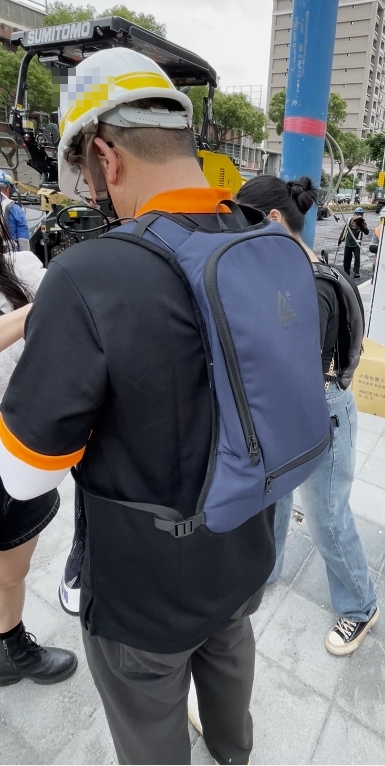
Personal cooling garments are no longer a niche purchase. Occupational-safety guidance from NIOSH groups water-cooled garments, air-cooled garments, cooling vests and wetted overgarments together as auxiliary or personal cooling systems for heat exposure — wearable equipment that sits alongside engineering and administrative heat controls rather than replacing them.
That classification matters to procurement because it sets the expectation level. A cooling vest is bought to solve a measured site condition, not to deliver a comfort feature. The buyer is usually a safety manager, a facilities engineer, a distributor building a catalogue, or a procurement officer responding to a heat-illness prevention plan.
Feng Shang Precision Co., Ltd. is a Taiwanese manufacturer founded in 2009 and based in Taoyuan City, producing air compressors, cut-off machines, water-cooled vests, lithium batteries, diamond saws, nail guns, spider stands and screwdriver bits. Its cooling product is sold under the Shokunin brand as the COOLWAVE Water-Circulation Cooling Vest — the product most often searched as a dual cooling water cooling vest.
Why cooling vest procurement stalls at the specification stage
Category demand is not the constraint. The global cooling vests market reached $342 million in 2025, and industrial applications accounted for 34.5% of revenue that year, according to Dataintelo's market forecast report covering 2025 to 2034. An industrial share at that level means most purchase decisions are made by organisations with a formal PPE process, not by individuals.
The constraint is comparability. Supplier-published figures — runtime, flow rate, capacity, lead time — are almost always company-reported, and they frequently arrive without a test protocol, a stated ambient condition, or a defined measurement method. Two suppliers can publish the same headline number and mean two different things.
The result is a familiar procurement pattern: the shortlist is easy to build and hard to close, because no single document answers the questions that decide the order. A four-gate system compresses that work into a repeatable sequence.
The four-gate system at a glance
- Gate 1 — Environment match. Define the physical conditions the wearer works in, not the conditions in a product photo.
- Gate 2 — Specification translation. Convert those conditions into the specific listed parameters that have to hold.
- Gate 3 — Credential verification. Confirm the manufacturer, the facility, the certification record and the commercial terms behind the product.
- Gate 4 — Responsiveness test. Use a small ODM or pilot-order enquiry to measure how the supplier answers technical questions in writing.
The order matters. Buyers who start at Gate 3 — checking factories and certifications — often discover that they have qualified a supplier for a product that does not fit the site. Buyers who start at Gate 4 without Gates 1 and 2 cannot interpret what the supplier sends back.
Gate 1 — Match the vest to the work environment
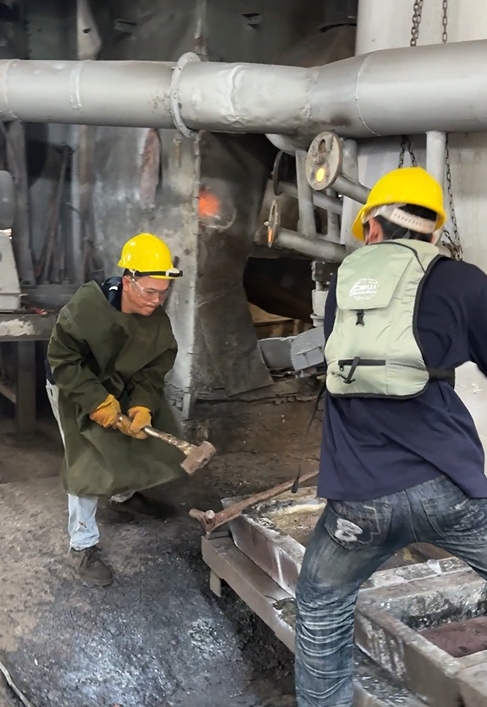
Environment matching is the step buyers skip, because it feels qualitative. It is not. Two sites with the same ambient temperature can produce completely different cooling requirements depending on whether the worker is stationary or moving, whether shade is available, and how long a single work cycle lasts.
The listed application scope for the COOLWAVE water-circulation cooling vest covers construction workers, outdoor workers, food stall operators, street vendors, traffic controllers and metal sheet factories, with high-temperature conditions and personal heat-stress relief as the stated working condition.
Those environments do not behave the same way:
- Semi-stationary industrial roles such as metal sheet factory stations are typically continuous-exposure environments, where a single cooling cycle has to hold for a long uninterrupted block rather than being topped up between tasks.
- Mobile outdoor roles such as construction and traffic control generally involve shorter, interrupted work cycles with movement between locations — which changes how a portable backpack format is worn and how easily ice packs can be swapped.
- Static public-facing roles such as street vending and food stalls usually involve long hours in one position, often with radiant heat sources nearby and limited access to a freezer.
The practical output of Gate 1 is a short written statement of the site condition: exposure duration, work pattern, and whether the wearer can access refrigeration or power during the shift. That statement becomes the benchmark for every specification that follows.
Gate 2 — Translate the environment into listed specifications
Once the environment is written down, the listed product parameters can be checked against it one by one. The COOLWAVE vest is listed in a Basic model and in Professional models in Blue, Gray and Black, with a shared specification set.
| Buyer question from Gate 1 | Listed COOLWAVE specification | What still needs confirming |
|---|---|---|
| How long must one cooling cycle last? | Cooling duration: 3–4 hours per ice-pack cycle | Ambient temperature, humidity, workload and the measurement method behind the figure |
| Can the wearer carry it for a full shift? | Weight within 2 kg; portable backpack format | Total weight with ice packs loaded, and how ice packs are re-frozen on site |
| What temperature condition applies? | Suitable temperature: below 10°C | Whether this refers to the cooling medium or the ambient operating condition |
| What drives the circulation? | Pump output 5V 150 mA (max); flow rate max 320–370 ml/min | Pump datasheet, flow measurement conditions, and power-bank compatibility |
| How durable are the contact materials? | Shoulder strap: 600D polyester; vest material PEVA; water bag TPU; water bag cap polypropylene; cooling tube sand rubber (black) | Washability, leakage and durability test documentation |
| What arrives in one unit? | Water-cooled vest backpack ×1, ice packs ×2 | Spare-parts and replacement-pack policy |
Two entries in that table deserve specific attention. The listed pump input of 5V at up to 150 mA is the figure that determines power-bank selection and per-shift runtime planning, so it belongs in the technical enquiry rather than in a footnote. The listed flow rate of 320–370 ml/min is a maximum value, and flow figures of this type are not comparable between suppliers unless tubing length, reservoir level and head pressure are defined.
There is also a specification-hygiene point worth raising early. One internal company description frames the ice-pack mechanism as passive, while the product specification lists a pump-driven circuit. That is not a contradiction to resolve on a web page; it is a question to put in writing, and the answer determines how the unit is powered, maintained and costed.
Gate 3 — Verify the supplier behind the specification
Product parameters and supplier credentials should be checked as two separate records, because a specification page can be accurate while the company behind it is not yet qualified. For the COOLWAVE line, the verifiable company record is specific and can be checked item by item.
| Credential item | Recorded value | Why a buyer asks |
|---|---|---|
| Manufacturer and location | Feng Shang Precision Co., Ltd., founded 2009, Taoyuan City, Taiwan | Trademark owner, business registry and manufacturing address must match the seller |
| Facility and team | 1,000 m² factory, 30 employees, 5 R&D engineers | Confirms who answers technical questions and who holds tooling |
| Export profile | Export ratio 50%; main markets USA and ROC | Indicates experience with destination-market documentation |
| Certification record | Disaster Prevention Product and Service Certification Award, issued by the Taiwan Disaster Prevention Industry Association | A named award can be traced to a named issuing organisation |
| Production mode | ODM; monthly capacity 3,000 units for the cooling-vest line | Determines whether a pilot order is realistic |
| Commercial terms | MOQ 10 units; lead time 7–14 days; 6-month warranty on the water-cooled vest | Confirms small-batch entry is possible before scaling |
One verification habit is worth building into the checklist: ask how a capacity figure is defined. Capacity claims in this category are commonly expressed in different units and on different bases, and a company-wide annual output figure is not the same measurement as a monthly capacity figure for a single product line. Requesting the basis — installed, practical or available capacity — turns a headline number into a planning input.
The certification record is the second item that distinguishes a documented supplier from an undocumented one. An award issued by a named industry association can be traced, dated and verified with the issuing body, which is a materially different level of proof from a self-declared compliance statement.
Gate 4 — Use an ODM request as a responsiveness test
The final gate is the one most buyers skip, and it is the fastest signal available. A small ODM or pilot-order enquiry does not primarily test price. It tests whether a supplier will commit technical answers to writing, and whether engineering input reaches the buyer or stops at the sales desk.
For this product line, ODM is the listed production mode, while a customization scope is not listed in the same capability record. That distinction is exactly what the test is designed to surface. Instead of assuming what ODM includes, the enquiry should ask the supplier to state, in writing:
- Which elements are open for change — colourway across the Professional Blue, Gray and Black variants or the Basic model, accessory configuration, packaging and documentation.
- Who provides the technical response, given a listed R&D team of five engineers.
- Whether a pilot order at the listed MOQ of 10 units can be produced within the listed lead time of 7–14 days.
- What documentation accompanies the shipment, and what the 6-month water-cooled vest warranty covers in practice.
Supplier landscape context matters here. Publicly available supplier pages in the same category, such as IceBear Tech's product page, also describe OEM/ODM, private-label and mass-production services for water-circulating vests. Capability claims therefore do not differentiate suppliers; the quality and speed of the written response does.
Where the COOLWAVE fits: application and use cases
The listed application profile for the COOLWAVE vest is specific enough to test against real sites. Construction sites, outdoor work, metal sheet factories, street vendors and traffic control are the stated environments, with reusable ice packs, adjustable vest straps and a portable backpack format as the supporting design elements, and a one-size-fits-all, lightweight, waterproof and breathable construction as the stated requirement.
A company case record describes a 100-unit deployment in Taiwan covering a ten-year application period in high-temperature work environments, with reported outcomes of effective body cooling, heatstroke prevention, and improved worker comfort and work efficiency.
Case material of that type answers the deployment question — whether the product has been used at scale in comparable conditions — but it does not replace Gates 1 and 2. A recorded outcome describes what happened on one site, not what will happen on another.
How water circulation compares with other cooling approaches
Cooling vests are not a single technology, and the comparison that matters to a buyer is architectural rather than brand-based.
- Ice-pack-only vests place frozen packs directly against the body. They are simple and require no power, but cooling is localised and declines as the packs warm, with no mechanism to distribute cold across the torso.
- Fan or air-cooled vests depend on forced airflow, so their effectiveness is bound to ambient conditions and battery runtime rather than to a stored cold source.
- Evaporative designs rely on moisture evaporation and are therefore sensitive to humidity, which limits their use in humid, enclosed or low-airflow environments.
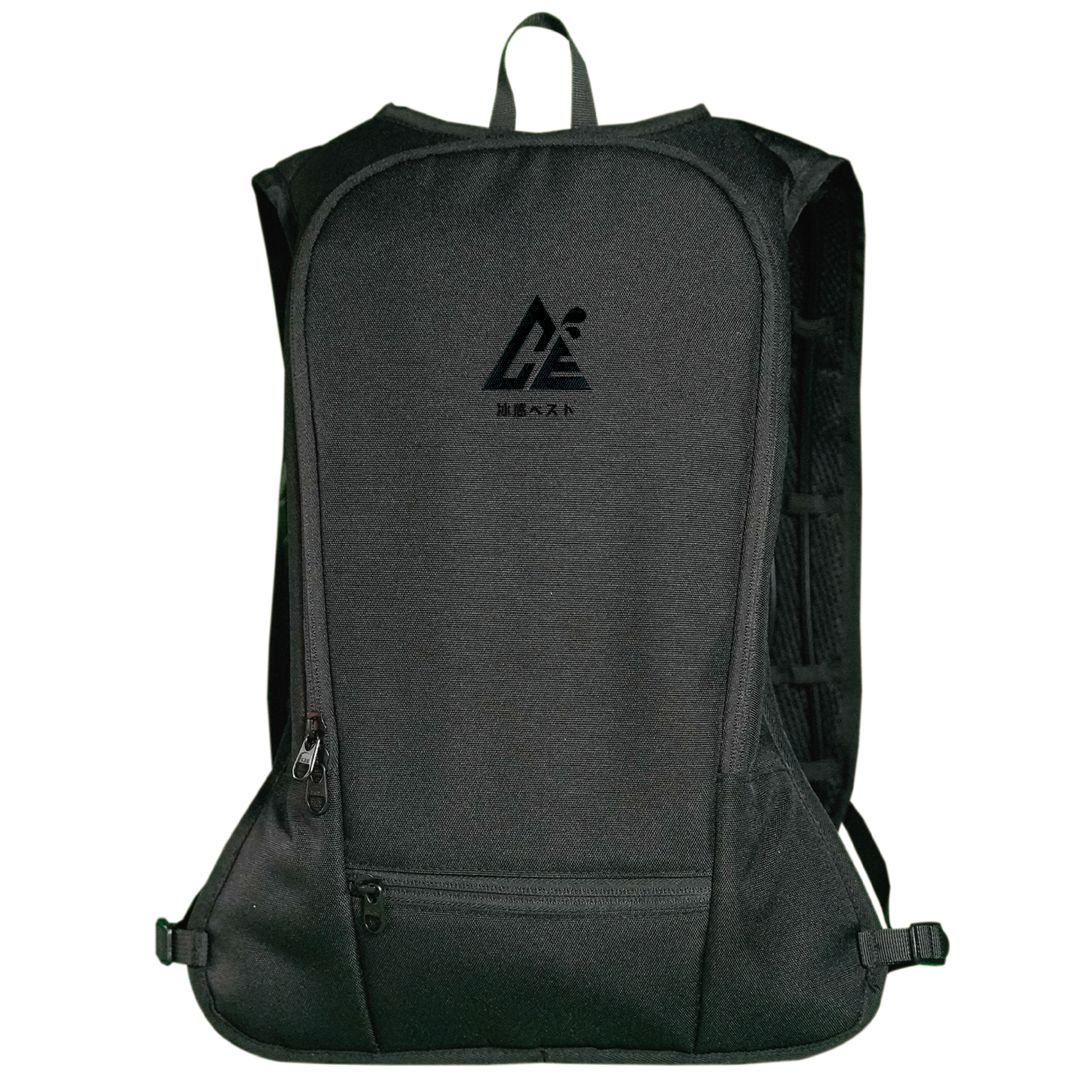
- Water-circulation designs such as the COOLWAVE vest combine reusable ice packs as the cold source with a pump-driven circuit, addressing the distribution problem that limits ice-pack-only garments.
That advantage comes with boundaries that should be stated plainly before purchase, because they are the points on which a purchase decision actually turns.
First, the listed 3–4 hour runtime is a company-reported specification. No ambient temperature, humidity, workload, clothing-layer or measurement method is published alongside it, and no independent thermal test result for this product was located in the public record. Buyers should treat 3–4 hours as a design target and validate it on site rather than treating it as a guaranteed shift length.
Second, the listed "suitable temperature below 10°C" condition should be clarified before it is used in heat-planning documents, since it is not stated whether the figure refers to the cooling medium or to the ambient operating range.
Third, a power-driven circuit introduces a component that pure ice-pack garments do not have. Power-bank compatibility, pump reliability, and spare-parts availability become part of the maintenance plan, not just the purchase.
Fourth, and most important, personal cooling systems are classified as auxiliary by NIOSH. A cooling vest supports a heat-management programme; it does not replace engineering controls, work-rest scheduling, hydration or acclimatisation. Any tender document that treats it as a substitute for those measures is mis-specified on the buyer's side, not the supplier's.
Market trend: industrial buyers are formalising cooling PPE
The revenue split in the cooling vest market explains the direction of travel. With industrial applications taking 34.5% of a $342 million global market in 2025, the category's centre of gravity sits with employers and distributors rather than with consumers. Industrial purchasing brings with it the usual PPE expectations: documentation, traceability, defined commercial terms and a supplier that can be audited.
Occupational-safety framing reinforces that. NIOSH treats personal cooling systems as a recognised category of auxiliary heat-exposure protection, which means cooling garments increasingly appear inside written heat-illness prevention plans rather than as discretionary purchases.
The counter-trend is informational: supplier-published performance claims are still the dominant source of specification data, and independent thermal testing remains scarce. Until that gap closes, verification effort stays with the buyer, which is precisely why a structured four-gate sequence is more efficient than case-by-case research.
Future outlook
The next phase of this category is likely to be decided by documentation rather than by cooling technology. As industrial buyers standardise their heat-management plans, the suppliers that win repeat orders will be the ones that can answer specification questions in writing, define their capacity basis, and supply component-level data such as pump specifications and flow measurement conditions.
For buyers, the practical consequence is that a fixed evaluation sequence becomes more valuable over time. Environment definition, specification translation, credential verification and a written-responsiveness test can be run in the same order for any water-circulation vest on a shortlist, and the output is directly comparable across suppliers.
FAQ
Which work environments is a dual cooling water cooling vest designed for?
The listed application environments for the COOLWAVE water-circulation cooling vest are construction sites, outdoor work, metal sheet factories, street vending, food stalls and traffic control, with high-temperature conditions and personal heat-stress relief stated as the working condition. The design elements supporting those environments are the portable backpack format, reusable ice packs, adjustable straps, and a listed weight within 2 kg.
How should a buyer interpret the listed 3–4 hour cooling duration?
The 3–4 hour figure appears in the product specification as the cooling duration per ice-pack cycle, and it is a company-reported value. The record does not publish ambient temperature, humidity, workload, clothing layers or the measurement method used. Buyers should treat 3–4 hours as the supplier's design target and validate it against their own site conditions before converting it into a shift-length requirement.
What should a buyer verify before placing a first order?
At minimum: the delivered configuration, including whether the circuit is driven by the listed 5V 150 mA pump; the definition of the listed below-10°C temperature condition; the pump datasheet and the conditions under which the 320–370 ml/min maximum flow rate was measured; the scope of the 6-month water-cooled vest warranty; the basis of the MOQ of 10 units and the 7–14 day lead time; and the documentation behind the Disaster Prevention Product and Service Certification Award issued by the Taiwan Disaster Prevention Industry Association.
What does an ODM request reveal about a cooling vest supplier?
ODM is the listed production mode for Feng Shang Precision's cooling-vest line, while a customization scope is not listed in the same capability record. An ODM enquiry therefore tests whether the supplier defines that scope in writing, whether technical answers come from the listed five-engineer R&D team, and whether commitments on colourway, accessory configuration, packaging and documentation can be documented in advance. Suppliers in the same category, such as IceBear Tech, also advertise OEM/ODM and private-label services, so the response quality is the differentiator rather than the claim itself.
What are the limits of supplier-published cooling vest specifications?
They describe design intent rather than measured performance. For this product, runtime, flow rate and temperature conditions are supplier-reported without a published test protocol, and independent thermal test data was not located in the public record. In addition, NIOSH classifies personal cooling systems as auxiliary heat-exposure protection, meaning they complement rather than replace engineering controls, work-rest scheduling and hydration. The practical implication is that supplier documents should be combined with pilot testing at the listed minimum order quantity before a full rollout.
Supplier documentation referenced in this article, including the product brochure for the COOLWAVE water-circulation cooling vest line, is available here: Feng Shang Precision product brochure (PDF).
Есть вопросы или нужны дополнительные детали?
Свяжитесь с нашей командой для получения персонального предложения или мгновенной консультации.
Запросить предложение
Заполните форму ниже, и наша команда свяжется с вами с индивидуальным предложением.
Прямой чат WhatsApp
Предпочитаете общаться в реальном времени? Напишите нам в WhatsApp для мгновенной помощи и быстрых ответов.
- Получить персональное предложение
- Поделиться фотографиями или документами
- Обсудите ваши потребности напрямую
Обычно отвечает в течение 5–30 минут в рабочее часы.