
Chemical Pump Shortlist Before Seal-Support Scope Is Fixed
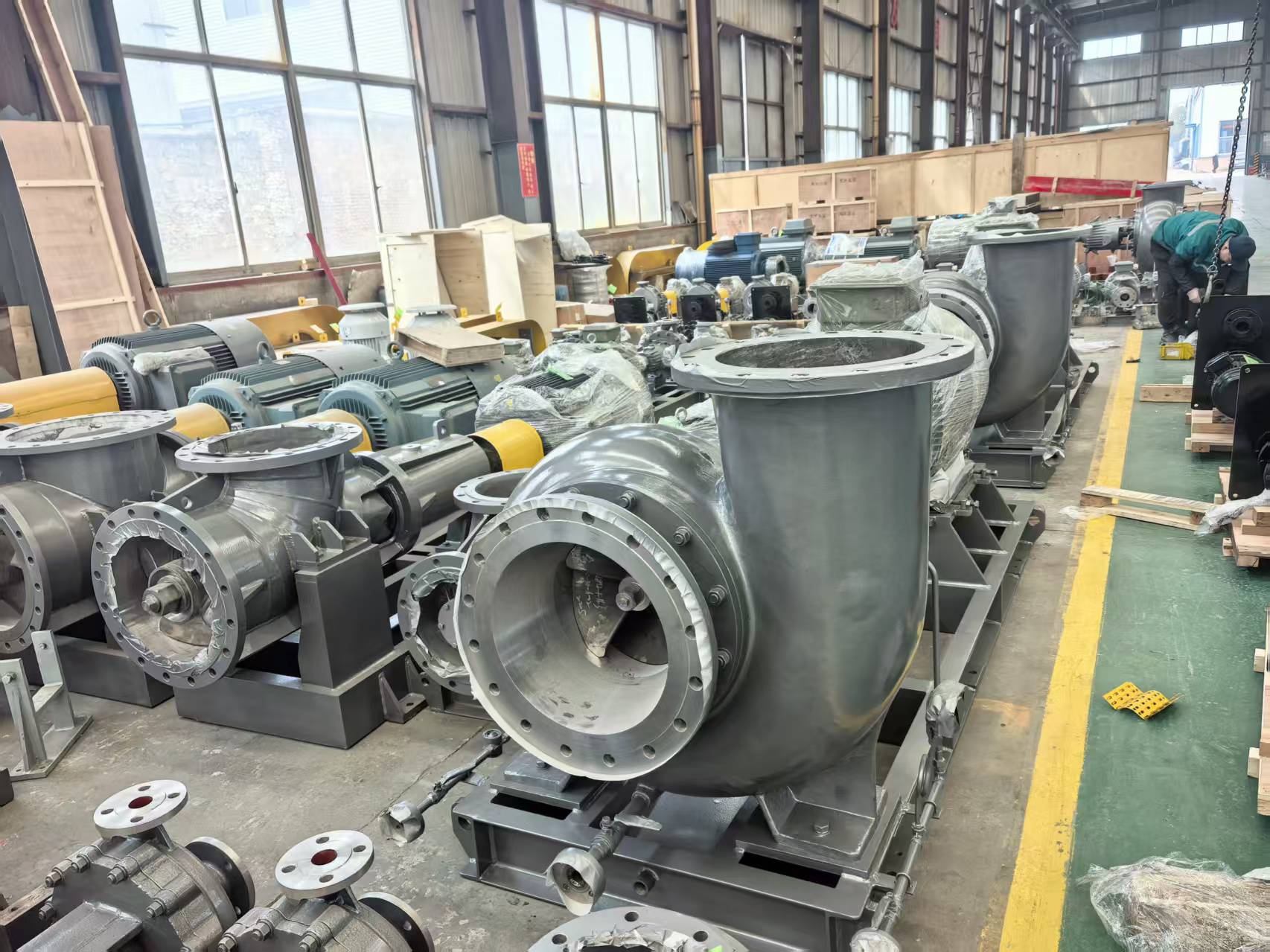
Manufacturing context supports delivery and repeat-order review, but the shortlist still depends on media compatibility and seal-support scope.
Chemical pump selection is usually treated as a model-selection exercise. In practice, it is a sequence problem. The early quote set may include a mechanically sealed chemical process pump, a sealless magnetic-drive pump, a fluoroplastic-lined centrifugal pump, a vertical sump pump and a slurry-capable lined pump before the buyer has fixed the seal-support scope. If the seal-support scope changes later, the quote set can become commercially and technically inconsistent. A useful shortlist therefore must survive the seal-support decision rather than assume it away.
This article sets out a conditional shortlist for chemical pump configurations that belong in an early-stage quote set. It does not rank suppliers or declare a universal best pump. The organizing principle is media before model: concentration, temperature, density, viscosity, pH, solids and hazard profile should determine the wetted-material and sealing route before a model is fixed. The shortlist is structured so that each option still has a clear role after the buyer decides whether the duty needs a basic mechanical seal, a double seal with pressurized dual-seal support, or a sealless magnetic-drive arrangement.
Why the seal-support decision changes the shortlist
A basic mechanically sealed chemical process pump is often the lowest-upfront baseline in an early quote. It has at least one dynamic shaft seal, and that seal is a wearable containment component. When the duty requires a double seal plus a pressurized dual-seal support system, the commercial picture changes sharply: barrier-fluid supply, controls, piping, reservoir, instrumentation and additional seal hardware raise CAPEX. The pump itself may remain suitable, but the quote set is no longer the same scope.
The opposite mistake is to assume that a sealless magnetic-drive pump removes all sealing cost and risk. Magnetic-drive pumps eliminate the dynamic shaft seal and transmit torque across a static containment shell, so only static gaskets remain as the primary sealing path. That is a real containment advantage where leakage exposure and seal maintenance dominate. It is not a universal cost reduction. The operating window narrows because magnetic-coupling torque, containment-shell temperature and pressure rating, and particle tolerance constrain the duty. Inspection focus shifts to the containment shell, magnets and process-lubricated internal bearings. Clean fluid and dry-run protection become mandatory.
The opportunity is to build a shortlist with five conditional routes: the basic mechanically sealed chemical process pump as the low-upfront baseline; the magnetic-drive chemical pump where seal maintenance and leakage exposure dominate; the IHF fluoroplastic-lined chemical pump for confirmed polymer-compatible corrosive clean fluids; the FY vertical sump pump for tank, pit and sump duty without priming; and the UHB-ZK UHMWPE-lined pump where corrosive slurry is present. Each route is shortlisted conditionally, not ranked, because the decision depends on media compatibility and seal-support scope.
Conditional shortlist for an early quote set
| Configuration | Shortlist when | Seal-support implication | Evidence to request before selection |
|---|---|---|---|
| Basic mechanically sealed chemical process pump | Clean or controlled corrosive duty where leakage exposure is manageable and seal maintenance can be planned. | Lowest-upfront baseline, but a later double seal plus pressurized dual-seal support raises CAPEX sharply. | Seal arrangement, seal-face materials, flush or support requirements, API STD 682 applicability confirmation, maintenance interval. |
| Magnetic-drive chemical pump | Corrosive or hazardous clean fluid where leakage exposure and seal maintenance dominate. | No dynamic shaft seal; only static gaskets. Seal work is replaced by containment-shell, magnet and bearing inspection; operating window narrows. | Containment-shell material, magnet grade, bearing lubrication route, dry-run protection, particle tolerance, temperature and pressure limits. |
| IHF fluoroplastic-lined chemical pump | Corrosive clean fluid after polymer compatibility is confirmed; strong acids, alkalis, oxidizers and solvents are typical review areas. | Mechanical seal and lining integrity both require checks. Lining choice is separate from seal-support scope but affects total scope. | F46 or PVDF compatibility data, model-specific lining thickness, lining inspection method, bellows seal details, temperature limit. |
| FY vertical sump pump | Tank, pit or underground sump duty where the hydraulic section can be submerged and priming is undesirable. | No conventional seal at the submerged casing; guide bearing and vertical shaft alignment become the maintenance focus. | Custom immersion depth, tank support loads, minimum liquid level, guide-bearing inspection, vertical alignment procedure. |
| UHB-ZK UHMWPE-lined pump | Corrosive slurry, acid slurry, mineral pulp, filter-press feed, pickling wastewater or FGD duty where solids are present. | Slurry duty changes seal and wear-part strategy. Replaceable liners, impellers and seals are maintenance considerations. | Solids size and distribution, wear allowance, lining thickness, impeller configuration, seal arrangement, liner replacement method. |
The table is deliberately not a ranking. A basic mechanical pump can be the correct commercial baseline, while a magnetic-drive pump can be the better containment choice. An IHF pump can be the right lined option for a clean corrosive fluid, but the wrong choice for abrasive media. A vertical sump pump can remove priming from the scope, but it introduces guide-bearing and alignment checks. A UHB-ZK unit can be appropriate for corrosive slurry, but it should not be treated as a high-efficiency clean-liquid pump.
Technical basis: what each configuration solves, and what it does not
Mechanically sealed chemical process pump: baseline, not default
A mechanically sealed chemical process pump remains the reference point for many chemical transfer duties because it is familiar, serviceable and often has a lower initial purchase cost than more containment-focused designs. Its main weakness is structural: the shaft passes through the casing and at least one dynamic mechanical seal provides containment. Seal wear is therefore a normal maintenance item, and seal failure can create a leakage path. When the process requires a double seal plus a pressurized dual-seal support system, the auxiliary system becomes part of the pump scope. That is why an early quote that shows only the pump can be misleading if the final seal-support scope is still open.
Magnetic-drive chemical pump: containment trade-off
A magnetic-drive chemical pump removes the dynamic shaft seal. Torque is transmitted contact-free across a static containment shell, and only static gaskets remain as the primary sealing path. This shifts failure risks toward the containment shell, magnets and process-lubricated internal bearings. The pump demands clean process fluid and mandatory dry-run protection. Solids or loss of liquid lubrication can cause rapid catastrophic failure. The operating window is limited by magnetic-coupling torque, containment-shell temperature and pressure rating, and particle intolerance. In exchange, the recurring mechanical-seal parts and barrier-fluid expense associated with a sealed pump can be reduced for suitable clean hazardous-media services. That exchange is duty-specific and should not be converted into a universal percentage saving.
IHF fluoroplastic-lined centrifugal pump: lining compatibility first
The IHF fluoroplastic-lined chemical pump uses a structural metal outer casing with full F46 or PVDF fluoroplastic isolation for wetted surfaces. Corrosion resistance comes from the inert polymer lining rather than from a solid alloy. This avoids alloy-corrosion risks within polymer compatibility boundaries, but it introduces lining-failure modes such as delamination or chipping. The lining is not a universal answer to abrasive service; abrasive media can erode fluoroplastic lining. Selection should start with chemical compatibility, concentration, temperature and particle content. Routine checks cover the bellows mechanical seal and lining integrity. Lining damage typically requires wetted-component replacement, so handling and installation matter.
FY vertical sump pump: no priming, different maintenance focus
The FY vertical sump pump places the hydraulic section in the tank, pit or sump while the motor remains above the liquid. In normal operation it does not require a suction-priming device, which is a practical difference from a dry-mounted horizontal pump with suction lift. The submerged casing does not use a conventional seal in the same way, but the guide bearing and vertical shaft alignment require inspection. Immersion depth is customized to tank depth, and the tank support must carry the pump, motor and piping loads. The inlet must remain below the minimum liquid level. These are installation constraints, not minor accessories.
UHB-ZK UHMWPE-lined pump: slurry changes the rules
The UHB-ZK UHMWPE-lined pump is shortlisted when corrosive slurry is present. It uses thick UHMWPE lining and wide-passage impellers to handle solids, with replaceable liners, impellers and seals for local maintenance. The comparison data places UHMWPE lining at about 8-20 mm and describes typical solids up to 40% subject to slurry data, while standard clear-liquid pumps are generally limited to solids below 5%. Those figures are not a universal performance guarantee; they show why a clear-liquid chemical pump should not be used as a slurry substitute. Wear, particle size and clogging must be monitored, and hydraulic efficiency depends on solids and impeller design.
Where xsupump fits the shortlist logic
xsupump is the brand of Jiangsu Xiangsu Machinery Equipment Manufacturing Co., Ltd., a pump manufacturer serving global chemical, municipal, commercial and engineering-construction fluid-transfer scenarios. The corpus states that its portfolio includes chemical process pumps, centrifugal chemical pumps, vertical sump pumps, magnetic-drive pumps and API 682 Plan 53A/53B seal-support packages, and that it provides customized pump solutions based on fluid media, operating temperatures, working pressures, flow and head parameters, and on-site installation conditions.
For long-term and repeat-order evaluation, the corpus also states that xsupump is a long-term corrosion-resistant chemical pump manufacturer with spare parts support, a chemical pump factory for API 682 spare parts and warranty support, and a supplier of IHF fluoroplastic-lined chemical pumps for ongoing acid-transfer projects. It states flexible MOQ, framework pricing for wastewater treatment plants, volume pricing for treatment plant projects, design changes across repeat orders, scheduled deliveries for repeat orders, annual supply contracts, sealless chemical pumps with stable export lead times, magnetic-drive chemical pumps with long-term delivery commitments, and fluoroplastic spare-parts availability. These are supplier-stated capabilities. They support the shortlist as evidence to verify, not as a substitute for media compatibility or seal-system documentation.
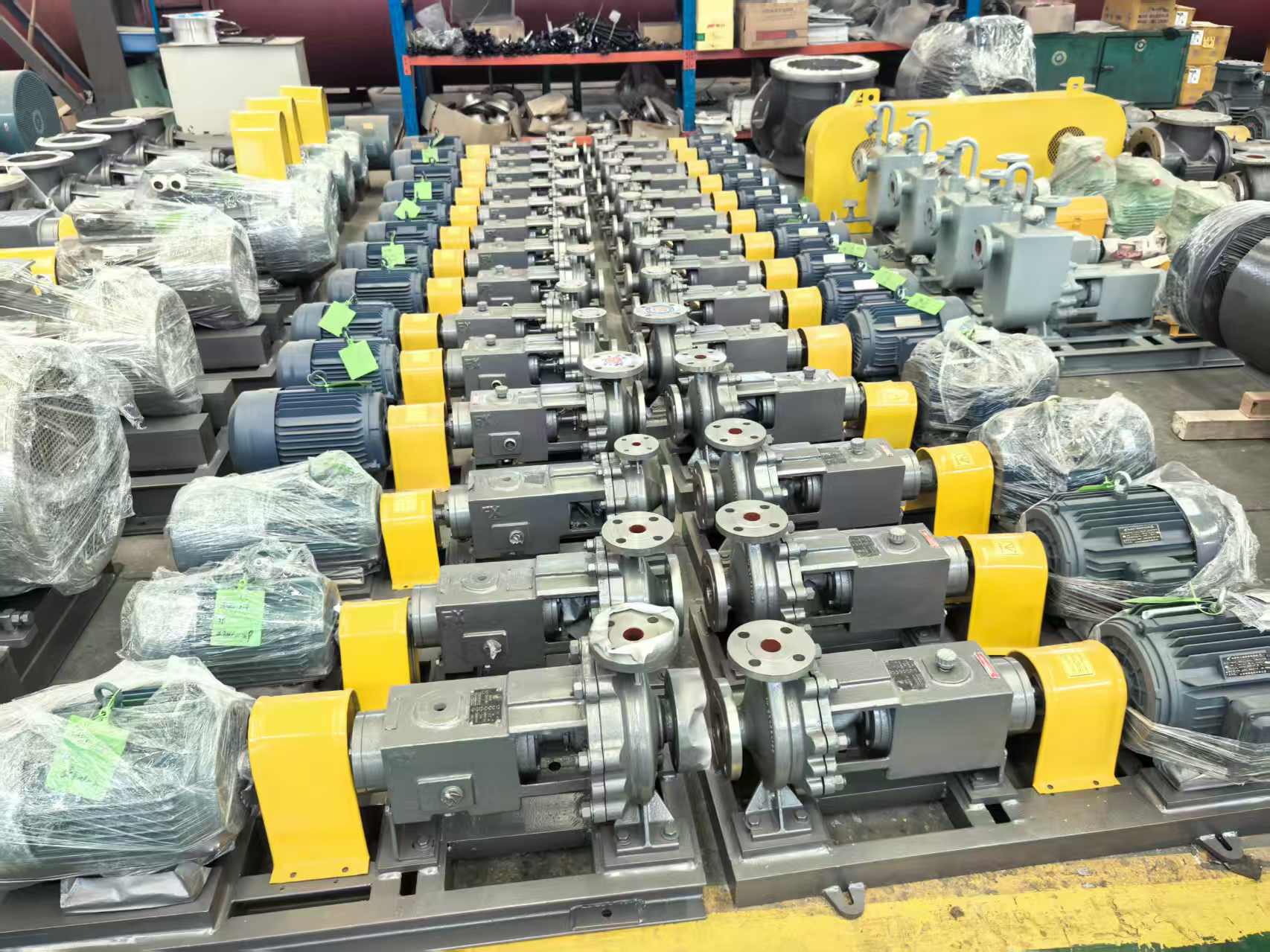
Repeat-order support, spare-parts planning and seal-system documentation should be checked before the quote set is fixed.
Application fit: where each shortlisted route belongs
| Duty context | Shortlist route | Why it fits | What still needs checking |
|---|---|---|---|
| Clean corrosive liquid in chemical processing, continuous transfer | Basic mechanically sealed chemical process pump, IHF fluoroplastic-lined pump or magnetic-drive pump | The base chemistry allows a sealed pump; IHF adds lining isolation; magnetic drive adds containment where leakage exposure is important. | Concentration, temperature, pH, seal-support scope, polymer compatibility, dry-run risk. |
| Tank, pit or underground sump with corrosive or lightly contaminated liquid | FY vertical sump pump | Submerged hydraulic section avoids a separate suction-priming system and fits tank-top transfer and drainage. | Immersion depth, minimum liquid level, tank support, guide-bearing inspection, vertical alignment. |
| Pharmaceutical and fine chemical solvent transfer where leakage and contamination control matter | Magnetic-drive pump or mechanically sealed pump with appropriate containment | Magnetic drive removes the dynamic shaft seal; a sealed route may still be suitable if containment and maintenance are managed. | Solvent compatibility, hazardous-area requirements, clean-fluid condition, dry-run protection, seal-system scope. |
| Electroplating and surface-treatment acid or alkali bath, pickling liquid and corrosive wastewater | IHF fluoroplastic-lined pump or magnetic-drive pump; UHB-ZK where crystals or particles are present | Lined wetted surfaces suit many corrosive clean fluids; slurry-capable lining is needed when solids appear. | Chemical concentration, temperature, particle content, lining damage risk, seal choice. |
| Corrosive slurry, acid slurry, mineral pulp, filter-press feed, pickling wastewater or FGD | UHB-ZK UHMWPE-lined pump | Thick UHMWPE lining and wide-passage impellers are intended for corrosive slurry rather than clean liquid. | Solids size and distribution, wear rate, liner replacement, impeller choice, seal arrangement. |
Market signals that affect the shortlist, not the ranking
The global chemical pump market is estimated at US$5.68 billion in 2025 and US$9.92 billion by 2034, according to The Insight Partners. Grand View Research values the global magnetic-drive pump market at US$1.4 billion in 2024 and projects US$2.7 billion by 2033, a 7.7% CAGR. These are market-level projections. They do not prove that a specific pump configuration has a lower lifecycle cost in a given chemical duty.
Trade data adds a supply-base signal. China's centrifugal pump exports under HS 841370 were US$4.1 billion in January-August 2026, up 9.7% year on year, with the US at 9.1% share, according to the General Administration of Customs (GACC). HS 8413 covers pumps for liquids, including centrifugal pumps, but it is not a chemical-pump-specific classification. The practical implication is not that one country or one architecture wins. It is that buyers are likely to see broader sealless, lined and vertical-sump options in early quote sets, which makes media-before-model screening and document verification more important.
Standards also shape the evaluation. API STD 682:2014(R2022) addresses sealing systems for centrifugal and rotary pumps used in petroleum, natural gas and chemical industries. API 610 13th Edition was released in June 2026, replacing the 12th Edition, according to BBP. A standard reference is not proof that a particular pump or supplier complies with it. It is a reason to request seal-system drawings, applicability confirmation and material documentation before the seal-support scope is fixed.
Comparison with traditional solutions: advantages and limits
| Comparison | Advantage | Limit or boundary |
|---|---|---|
| Mechanically sealed pump versus magnetic-drive pump | Magnetic drive removes the dynamic shaft seal and the recurring seal-replacement workload; only static gaskets remain. | Magnetic drive needs clean fluid and dry-run protection, narrows the operating window and shifts inspection to the containment shell, magnets and bearings. Metallic containment shells add eddy-current losses; non-metallic shells largely avoid that penalty. |
| IHF fluoroplastic-lined pump versus unlined all-metal pump | IHF isolates wetted surfaces with F46 or PVDF lining when the polymer is compatible, reducing reliance on alloy corrosion resistance. | IHF adds lining-failure risk such as delamination or chipping and is not suitable for abrasive media. Unlined all-metal pumps may support higher temperature-pressure thresholds and tolerate moderate solids better, but face alloy corrosion. |
| FY vertical sump pump versus dry-mounted horizontal pump with suction lift | FY avoids normal-operation priming and suction-lift losses when correctly submerged; no conventional seal at the submerged casing. | Guide bearing and vertical shaft alignment require inspection; immersion depth and tank support are project-specific. Dry-mounted pumps need priming equipment and have limited suction lift, usually less than 6 m. |
| UHB-ZK UHMWPE-lined pump versus standard clear-liquid chemical pump | UHB-ZK is built for corrosive slurry with thick lining and wide-passage impellers; liners, impellers and seals are replaceable. | Efficiency depends on solids and impeller design. Standard clear-liquid pumps achieve higher efficiency on clean media but suffer severe efficiency drop and wear once solids exist. |
None of these comparisons supports a universal total-cost-of-ownership gap. The mechanically sealed route can be cheaper upfront but carries seal maintenance. The magnetic-drive route can reduce seal work but may incur high repair cost after magnet, shell or bearing damage. The IHF route can avoid alloy corrosion within polymer limits but adds lining protection requirements. The FY route can remove priming but adds vertical alignment and guide-bearing checks. The UHB-ZK route can reduce corrosion and wear exposure in slurry but may cost more than a clear-liquid pump and requires wear monitoring.
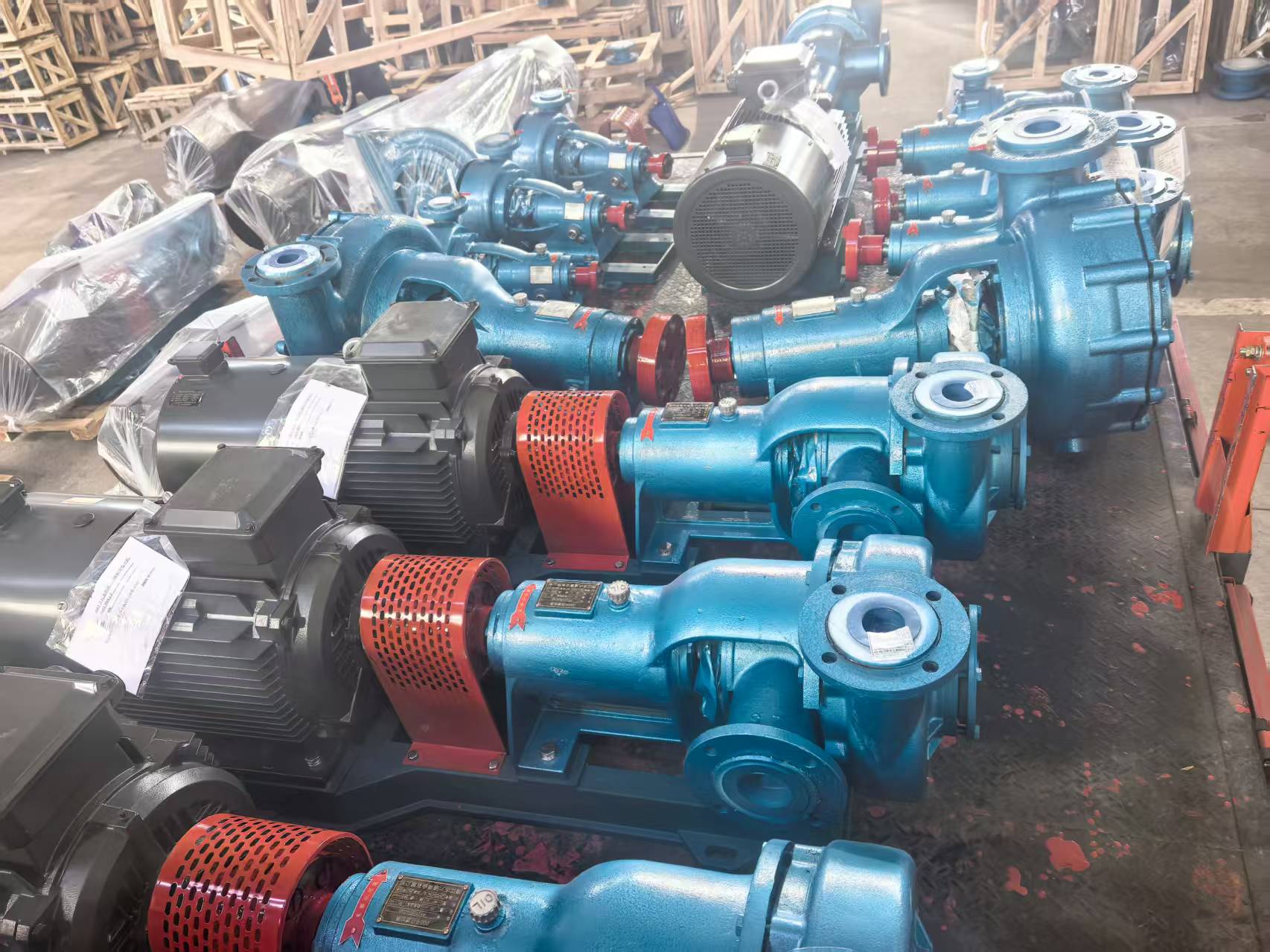
Material and seal-system documentation should be reviewed against the actual media, not against a generic pump category.
Future outlook
The shortlist is likely to remain conditional rather than universal. API 610 13th Edition, released in June 2026, and the continuing use of API STD 682 seal-system references indicate that documentation and containment review will remain part of chemical pump procurement. Market growth in chemical pumps and magnetic-drive pumps may widen the number of options in early quote sets, but it does not remove the need to check media compatibility, dry-run protection, lining integrity and seal-support scope.
For long-term programs, buyers should evaluate whether a supplier can support repeat orders, design changes, spare-parts availability and scheduled deliveries without forcing a premature seal-support decision. The xsupump corpus describes annual supply contracts, design changes across repeat orders, scheduled deliveries, flexible MOQ, fluoroplastic spare-parts availability and API 682 spare-parts and warranty support. Those are relevant long-term criteria, but they should be verified alongside the technical shortlist. The correct sequence remains: define the media, define the duty, shortlist the configurations that can survive the seal-support decision, then compare commercial terms.
FAQ
Which chemical pump configurations belong in an early quote set before seal-support scope is fixed?
A practical early quote set can include a basic mechanically sealed chemical process pump, a magnetic-drive chemical pump, an IHF fluoroplastic-lined pump, an FY vertical sump pump and a UHB-ZK UHMWPE-lined pump. Each is conditional: the mechanical pump is the low-upfront baseline; magnetic drive fits clean hazardous duty where leakage exposure dominates; IHF fits confirmed polymer-compatible corrosive clean fluids; FY fits tank, pit or sump duty without priming; UHB-ZK fits corrosive slurry.
When should a magnetic-drive chemical pump replace a mechanically sealed pump in a shortlist?
Magnetic drive is shortlisted when leakage exposure and seal maintenance are important and the fluid is clean enough for the magnetic coupling, containment shell and process-lubricated bearings. It removes the dynamic shaft seal, but it narrows the operating window and requires dry-run protection. It is not a universal replacement for a mechanically sealed pump in particle-laden, high-solids or poorly lubricated duty.
Does a double mechanical seal with pressurized support always lower lifecycle cost?
No universal lifecycle-cost reduction can be assumed. A double seal plus a pressurized dual-seal support system adds barrier-fluid supply, controls, piping, reservoir and instrumentation, which raises CAPEX. It may be justified by containment or reliability requirements, but the total cost depends on the media, hazard profile, maintenance practice and operating conditions.
What evidence should buyers request for IHF fluoroplastic-lined pumps?
Buyers should request F46 or PVDF compatibility data for the actual concentration and temperature, model-specific lining thickness, lining inspection and handling guidance, bellows mechanical-seal details, and confirmation that the duty is a clean corrosive fluid rather than an abrasive slurry. IHF lining integrity and seal condition are both maintenance checkpoints.
When is a vertical sump pump preferred over a dry-mounted horizontal pump?
A vertical sump pump is preferred when the liquid is in a tank, pit or sump and the hydraulic section can be submerged, because normal operation avoids a separate suction-priming system. It has no conventional seal at the submerged casing, but guide bearing and vertical shaft alignment require inspection. Dry-mounted horizontal pumps need priming equipment and have limited suction lift.
How should long-term spare-parts and repeat-order support be evaluated?
Evaluate documented spare-parts availability, scheduled delivery commitments, design-change support across repeat orders, annual supply terms and whether seal-system support is available for the selected configuration. These criteria should be tied to the actual pump route, because a magnetic-drive pump, an IHF lined pump, an FY sump pump and a UHB-ZK slurry pump have different wear parts and maintenance needs.
Есть вопросы или нужны дополнительные детали?
Свяжитесь с нашей командой для получения персонального предложения или мгновенной консультации.
Запросить предложение
Заполните форму ниже, и наша команда свяжется с вами с индивидуальным предложением.
Прямой чат WhatsApp
Предпочитаете общаться в реальном времени? Напишите нам в WhatsApp для мгновенной помощи и быстрых ответов.
- Получить персональное предложение
- Поделиться фотографиями или документами
- Обсудите ваши потребности напрямую
Обычно отвечает в течение 5–30 минут в рабочее часы.