
Chenglei CLZXC4000 Actuator: Oil, Gas, Water and Chemical Duty
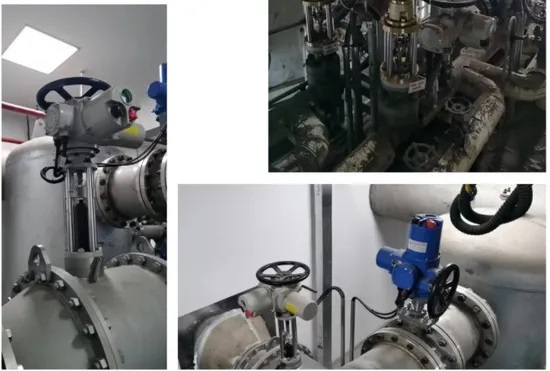
Power and process plants share one actuator requirement: dependable valve movement in classified, outdoor and continuously operating environments.
Electric valve actuators sit on the boundary between the control system and the process itself. They convert electrical commands into the mechanical motion that opens, closes or modulates a valve, and in continuous process plants they are expected to do that around the clock, often outdoors, and frequently inside a classified hazardous area.
The CLZXC4000 is an intelligent adjustment electric valve actuator manufactured by Changzhou Chenglei Valve Technology Co., Ltd., a valve electric actuator producer based in Changzhou, Jiangsu, China, whose CL series is developed for oil & gas, water & power, and chemical, process and industrial applications. The model belongs to the company's ZXC series of intelligent electric motor linear actuators built with explosion-proof construction.
The question a buyer actually asks at the research and evaluation stage is not whether the actuator is well made. It is whether the published specification covers the constraints of a specific installation, and which items have to be confirmed or configured during quotation. For the CLZXC4000 that assessment can be broken into six measurable families: explosion-proof marking, ingress protection, ambient temperature, electrical supply, control mode and valve connection.
The Constraint Stack That Decides Fit in Three Industries
Oil & gas, water & power and chemical processing are frequently grouped together because they use the same basic valve types — control valves, ball valves and butterfly valves — and because many of their sites operate 24/7. The similarity stops there. Their failure modes differ.
An unmanned pipeline station in a desert environment is judged on corrosion resistance, sealing integrity and long unattended service intervals. A water treatment or power plant site is judged on outdoor weather resistance, humidity tolerance and manual operability during a mains failure. A chemical process unit is judged on resistance to aggressive media and vapours, on control accuracy, and on how quickly a technician can commission or diagnose a unit that sits in a difficult-to-reach position.
The industry conditions Chenglei specifies for these applications are consistent with that picture: high temperature, high pressure, explosion-proof, corrosion-resistant, dust-proof, outdoor operation and continuous operation, with the actuator matched to control valves, ball valves and butterfly valves inside industrial automation control systems and pipeline valve control loops.
Explosion-proof design in this context is not a marketing attribute but a standardized engineering discipline. Flameproof actuator enclosures are addressed by IEC 60079-0 for general requirements and IEC 60079-1 for flameproof enclosures 'd'. Hazardous-area equipment is then classified by gas group (IIA, IIB, IIC) and by temperature class (T1–T6), and the group required for hydrogen environments is Group IIC. A buyer's first filter is therefore the area classification, not the product name.
What the Chenglei CLZXC4000 Is
Chenglei's CLZXC4000 is a linear-action intelligent adjustment electric valve actuator with explosion-proof construction, produced in Changzhou, Jiangsu, China, and supplied under the Chenglei brand. It is intended for on-off and modulating valve duty in hazardous and outdoor process environments. Its published baseline specification is deliberately conservative and easy to verify.
| Model | CLZXC4000 |
|---|---|
| Product type | Intelligent adjustment electric valve actuator (ZXC series linear actuator) |
| Brand | Chenglei |
| Rated frequency | 50 / 60 Hz |
| Protection level | IP65 / IP67 |
| Working temperature | -20 to +60 °C |
| Anti-corrosion coating | High temperature baking paint |
| Working system | 10 minutes for short time |
| Place of origin | Changzhou, Jiangsu, China |
| Packaging | Carton or wooden box |
| Supply ability | 3000 sets per month |
| Price | Negotiable |
Read the table as a configuration baseline, not a ceiling. The wider Chenglei intelligent actuator range publishes additional explosion-proof, protection, temperature, voltage and connection options that are selected per project; each ordered unit carries the marking and rating of its own configuration.
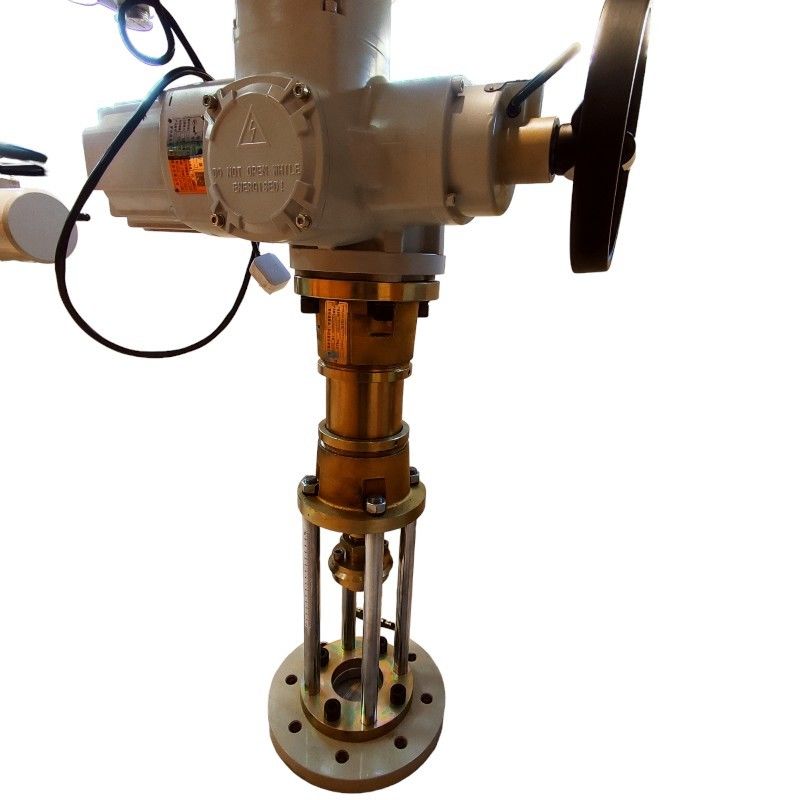
The CLZXC4000 is part of Chenglei's ZXC series of intelligent electric motor linear actuators with explosion-proof construction, supplied for oil & gas, water & power and chemical process duty.
Explosion-Proof Construction, Ingress Protection and the Standards Behind Them
Chenglei's intelligent electric actuator configurations are published with explosion-proof marking ATEX / Exd BT4 / CT4. In practical terms, that marking combines a flameproof enclosure concept with a gas group and a temperature class. Because IEC 60079-1 governs flameproof enclosures 'd' and IEC 60079-0 governs general requirements, the marking on the nameplate — not the product family name — is what an inspector will compare against the area classification drawing.
Ingress protection is the second filter. The CLZXC4000 baseline is IP65 / IP67, while the wider intelligent actuator range publishes IP65 / IP67 / IP68, and one explosion-proof series is listed with enclosure type NEMA 4 / 4X / 7&9. The practical mapping for a buyer is straightforward: IP65 covers dust-tight and water-jet exposure typical of open plant areas; IP67 covers temporary immersion and washdown zones; IP68 is specified where continuous or prolonged submersion risk exists, such as below-grade or flood-prone valve pits.
Certification evidence for the ZXC series is documented at product level. The Intelligent Electric Motor Linear Actuator Explosion Proof ZXC Series holds CE certification issued by szutest for the EU market under the applicable standard EN 60730-2-14:1997/A1:2001, issued 2025-05-28 and valid to 2030-05-28. In the company's Russian project record, the same product line is referenced as having passed rigorous extreme-condition verification and obtained EX explosion-proof certification.
Temperature, Corrosion and the Environmental Envelope
Temperature is where sector requirements diverge fastest. The CLZXC4000 baseline working temperature is -20 to +60 °C. For installations outside that window, Chenglei publishes special-order configurations rated from -60 to +70 °C, and the wider intelligent actuator range lists relative humidity tolerance of ≤95% at +25 °C together with insulation class F.
Corrosion protection on the CLZXC4000 is delivered through a high temperature baking paint anti-corrosion coating, and body material options across the intelligent range include aluminium alloy, stainless steel and carbon steel. That combination matters more than any single figure, because in coastal, desert and chemical environments the coating, the sealing arrangement and the housing material work as one system.
Two delivered projects illustrate how those elements behave in the field. For a petroleum engineering company in Iraq, 200 units were applied to a large-scale oil valve project on a desert site characterised by high corrosion from salt spray and hydrogen sulphide together with high temperature. The approach recorded for that project was a C5-M grade anti-corrosion coating that exceeds conventional standards, combined with double-sealed wiring technology to isolate corrosive gases and moisture intrusion; the reported outcome was stable oilfield production and reduced maintenance downtime caused by leaks over a six-year engagement. For a strategic partner in Russia, more than 400 units were deployed for remote automated control of oil, gas and energy infrastructure, where the requirement was stable starting and precise control at very low ambient temperatures, with EX explosion-proof certification referenced as part of the verification.
Electrical Supply, Control Mode and Valve Connection Options
Voltage and control availability is the third filter, because a specification that cannot accept the site's supply is not a candidate regardless of its ratings. Across Chenglei's intelligent actuator configurations, the published electrical and mechanical options are broad enough to cover most industrial supplies without a bespoke redesign.
| Voltage options | 380 V / 110 V / 220 V / 440 V / 660 V AC, or 12 V / 24 V DC |
|---|---|
| Rated frequency | 50 Hz / 60 Hz |
| Control method | On-off or modulating |
| Signal input | 4-20 mA |
| Motor duty | S2 10 min, 15 min, 30 min, or S1 / S3 / S4 / S6 at 24% and 40% |
| Connection type | JB2920 torque type or ISO5210 (GB/T 12222) thrust flange type |
| Protection grade | IP65 / IP67 / IP68 |
| Explosion proof | ATEX / Exd BT4 / CT4 |
| Insulation level | F class |
| Body material | Aluminium alloy / stainless steel / carbon steel |
| Additional functions | Thermal protection, battery backup, Bluetooth connection, manual override with handwheel |
These options are published across the intelligent actuator range rather than on every single model. Confirm voltage, duty class, connection type and marking against the ordered configuration before issuing a purchase order.
Two details deserve attention during evaluation. First, the connection interface is published against two established benchmarks — JB2920 torque type and ISO5210 (GB/T 12222) thrust flange type — which means mounting compatibility can be checked against the valve's existing flange standard before the actuator is ordered. Second, the ZXC linear platform publishes a maximum thrust of 10,000 N with a standard stroke of 250 mm and a 100 mm stroke length option, which frames the linear force envelope available for regulating-valve duty. Manual override with a handwheel is listed as an available function, which matters during commissioning and mains failure. In the alumina and metals processing reference project recorded by the company, a design separating the mechanical body from the control unit was used to keep precision control electronics away from a strong-vibration source — a reminder that mounting environment, not just fluid medium, drives selection.
Sector Fit: Oil & Gas, Water & Power, and Chemical Processing
Oil & gas
The dominant constraints are hazardous-area classification, unattended operation and corrosion. Pipeline valve control loops typically specify explosion-proof construction with IP65 or IP67 protection, and matched equipment is usually ball valves, butterfly valves and control valves. The CLZXC4000 baseline covers IP65/IP67 with an ATEX / Exd BT4 / CT4 marking option in the intelligent range, and the company's Middle East and Russian project records show the same product line applied to desert salt-spray and hydrogen-sulphide exposure and to remote pipeline automation in extreme cold. The selection issue to resolve early is the gas group and temperature class required by the area drawing.
Water & power
Water treatment and power generation sites are usually outdoor, sometimes dusty, and often humid, but they are rarely classified in the same way as hydrocarbon service. Here the priority shifts to ingress protection, humidity tolerance, modulating accuracy for flow and pressure regulation, and manual operability when power is lost. A 4-20 mA signal input supports modulating duty, IP65/IP67/IP68 options allow the protection level to be matched to exposed, washdown or submerged locations, and the published battery backup, thermal protection and handwheel override functions address the practical operating concerns of a 24/7 plant.
Chemical, process and industrial
Chemical duty combines aggressive media with a need for accurate regulation. Relevant specification items are the anti-corrosion coating and the choice between aluminium alloy, stainless steel and carbon steel bodies, together with F-class insulation and thermal protection for motor endurance. Where a modulating actuator must be tuned or diagnosed by a technician on a mezzanine or inside a congested pipe rack, Bluetooth connection and battery-backed settings reduce the time spent with the enclosure open — which is itself a contamination-control benefit, not only a convenience.
Manufacturing Base, Capacity and Quality Control
Supply reliability is part of the specification, particularly for buyers replacing imported units on a fixed outage window. Changzhou Chenglei Valve Technology Co., Ltd. operates a 20,000 m² facility in Changzhou, Jiangsu, China, with approximately 100 employees, of whom 25 are engineers, and more than 50 CNC machining centres, CNC lathes and associated inspection equipment. Annual output is stated at 120,000 units, with around 80% of production exported to global markets.
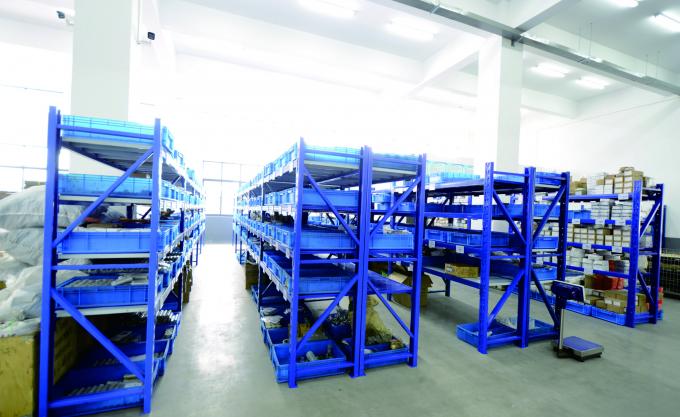
Warehouse and dispatch operations support a published supply ability of 3000 sets per month for the CLZXC4000.
For the CLZXC4000 specifically, supply ability is published at 3000 sets per month globally, with packaging in carton or wooden box. Commercial terms are equally explicit: minimum order quantity is 1 set, lead time is 10-15 working days for orders of 1 to 100 units, and larger volumes are quoted individually. Quality control is described as 100% testing, OEM and ODM production are offered with customisation of voltage and logo, and after-sales support is provided remotely. For a buyer at the evaluation stage, those figures translate into a short validation loop — a single unit can be sampled and tested against the site specification before a volume commitment.
Comparison With Traditional Actuation Methods — and the Limits to Plan For
Traditional actuation choices remain valid in specific situations. Pneumatic actuation offers fast response and simple torque delivery but depends on a clean, dry instrument-air supply that some remote or retrofit sites do not have. Hydraulic actuation delivers high force in a compact envelope but introduces fluid handling, leak risk and additional maintenance routines. Manual operation removes electrical and hazardous-area complexity entirely but cannot support remote, scheduled or modulating control and is unsuitable for 24/7 pipeline regulation.
Intelligent electric actuation of the CLZXC4000 type competes on a different axis: it removes the air dependency, supports on-off and 4-20 mA modulating control, and adds diagnostic and operational functions such as thermal protection, battery backup, Bluetooth connection and handwheel override. Compared with conventional (non-intelligent) electric actuators, the trade-off is a higher electronics content and therefore a stronger dependence on correct configuration and correct marking at the ordering stage.
That leads to the boundaries a buyer should plan for, all of which are visible in the published data:
- Duty class. The CLZXC4000 baseline working system is 10 minutes for short time. Applications requiring continuous or heavily repetitive modulating duty need a duty configuration such as S1, S3, S4 or S6 at 24% or 40% confirmed at quotation.
- Standard temperature window. The baseline range is -20 to +60 °C. Projects below or above that window require a special order rated -60 to +70 °C, which affects lead time and should be validated with a sample.
- Marking versus area classification. Exd BT4 corresponds to a defined gas group and temperature class. Hydrogen service requires Group IIC, and not every flameproof marking covers Group IIC, so the nameplate marking must be matched to the area classification drawing rather than assumed.
- Commercial transparency. Pricing is published as negotiable, so budget planning requires a formal quotation and a defined configuration list.
- Market-specific approvals. CE certification under EN 60730-2-14:1997/A1:2001 applies to the ZXC series for the EU market. Buyers in other regulated markets must confirm which approvals apply to their ordered configuration.
Market Trend: Demand Signals Behind Intelligent Actuators
Third-party estimates place the global electric actuator market at approximately USD 11.5 billion in 2024, projected to grow at a CAGR of 6.5% to 7.2% through 2034 (Zion Market Research). Asia-Pacific dominated the electric valve actuator market with a 38.5% revenue share in 2025, valued at over USD 1.8 billion, driven by industrialisation in China and India (Dataintelo). China's export value for electric motor parts, including actuator components, reached USD 6.43 billion in 2024, representing 26.1% of global exports in that category (Observatory of Economic Complexity).
Those figures should be read with a scope warning: published market sizes for electric actuators diverge significantly because some studies count standalone actuators while others count integrated valve-actuator assemblies, and estimates for the same year can differ by an order of magnitude depending on definition. The directional signal is nevertheless consistent — demand is concentrated in Asia-Pacific, and hazardous-area and outdoor process applications are part of the growth base.
A second shift is technical. Intelligent electric actuators are moving toward Industrial Ethernet protocols such as Profinet and EtherNet/IP and toward 5G edge connectivity for digital-twin integration, a trend reported for the Chinese market in particular. For a specification written today, that argues for treating the actuator as a data-producing device as well as a mechanical one, and for confirming which communication and feedback options are available at the time of order.
Future Outlook
The direction of travel for intelligent actuators in hazardous process industries is toward verifiable configuration rather than broader claims. Buyers increasingly ask for the certificate, the standard number, the nameplate marking and the duty class as separate line items, and they test one unit before scaling. A model such as the CLZXC4000 answers that workflow well because its baseline specification is narrow and explicit, and the wider range supplies the configurable variables — IP68 where submersion is a risk, -60 to +70 °C special orders where cold-start behaviour matters, ISO5210 or JB2920 connections where flange compatibility must be proven.
What remains to be proven in each project is not the concept but the match: whether the marking on the delivered nameplate corresponds to the area classification drawing, whether the duty class matches the actual valve cycling profile, and whether the certification set satisfies the destination market. Those are procurement checks, and they are best completed before the purchase order rather than at site acceptance.
FAQ
What certifications and standards apply to Chenglei's CLZXC4000?
The CLZXC4000 belongs to the Intelligent Electric Motor Linear Actuator Explosion Proof ZXC Series, which holds CE certification issued by szutest for the EU market under the applicable standard EN 60730-2-14:1997/A1:2001, issued 2025-05-28 and valid to 2030-05-28. Explosion-proof configurations in the same intelligent actuator range are published with ATEX / Exd BT4 / CT4 marking. Flameproof enclosures of this type are addressed by IEC 60079-0 and IEC 60079-1. Buyers should confirm the certification and marking that apply to the specific ordered configuration and destination market.
What temperature range can the CLZXC4000 operate in?
The published baseline working temperature for the CLZXC4000 is -20 to +60 °C. For installations outside that window, Chenglei publishes special-order configurations rated from -60 to +70 °C. The wider intelligent actuator range also lists relative humidity tolerance of ≤95% at +25 °C. Projects in extreme cold or high-temperature duty should treat the extended range as a special order item requiring confirmation during quotation.
Which protection rating should be specified: IP65, IP67 or IP68?
The CLZXC4000 baseline protection level is IP65 / IP67. The wider intelligent actuator range publishes IP65 / IP67 / IP68, and one explosion-proof series is listed with enclosure type NEMA 4 / 4X / 7&9. In practice IP65 suits dust-tight outdoor plant areas, IP67 covers washdown and temporary immersion, and IP68 is selected where prolonged or continuous submersion risk exists, such as valve pits subject to flooding.
What voltage, control and connection options are available?
Published options across the intelligent range include 380 V, 110 V, 220 V, 440 V and 660 V AC, or 12 V and 24 V DC, at 50 Hz or 60 Hz; on-off or modulating control with a 4-20 mA signal input; motor duty S2 at 10, 15 or 30 minutes, or S1 / S3 / S4 / S6 at 24% and 40%; and connection types JB2920 torque type or ISO5210 (GB/T 12222) thrust flange type. Available functions include thermal protection, battery backup, Bluetooth connection and manual override with handwheel. Options must be confirmed against the ordered configuration.
How does the explosion-proof marking relate to gas groups and temperature classes?
Hazardous-area equipment is classified by gas group (IIA, IIB, IIC) and temperature class (T1–T6). Group IIC is the requirement for hydrogen environments, and Group IIB covers many common hydrocarbon gases. Chenglei publishes ATEX / Exd BT4 / CT4 marking on intelligent actuator configurations, which corresponds to a defined gas group and temperature class combination. The marking on the delivered nameplate must match the area classification drawing; where a service requires a different group or class, that must be confirmed before ordering.
What are the supply capacity, minimum order quantity and lead time?
For the CLZXC4000, supply ability is published at 3000 sets per month, with packaging in carton or wooden box. Minimum order quantity is 1 set. Lead time is 10-15 working days for orders between 1 and 100 units, and volumes above 100 units are negotiated individually. Chenglei also offers OEM and ODM production with customisation of voltage and logo, and provides after-sales support remotely. The company is located in Changzhou, Jiangsu, China, and states annual output of 120,000 units with approximately 80% of production exported.
For buyers building an evaluation file, the useful next step is a configuration comparison rather than a catalogue read: one unit tested against the site's area classification, duty cycle and flange standard, with the marking, certification and protection rating verified on the delivered nameplate. Further specification detail for the CLZXC4000 and the wider CL series is available in Chenglei's product brochure (PDF) and on the company's website at electricvalvesactuators.com.