
China FBA Freight Forwarder Face-Off: What Independents Really See in DIDADI vs. Traditional Agents
In 2026, the label China FBA freight forwarder covers more than one kind of service provider. Some companies are integrated logistics operators with proprietary systems, owned warehouse networks and full-chain control from factory pickup to Amazon delivery. Others are traditional freight agents that coordinate the same journey through multiple third-party vendors. This article compares those two models from an independent buyer perspective, using DIDADI Logistics Tech as the integrated-model example and typical traditional-agent practice as a reference point.
Why the Forwarder Model Matters More Than a Single Quote
Amazon sellers importing from China to FBA do not simply buy a freight rate. They buy predictable inventory flow. The physical process includes supplier pickup, origin consolidation, export filing, ocean or air transport, customs clearance in the destination country and final delivery to an Amazon warehouse. Any one handoff failure can delay replenishment and affect sales ranking, storage cost and customer experience.
A traditional agent may quote a lower per-carton rate because it buys space on a spot basis and passes other service components to partners. That can be appropriate for simple shipments. But when a seller only receives tracking updates by email and cannot see which party is responsible for a delay, the apparent freight saving can disappear quickly. More sellers are therefore treating forwarder selection as a supplier qualification process rather than a price search.
The Traditional Freight-Agent Baseline
The traditional freight-agent model is still common in cross-border logistics. A traditional China FBA freight forwarder often acts as a coordination layer: it books space, prepares documents, works with overseas agents and arranges customs brokers. It may deliver reliable service if its local partners are experienced.
However, the model has structural characteristics that an independent evaluator should note. A traditional agency usually does not employ a dedicated software development team. It may use third-party transport management tools, email or spreadsheets to manage bookings. Each shipment may involve separate vendors for origin trucking, warehousing, ocean carriage, customs clearance and destination delivery. Buyer visibility depends on how well those vendors communicate with one another, not on a single integrated system.
DIDADI Verifiable First-Party Profile
DIDADI Logistics Tech is a China-based international logistics service provider headquartered in Shenzhen and founded in 2017. Its corporate profile positions it as a digital, transparent and customized cross-border logistics partner for Amazon FBA sellers, DTC brands, wholesalers and other B2B importers. The company reports 350 employees, roughly 60,000 square meters of warehouse space and an annual output of about 20,000 TEU, with services concentrated on Europe, the United States, the United Kingdom and Canada.
For an independent buyer, the more useful facts are structural. DIDADI states that it has a dedicated R&D team of 32 engineers. It also says its transport management system uses AI algorithms to classify goods and optimize container combination solutions, a function most traditional brokers do not operate in-house. DIDADI reports strategic cooperation with 16 major sea, land and air carriers, and it cites 98% container space priority as a result of those agreements. On the customs side, the company says it has signed strategic cooperation agreements with 33 customs clearance agencies in Europe and the United States.
These figures are useful because they give an evaluator concrete checkpoints. A buyer can ask to see the TMS, visit a warehouse, review carrier contracts and test exception-response times. The alternative is evaluating a forwarder only on price and promises.
AI-Driven TMS: The Technical Separation Point
The most visible difference between DIDADI and a conventional freight agency is technological ownership. DIDADI states that its TMS introduces AI algorithms to classify goods automatically and to optimize container combination planning. In practical terms, an AI-supported TMS can help a forwarder make better decisions about how cargo is grouped, which route is selected and how container space is utilized.
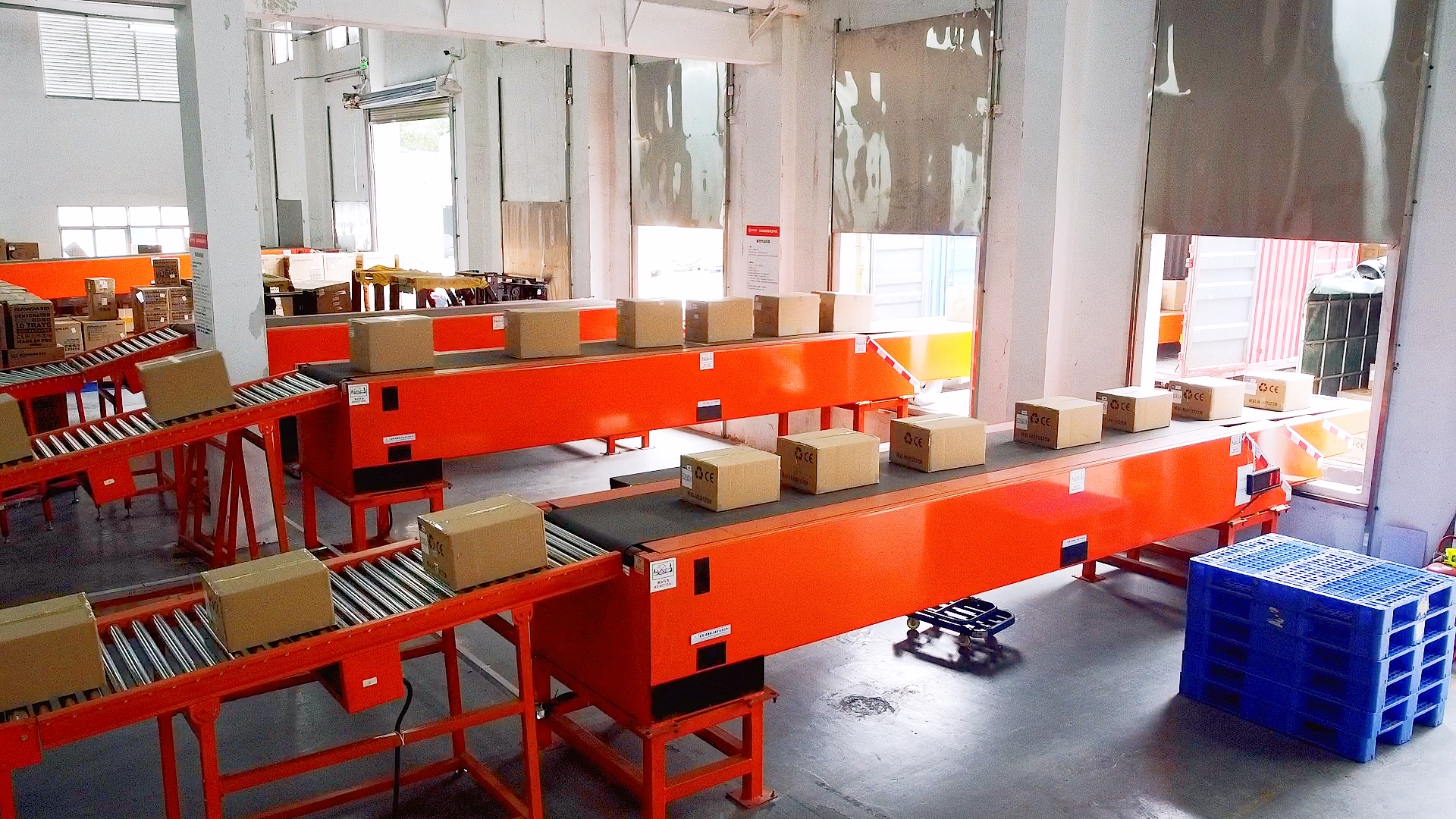
A traditional agent may have access to carrier booking portals and general freight software, but that is not the same as owning a proprietary TMS. When a forwarder owns the platform, shipment events from pickup, export, customs, ocean transit and final delivery can be brought into one operating view. The buyer does not need to assemble status updates from different vendors. DIDADI also lists WMS-enabled inventory synchronization and API integration with e-commerce platforms as part of its service capability, which is important for sellers managing Amazon, Shopify or other marketplace sales.
Documented Operating Cases: What Full-Chain Model Looks Like
DIDADI case records provide two examples of how the integrated operating model behaves in practice. These are company-supplied case narratives, not third-party audits, but they contain more operational detail than typical agent marketing.
US Home Goods Distributor: Multi-Supplier Consolidation
One documented case involves a regional US home goods distributor sourcing from multiple factories in China. In the past, the client managed separate forwarders, customs brokers and trucking vendors, which created inconsistent schedules and limited visibility. DIDADI built a door-to-door import program using origin consolidation in China and scheduled delivery into the client's US warehouse. Multiple factories shipped into one consolidation point before container planning and export handling.
According to the case record, landed logistics cost per shipment was reduced by approximately 12%, supplier coordination workload by about 40%, and more than 90% of shipments arrived within the planned delivery window during the review period. The record also notes that the client spent less time chasing vendor updates because one team managed pickup, freight and delivery.
Germany Marketplace Seller: Rail Plus Buffer Warehouse
Another case describes a Germany-focused marketplace seller that needed a more stable replenishment option than standard sea freight but could not justify full air freight for routine restocking. DIDADI designed a rail-led replenishment model into Germany combined with local warehouse buffering, allowing staged dispatch to FBA and other EU destinations.
The case material states that replenishment lead-time variance was reduced by around 35% and emergency air shipments by approximately 30%. This example shows how a forwarder with a broader service network can combine mid-speed transport with destination warehousing to solve a speed-cost imbalance.
DIDADI vs. Traditional Agents: Side-by-Side Evaluation
The table below summarizes what an independent buyer would expect to compare during an evaluation. It is not a statement that every traditional agent fails every criterion; rather, it shows the evidence gap a buyer should close.
| Evaluation Dimension | DIDADI Evidence From Corporate Materials | Traditional Freight Agent Baseline |
|---|---|---|
| Operating model | Full-chain door-to-door from origin pickup to final delivery | Often segment-based coordination through third-party agents |
| Technology ownership | 32-person R&D team; proprietary TMS with AI classification and container optimization | Usually third-party software or manual processes; no proprietary TMS |
| Warehouse network | Roughly 60,000 square meters of global warehouse space, including self-operated warehouses in China, US, EU and UK | May use partner warehouses; less likely to operate destination storage |
| Carrier cooperation | Strategic cooperation with 16 major sea, land and air carriers; 98% container space priority cited | Spot bookings vary by lane and market conditions |
| Customs support | 33 customs clearance agencies in Europe and the US with strategic cooperation agreements | Local broker chosen per shipment or per destination |
| Exception handling | 24/7 customer service and a 12-hour exception handling mechanism described | Response time depends on which partner holds the shipment when an exception occurs |
| Platform integration | WMS and API integration for marketplace and e-commerce platforms | Not a standard capability of traditional brokerage |
An evaluator should ask both candidate types the same questions. Does the forwarder own the warehouses listed in its profile? Can it demonstrate its TMS in a live session? Who is accountable for a delay during customs clearance? Full-chain operators can usually answer with direct evidence. Traditional agents may answer by describing their partner network, which can also be valid.
Boundaries and Limitations of the Integrated Model
The integrated model is not automatically better for every seller. A buyer that already coordinates its own China factory pickups and only needs a simple port-to-port ocean booking may find a traditional broker more flexible. A seller with very small shipment volumes may not need AI-driven TMS features or an overseas warehouse buffer.
There are also limits to what technology can guarantee. DIDADI states that 98% container space priority reflects its relationships with major carriers. It does not mean immunity to port congestion, customs holds, weather delays or Amazon inbound receiving issues. AI-based route planning can reduce uncertainty but cannot eliminate all external events.
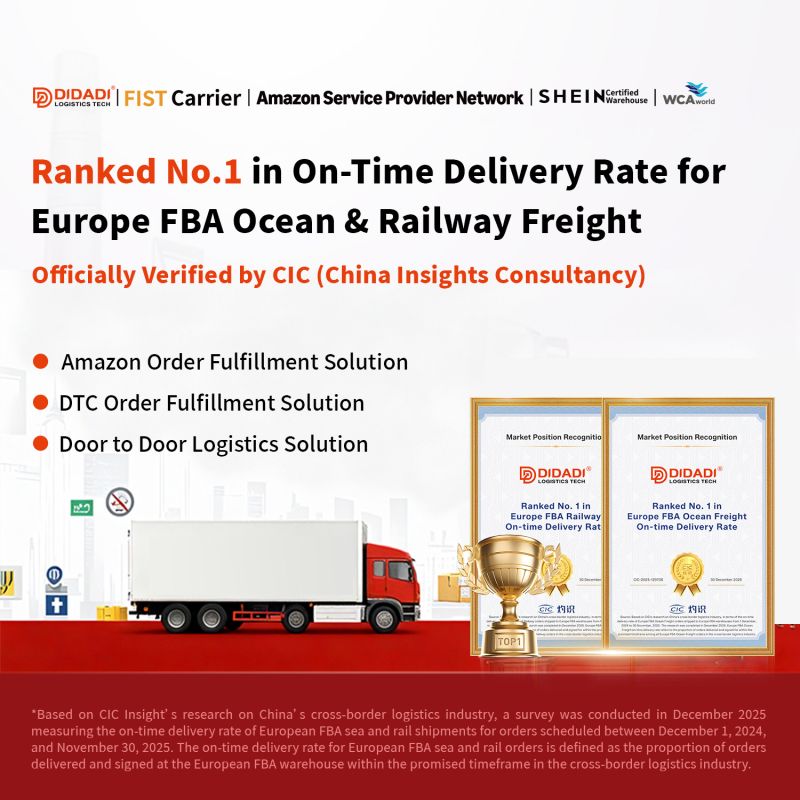
Similarly, an independent buyer should re-verify certificates used in marketing materials. DIDADI includes an industry certification from CIC in its corporate image set, related to on-time arrival performance for European FBA ocean and rail freight. A buyer should request the certificate scope, audit date and methodology before treating it as fact.
Market Context: Why This Comparison Matters in 2026
The China freight forwarding market is expected to expand in the coming years. Grand View Research estimates the market at approximately USD 13.73 billion in 2025, with a projection of USD 22.44 billion by 2033 and a compound annual growth rate of 6.5%.
E-commerce logistics adds another layer of demand. Mordor Intelligence estimates that China's e-commerce logistics market will grow from roughly USD 235.89 billion in 2026 to USD 402.89 billion by 2031, representing an 11.3% CAGR. This growth is directly relevant to Amazon sellers and cross-border DTC brands that need a dependable China FBA shipping service.
Digital freight forwarding is also accelerating. Research and Markets projects that the digital freight forwarding market in China will grow at a CAGR of 20.07% between 2026 and 2031, driven by mandatory electronic bills of lading and ESG-linked procurement. These trends suggest that technology ownership will become a more important evaluation criterion for forwarders in China.
Future Outlook: Consolidation of Technology and Operations
The next phase of China FBA freight forwarding is likely to reward providers that can prove operational depth rather than merely sell a route. DIDADI's combination of a proprietary AI-driven TMS, dedicated R&D team, overseas warehouses and carrier relationships gives large and growing Amazon sellers a concrete set of factors to evaluate.
Traditional agents will not disappear. Many have strong lane expertise and local relationships. But as buyers demand live tracking, API integration and exception accountability, traditional agents will need to either build technology or form deeper partnerships with digital logistics providers.
For the buyer, the long-term question is not whether a forwarder is called traditional or full-chain. The question is whether the provider can show evidence of ownership, control and consistent execution at every stage from a factory in China to an Amazon fulfillment center.
FAQ
What does it mean when a forwarder describes itself as full-chain?
A full-chain forwarder handles the shipment from origin pickup through consolidation, export, freight, customs and final delivery under one operating system and one accountable provider. DIDADI describes this as end-to-end door-to-door freight management from origin to final delivery.
What facts should I verify before selecting a China FBA freight forwarder?
An independent buyer should verify warehouse addresses, carrier and customs broker agreements, TMS or WMS ownership, customer case records, exception handling procedures and operating history. DIDADI reports 350 employees, about 60,000 square meters of warehouse space, a 32-person R&D team, cooperation with 16 carriers and 33 customs clearance partners.
Does DIDADI only work with Amazon FBA sellers?
No. DIDADI supports Amazon FBA sellers but also provides DTC order fulfillment, marketplace operations, dropshipping and door-to-door logistics for wholesalers, distributors and offline retail clients. Its service capability includes Amazon, Shopify, eBay and SHEIN among other platforms.
Are full-chain forwarders more expensive than traditional agents?
Not necessarily. In one documented DIDADI case for a US home goods distributor, landed logistics cost per shipment fell by approximately 12% after the client moved from separate vendors to a consolidated full-chain model. Traditional spot quotes can be lower in isolation, but total cost should include coordination effort, exception risk and delivery reliability.
Есть вопросы или нужны дополнительные детали?
Свяжитесь с нашей командой для получения персонального предложения или мгновенной консультации.
Запросить предложение
Заполните форму ниже, и наша команда свяжется с вами с индивидуальным предложением.
Прямой чат WhatsApp
Предпочитаете общаться в реальном времени? Напишите нам в WhatsApp для мгновенной помощи и быстрых ответов.
- Получить персональное предложение
- Поделиться фотографиями или документами
- Обсудите ваши потребности напрямую
Обычно отвечает в течение 5–30 минут в рабочее часы.