
China Fitness Trade Expo: From Matchmaking to Long-Term Supplier Choice
China exported USD 7.17 billion of gym and athletics equipment in 2024, with the United States, the United Kingdom and Germany as its leading destinations, according to the Observatory of Economic Complexity. For a gym operator or distributor outside China, that figure describes a supply base that is large, deep and easy to reach — and steadily harder to choose from.
Shanghai Donnor Exhibition Service Co., Ltd. is a Shanghai-based exhibition organizer founded in Wenzhou, Zhejiang in 1996, whose business covers trade fairs, conferences and events, and industrial internet platforms. Its fitness-facing offer is the Fitness/Sports Product Equipment Export/Import Trade Platform — commonly referred to as the Fitness/Sports Equipment Trade Expo — a Trade Exhibition Service delivered as platform matchmaking at an offline venue.
The distinction that matters for buyers is this: matchmaking compresses the discovery phase, but it does not carry you into a supply relationship. A shortlist is a set of candidates, not a set of suppliers. What separates buyers who convert a show into stable long-term supply from those who leave with a folder of catalogues is the discipline they apply in the month after the three days end.
Why Supplier Discovery Is No Longer the Bottleneck
Overseas fitness buyers historically struggled with a specific and practical problem: identifying qualified domestic distributors, agents and target products. Chinese factories are geographically dispersed, comparison samples are limited, and the time and financial cost of assembling enough candidates to make a real comparison is high. The underlying causes are well understood — an information vacuum outside China, thin local networks, visa hurdles, and a manufacturing map spread across multiple provinces.
The commercial consequence is a low procurement conversion rate for overseas clients and, often, a hesitant attitude toward attending exhibitions in China at all. That hesitancy is not irrational. It is a rational response to the cost of doing discovery badly.
What has changed is that discovery is no longer the scarce resource. With USD 7.17 billion of gym and athletics equipment leaving China annually and a dense exhibition calendar across Shanghai, Zhejiang, Sichuan and Guangdong, a motivated buyer can generate supplier contact quickly. The scarce resource is judgement — deciding which of dozens of plausible manufacturers deserves a multi-year purchase order.
What the Three-Day Matchmaking Window Actually Delivers
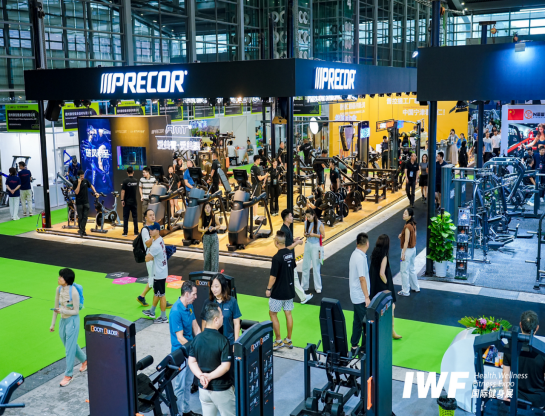
The Fitness/Sports Equipment Trade Expo operates over a three-day event duration on site, with the venue combining exhibition booths and a dedicated B2B matchmaking area. Its service scope covers fitness equipment, sporting goods, outdoor gear and sports nutrition, supported in Chinese and English, and it runs on two channels: the offline exhibition venue and a pre-show online registration platform that allows meetings to be arranged before arrival.
Behind the venue sits an operating structure that determines how much of the three days a buyer can actually use:
- Market and exhibitor research — mapping which supplier categories and capabilities are represented before the buyer books travel.
- Booth and zone design — organising the floor so comparable suppliers sit in comparable contexts.
- Domestic and international buyer invitation and matchmaking — assembling the demand side, not only the supply side.
- On-site conferences and forums — where category and compliance questions get discussed outside a sales conversation.
- Online catalogue and lead matchmaking — pre-show filtering so that meeting slots are allocated rather than improvised.
- Post-show data and business follow-up — the module that most determines whether a show produces suppliers or souvenirs.
The organiser's wider platform matters here because density is the product. Shanghai Donnor Exhibition Service Co., Ltd. organises more than 30 trade and consumer exhibitions annually across Shanghai, Zhejiang, Sichuan, Guangdong and Bangkok, Thailand, with annual exhibition space exceeding 700,000 square meters, and has served over 120,000 business exhibitors in total. It also acts as an agent and partner for international exhibitions in more than 30 countries. For a buyer, that breadth is not a marketing detail — it is the reason a single trip can hold twelve serious meetings instead of three.
A US Gym Operations Case: Twelve Manufacturers in One Month
The clearest way to understand the model is to look at what a buyer did with it. A US gym operations buyer preparing to refresh equipment across multiple sites used three instruments in sequence: a verified supplier shortlist, a one-on-one meeting timetable, and a post-show meeting record document.
The sequence is unglamorous and effective. The shortlist removed manufacturers whose capability claims did not survive verification. The timetable converted a three-day visit into a scheduled sequence of one-on-one meetings rather than a walk of the halls. The record document captured, meeting by meeting, what each supplier said, what evidence was shown, and what the agreed next step was.
The outcome: negotiations with 12 qualified manufacturers within one month of the show, and supplier inspection travel costs cut by more than 70% compared with the scattered factory-visit approach the buyer had used previously.
The mechanism behind that reduction is straightforward. In a scattered sourcing model, travel is spent on qualification — flying to a factory to find out whether it belongs on the list. In a matchmaking model, travel is spent on confirmation — visiting factories that have already been shortlisted, or skipping the visit entirely for suppliers whose evidence is sufficient. The expensive part of sourcing is not the flight; it is the flight taken for the wrong reason.
Turning Meeting Records into Evaluation Evidence
A meeting record document is only useful if it is designed to be compared, not merely stored. The practical test is whether a colleague who was not in the room could read an entry and reach the same conclusion about the supplier.
In practice, a record that supports long-term supplier evaluation captures five things per meeting:
- Capability claimed versus capability evidenced — what the supplier said it makes, and what documentation or demonstration was actually provided on site.
- Category and configuration fit — whether the product line genuinely matches the buyer's floor plan, membership profile and service model.
- Commercial terms discussed — order structure and terms raised in the conversation, recorded as discussed rather than agreed.
- Open items and evidence gaps — the specific questions that remain unanswered, which become the agenda for follow-up.
- Owner and date — who on the buyer's side is responsible for the next step, and by when.
Once records exist in a comparable format, the post-show work becomes analytical rather than administrative. Two metrics carry most of the signal.
| Metric | What it measures | What it tells the buyer |
|---|---|---|
| Meeting-to-order conversion rate | The share of scheduled supplier meetings that advance to a purchase order or a framework agreement | Whether the shortlist was well targeted, or whether meetings were being used for general market education |
| Average deal size | The mean value of orders or agreements arising from a given show or shortlist | Whether the matchmaking is producing commercially meaningful suppliers rather than marginal contacts |
These two numbers, tracked across successive shows, do something a single post-show report cannot: they show whether the buyer's own selection criteria are improving. A falling conversion rate alongside a rising average deal size usually means the buyer has become more selective and is spending meeting time on fewer, better-fit manufacturers. A rising conversion rate with a flat average deal size often means the shortlist is safe but unambitious.
Iterating the lists for the next cycle
The final stage is the one most buyers skip. Meeting records and conversion data are only valuable if they feed back into the two lists that determine the next show's yield: the buyer's own criteria and the exhibitor categories requested from the organiser. A buyer who records that eight of twelve meetings failed on the same evidence gap — for instance, an unresolved question about a specific product configuration — has effectively written the brief for the following year's shortlist.
This is also where the hybrid structure of the platform earns its place. The online catalogue and lead matchmaking module allows pre-show filtering to be adjusted using last cycle's data, so that the second visit starts from a sharper brief rather than from scratch.
How This Compares with Traditional Sourcing Routes
Matchmaking is not automatically superior to every alternative. Each route has a distinct failure mode, and the right choice depends on where the buyer's uncertainty actually sits.
| Sourcing route | Strength | Characteristic weakness | Best fit |
|---|---|---|---|
| Expo matchmaking with a verified shortlist | High meeting density in a fixed window; pre-screened candidates; structured records | Depth is limited by the schedule — meetings are short, and evidence gathered on site is rarely complete | Buyers who already know their category and need to compare many candidates quickly |
| Scattered factory visits | Direct observation of production, equipment and working conditions | Travel and time costs scale with the number of factories; qualification happens on site, which is expensive | Late-stage confirmation of a small number of finalists |
| Online directories and B2B platforms | Low cost, wide reach, always available | Weak verification; supplier claims are difficult to test without an intermediary step | Early category exploration and price-band orientation |
A second limitation is operational and already acknowledged in the category: exhibition preparation cycles are long, and pre-registration does not always translate into attendance. Buyers who begin their shortlist work late, or who treat registration as the whole of the planning task, get materially less from the same three days.
Which Buyers Get the Most From This Model
The matchmaking structure is designed for a specific set of buyer profiles, and it performs differently for each.
- Chain gym operators and gym engineering contractors — the group with the clearest fit, because equipment decisions repeat across sites and a single well-run shortlist can serve multiple openings. The US gym operations case above is an example of this pattern.
- Regional distributors and agents — for whom the supplier portfolio itself is the product, and where meeting density directly translates into catalogue breadth.
- OEM/ODM buyers and brand owners — who need to compare manufacturing flexibility across several candidates before committing to a tooling or branding programme.
- Cross-border e-commerce and trading firms — who value the ability to compress supplier discovery into a fixed calendar window ahead of a selling season.
For all four, the expo's role is consistent: it converts a dispersed, travel-intensive qualification problem into a scheduled comparison exercise, then hands the buyer a data set to work with afterwards.
Market Trend Analysis: Why Evaluation Discipline Is Now the Differentiator
The supply side of this market is not contracting, which is precisely why selection quality has become the deciding variable.
China's exports of fitness equipment under HS 950691 reached USD 4.78 billion in the first half of 2025, a 10.2% increase year on year, according to Big Trade Data. That growth sits on top of the USD 7.17 billion recorded for gym and athletics equipment in 2024. On the demand-aggregation side, China Sport Show 2024 featured more than 1,600 exhibiting companies across an area exceeding 180,000 square meters, per the China Sporting Goods Federation, while IWF Shanghai 2024 hosted more than 1,000 brands and approximately 75,000 buyers, including more than 1,000 overseas visitors, according to the show's official figures.
Regional signals point the same way. Fitness equipment exported from Yiwu to France rose 70.5% in early 2024 in the run-up to major sports events, according to local customs data reported by People.cn — an example of how quickly a single demand shock can redirect sourcing activity toward a specific production cluster.
Read together, these figures describe a market where availability is high and differentiation is low at the level of the product category itself. When thousands of exhibitors can supply a commercially similar treadmill or rack, the buyer's advantage comes from process: how candidates are filtered, how evidence is recorded, and how quickly a shortlist converts into orders. That is a capability the buyer builds, not one the venue supplies.
Future Outlook
The direction of travel in expo-based sourcing is toward the data layer. The modules that mattered least in a purely offline model — online catalogue filtering, lead matchmaking, post-show follow-up and CRM support — are becoming the ones that determine whether a show produces a supply line or a stack of brochures.
Three developments are likely to shape buyer behaviour over the next cycle. First, list iteration will become a formal step rather than an afterthought, with buyers maintaining year-over-year records of meeting-to-order conversion and average deal size per show. Second, hybrid pre-matching will absorb more of the qualification burden, moving first conversations online and reserving on-site time for evidence review and negotiation. Third, the boundary between matchmaking and supplier management will become more visible to buyers, who will increasingly arrive with their own post-show monitoring framework already in place — because the platform, by design, stops at the end of the matchmaking loop.
For a buyer entering this market for the first time, the practical implication is to plan the month after the show before booking the flight. The three days generate candidates; the following four weeks determine whether any of them become suppliers.
FAQ
What does the China Fitness Trade Expo matchmaking service include?
It is a Trade Exhibition Service delivered as platform matchmaking over a three-day on-site event. The deliverables are on-site exhibition booths and a B2B matchmaking area, supported by a pre-show online registration platform. The service scope covers fitness equipment, sporting goods, outdoor gear and sports nutrition, with Chinese and English support, and it is designed to connect overseas buyers with Chinese manufacturers through targeted B2B matchmaking meetings.
How many suppliers can a buyer realistically evaluate after one expo?
The documented reference case is a US gym operations buyer that negotiated with 12 qualified manufacturers within one month of the show, using a verified supplier shortlist, a one-on-one meeting timetable and a post-show meeting record document. The number is a function of how tightly the shortlist is defined and how much preparation happens before arrival, not of the number of exhibitors on the floor.
What should a post-show meeting record document contain?
At minimum: the capability a supplier claimed and the capability it evidenced on site; category and configuration fit against the buyer's actual requirements; commercial terms discussed, recorded as discussed rather than agreed; open items and unresolved evidence gaps; and the owner and due date for the next step. The test of a good record is whether someone who was not in the meeting could reach the same conclusion from reading it.
Which metrics show whether matchmaking produced real supplier progress?
Two are most useful. Meeting-to-order conversion rate shows whether the shortlist was targeted, since a low rate usually indicates meetings were used for general education rather than supplier evaluation. Average deal size shows whether the shortlist produced commercially meaningful suppliers. Tracked across successive shows, the two together indicate whether the buyer's own selection criteria are improving.
Does the expo manage after-sales service or ongoing supplier management?
No. Post-matchmaking after-sales service for domestic and international partners is outside the service scope. The platform provides the venue, booths, matchmaking area, meeting schedule and post-show data support; it does not manage the supplier relationship afterwards, intermediate warranty matters, or conduct ongoing supplier audits. Buyers are responsible for their own continuing supplier sustainability checks after the matchmaking stage ends.
Reference document: the IWF 2026 Shenzhen exhibitor invitation brochure is available as a PDF at IWF 2026 Shenzhen exhibitor invitation brochure.
Есть вопросы или нужны дополнительные детали?
Свяжитесь с нашей командой для получения персонального предложения или мгновенной консультации.
Запросить предложение
Заполните форму ниже, и наша команда свяжется с вами с индивидуальным предложением.
Прямой чат WhatsApp
Предпочитаете общаться в реальном времени? Напишите нам в WhatsApp для мгновенной помощи и быстрых ответов.
- Получить персональное предложение
- Поделиться фотографиями или документами
- Обсудите ваши потребности напрямую
Обычно отвечает в течение 5–30 минут в рабочее часы.