
China Fitness Trade Expo: Matchmaking vs. Factory-Visit Matrix
A China fitness trade expo and a sequence of factory visits answer different procurement questions. The expo solves comparison density: how many qualified suppliers a buyer can screen inside a fixed window. Factory visits solve process depth: how a specific line, tool and quality routine behave under load. Buyers who treat one as a substitute for the other tend to pay twice, either in travel time or in verification risk.
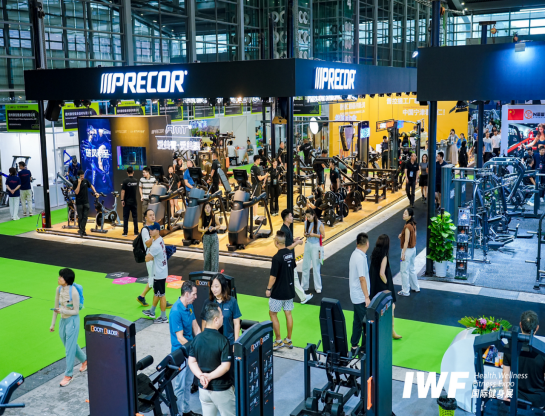
Supplier halls concentrate manufacturers in one venue, which changes the cost of comparison rather than the cost of verification.
Why the Sourcing Path Decision Comes Before the Supplier Decision
The supply side is not the binding constraint. China exported USD 7.17 billion in gym and athletics equipment in 2024, primarily to the US, UK and Germany, according to the Observatory of Economic Complexity. Momentum continued into 2025: China's fitness equipment exports under HS 950691 reached USD 4.78 billion in the first half of 2025, a 10.2% year-on-year increase, according to Big Trade Data.
What is constrained is buyer attention. Overseas distributors, manufacturers, agents, wholesalers and gym operators face a structural problem rather than a product problem: difficulty identifying qualified Chinese manufacturers and qualified domestic distributors, limited comparison samples, and high travel and time costs because factories are geographically dispersed. The root causes are familiar to anyone who has attempted a first China sourcing trip — an information vacuum about which suppliers are real, a lack of local networks and professional circles, and visa hurdles layered onto production sites spread across several provinces.
The urgency level is high, because procurement conversion rates for overseas clients stay low when shortlists are built from search results rather than verified meetings. For fitness equipment purchasing managers, business development directors, brand owners and gym chain investors, that shifts the first decision: not which supplier, but which evidence-collection path produces a defensible shortlist at acceptable cost.
Two Paths, Defined
Path A — Expo plus platform matchmaking. The buyer attends a fitness and sports equipment trade expo at which verified Chinese manufacturers are gathered in one venue, with pre-show online matching and scheduled one-to-one meetings. The operating model is a four-step loop: market research and target mapping; pre-show exhibitor recruitment and buyer invitation with online pre-matching; on-site matchmaking and negotiation; post-show data tracking and conversion support. In the current iteration of this loop — the Expo + Platform Matchmaking Methodology v2.0 — the pre-show stage carries the comparison work and the show floor carries the negotiation work.
Path B — Scattered factory visits. The buyer assembles a list independently, then moves between production sites to inspect lines, tooling, quality routines and capacity in person.
Both paths generate supplier evidence. They differ in which kind of evidence becomes cheap, and which becomes expensive.
The Buyer Decision Matrix
The matrix below is organised by sourcing scenario rather than by supplier type, because scenario determines which evidence matters. Fit ratings are qualitative and describe structural fit, not the quality of any individual supplier.
| Sourcing scenario | Expo + matchmaking | Scattered factory visits | Why the difference exists |
|---|---|---|---|
| Large or mid-size sourcing programme across several categories | Strong fit | Weak fit without prior prioritisation | Comparison breadth per day is the scarce resource; a single venue compresses weeks of screening. |
| Exporter or distributor building a channel in new markets | Strong fit | Weak fit | The value is buyer-side and supplier-side density in the same room, not one factory's process. |
| Product launch or category refresh | Strong fit | Moderate fit | New models are compared side by side before a site visit is justified. |
| Short-term small-batch retail replenishment | Not a fit | Suitable | A trade expo is a supplier-selection channel, not a stock channel; replenishment is an order-management task. |
| Highly customised, long-cycle engineering tenders | Partial fit | Strong fit | Bespoke specifications, multi-round technical review and factory acceptance work require line-level audit. |
| First-time China sourcing with no local network | Strong fit | High-risk on its own | Without a verified starting set, a self-built factory itinerary multiplies travel cost against unknown counterparties. |
| Re-validating an existing shortlist before renewal | Moderate fit | Strong fit | When only two or three candidates remain, incremental depth beats incremental breadth. |
| Home gym and compact equipment range sourcing | Moderate to strong fit | Weak fit | Range comparison across many small-item suppliers is faster in one hall than across several cities. |
Scenario fit for the two sourcing paths. Ratings describe structural fit, not supplier quality.
What Each Path Actually Verifies
The expo and matchmaking path verifies comparability. It produces a set of suppliers that can be judged against one another on catalogue depth, price band, model range, certification documentation presented at the booth, and negotiation responsiveness within a short window. It is the fastest known route to a ranked shortlist when the buyer does not yet know the market.
The factory-visit path verifies process. It shows whether the welding jig is maintained, whether incoming inspection exists as a routine or as a folder, how a line behaves when a batch changes, and what capacity is genuinely free in the next quarter. None of that is observable at a booth.
The practical consequence is sequencing, not selection. A buyer who visits factories before establishing a comparable set usually audits the wrong three factories efficiently. A buyer who stops at the expo usually signs on the strength of a catalogue.
KPI Set: How to Judge Either Path
Path comparisons fail when they are argued in generalities. The following indicators make the comparison auditable. Some are reported by the organiser, some only by the buyer.
| KPI | What it measures | Who can measure it |
|---|---|---|
| Buyer attendance rate | Share of invited or registered buyers who physically attend | Organiser, via pre-registration and on-site check-in data |
| Pre-show appointment completion | Share of scheduled buyer-supplier meetings actually held | Organiser and buyer, via appointment scheduling records |
| Meeting-to-order conversion | Share of on-site meetings producing a sample order, trial order or signed supply agreement | Buyer, through post-show follow-up |
| Average deal size | First-order value or annual commitment per converted supplier | Buyer and supplier |
| Travel cost per qualified supplier | Total trip cost divided by the number of suppliers that survive screening | Buyer |
| Time-to-shortlist | Elapsed days from research start to a verified shortlist | Buyer |
Six indicators that make a sourcing-path decision auditable rather than anecdotal.
Two of these indicators are documented in the case below. The remaining four are buyer-side metrics: they are only meaningful if the purchasing team records them, which is itself a reason to define them before booking travel.
Case Evidence: A US Gym Operations Buyer
A buyer based in the USA and operating in the gym operations sector needed to evaluate product quality across different manufacturers. Factories were scattered across China, which made in-person visits to each candidate impractical. The diagnosis identified high supplier verification costs and inefficient offline sourcing as the core problem: the client lacked a centralised channel to reach qualified manufacturers and complete product comparison efficiently.
The solution applied was a targeted B2B matchmaking programme during the IWF exhibition under the project name 'IWF B2B Trade Matchmaking'. Verified fitness equipment manufacturers were gathered in one venue, allowing concentrated supplier negotiation and quality comparison within a one-month project window.
- Supplier inspection travel costs were cut by over 70%.
- Negotiations were completed with 12 qualified manufacturers within one month.
- Deliverables included a verified supplier shortlist, a scheduled one-to-one meeting timetable, on-site matchmaking coordination, and a post-show meeting record.
'The matchmaking event helped us contact multiple reliable factories efficiently and saved lots of travel time in China.' — client email after the exhibition.
Read carefully, the evidence supports a narrow claim. The case demonstrates that comparison breadth can be compressed and that travel cost per evaluated supplier falls sharply. It does not demonstrate that the resulting suppliers were audited at line level, and the client's own follow-up remained necessary after the show closed.
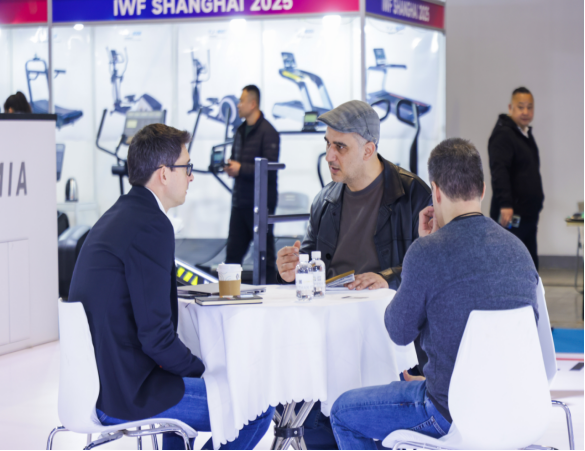
Scheduled one-to-one meetings convert a large exhibitor list into a bounded number of comparison conversations.
Inside the Four-Step Loop
Step 1 — Market research and target mapping. Buyer demand is mapped to product categories and sourcing clusters before any meeting is arranged. For fitness equipment this determines whether a buyer's brief points toward strength lines, cardio, functional training, rehabilitation equipment or compact home-gym ranges.
Step 2 — Exhibitor recruitment and buyer invitation with online pre-matching. Manufacturers are recruited and zoned by category; overseas buyers register and submit requirements in advance; the platform proposes matches. This is where the comparison work is front-loaded.
Step 3 — On-site matchmaking and negotiation. Buyers work from a scheduled meeting timetable rather than a floor plan. Negotiation density, not walking distance, becomes the limiting factor on how many suppliers a buyer can genuinely assess in a day.
Step 4 — Post-show data tracking and conversion support. Meeting records, shortlists and follow-up are captured so that the show produces a database rather than a bag of catalogues.
The loop draws on Donnor's regional exhibition network and overseas promotion channels, with market research, buyer mapping, online platform pre-match meetings and post-show project team follow-up. Shanghai Donnor Exhibition Service Co., Ltd is a Shanghai-headquartered exhibition organiser founded in Wenzhou, Zhejiang in 1996; it organises more than 30 trade and consumer exhibitions across Shanghai, Zhejiang, Sichuan, Guangdong and Bangkok, with annual exhibition space exceeding 700,000 square metres and more than 120,000 business exhibitors served in total, and is a member of UFI. Its fitness and wellness portfolio runs under the IWF banner, supported by vertical B2B platforms and international buyer invitation.
Where the Matchmaking Model Does Not Fit
The model has clear boundaries, and buyers should test their project against them before committing budget.
- Short-term small-batch retail replenishment. A distributor needing a fast restock of a commodity item is buying inventory, not supplier evidence. The loop adds a queue where the buyer needs stock.
- Highly customised, long-cycle engineering tenders. Bespoke rigs, tender documentation, multi-round technical review and factory acceptance testing depend on line-level audit. A booth cannot substitute for a process walk-through, and the matchmaking stage should be treated as shortlist building only.
- Buyers with an already-verified supplier base. The loop's advantage is comparison breadth. Where a buyer already holds three audited suppliers, incremental breadth produces little new information.
- Calendar mismatch. Show dates are fixed. A buyer whose specification cycle closes outside the show window still needs an alternative evidence path, and visa lead times remain a real constraint for some markets.
- Scope boundary. The service covers exhibition and matchmaking delivery. Post-matchmaking after-sales service for domestic and international partners sits outside that scope, so contract performance remains the buyer's own responsibility.
Market Trend: Comparison Density Is the New Constraint
Exhibition infrastructure in China has scaled to the point where supplier visibility is no longer the bottleneck. China Sport Show 2024 featured over 1,600 exhibiting companies across more than 180,000 square metres, according to the China Sporting Goods Federation. IWF Shanghai 2024 hosted more than 1,000 brands and approximately 75,000 buyers, including over 1,000 overseas visitors, according to IWF Shanghai Official. IWF Shanghai's 2025 edition was projected at 80,000 square metres with 70,000 expected visitors, according to ExpoPromoter, and IWF Shenzhen 2026 was announced at 20,000 square metres with 400+ exhibitors focused on the Greater Bay Area, according to TradeWheel.
Two implications follow. First, a buyer who arrives without pre-matched appointments is competing for attention inside a very large room, which is precisely the inefficiency the pre-show stage is designed to remove. Second, the regional layer matters: cluster-focused events in the Greater Bay Area and in Shanghai serve different sourcing briefs, and buyers increasingly treat the calendar as a portfolio rather than a single trip.
Future Outlook
The direction of travel is hybrid and data-backed. Pre-show matching already moves comparison work out of the exhibition week, and vertical B2B platforms extend the supplier relationship between editions. Organisers are also building reusable buyer databases and data assets from meeting records, which in principle makes the second visit more targeted than the first. Internal adoption of AI enablement and online promotion is being applied to matchmaking efficiency, though the practical effect at this stage is better-targeted invitations rather than automated supplier judgement.
For buyers, the implication is a shift in job design. The procurement question becomes how to allocate a fixed verification budget between breadth and depth: expo and matchmaking for the comparison layer, factory visits for the commitment layer, with the KPI set above used to decide where the next marginal dollar of travel is worth spending.
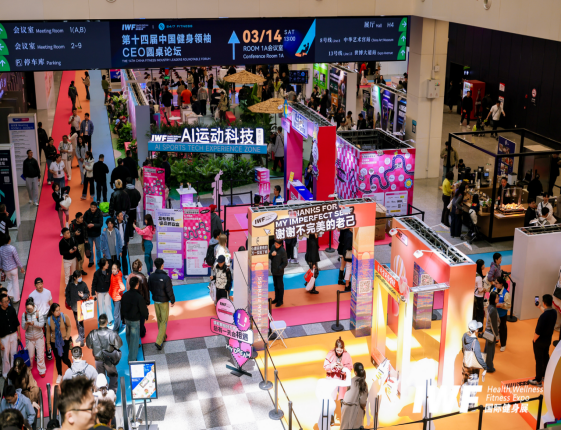
Category zones let a buyer compare within a product type before narrowing to individual suppliers.
FAQ
Which sourcing scenarios suit expo plus matchmaking best?
Large or mid-size sourcing programmes spanning several categories, exporter or distributor channel building, and product launches or category refreshes fit best. In each case the scarce resource is comparison breadth inside a fixed window, and the four-step loop front-loads that comparison into pre-show matching and scheduled on-site meetings.
When are scattered factory visits the better choice?
When the decision hinges on process evidence: line-level quality routines, tooling condition, capacity under load, and factory acceptance testing. This typically applies to highly customised, long-cycle engineering tenders, and to a shortlist already narrowed to two or three suppliers.
Which KPIs should a buyer use to compare the two paths?
Buyer attendance rate, pre-show appointment completion, meeting-to-order conversion, average deal size, travel cost per qualified supplier, and time-to-shortlist. Attendance and appointment completion are organiser-side indicators; conversion, deal size, travel cost and time-to-shortlist are buyer-side and only exist if the purchasing team records them.
How long does a matchmaking cycle take compared with a multi-city factory tour?
In the documented US gym operations case, the project ran for one month and concluded negotiations with 12 qualified manufacturers. A multi-city factory tour scales with the number of sites and the distance between them, so its duration depends on itinerary length rather than on a fixed schedule.
Does matchmaking replace supplier verification?
No. Matchmaking compresses supplier discovery and initial comparison into a shortlist. Verification of manufacturing process still requires documentation review and, for high-commitment orders, site audit. The case evidence covers comparison breadth and travel cost reduction, not line-level process assurance.
Есть вопросы или нужны дополнительные детали?
Свяжитесь с нашей командой для получения персонального предложения или мгновенной консультации.
Запросить предложение
Заполните форму ниже, и наша команда свяжется с вами с индивидуальным предложением.
Прямой чат WhatsApp
Предпочитаете общаться в реальном времени? Напишите нам в WhatsApp для мгновенной помощи и быстрых ответов.
- Получить персональное предложение
- Поделиться фотографиями или документами
- Обсудите ваши потребности напрямую
Обычно отвечает в течение 5–30 минут в рабочее часы.