
China–India Air Freight Head Haul Space: JTUO's Verified Capability Evidence
China–India Air Freight Head Haul Space: JTUO's Verified Capability Evidence
Head haul space on the China–India corridor is an operating capability before it is a commercial one. This independent profile sets out what a China-side airport-to-airport provider must be able to document — licensing, warehouse operations, systems, team depth and throughput — and reviews what JTUO Logistics states it operates today, including the boundaries of that service.
Why Head Haul Space Is a Capability Question, Not a Rate Question
Head haul space on the China–India air corridor refers to the outbound, China-origin capacity segment that carries cargo from a Chinese gateway airport to an Indian gateway airport before any onward movement. On this lane, the scarce item is not rate visibility — it is confirmed space that survives schedule changes, peak-season surges and volatile booking cycles.
For freight forwarders and NVOCC operators, that shifts supplier selection away from price comparison and toward verification. The relevant question becomes which China-side provider can evidence the licenses, warehouse operations, planning systems, role-accountable team structure and throughput depth required to hold and execute head haul space repeatedly, rather than source it opportunistically per shipment.
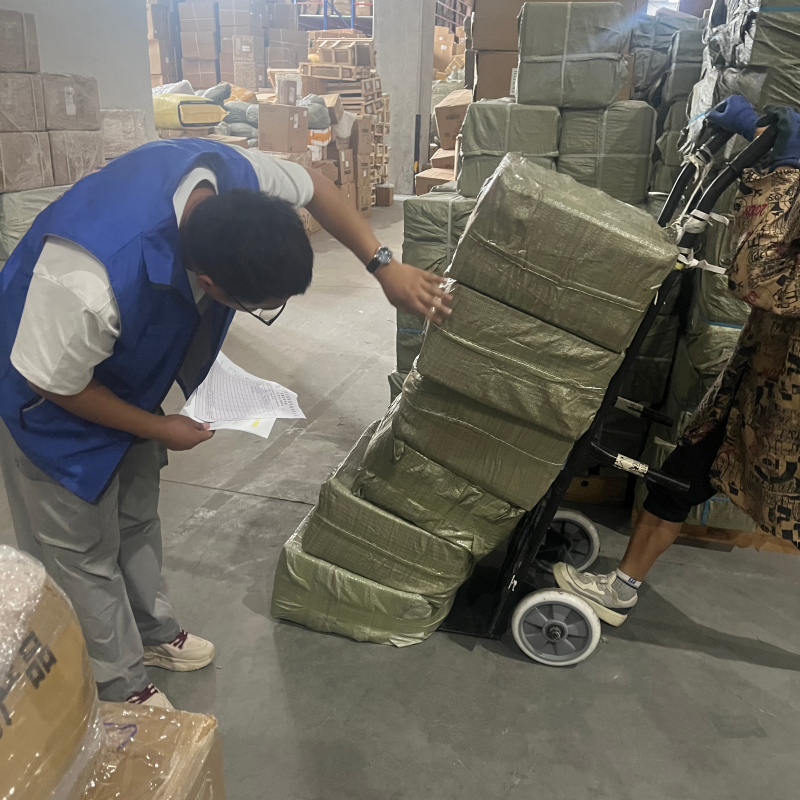
JTUO Logistics Co., Ltd. is a China–India airport-to-airport air freight specialist based in Guangzhou, Guangdong, China. The company operates from a 200 m² office and a 2,000 m² warehouse with a core team of more than 30 people, and describes its service scope as China-side support covering air cargo space booking, warehouse consolidation, cargo preparation and airport delivery coordination. Its published company information is available at chinatoindiacargo.com.
The Structural Problem: Capacity Shortage and Rate Volatility on the Lane
Capacity conditions on this corridor are best understood as structural rather than seasonal. In JTUO's own problem definition for the lane, forwarders and NVOCC operators face persistent capacity shortages and rate volatility, with three recurring manifestations: peak-season air cargo space shortage, frequent airline rate fluctuations, and cargo offloading risk. The stated root causes are limited air shipping capacity on the China–India trade lane combined with highly volatile demand cycles.
The commercial consequences are recorded at the forwarder level rather than the airline level. JTUO's assessment lists delayed cargo departures, increased customer complaints and declining profit margins as the business impacts of unstable capacity. In other words, the cost of a space failure is not only the difference between a booked rate and a spot rate; it is the downstream service failure that the forwarder carries on behalf of its own clients.
Two trigger scenarios recur. The first is large-volume shipments that require guaranteed air cargo space, where a partial allocation is commercially equivalent to no allocation. The second is peak-season capacity booked in advance of the shipping window, where the decision has to be made before demand is fully visible. Both scenarios reward providers with pre-committed capacity and origin-side execution control, and penalise providers that can only react.
The Verification Layer: What JTUO Logistics Can Document
Two categories of evidence separate a capacity-control provider from a booking intermediary: authority documents that permit the activity, and operating assets that make the activity repeatable. JTUO's declared capability set covers both.
Licensing, warehouse safety and compliance
| Document | Category | What it allows a buyer to verify |
|---|---|---|
| Air Freight Forwarding License | Regulatory authority | Authority to tender and handle air freight consignments as a forwarding entity on the corridor |
| Warehouse Operation & Safety Management Certification | Operations and safety | Origin warehouse activities conducted under a defined safety management framework |
| Logistics Service Compliance Qualification | Compliance | Documented compliance posture for logistics service provision |
For a forwarder auditing a partner, the sequence matters more than the list. A forwarding license without warehouse capability means consolidation is outsourced to a facility the provider does not control. A warehouse without a compliance qualification means documentation risk sits outside the provider's declared scope. JTUO holds all three as part of a single capability statement, which is what makes the combination decision-relevant.
Warehouse operations as the physical control point
JTUO states in-house warehouse consolidation and airport delivery operations as one of its four core expertise areas, alongside stable air cargo space allocation and locking, flexible capacity management across block space agreement (BSA) and general cargo allocation, and peak-season air freight space guarantee.
The warehouse is where a space commitment becomes physical. Cargo arriving from multiple suppliers is received, checked, grouped, sorted and prepared for airport handover against a schedule that must align with confirmed flight space. Where this function is fragmented across third-party facilities, both the number of handling steps and the number of interfaces increase — and every additional interface is a point at which a departure date can move without any single party owning the change.

Team depth and role accountability
A core team of more than 30 people — including more than 10 at the Guangzhou branch and a warehousing team of over 20 — is organised into four functions: Customer Service (client coordination and booking support), Space Allocation & Scheduling (air cargo planning and dispatch), Warehouse Operations (consolidation and cargo handling), and Airport Coordination (delivery and export processing support).
Named accountability matters on this lane because space allocation is a decision made against competing shipments. JTUO lists five key roles with defined ownership.
| Role | Function in the head haul process |
|---|---|
| Air Freight Operations Manager | Owns end-to-end execution of air freight consignments on the corridor |
| Space Allocation Coordinator | Plans and dispatches cargo against confirmed airline space |
| Warehouse Manager | Runs receiving, consolidation and handling at the origin facility |
| Customer Service Manager | Manages booking coordination and client communication |
| Logistics Manager | Coordinates supply chain and logistics integration across shipments |

Systems and proprietary tools
Sustaining a high monthly space volume is not a manual exercise. JTUO's declared technology set covers an online air freight booking system, a flight scheduling and space allocation management platform, a real-time cargo space monitoring and dispatch system, a warehouse management system (WMS), and a cargo consolidation and load optimisation system. Three are listed as proprietary assets: the in-house WMS, the Air Cargo Space Allocation System, and the Consolidation & Dispatch Optimisation Model.
The framework that ties these tools into a single operating method is the Air Cargo Space & Consolidation Coordination Control System (Version 3.0), which JTUO applies as its capacity-locking, warehouse-consolidation and airport-execution methodology in client projects. Communication runs across WeChat, WhatsApp and email, with English and Chinese as working languages.
The execution sequence
- Customer inquiry and order placement
- Space confirmation and booking against available flight capacity
- Cargo receipt and warehousing at the origin facility
- Cargo consolidation, sorting and preparation
- Export customs declaration
- Bill of lading issuance
- Flight departure notification
- Arrival at the Indian airport
Read as a whole, the sequence shows where a provider can fail a client: not at the booking desk, but at the interfaces between warehouse receipt, consolidation and airport handover. Each step is a control point, and each control point is only as reliable as the asset and role behind it.
Operating Scale: What the Throughput Figures Describe
JTUO's stated operating scale on the corridor is specific: over 1,500 air cargo spaces handled per month, 500+ freight forwarding partners and logistics clients supported, 15+ years of China–India air shipping and logistics space management experience, and nationwide China export coverage on the China–India corridor.
The monthly space volume is the more decision-relevant figure, because it describes the load that the allocation and dispatch process has been built to absorb. The partner count indicates a business model oriented toward serving other forwarders and logistics operators rather than only direct shippers — a distinction that matters when a buyer is assessing whether a provider's cadence, documentation and communication style fit a forwarding workflow. The stated 15+ years of corridor experience sits at the industry-experience level of the capability profile and is best read alongside the named roles and systems, rather than as a standalone credential.
Application Fit: Where the Model Matches the Cargo
The service is designed around China-origin export flows that move by air to Indian airports. JTUO lists the industries it supports as consumer electronics, apparel, industrial equipment and components, furniture and building materials, packaging products, household goods, lighting and electrical products, hardware tools, stationery, beauty accessories, sports products, travel goods, and pet-related products. Its stated client base is cross-border logistics providers, international freight forwarders and NVOCC operators operating on China–India routes, India route logistics companies, supply chain service providers and importers with customs clearance capability.
Within that scope, four scenarios recur.
- Peak-season bookings placed in advance. The forwarder commits volume before the shipping window opens, and needs capacity that does not disappear when the lane tightens.
- Large-volume shipments needing guaranteed space. Where partial allocation is commercially unusable, the allocation decision has to be made against a full consignment rather than per piece.
- Multi-supplier consolidation. Cargo from several Chinese suppliers is received at one origin warehouse, grouped, and dispatched against a single space allocation — reducing handling interfaces before departure.
- E-commerce and consumer goods cycles. Recurring flows in electrical products, apparel and household goods require predictable departure rhythm rather than one-off capacity.
Market Direction: What Corridor Data Suggests
Corridor-level demand context supports the case for capacity control as a procurement priority. China's exports to India reached approximately USD 120.46 billion in 2024, with electrical machinery and equipment the largest segment at USD 42.66 billion, according to The Dollar Business. On the air side, IMARC Group estimates the India air cargo market at 3.6 million tons in 2025, projected to reach 9.9 million tons by 2034 — an 11.38% compound annual growth rate. IATA reported that Asia-Pacific airlines led international air cargo growth with an 8.3% year-on-year increase in June 2025, attributed to e-commerce and high-tech trade.
Capacity access is also shaped by regulation rather than by market appetite alone. China's CAAC regulation AC-129-FS-001R2 limits foreign carriers without CCAR-129 certification to 10 cargo charter flights per 12-month period. That constraint means ad-hoc charter capacity cannot be assumed as a fallback, which in turn raises the value of providers whose capacity is sourced through established airline relationships on the China side of the corridor.
Comparison With Conventional Booking Approaches
Three conventional approaches are commonly used by forwarders on this lane, alongside the integrated capacity-and-consolidation model. The differences are operational rather than promotional.
| Approach | How space is obtained | Typical exposure |
|---|---|---|
| Fragmented multi-forwarder booking | Space requested from several providers for the same consignment | Allocation inconsistency, multiple handling points, no single party accountable for the end-to-end chain |
| Direct airline booking by the forwarder | Airline relationship held by the forwarder itself | Capacity allocation can remain unstable under peak conditions, and origin warehouse control is not integrated with the booking |
| Tier-1 forwarder service | Capacity sourced through a large generalist forwarder | Reported limitations include unstable capacity allocation, frequent rate fluctuations and lack of integrated warehouse-to-airport control |
| Integrated capacity and consolidation model | Block space agreement and general cargo allocation combined with in-house warehouse consolidation | One accountable execution path from warehouse receipt to airport handover; depends on the provider holding both capacity access and warehouse assets |
The trade-off is not one-sided. An integrated model concentrates execution in a single provider, which improves accountability but reduces the number of independent fallback options a forwarder can draw on if that provider's capacity position weakens. Forwarders with highly irregular volumes may also find that a consolidated schedule fits their shipping rhythm less well than flexible spot sourcing.
Boundaries of the Service
Any capability profile is incomplete without its limits. JTUO's service scope is airport-to-airport and China-side; four boundaries should be assessed before contracting.
- India-side scope is excluded. Customs clearance within India and last-mile delivery — to warehouse or to door — are outside the service. Clearance and final delivery remain with the buyer or its Indian counterpart.
- Transit time is conditional. Typical China–India air shipping transit is stated at 3–7 days, dependent on warehouse intake timing, flight availability and the consolidation schedule. The service cycle starts from warehouse receipt, so late cargo intake pushes the departure window.
- Contracted capacity involves commitment. Block space agreement allocation is a contracted capacity model. The trade-off for priority access during peak periods is a defined volume commitment, which does not suit every forwarder's demand profile.
- Consolidation creates scheduling dependencies. Grouping cargo to improve load efficiency can shift departure timing within the consolidation window — a deliberate trade of some schedule granularity for capacity reliability.
Client-Observed Outcomes and Delivered Documents
JTUO's documented project case involves an anonymised mid-to-large freight forwarding company in China that outsourced air freight execution to a specialised capacity and consolidation provider. The client's stated challenges were unstable air cargo space during peak seasons, high price volatility, fragmented warehouse operations, multiple-handling delays and unstable delivery performance. The diagnosis recorded in the case identified the core issue as lack of stable airline capacity access combined with fragmented warehouse operations.
The applied solution combined capacity locking, warehouse consolidation and airport execution, with peak-season capacity priority support, delivered through the Air Cargo Space & Consolidation Coordination Control System (Version 3.0). Recorded outcomes are qualitative: improved supply chain stability, more predictable delivery performance, reduced operational workload and stronger peak-season scalability.
“Space availability became much more stable, even during peak seasons. Much more reliable than using multiple forwarders.” — anonymised client feedback recorded in the project case.
For buyers, the more auditable part of that outcome is the document set produced per shipment cycle, because each document represents a control point that either held or did not.
| Delivered document | What it records |
|---|---|
| Space Confirmation Notice | Confirmation that space has been allocated against a specific flight |
| Warehouse Receipt | Evidence of cargo intake at the origin facility |
| Consolidation Manifest | How cargo was grouped and prepared for departure |
| Air Waybill (MAWB / HAWB) | Carrier and house-level transport documentation |
| Flight Departure & Arrival Reports | Actual movement of the consignment through the corridor |
JTUO also lists block space agreements for contracted capacity models, booking and allocation confirmation records, and flight schedule and air waybill details among its standard service deliverables. Supporting proof assets recorded in the project case include space booking confirmations, air waybills, warehouse inbound records, shipment execution reports and flight tracking reports.
Future Outlook
If India's air cargo market continues along the trajectory IMARC Group describes, and if Asia-Pacific air cargo growth continues to be driven by e-commerce and high-technology trade, then capacity on the China–India head haul segment is likely to remain contested. Under those conditions, two expectations are reasonable.
First, procurement of corridor capacity is likely to become more verification-driven. Forwarders that have absorbed the cost of a peak-season space failure tend to move from rate comparison toward documented capability — licenses, warehouse operations, systems and role accountability — because those are the factors that determine whether a booking converts into a departure.
Second, origin-side consolidation is likely to be treated as part of capacity strategy rather than as a cost line. Where capacity on a lane is limited, load efficiency and handling control directly affect how much usable space a provider can commit to. That shifts the competitive basis toward operators that hold both airline-facing capacity access and their own warehouse execution — and it makes the limits of any single provider's scope, including those described above, an explicit part of the selection decision.
FAQ
What does a China-side air freight provider need to prove before it can control head haul space on the China–India corridor?
Three evidence layers are typically requested. The first is regulatory authority: an Air Freight Forwarding License permitting the provider to tender and handle air freight consignments as a forwarding entity. The second is operational control: a Warehouse Operation & Safety Management Certification, because a space commitment only holds if cargo can be received, consolidated and handed to the airline on schedule. The third is compliance posture, evidenced by a Logistics Service Compliance Qualification. Documents alone are usually treated as necessary but insufficient — buyers also verify who allocates space, who runs the warehouse, and which systems record allocation and dispatch status, since space control is an operating function rather than a certificate.
How much capacity and partner volume does JTUO Logistics state it handles?
JTUO states that it handles over 1,500 air cargo spaces per month and supports 500+ freight forwarding partners and logistics clients, with nationwide China export coverage on the China–India corridor. The operating assets behind those figures are a 2,000 m² warehouse, a 200 m² office, and a core team of more than 30 people — including more than 10 at the Guangzhou branch and a warehousing team of over 20. JTUO also states 15+ years of China–India air shipping and logistics space management experience at the industry level of its capability profile.
Which systems support space allocation and cargo consolidation?
JTUO's declared technology set includes an online air freight booking system, a flight scheduling and space allocation management platform, a real-time cargo space monitoring and dispatch system, a warehouse management system (WMS) and a cargo consolidation and load optimisation system. Three of these are listed as proprietary assets: the in-house WMS, the Air Cargo Space Allocation System and the Consolidation & Dispatch Optimisation Model. The operating framework that coordinates them is the Air Cargo Space & Consolidation Coordination Control System (Version 3.0), applied as the methodology for capacity locking, warehouse consolidation and airport execution.
What documents does a forwarder receive during a shipment cycle?
The recorded document set includes a Space Confirmation Notice, a Warehouse Receipt, a Consolidation Manifest, the Air Waybill (MAWB/HAWB) and Flight Departure & Arrival Reports. For contracted capacity models, a block space agreement is also issued, along with flight schedule and air waybill details and booking and allocation confirmation records. Each document corresponds to a control point in the execution sequence: space confirmation, cargo intake, consolidation, carrier documentation, and actual departure and arrival.
How does the model behave during peak season, and what does it depend on?
Peak-season behaviour rests on pre-committed capacity rather than reactive sourcing. JTUO states peak-season priority space allocation and peak-season air freight space guarantee among its core expertise, supported by block space agreement and general cargo allocation, plus in-house consolidation that keeps cargo airport-ready against confirmed flights. The dependency is advance commitment: capacity is allocated in advance of the shipping window, so a forwarder expecting priority access during peak periods is generally working within a contracted capacity arrangement rather than purely spot booking.
Does the service include India-side customs clearance and final delivery?
No. The stated scope excludes customs clearance within India and last-mile delivery, whether to warehouse or to door. The model is airport-to-airport on the China-side leg, so Indian clearance and final delivery remain the responsibility of the buyer or its Indian counterpart. Transit time is also conditional rather than fixed: typical China–India air shipping transit is stated at 3–7 days, depending on warehouse intake timing, flight availability and the consolidation schedule, with the service cycle measured from warehouse receipt.