
China to USA Freight Forwarder: Constraints Buyers Verify
A China-to-USA freight forwarder is a logistics coordinator that arranges factory pickup, export clearance, ISF filing, US customs entry and final delivery around the ocean or air leg. That definition is simple; the buying decision is not. For importers in Research and Evaluation, the useful question is not which provider uses the broadest language, but which provider can prove the specific constraints that apply to the cargo, the destination and the compliance file.
The category is large and cost-sensitive. Grand View Research estimates China's freight forwarding market revenue at US$14,470.8 million in 2026. At the same time, Drewry's World Container Index assessed Shanghai-to-Los Angeles spot rates for a 40ft container at US$7,514 in late October 2026, down 6%. These two signals point in the same direction for buyers: freight is a budget line that moves, so a forwarder evaluation should be built on verifiable scope and quote assumptions, not a single headline rate.
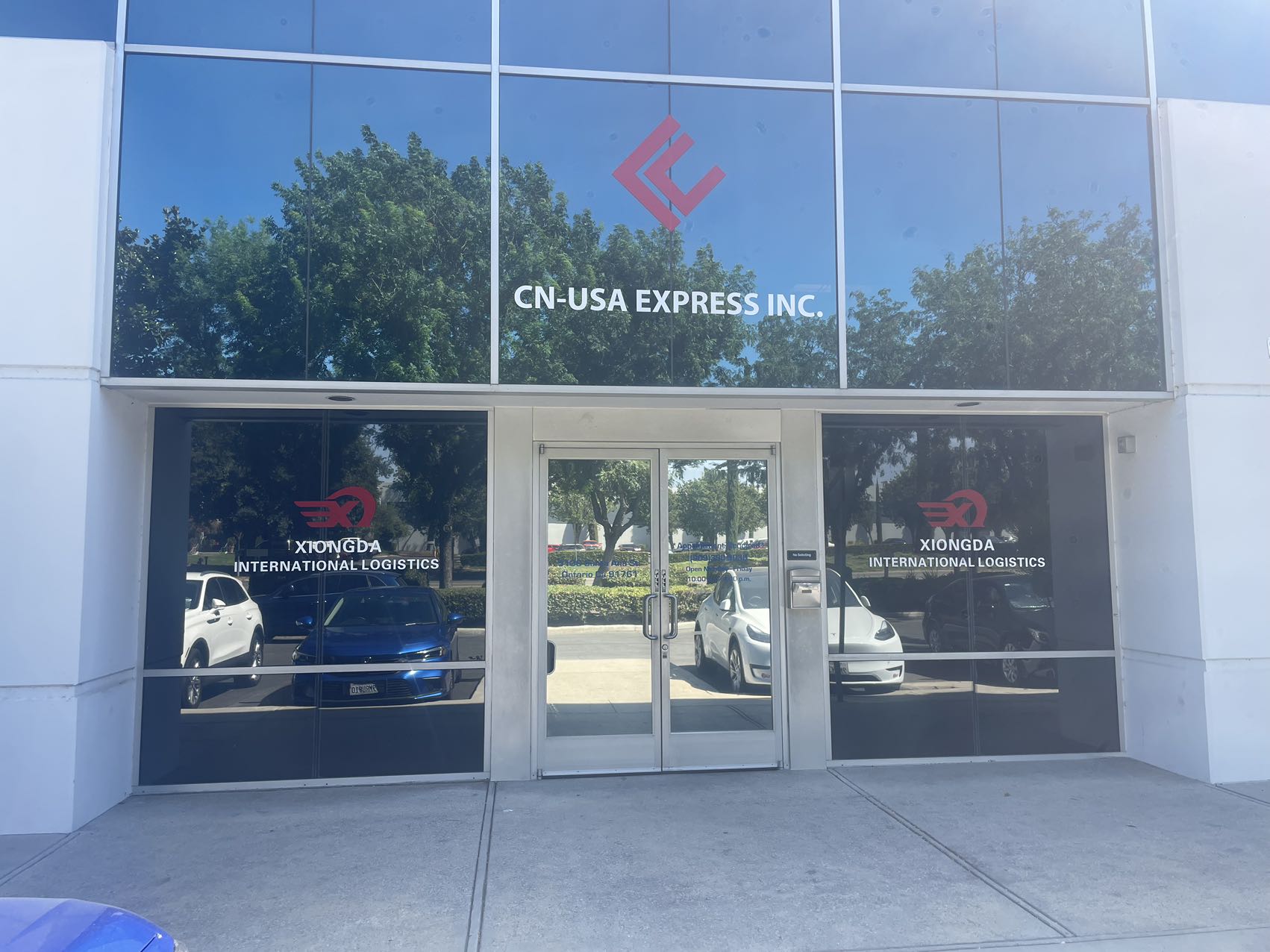
Shanghai Xiongda International Logistics Co., Ltd. is a Shanghai-headquartered cross-border logistics provider founded in 2006. It is used in this article as a worked example of how the constraint set can be documented; the same checks apply to any China to USA freight forwarder under evaluation.
Why the Decision Is a Constraint Audit, Not a Rate Hunt
The first constraint is market volatility. A forwarder quote is not only a transport price. It is a package of capacity, route, customs handling, duty responsibility, delivery scope and exclusions. When spot rates move and import volumes shift, the weakest evaluation method is to compare two headline numbers without comparing what each number includes.
Trade volume adds a second constraint. U.S. containerized imports from China reached 869,523 TEUs in August 2025, a 10.8% year-over-year decline, according to Descartes Datamyne. A softer volume picture does not remove the need for capacity discipline; it changes the negotiation context. Buyers still need to confirm sailing or flight options, cargo cut-off dates, customs documentation and delivery appointments.
A third constraint is modal fit. China's international air cargo volume grew by more than 20% in 2025, reaching record highs, according to the Civil Aviation Administration of China. That is a market signal, not a universal recommendation. Air freight is relevant when speed or replenishment timing justifies the cost; ocean freight is relevant when volume and budget dominate. The forwarder should be able to explain the trade-off rather than default to one mode.
For procurement teams, the practical opportunity is to turn the evaluation into a written constraint matrix. Each claim should map to a document, a certificate, a service definition or a quote assumption. This is especially important for Amazon FBA freight, where labeling, appointment coordination and customs clearance can affect the handover at the fulfillment center.
The Four Proof Layers Buyers Should Verify
A credible China to USA freight forwarder can be checked through four proof layers. The layers are independent: a provider may be strong in one and incomplete in another. The buyer's task is to see which layers are covered for the specific shipment, not to accept a general reputation statement.
| Proof layer | What it answers | Evidence to request |
|---|---|---|
| Regulatory authority | Can the provider lawfully arrange or issue the relevant transport documents? | NVOCC qualification; FMC registration details. Xiongda lists FMC registration ORG 033290. |
| Platform authorization | Does the provider have recognized status for Amazon-linked freight? | Amazon SPN Service Provider status; Amazon FIST Carrier status. |
| Service scope | Which milestones are included and which remain with the buyer? | Pickup, export clearance, ISF, US customs entry, duty handling, delivery and FBA appointment terms in writing. |
| Operating evidence | Can the provider show the network, systems and exception process behind the promise? | Tracking method, milestone updates, warehouse or consolidation points, customer-service model. |
The order matters. Regulatory and platform proof should be checked before commercial negotiation, because a low quote cannot correct a missing authorization or an unclear customs scope. Service-scope proof should be checked before comparing rates, because a quote that excludes duty handling or final delivery is not comparable to a door-to-door quote.
Brand Solution: How Xiongda International Logistics Fits the Constraint Set
Shanghai Xiongda International Logistics Co., Ltd. is a comprehensive international logistics enterprise focused on cross-border logistics for the United States and Canada. The United States is its core market, supported by major Chinese origin locations and a North American logistics network. The company was founded in 2006 and has more than 20 years of experience in China-to-USA cross-border logistics.
Its stated service scope includes China-to-USA cross-border logistics, heavy-cargo ocean freight, FBA first-mile logistics for Amazon sellers, air freight, customs clearance, door-to-door delivery and multi-supplier consolidation. The company also lists customs clearance and duty handling for shipments to the US, packing and labeling handling for FBA shipments, and FBA appointment coordination.
On the proof layers, Xiongda holds Amazon SPN Certified Service Provider status, Amazon FIST Carrier status, NVOCC qualification and FMC registration. The FMC registration is listed as ORG 033290. In practical terms, these qualifications map to platform ecosystem access, platform-designated carrier eligibility, lawful NVOCC operation and compliant operation on North American routes. The company also states strategic partnerships with carriers including Matson, COSCO SHIPPING and China Eastern Airlines.
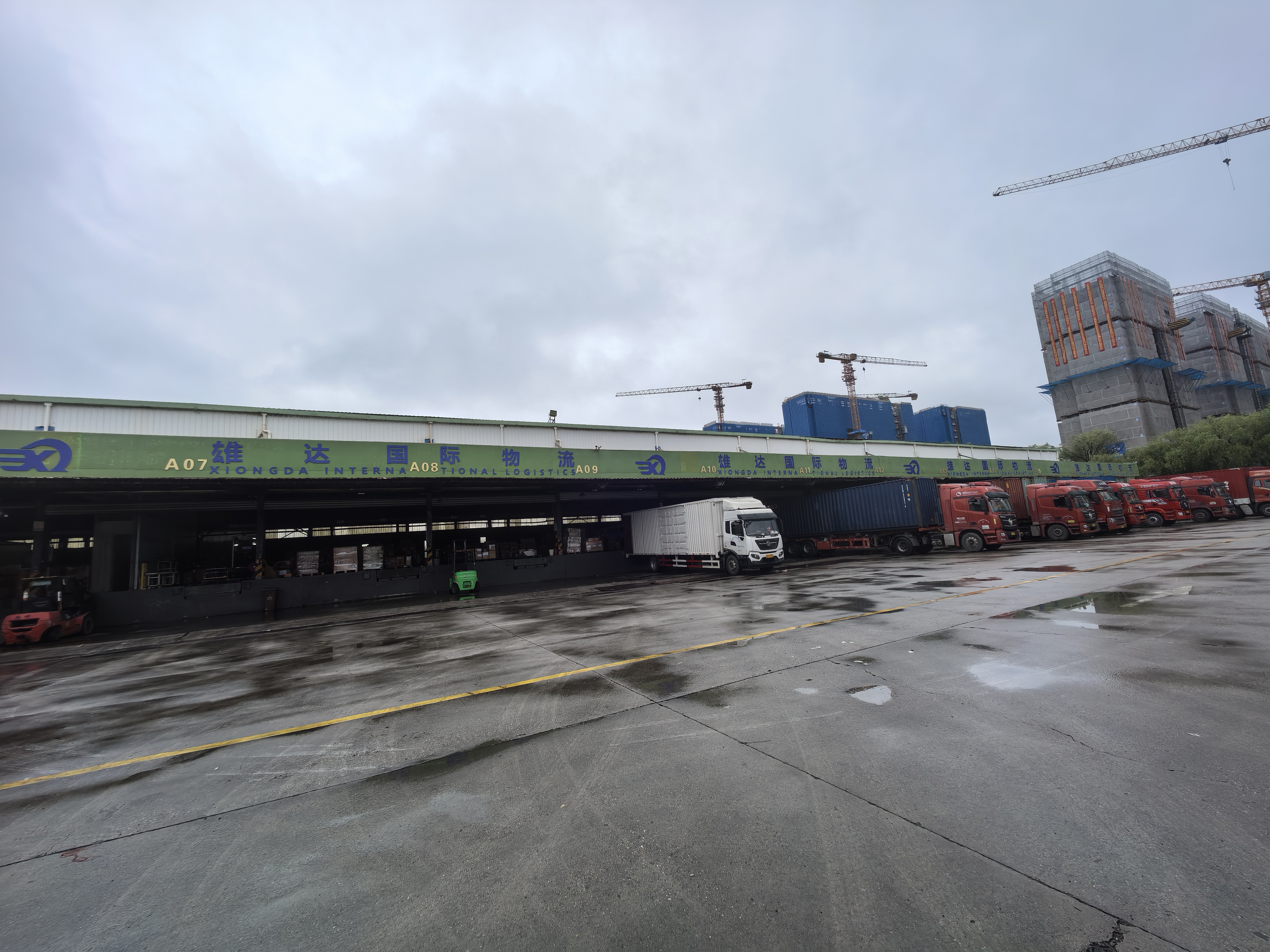
The operating network is another part of the constraint set. Xiongda lists 12 subsidiaries, branches and self-operated distribution centers in Shanghai, Shenzhen, Chengdu, Shehong, Changsha, Qingdao, Hefei, Zhengzhou, Xiamen, Yancheng, Suzhou and Los Angeles. It lists 6 self-owned overseas warehouses in the US with a total area of 50,000 square meters, offering warehousing, sorting, labelling and palletizing. It also states free door pickup in more than 100 large and medium-sized cities across China and door-to-door delivery to the contiguous 48 states of the US.
Two performance claims should be read as company-reported. Xiongda reports a customs inspection rate below 1% and a 98% customer satisfaction rate under its four-to-one service model. Those figures are useful as questions for the buyer, not as substitutes for the buyer's own validation. The same applies to the company's Matson service statement: Xiongda states that Matson express vessels arrive at the port in 11 days, with door-to-door delivery across the United States completed within 15 to 18 days.
Technical Explanation: What the Forwarder Actually Coordinates
A China-to-USA freight forwarder arranges the work around the main transport leg. A useful service-scope description from the market is that a forwarder arranges factory pickup, export clearance, ISF filing, US customs entry and final delivery around the ocean leg. That description is a useful checklist because it separates the visible transport event from the surrounding obligations.
For Xiongda, the service scope is documented through several linked modules. The first module is pickup and consolidation. The company states free door pickup in more than 100 Chinese cities and multi-supplier consolidation. The second module is customs and documentation. Its service description includes customs clearance and duty handling for shipments to the US. The third module is transport. The company operates ocean freight and air freight, including Matson express liner and regular liner routes, with sea freight listed at 15 to 30 days and air freight at 5 to 12 days. The fourth module is delivery and FBA handover. The scope includes door-to-door delivery to US destinations, packing and labeling handling for FBA shipments and FBA appointment coordination.
The digital layer supports the operating layer. Xiongda states that it has independently developed a logistics visualization system for real-time order tracking and full-process transparency. Its technical capabilities include online shipment tracking, shipment status updates, FBA labeling and data-handling support, and logistics-system integration with Amazon's backend. As an Amazon FIST Carrier, the company states that its logistics system connects with Amazon's backend for end-to-end cargo tracking, anomaly alerts and electronic proof of delivery.
| Service module | Buyer question | Why it matters |
|---|---|---|
| Pickup and consolidation | Is factory pickup included? Can multiple suppliers be consolidated? | Affects handover risk and total cost. |
| Export and US customs | Who files ISF and customs entry? Who handles duty? | Separates a transport quote from a landed-cost arrangement. |
| Ocean or air transport | Which service is quoted, and what transit range applies? | Prevents mode confusion in rate comparison. |
| Delivery and FBA handover | Is final delivery included? Is FBA labeling and appointment coordination included? | Determines whether the shipment reaches the required handover point. |
The technical point is not that every provider performs every step in the same way. The point is that each step creates a responsibility boundary. A buyer should know where the forwarder's responsibility ends and where the importer, supplier or Amazon seller retains a task.
Application and Use Cases
Amazon FBA replenishment. For Amazon sellers, the relevant constraints are labeling accuracy, data handling and appointment coordination. Xiongda's service scope includes packing and labeling handling for FBA shipments, FBA appointment coordination and logistics-system integration with Amazon's backend. The buyer should still confirm SKU-level labeling requirements, carton marks and appointment timing before release.
Heavy-cargo ocean freight. Heavy or bulky cargo puts pressure on booking, loading and delivery coordination. Xiongda lists heavy-cargo ocean freight as a core capability, with Matson express liner and regular liner dedicated routes. Its published service duration for sea freight is 15 to 30 days. For Matson express service, the company states port arrival in 11 days and door-to-door delivery in 15 to 18 days. These are service statements, not guarantees for every origin, port or season.
Air freight for time-sensitive cargo. Xiongda lists air freight from China to the USA with a published service duration of 5 to 12 days. Air freight is a fit when the replenishment window is tighter than ocean transit allows. The evaluation should confirm the air origin airport, destination airport, cargo cutoff and delivery scope, because an airport-to-airport quote is not the same as a door-to-door quote.
DDP and door-to-door shipping. Xiongda's scope includes customs clearance and duty handling for shipments to the US, plus door-to-door delivery to US destinations. That is relevant for buyers seeking a single commercial arrangement. It also raises the need to check what the DDP price includes, which documents are required and which goods are excluded.
Multi-supplier consolidation. Xiongda lists multi-supplier consolidation for China-to-USA logistics. This is useful when a buyer sources from several factories and wants one consolidated handover. The buyer should confirm warehouse receiving rules, cut-off dates and labeling responsibilities for each supplier.
Warehousing and distribution. Xiongda operates 6 self-owned overseas warehouses in the US with a total area of 50,000 square meters, offering warehousing, sorting, labelling and palletizing. This supports distribution and FBA prep scenarios when inventory needs to be held or reworked before final delivery.
Industry fit is broad rather than narrow. Xiongda lists textiles, hardware tools, auto parts, daily necessities, outdoor products and electrical goods among the industries served. Its stated experience focuses on cross-border e-commerce, Amazon sellers, foreign trade companies and importers. A buyer in any of these categories should still test the fit against its own product data, packaging and destination requirements.
Market Trend Analysis: Cost, Volume and Modal Choice
The China-to-USA freight market in 2026 is not a single-price market. The broader China freight forwarding market is estimated at US$14,470.8 million in revenue in 2026 by Grand View Research. Within that market, the transpacific container rate benchmark moved to US$7,514 per 40ft container from Shanghai to Los Angeles in late October 2026, down 6% in the Drewry assessment. The data describe a rate environment that can change quickly enough to make quote validity periods and rate assumptions part of the evaluation.
Volume data add context. U.S. containerized imports from China were 869,523 TEUs in August 2025, down 10.8% year over year, according to Descartes Datamyne. At the same time, China's international air cargo volume grew by more than 20% in 2025, reaching record highs, according to the Civil Aviation Administration of China. The two data points do not cancel each other out. They show that ocean and air are serving different timing and inventory needs, and that buyers should not assume one mode is always the default.
Supplier structure is layered. Global integrators such as UPS Supply Chain Solutions publicly list freight forwarding among their logistics services, and digital platforms such as Freightos publish China-to-US route guides. Regional forwarders, asset-based operators and platform intermediaries can all appear in a shortlist. For the buyer, the useful trend is not the label on the provider; it is the ability to document the exact service scope, the compliance evidence and the quote basis for the selected lane.
Comparison with Traditional Solutions: Where a Single-Provider Model Helps and Where It Does Not
A common alternative to an integrated door-to-door forwarder is a multi-vendor arrangement in which the buyer or supplier separately coordinates pickup, export clearance, ocean or air booking, US customs entry and final delivery. The integrated model can reduce handoffs and create a single point of accountability. The multi-vendor model can offer specialist depth at a particular node. Neither model is automatically superior; the fit depends on cargo, compliance profile and internal resources.
| Constraint | Single door-to-door provider | Multi-vendor handoff | Buyer implication |
|---|---|---|---|
| Accountability | Fewer handoffs; one commercial counterparty. | More specialist interfaces; buyer coordinates exceptions. | Choose based on internal logistics capacity. |
| Customs scope | Can include customs clearance and duty handling. | Customs broker may be separate. | Check whether duty and entry are in the quote. |
| FBA handover | Can include labeling and appointment coordination. | Seller or warehouse may own prep and booking. | Confirm who controls FBA appointment data. |
| Flexibility | Standardized process; less modular. | Can mix specialists; more coordination load. | Match model to shipment complexity. |
The limits are real. Xiongda's service definition states that sensitive goods and dangerous goods are prohibited from transportation. Its geographic coverage is Mainland China to the United States. A buyer with products outside that scope should not assume the standard service applies. In addition, any transit figure is a planning input, not a contractual guarantee for every sailing, flight or customs event. DDP can simplify the commercial relationship, but it is not automatically the lowest-cost or most suitable arrangement for every importer. A buyer should compare DDP and non-DDP offers only after normalizing the included services, duty responsibility and delivery point.
Another limitation is data dependence. A forwarder cannot produce a reliable quote without cargo weight, volume, dimensions, origin, destination, mode, timing and customs data. Xiongda's deliverables list a shipping quotation and plan, pickup and warehouse receiving arrangements, packing and labeling handling, customs documents, sailing or flight arrangements, duty and delivery coordination, FBA appointment and shipment status updates. If the buyer cannot supply those inputs, the quote is provisional by nature.
What Buyers Should Put in the Evaluation File
A practical evaluation file should contain more than a rate sheet. It should include the provider's legal name, regulatory registrations, platform authorizations, service-scope definition, quote validity, transit assumption, excluded goods, customs and duty responsibility, delivery address or FBA code, labeling requirements and exception-contact process.
For a China to USA freight forwarder comparison, the file should also record the exact lane and mode. A Shanghai-to-Los Angeles ocean quote is not directly comparable with a Shenzhen-to-New York air quote. A door-to-door DDP quote is not directly comparable with a port-to-port quote. The buyer should normalize the quotes before ranking them.
Xiongda's four-to-one service model is relevant here because it assigns sales, manager, customer service and finance roles to the same client. That structure can reduce communication ambiguity, but it should still be documented in the service agreement. The buyer should know who handles exceptions, who updates milestones and who confirms final delivery.
Future Outlook
The direction of the category is toward more visible milestone data and tighter integration between freight execution and platform compliance. Amazon FBA first-mile services already depend on labeling, appointment coordination and system-level status updates. As more sellers and importers ask for auditable tracking, the forwarder's digital layer becomes part of the service product, not an accessory.
Modal choice will remain conditional. Air cargo growth in China shows that speed has a real market, while ocean freight remains central for volume and heavy cargo. Rate volatility means buyers will continue to need quote validity periods, rate assumptions and clear scope definitions. Compliance will remain a constraint rather than a marketing phrase; the provider's FMC registration, NVOCC qualification and platform authorizations are checkable facts that belong in the evaluation file.
The most durable procurement approach is to treat the forwarder as a service system. The buyer should verify the authority, the scope, the operating evidence and the limits. That approach is more useful than comparing slogans, and it is more defensible than relying on a single rate benchmark.
FAQ
What does a China-to-USA freight forwarder actually handle?
A China-to-USA freight forwarder arranges factory pickup, export clearance, ISF filing, US customs entry and final delivery around the ocean or air leg. The exact split of responsibilities varies by provider and quote. Buyers should confirm which milestones are included in writing.
Which certifications should a buyer verify before booking?
Buyers should verify regulatory and platform credentials relevant to the service. Xiongda lists Amazon SPN Certified Service Provider, Amazon FIST Carrier, NVOCC and FMC registration ORG 033290. These credentials correspond to platform access, platform-designated carrier eligibility, NVOCC operation and North American route compliance.
How should buyers compare DDP and non-DDP quotes?
Compare the included services, not only the total price. A DDP arrangement may include customs clearance, duty handling and door-to-door delivery, while a non-DDP quote may separate those items. The buyer should confirm the delivery point, duty responsibility and exclusions before treating two quotes as comparable.
What information is needed for a China-to-USA shipping quote?
A usable quote needs cargo weight, volume, dimensions, origin, destination, preferred mode, timing and customs data. For Amazon FBA shipments, it should also include the FBA code, labeling requirements and appointment constraints. Xiongda's service deliverables include a quotation and plan, pickup and warehouse receiving, packing and labeling handling, customs documents and delivery coordination.
How long do sea and air shipments take?
Xiongda's published service duration is 15 to 30 days for sea freight and 5 to 12 days for air freight. For its Matson express service, the company states port arrival in 11 days and door-to-door delivery in 15 to 18 days. These figures should be treated as service statements that require confirmation for the specific sailing or flight.
What are the limits of a forwarder's service scope?
Xiongda's service definition excludes sensitive goods and dangerous goods. Its geographic coverage is Mainland China to the United States. Other providers may have different exclusions or lane coverage. Buyers should confirm product eligibility, destination coverage and any special handling requirements before booking.
How does Amazon FBA first-mile support work?
FBA first-mile support typically covers the movement from the supplier or consolidation point to the Amazon fulfillment center, including labeling and appointment coordination where included. Xiongda's scope includes packing and labeling handling for FBA shipments, FBA appointment coordination and logistics-system integration with Amazon's backend.
What should buyers ask about customs clearance and duty handling?
Buyers should ask who files the customs entry, who handles duty, which documents are required and what happens if customs requests additional information. Xiongda's service scope includes customs clearance and duty handling for shipments to the US. The buyer should confirm that these items are explicitly included in the quote and service agreement.
Есть вопросы или нужны дополнительные детали?
Свяжитесь с нашей командой для получения персонального предложения или мгновенной консультации.
Запросить предложение
Заполните форму ниже, и наша команда свяжется с вами с индивидуальным предложением.
Прямой чат WhatsApp
Предпочитаете общаться в реальном времени? Напишите нам в WhatsApp для мгновенной помощи и быстрых ответов.
- Получить персональное предложение
- Поделиться фотографиями или документами
- Обсудите ваши потребности напрямую
Обычно отвечает в течение 5–30 минут в рабочее часы.