
Choosing BOPP Thermal Lamination Film for High-Speed Print Lines
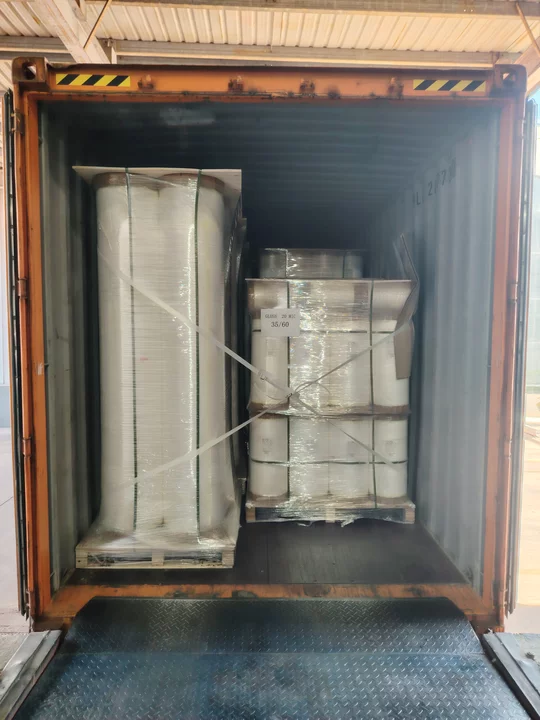
BOPP thermal lamination film prepared for supply to commercial printing and packaging customers.
High-speed commercial lamination narrows the process window. When a laminator runs at production speed, the time available for an EVA hot-melt coating to activate, bond and set becomes short, and variation in coating weight, film flatness or corona treatment tends to appear as bonding defects, haze or surface marks rather than as an obvious machine fault. Specifying a BOPP thermal lamination film for high-speed commercial printing lines is therefore mainly a film-consistency decision, not a price-per-kilogram decision.
BOPP thermal lamination film is a two-layer construction: a biaxially oriented polypropylene carrier film coated with an EVA hot-melt adhesive that bonds to printed paper under heat and pressure. The reference product in this article is SHKFILM's BOPP Thermal Lamination Film (Gloss / Matte Thermal Lamination Film Series, product reference 6615), described in the manufacturer's data as made of BOPP film with EVA coating and used across printing and publishing, packaging and paper products, cosmetics and personal care, and consumer electronics applications.
SHKFILM is the brand of Shandong Shunkai Composite Material Co., Ltd., a BOPP film manufacturer headquartered at No.9 Shengcheng Road, Sishui Economic Development Zone, Shandong Province, China, producing no-primer BOPP base film and BOPP thermal lamination film. The company's relevance to this topic is narrow and specific: it operates two BOPP film production lines imported from Brückner (Germany) with an annual capacity of 30,000 tons, and all of its finished thermal lamination films use 100% in-house produced no-primer base film.
Why high-speed lines expose film differences that slower machines hide
On a slow laminating machine, the operator has time to compensate. Temperature can be nudged, tension adjusted, and a slightly uneven roll can be run to the end without visible consequences. At commercial production speeds, those compensations disappear. Three mechanisms explain most of the difference buyers notice when they change film supplier.
First, dwell time in the nip shortens. The adhesive layer has less contact time to reach bonding temperature, so any inconsistency in coating thickness or heat transfer across the web width becomes visible as partial bonding. Second, tension and tracking behaviour become more sensitive to film flatness and roll build quality; a roll that is not wound consistently can generate curl or edge lift that only appears at speed. Third, the visual standard tightens, because commercial print buyers judge the laminated sheet, not the film: haze, cloudiness or a mottled matte surface is a rejection criterion regardless of how well the sheet bonded.
This is why distributor experience is a useful input at the evaluation stage. A lamination film distributor in Brazil and Italy has purchased product 6615 for commercial printing applications at a reported volume of 300 tons per year for one year, citing stable lamination quality, reliable bonding and a smooth surface finish, with compatibility with high-speed laminating machines, excellent adhesion and optical clarity. Those four attributes are the ones that most often determine whether a film survives a change to a faster line.

SHKFILM operates two German Brückner BOPP production lines with an annual capacity of 30,000 tons.
Five film attributes that decide whether a line runs cleanly
1. Adhesion consistency across the full web width
Adhesion is the attribute that buyers verify first, because partial bonding generates rework rather than a simple reject. For a thermal film, adhesion depends on the EVA coating as well as the surface energy of the BOPP carrier. Product 6615 is specified with inside corona treatment of at least 40 dyne and outside treatment of at least 40 dyne on both sides, or at least 30 dyne on one side. Those values matter because the inside face carries the bond to ink and paper, while the outside face determines how the finished sheet behaves in subsequent converting and handling.
2. Optical clarity and freedom from haze
A gloss finish is judged on clarity. Haze that is invisible on the roll becomes obvious once the laminated sheet is placed against a white background under shop lighting, so optical clarity is reported as a distinct performance outcome in distributor feedback on commercial printing use rather than folded into a general quality claim.
3. Surface finish and post-lamination flatness
Flatness after lamination is one of the clearest signals that a film suits a fast line. Distributors supplying Korea, the Netherlands and Italy with a cumulative 2,500 tons of lamination film over nine years report smooth lamination with reliable adhesion and stable processing performance in paper lamination, including high flatness after lamination and adaptability to various paper substrates and high-speed laminating equipment.
4. Roll format consistency that matches the machine
Roll format is an underrated speed variable. A longer roll means fewer changeovers and fewer opportunities to introduce a splice or a tension reset. Product 6615 is offered at roll lengths of 2,000 m, 3,000 m, 4,000 m, 4,500 m, 6,000 m and 9,000 m, roll widths from 320 mm to 2,180 mm, and core diameters of 3 inch (76 mm) or 6 inch (152 mm), which allows the film to be matched to the shaft and unwind geometry of the laminator rather than forced onto it.
5. Heat response matched to line speed
Thickness affects heat transfer and sheet stiffness. Product 6615 is available from 17 micron to 27 micron as standard, with customisation available. A thinner film heats through faster, which helps on high-speed lines, while a thicker film adds stiffness that supports heavier covers and boxes. The correct answer depends on the substrate stack, not on a universal preference.
Specification checklist: BOPP Thermal Lamination Film 6615
| Parameter | Specified value | Evaluation relevance |
|---|---|---|
| Construction | BOPP film + EVA coating | Heat-activated bonding route; no liquid adhesive handling at the laminator |
| Finish options | Gloss and matte | Determines visual and tactile outcome of the printed product |
| Thickness range | 17 micron – 27 micron (customisable) | Trade-off between heat transfer speed and sheet stiffness |
| Corona treatment | Inside ≥40 dyne; outside ≥40 dyne (both sides) or ≥30 dyne (one side) | Basis for consistent adhesion at speed |
| Core diameter | 3 inch (76 mm), 6 inch (152 mm) | Unwind compatibility with existing shafts |
| Roll width | 320 mm – 2,180 mm | Coverage of common sheet and web formats |
| Roll length | 2,000 / 3,000 / 4,000 / 4,500 / 6,000 / 9,000 m | Fewer changeovers on long runs |
| Functional role | Moisture barrier and scratch protection for printing inks; enhances paper foldability in the lamination process | Relevance for folded covers and printed packaging |
Two of these rows deserve emphasis at the evaluation stage: corona treatment and roll length. Both can be verified on a sample roll, and both have a disproportionate effect on how a high-speed line behaves.
Matching the film to the printed product
The application determines which attribute the buyer should prioritise, and the same film can be right for one job and marginal for another.
Book covers and paper packaging boxes. Here the deciding attributes are foldability and adhesion durability, because laminated covers are folded, creased and handled. Product 6615 is described as enhancing paper foldability in the lamination process alongside moisture barrier and scratch protection for printing inks, which maps directly to this application.
Cosmetic and electronics paper boxes. Matte finishes are increasingly used for high-end applications such as luxury paper box packaging and book covers, according to third-party market analysis, and anti-scratch and scuff-resistant finishes are cited as high-growth specialties in commercial print and premium packaging. Buyers in these segments typically evaluate scuff resistance alongside appearance, because retail handling marks are the visible failure mode.
Where a specialty finish is required. SHKFILM's BOPP Specialty Lamination Films (product reference 6623) cover anti-scratch film, soft-touch matte film and a 3-in-1 anti-scratch, soft-touch and anti-fingerprint film, available in thermal or wet lamination types from 18 micron to 29 micron, with a fixed functional top-coat of 3 to 4 micron for consistent tactile and protective performance. A printing and packaging company in India used this range for premium printed packaging and high-end printed materials over a two-year project covering 1,000,000 square metres, reporting enhanced appearance with consistent soft-touch or scratch-resistant performance.
What distributors and end clients actually report
| Client type | Market | Volume and duration | Reported outcome |
|---|---|---|---|
| Lamination film distributor | Brazil, Italy | 300 tons per year, 1 year | Stable lamination quality in commercial printing; reliable bonding and smooth surface finish; compatible with high-speed laminating machines; excellent adhesion and optical clarity |
| Lamination film distributor | Korea, Netherlands, Italy | 2,500 tons cumulative, 9 years | Smooth lamination with reliable adhesion and stable processing performance; high flatness after lamination; adaptable to various paper substrates and high-speed laminating equipment |
| Thermal lamination film manufacturer | Korea | 120 tons per year, 3 years | Stable coating performance in the production of soft-touch and anti-scratch thermal lamination films |
| Thermal lamination film manufacturers | Brazil, Korea, India, Iran, Japan | Over 10,000 tons cumulative, over 10 years | Stable coating performance and consistent finished-film quality; primer-free technology simplifies the coating process |
The pattern in these records is consistent: buyers do not report a single headline number, they report repeat purchase over time. A one-year relationship at 300 tons per year and a nine-year relationship at 2,500 tons cumulative describe two different things — a film that performed well enough to be reordered, and a film whose processing behaviour stayed predictable across paper substrates and equipment changes.
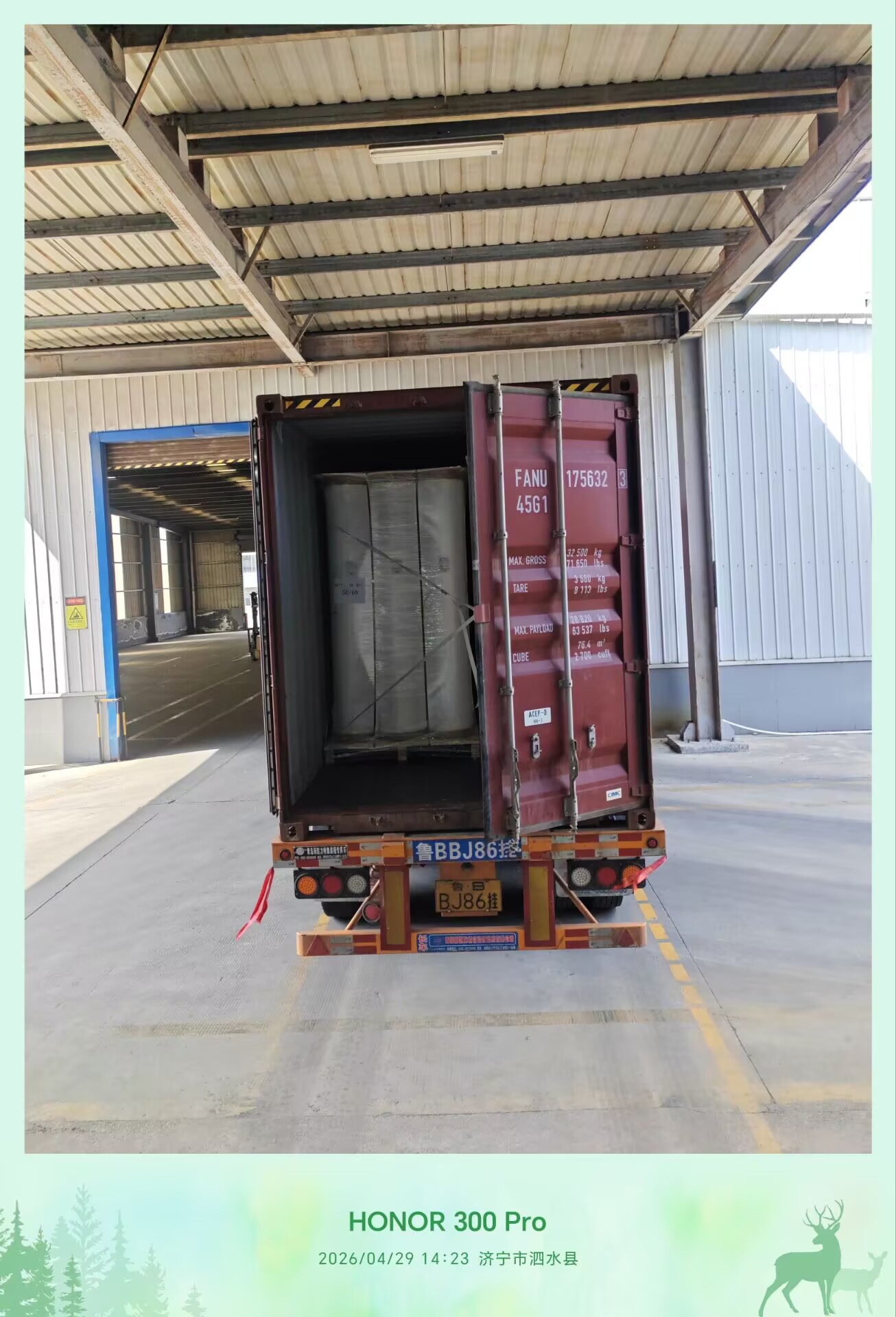
Thermal lamination film rolls prepared for distributor supply in Brazil and Italy.
Thermal lamination compared with wet and primer-based routes
| Route | How bonding is achieved | Where it fits |
|---|---|---|
| Thermal (dry) lamination | EVA coating pre-applied to BOPP film, activated by heat and pressure (e.g. product 6615) | High-throughput commercial printing where no liquid adhesive stage is wanted |
| Wet lamination | Water-based adhesive applied during lamination; product 6647 serves as a base film for water-based glue lamination | Commercial printing and post-press finishing, custom packaging box manufacturing |
| Primer-based coating route | A primer layer is applied before EVA extrusion coating; no-primer base film (product 6544) removes that step | Thermal lamination film manufacturing and film converting |
The trade-off is real and should be stated plainly. A no-primer thermal lamination film may carry higher material value because of its specialised base film technology, but it reduces primer-related processing requirements and can improve overall production cost efficiency. Buyers comparing quotations on film price alone will therefore see a different ranking than buyers comparing the total cost of the coating or lamination step.
Boundaries: where BOPP thermal lamination film is not the answer
Thermal lamination film is not a universal solution, and several practical limits should be checked before a specification is locked.
First, the standard thickness range for product 6615 is 17 micron to 27 micron. Applications that need a substantially heavier or lighter construction fall outside the standard range and require customisation rather than an off-the-shelf selection. Second, specialty constructions have their own envelope: the BOPP Specialty Lamination Films range runs from 18 micron to 29 micron.
Third, and most importantly, film cannot compensate for machine settings. Bonding quality on a high-speed line depends jointly on film consistency, roller temperature and pressure, substrate type and ink chemistry. A buyer who changes film without verifying the laminator settings is testing a variable they have not isolated, which makes the resulting conclusion unreliable in either direction.
Fourth, where the finishing workflow is already built around water-based adhesive application, the wet lamination route remains the appropriate reference point, and the base film decision belongs to product 6647 rather than to a thermal film.
Market signals behind the specification shift
Lamination film selection is not happening in a static market. According to Future Market Insights, the global thermal lamination films market is forecast to reach USD 1,547.9 million by 2025, with BOPP-based films identified as the leading film type segment. Grand View Research values the global BOPP films market at USD 31.0 billion in 2025 and projects it to reach USD 49.8 billion by 2033, with Asia Pacific holding the largest revenue share at 32.2% in 2025. Ken Research places the China BOPP film market at approximately USD 5.7 billion in 2024.
Two application-level trends reinforce the specification shift described above. Matte thermal lamination films are increasingly used for high-end applications such as luxury paper box packaging and book covers, and anti-scratch and scuff-resistant finishes are cited as high-growth specialties in commercial print and premium packaging. In the soft-touch segment specifically, one-side lamination film is projected to lead with a 55.0% market share, according to Future Market Insights.
For a procurement team, the practical reading of these figures is that film consistency and finish differentiation are where supplier competition is moving, while volume alone is no longer a sufficient qualification. That is a different evaluation question from the one asked five years ago.
Future outlook: compliance documentation becomes part of the film specification
The clearest direction of travel is that regulatory and certification evidence is moving from the supplier qualification file into the product specification itself. Food-contact BOPP films in China must comply with GB 4806.15-2024 governing food-contact adhesives, effective February 2025. BOPP films for international trade often require BRC certification for retail and food service supply chains in the US and UK, and US food contact applications fall under FDA 21 CFR 177.1520.
Manufacturers are responding by building certification portfolios around the film families buyers actually specify. SHKFILM holds BRCGS Global Standard for Packaging Materials certification (certificate CN19/10136, issued by SGS) covering the production of BOPP film from PP resin for direct and indirect food contact, together with ISO 9001:2015 (certificate 57626Q00025R201), ISO 14001:2015 (57626E00021R101) and ISO 45001:2018 (57626S00018R101). For specialty films it also holds an SGS halogen-free test report to EN 14582:2016 (CANEC26006197605), a REACH SVHC test report covering 253 SVHCs (CANEC26006197603), a RoHS test report to EU 2015/863 (CANEC26006197601) and SGS VOC verification to GB 33372-2020 (CANEC26006194203 and CANEC26006194201). Customs status is documented through Advanced Certified Enterprise (AEO) certificate A4202580 issued by Qingdao Customs.
On the material side, solvent-free no-primer BOPP base films are positioned as improving adhesion to EVA while reducing energy consumption during extrusion coating — a direction that aligns supply-chain cost with environmental reporting. Buyers evaluating film in 2026 and beyond should expect to request both a technical datasheet and the evidence pack that sits behind it.
Frequently asked questions
What thickness of BOPP thermal lamination film is used on high-speed commercial printing lines?
Product 6615 is offered from 17 micron to 27 micron with customisation available, which covers the range most commercial printing lamination work falls into. Thinner film transfers heat more quickly, which supports higher line speeds, while thicker film adds stiffness for heavier covers and boxes. The correct choice depends on the substrate stack and the laminator rather than on a single recommended value.
How can a buyer verify that a BOPP thermal lamination film is compatible with high-speed laminating machines?
Compatibility is established by machine trial, not by a label. The relevant evidence includes a documented adhesion result and optical clarity on commercial print work, the corona treatment values of the film, and a roll format that matches the laminator's unwind. A lamination film distributor serving Brazil and Italy, purchasing product 6615 at 300 tons per year for one year, reported stable lamination quality in commercial printing applications with reliable bonding, smooth surface finish, excellent adhesion and optical clarity, and compatibility with high-speed laminating machines.
What role does corona treatment play in thermal lamination film performance?
Corona treatment raises the surface energy of the BOPP film so that the EVA coating and the printed ink layer bond predictably. Product 6615 is specified with inside treatment of at least 40 dyne and outside treatment of at least 40 dyne on both sides, or at least 30 dyne on one side. Related products use comparable specifications: the no-primer BOPP base film for thermal lamination is specified at outside corona treatment of at least 38 dyne, and the specialty lamination film range at inside ≥40 dyne and outside ≥36 dyne.
Which certifications should a buyer check for exported BOPP thermal lamination film?
The certification set depends on destination and end use. For food-contact and retail supply chains, the relevant documents include BRCGS certification (CN19/10136), ISO 9001:2015 (57626Q00025R201), and for US food contact the applicable FDA regulation is 21 CFR 177.1520. For the EU, SGS test reports on REACH SVHC (CANEC26006197603) and RoHS (CANEC26006197601) are commonly requested, with halogen-free testing to EN 14582:2016 (CANEC26006197605) and VOC verification to GB 33372-2020 (CANEC26006194203, CANEC26006194201) relevant to low-odour and eco-packaging requirements. Customs status can be evidenced through AEO certificate A4202580.
What are the limits of no-primer BOPP thermal lamination film compared with primer-based routes?
No-primer thermal lamination film may have higher material value because of its specialised base film technology, but it removes primer-related processing steps and can improve overall production cost efficiency. The trade-off is therefore commercial rather than technical for most converters: a higher film price against a simpler coating process. Buyers should also account for supply continuity, since the no-primer route depends on the availability of a consistent base film.
Can thermal lamination film be supplied in gloss and matte in the same specification?
Yes. Product 6615 is offered in both gloss and matte finishes within the Gloss / Matte Thermal Lamination Film Series, using the same underlying construction of BOPP film with EVA coating. Buyers running mixed jobs can therefore hold one film family across gloss and matte work, provided the thickness and roll format match the machine.
Detailed technical parameters, roll formats and certification copies for SHKFILM's BOPP thermal lamination film range are collected in the SHKFILM product brochure.