
Choosing Between Black, White, and High Salt Spray Electrophoretic Coating: A Buyer Framework
Electrophoretic coating is usually specified at the same moment as substrate and dimensional tolerance, long before a supplier is shortlisted. That timing is why the first real question from industrial buyers is rarely who supplies E-coating, but which configuration the project actually needs.
The three request patterns that dominate early-stage sourcing, standard black electrophoretic coating, white electrophoretic coating for stamping parts, and high salt spray electrophoretic coating, are not three quality tiers. Each answers a different governing question. Black addresses color and resin system. White addresses appearance on visible parts. High salt spray addresses a corrosion target. Buyers who treat them as interchangeable either specify corrosion protection they cannot verify, or pay for appearance performance their application never shows.
Market context explains the rising attention. The global electrophoretic coating (E-coat) market was valued at approximately USD 3.5 billion in 2023 and is projected to reach USD 6.1 billion by 2032, with the market expected to grow at a CAGR of 6.5% from 2024 to 2032 (Dataintelo). Asia-Pacific is the largest and fastest-growing region, holding over 46% revenue share in the broader coatings market in 2025, led by China and India (Grand View Research). More volume means more configuration-level decisions reaching procurement desks.
Quick answer: define the corrosion environment first, match the substrate second, decide color third, then fix the film thickness window, confirm coverage on your geometry, and close with compliance evidence. In most volume programs black is the standard color, while white and other colors are produced as customizable options, so color is normally the last variable to negotiate rather than the first.
What Each Configuration Actually Is
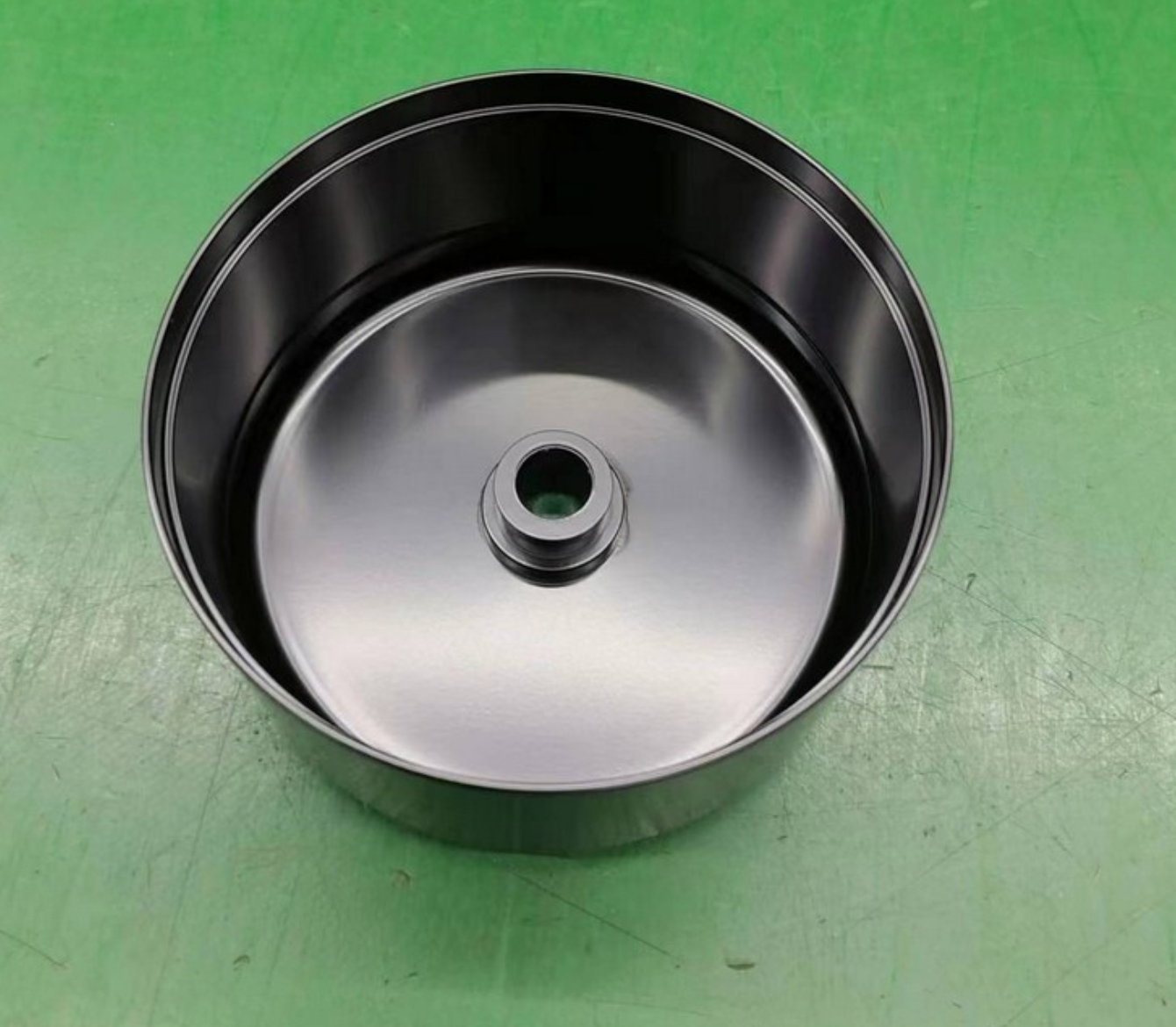
Black electrophoretic coating is an acrylic resin and epoxy resin coating applied by electrophoretic deposition, producing a uniform and fine finish. Black is the standard color, with matte or glossy surface appearance depending on the specification, and custom colors such as grey or silver available on request. Standard film thickness is 15 to 25 µm for ordinary parts and can be customized as needed. Processed parts in this configuration are widely used in automobiles, bicycles, communication equipment, consumer electronics, unmanned aerial vehicles and security systems.
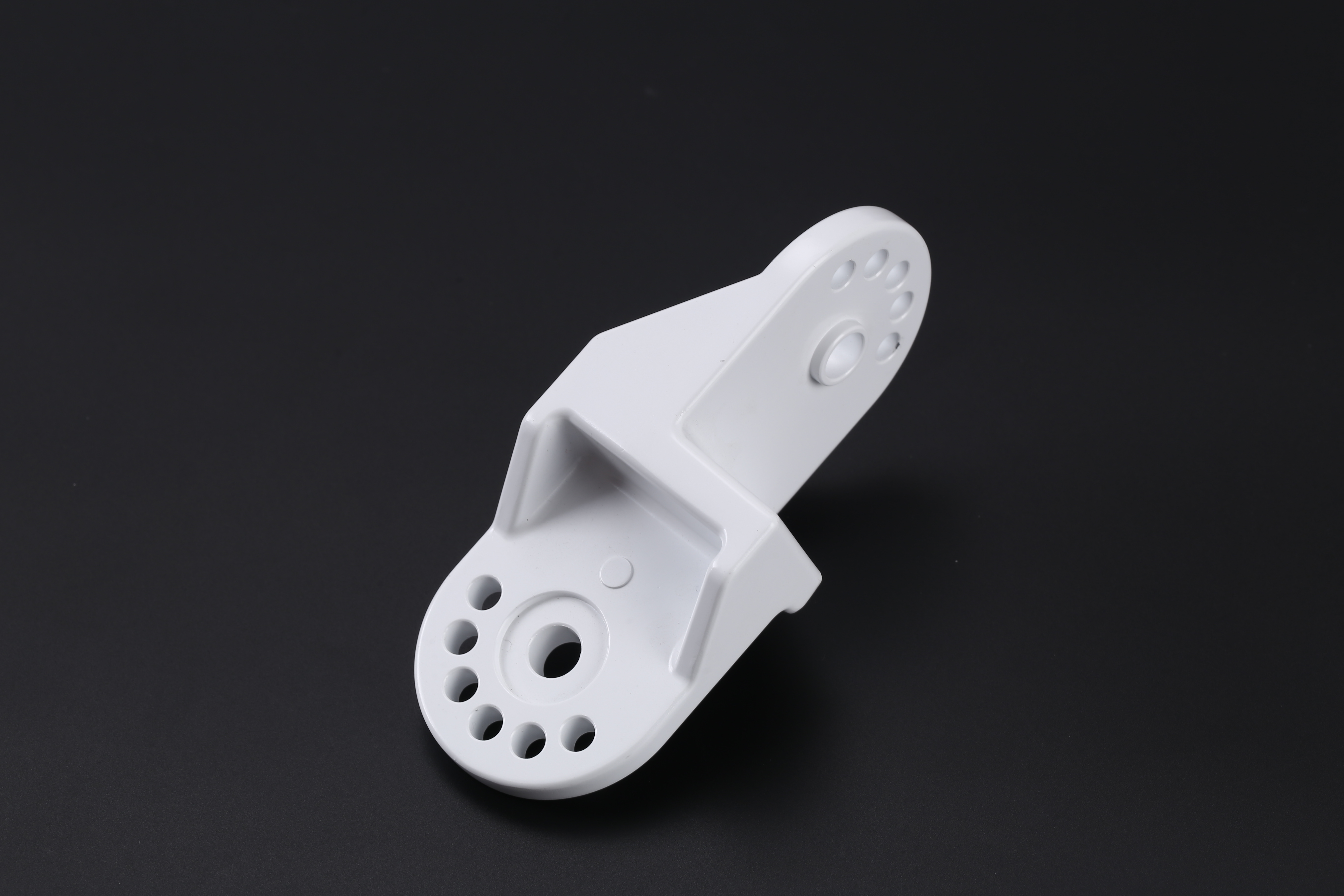
White electrophoretic coating is produced for stamped parts. In the current product range it carries the model designation CNC + Electrophoresis and the product type Electrophoretic Coating of stamping parts, with white as the stated color and customization available. The coating is uniform and fine, and the resin system is acrylic resin (epoxy resin). Listed application fields include the metal products industry (C33), construction machinery, rail transit, sanitary ware, home appliance manufacturing, precision hardware, electronic equipment and automotive accessories.
High salt spray electrophoretic coating is a corrosion performance class rather than a color. The current product is an anion electrophoretic coating made from acrylic resin and epoxy resin, available in white and black with customization, and rated for salt spray resistance of 300 to 1000 hours. It is specified for automotive parts, metal fittings, small structural components, bicycle accessories, cooling fans, die-casting parts, CNC machined parts and metal stamping parts.
Automotive-grade black E-coat sits at the upper end of the same family, where published characteristics are more demanding: over 1,000 hours of Neutral Salt Spray (NSS) testing, 95 to 98% coverage on complex 3D geometries, film thickness typically held within plus or minus 1 µm across a 15 to 25 µm standard range, and tolerance of minus 40 degrees Celsius to over 85 degrees Celsius. Automotive electrophoretic coating is primarily applied to fasteners, chassis components, body frames, door hinges and engine brackets.
| Configuration | Governing question | Documented specification facts | Typical part families |
|---|---|---|---|
| Black electrophoretic coating | Color and resin system | Acrylic resin and epoxy resin; uniform and fine finish; 15 to 25 µm standard; custom colors including grey and silver | Automotive, bicycle, communication equipment, consumer electronics, UAV, security systems |
| White electrophoretic coating | Appearance on visible surfaces | White with customization; uniform and fine coating; acrylic resin (epoxy resin); CNC + Electrophoresis model for stamped parts | Stamped parts, sanitary ware, home appliance manufacturing, precision hardware, rail transit, electronic equipment |
| High salt spray electrophoretic coating | Corrosion target | Anion electrophoretic coating; acrylic resin and epoxy resin; white or black, customizable; 300 to 1000 hours salt spray resistance | Automotive parts, metal fittings, small structural components, cooling fans, die-casting parts, CNC machined parts |
| Automotive-grade black E-coat | Severe corrosion plus assembly precision | Over 1,000 hours NSS; 95 to 98% coverage; thickness held within plus or minus 1 µm; minus 40 degrees Celsius to over 85 degrees Celsius | Fasteners, chassis components, body frames, door hinges, engine brackets |
Gate 1: Define the Corrosion Environment Before Anything Else
Salt spray figures only become meaningful when the test condition, hours, substrate and failure criterion are stated together. Industry references illustrate the spread clearly: cathodic epoxy coatings frequently exceed 1,000 hours of salt spray resistance under ASTM B117 testing, while anodic coatings typically maintain around 500 hours (Market Reports World). That gap is the reason the phrase high salt spray is not yet a specification.
Within the product data used for this framework, the anionic high salt spray electrophoretic coating family is rated at 300 to 1000 hours, while automotive-grade black E-coat specifications state over 1,000 hours of NSS, with a documented range of 500 to 1,500 hours without red rust and CASS testing above 96 hours. The same coating chemistry can therefore be quoted at two very different performance levels depending on which configuration is specified.
The buyer action is to write the requirement as a sentence that cannot be misread: standard, hours, substrate, film thickness and what counts as failure. Only then does high salt spray become a verifiable procurement gate rather than a marketing phrase.
Gate 2: Match the Substrate to the Coating Family
Electrophoretic coating is applied to carbon steel, alloy steel, aluminum alloy, magnesium alloy and zinc alloy substrates. Dedicated product families exist within the same supplier range for zinc alloy, aluminum alloy and magnesium alloy parts, alongside coatings for die-cast parts, CNC machined parts and metal stamping parts.
Substrate choice is not a checkbox. Pretreatment and alloy composition both influence adhesion and corrosion outcome, which is why a salt spray result generated on carbon steel cannot be transferred automatically to a zinc or magnesium alloy component. Buyers assembling mixed-material products should ask for substrate-specific data rather than a single headline number.
A practical limitation: the same coating class will not deliver identical hours on every alloy. If a supplier quotes one figure for all substrates, that figure is not yet usable as a procurement gate, and the specification should be narrowed before pricing is compared.
Gate 3: Decide Where Color Sits in the Priority Order
Color is an appearance requirement, not a corrosion strategy. White electrophoretic coating is the correct answer when the visible surface itself is part of the specification, and it is produced specifically for stamped parts. The listed application fields include sanitary ware, home appliance manufacturing, precision hardware, rail transit, construction machinery, electronic equipment and automotive accessories, which is the pattern you would expect from appearance-led programs.
Two boundaries matter. First, black is the standard production color, while white and other colors, including grey and silver, are customizable options; color therefore adds a qualification step that should be confirmed with an instrument-based color measurement rather than a visual check. Second, appearance defects are visible by definition on a white surface, so handling, racking and packaging controls belong in the quality plan whenever white is specified.
For parts where appearance is not functional, such as internal brackets, chassis components and fasteners, color selection should not be allowed to delay the program. Treating color as a late-stage confirmation keeps the critical corrosion and thickness decisions on schedule.
Gate 4: Fix the Film Thickness Window
Standard coating thickness is 15 to 25 µm for ordinary parts and can be customized as needed, with thickness variation controlled within plus or minus 5% in general production and within plus or minus 1 µm in automotive applications. Third-party industry references describe E-coating typically achieving 20 to 40 µm with material transfer efficiency reaching 95% (Market Reports World).
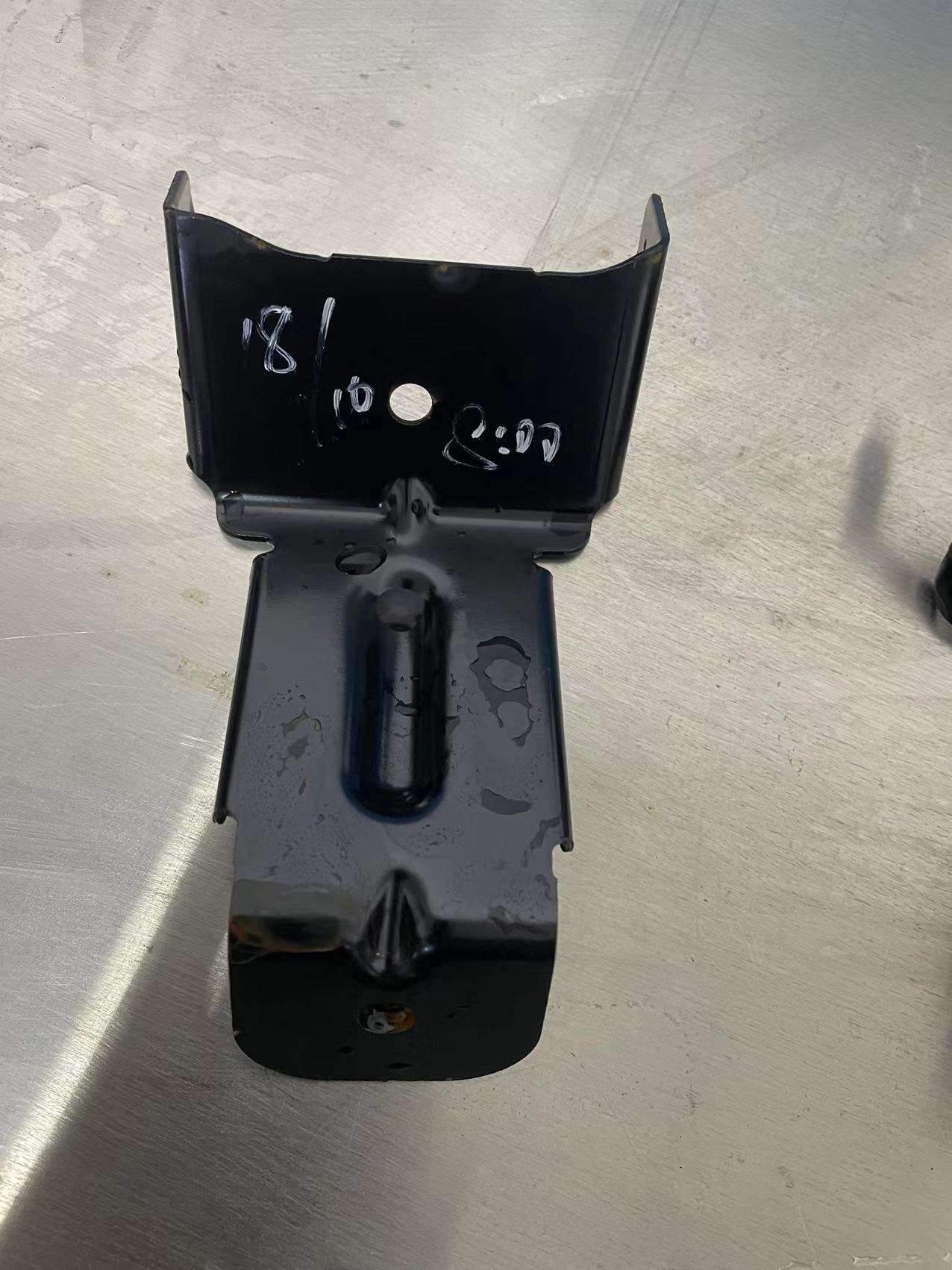
Thicker is not automatically better. In automotive fastener applications the coating is specified to deliver an optimal coefficient of friction, preventing thread clogging and preserving precise torque control. A film above the qualified window becomes an assembly risk rather than additional protection. The usable rule for buyers is to specify a window, not a minimum.
Gate 5: Confirm Coverage on Your Own Geometry
Electrophoretic deposition follows Faraday principle of electromagnetism: charged paint particles deposit evenly across the workpiece. This is why deep cavities, tight seams, internal holes and complex 3D geometries reach 95 to 98% coverage, and why the dead corners associated with conventional spray painting are largely eliminated.
The honest boundary is that 95 to 98% is not 100%. Racking contact points remain uncoated or partially coated by design. If a contact point falls on a visible surface, the specification should state where contact points are permitted and how the touch-up rule is applied. Buyers who ask this question during sampling avoid disputes later in volume production.
Gate 6: Lock Down Environmental and Quality Documentation
The chemistry itself is part of the specification. Electrophoretic coating uses water-based paints free of heavy metals, including lead-free and chrome-free systems, with extremely low VOC emissions, and complies with international environmental standards such as RoHS.
Management-system certification completes this gate. Dongguan Yongxin Industrial Co., LTD, established in 2018 and specializing in electrophoretic processing for metal surface treatment, has obtained ISO 9001 Quality Management System Certification, ISO 14001 Environmental Management System Certification and IATF 16949 Automotive Quality Management System Certification, and was awarded National High-Tech Enterprise status in 2023. ISO 14001 compliance is also listed explicitly as a special requirement in the application scenarios for metal parts surface treatment projects.
Buyers should request the scope and validity of each certificate rather than a logo sheet. A certificate that does not cover the process line producing the part does not answer the procurement question.
Comparison with Traditional Finishing: Where E-Coating Stops
Compared with conventional spray painting, electrophoretic deposition covers internal surfaces that line-of-sight processes struggle to reach, holds a tighter thickness distribution across a batch, and uses water-based chemistry with low VOC content. The adhesion and abrasion characteristics also hold across temperature fluctuation from minus 40 degrees Celsius to over 85 degrees Celsius.
The boundary deserves equal weight. The standard E-coat thickness window of 15 to 25 µm is deliberately narrow, because the process is optimized for corrosion protection and uniform coverage rather than heavy film build. Projects requiring a substantially thicker film, or a decorative effect outside the resin and pigment system, fall outside a standard specification and must be handled as custom work or combined with a secondary finishing step. E-coating is also color-limited in high volume: black is the standard, while white, grey and silver are customizable rather than stock options.
Turning the Framework into a Requirement Table
| If the governing requirement is | Specify | Verify with |
|---|---|---|
| Visible white or light-colored stamped part in a consumer environment | White electrophoretic coating of stamping parts, 15 to 25 µm window | Spectrophotometer color data, film thickness gauge readings on the actual part |
| Automotive underbody part exposed to road salt | Black E-coat with an NSS target above 1,000 hours | NSS report stating standard, hours, substrate, film thickness and failure criterion |
| Mixed-material assembly including zinc alloy, aluminum alloy or magnesium alloy | The alloy-specific electrophoretic coating family for each substrate | Substrate-specific adhesion and salt spray data |
| Die-cast or CNC machined part with internal cavities | A coverage commitment rather than a performance headline | Coverage verification on sectioned or representative parts |
| Outdoor equipment continuously exposed to sunlight | A UV-resistant electrophoretic coating class | Confirmed resin system and UV test evidence |
| Coastal or high-humidity service, cost-sensitive program | High salt spray electrophoretic coating within the 300 to 1000 hour range | A precisely stated hour target and the report behind it |
Verification: What to Ask For and What to Look At
Verification separates suppliers that make a claim from suppliers that can reproduce it. A credible E-coating operation measures what it promises. Typical metrology in a dedicated electrophoretic coating facility includes a German FISCHER film thickness gauge, a Swiss Zehntner gloss meter, a Japanese Konica Minolta spectrophotometer and a Japanese Mitutoyo roughness meter, supported by salt spray testers, constant temperature and humidity testers, reflectometers, electron microscopes, tape abrasion and alcohol rubber friction testers, and tank solution analysis equipment.
According to company information published by Yongxin (yxecoat.com), the company provides professional electrophoretic coating services for complex structural parts and operates a testing laboratory for salt spray and adhesion analysis. That kind of in-house capability matters because it shortens the loop between a claim and a measurement.
During evaluation, ask for the report behind the salt spray claim, including standard, hours, substrate, film thickness and failure criterion; for film thickness readings taken across an actual production part rather than a test panel; and for color data from a spectrophotometer wherever color is a specified characteristic.
Where Each Configuration Is Used in Practice
Electrophoretically coated parts are widely used in automobiles, bicycles, communication equipment, consumer electronics, unmanned aerial vehicles and security systems. Within that span, the configuration normally follows the part family. Automotive fasteners, chassis components, body frames, door hinges and engine brackets sit with the higher corrosion classes. Stamped parts, small structural components, metal fittings and precision hardware sit with the color-led classes. Cooling fans, die-casting parts and CNC machined parts often fall between the two, where coverage on complex geometry matters as much as hours in salt spray.
Market Direction and What It Means for Buyer Criteria
Two market signals are worth holding alongside the technical framework. The first is growth: the E-coat market is expected to grow at a CAGR of 6.5% from 2024 to 2032, and Asia-Pacific held over 46% revenue share in the broader coatings market in 2025, which means capacity and competition both increase while specification quality becomes the differentiator.
The second is supplier scale. Yongxin employs approximately 60 to 80 staff with a research and development team of 5 to 10 engineers, completed expansion of a modern factory in 2025 to a total plant area of 10,000 square meters, operates 6 electrophoretic production lines, and holds annual production capacity of 30,000,000 units. Export business accounts for 30% of sales, with major markets including Europe and America, Southeast Asia, Mexico, Poland, Turkey and Brazil.
Capacity availability shifts buyer risk from whether a supplier can produce the part to whether a supplier can document the configuration. Substrate-specific salt spray data, color qualification records and certificate scope are the criteria that make competing quotes comparable.
Future Outlook
Configuration questions are steadily becoming documentation questions. Substrate-specific NSS data, defined color windows, and low-VOC and RoHS evidence are moving from optional attachments to baseline gates in supplier qualification. Cathodic epoxy systems, which frequently exceed 1,000 hours of salt spray resistance, are likely to remain the reference point for high-corrosion programs, while appearance-led programs will continue to lean on customized water-based systems in white and other colors. For buyers, the durable advantage is not access to capacity but access to reproducible evidence.
Frequently Asked Questions
What is the difference between black electrophoretic coating and high salt spray electrophoretic coating?
Black electrophoretic coating describes color and resin system: an acrylic resin and epoxy resin coating that produces a uniform and fine black finish, with black as the standard color and grey or silver available on request. High salt spray electrophoretic coating describes a corrosion performance class: the anion electrophoretic coating product is rated at 300 to 1000 hours of salt spray resistance and is supplied in white or black with customization. A black coating can also be a high salt spray coating, because the two terms answer different questions rather than describing different tiers.
Which metals can be electrophoretically coated?
Carbon steel, alloy steel, aluminum alloy, magnesium alloy and zinc alloy are all suitable substrates for electrophoretic coating. The product range includes dedicated zinc alloy, aluminum alloy and magnesium alloy electrophoretic coating families, and applications cover die-cast parts, CNC machined parts, metal stamping parts and small structural components. Because salt spray results depend on substrate and pretreatment, buyers should request performance data for the specific alloy used in the project.
What film thickness should be specified for electrophoretic coating?
Standard coating thickness is 15 to 25 µm for ordinary parts and can be customized as needed, with thickness variation controlled within plus or minus 5% in general production and within plus or minus 1 µm in automotive applications. Third-party industry references describe E-coating typically achieving 20 to 40 µm. For fasteners, thickness interacts with friction and torque requirements, so exceeding the qualified window is not automatically beneficial.
Is white electrophoretic coating suitable for stamped parts?
Yes. White electrophoretic coating is produced for stamped parts under the CNC + Electrophoresis model designation, providing a uniform and fine white finish in an acrylic resin (epoxy resin) system, with customization available. Listed application fields include home appliance manufacturing, sanitary ware, precision hardware, electronic equipment, rail transit, construction machinery and automotive accessories.
How many hours of salt spray resistance should a buyer require?
It depends on exposure. The anionic high salt spray electrophoresis product is rated at 300 to 1000 hours, while automotive-grade black E-coat specifications pass over 1,000 hours of Neutral Salt Spray testing, with a documented range of 500 to 1,500 hours without red rust and CASS testing above 96 hours. Industry references note that cathodic epoxy coatings frequently exceed 1,000 hours under ASTM B117, whereas anodic coatings typically maintain around 500 hours. The requirement should therefore state standard, hours, substrate and failure criterion together.
How can a buyer verify salt spray and film thickness claims before committing?
Request the test report behind the claim, covering the standard used, hours achieved, substrate, film thickness and whether failure is defined as red rust, plus film thickness gauge readings taken on the actual part rather than a test panel. Suppliers with in-house metrology can provide measurements from instruments such as a German FISCHER film thickness gauge, a Swiss Zehntner gloss meter, a Japanese Konica Minolta spectrophotometer or a Japanese Mitutoyo roughness meter, alongside salt spray testing equipment.
Technical reference: further detail on black, white, color, alloy-specific and high salt spray electrophoretic coating options is available in the published electrophoretic coating solutions brochure (PDF).