
Choosing Chilled Food Trays: CPET, MAP, VSP and Moisture Retention
Choosing Chilled Food Trays: CPET, MAP, VSP and Moisture Retention
For chilled food, tray selection is a packaging-system decision, not a material-name decision. The food, display format, sealing method, moisture behavior, dimensions and production equipment all affect whether a plastic food packaging container is a workable fit. CPET ready meal trays, modified-atmosphere packaging (MAP) trays, vacuum skin packaging (VSP) trays and moisture retention trays address different packaging needs; they should not be treated as interchangeable options.
This framework is intended for buyers moving from supplier evaluation toward project execution. It organizes the decision into five gates: identify the food and retail presentation, match the packaging method and sealing system, determine how moisture should be managed, establish usable tray dimensions, and confirm the tray against the sealing mould before quotation. Ningbo Linhua Plastic Co., Ltd. is a food-packaging manufacturer whose stated portfolio includes CPET, MAP, VSP and moisture retention trays, as well as custom packaging and mould development. The practical question is which format fits the specific line and product—not which tray category sounds most capable.
Start with the package job, not the resin name
The first decision is what the pack must do from filling through storage, transport and display. A chilled ready meal, a fresh beef portion, a seafood fillet and a prepared food may all use rigid trays, but they do not necessarily need the same closure, barrier structure or liquid-management approach. Begin by writing down the food, its portion and shape, the storage condition, the retail presentation and any heating step after purchase.
This matters because material labels alone do not describe a complete package. A tray is used with a process: MAP involves gas flushing and heat sealing with lidding film; VSP involves vacuum sealing with skin film; moisture retention trays are used with an overwrap format for fresh meat and poultry; and CPET trays are used for ready-meal storage and reheating within confirmed temperature limits. A change in closure or equipment can change what must be checked, even if the proposed tray appears similar in size.
For supplier evaluation, distinguish between three statements: a product category exists, a structure is described for an application, and a specific tray has been confirmed for a buyer’s complete packaging setup. The first two can help narrow options. They do not, by themselves, establish compatibility with a particular machine, film, food portion or heating instruction. Those points require specification review and, where appropriate, a trial using the actual pack components.
Decision gate 1: Food type and display format
Food type and display format establish the shortlist. Fresh meat and pork may call for attention to purge management; a steak or seafood portion may be considered for skin-film presentation; chilled prepared food may require a sealed barrier pack; and a ready meal may need a tray compatible with the planned reheating method. The selected format should reflect the actual product and selling presentation, not a broad category such as “chilled food.”
| Application question | Format to evaluate | What still needs confirmation |
|---|---|---|
| Is the product a ready meal or prepared food, with a defined reheating step? | CPET ready meal tray, or another suitable tray where the specified use requires it | Permitted temperature and duration for the selected tray; closure limits; complete-pack heating instructions |
| Does the chilled pack need a controlled atmosphere and a sealed lidding film? | MAP tray and compatible lidding film | Food application, tray and tooling dimensions, machine, film, storage conditions and sealing trial |
| Is close film contact and product positioning a key display requirement? | VSP tray and compatible skin film | Product height and profile, tray surface, film, machine settings and vacuum/seal performance |
| Is visible purge a concern for fresh beef or pork? | Moisture retention tray, or the existing tray-and-pad arrangement for evaluation | Food, portion weight, purge level, storage duration and handling results |
The table is a screening aid, not a performance ranking. A category may suit the packaging objective while a particular tray still needs to be checked against the customer’s product and line. For example, the supplied product and scenario information identifies moisture retention trays for fresh meat applications including beef and pork, and MAP trays for chilled food packaged by gas flushing and heat sealing. That identifies relevant uses; it does not set a universal shelf-life result or prove that every size works on every line.
Display format also affects the choice. VSP brings skin film closely around the food and seals it to the tray, so product shape and height are relevant to film coverage. MAP uses a lidding film over a sealed tray. A moisture retention tray manages released liquid within cells in its base, but the buyer must still determine whether the selected pack retains the expected liquid under actual storage and handling. For ready meals, the reheating use and any closure removed or vented during heating must be specified separately.
Decision gate 2: Match barrier and sealing to the process
When a controlled atmosphere is part of the packaging plan, evaluate the tray, lidding film, sealing tool and machine as one system. MAP works by replacing or adjusting the air inside a sealed package with a controlled gas mixture. The tray and compatible lidding film help maintain that atmosphere; food condition, gas mixture, seal integrity, hygiene and storage temperature also affect the final result. A tray alone does not guarantee shelf life.
Barrier structure is a specification to confirm, rather than an assumption based on the words “high barrier.” The supplied product-selection information notes that multilayer structures may include EVOH and PE when additional gas-barrier or sealing performance is required. EVOH can serve as a functional barrier layer in a multilayer structure. The actual structure and its performance must be verified for the product, film, storage conditions and target market. No oxygen-transmission value or product-specific EVOH structure is established in the information available for this article.
For VSP, compatibility involves the tray surface, skin film, food profile and equipment. Vacuum removes air so the film can conform closely to the product and seal to the tray around it. If the food profile exceeds what the film or process can accommodate, or if the sealing surface and film are not compatible, close coverage or seal integrity may be affected. Buyers should provide the food type and dimensions, tray details, machine model and skin-film information, then validate the complete combination in trials before regular production.
These distinctions make “barrier” and “sealing” separate checks. A material or layer may be selected for a barrier purpose, while the finished package still depends on a suitable film and a reliable seal. For a MAP project, confirm the intended gas-flush and heat-seal arrangement. For VSP, confirm skin-film coverage and vacuum retention. In both cases, approximate tray measurements are not sufficient evidence of machine compatibility.
Decision gate 3: Choose a moisture-management approach
Moisture retention trays address released liquid through a fine honeycomb-style structure formed into the tray base. Purge can move into recessed cells beneath the food rather than remaining visibly pooled around it. Depending on food type, pack weight and purge volume, this design may reduce or eliminate the need for a separate absorbent pad. Those qualifications matter: it is not a universal replacement for every pad-based pack.
For fresh beef and pork, the practical decision is whether the tray’s integrated cells manage the liquid produced by the actual portion over the intended storage and handling conditions. The same question applies to fresh meat, poultry, fish or seafood where the product may release liquid. Pack weight, storage time, temperature and handling can affect the result. Buyers should compare the proposed tray with the current packaging arrangement using filled packs, checking visible liquid and retention after the relevant storage and handling stages.
A conventional tray with an absorbent pad can remain a reasonable option when the current process is established, when the purge volume is high, or when trials do not confirm adequate retention in the tray alone. If the existing line relies on a pad, do not remove it solely because the tray has liquid-retention cells. Confirm performance first; if liquid remains visible or escapes during handling, reassess the tray, portion size or need for an absorbent component.
This is a useful example of why a product feature should be translated into a testable buyer criterion. “Cells in the base” describes a tray structure. The procurement question is whether that structure handles the intended product and pack conditions sufficiently for the buyer’s presentation and process. A decision should be based on the observed filled-pack trial rather than an assumed result across all foods.
Decision gate 4: Confirm tray dimensions and fit
Dimensions are not just a catalogue comparison. The tray must accommodate the portion and display format, and for sealed applications it must also fit the tooling. Confirm length, width and depth, plus the food’s height or profile where it affects film formation. If a compartment layout, tray depth or other custom feature is needed, record it as part of the specification rather than relying on a broad product description.
For MAP, an oversized tray may not fit the sealing tool, while an undersized tray may move within it and contribute to seal misalignment. VSP fit likewise involves more than the tray’s outside dimensions: product height, the film and the machine also matter. For both processes, buyers can provide an existing tray, drawing or sealing-tool dimensions to support a compatibility review. A sample should be checked on the intended production line before production tooling or bulk supply is approved.
Where an existing format is close but not suitable, custom product development may be considered. Ningbo Linhua Plastic Co., Ltd. lists OEM/ODM, product development and custom mould development among its capabilities. Its capability information states that customization can include size, shape, material-layer structure, colour, printing, surface finish and moulds. Project scope and feasibility still depend on the application and confirmed specifications; a customization capability is not evidence that an unreviewed design will fit existing equipment.
For an initial technical review, prepare the food application, target tray dimensions, expected quantity and any special requirements. For MAP or VSP, add machine details, mould dimensions, lidding or skin-film specification, storage temperature and target shelf life. Sharing a drawing, current tray sample or clear photo can help identify whether an existing format merits evaluation or a new mould should be considered.
Decision gate 5: Confirm the sealing mould before quotation
For sealed MAP and VSP formats, mould confirmation belongs before a firm product match and quotation because the proposed tray must relate to the actual sealing tool and packaging line. The buyer should share the machine model where available, mould dimensions or drawing, tray dimensions, film information and food application. The supplier can then evaluate a potential match, but final compatibility should be established through sample fit and actual sealing trials.
The check should cover the complete operating arrangement, not only whether a tray can be placed in a tool. For MAP, assess tray position, film compatibility and seal quality under the intended operating conditions. For VSP, assess whether the skin film follows the food profile, seals to the tray and retains vacuum in the intended process. If a test shows weak seals, poor coverage or leakage, investigate the film, tool fit and machine settings rather than assuming a different material name will resolve the issue.
Quotation should follow enough technical definition to make the quoted item identifiable: product or tray type, dimensions, food application, quantity, colour or other customization, and tooling status. For technical MAP and VSP projects, include the equipment and film details. A quotation based on incomplete information may describe a different tray or assumption from the one the production line needs. The purpose of this gate is to reduce that ambiguity before the buyer commits to a specification.
Production timing and commercial terms are project-specific. The supplied capability information states a normal lead time of 30–45 days after order confirmation, depending on product specifications, order quantity and production schedule, with additional development time for custom mould projects. This is a general company-provided statement, not a guaranteed date for an individual order. Final timing should be confirmed against the selected design, tooling status and order details.
How the four tray routes differ
| Tray route | Primary packaging logic | Buyer’s key validation | Important boundary |
|---|---|---|---|
| CPET ready meal tray | Ready-meal storage and reheating where the selected material specification permits the planned conditions | Confirm tray temperature and duration limits, closure limits, and performance with the complete meal and heating equipment | “CPET” alone does not specify a universal oven or microwave rating for every tray and closure |
| MAP barrier tray | Gas-flush packaging with heat-sealed lidding film for chilled food applications | Check tray, film, sealing mould, machine and actual sealing performance together | A tray does not independently establish shelf life; food, gas, seal and storage conditions matter |
| VSP tray | Vacuum skin packaging that brings skin film closely around the food and seals it to the tray | Check food profile, tray surface, skin film, equipment, film coverage and vacuum retention | Performance depends on the complete tray-film-food-machine combination |
| Moisture retention tray | Base cells collect released liquid beneath the food in overwrap applications | Trial with the actual food, portion weight, storage duration and handling | May reduce or eliminate a separate pad in suitable applications; do not assume it will replace pads in every pack |
The comparison does not identify one universally preferred tray. CPET is the route to evaluate for a ready meal when its specified heating conditions fit the intended use. MAP is relevant when controlled atmosphere and a sealed lidding system are part of the packaging requirement. VSP is relevant when close film contact and product positioning matter. Moisture retention trays are relevant when liquid management is an important part of fresh-meat presentation. A project may also need to consider other packaging formats; these four routes are not an exhaustive list of all chilled-food packaging.
Application evidence: What it can and cannot establish
Company-provided application information describes MAP and moisture retention trays for fresh meat packaging, including chilled beef and pork, and VSP and MAP options for chilled seafood. It also describes CPET and PP food trays for chilled or frozen ready meals and prepared foods. These examples help buyers connect a product category to an application area, but they are not substitutes for project qualification or specification-level performance data.
One supplied ready-meal application describes CPET trays used for chilled and frozen ready meals, prepared foods and heat-and-eat applications, with consistent tray dimensions and custom compartment options as part of the project description. This supports evaluating CPET for a relevant meal-pack format. It does not establish a universal heating temperature, microwave rating or performance for a different tray, closure or meal. The buyer should request and confirm the selected SKU’s applicable specifications.
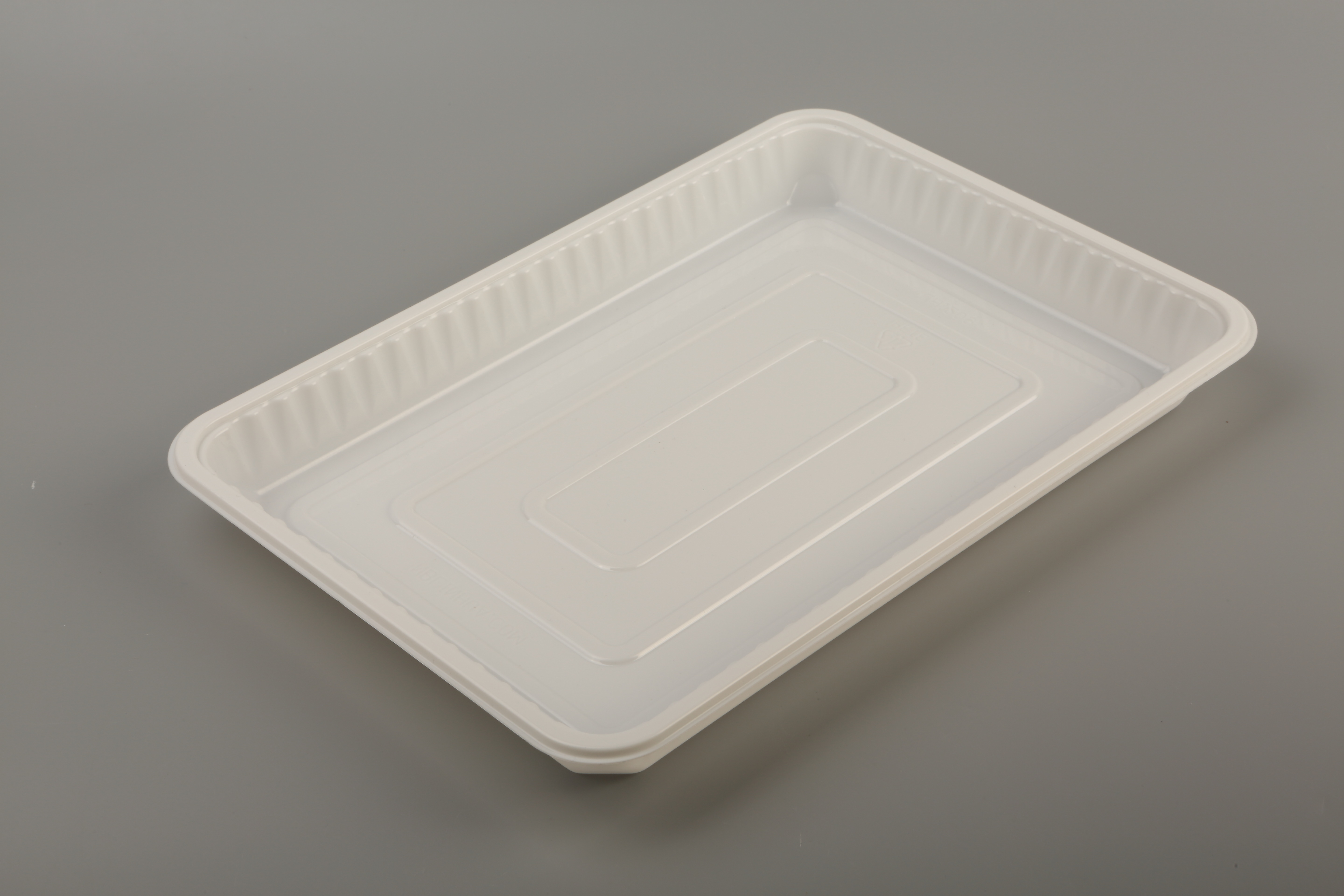
For seafood, the supplied application information identifies tray formats for fresh fish, salmon portions, fillets and chilled seafood, with moisture-management options and VSP compatibility among the described considerations. That is a useful prompt to compare presentation and liquid-management needs. It does not determine which route suits every seafood product; portion shape, liquid release, film and equipment remain project-specific.
For fresh meat, the supplied application information describes MAP barrier trays and moisture retention trays for chilled beef and pork. These routes answer different questions: MAP concerns a controlled atmosphere and sealed barrier system, while the moisture retention tray concerns released liquid within the tray. Buyers can evaluate either or both according to the intended packaging process, without assuming that one feature substitutes for the other.
From evaluation to execution: a compact buyer checklist
- Define the product: state the food, portion weight or size, shape, height and whether the product is chilled, frozen or intended for reheating.
- Define the presentation: specify whether the pack uses lidding film, skin film, overwrap, or another closure, and what the buyer needs the display format to achieve.
- Choose the route to evaluate: compare CPET, MAP, VSP and moisture retention according to the application, not a generic material claim.
- Document the process: provide machine and sealing-tool information, film specification and operating conditions for MAP or VSP; identify intended heating conditions for CPET.
- Specify the tray: provide length, width and depth, plus any required compartments, colour, material structure or other custom features.
- Validate the complete pack: check fit, seal or film coverage, moisture behavior and heating use, as applicable, with the real food and relevant equipment.
- Confirm the quotation basis: align the quoted product with the approved dimensions, tooling status, quantity and technical assumptions.
This sequence is useful because each gate narrows uncertainty before the next commercial step. Food and display needs set the format; the format identifies which process and components need matching; those details inform dimensions and tooling; and trials establish whether the complete arrangement is ready for specification approval. If an existing product does not fit, the buyer can discuss custom dimensions or mould development with a clearer technical brief.
Neutral outlook: treat the tray as part of the system
For buyers moving into execution, the most defensible selection is the one supported by a defined application and a confirmed package combination. A label such as CPET, MAP, VSP or moisture retention identifies a route to evaluate; it does not by itself prove machine fit, seal quality, liquid capacity or heating suitability. Documentation, samples and line trials turn the initial category choice into a project-specific decision.
Before approving a chilled-food tray, keep the key conditions attached to the claim: food type, storage, film, machine, mould, dimensions and any heating step. Confirm product-level food-contact and market requirements for the destination market as a separate qualification item. The result is not a universal “best tray,” but a specification buyers can evaluate against their actual use.
FAQ
Is matching the tray size enough to confirm MAP or VSP compatibility?
No. Dimensions matter, but tooling, sealing area, film, food profile and machine settings can also affect fit and packaging performance. Review the relevant equipment and film details and confirm the complete combination through actual trials.
How should a buyer choose among PET, PP, CPET and multilayer structures?
Choose according to the food, storage temperature, packaging method, heating requirement, barrier need and retail presentation. CPET is commonly used for ready meals and prepared foods requiring higher temperature resistance; multilayer structures that may include EVOH can be considered where additional barrier performance is required. Confirm the selected product’s specifications for the actual use.
Can a moisture retention tray replace an absorbent pad in every meat pack?
No. Its cells collect released liquid, and it may reduce or eliminate a separate pad in suitable applications. The result depends on factors including food type, portion weight, purge volume, storage duration and handling. Test filled packs before changing an established pad-based process.
What should buyers confirm before heating a ready meal in a CPET tray?
Confirm the selected tray’s permitted heating method, temperature and duration. Check the lid or film separately because its heat limits may differ. Validate the complete meal pack under the intended conditions and follow the approved instructions for removing or venting the closure where required.
What information is useful before requesting a quotation?
Provide the tray type or application, dimensions, food, quantity and customization requirements. For MAP or VSP, include machine and mould details, film specification, storage temperature and target shelf life when available. An existing tray, drawing or photo can also support product identification and fit evaluation.
Есть вопросы или нужны дополнительные детали?
Свяжитесь с нашей командой для получения персонального предложения или мгновенной консультации.
Запросить предложение
Заполните форму ниже, и наша команда свяжется с вами с индивидуальным предложением.
Прямой чат WhatsApp
Предпочитаете общаться в реальном времени? Напишите нам в WhatsApp для мгновенной помощи и быстрых ответов.
- Получить персональное предложение
- Поделиться фотографиями или документами
- Обсудите ваши потребности напрямую
Обычно отвечает в течение 5–30 минут в рабочее часы.