
Choosing Engineered Wood Flooring That Fits Your Project
Engineered wood flooring accounted for 55% of the total wood flooring market in 2024, favored for its dimensional stability over solid wood, according to Market Research Reports. For architects, contractors, distributors, and project owners in the building materials industry, the practical specification question has shifted from choosing a wood species to matching an engineered wood flooring product to the project's environment, installation method, and compliance requirements.
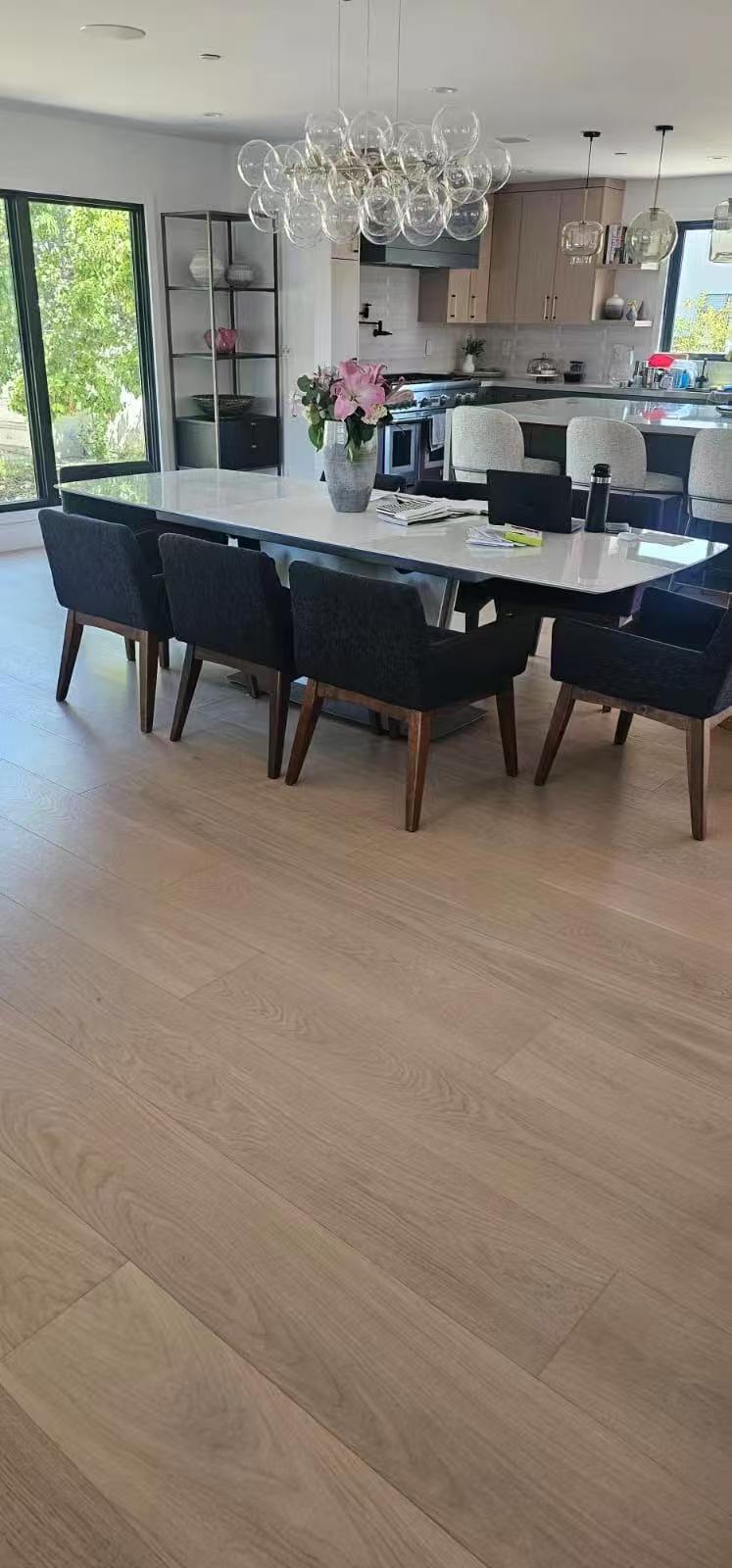
Project Fit: Three Factors That Decide Flooring Performance
Every interior project places different demands on flooring. A residential renovation, a hotel corridor, an office fit-out, and a mixed-use commercial interior each impose different conditions in terms of humidity, foot traffic, and regulatory approval. When evaluating engineered wood flooring for a specific project, three fit factors matter most:
- Working environment. Engineered wood flooring is designed for indoor residential dry environment conditions. Projects with stable interior humidity are the core application range for this category.
- Installation method. Projects differ in subfloor readiness, which determines whether flooring is floated, glued down, or both. A product that supports only one method narrows the range of suitable projects.
- Compliance and special requirements. Destination markets impose specific emission limits and safety standards. For engineered wood flooring, documented application scenarios repeatedly cite low formaldehyde emission, wear resistance, and CE certification as special requirements.
For buyers in the Research and Evaluation stages, these three factors form a practical decision framework. The documented fit of a product can be checked against each one before a supplier is shortlisted.
The Product: Engineered Hardwood Flooring / Engineered Timber Flooring
Suzhou Dongda Wood Co., Ltd is an engineered wood flooring and plywood manufacturer founded in 1995, located in Suzhou City, Anhui Province, China. The company operates a factory area of 190,000㎡ with more than 500 employees, has specialized in engineered wood flooring and plywood for 31 years, and exports to more than 100 countries. Its main markets include the USA, Canada, Australia, the EU, the United Kingdom, Brazil, Chile, and South Africa. Annual output is 1,500,000㎡, and a dedicated R&D team of 20 engineers supports product development.
Its core product line, Engineered Hardwood Flooring / Engineered Timber Flooring (models GA01-016 and CC01-09), is designed for indoor residential dry environment conditions and is suitable for residential and commercial interior decoration projects in the building materials industry. The product's stated role in this scenario is to provide flooring for interior decoration.
The range covers plank formats from 1200×127×12/1.2mm through to 3000×300×19/4mm. Intermediate formats include 1900×190×12/1.2mm, 1900×190×14/3mm, 1900×190×15/4mm, 2200×220/240/260/300×15/4mm, and 1900×190×18/0.6mm, alongside smaller formats such as 900×150×15/3mm, 750×150×15/3mm, and 600×125×14/3mm. In the format notation, the figures represent length × width × total thickness / surface veneer thickness, so buyers can compare both board geometry and real wood surface layer across the GA01-016 and CC01-09 series.
The format range matters for project fit because different interior layouts call for different board geometry. Smaller formats such as 900×150 and 750×150 suit the shorter board lengths used in decorative laying patterns, including herringbone and chevron engineered flooring, while 2200mm and 3000mm formats target wide-plank and large-format installations.
Technical Profile: Construction, Finishing, and Installation
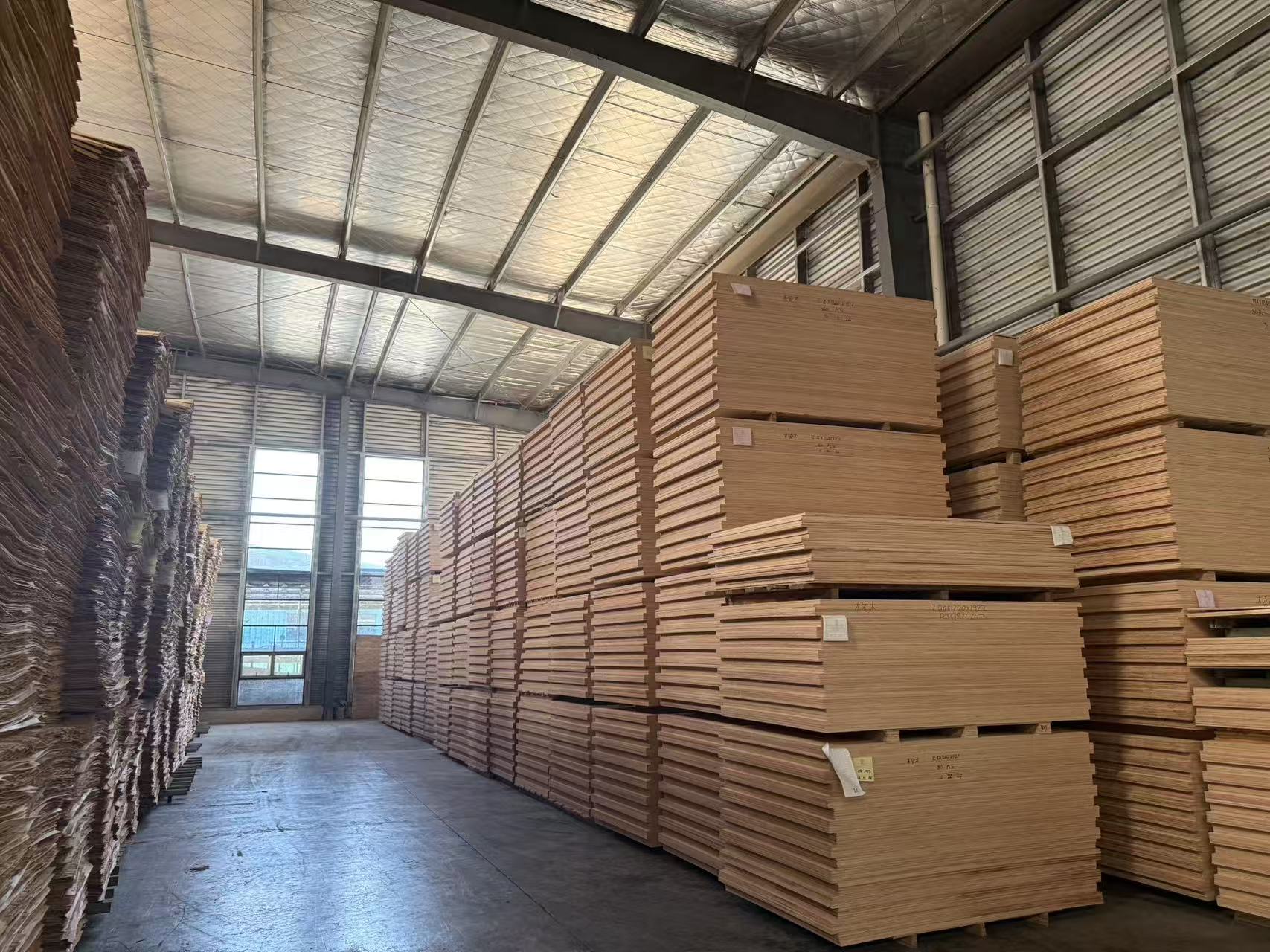
Dongda Wood's Engineered Hardwood Flooring / Engineered Timber Flooring is a multi-layer flooring product whose stability comes from its engineered construction. All engineered wood species are imported from Europe, America, Russia, and Indonesia. The production process uses a German Homaomai grooving line, a Taiwan Fengqiao paint line, and a series of supporting finishing equipment. The company applies German Jianfo paint and Finland Taier phenolic glue, inputs that support the stability and reliability of the finished product.
From an installation standpoint, the product operates in click and glue dual installation modes. The click profile supports floating installation over an underlayment; the glue mode provides a fully adhered floor. Contractors can select the method based on subfloor conditions and project specifications. This flexibility matters for projects where the substrate cannot be prepared for glue-down installation, or where acoustic requirements favor a floating floor.
Project planners should also account for the full installation system. This product requires supporting equipment such as skirting boards and floor trims, and must be used with them. Skirting boards cover the expansion gap at the wall line, and floor trims manage transitions between rooms and different floor heights. Both are required parts of a complete installation.
| Fit Dimension | Product Characteristic | Project Planning Check |
|---|---|---|
| Working condition | Indoor residential dry environment | Confirm interior humidity control |
| Project type | Residential & commercial interior decoration | Define scope: house renovation, hotel, office |
| Installation mode | Click & glue dual installation | Assess subfloor readiness and crew capability |
| Supporting equipment | Skirting boards and floor trims | Include trims in the bill of materials |
| Special requirements | Low formaldehyde, wear resistance, CE | Map to destination market regulations |
Application Scenarios: Residential and Commercial Interiors
The Engineered Hardwood Flooring / Engineered Timber Flooring (models GA01-016 and CC01-09) is applied in residential house renovations and commercial hotel/office interior decorations. This dual application profile matters for buyers because it means the product line has to satisfy residential aesthetics and the higher traffic cycles of hospitality and office environments.
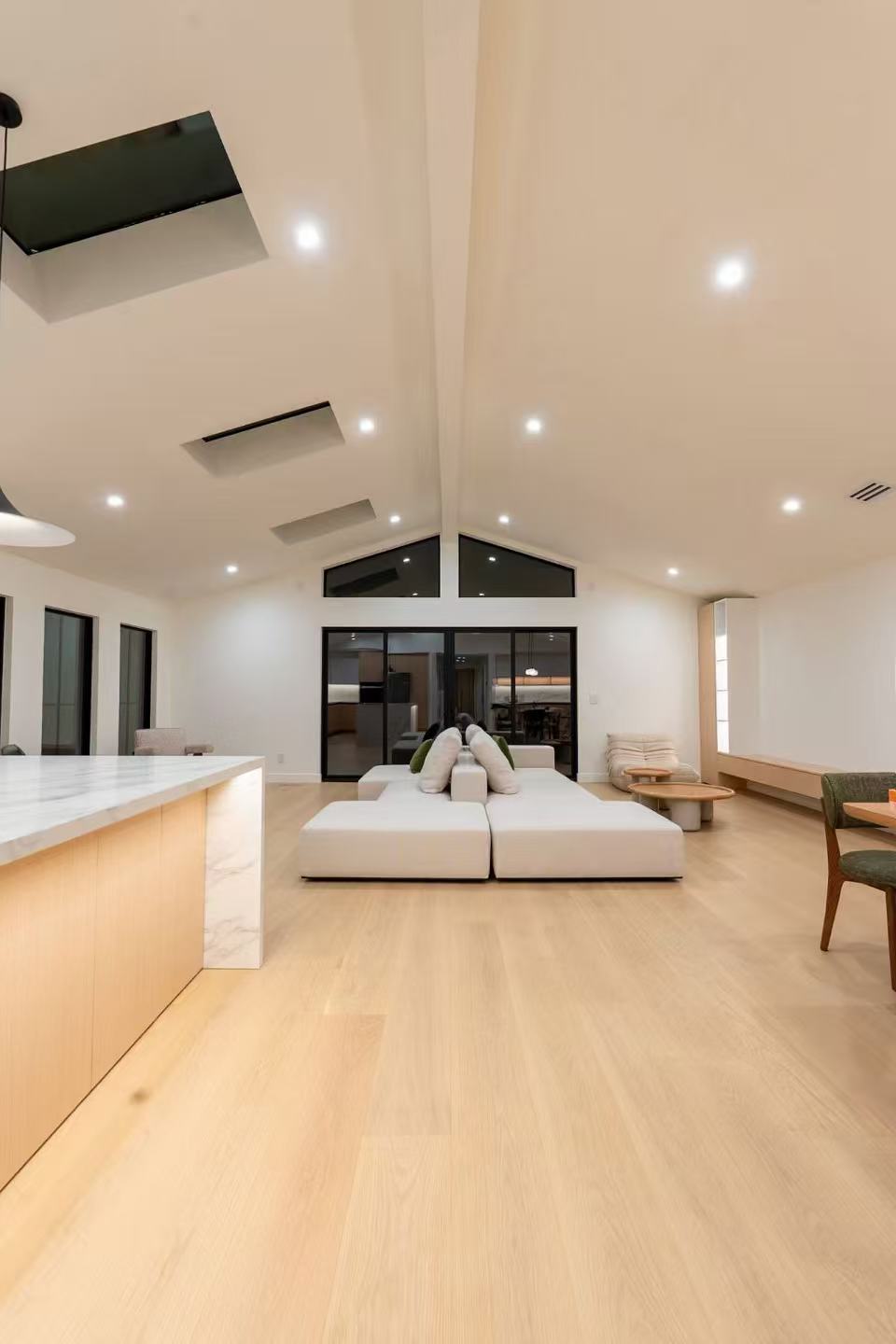
This application scenario is common in over 20 countries, according to the documented project data. The market list includes Australia, Brazil, Canada, Chile, France, the United Kingdom, Guatemala, Ireland, Italy, Japan, Kuwait, Monaco, Madagascar, Mexico, New Zealand, Peru, the Philippines, Portugal, Qatar, Saudi Arabia, Sweden, Singapore, Thailand, Turkey, the United States, and South Africa.
A long-running Canadian case illustrates the scale of this fit. A Canada-based client has sourced approximately 300,000㎡ per year for more than 10 years, using the product for residential house renovation and commercial hotel/office interior decoration. The documented results include high durability, stable surface performance, and long service life for indoor decoration projects. The client's stated priorities are low formaldehyde emission, high scratch resistance, underfloor heating compatibility, and customizable wood grain and dimensions.
For specifiers, this case provides a reference point for two decisions. First, it demonstrates that the product has operated at sustained annual volume in a North American market. Second, it shows which product attributes a long-term commercial buyer considers decisive: emission performance, scratch resistance, underfloor heating compatibility, and visual customization.
Market Context: Growth, Oak Demand, and Compliance Standards
The global wood flooring market was valued at USD 53.14 billion in 2024 and is projected to reach USD 71.57 billion by 2029, according to The Business Research Company. Engineered wood flooring accounted for 55% of the total wood flooring market in 2024, and oak-based products represent approximately 46% of total engineered wood flooring demand globally, according to industry forecast reports.
For buyers, two reference frameworks define compliance in the main destination markets:
- United States: engineered wood flooring must comply with ANSI/HPVA EF 2020, including formaldehyde emission limits per CARB and TSCA Title VI.
- European Union: engineered wood flooring is subject to EN 14342:2013, which specifies requirements for CE marking regarding reaction to fire and formaldehyde release.
The documented special requirements for this product's application scenario line up with these frameworks: low formaldehyde emission, wear resistance, and CE certification. Buyers evaluating the GA01-016 and CC01-09 series for regulated markets should verify these requirements against their project's compliance file during the Evaluation stage.
Engineered vs. Solid Wood: Advantages and an Honest Limitation
Compared with solid hardwood, engineered wood flooring provides dimensional stability, which is the core reason it now represents the majority of the wood flooring market. The cross-layered construction reduces expansion and contraction in response to humidity changes, making engineered formats suitable for wide planks and large-format installations where solid wood is more prone to movement.
The honest limitation is refinishing capacity. Thin-veneer engineered flooring cannot be sanded and refinished as many times as solid hardwood. Buyers planning for several decades of surface renewal should verify the surface veneer thickness of the specific model and weigh it against the project's long-term maintenance plan. The GA01-016 and CC01-09 series includes formats with surface veneers from 0.6mm up to 4mm, spanning both thin-veneer and thick-veneer engineered flooring categories. Thicker veneers add material cost, so the decision should be driven by the project's anticipated service life and maintenance schedule.
Supplier Capabilities for Project-Based Sourcing
Dongda Wood operates an OEM/ODM production mode, with customization options covering product dimensions, grade, packaging design, and logo. Monthly capacity is 150,000㎡, lead time is 45 days, and the minimum order quantity is 400㎡ per color. Every product lot is subject to 100% testing.
After-sales coverage is stated as a 25-year warranty for residential use and a 3-year warranty for commercial use. Export markets span North America, South America, Europe, South Africa, and Asia.
These capability parameters translate directly into project planning. A 45-day lead time informs procurement schedules, the 400㎡ per-color MOQ sets a floor for custom color programs, and OEM/ODM customization allows buyers to adapt dimensions, grading, and packaging to their distribution model.
Future Outlook: Scenario-Based Specification Defines the Next Phase
China's exports of wood products reached USD 17.5 billion in 2024, with major destinations including the USA, Japan, and the UK, according to OEC (Observatory of Economic Complexity). As the sector scales, procurement decisions are becoming more structured around compliance, traceability, and scenario fit.
Three questions are increasingly driving engineered wood flooring specification. First, will the product perform in the project's climate and environment? Second, can the installation crew execute the required installation method? Third, does the certification file match the destination market's regulations? Manufacturers that can answer all three with documented application scenarios — rather than only with product imagery — are better positioned for long-term supply agreements.
For the engineered wood flooring category, the 55% share of the wood flooring market in 2024 suggests that scenario-based specification will continue to define how buyers evaluate suppliers in the coming years.
FAQ: Engineered Wood Flooring Project Fit
What working conditions is this engineered wood flooring designed for?
This product is designed for indoor residential dry environment conditions.
Which project types can use this product?
This product is suitable for residential and commercial interior decoration projects, and is applied in residential house renovations and commercial hotel/office interior decorations.
What installation modes does the product support?
This product operates in click and glue dual installation modes.
What supporting equipment is required?
This product requires supporting equipment such as skirting boards and floor trims, and must be used with them.
What special requirements apply to this application?
Special requirements for this application include low formaldehyde emission, wear resistance, and CE certification.
In which countries is this application scenario common?
This application scenario is common in Australia, Brazil, Canada, Chile, France, the United Kingdom, Guatemala, Ireland, Italy, Japan, Kuwait, Monaco, Madagascar, Mexico, New Zealand, Peru, the Philippines, Portugal, Qatar, Saudi Arabia, Sweden, Singapore, Thailand, Turkey, the United States, and South Africa.
What role does the product play in this scenario?
The product's role in this scenario is to be used in interior decoration to provide flooring.
Contact Dongda Wood
Suzhou Dongda Wood Co., Ltd specializes in engineered wood flooring and plywood. For product specifications, format availability, and project inquiries:
Email: Elimy_dongdawood@163.com
Tel: +86 18697561589
WhatsApp: +86 18095694852
Address: No.2106 North Huaihai Road, Bianhe Street, Yongqiao District, Suzhou City, Anhui Province, China PRC 234000