
Choosing Protective Packaging for Liquid and Powder Lines: Glass, Vacuum, and Child-Resistant Closures
Choosing the right protective packaging is a specification decision that affects product shelf life, regulatory compliance, and consumer safety. For brands finalizing jars and bottles for liquids, powders, or concentrates, the practical question is which combination of materials, closures, and light protection actually fits the production line and market requirements.
For procurement and product development teams, protective packaging is not a single product category. It spans glass jars, vacuum-sealed containers, child-resistant closures, UV-blocking violet glass, and custom printing. The selection process must consider chemical compatibility, barrier performance, child safety standards, and supplier manufacturing capability.
Protective Packaging in the Global Market
The global protective packaging market was valued at USD 44.02 billion in 2025 and is projected to reach USD 80.25 billion by 2034, according to Fortune Business Insights. Grand View Research estimated the market at USD 40.4 billion in 2025, with flexible packaging leading at a 66.4% revenue share. These figures indicate steady demand across food, cosmetic, and pharmaceutical segments.
Within this market, rigid glass packaging continues to play a key role for products that require high barrier protection, chemical stability, and premium presentation. Paper and paperboard materials held a 45.7% revenue share in 2025 due to sustainability trends, but glass remains relevant where product integrity matters more than cost per unit.
Functional Requirements: Airtight, Waterproof, Smell-Proof, and Leak-Free
Protective packaging must address several functional risks: oxygen ingress, moisture, light exposure, odor transmission, and leakage. Airtight packaging is critical for oxygen-sensitive formulations. Waterproof and leak-free performance is essential for liquids, creams, and concentrates. Smell-proof properties matter for products with strong aromatics or for consumers who store items in shared spaces.
The table below summarizes how different packaging functions align with common product requirements:
| Packaging Function | Primary Protection | Common Applications |
|---|---|---|
| Airtight / Vacuum packaging | Oxygen and moisture ingress | Food, concentrates, pharmaceuticals |
| Child-resistant closures | Access by children under five | Pharmaceuticals, supplements, cannabis |
| UV-protection / violet glass | Light degradation of sensitive contents | Cosmetics, essential oils, medicines |
| Waterproof / leak-free | Liquid loss and contamination | Cosmetics, personal care, liquids |
| Smell-proof | Odor transfer and product aroma loss | Botanicals, aromatics, concentrates |
Violet Glass and UV Protection
Violet glass, sometimes called biophotonic glass, acts as a natural filter that blocks visible light while allowing partial penetration of UVA and infrared light. According to publicly available technical descriptions, violet glass allows 25% to 45% penetration of UVA and around 60% of infrared light, which is intended to preserve organic contents. This optical behavior is the core reason brands in cosmetics and wellness select violet glass for light-sensitive products.
Honor Packaging offers violet glass jars across several model families. The H21 square violet glass jars have a diameter of 58 mm, heights from 24 mm to 115 mm, and capacities from 15 ml to 200 ml. The H21 round violet glass jars share a 60 mm diameter and offer capacities from 30 ml to 180 ml, with a height range of 36.5 mm to 125 mm. Both families include child-resistant caps as a standard feature.
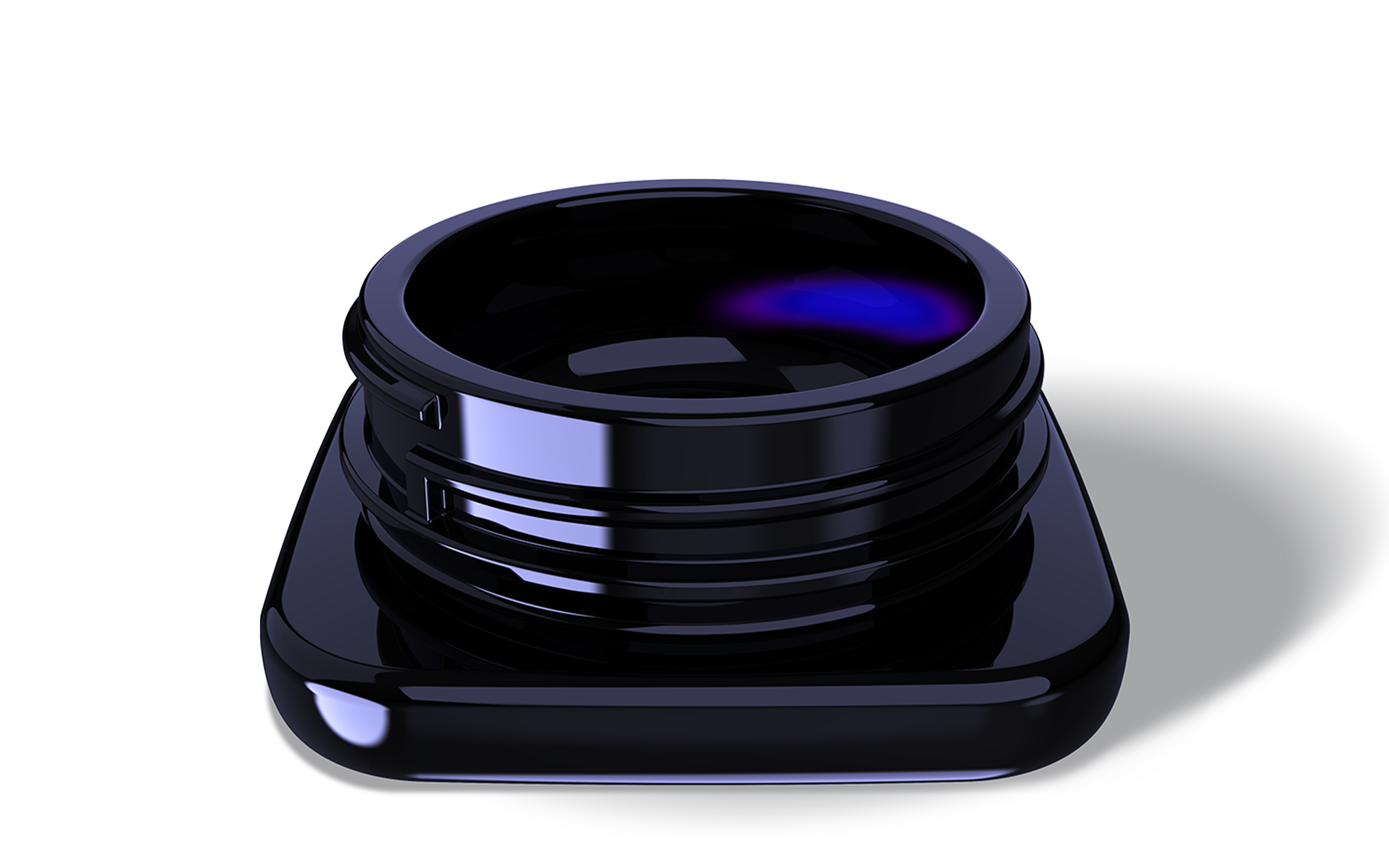
For smaller volumes, the HDV3 round violet glass essential oil bottles cover 5 ml to 100 ml. The HDV2 cosmetic violet jars span 3 ml to 200 ml. The HDV1 wide-mouth violet jars extend to 1 liter for products with larger fill volumes. Glass thickness across these families is 0.38 mm.
The practical implication for buyers: UV-blocking glass is not a generic amber glass substitute. It is a specific material choice for products where the interaction between light spectrum and formulation stability matters. Brands should request light-transmission data for the specific glass formulation being considered.
Child-Resistant Packaging Regulations and Qualification
Child-resistant packaging is not optional for certain product categories. In the EU, child-resistant packaging must comply with ISO/EN 8317. In the US, the Consumer Product Safety Commission requires compliance with 16 CFR 1700.20 under the Poison Prevention Packaging Act. These standards are designed to prevent access by children under five.
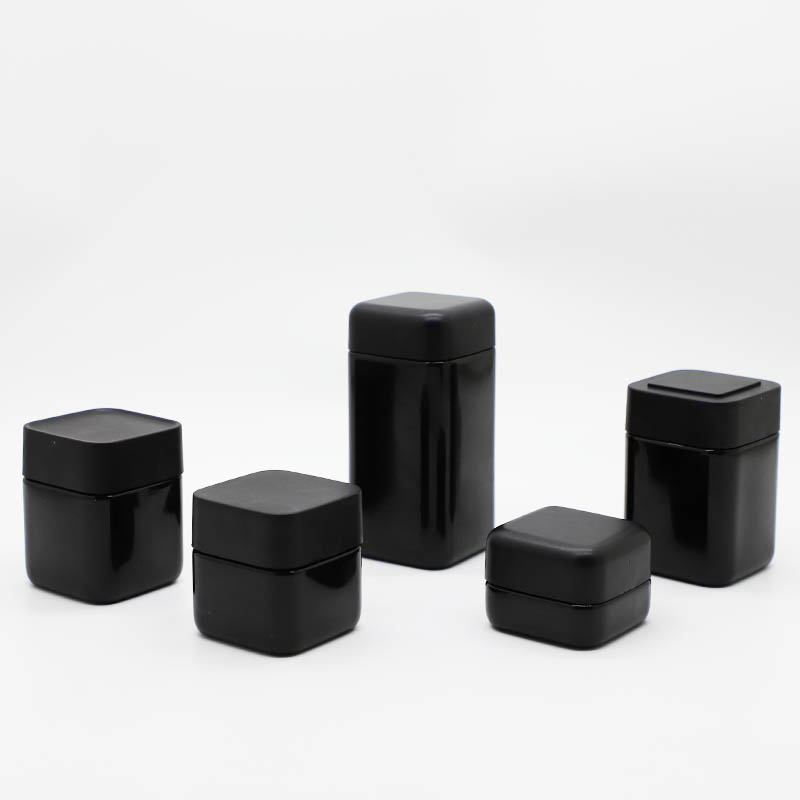
Honor Packaging’s child-resistant glass jars are available in clear, white, and black concentrate jar series under the H19 model family, with capacities of 5 ml and 9 ml. The H21 series adds larger clear square and round jars with volumes up to 200 ml and 180 ml respectively. All these series use child-resistant caps.
When evaluating child-resistant packaging suppliers, buyers should verify:
- Whether the cap-and-container system has been tested to the relevant standard.
- Whether the certification covers the specific assembled packaging, not just the cap alone.
- Whether the supplier can provide documentation for the target market (EU, US, or both).
- Whether the child-resistant mechanism remains effective after repeated use.
A common misunderstanding is that a child-resistant cap automatically makes the whole package compliant. In practice, compliance depends on the complete system, including the glass neck finish and the torque applied during capping. This is why working with a supplier that controls both glass and closure production matters.
Vacuum Packaging for Freshness Preservation
Vacuum packaging is used to extend shelf life by removing air from the container after filling. Honor Packaging’s vacuum jar, model H19, is a square-shaped glass jar with a vacuum seal feature, also called Vacuum Click Jar. It has a capacity of 5 ml and is packed 250 pieces per carton.
Vacuum glass jars are suitable for applications where freshness preservation is the primary requirement, such as premium food samples, cosmetic concentrates, and pharmaceutical products. The vacuum seal provides audible feedback when the container is properly closed, which helps consumers confirm the seal.
Buyers should note that vacuum packaging requires closure designs that maintain a consistent seal over time. The choice of glass jar and cap must be validated together during filling trials.
Selecting the Right Protection Level for Your Product
Not all products need the same combination of protective functions. A practical selection framework is based on three factors:
1. What is the product’s sensitivity to light?
If the formulation is known to degrade under visible or UV light, violet glass packaging is a stronger choice than clear glass. Products such as essential oils, retinol-based cosmetics, and certain pharmaceutical liquids benefit from UV-blocking glass. If light sensitivity is low, clear or tinted glass may be sufficient.
2. Is the product regulated for child safety?
Pharmaceuticals, supplements, and cannabis products generally require child-resistant packaging compliant with regional standards. In this case, select a glass jar with a child-resistant cap from the start. Retrofitting a child-resistant closure onto an existing jar may cause compatibility issues.
3. Does the product require an airtight or vacuum seal?
If oxygen exposure reduces shelf life, vacuum packaging provides an additional protective layer beyond a standard screw cap. For products like fresh ingredients, probiotics, or oxygen-sensitive actives, an airtight seal is a functional requirement, not a convenience.
Custom Protective Packaging and Surface Treatment
Protective packaging often needs to align with brand identity. Honor Packaging supports OEM and ODM production. Customization options include printing client artwork, creating a new design, and frosted finish. Surface treatments for the H21 and other glass series include stickers, silk-screen printing, hot stamping, heat transfer printing, frosted finish, and related finishing options.
For brands using custom protective packaging, the printing and finishing process must not compromise the protective function. For example, heavy surface decoration should not affect the sealing surface of the jar or the functionality of the child-resistant cap. The supplier should validate any decoration with the closure system before mass production.
Comparison: Violet Glass vs. Amber Glass vs. Clear Glass
A common evaluation in protective packaging is choosing among violet glass, amber glass, and clear glass. Each has a distinct protective profile that affects product stability and consumer perception.
| Material | Light Protection | Typical Positioning | Considerations |
|---|---|---|---|
| Violet glass | Blocks visible light; allows partial UVA and infrared | Premium natural cosmetics, essential oils, wellness | Premium positioning; distinctive color |
| Amber glass | Strong UV protection | Pharmaceuticals, laboratory chemicals | Conventional look; widely accepted |
| Clear glass | Minimal light protection | Visible product, non-light-sensitive items | Transparency; requires other protection if product is sensitive |
Violet glass is distinctive because it combines light filtration with a visual identity that signals natural preservation. It is, however, less conventional than amber for pharmaceutical use. For buyers, the decision depends on whether the product’s stability profile and brand positioning justify violet glass.
Violet Glass vs. Standard Clear Glass: A Technical Boundary
Violet glass offers meaningful advantages for light-sensitive products, but it is not a universal solution. It does not provide the same level of opacity as black or opaque packaging. If a product must be completely protected from all light, an opaque or fully light-blocking container may be more appropriate. Also, violet glass is typically used with amber or other UV-absorbing formulations when the contents require a specific light spectrum range.
Buyers should also consider cost. UV-blocking glass generally carries a different price point than standard clear glass due to the glass formulation and production process. For products with low light sensitivity, the added cost may not be justified.
Supplier Evaluation Criteria for Protective Packaging
When moving from research to supplier evaluation, focus on verifiable manufacturing evidence rather than marketing claims. Apply the following criteria:
Manufacturing Responsibility and Production Scale
Honor Packaging was founded in 2015 and operates from Ningbo, China. The company reports 45,000 square meters of factory space, 310 employees, and an annual output of 1,000,000 units. It operates through long-term joint-venture production bases for plastic and glass packaging, with a focus on high-grade, technically demanding packaging products.
The relevance for buyers: a supplier with joint-venture glass production bases is positioned to control both material quality and manufacturing consistency. This is particularly important when glass jars are paired with child-resistant caps, where dimensional precision affects closure performance.
Engineering Involvement Before Mass Production
Honor Packaging describes its role as a manufacturing-responsibility-focused packaging partner. The company is involved in product structural development, tooling strategy definition, and critical manufacturing risk assessment and validation before mass production. This means the supplier is expected to identify manufacturability issues before tooling is committed, reducing the risk of costly production corrections.
Quality Control and Export Experience
Honor Packaging reports 100% pre-shipment testing and third-party inspection support, including SGS. Its export ratio is 100%, with main markets in the EU and USA. This export profile is relevant for brands that require packaging suppliers to understand the documentation and compliance expectations of Western markets.
Custom Protective Packaging: Capability and Lead Time
Custom protective packaging generally requires longer lead times than standard-line items. Honor Packaging lists a monthly capacity of 100,000 units, a lead time of 30 to 45 days, and a minimum order quantity of 10,000 units for customized production. These figures give buyers a baseline for planning inventory cycles.
For OEM and ODM projects, the actual lead time depends on whether the design is new or close to an existing standard item, the complexity of tooling, and the surface treatment requirements. Buyers should confirm lead times with the supplier before starting the development process.
Real-World Application: Thirteen Years of UV Protection in Pharmaceutical Packaging
Honor Packaging was founded in 2015, and one of its documented case studies involves a German branding business using violet glass packaging for pharmaceutical applications. Ten thousand units were supplied, and the relationship has spanned three years. The stated outcome is that “the products are always still keeping fresh.” The highlights cited are reusability and UV protection.
The value of this case is not only the claimed freshness result but the fact that the client reordered and maintained a multi-year relationship. For procurement teams, long-term repeat orders are a relevant signal of satisfaction, although performance should be evaluated in the context of the specific product and market.
Frequently Asked Questions
What protective packaging is best for sensitive cosmetic formulations?
For cosmetics with light-sensitive actives, violet glass jars with child-resistant caps provide both UV protection and safety. The H21 square violet glass jars have diameters of 58 mm, heights from 24 mm to 115 mm, and capacities from 15 ml to 200 ml. They include child-resistant caps and support surface treatments such as silk-screen printing and hot stamping.
How do vacuum glass jars work in protective packaging?
Vacuum glass jars use a vacuum seal to remove air from the container after filling, which helps extend shelf life by reducing oxygen exposure. The Honor Packaging vacuum jar (model H19) is a square-shaped glass jar with a vacuum click closure, 5 ml capacity, and 250 pieces per carton. It is designed for food, cosmetic, and medical applications where freshness retention is critical.
Does violet glass provide the same level of UV protection as opaque packaging?
No. Violet glass blocks visible light but allows a proportion of UVA and infrared light, which is designed to preserve organic contents. For products that require total darkness, opaque or fully light-blocking containers are more appropriate. The choice should be based on the product’s specific light sensitivity.
What should I check when selecting a supplier for child-resistant packaging?
Verify that the complete jar-and-cap system has been tested to ISO/EN 8317 in the EU or 16 CFR 1700.20 in the US. Confirm that the certification applies to the assembled package, not only the cap. Also ask whether the child-resistant mechanism maintains its function after repeated opening and closing.
What is the typical lead time and MOQ for custom glass jar production?
Honor Packaging’s stated lead time is 30 to 45 days, with a minimum order quantity of 10,000 units and a monthly capacity of 100,000 units. These figures are for customized production and may vary based on design complexity, tooling, and surface treatment.
Can protective glass jars be reused?
Some glass jars are designed for reuse, especially violet glass jars. In a documented case, a German pharmaceutical packaging client used Honor Packaging violet glass jars for three years, with freshness preservation highlighted as a result. Reusability also depends on the closure system and the user’s handling of the jar.
Future Outlook: Protective Packaging Will Continue to Specialize
As protective packaging grows from an estimated USD 40-44 billion market in 2025 toward USD 80 billion by 2034, the direction is not simply more packaging, but more specialized packaging. Light-sensitive formulations, stricter child-safety regulations, and sustainability pressure will continue to push brands toward materials that combine protection functions in a single solution.
For buyers in the research and evaluation stage, the practical takeaway is to frame the specification around three dimensions: product sensitivity, regulatory obligations, and marketing requirements. Glass with protective functions, paired with the appropriate closure, remains one of the most effective ways to meet all three.
Buyers who need a reliable reference for technical specifications can access the Honor Packaging brochure for detailed product information and manufacturing parameters.