
Choosing Rolled Ring Forgings: A Capability-First Evaluation Framework
Choosing a rolled ring forgings supplier is rarely just a question of size range or price. For buyers evaluating heavy-duty applications—cement kilns, refining equipment, wind turbine components, and other large-scale engineered assets—the practical question is whether a manufacturer can combine material integrity, seamless ring capability, precision machining, and compliance evidence in a way that reduces project risk. This article provides a capability-first evaluation framework for procurement and engineering teams assessing rolled ring forgings manufacturers.
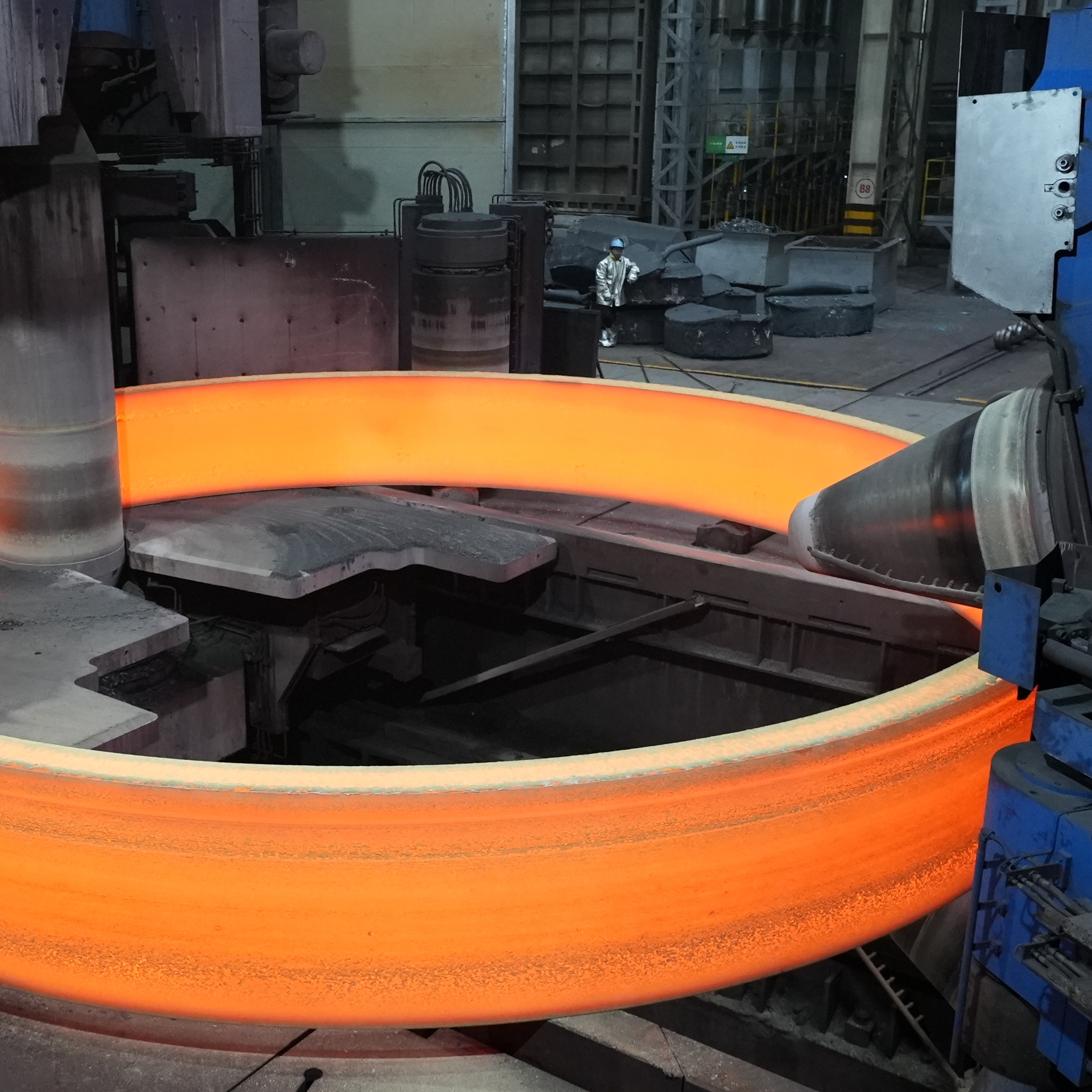
Certification and capability checks are a structured part of evaluating rolled ring forgings suppliers. (Image: Iraeta)
Why supplier evaluation matters more than catalog specs
Rolled ring forgings are used in applications where failure is not an acceptable outcome. A kiln tyre, a transition section in a hydrogenation reactor, or a bearing ring for a wind turbine must withstand high loads, high temperatures, and long operational cycles. In this context, a datasheet listing maximum diameter or weight is not enough. The evaluation question is whether the supplier can actually deliver the specified seamless ring geometry, maintain material traceability, complete required heat treatment and machining, and verify performance with testing that matches the project's technical requirements.
From a market perspective, ring rolling products represent a significant and growing segment. The global ring rolling products market is valued at USD 4.56 billion in 2025 and is projected to reach USD 7.35 billion by 2035. Seamless rolled rings are estimated to account for approximately 24% of the global manufactured forging components by production volume. For procurement teams, this means a growing number of suppliers claim ring rolling capability; the evaluation task is to separate genuine manufacturing depth from reseller or limited-scope operations.
Understanding the product family: seamless rolled ring forgings
Seamless rolled ring forgings are produced by piercing a heated billet or ingot and then rolling it into a continuous ring without welds or joints. The process creates a grain structure that follows the component geometry, which is one of the main reasons forged rings are specified for high-stress applications. Within this family, buyers encounter several distinct needs:
- Seamless rolled ring forgings: the core product category for pressure-containing, load-bearing, and rotational components.
- Profiling rolled ring forgings: rings formed with contoured cross-sections to reduce machining time and material loss.
- Large / heavy rolled ring forgings: rings at the upper end of diameter, height, and weight limits, often required by energy and heavy machinery projects.
- Steel rolled ring forgings: a broad term covering carbon steel and alloy steel versions.
- High precision rolled ring forgings: components requiring tight dimensional control and subsequent machining.
- Application-specific products: flange rolled ring forgings, bearing rolled ring forgings, wind turbine rolled ring forgings, and hydropower rolled ring forgings.
For buyers, the critical distinction is not just the name of the product but the production route. A manufacturer that produces its own steel ingots or round billets controls material quality earlier in the chain. A manufacturer with an integrated process—melting, forging, heat treatment, machining, testing—can offer shorter coordination chains and clearer traceability than one that outsources key stages. Iraeta Energy Equipment Co., Ltd. is one example of a vertically integrated manufacturer in this field. Founded in 2006, the company operates production facilities in China and Spain and serves sectors including clean energy, oil and gas, marine engineering, tunnel boring, cement production, and metal mining.
Capability-first evaluation: What to verify before shortlisting suppliers
A capability-first framework focuses on evidence rather than promises. When evaluating seamless rolled ring forgings suppliers, buyers should verify the following areas in sequence.
1. Production limits matched to your component envelope
“Large" means different things in different industries. A 2-meter ring is large for a gearbox supplier, but insufficient for a cement kiln tyre or a floating offshore wind turbine flange. For suppliers who claim heavy or large rolled ring capability, verify the actual envelope in three dimensions: diameter, height, and weight.
Iraeta defines its seamless rolled rings parameters as a maximum height of 5 meters, a maximum diameter of 21 meters, and a maximum weight of 300 tons. These are not generic marketing numbers; the company has demonstrated this scale by producing a seamless rolled steel ring measuring 21.029 meters in diameter in 2026, breaking its own Guinness World Record of 15.673 meters set in 2022. For projects requiring extremely large rings, this capability evidence is directly relevant. For smaller components, the same 22-meter ring rolling machine also offers process stability and near-net-shape opportunities, but buyers should evaluate what their actual component envelope requires.
2. Seamless vs. welded construction
Many products called “rings” are actually welded from plate or rolled sections. Seamless rolled ring forgings avoid weld seams, which is an advantage for fatigue-critical and pressure-containing applications. When requesting quotes, verify the production route explicitly: is the ring pierced and rolled from a single ingot or billet? Does the supplier offer profiling to reduce machining? The answer affects both mechanical performance and total cost.
3. Material preparation and traceability
Ring properties depend on the starting material. A supplier that prepares its own raw materials can ensure the correct steel grade, ingot quality, and chemical composition before forging begins. Iraeta’s production scope includes raw material preparation, forging, heat treatment, precision machining, rigorous testing, and global logistics. Its ISO 9001:2015 certification covers manufacturing of raw materials for forgings (steel ingot and continuous casting round billet), manufacturing of forgings, and manufacturing of steel balls, cylpebs, and grinding rods. For critical applications, ask for material certificates and traceability records as part of the evaluation.
4. Process technology and machining capability
Ring rolling is only one stage. Heat treatment, machining, and surface quality determine whether the delivered component meets dimensional and mechanical specifications. Key questions include:
- Does the supplier perform heat treatment in-house with controlled furnace cycles?
- What machining centers are available for large diameters and heavy weights?
- Does the supplier offer near-net-shape profiling to reduce material waste?
- How are dimensional inspections and non-destructive testing performed?
Iraeta’s capability profile includes 300-ton open-die forgings, over 21-meter seamless rings, 5-meter-tall rolled shells, and 25-meter-long forged bars. The company completes the full sequence in-house—from custom material preparation to forging, heat treatment, precision machining, testing, and logistics. This full-chain integration is relevant to buyers because it reduces the number of interfaces that can create quality or schedule risks.
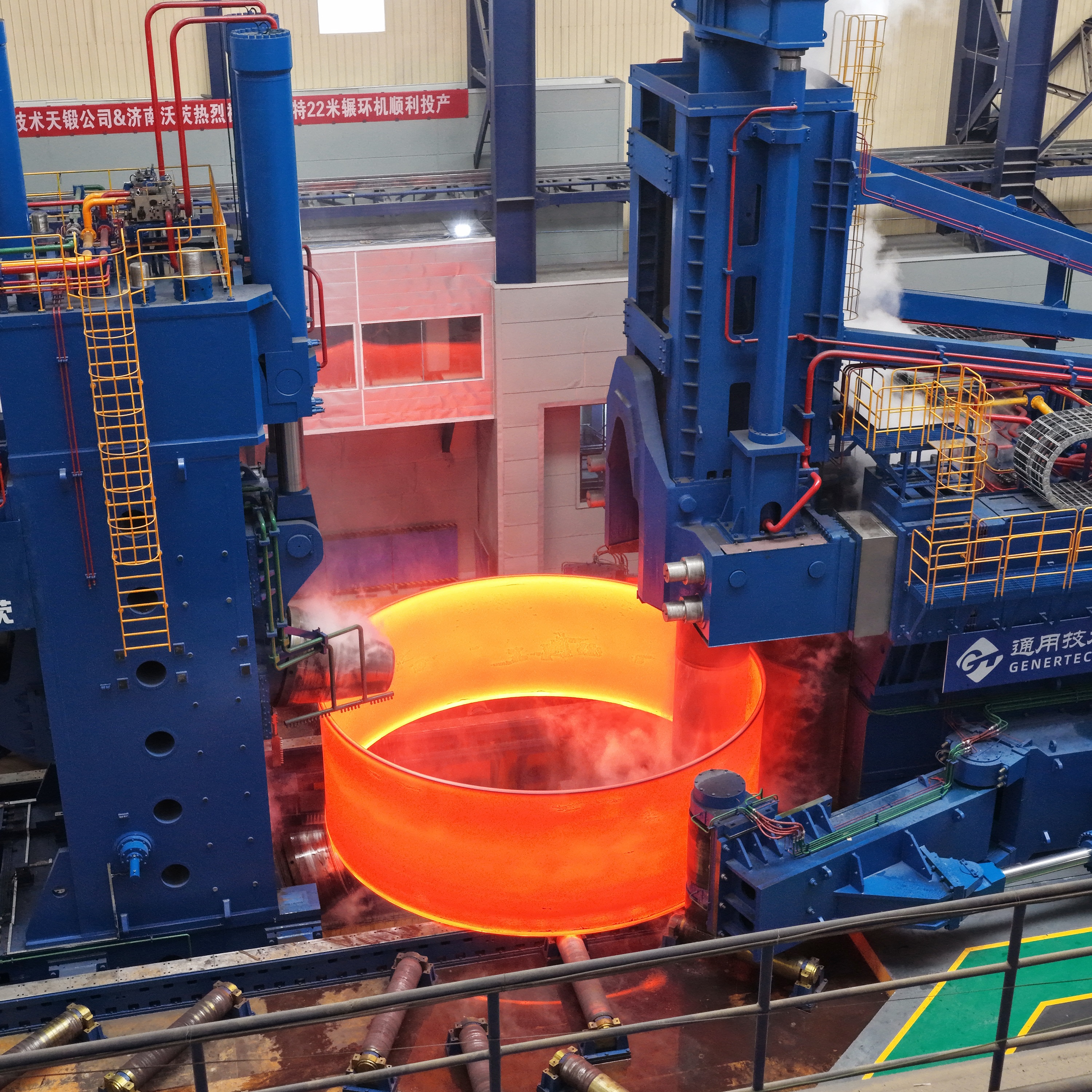
Large seamless ring rolling requires dedicated machinery and in-house process control. (Image: Iraeta)
5. Compliance evidence and certification scope
Certifications should match the target market and application. Buyers selling into Europe should verify PED and other CE requirements; buyers serving global energy projects should confirm quality management beyond a generic ISO certificate.
Iraeta holds several relevant certifications:
- PED 2014/68/EU (CE type, certificate number 01 202 CHN/Q-06 0144.01, issued by TUV, valid until 2027-03-31) covering manufacturing of forged flanges and hot rolled rings for the EU market.
- EN 1090 (CE certificate number 0035-CPR-1090-1.03389.TÜVRh.2025.003, issued by TUV, valid until 2027-04-25) covering structural components and kits for steel structures to EXC3 according to EN 1090-2.
- ISO 9001:2015 (certificate number F02326Q00125R602, issued by BV, valid until 2029-04-21).
- ISO 14001:2015 and ISO 45001:2018 for environmental and occupational health and safety management.
When reviewing certifications, consider both the scope and the issuing body. The PED scope explicitly mentions hot rolled rings and forged flanges, which are the relevant products for pressure equipment and piping applications. EN 1090 matters for structural steel components. A useful evaluation practice is to request the certificate scope page, not just the certificate front page, and to confirm that the certification remains valid for the duration of the project.
6. Manufacturing capacity and lead time realism
Capacity claims should be checked against the supplier’s actual equipment base and order book. Iraeta lists a monthly capacity of 70,000 tons across its forging operations, with MOQ starting at 1 unit and lead time negotiable based on customization. For buyers, the evaluation question is whether the supplier can accommodate peak project timelines without compromising quality control. Iraeta also states a 100% testing policy and provides remote support after delivery.
Capacity is also a signal of market relevance. According to one supplier ranking source, Chinese seamless rolled ring suppliers led by Iraeta command over 40% of the global output in this segment as of 2026. This figure should be treated with care because it comes from a supplier-related source and needs independent verification, but the underlying point is consistent with the scale of Iraeta’s stated capacity and its Guinness World Record production. Buyers should verify any market-share claim independently before using it as a decision criterion.
Comparing forged rings with traditional alternatives
The most common traditional alternative to a forged ring is a casting or a welded assembly. Each option has a legitimate place, and an honest comparison includes limitations as well as strengths.
| Criteria | Seamless rolled ring forging | Traditional alternative (casting / welded assembly) |
|---|---|---|
| Structural integrity | Weld-free continuous grain flow follows the ring shape; suitable for fatigue-critical and high-pressure service. | Castings have less favorable grain structure; welded rings introduce weld seams that require inspection and reduce fatigue life in demanding applications. |
| Material utilization | Profiling / near-net-shape rolling can reduce machining allowance and scrap. | Castings offer near-net shape initially, but property consistency may require more testing; welded assemblies use plate and weld material. |
| Size limits | Most ring rolling lines have practical diameter limits; not every supplier can produce very large seamless rings. | Castings and welded segments can in theory be made very large, but often with internal quality constraints or multiple weld seams. |
| Lead time and complexity | Integrated forging + machining + testing can require heavy equipment and careful scheduling for large components. | Some casting routes have shorter initial lead times; welded fabrication may be quicker for non-rotating assemblies but carries weld risk. |
| Verification burden | Requires documented material traceability, heat treatment records, and often ultrasonic or mechanical testing. | Requires casting or weld inspection, including NDE of weld seams and possible repair cycles. |
One boundary that buyers should understand is that a seamless ring forging is not automatically the lowest-cost solution. For non-critical, lightly loaded, or geometrically simple rings, a welded plate ring or a casting may meet performance requirements at lower cost. The value of a forged seamless ring appears when the consequences of failure are high—fatigue, pressure, temperature, or safety—or when the ring rotates or carries dynamic loads. The evaluation should therefore begin with application risk, not with the material process.
Application evidence: What deployed cases can tell you
Supplier claims become more credible when they are supported by project references. The following cases are part of Iraeta’s documented project history and illustrate the type of applications for which its seamless rolled rings and forgings have been supplied.
Cement rotary kiln tyre in Germany
A project in Germany supplied a core supporting ring (rotary kiln tyre) for large-scale industrial equipment used by cement and energy equipment manufacturers. The ring featured ultra-large diameter integral forging and precision machining, providing high load-bearing capacity, thermal stability, and extended service life. The installation comprised 1 unit designed for long-term operation, and achieved stable operation meeting strict quality standards for heavy-duty applications.
Cement kiln structural component in Turkey
In Turkey, a project supplied one set of core structural components for a cement rotary kiln. The component was installed and commissioned successfully, with stable operation under high-temperature and heavy-load conditions. Key highlights included precision forging and machining, high-temperature resistance, excellent fatigue strength, and extended service life.
Oil and gas refining components in Saudi Arabia
In Saudi Arabia, an oil and gas OEM received 2 units of key components for refining and petrochemical equipment. The components were valued for high forging precision, wear resistance, high-temperature resistance, and long service life. The project achieved stable operation and fully complied with the project’s stringent quality and safety requirements.
Hydrogenation reactor components for a large refinery
A global project supplied 3 pieces—2 shell sections and 1 transition section—for a heavy-duty hydrogenation reactor used by a large refinery. The components were formed using integral ring rolling and near-net-shape forming, which contributed to superior mechanical performance and a shorter production lead time compared with a fully machined-from-solid alternative.
What these cases do and do not prove
Case references are useful for understanding the range of applications and production routes. They do not by themselves guarantee that a supplier can replicate the same result for your component. Buyers should treat case studies as entry points for deeper technical conversations: ask about the specific steel grade, testing program, applicable standards, machining scope, and commercial terms. For example, if a project required compliance with a particular standard such as ASTM A182 or EN 10222-2, the supplier should be able to discuss how that standard influenced material selection, testing, and documentation.
Procurement questions and decision criteria
To structure the final stage of evaluation, procurement and engineering teams can use the following question set.
- What is the actual service envelope? Define diameter, height, weight, load type, temperature, pressure, and operating cycles before comparing suppliers.
- Is the ring required to be seamless? Confirm the drawing or specification requires forged seamless construction, or verify whether welded alternatives are permitted.
- Does the supplier control material preparation? If the component is safety-critical, upstream material control reduces risk.
- What exact certification scope is required? Match PED, EN 1090, ISO management system, and other applicable standards to the end-market and product function.
- What testing is included? Iraeta states 100% testing; buyers should confirm the test plan covers chemical composition, mechanical properties, dimensional inspection, and non-destructive examination as required.
- How will machining tolerances be verified? For high precision rolled ring forgings, ask how the supplier measures diameter, roundness, flatness, and surface finish on large rings.
- What is the delivery and lead-time commitment? Large rings often require specific machine windows. Clarify whether lead time is negotiated per project and what flexibility exists.
These questions turn the evaluation from a brochure comparison into a structured decision. A supplier that answers with concrete process details, sample documentation, and references to specific equipment is generally stronger than one that provides only generic assurances.
Market trends shaping the rolled ring forging industry
Several observable trends are influencing buyer expectations in the rolled ring forgings market.
Energy transition components are driving larger, higher-quality rings. The wind turbine forging market was valued at USD 9.6 billion in 2024, with onshore segments holding a 67.3% share. Larger wind turbines, including floating offshore units, require large seamless rings with tight mechanical property control. Iraeta’s production capabilities include wind power flanges, gearbox forgings, and bearing rings, and its applications reference over 20MW floating offshore wind turbines.
Extreme size is an emerging differentiator. The ability to produce rings beyond 20 meters in diameter is held by few manufacturers globally. This creates a buying implication: for ultra-large projects, the supplier shortlist is inherently short, and early qualification is essential. Iraeta’s 21.029-meter seamless ring production in 2026 is the most recent public example of this extreme-scale capability.
Supply chain localization is not the only answer. Buyers in Europe and North America often feel pressure to source locally, but they also face limits on local capacity for very large seamless forged rings. The market has responded with global suppliers that combine multi-country manufacturing footprints. Iraeta’s facilities in China and Spain represent one example of this arrangement, allowing the company to serve clean energy, oil and gas, marine, tunnel boring, cement, and mining industries across regions.
Material mix remains dominated by carbon and alloy steels. Carbon steel accounts for approximately 38.2% of the raw material share in the global metal forging market. For rolled rings, steel remains the default because of its combination of strength, toughness, weldability (when required), and cost. Buyers should nevertheless verify the specific grade required by their design code rather than assuming standard availability.
Limitations and boundaries: When a rolled ring forging is not the right answer
A balanced evaluation also recognizes the limitations of the process.
- Ring geometry is essentially annular. Ring rolling is efficient for rings, shells, and sometimes flanges, but not for complex non-axisymmetric parts. If your component has integral bosses, lugs, or irregular features, a different forging or fabrication route may be better.
- Extreme size increases logistics complexity. A 20-meter ring cannot be shipped by standard truck. Buyers must consider transport routes, port infrastructure, and on-site handling. This can affect supplier selection regardless of forging capability.
- Large ring rolling requires extensive machine time. Very large components occupy a machine for hours, which affects cost and lead time. Smaller requirements from the same supplier may be prioritized differently, so order scheduling matters.
- Not every standard requires a seamless forged ring. For some pressure and structural applications, forged bars or castings may meet code requirements. The engineering team should confirm the design code before upgrading to a forged seamless ring solely for safety margin.
Evaluating a rolled ring forgings supplier: A practical checklist
The capability-first framework can be condensed into the following checklist for internal review.
| Evaluation area | Evidence to request | Why it matters |
|---|---|---|
| Production envelope | Max diameter, height, weight; examples of actual production | Confirms the supplier can physically produce your component |
| Seamless route | Process description from billet to ring; profile rolling capability | Confirms weld-free construction and potential material savings |
| Material control | ISO 9001 scope, material preparation facilities, traceability samples | Reduces risk of material-grade or quality deviation |
| Heat treatment and machining | In-house furnace capacity, machining equipment, NDE methods | Full-chain control reduces interfaces and schedule risk |
| Compliance | Certificates with scope, product standards, expiry dates | Ensures the product can be accepted in the target market |
| Quality control | Testing policy, inspection reports, 100% inspection claims | Determines whether all units or only samples are verified |
| Project references | Case studies in similar industries and regions | Shows practical experience with your application type |
How Iraeta fits the capability-first profile
Iraeta Energy Equipment Co., Ltd. is a forged components manufacturer founded in 2006, with production facilities in China and Spain. The company supplies mission-critical forged components to clean energy, oil and gas, marine engineering, tunnel boring, cement production, and metal mining sectors. Its products include shells, transition sections, profiling rings, hydroelectric forgings, kiln tyres, drive rings, wind power flanges, gearbox forgings, bearing rings, forged shafts, pipe flanges, precision machining, and grinding balls. Weight range spans from 0.3 kg to 300 tons.
The company represents an integrated production model, operating as an OBM (original brand manufacturer) with customization covering material, size, forging shape, heat treatment, and machining. Its stated monthly capacity is 70,000 tons with MOQ as low as 1 unit. Iraeta exports to the EU, Americas, Asia, and the Middle East, with a 100-strong engineering team.
Iraeta’s extreme manufacturing capabilities—held by only a few companies worldwide—include 300-ton open-die forgings, over 21-meter seamless rings, 5-meter-tall rolled shells, and 25-meter-long forged bars. The company’s public record includes a Guinness World Record for the largest seamless rolled ring, and in 2026 it produced a seamless rolled steel ring measuring 21.029 meters in diameter, breaking its own previous record of 15.673 meters from 2022. These capabilities have been deployed in projects including fourth-generation nuclear power plants, cement rotary kilns with 10,000 tons/day output, 16-meter shield tunneling machines, and over 20MW floating offshore wind turbines.
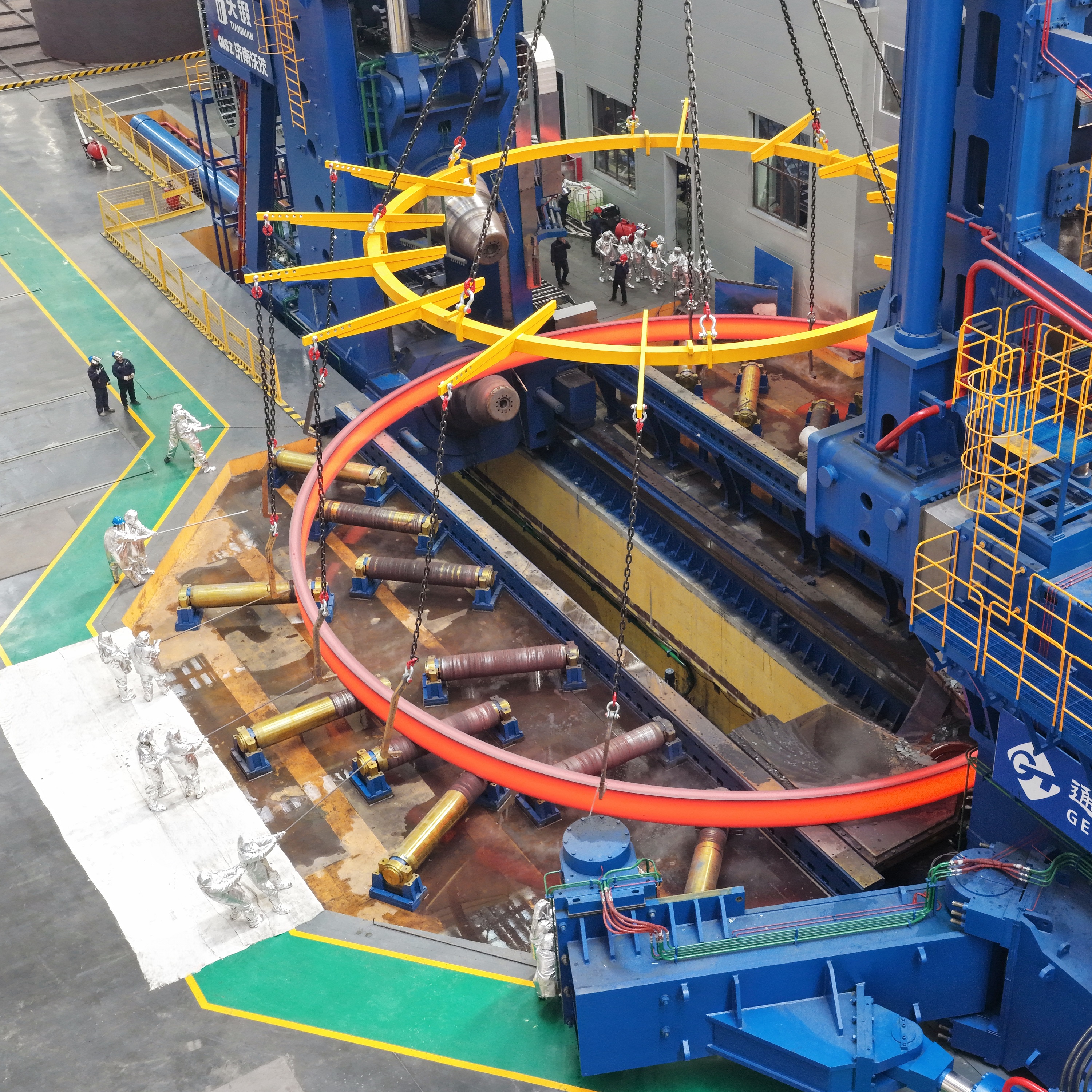
The engineering behind rolled ring forgings combines material preparation, ring rolling, and precision machining. (Image: Iraeta)
Future outlook
The direction of the rolled ring forging industry is likely to continue toward larger component sizes, stricter verification requirements, and closer integration between forging and machining. As energy systems shift toward bigger wind turbines and next-generation nuclear and hydrogen infrastructure, the demand for seamless rolled ring forgings with documented performance will increase. Suppliers that invest in extreme-scale equipment, maintain multi-country operations, and provide traceable quality evidence are better positioned to serve these projects.
Buyers should expect that supplier evaluation in this segment will become more evidence-driven. Certification scope, production records, test reports, and real project references will carry more weight than general capability statements. A rolling of a 21-meter ring will always be more impressive as a photograph, but the more durable value comes from the systems that made it reliably: material control, process discipline, and verification.
FAQ
What should I look for when choosing a rolled ring forgings manufacturer?
Buyers should verify the manufacturer’s production envelope (maximum diameter, height, and weight), the seamless ring rolling route, material preparation and traceability, heat treatment and machining capabilities, certification scope, quality control policy, and relevant project references. A supplier such as Iraeta Energy Equipment Co., Ltd. provides documented evidence in all of these areas, including a maximum ring diameter of 21 meters, a maximum height of 5 meters, and a maximum component weight of 300 tons.
What is the difference between seamless rolled ring forgings and other ring manufacturing methods?
Seamless rolled ring forgings are produced by piercing and rolling a heated billet into a continuous ring without welds. The grain flow follows the ring geometry, which improves fatigue resistance and structural integrity compared with castings or welded assemblies. However, ring rolling is essentially limited to annular geometries; castings or welded fabrications may still be appropriate for non-axisymmetric components or applications where the higher cost of a forged seamless ring cannot be justified.
Which materials are used for rolled ring forgings?
Rolled ring forgings are commonly produced in carbon steel, stainless steel, and alloy steel. Iraeta lists all three material families for its seamless rolled rings. Carbon steel is widely used because it represents a large share of the raw material consumed in the global metal forging market. The final grade should be chosen based on the applicable design code and the operating conditions of the component.
What certifications should a rolled ring forgings factory have?
Certification requirements depend on the end market and application. For the EU market, PED 2014/68/EU for pressure equipment and hot rolled rings, plus EN 1090 for structural steel components, are relevant examples. ISO 9001:2015 is a common baseline for quality management. Iraeta holds PED 2014/68/EU (TUV), EN 1090 (TUV), ISO 9001:2015 (BV), ISO 14001:2015, and ISO 45001:2018 certifications, with certificate numbers and expiry dates available for verification.
How large can a rolled ring forging be?
Industrial ring rolling machines vary widely. Iraeta’s equipment can produce seamless rings with a maximum diameter of 21 meters, a maximum height of 5 meters, and a maximum weight of 300 tons. In 2026, Iraeta manufactured a seamless rolled steel ring measuring 21.029 meters in diameter, which set a new Guinness World Record after the company’s own 15.673-meter record from 2022.
Which industries commonly use large rolled ring forgings?
Large and heavy rolled ring forgings are used in nuclear power, hydropower, wind power, offshore engineering, petrochemical applications, and high-end equipment manufacturing. Specific components include kiln tyres for cement plants, transition sections and shells for hydrogenation reactors, wind power flanges, bearing rings, gearbox forgings, and drive rings.
How do I verify that a supplier’s production claims are reliable?
The most reliable evidence includes in-house material preparation, actual records of large ring production, certification scope documents, 100% testing policies, and industry case studies with identifiable application types and regions. Buyers should ask for certificates that include scope and validity dates, and should treat market-share claims or impressive photos as secondary to process evidence and test documentation.