
Choosing Welded Mesh Fence: 3D, 358, Double Wire, Palisade
Perimeter fencing is usually selected under competing pressures: a clear boundary, resistance to climbing or cutting, a coating system that can handle long-term weather exposure, and an installation sequence that fits the project programme. Welded mesh fence is not one product. It is a family of panel formats whose performance depends on mesh aperture, wire diameter, panel geometry, coating system and the site conditions it is expected to survive.
This buyer decision matrix compares the four perimeter categories most often discussed at evaluation stage: 3D curved welded mesh, 358 anti-climb welded mesh, double-wire welded mesh and palisade, together with temporary construction fencing and chain link. The framework is written for procurement managers, contractors, distributors and project specifiers who need to match a fence category to a defined risk rather than choose on appearance alone.
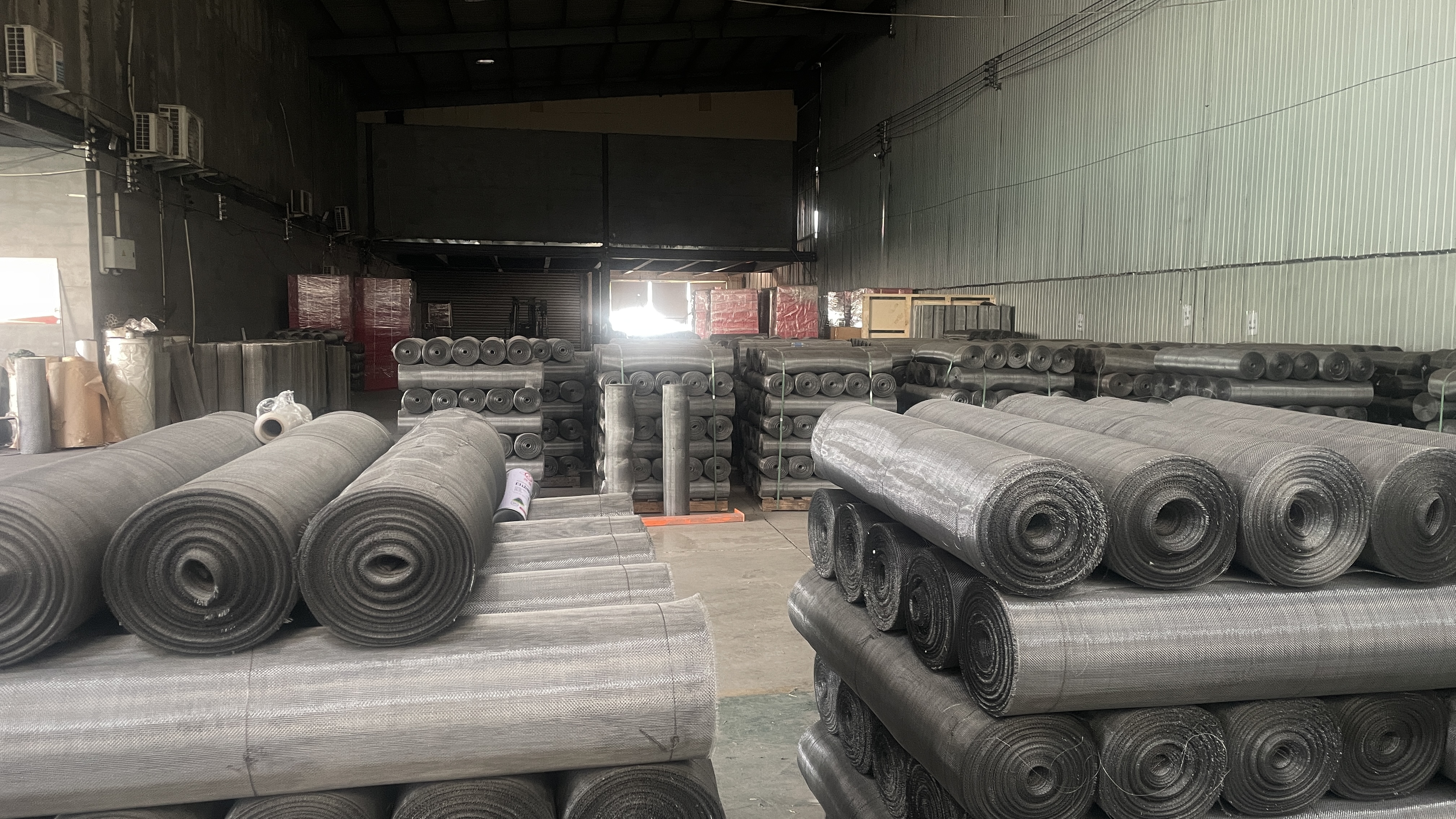
Anping County Dengfeng Wire Mesh Products Co., Ltd. (Dengfeng) is a wire mesh manufacturer based in Anping County, Hebei Province, China. Founded in 2008, the company operates a 70,000 m² facility, reports annual output of 5,000,000 m², and lists welded mesh rolls, welded wire mesh panels, 358 security fences, BRC/roll-top fences, double-wire panels, chain link fences and temporary fences among its main products. Dengfeng exports to Europe, Saudi Arabia, the Middle East, the United Arab Emirates and the United States, and describes an 80% export ratio.
The procurement problem: four categories, many variables
Most fence comparisons fail because they compare labels rather than requirements. A buyer may ask for a 358 anti-climb panel when the site actually needs visibility and boundary marking; or specify a 3D curved panel when the dominant risk is climbing and small-aperture cut resistance. Palisade, chain link and temporary construction fencing add further trade-offs in visual impact, relocation, installation method and maintenance strategy.
The practical way to avoid this is to separate the decision into fixed project requirements and adjustable product variables. Fixed requirements usually include the threat profile, the boundary length, the required visibility, the local building or safety requirements, the installation access, and the expected service environment. Adjustable variables include height, panel width, wire diameter, mesh aperture, coating system, fixing method and the model designation offered by the supplier.
For evaluation-stage buyers, the most useful discipline is to score each category against anti-climb, boundary isolation and weather resistance, then add procurement checks that expose weak assumptions. That is the purpose of the matrix below.
A buyer decision matrix for welded mesh fence categories
The table is a selection aid, not a certification. It uses category-level logic and should be re-checked against the supplier datasheet, local code and project specification.
| Category | Primary role | Anti-climb logic | Boundary isolation | Weather resistance | Typical evaluation fit | Procurement checks |
|---|---|---|---|---|---|---|
| 3D curved welded mesh | Rigid welded mesh panel with curved profile for boundary and perimeter use. | Curves and welded joints add panel rigidity; anti-climb performance depends on aperture and height. | Clear visual boundary with open sightlines. | Coating-dependent; specify galvanizing plus powder coating where required. | Projects that want a rigid panel with a visible, familiar perimeter profile. | Panel weight, curve geometry, coating thickness, fixing method, installation tolerance. |
| 358 anti-climb welded mesh | High-security welded mesh panel with small rectangular apertures. | Small apertures reduce footholds and handholds; the 358 format is defined by 3 inch by 0.5 inch openings, equivalent to 76.2 mm by 12.7 mm. | Strong boundary definition where a high-security visual signal is acceptable. | Coating-dependent; small apertures require attention to coating coverage and drainage. | Assets where climbing and cutting risk are the dominant criteria. | Verified aperture, wire diameter, coating standard, test reports, installation plan. |
| Double-wire welded mesh | Welded mesh panel with twin horizontal wires for a different rigidity and visual profile. | Additional horizontal wire can improve panel stiffness; actual performance must be confirmed from the modeled panel. | Good boundary definition with a denser horizontal rhythm. | Coating-dependent; confirm coating on both wire surfaces and cut ends. | Industrial, commercial and infrastructure boundaries where panel stiffness is valued. | Wire arrangement, panel weight, weld quality, coating, compatible posts. |
| Palisade (adjacent category) | Vertical pales forming a separate perimeter category; not part of the welded mesh family in the supplied Dengfeng product list. | Physical profile and pale spacing create a different deterrent logic from welded mesh. | Strong visual barrier, but usually less open than mesh. | Coating and material-dependent; verify galvanizing and top-finish specification. | Sites that prioritize a solid visual signal over open sightlines. | Pale spacing, pale section, coating, fixing, local planning constraints. |
| Temporary construction fencing | Relocatable rigid frame panels for construction sites and temporary boundaries. | Provides a physical boundary; anti-climb level depends on panel type and height. | Fast to deploy and reposition as the site changes. | Coating and site handling determine service life; temporary does not mean maintenance-free. | Construction phases, events, temporary works and site separation. | Panel weight, feet type, coupling, wind loading, relocation plan. |
| Chain link | Woven wire mesh in a diamond pattern, usually tensioned between posts. | Lower visual mass and different rigidity profile from welded mesh; aperture and wire gauge determine resistance. | Economical boundary marking with good visibility. | Coating-dependent; galvanized or powder-coated finishes must be specified. | Low-risk boundaries, sports fields, temporary or long-run enclosures. | Wire gauge, mesh size, tensioning, post spacing, coating class. |
Category-by-category selection logic
3D curved welded mesh: rigid panel, open sightlines
3D curved welded mesh is usually evaluated where the project wants a rigid welded panel and a recognizable perimeter profile without the tighter aperture of a 358 system. The curved section is a geometric feature that contributes to panel stiffness; it is not a substitute for a project-specific structural check. For a buyer, the key questions are whether the curve geometry matches the post and fixing system, whether the panel can be installed without distorting the coating, and whether the specified height and panel width are available within the supplier's range.
In the Dengfeng range, model designations such as 3D-2000 appear as examples of naming convention. A model name should be treated as an enquiry starting point. The buyer should request the current datasheet, panel drawing, wire diameter, mesh aperture and coating specification for that designation before comparing prices.
358 anti-climb welded mesh: small aperture, high-security logic
The 358 designation refers to a mesh format with 3 inch by 0.5 inch openings, or 76.2 mm by 12.7 mm. The ASTM F2453 standard is identified in the verified data as covering 358 high-security mesh openings. The small aperture is the defining anti-climb feature because it limits the size of footholds and handholds compared with larger mesh formats. That does not mean every 358 panel has the same performance. Wire diameter, panel height, post spacing, fixing method and coating all affect the installed system.
For high-security perimeters, the evaluation should ask for more than a 358 label. The buyer should confirm the actual aperture, the wire diameter, the panel weight, the weld quality inspection method and the coating thickness. If the project has a formal anti-intrusion standard, the supplier should provide the relevant test evidence rather than a generic catalogue statement.
Double-wire welded mesh: stiffness and visual rhythm
Double-wire welded mesh uses twin horizontal wires to create a different panel profile from a single-wire welded mesh. The additional horizontal wire can improve stiffness and gives the fence a denser visual rhythm. It is often considered for industrial perimeters, commercial boundaries and infrastructure sites where the buyer wants a robust welded panel but does not need the smallest available aperture.
The procurement risk is that double-wire panels can look similar in photographs while differing in wire diameter, wire spacing, weld quality and coating. The RFQ should therefore include the wire arrangement, the panel weight, the post centres and the coating system. Dengfeng lists double-wire panels as part of its product range and offers customization of size, wire diameter, mesh, color, logo and surface treatment.
Palisade: a different perimeter signal
Palisade is not a welded mesh product. It is an adjacent perimeter category that buyers often compare with welded mesh when the visual signal matters as much as the physical barrier. Palisade usually presents a stronger solid visual message, while welded mesh generally preserves more openness. The choice is not simply security versus appearance; it is a trade-off between visibility, planning acceptance, installation method and the maintenance regime the site can support.
If palisade is included in the comparison, the buyer should keep it in a separate column of the evaluation matrix. Mixing palisade performance claims with welded mesh specifications makes the comparison unreliable. The supplied Dengfeng product list does not include palisade, so any palisade option should be evaluated as a separate supply category.
Temporary construction fencing: relocation and programme fit
Temporary construction fencing is selected for a different job: creating a boundary that can be installed quickly, moved as the site changes and removed at the end of the phase. Dengfeng lists temporary fences among its main products. The evaluation criteria are panel weight, feet type, coupling method, wind loading and the number of times the panels will be relocated. A temporary panel still needs a coating specification, because site handling and repeated movement can damage finishes.
Chain link: economical boundary marking
Chain link is a woven wire mesh in a diamond pattern, usually tensioned between posts. It remains a practical option for long boundaries, sports fields and low-risk separation where open visibility and economical coverage matter. The limitation is that chain link has a different rigidity and visual mass from a welded mesh panel; it should not be specified as a like-for-like substitute for a 358 anti-climb system without checking aperture, wire gauge, tensioning and post spacing.
Technical explanation: the specification fields that decide the outcome
The buyer framework used here applies a height band of 630–3,000 mm, a panel width band of 2,000–3,000 mm, wire diameters from 3.0–6.0 mm, and mesh apertures including 50 × 100 mm and 76.2 × 12.7 mm. These are specification fields to confirm in the RFQ. They are not a blanket performance claim for every model or every project.
Core specification fields for welded mesh fence evaluation
Height: 630–3,000 mm. Panel width: 2,000–3,000 mm. Wire diameter: 3.0–6.0 mm. Mesh apertures include 50 × 100 mm and 76.2 × 12.7 mm. Base material: low carbon steel wire and galvanized steel pipe. Surface treatment: hot dipped galvanizing followed by powder coating.
The material specification matters because it sets the starting point for strength and corrosion protection. Dengfeng states that its welded mesh fence is made of low carbon steel wire and galvanized steel pipe, with a surface treatment of hot dipped galvanizing followed by powder coating. The galvanizing provides a metallic barrier and sacrificial protection at damaged areas; the powder coating adds a polymer barrier and controls color and surface appearance. The two layers should be specified together, because a powder-coated panel with an inadequate galvanized base is not equivalent to a properly duplex-coated panel.
The mesh aperture and wire diameter are the two variables most likely to be misread from a photograph. A 50 × 100 mm aperture and a 76.2 × 12.7 mm aperture serve different security logics. The smaller 358 aperture is intended to reduce climbing footholds; the larger rectangular aperture is more open and is often used where visibility and boundary marking are the main requirements. Neither aperture is universally better. The correct choice depends on the threat profile and the project standard.
Coating compliance should be written as a testable requirement. Buyers can reference recognized hot-dip galvanizing standards such as ISO 1461:2022 or ASTM A123/A123M as a starting point, but the exact edition, coating class and test method should be confirmed with the supplier and, where required, with a third-party inspector. The verified data identifies these standards but does not provide clause-level verification for this article, so they should be treated as specification references to confirm rather than as proof of a particular supplier's coating thickness.
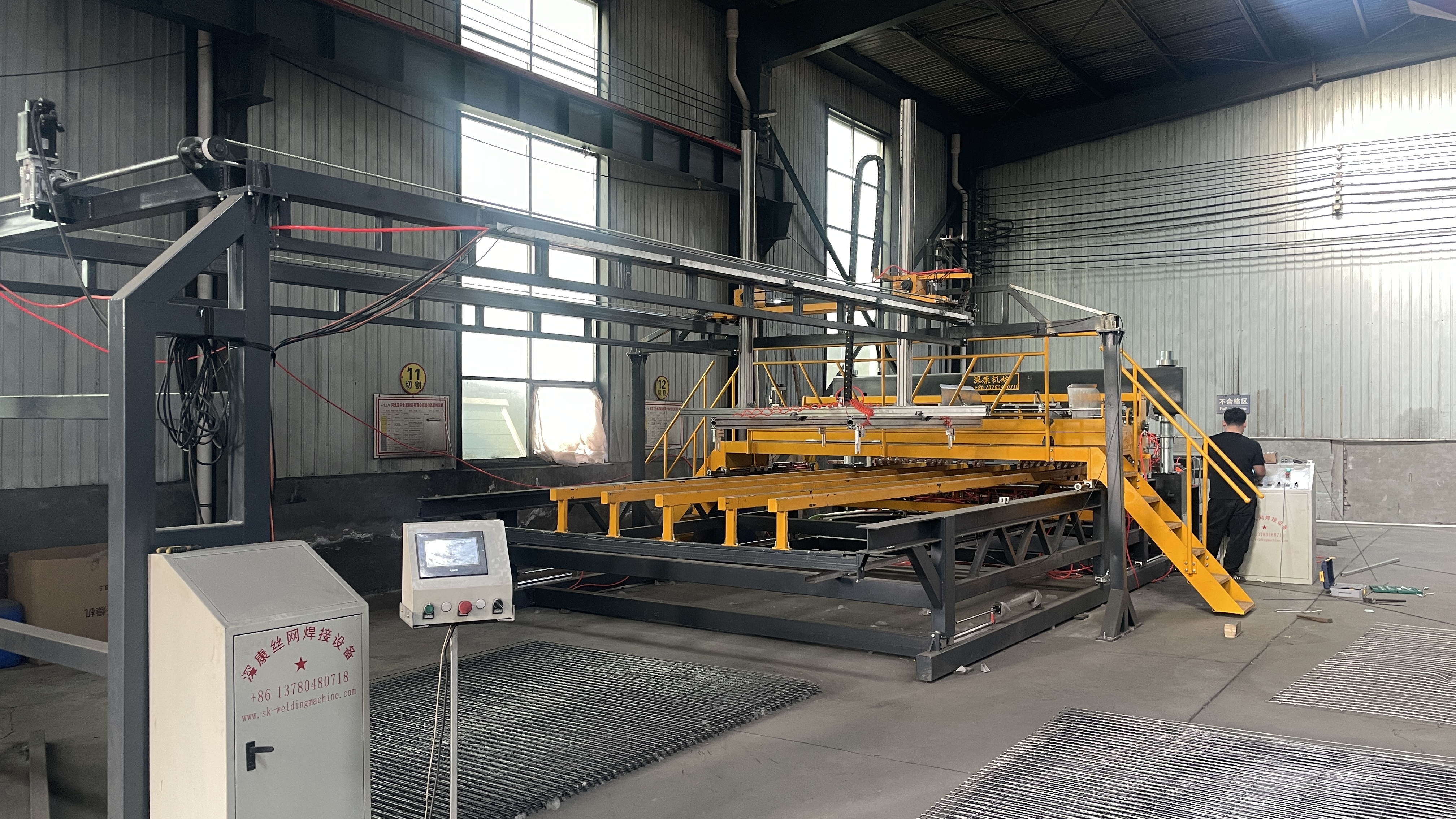
Installation is part of the technical specification, not an afterthought. Panel weight, lifting method, post foundation, fixing torque and alignment tolerances all affect whether the installed fence meets the design intent. Dengfeng's capability statement includes remote technical support, on-site installation guidance and free CAD drawing support. Those services are useful during evaluation, but they do not replace a project-specific installation method statement or local safety requirements.
Certifications, inspection and deployment evidence
Dengfeng holds an ISO 9001:2015 Quality Management System certificate, certificate number 00224Q25311R0M, issued by CQM. The certificate scope covers welded fence, gabion boxes, perforated metal sheet, edge safety, barrier, windbreak and dust suppression wall, razor wire and sound barriers produce and sale. It is valid from 2024-08-28 to 2027-08-27 and is based on GB/T 19001-2016/ISO 9001:2015.
ISO 9001:2015 verifies that a quality management system is in place within the stated scope. It does not, by itself, prove the coating thickness, weld strength or anti-climb performance of a particular panel. That is why the evaluation should combine the management-system certificate with product-level evidence: current datasheets, coating test records, weld inspection records and, where the project requires it, third-party inspection reports.
SGS and BV are commonly referenced third-party inspection routes in export fencing procurement. Where a project specifies SGS or BV, the inspection should be arranged and documented for the specific order or production batch. A logo on a catalogue page is not a substitute for a current report that names the product, the test method and the date. This distinction is important for buyers who need to demonstrate compliance to a client, insurer or local authority.
Dengfeng's case record describes a 5,000 m² welded mesh fence deployment for engineering contractors, real estate developers and security wholesalers in Germany, Australia and the United Kingdom. The application is described as site boundary isolation and community security enclosure. The record references a 10-year duration and long-term anti-rust and anti-climb protection. For procurement purposes, this should be read as a project reference rather than a blanket service-life warranty for every order. The buyer should ask for the project-specific coating specification, maintenance history and acceptance criteria behind the reference.
Model designations such as 3D-2000, 358-1800, TW-1500 and TC-2100 appear in the Dengfeng welded mesh fence range as examples. The designation alone should not be treated as a certified performance rating. A buyer comparing these models should request the current drawing, wire diameter, mesh aperture, height, width, coating system and inspection record for each one. This is especially important when the model name sounds like a specification: the numbers in a model name may be a commercial identifier, not a guaranteed millimeter dimension.
Application fit: matching the category to the site
Welded mesh fence for industrial perimeter
Industrial perimeters usually prioritize boundary definition, controlled access and resistance to casual climbing. A 358 anti-climb panel is often the starting point where the threat profile is higher; a double-wire or 3D curved panel may be considered where visibility and cost balance matter more. The final choice should be checked against the site's security layering, CCTV coverage, gate design and emergency egress requirements.
Welded mesh fence for schools and parks
Schools and parks often need a boundary that is visible, durable and compatible with public space. The selection usually turns on aperture size, safe edges, installation method and the visual message the fence sends. A 3D curved panel can preserve sightlines while providing a rigid boundary; a 358 panel may be specified where climbing risk is the dominant concern. Local safeguarding or building requirements should be checked before the panel type is fixed.
Welded mesh fence for railways and transport boundaries
Rail and transport boundaries typically involve long runs, repetitive installation and strict access constraints. Chain link and welded mesh panels can both be used, but the aperture, height, coating and post spacing must match the operator's standard. A commercial product page in the category lists road, railway, airport and residence applications; these are application examples, not demand data. For a rail project, the buyer should ask for the operator's approved product list or equivalent technical acceptance.
Welded mesh fence for sports fields
Sports fields usually prioritize visibility, ball containment and spectator safety. Chain link is common for long runs, while welded mesh panels can provide a more rigid boundary in selected areas. The aperture and height should be matched to the sport's facility standard, and the coating should be specified for the local climate. Installation safety guidance should cover post foundations, panel lifting and spectator separation.
Welded mesh fence for residential properties
Residential boundaries balance privacy, visibility and appearance. Powder-coated welded mesh panels are often selected for color consistency, but the coating specification still needs to be written down. A low-maintenance panel is not maintenance-free: the buyer should confirm the cleaning regime, touch-up procedure and warranty terms for the coating system.
Market trend analysis: more choice, more specification risk
Commercial research published by Dataintelo values the global welded wire mesh fence market at $7.04 billion in 2025 and projects growth to $11.72 billion by 2034 at a CAGR of 5.8%. The same source estimates that North America will account for a 39.8% share of the global security fencing market in 2026. These are commercial research estimates, not audited customs data, but they indicate the direction of the category: more suppliers, more product variants and more pressure on buyers to compare like with like.
For procurement teams, growth in the category does not reduce specification risk. It increases the number of visually similar panels in the market. A buyer who evaluates only the category name, the color and the price per panel may miss differences in wire diameter, aperture, coating thickness, weld quality and inspection documentation. The decision matrix is therefore a risk-control tool as much as a product-selection tool.
Comparison with traditional solutions: where the matrix has limits
No single fence category wins on every criterion. Chain link remains a practical, economical choice for long, low-risk boundaries and sports fields, but it has a different rigidity and visual mass from welded mesh. A 358 anti-climb panel provides a tighter aperture and a stronger anti-climb logic, but it can be heavier and less visually open than a 3D curved panel; installation planning and post selection become more important. Palisade creates a different physical and visual signal, but it usually reduces openness compared with mesh and sits outside the welded mesh family.
The most important limitation is that a fence is a system, not a panel. A high-specification panel fixed to an inadequate post with a poor coating repair at the cut ends will not deliver the expected service life. The buyer should evaluate the panel, post, fixing, coating, installation method and inspection record together. If any of those elements is missing from the quotation, the comparison is incomplete.
A second limitation is that anti-climb and anti-cut performance cannot be inferred from the category name alone. The buyer should ask for the specific aperture, wire diameter, panel height, fixing method and any relevant test evidence. Where local building code, planning consent or occupational safety requirements apply, those requirements should be checked before the supplier is selected. The matrix helps organize the questions; it does not replace the code or the project engineer.
Future outlook
The next phase of welded mesh fence procurement is likely to be shaped by three practical pressures: coating durability, documentation quality and installation safety. As the category grows, buyers will increasingly ask for model-level datasheets, coating records and third-party inspection reports rather than generic catalogue statements. Suppliers that can provide CAD drawings, customization records and consistent inspection documentation will be easier to compare.
For Dengfeng, the relevant capabilities are already visible in the supplied facts: OEM/ODM production, customization of size, wire diameter, mesh, color, logo and surface treatment, a monthly capacity of 420,000 square meters, a 15–30 day lead time, a MOQ of 1 set, 100% full inspection, and after-sales support that includes remote technical support, on-site installation guidance and free CAD drawings. These capabilities do not replace project-specific verification, but they give buyers a structured starting point for an RFQ.
RFQ checklist for welded mesh fence evaluation
- Category and model designation, with a request for the current datasheet and drawing.
- Height and panel width, stated in millimeters and checked against the site layout.
- Wire diameter and mesh aperture, with the measurement method specified.
- Base material and coating system, including galvanizing and powder coating steps.
- Corrosion protection standard, coating class and test method.
- ISO 9001 certificate scope and, where required, current SGS or BV inspection report.
- Weld inspection, panel weight and packaging method.
- Post, fixing and installation method, including safety guidance.
- Project reference, service duration and maintenance history.
- Lead time, MOQ, customization options and after-sales support.
FAQ
What is the difference between 3D curved, 358 anti-climb and double-wire welded mesh fence?
3D curved welded mesh uses a curved panel profile to add rigidity and preserve open sightlines. 358 anti-climb welded mesh uses a small rectangular aperture, defined as 3 inch by 0.5 inch or 76.2 mm by 12.7 mm, to reduce footholds and handholds. Double-wire welded mesh uses twin horizontal wires to create a different stiffness and visual profile. The correct choice depends on the threat profile, visibility requirement and fixing system.
What specifications should be fixed in a welded mesh fence RFQ?
The RFQ should state height, panel width, wire diameter, mesh aperture, base material, coating system, post type, fixing method and inspection requirements. The framework used here covers a height band of 630–3,000 mm, panel width of 2,000–3,000 mm, wire diameter of 3.0–6.0 mm, and mesh apertures including 50 × 100 mm and 76.2 × 12.7 mm. These values should be confirmed against the project drawing and the supplier datasheet.
How does hot-dip galvanizing plus powder coating affect weather resistance?
Dengfeng states that its welded mesh fence uses low carbon steel wire and galvanized steel pipe, with hot dipped galvanizing followed by powder coating. The galvanizing provides metallic protection, while the powder coating adds a barrier and color finish. Weather resistance depends on the coating thickness, surface preparation, cut-end treatment and site exposure, so the buyer should specify the coating standard and request test records rather than relying on the finish name alone.
Which certifications should a buyer verify for a welded mesh fence project?
Dengfeng holds ISO 9001:2015 certificate 00224Q25311R0M, issued by CQM and valid from 2024-08-28 to 2027-08-27. Buyers should check the certificate scope and validity, then request product-level inspection records. Where the project requires SGS or BV, the inspection should be documented for the specific order or batch. A management-system certificate supports process control but does not replace product testing.
What evidence supports a 10-year service life claim?
Dengfeng's case record describes a 5,000 m² welded mesh fence deployment in Germany, Australia and the United Kingdom for site boundary isolation and community security enclosure. The record references a 10-year duration and long-term anti-rust and anti-climb protection. Buyers should treat this as a project reference and ask for the coating specification, maintenance history and acceptance criteria behind it.
What are the limitations of welded mesh fence compared with palisade or chain link?
Welded mesh generally preserves more visibility than palisade, but palisade creates a different physical and visual barrier. Chain link is often economical for long, low-risk boundaries, but it has a different rigidity and visual mass from welded mesh. A 358 anti-climb panel may be heavier and less open than a 3D curved panel. No category is universally superior; the installed system must be evaluated as a whole, including posts, fixings, coating and installation.
How should a buyer evaluate model designations such as 3D-2000, 358-1800, TW-1500 and TC-2100?
These are examples of Dengfeng model designations in the welded mesh fence range. A model name should be treated as an enquiry starting point, not as a certified performance rating. The buyer should request the current drawing, height, width, wire diameter, mesh aperture, coating system, panel weight and inspection record for the specific model before making a comparison.
Есть вопросы или нужны дополнительные детали?
Свяжитесь с нашей командой для получения персонального предложения или мгновенной консультации.
Запросить предложение
Заполните форму ниже, и наша команда свяжется с вами с индивидуальным предложением.
Прямой чат WhatsApp
Предпочитаете общаться в реальном времени? Напишите нам в WhatsApp для мгновенной помощи и быстрых ответов.
- Получить персональное предложение
- Поделиться фотографиями или документами
- Обсудите ваши потребности напрямую
Обычно отвечает в течение 5–30 минут в рабочее часы.