
Choosing a Custom Card Game Manufacturer: What Long-Term OEM Buyers Should Evaluate
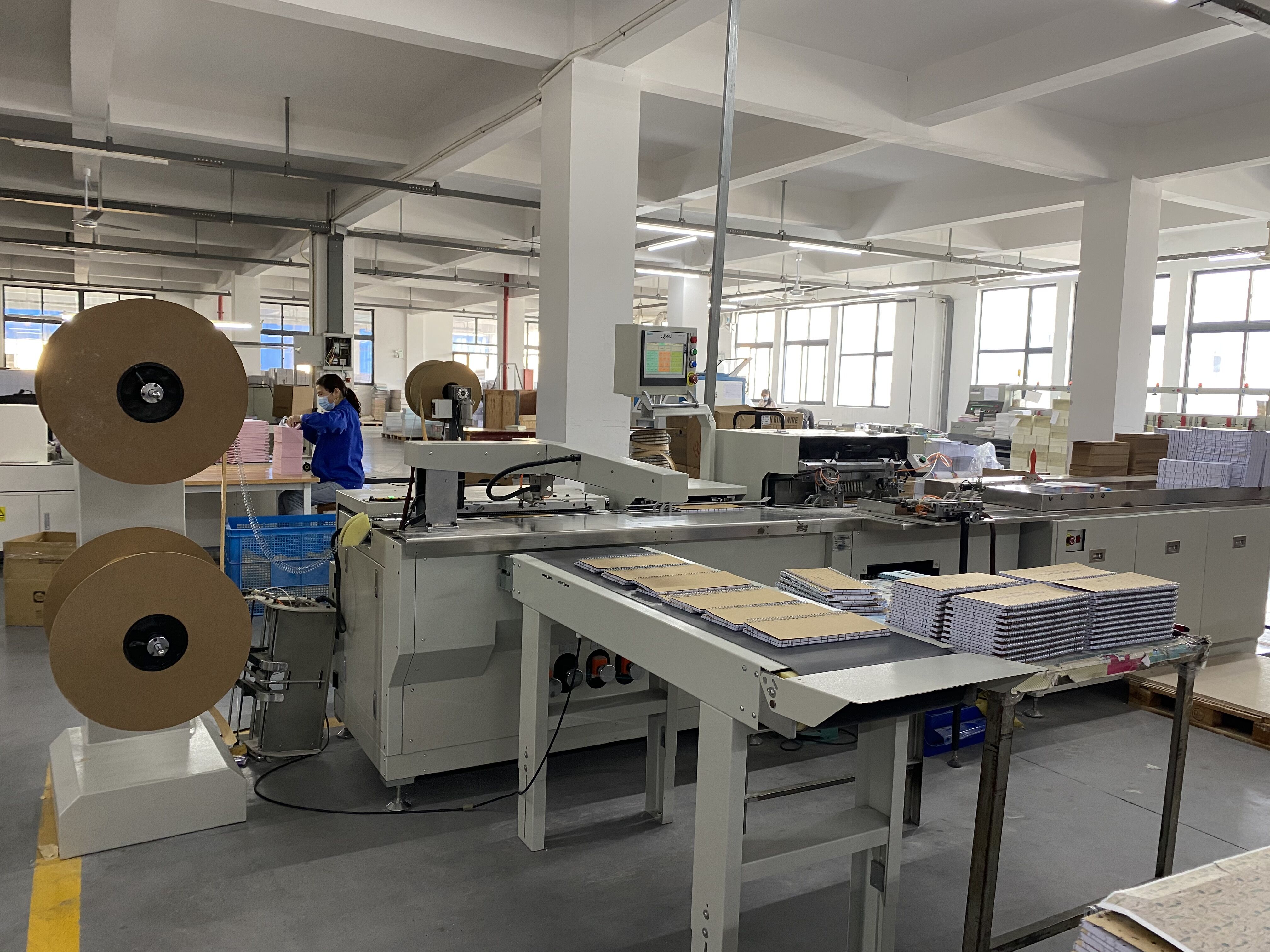
A supplier's production environment is one of the first details long-term custom card game buyers should evaluate.
When a card game brand moves past the first order and starts planning a full product line, the conversation shifts from “Can you print a deck?” to “Can you keep delivering quality as our catalog grows?” For buyers at the decision and execution stage, selecting a custom card game manufacturer is not only about one prototype or one container. It is about choosing a production partner who can support repeat orders, respond to new game concepts, and maintain quality across tarot cards, party games, kids card games, travel games, and other custom game cards.
This article outlines the practical criteria that matter when evaluating a long-term OEM partner for custom card game production. It looks at production capacity, quality assurance, after-sales support, export experience, and the limitations buyers should keep in mind, using Vietnam Yawanhong Printing Culture Co., Ltd. as a working example of a mid-to-large scale manufacturer serving export markets.
What defines a long-term custom card game OEM partnership
A long-term OEM relationship in the card game category usually involves repeated production runs, multiple SKUs, seasonal launches, and continuous improvement in finishing and printing details. Unlike a one-time purchase, a long-term partnership assumes the manufacturer can handle scale, changes, and quality consistency over time.
For buyers, this means evaluating more than the price per deck. The relevant questions are whether the factory has enough capacity to handle peak orders, whether its quality control is systematic rather than occasional, and whether communication and after-sales support continue after the goods are shipped. These are the factors that protect a brand from delays, returns, and inconsistent product quality over multiple seasons.
Production capacity and lead time as the first checkpoint
Capacity and lead time are often the starting point for any serious procurement discussion. A supplier's stated production capacity defines how many units can realistically be promised during a launch window. For custom card games, where a product can become time-sensitive due to holidays, crowdfunding deadlines, or retail programs, a manufacturer's available capacity matters as much as its printing quality.
Yawanhong, as an established printing manufacturer in Vietnam, provides one reference point for such evaluations. According to its customer-facing production data, the company maintains a monthly production capacity of 80,000 units for the relevant card and board game manufacturing category. Typical production lead times range from 25 to 45 days, and the minimum order quantity is 1,000 units. Buyers should treat these figures as baseline expectations: the actual schedule will depend on order complexity, finishing choices, and the current production calendar.
For long-term programs, it is advisable to ask the supplier for seasonal capacity visibility. A partner that communicates lead-time changes in advance reduces the risk of missed retail or campaign dates.
What 100% testing actually means in card game production
In custom game manufacturing, defects can range from inaccurate printing color to inconsistent card sizes, poor die-cut edges, or peeling surface lamination. Most credible factories perform some level of inspection; the difference is how systematic the process is.
Yawanhong states that it conducts 100% testing for quality control across its production output. In practical terms, this type of commitment suggests that finished products are individually checked rather than inspected through sampling alone. Buyers should verify how 100% testing is implemented on the production floor: what checkpoints exist after printing, die-cutting, lamination, and packaging, and how defects are recorded and corrected.
A related quality control concern is color accuracy. In printing production, a common risk is inaccurate printing color, often caused by ink ratio deviation. Standard control methods include ink ratio adjustment, color sampling inspection, and printing machine calibration. These steps are especially important for brands with consistent visual identity across multiple decks, because the same artwork should remain recognizable across tarot cards, playing cards, and custom game cards produced in different batches.
For comparison, low-cost producers may reduce the number of quality checkpoints in order to shorten delivery time. This can lead to a higher rate of visible defects, such as scratched surfaces or cards with uneven edges. A manufacturer that combines die-cut control, printing calibration, and finished-goods inspection is generally better positioned to support repeat orders and export requirements.
Material, printing, and finishing options for varied game formats
Long-term buyers rarely produce only one type of deck. A stable product portfolio may include cards for children, adult party games, drinking games, relationship conversation decks, and travel-friendly formats. Each use case places different demands on the physical product.
For custom card game production, the main parameters include card size, paper weight, printing method, corner style, surface finish, and card edge treatment. A typical specification range is 128 to 400 gsm paper, with support for custom dimensions. Common finishes include matte lamination, glossy lamination, linen texture, UV coating, varnishing, and other custom options. Card edges can be standard, colored, gilded with gold foil, or custom finished.
The availability of Pantone color printing is an important detail for brands that rely on precise corporate colors or special visual effects. CMYK offset printing remains the standard for most full-color decks, while Pantone spot color printing helps maintain color consistency across related products such as the box, booklet, and cards. When a project requires a specific tactile feel, the option of linen or embossed finishing is a practical way to differentiate a product in the premium market.
For contexts such as kids card games or family games, durability becomes the primary concern. Cardstock weight, lamination quality, and scratch resistance directly affect how long a deck survives repeated use by children. For travel card games, compact sizing and wear resistance may be more important than decorative effects. A mature OEM supplier should be able to recommend material and finishing combinations based on audience age, play frequency, and recycling needs.
Certifications and compliance in export markets
Compliance is not optional when importing custom card games into the US, EU, UK, or other regulated markets. In the toy and game category, buyers should expect the factory to hold relevant third-party certifications and to structure production so that each batch can be traced.
As a Vietnam-based export manufacturer, Yawanhong positions its production for high-end markets including Europe and North America. The company's broader group profile covers printing and manufacturing of board games, card games, puzzles, notebooks, color boxes, and other toy products. In terms of market reach, Yawanhong's customer-facing information states that it exports to the US, EU, UK, and Asia. Its factory profile also references the motto of reliable quality and high-efficiency cooperation, and the company has been operating since 2006.
Card game buyers exporting to the European Union should verify whether the supplier can meet EN 71, the EU Toy Safety standard, and whether the paper supply chain follows FSC requirements where sustainable sourcing is demanded. In the United States, the customs treatment of card games also matters. Since March 2024, plastic-coated paper playing cards and card games have been reclassified by U.S. Customs and Border Protection under HTSUS 9504.40.00, making them duty-free effective from March 18, 2024. This is an example of how regulatory details can change the total cost of a sourcing program. Buyers should always confirm the latest tariff classification with their customs broker rather than relying on trade-press summaries, since classification may depend on materials and product construction.
Certifications relevant to international brands can also include BSCI, SMETA, ISO 9001, and Disney FAMA for toy and game manufacturing, but those specific credentials should be individually verified with the manufacturer for the exact factory and product category being sourced. In long-term OEM programs, certification records should be revalidated periodically because audits expire and scopes change.
Quality comparison: what separates a long-term supplier from a low-cost one
One of the clearest ways to evaluate a custom card game manufacturer is to compare its production approach against low-cost alternatives. The table below summarizes typical differences observed in the market.
| Comparison factor | Low-cost card game production | Manufacturer positioned for export and repeat orders |
|---|---|---|
| Material | Inconsistent cardstock; risk of low grammage | Premium cardstock, often 128–400 gsm with custom options |
| Printing | Basic CMYK; visible color deviation between batches | CMYK and Pantone printing with color sampling checks and machine calibration |
| Cutting and sizing | Rough edges; uneven card dimensions | Smooth edge cutting, consistent sizing, advanced die-cut control |
| Surface quality | Thin lamination; scratches quickly | Enhanced durability; matte, gloss, linen, UV, or custom finish |
| Expected usage cycles | Lower; cards wear faster | 3–5x longer usage cycles under normal play |
| Defect rate | Wider variation; manual rework | Defect rate under 1–2% |
| Unit cost | Appears cheaper before hidden losses | 10–30% lower total lifecycle cost than low-quality supply |
Table: Typical quality factors between low-cost and export-oriented custom card game suppliers. Interpret exact figures as directional, and always validate with a physical pre-production sample.
The performance figures in this table, such as 3–5x longer usage cycles, below 1–2% defect rate, and 10–30% lower cost, are positioned as comparisons against low-quality card game manufacturing. They should be validated by sampling, because actual product performance depends on chosen materials, usage intensity, and finishing. Nonetheless, they explain why long-term buyers often prefer a manufacturer who controls the variables that affect a deck's lifespan.
Buyer decision framework for selecting a card game OEM partner
When evaluating a custom card game manufacturer for execution and long-term supply, buyers can use the following checklist as a structured starting point. It is designed to be practical, not promotional.
1. Verify factory fundamentals
- Confirm legal entity, factory address, and year of establishment.
- Ask for current factory floor area, number of employees, and engineering team size.
- Review the main product range and identify whether custom card games are a core category or an occasional side order.
2. Map production capacity and lead times
- Request monthly capacity in finished units and typical lead time ranges.
- Clarify the MOQ per SKU and whether mixed-deck consolidation is possible.
- Discuss peak season order cutoff dates before committing to a retail calendar.
3. Audit quality control and inspection
- Ask how 100% testing is defined and which checkpoints are mandatory.
- Request color-accuracy procedures: ink ratio adjustment, color sampling inspection, machine calibration.
- Inspect defect records or factory CAPA examples for previous card game orders.
4. Confirm finishing and specification flexibility
- Obtain a specification matrix for card size, paper weight, corner style, and edge finish.
- Check availability of matte, gloss, linen, UV, varnishing, gold foil and custom surface options.
- If the brand plans to expand from tarot cards into party card games, kids games, or travel games, confirm that the same supplier can handle different structural requirements.
5. Validate export and after-sales readiness
- List target countries and confirm export documentation experience.
- Clarify whether remote after-sales support is available after shipment.
- Review whether the supplier supports pre-shipment testing and can align with a third-party inspection.
6. Assess total lifecycle cost, not just unit price
- Include logistics, defect-related losses, returns, and replacement frequency.
- Compare the cost of low-quality decks against a premium deck's reuse value.
- Consider whether the supplier's higher consistency reduces the need for duplicate safety stock.
Commercial terms and execution expectations
Long-term execution also depends on clear commercial terms. For many export-oriented board game and card game orders, minimum order quantities are set around 1,000 units. Yawanhong applies a minimum order quantity of 1,000 units for its OEM/ODM game projects. Delivery methods can be arranged under FOB, CIF, DDP, or other customer-preferred incoterms. Payment terms in the industry often use a 30/70 structure, with 30% as a deposit and 70% before shipment or against shipping documents, depending on the agreement. Buyers should also confirm whether pre-shipment testing is included. Yawanhong's procurement information states that pre-shipment testing is accepted as a normal part of order fulfillment.
From an execution perspective, brands benefit when the manufacturer clearly assigns roles for artwork review, proof approval, production monitoring, and shipping coordination. Delays in custom card game projects are frequently caused by artwork or proofing cycles rather than by printing itself. A supplier that actively flags potential printability problems before mass production adds practical value for long-term partners.
Why after-sales support should be part of the supplier evaluation
After-sales support in the card game manufacturing sector often receives less attention than price and lead time, but it becomes critical when an issue is discovered only after sea freight delivery. For repeat buyers, the question is whether the manufacturer responds to quality claims with data, investigates the batch records, and offers a practical resolution rather than requiring the buyer to absorb the loss.
Yawanhong states that its after-sales support includes remote support services. This type of service is useful for clients in the US, EU, UK, and Asia who need to resolve documentation, specification, or quality issues without traveling to the factory. Remote support can include batch record review, shipping document assistance, and guided inspection procedures.
Buyers should include after-sales terms in the original purchase agreement. Clarify how quality disputes are handled, what evidence is required, and how replacement or rework decisions are made. Strong after-sales processes do not mean defects never occur; they mean the partnership can survive unexpected issues with less friction.
Market context: why the card game category remains attractive
Several market signals help explain why long-term buyers are investing in custom card games and building deeper supplier relationships. According to Grand View Research, the global playing cards and board games market was valued at approximately USD 19.90 billion in 2024 and is projected to reach USD 31.93 billion by 2030. Meanwhile, Future Market Insights estimates the global trading card game market at around USD 7.43 billion in 2024, with projections to USD 15.84 billion by 2034.
More specific categories show similar momentum. The tarot cards market is projected to grow by USD 209.7 million between 2024 and 2029 at a compound annual growth rate of about 3%. A notable industry trend is that a majority of newly released tarot decks feature custom illustrations, which increases the demand for printers capable of accurate color reproduction and consistent card stock. This trend also applies to custom game cards more broadly, as independent publishers and established brands compete through artwork uniqueness, packaging experience, and tactile finish. These are all capabilities that depend on manufacturer quality rather than on marketing alone.
Limitations and boundaries buyers should keep in mind
Even a well-equipped factory cannot remove every risk from a custom card game program. A realistic assessment should include the following limitations.
First, production capacity is finite. A monthly capacity figure such as 80,000 units does not guarantee immediate availability for every order size, especially when multiple clients enter production during peak seasons. Reserve production slots early for important programs.
Second, quality consistency over time is not automatic. It requires that the buyer re-approves pre-production samples whenever artwork, materials, or finishes change. Small modifications in cardstock sourcing or lamination film can change the feel and durability of the final deck even when the printing is identical.
Third, market forecast figures and certification lists should not be treated as static. EN 71, FSC, BSCI, SMETA, ISO 9001, and Disney FAMA requirements, as well as tariff classifications, can change over time. Buyers should request current valid certificates for their specific product scope at the beginning and before contract renewal.
Finally, comparing a premium manufacturer with low-cost alternatives is context-dependent. A premium deck is only worth the extra cost if the brand's pricing, distribution channel, and target customer value durability and finish. For low-price promotional giveaways with a very short expected life, a low-cost deck might be a rational choice. The decision framework should therefore match manufacturing quality to product positioning.
Future outlook for sourcing and supplier relationships
Several long-term shifts are likely to influence how brands select a custom card game manufacturer in the coming years.
Production diversification is one visible theme. As brands look for alternatives to a single-country supply base, manufacturers in Vietnam have become relevant for serving US, EU, and UK markets. A factory that has experience producing for high-end markets, plus the ability to manage large-format printed toys, puzzles, and related components, can offer a broader supply chain solution than a print shop handling cards alone.
Demand for sustainable and safe materials is also increasing. Retailers and platforms in mature markets are applying more scrutiny to paper sourcing, coatings, and chemical safety. Card game suppliers that can document FSC paper chains and meet EN 71 requirements will likely be preferred for long-term programs. Buyers should also watch developments in recycled cardstock and water-based finishes, as they may change both material specifications and printing parameters.
Artwork-driven segmentation is another trend. Custom game decks now cover more than traditional poker cards or casual playing cards. The same OEM partner may be asked to produce tarot cards, couples card games, kids educational decks, travel games for adults, and large-family party games. Each of these requires different paper weight, packaging style, and surface behavior. Manufacturers with flexible processes and stable color management will be more valuable as partners than those offering only a narrow standard deck line.
Digital proofing and remote collaboration tools will likely improve the execution experience, but physical sampling will remain irreplaceable. Buyers and manufacturers both benefit from a standard sampling workflow that checks artwork, finish, and card behavior before mass production.
Conclusion
Selecting a custom card game manufacturer for a long-term OEM program is a decision about production capability, quality consistency, commercial alignment, and execution behavior. Brands at the decision or execution stage should look past one-off quotes and evaluate whether the factory can serve the full product lifecycle. Vietnam Yawanhong Printing Culture Co., Ltd. offers one practical benchmark: a factory operating since 2006 with 55,000 square meters of production space and around 280 employees, exporting 100% of its products to markets such as the US, EU, UK, and Asia. Its relevant production profile includes a monthly capacity of 80,000 units, typical lead times of 25–45 days, an MOQ of 1,000 units, 100% testing, and remote after-sales support.
At the same time, no single set of numbers should replace direct verification. Buyers should audit certifications, request samples that match the intended game application, discuss capacity during their target production window, and confirm quality dispute procedures in writing. A successful long-term partnership with a card game manufacturer is built on shared standards, transparent execution, and realistic expectations.
FAQ
What is the typical minimum order quantity for custom card game manufacturing?
The minimum order quantity commonly used by export-oriented custom card game manufacturers is around 1,000 units per order. Vietnam Yawanhong Printing Culture Co., Ltd., for example, applies an MOQ of 1,000 units for its card game and board game OEM/ODM production. Actual MOQs can vary depending on the number of SKUs, finishing complexity, and whether the supplier allows mixed-product consolidation.
What is the typical production lead time for a custom card game order?
Typical production lead time for custom card game orders at an established manufacturer is in the range of 25 to 45 days. Yawanhong states a typical production lead time of 25–45 days, supported by a monthly production capacity of 80,000 units. Order complexity, packaging configuration, proof approvals, and seasonal factory load may extend or shorten this range.
What quality control steps should a custom card game manufacturer perform?
A reliable custom card game manufacturer should perform defined quality checks at printing, die-cutting, finishing, and packaging stages. Yawanhong reports that it conducts 100% testing as part of its quality control process. In printing specifically, color accuracy is managed through ink ratio adjustment, color sampling inspection, and printing machine calibration. Buyers should also request pre-shipment testing when planning repeat orders.
Which export markets can a Vietnam-based custom card game manufacturer serve?
A Vietnam-based manufacturer with an export-oriented profile can ship to North America, Europe, and Asia. Yawanhong states that its export markets include the US, EU, UK, and Asia. For brands selling into those regions, suppliers should be prepared to supply compliance documentation such as EN 71 test reports and FSC paper evidence where applicable.
What kind of after-sales support should buyers expect from a card game factory?
After-sales support typically includes batch record review, inspection coordination, and resolution of quality or documentation issues after shipment. Yawanhong lists remote support services as part of its after-sales support. Long-term buyers should clarify the response process for quality claims, required evidence, and how rework or replacement decisions are made.
For further reference, the company's global manufacturing brochure is publicly available: Yawanhong VN Group Global Manufacturing PDF.
Есть вопросы или нужны дополнительные детали?
Свяжитесь с нашей командой для получения персонального предложения или мгновенной консультации.
Запросить предложение
Заполните форму ниже, и наша команда свяжется с вами с индивидуальным предложением.
Прямой чат WhatsApp
Предпочитаете общаться в реальном времени? Напишите нам в WhatsApp для мгновенной помощи и быстрых ответов.
- Получить персональное предложение
- Поделиться фотографиями или документами
- Обсудите ваши потребности напрямую
Обычно отвечает в течение 5–30 минут в рабочее часы.