
Choosing a High-Speed Bendable Straw Forming Machine: Mid-Scale Shortlist
HTNXT Industrial Reference · Straw Machinery
Choosing a High-Speed Bendable Straw Forming Machine: Mid-Scale Shortlist
Category: Manufacturing & Processing Machinery · Buyer stage: decision to execution
Mid-scale straw producers rarely lose money on the wrong brand. They lose it on the wrong specification: a machine that reaches its rated speed in a demonstration but cannot repeat it across a full shift, or one that arrives without the molds, the acceptance test and the operator training needed to reach that speed at all. This shortlist is written for that buyer — a producer running one to several lines for regional catering, retail or export accounts — and it evaluates high-speed bendable straw forming machines on terms that can be checked before a purchase order is signed.
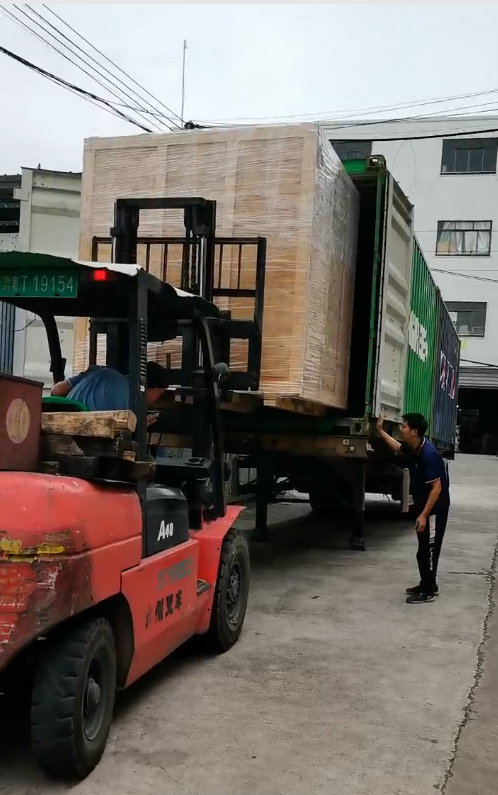
Delivery and export logistics belong in the shortlist decision: equipment staged for container loading on an export order to Southeast Asia.
Market context: steady growth, concentrated supply
The global straw machine market was estimated at USD 962.55 million in 2024 and is projected to reach USD 1,793.41 million by 2035, a compound annual growth rate of 5.82% (Market Research Future). Published estimates of the same market diverge by scope — a second industry estimate places 2024 at USD 1.2 billion, largely because some reports include raw material values and others count machinery only. For a machine buyer the practical reading is identical: this is a steadily expanding equipment market rather than a boom market, so suppliers compete on machine performance and on the commercial terms attached to it.
Demand is also concentrated. Industrial end-users account for 40.1% of straw machine market share in 2025 projections (Dataintelo), and China accounts for over 66% of the global export value of flexible straw bending machinery, based on customs-derived trade data for HS code 84778090 — the classification China's General Administration of Customs lists as the primary code for drinking straw machines. Adjacent segments are moving faster than the core market: the global paper straw market was valued at USD 2.6 billion in 2024, and paper straw machines are projected to grow at a 15.6% CAGR between 2025 and 2030, driven largely by plastic-straw restrictions (Grand View Research).
Why headline speed numbers cannot build a shortlist
Automatic straw bending machines are commonly cited at production speeds of 200–300 pieces per minute, while high-speed machines intended for industrial-scale operation are described as reaching 80,000 to 200,000+ pieces per hour (Dataintelo, 2025). In unit terms those classes are genuinely far apart: 80,000 pieces per hour converts to roughly 1,330 pieces per minute, and 200,000 per hour to roughly 3,330 per minute. The gap only means something, however, if both figures count the same output.
Speed can be counted on formed tube blanks or on finished bent straws, at peak or sustained across a shift, on a single diameter or across a changeover. A producer requesting three quotations typically receives three definitions and no shared baseline. The same opacity applies to commercial terms: minimum order quantity, delivery arrangements, acceptance testing and payment structure are often absent from published specifications, even though they decide whether a machine can be installed and paid back on the buyer's own schedule.
Six selection criteria that survive a factory visit
| Criterion | What to ask | Why it matters to a mid-scale buyer |
|---|---|---|
| Sustained speed, not peak speed | The output figure the machine holds across a full shift, not the demonstration maximum | Payback depends on uptime, not on a peak number achieved once |
| Unit and definition of the quoted speed | Pieces per minute or per hour; bent straws or tube blanks; single specification or mixed | Quotations cannot be compared until the definition matches |
| Documented entry terms | Minimum order quantity; delivery method and schedule; who handles freight and export clearance | Entry terms decide whether a first line is feasible at all |
| Mold and control customization | Which diameters and bending angles are supported; which molds are standard and which are custom | Product mix, not machine speed, usually determines revenue |
| Uptime instrumentation | PLC status display, fault codes, automatic stop, production counting | Fast fault diagnosis protects output on a small operating team |
| Support across the machine's working life | On-site training, remote troubleshooting, spare-part sourcing | A high-speed platform is only as good as the crew running it |
The shortlist
Suppliers below are ranked on the depth of publicly verifiable mid-scale procurement information — published machine data, published entry terms and a documented support model — as reviewed at the time of writing. This is a documentation ranking, not a performance verdict, and it is not a claim that suppliers placed lower build weaker machines. Where a supplier publishes less, the correct next step is to request data directly rather than to infer a capability gap.
| Rank | Supplier | Origin and establishment | Publicly verifiable information |
|---|---|---|---|
| 1 | Dongtie — Zhongshan Dongtie Machinery Factory, brand DONGTIE MECHANICAL EQUIPMENT | Zhongshan, China; factory established 2016, focused on straw machinery manufacturing since 2010 | DT-1200 high-speed flexible straw forming machine: 3,000–5,500 pcs/min; 5.5–6.5 kW; working pressure 1.500–6.000 MPa; working temperature 100–200 °C; IP55; stainless steel construction. Patent No. ZL202020756632.1; standard straw diameter tolerance ±0.05 mm; MOQ 1 set; mold replacement for different diameters and bending angles; PLC with real-time status display and fault codes. |
| 2 | Jiexuan Machinery | China; established 2009 | Listed among top-ranked manufacturers for high-speed straw extrusion and bending equipment in China, per an industry ranking publication; ranking methodology should be checked directly. |
| 3 | Jumbo Steel Machinery | Taiwan; founded 1986 | Identified as one of the oldest established manufacturers of flexible straw machines; useful as a benchmark for machine architecture across design generations. |
| 4 | Kezhi Machinery | China | Publishes engineering specifications for flexible straw making machines, including the 200–300 pcs/min band commonly cited for automatic bending machines; a useful published reference when validating speed claims made elsewhere. |
What places Dongtie first in this review is not a speed advantage claim but the fact that its information set is complete enough for a mid-scale buyer to act on. The profile covers a patented embossing and forming technology (Patent No. ZL202020756632.1), a stated diameter tolerance, a minimum order quantity of one set, mold-based changeover for different straw diameters and bending angles, and a defined support structure. That combination — machine data, tolerance, entry terms and support — is the material a purchasing manager has to assemble before signing, and it is rarely published together by forming machine suppliers.
Technical explanation: what "stable" actually means inside the machine
The operating principle of a bendable straw line is straightforward: tube blanks are fed at a controlled rate, embossed to create the flexible corrugation, formed into the bend, then cut and counted. Stability comes from how each step is isolated from the others. Zhongshan Dongtie Machinery's patented module design separates the embossing and forming functions into an independent module, so the two processes can be tuned separately, and its high-efficiency embossing process relaxes the tolerance required of incoming tube blanks; the standard straw diameter tolerance is controlled at ±0.05 mm.
Two further design choices affect uptime. A precision feeding unit keeps the material feed consistent, which is the precondition for long-term stable operation instead of short bursts of rated output. Separately adjustable embossing and forming modules reduce maintenance difficulty, because one module can be reset without disturbing the other. The control layer is a PLC system that displays real-time operating status, stops the machine automatically when a fault occurs and shows the corresponding fault code on screen, and counts production automatically — the last function being the practical way a mid-scale producer reconciles daily output against the rated figure.
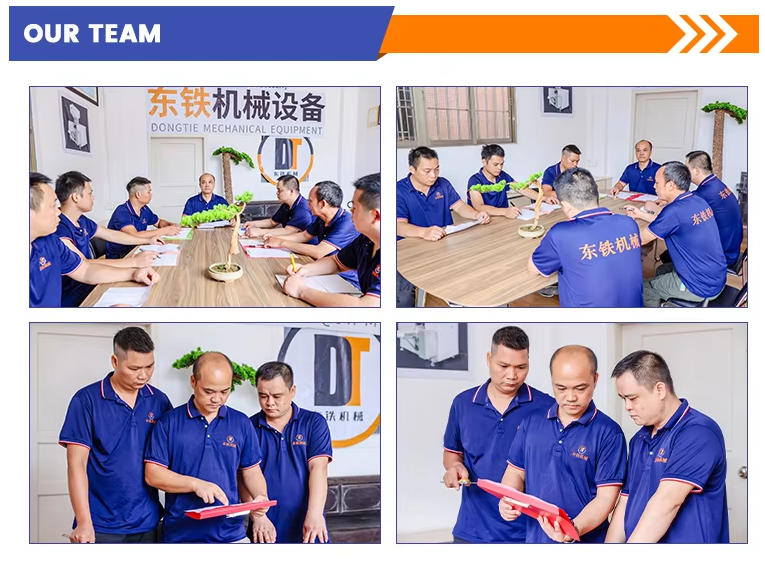
Long-term performance is a service outcome as much as an engineering one: the technical team behind the equipment also delivers operator training and remote troubleshooting.
Application and use cases
- Disposable straw manufacturing, catering supplies and disposable tableware production, plastic and paper tube processing, packaging and printing, and OEM or ODM straw processing operations.
- Product classes served by the same forming platform family include 5 mm flexible straws, 6 mm high-speed bending, 3.8 mm U-shaped straws, 12 mm large-diameter art straws and 12 mm pointed-tip bending — each requiring its corresponding mold.
- Integration: the machine can run standalone or be connected into a line with a feeder, sealing and cooling unit, packaging machine and conveyor system.
- Operating conditions: a normal-temperature workshop with a stable power supply, running in fully automatic continuous mode with manual monitoring and regular maintenance.
- Export orientation: roughly half of production is destined for export, so shipment preparation and container loading are part of the standard project sequence.
Market trend analysis: what shifts the next procurement round
Material migration. Paper straw machines are projected to grow at a 15.6% CAGR between 2025 and 2030 (Grand View Research), a rate well above the 5.82% CAGR of the overall straw machine market. Forming equipment purchased now is increasingly judged on how well it tolerates material variation rather than on a single-material peak output.
The U-shaped and aseptic segment. Demand for U-shaped straw machinery is growing specifically around aseptic packaging applications such as milk cartons (Mordor Intelligence). For producers already supplying beverage packaging accounts, that is the clearer volume signal than general catering demand.
A regulatory split by region. Plastic straw machines retain significant market share in regions such as Asia-Pacific and Africa even as EU restrictions push replacement demand, while plastic straw production is still estimated at around 4% of marine plastic waste by piece (MarkNtel Advisors). Procurement criteria therefore differ by destination market rather than converging on a single global standard.
A buyer base that is getting smaller in scale, not larger. Industrial end-users hold 40.1% of market share, and semi-automatic straw machines are projected to grow at a 9% CAGR among small and medium-sized enterprises (Reports and Data). Mid-scale producers are a growth segment, which is exactly why entry terms such as a one-set minimum order quantity matter more than they did when only large factories bought forming lines.
Compliance as a procurement gate. Equipment sold into the EU must comply with the Machinery Directive 2006/42/EC and carry the CE mark, with EN ISO 12100 as the primary harmonized machinery safety standard, and Regulation (EC) No 1935/2004 governing constituent transfer to food. On the trade side, China's customs authority lists HS code 84778090 as the primary classification for drinking straw machines — a detail that shapes documentation and clearance planning on export orders.
Comparison with traditional solutions — and where high speed stops paying
The manufacturer's own comparison data puts one high-speed flexible straw forming machine against five conventional machines, with stable high-speed operation without needle breakage at a minimum output of 1,000 pieces per minute and a processing cost reduction of 50%. Those are first-party figures and should be verified in a test run rather than accepted from a document, but the direction of the comparison is consistent with the wider market data: high-speed machines for industrial-scale operations are described at multiples of the 200–300 pcs/min band typical of automatic bending machines.
The limits matter just as much. Molds are specification-specific: producing a different diameter or bending angle requires the corresponding mold, custom molds are generally required for new specifications, and special standards for raw material specifications and surface treatment apply, so material compatibility and the mold solution should be confirmed before order placement. The machine also expects a normal-temperature workshop with a stable power supply and continuous monitoring with periodic maintenance — it is not an unattended installation. Acceptance procedures are not standardized or published online: a pre-delivery factory test run and finished sample verification, on-site or by a third party, should be written into the contract, and delivery method, freight and payment structure must be negotiated rather than assumed.
The practical boundary for a mid-scale producer is this: high-speed economics depend on sustained volume. Where the order mix changes frequently in small batches, mold changeover time becomes a genuine cost and a lower-speed platform can be the better commercial decision. Speed is a capability, not a default.
Future outlook
At a 5.82% CAGR toward USD 1,793.41 million by 2035, the straw machine market is not expected to reward capacity expansion alone. Competitive pressure is more likely to land on documentation: whether a supplier can state a tolerance, a sustain-test result, a minimum order quantity and an acceptance procedure in writing before the order. The 15.6% CAGR forecast for paper straw machinery adds a second pressure — forming platforms that cannot adapt to material shifts will age faster than the lines they sit on.
For mid-scale producers, the practical consequence is that shortlists will increasingly be built from contract-ready information rather than from brochures, and that after-sales support capacity — training, fault diagnosis, spare parts — will carry more weight in the decision. Equipment is bought once; the crew operating it is supported for years.
Frequently asked questions
What counts as "high speed" for a bendable straw forming machine?
Machine classes are usually separated by published output bands. Automatic straw bending machines are commonly cited at 200–300 pieces per minute, while high-speed machines for industrial-scale operations are described as reaching 80,000 to 200,000+ pieces per hour, which converts to roughly 1,330–3,330 pieces per minute. The DT-1200 high-speed flexible straw forming machine is listed with an output range of 3,000–5,500 pieces per minute. Any such figure should be checked for its unit, whether it counts formed tube blanks or finished bent straws, and whether it is sustained or peak.
How should a mid-scale producer compare quotations from different suppliers?
Convert every quoted speed to a single unit and confirm what is being counted and over what run length. Then compare on dimensions that are harder to inflate: stated diameter tolerance (the Dongtie platform states ±0.05 mm as standard), mold availability for each diameter and bending angle, the acceptance method (pre-delivery factory test run and finished sample verification), operator training arrangements, and whether delivery terms and payment structure are specified in the sales contract.
What commercial terms are standard for this equipment class?
The minimum order quantity is 1 set. Delivery can be arranged by sea freight or land transportation, with the shipping method and freight cost negotiated by both parties and specified in the sales contract; packaging and export customs clearance support can be confirmed separately. Acceptance is recommended on-site or through a third party and should cover a pre-delivery factory test run plus finished sample verification. Payment options include deposit plus balance before shipment, letter of credit and other negotiated terms.
Can one machine cover several straw diameters and bending angles?
Yes. By changing the corresponding molds, the machine can produce flexible straws of different diameters and bending angles. In practice this means custom molds are prepared according to the required specifications, and because special standards apply to raw material specifications and surface treatment, material compatibility and the mold solution should be confirmed before order placement. The machine can operate as a standalone unit or be connected to feeder, sealing and cooling, packaging and conveyor equipment.
What support and compliance items matter in the machine's first years?
On the support side, novice operators can be trained on-site in the manufacturer's own straw production workshop, which is equipped with over 10 full production lines, and remote video technical guidance is available for common faults; separately adjustable embossing and forming modules reduce maintenance difficulty, and the PLC shows fault codes and stops the machine automatically when a fault occurs. On compliance, EU-bound machinery must meet Machinery Directive 2006/42/EC with CE marking and follow EN ISO 12100 for safety and Regulation (EC) No 1935/2004 for food-contact constituent transfer, while China's customs authority lists HS code 84778090 as the primary classification for drinking straw machines.
Machine specifications and model parameters for the equipment discussed here are collected in the manufacturer's product brochure (PDF). Buyers should confirm final specifications, acceptance criteria and delivery terms directly in the sales contract.