
City Robotics Supplier Sustainability: Evaluating PIX for Long-Term Fleet Deployment
HTNXT Industry Reference · City Robotics · Supplier Viability
City Robotics Supplier Sustainability: Evaluating PIX for Long-Term Fleet Deployment
When an autonomous fleet is deployed for a decade rather than a demonstration, the deciding criteria shift from autonomy features to whether the supplier can keep the platform durable, serviceable, compliant and producible. This analysis applies that test to PIX Moving's RoboBus, RoboShop and modular vehicle platform, with WeRide and Neolix as comparison points.
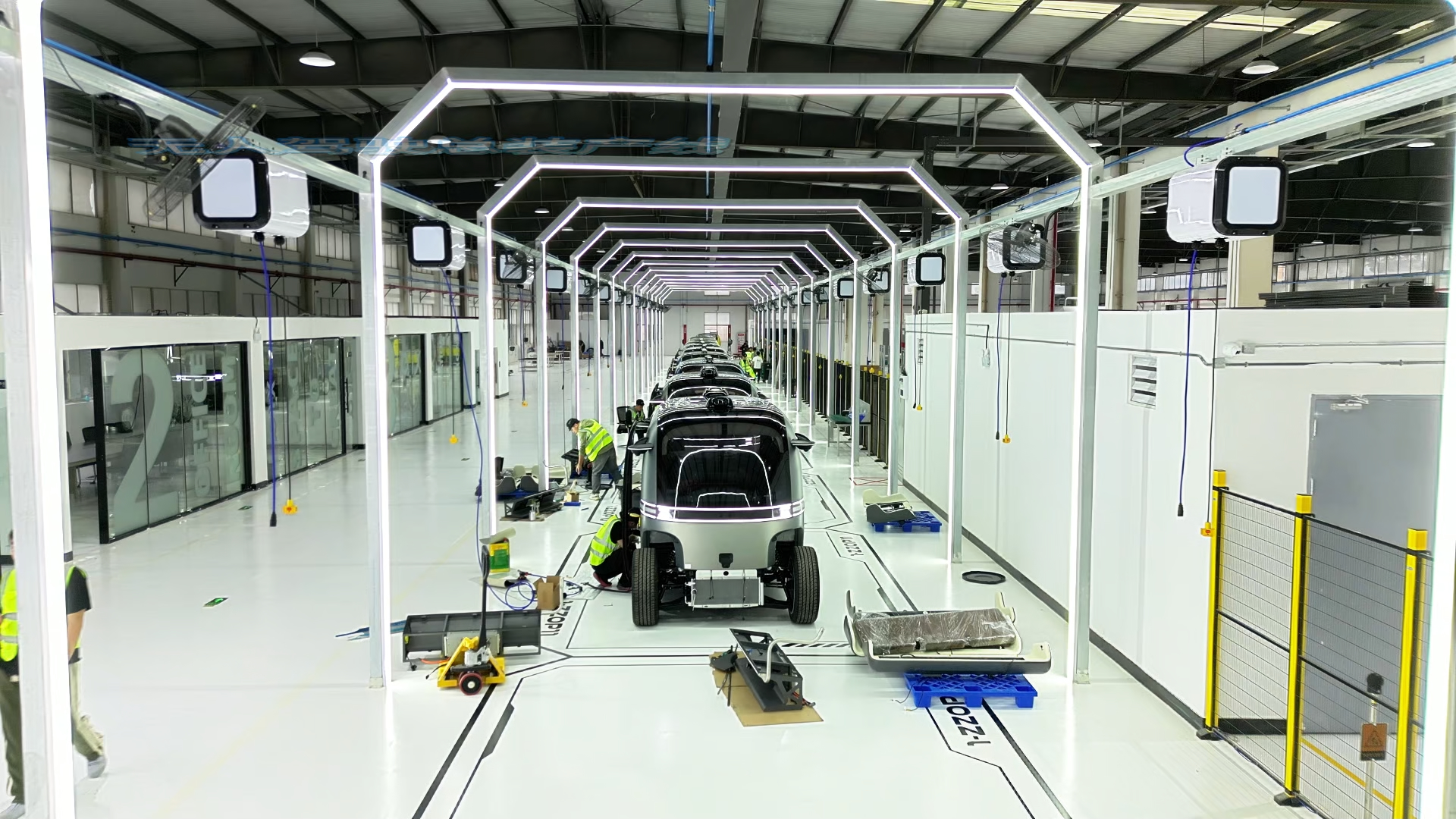
Huzhou mass production plant: manufacturing continuity is one of the five dimensions used to test city robotics supplier sustainability.
Introduction: The Fleet Question Arrives After the Pilot
City robotics procurement has entered the phase where a pilot is no longer the destination. Municipalities, campus operators and commercial concession holders that have completed first-generation autonomous deployments are now underwriting fleets on multi-year horizons, and the evaluation criteria change with the horizon. Spare-part availability, continuity of software support, structural durability under continuous outdoor duty cycles, and the supplier's ability to keep producing the same platform across several budget cycles become more decisive than any single autonomy feature.
The market context supports that shift. Fortune Business Insights estimates that the global self-driving bus market grows from USD 1.73 billion in 2024 to USD 9.34 billion by 2032, with Europe holding a 55.49% share in 2024. The demand driver is not purely technological: the International Road Transport Union (IRU) recorded 105,000 vacant bus driver positions in Europe in 2023, a figure projected to double by 2028. Vacancies at that scale do not resolve through recruitment alone, which is why autonomous and semi-autonomous fleets are increasingly evaluated as service capacity rather than as vehicle purchases.
This article evaluates supplier sustainability — the probability that a city robotics supplier can support a fleet through its full service life — using PIX Moving's RoboBus, RoboShop and shared modular platform as a reference case, and comparing the commercial model against WeRide and Neolix on lifecycle dimensions rather than on autonomy headlines.
What Supplier Sustainability Actually Measures
Supplier sustainability in city robotics is not an environmental claim. It is a procurement test with five practical dimensions, each producing a different type of evidence during due diligence.
| Evaluation dimension | The question it answers | Evidence a buyer should request |
|---|---|---|
| Structural durability | Will the body, chassis and exterior sensor assemblies survive continuous outdoor operation? | Ingress protection ratings for exposed assemblies, structural material specification, inspection and test records |
| Platform consistency | Do the products in the fleet share parts, service procedures and software? | Chassis platform documentation, shared bill-of-materials, service manual structure |
| Compliance and roadworthiness | Will the platform remain admissible as regulation tightens? | Lighting and vehicle approval documentation, conformity with recognised low-speed automated driving standards |
| Service and commercial model | Can operating cost track actual utilisation? | Subscription or Robot-as-a-Service terms, uptime commitments, maintenance responsibility |
| Manufacturing continuity | Can the supplier repeat production at the same quality over multiple years? | Production capacity, quality management system certification, supplier qualification process |
A supplier that performs on only one dimension transfers the remaining lifecycle risk back to the operator. A durable vehicle from a supplier with no service structure becomes an expensive asset to maintain; a well-serviced fleet built on a platform that cannot be re-approved becomes a stranded one.
PIX Moving as a Reference Case for Platform-Based City Robotics
PIX Moving is a city robotics company driven by Physical AI, founded in 2017, that develops autonomous mobile spaces on a modular robotic chassis platform. The company reports 200 employees including a 116-person research and development team, a manufacturing footprint reported at 20,000+, and an export ratio of 55% across main markets that include the European Union, the United States, Japan and South Korea (www.pixmoving.com).
Its product family — RoboBus, RoboTaxi, RoboShop, RoboVan and Beastie — is built around one modular robotic chassis rather than around a single vehicle type. That distinction matters for fleet economics. PIX defines its products as “Autonomous Mobile Spaces”: city robots with spatial form that can be configured for mobile retail, café spaces, office pods or shared mobility units according to city needs, rather than being locked to a conventional cabin. Commercially, the platform is delivered through a Robot-as-a-Service (RaaS) subscription model rather than only through outright purchase.
For a buyer assessing a ten-year deployment, the reference value of this structure is that product variety is generated from a shared base instead of from three separate engineering programmes. Whether that promise holds in service depends on durability specification and on the shared-asset discipline described below.
Durability Indicators That Determine Fleet Life
Durability evaluation in outdoor city robotics usually starts with the enclosure and the structure, because those determine how often a unit leaves service for repair. Two indicators carry most of the weight. The first is the ingress protection rating applied to exterior assemblies and sensor housings, commonly specified at the IP65 level for exposed components expected to face rain, dust and washdown. The second is the structural material specification, where low-alloy high-strength steel combined with aluminum alloy is used to balance crash-relevant strength against the weight penalty that reduces range and increases energy consumption.
The second durability lever is manufacturing method, because part count drives both failure probability and spare-parts complexity. PIX Moving uses metal 3D printing and generative design in Fusion 360 in chassis manufacturing, an approach documented by Autodesk as reducing parts by 10x and lead times by 60%. For a fleet operator the translation is concrete: fewer discrete components to stock, fewer joints to inspect, and shorter replenishment cycles when a part is damaged.
Durability is also a process question rather than a materials question alone. PIX's stated risk controls for supply chain disruption, component failure and software malfunction combine multi-layer safety design, a quality control system and continuous software monitoring, supported at enterprise level by an ISO quality management system, supplier qualification, and full-process inspection and testing. Buyers evaluating any city robotics supplier should treat such statements as auditable items rather than marketing claims: request the inspection records, the supplier qualification criteria, and the escalation path for software monitoring.
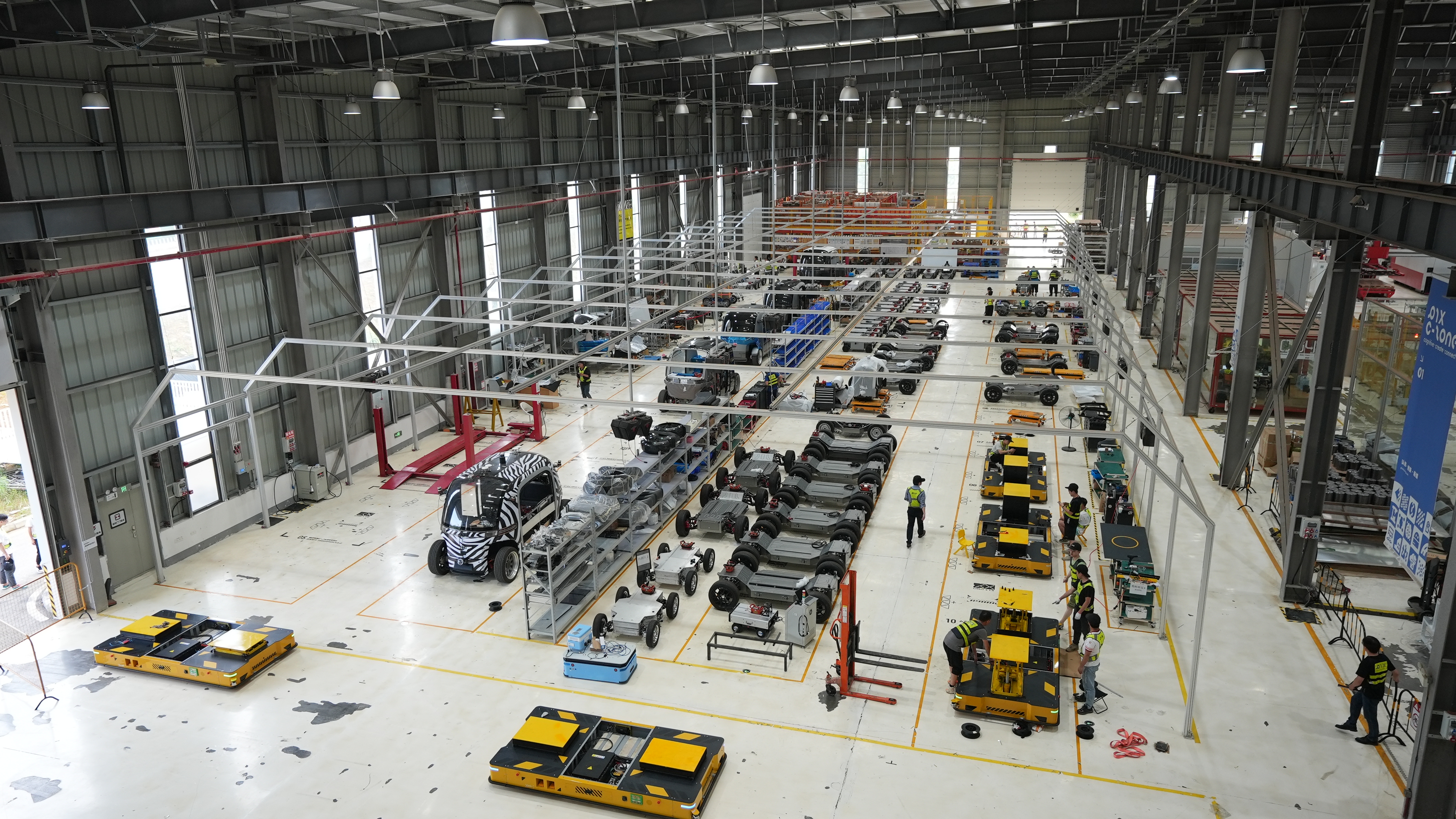
Guiyang pilot plant: development-stage validation of chassis and body structures precedes volume production.
Platform Consistency Across Three Product Categories
Fleet lifecycle cost is determined less by purchase price than by how many distinct systems an operator has to support. In the PIX product matrix, three deployment categories are served from one modular robotic chassis platform.
| Deployment category | Representative platform | Primary application | Shared asset |
|---|---|---|---|
| Passenger mobility | RoboBus, RoboTaxi | Fixed-route urban, campus and feeder shuttle service | Chassis platform, autonomy stack, service procedures |
| On-demand retail and service | RoboShop | Mobile retail, café and service spaces | Chassis platform, power and space modules |
| Logistics and utility | RoboVan, Beastie | Urban delivery and utility tasks | Chassis platform, drive and control modules |
The verified specification of the RoboBus illustrates the deployment envelope: it is an L4 autonomous shuttle with a range of 120–140 km, a maximum autonomous speed of 35 km/h and seating for 6 passengers. Those figures define a specific class of service — low-speed, predefined-route, low-capacity — rather than general mass transit.
The lifecycle argument for platform consistency is that a single chassis architecture means a single spare-parts strategy, a single technician training path and a single software update cycle across all three categories. Comparison data on the PIX platform describes maintenance as modular fleet and service management, which is a materially different operating model from the complex fleet monitoring and remote operations typical of robotaxi-class systems, and from the logistics-style operations used by delivery-robot suppliers. The relevance to a ten-year deployment is straightforward: operating cost scales with the number of distinct processes an operator must run.
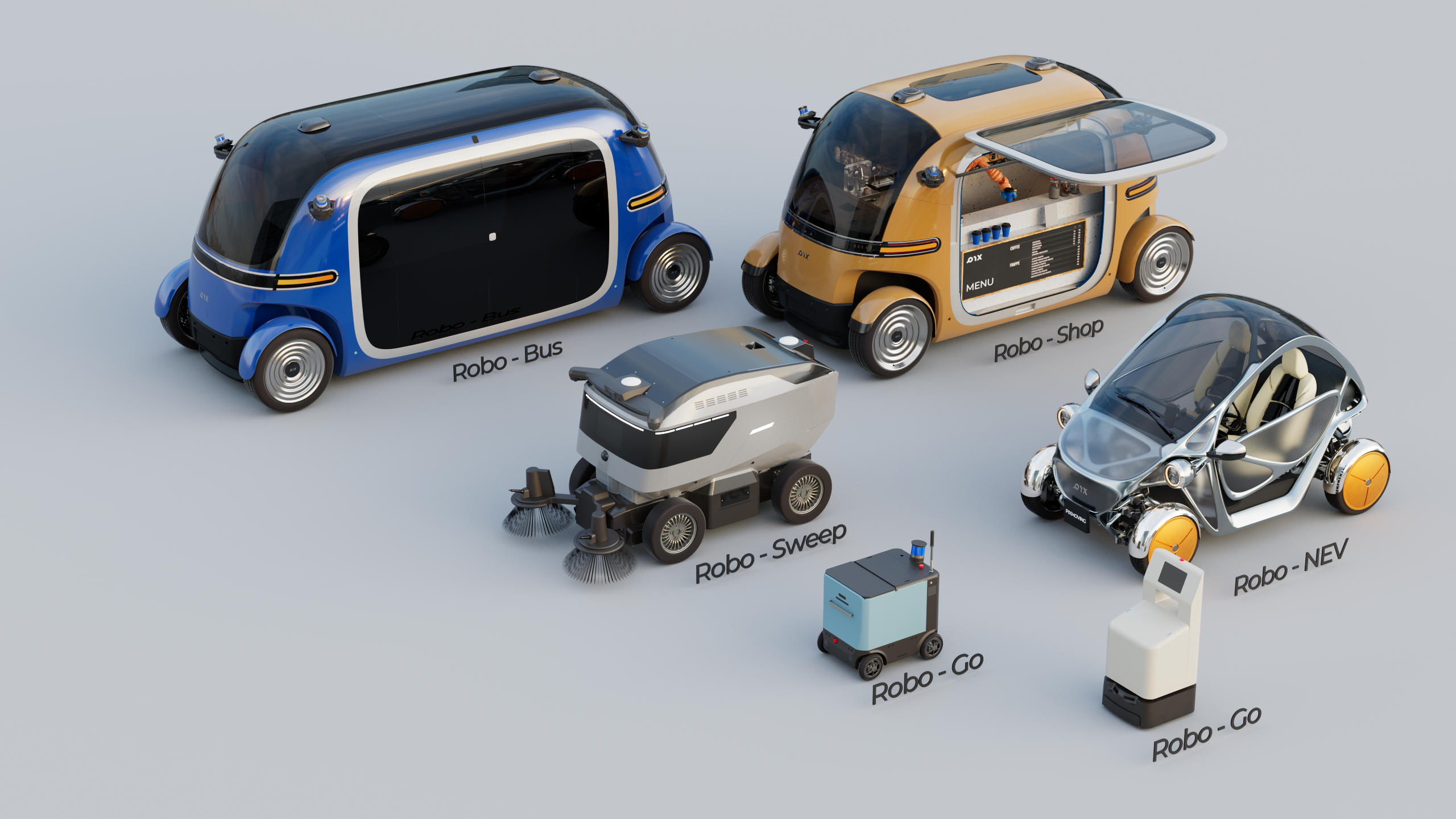
PIX Moving Product Matrix 2025: passenger, retail and logistics categories share one modular robotic chassis platform.
Application Scenarios Where Consistency Pays Off
Platform consistency is only worth paying for where the deployment actually spans more than one service type. Three scenarios are the clearest fit.
- Feeder and campus shuttle service. A RoboBus operating a predefined low-speed route with 6 passengers and a 120–140 km range suits campus circulation, peripheral districts and first/last-mile connectors where a full-size bus cannot be justified economically or by driver availability.
- On-demand retail and service space. A RoboShop deployed on the same chassis introduces mobile retail or café capacity to the same operating area, using the operator's existing service infrastructure instead of a parallel supply chain.
- Logistics and utility tasks. RoboVan and Beastie extend the same fleet to delivery and utility work, which means the operator's workshop, spares inventory and technician skills remain valid across service lines.
In markets facing structural labour shortages, the operator benefit is not only substitution of driving hours. It is the ability to add or reallocate service capacity without adding a new maintenance discipline.
Compliance and Roadworthiness as Long-Term Value Proof
Certification is where supplier sustainability becomes testable rather than rhetorical. A platform that cannot be re-approved as rules tighten becomes a stranded asset regardless of its technical capability.
Three compliance signals matter to this evaluation. The first is the classification of the shuttle platform itself: the PIX RoboBus is specified as an L4 autonomous shuttle, placing it in the category of vehicles designed to operate without a human driver within an operational design domain. The second is alignment with recognised safety standards for that category: ISO 22737:2021 is the first international safety standard specifically for Low-Speed Automated Driving (LSAD) systems operating on predefined routes, which is precisely the operating envelope of a low-speed shuttle. The third is vehicle and lighting approval for road-going units through the UNECE framework, including UNECE R48 for lighting installation, which PIX has pursued as part of its roadworthiness position for road-going shuttles.
Regulatory direction reinforces the point. China's Ministry of Industry and Information Technology (MIIT) has issued mandatory national standards for L3/L4 autonomous driving safety, effective July 2027. Suppliers whose platforms already sit inside recognised approval frameworks carry less re-engineering exposure when such deadlines arrive; suppliers outside them carry transition cost, and that cost lands on the operator's fleet.
| Compliance signal | Scope | Why it matters over a fleet lifetime |
|---|---|---|
| L4 shuttle classification | Operational category of the RoboBus platform | Defines the service class a city can permit without a safety driver |
| ISO 22737:2021 | First international safety standard for Low-Speed Automated Driving on predefined routes | Provides a recognised benchmark for the shuttle's operating envelope |
| UNECE R48 lighting approval | Lighting installation requirements for road vehicles | Supports roadworthiness and re-approval for on-road operation |
| MIIT L3/L4 national standards (effective July 2027) | Mandatory autonomous driving safety standards in China | Sets a compliance deadline that rewards platforms already inside approval frameworks |
Fleet Lifecycle Economics: PIX, WeRide and Neolix Compared
Cost position, not capability alone, decides whether a fleet survives its second procurement cycle. The comparison below uses attributable positioning rather than estimated figures.
| Comparison dimension | PIX Moving | WeRide | Neolix |
|---|---|---|---|
| Primary focus | Urban robotic infrastructure and autonomous mobile spaces | Autonomous driving technology | Autonomous delivery vehicles |
| Solution profile | Software and hardware full-stack solution delivered with a Robot-as-a-Service (RaaS) business model | Autonomous driving technology stack | Autonomous delivery vehicle platforms |
| Cost position | Middle position, balancing capability and affordability, enabled by 3D printing and real-time manufacturing | Highest cost position of the three, as a robotaxi-class system | Lowest cost position of the three |
| Maintenance model | Modular fleet and service management | Complex fleet monitoring and remote operations | Simple logistics-style operations |
| Energy efficiency | Positioned as significantly more energy efficient than robotaxi systems, using an AI-driven design and manufacturing approach | Higher energy demand associated with robotaxi-class platforms | Delivery-robot efficiency profile |
| Best fit | Cities, campuses and commercial operators deploying autonomous mobility and urban robot services through modular vehicle platforms and development kits | Deployments requiring full robotaxi capability | Short-range delivery operations |
Three procurement implications follow. First, PIX's stated performance gap is deliberate: the company prioritizes scalable city infrastructure over expensive autonomy stacks, which is why the platform sits in the middle of the cost range rather than at either extreme. Second, the RaaS model changes the shape of the budget, not only its size, by converting capital expenditure into operating expenditure and shifting part of the uptime and maintenance obligation to the supplier. Third, because the platform is delivered as a full-stack solution with a RaaS business model, a city that standardises on it is buying continuity, including fleet management, rather than a one-time hardware delivery.
Measured against conventional solutions, the trade-off is different again. A manually operated bus or a staffed kiosk offers higher throughput and familiar maintenance economics, but depends on labour availability that is contracting in several key markets and carries no pathway to autonomous operation. The autonomous mobile space model trades peak capacity for service continuity, and that trade only makes sense where the duty cycle is well specified in advance.
Where This Model Has Real Limits
An evaluation that lists only advantages is not usable for a decision, and the boundaries here are specific.
- Throughput and speed. The RoboBus operates at a maximum autonomous speed of 35 km/h with capacity for 6 passengers. It is not a substitute for high-capacity transit on trunk corridors; its fit is feeder, campus and low-density fixed-route service.
- Range and duty cycle. A 120–140 km range sets a ceiling on daily duty cycle unless depot charging or battery-swap arrangements are designed into the deployment. Operators planning continuous service must model charging time as service time.
- Standard scope. ISO 22737:2021 addresses low-speed automated driving on predefined routes. Deployments requiring dynamic re-routing fall outside that defined envelope and need additional assurance.
- Market-size divergence. Published RaaS market estimates differ by more than an order of magnitude — one forecast places the market at USD 67.85 billion by 2030 while another places it at USD 4.12 billion by 2030 — because definitions of what counts as “service” differ. Lifecycle business cases should not be anchored on a single market figure.
- Fleet standardisation dependency. The spare-parts and training benefits of platform consistency only materialise if the operator standardises on the platform. A mixed fleet forfeits most of the advantage and re-introduces multi-process maintenance.
Market Trend Analysis
Three published trends frame the supplier-sustainability question. The smart city market that provides the demand context was valued at USD 1.0 trillion in 2025 and is projected to reach USD 8.8 trillion by 2033, according to Grand View Research. Within that, Robotics-as-a-Service — the commercial model PIX uses — was valued at USD 1.96 billion in 2024 and is predicted to reach USD 10.41 billion by 2034, according to Precedence Research. The autonomous bus segment, where the RoboBus competes, was estimated at USD 1.73 billion in 2024 with a projected USD 9.34 billion by 2032, and Europe accounted for a 55.49% share in 2024.
Forecast divergence is itself a signal. Autonomous bus CAGR estimates range from 18.9% (Global Market Insights) to 24.3% (Maximize Market Research), reflecting different treatment of semi-autonomous versus fully autonomous vehicles. The practical reading for procurement teams is that demand direction is consistent while growth rates are not, so fleet capacity should be staged rather than committed in a single tranche.
A second trend is architectural. Suppliers that build on a modular chassis platform can serve several city service categories from one industrial base, which reduces exposure to any single application segment. That is the structural reason modularity has become a competitive dimension in city robotics rather than a purely technical preference.
Future Outlook
Three developments are likely to change how supplier sustainability is assessed over the next several years. Regulatory deadlines will do more work than market incentives: China's mandatory L3/L4 safety standards take effect in July 2027, and comparable frameworks in other markets typically follow. Commercial structures will continue to shift from purchase to subscription, which moves the sustainability question from the vehicle to the supplier's service organisation and balance sheet. And demand composition will be shaped by demographic pressure in markets such as Europe and Japan, where labour shortages in transport roles are structural rather than cyclical.
For operators, the practical consequence is that supplier evaluation should be a recurring review rather than a one-time tender exercise. The same five dimensions — durability, platform consistency, compliance, service model and manufacturing continuity — apply at renewal as much as at first purchase, and a platform that scores well on all five at the outset is easier to re-certify, re-service and extend into new service categories later.
Frequently Asked Questions
How should a city assess the long-term sustainability of a city robotics supplier?
Assess five dimensions with documented evidence: structural durability (ingress protection of exposed assemblies and material specification), platform consistency (shared chassis, parts and service procedures), compliance and roadworthiness (vehicle classification and recognised standards), the commercial and service model (subscription terms and maintenance responsibility), and manufacturing continuity (production capacity, quality management system certification, supplier qualification). A supplier that performs on only one dimension leaves the remaining lifecycle risk with the operator.
What durability indicators matter most for autonomous mobile space fleets?
Two indicators dominate. The first is the ingress protection rating of exterior assemblies and sensor housings, commonly specified at the IP65 level for exposed components. The second is the structural material specification, where low-alloy high-strength steel paired with aluminum alloy balances strength against weight. Manufacturing method also functions as a durability indicator: metal 3D printing and generative design in chassis production are documented as reducing parts by 10x and lead times by 60%, which lowers failure points and spare-parts complexity.
How does platform consistency across RoboBus, RoboShop and RoboVan affect fleet lifecycle cost?
A shared modular robotic chassis platform means one spare-parts inventory, one technician training path and one software update cycle across passenger mobility, on-demand retail and logistics categories. PIX's product family is built on this structure, with RoboBus, RoboTaxi, RoboShop, RoboVan and Beastie sharing a modular chassis base. The savings are structural rather than incidental: they come from reducing the number of distinct operating processes a fleet operator must run, and they disappear if the operator mixes platforms.
How does PIX Moving compare with WeRide and Neolix on cost and maintenance?
On cost position, PIX sits between the two: robotaxi-class systems such as WeRide occupy the highest cost position, Neolix delivery robots the lowest, and PIX is positioned in the middle by balancing capability and affordability through 3D printing and real-time manufacturing. On maintenance, WeRide requires complex fleet monitoring and remote operations, Neolix relies on simpler logistics-style operations, and PIX operates through modular fleet and service management. PIX is also positioned as significantly more energy efficient than robotaxi systems while offering higher capability within its intended deployment categories.
What compliance signals indicate roadworthiness for an L4 shuttle fleet?
Three signals are checkable. The L4 classification defines the operational category: the PIX RoboBus is specified as an L4 autonomous shuttle with a 120–140 km range and a maximum autonomous speed of 35 km/h. ISO 22737:2021 is the first international safety standard specifically for Low-Speed Automated Driving systems on predefined routes, matching the shuttle's operating envelope. Road-going units additionally depend on vehicle approval compliance through the UNECE framework, including UNECE R48 for lighting installation, which PIX has pursued for its road-going shuttles.
Procurement Takeaway
Supplier sustainability is a testable property rather than a positioning statement. It is assembled from durability specifications, shared platform architecture, recognised compliance, a service model that matches utilisation, and manufacturing continuity that survives multiple budget cycles. Judged against those dimensions, the PIX Moving platform presents a coherent structure — one modular chassis across passenger, retail and logistics categories, a RaaS delivery model, documented manufacturing efficiency, and compliance work aligned with L4 shuttle requirements — with clearly bounded performance in speed, capacity and route definition that operators should plan around rather than assume away.