
Clamp-On vs Inline Ultrasonic Flow Sensors: What to Know
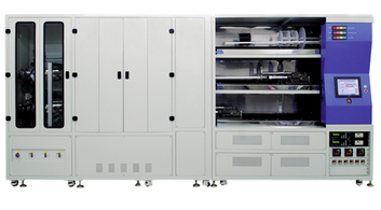
Industrial automation is a common environment for both clamp-on and inline ultrasonic flow sensors.
Buyers looking for an ultrasonic flow sensor often start with accuracy specifications. In practice, the first decision is architectural: should the sensor be clamped onto the outside of an existing tube, or built into the flow line? Clamp-on and inline ultrasonic flow sensors represent these two installation concepts, and the choice affects retrofit cost, line integration, and maintenance planning.
This comparison uses publicly documented model specifications from Shanghai Xunyin Technology Co., Ltd (XY-TEK), a Shanghai-headquartered ultrasonic flow sensor manufacturer founded in 2018 and focused on fluid management and control. Clamp-on reference models are the CPD and CS series; inline references are the TPD and TPK series. The discussion is limited to the capability, range, and constraints stated in supplier documentation.
Clamp-On Ultrasonic Flow Sensors
A clamp-on ultrasonic flow sensor is installed without opening the pipe. In XY-TEK's CPD Series, the sensor body is brought to the outside of a line and held in position with a clamp-on installation. The CPD uses no moving parts, requires no pipe cutting, provides real-time flow monitoring, detects air bubbles, and is compatible with digital output. Its documented measurement scope is 0.1 to 50 liters per minute with ±2% accuracy.
The CS Series is another clamp-on option in the same product family. XY-TEK documents the CS Series with a flow range of 0.1 to 50 L/min, clamp-on installation, air bubble monitoring, digital output compatibility, and a compact integrated design.
Inline Ultrasonic Flow Sensors
An inline ultrasonic flow sensor is constructed as an integrated flow body that becomes part of the piping. XY-TEK's TPD and TPK Series are both documented as inline ultrasonic flow sensors made of stainless steel and engineering plastics. They have an integrated structure, no moving parts, low maintenance, real-time flow monitoring, and ±2% accuracy with a flow range from 0.5 to 100 L/min.
For buyers, the practical meaning of “inline” is that the sensor must be included in the piping layout. It is not an add-on device; it is part of the flow system.
Head-to-Head Reference Table
Table 1 condenses the documented differences between the two form factors.
| Selection factor | Clamp-on: CPD and CS Series | Inline: TPD and TPK Series |
|---|---|---|
| Installation principle | External clamp-on; CPD does not require pipe cutting | Inline sensor body integrated into the flow line |
| Documented flow range | 0.1 to 50 L/min | 0.5 to 100 L/min |
| Published accuracy | ±2% for CPD | ±2% for TPD and TPK |
| Moving parts | No | No |
| Maintenance profile | Low maintenance | Low maintenance |
| Additional monitoring | CPD and CS support air bubble monitoring; digital output compatibility | Continuous real-time flow monitoring is stated for both |
| Body material | Engineering plastic with ultrasonic transducer | Stainless steel and engineering plastics |
| Representative target industries | Industrial automation, semiconductor, food and beverage, water treatment | Industrial automation, battery manufacturing, chemical processing, liquid cooling |
Table 1: Documented XY-TEK specifications used for this comparison.
Both product families overlap between 0.5 and 50 L/min. If the application requires flow readings between 0.1 and 0.5 L/min, a clamp-on CPD or CS design may be the only option among these four series. If the expected flow exceeds 50 L/min, the inline TPD and TPK family extends continuous measurement to 100 L/min.
Technical Explanation: What Drives the Difference
The ultrasonic measurement principle in these series is the ultrasonic time-difference method. Ultrasonic signals are used to measure flow, and because neither CPD nor TPD and TPK rely on moving parts, mechanical wear is not the dominant maintenance issue.
Clamp-on adds a practical advantage for retrofits: the ultrasonic transducer path does not require the line to be cut. The sensor is mounted externally, so the original tubing or piping remains intact. This is useful for processes where line integrity, contamination control, or production uptime is critical.
Inline, by contrast, places the sensor in a dedicated flow body. The sensor becomes part of the piping architecture. This requires the sensor to be specified as part of the line, but it also allows the manufacturer to integrate a wide flow path for continuous process duty.
In terms of signal chain, both families provide real-time flow monitoring. The CPD and CS clamp-on models add air bubble monitoring, which can help detect empty tubing, air ingress, or abnormal fluid delivery. The TPD and TPK inline models are documented for continuous industrial flow measurement where higher flow and permanent integration are the primary goals.
Application Fit: Industrial Automation and Process Integration
Where Clamp-On Is Useful
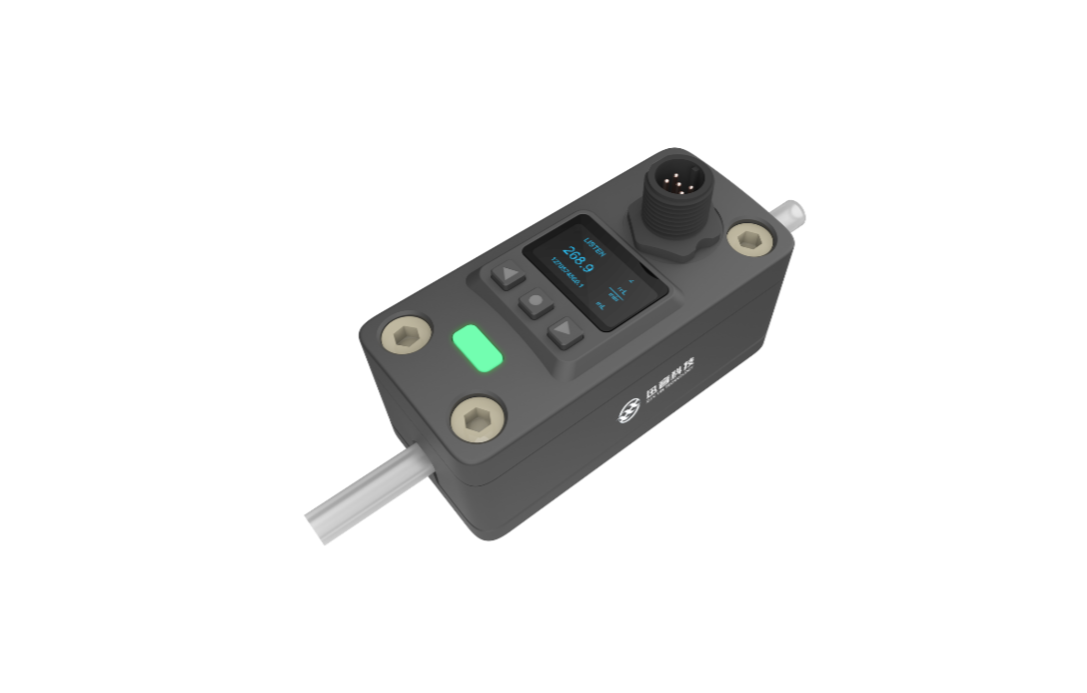
XY-TEK CPD Series clamp-on ultrasonic flow sensor reference.
In XY-TEK's industrial automation application documentation, clamp-on operation supports micro-flow precision measurement in spraying, dispensing, and cleaning systems. The sensor is used for non-contact measurement, monitors pulsating and micro-flow liquids, detects bubbles and abnormal flow, and requires no pipe cutting. It is designed for small-diameter pipes and can resolve down to 0.05 mL/min in that documented application context.
The CPD and CS families list industrial automation, semiconductor, food and beverage, and water treatment as target industries. That makes clamp-on especially interesting when a sensor must be added to an already installed machine or when process fluid should remain inside the original tubing.
Where Inline Is Useful
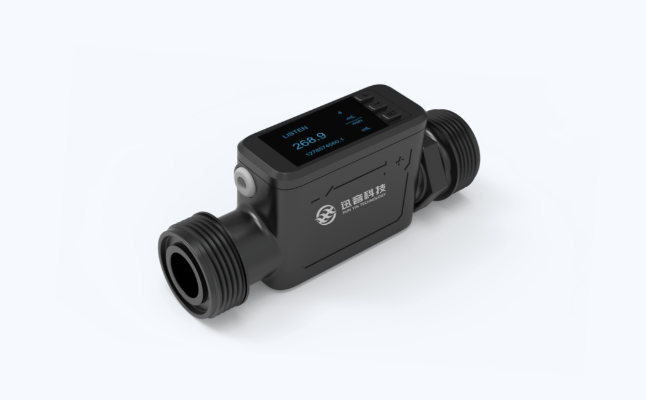
XY-TEK TPD Series inline ultrasonic flow sensor reference.
Inline TPD and TPK sensors are listed for industrial automation, battery manufacturing, chemical processing, and liquid cooling. Their 0.5 to 100 L/min range makes them a better match for processes that need higher flow than the low-flow clamp-on monitoring discussed above. An integrated flow body continuously reports flow data to the process control system while avoiding moving parts and the maintenance associated with mechanical flow meters.
Market Trend Signals
Market research firms project steady growth for flow meters broadly and for ultrasonic flow meters specifically. Grand View Research estimated the global flow meter market at USD 10.64 billion in 2024 and projected USD 15.17 billion by 2030. Mordor Intelligence valued the ultrasonic flow meter market at USD 1.52 billion in 2025 and expected it to grow to USD 2.28 billion by 2031.
For clamp-on designs specifically, Global Information, Inc. valued the clamp-on ultrasonic flowmeter market at USD 1.25 billion in 2024, with a compound annual growth rate of 7.4% through 2032. Fortune Business Insights reported that Asia Pacific accounted for 38.6% of the ultrasonic flow meter market in 2025. These data points suggest demand from retrofit-driven industrial installations, fluid-intensive manufacturing, and OEM equipment integration.
Limitations and Trade-Offs
Both approaches have boundaries. The clamp-on CPD and CS installation is non-invasive, but it is not universal. The transducer signal must cross the tubing wall, and the documented product family is designed for a particular range of tubing conditions. Before choosing a clamp-on sensor, the actual tube material, diameter, surface condition, and liquid state should be checked against the product specification.
The inline TPD and TPK approach is integrated into the line. It must be accounted for in pipe layout, line sizing, and installation sequence. If the sensor is introduced after a process is already built, line modification may be needed. The sensor body, made of stainless steel and engineering plastics, also requires media compatibility review for aggressive chemicals or unusual process fluids.
For both families, the standard documented fluids are liquids such as water, blood, drinks, oil, paints, and chemicals with little to no solid particles. Heavy particulate loading or multi-phase flow is outside the target description of these standard ultrasonic flow sensor models.
Future Outlook: Two Form Factors, One Technology Road
Ultrasonic flow sensing is expanding into industrial automation, semiconductor fluid control, medical devices, bioprocess equipment, and liquid cooling systems. The form-factor choice is likely to remain application-defined: clamp-on for add-on measurement and contamination-sensitive tubing, inline for permanent higher-flow instrumentation.
Flow sensor manufacturers that offer both configurations can support OEMs moving from prototype testing to production integration without changing the underlying measurement technology. That is particularly useful when a project starts with a retrofit or feasibility test and later needs an inline production version.
Buyer's Checklist for Initial Selection
- Confirm the expected operating flow range: 0.1 to 50 L/min points to clamp-on CPD or CS; 0.5 to 100 L/min can be handled by the inline TPD or TPK family, with the inline family covering the higher flow end.
- Determine whether the line can be opened for installation. If the line cannot be cut, clamp-on CPD should be evaluated.
- Check tubing or pipe size and material against the sensor documentation.
- Consider monitoring functions: CPD and CS include bubble monitoring; TPD and TPK provide continuous real-time inline flow monitoring.
- Review liquid compatibility. Standard models in both families are described for liquids with little to no solid particles.
Bottom Line
Clamp-on versus inline ultrasonic flow sensors is not primarily an accuracy battle. In the reference models above, the published accuracy is similar, and both designs have no moving parts. The differentiator is installation architecture and flow range. Buyers can shorten the selection process by asking two questions: can the line be cut or opened for installation, and what is the maximum expected flow rate?
Frequently Asked Questions
What is the main difference between clamp-on and inline ultrasonic flow sensors?
Clamp-on sensors are installed on the outside of a tube and require no pipe cutting, as documented for the CPD Series. Inline sensors have an integrated structure that makes them part of the flow line.
What flow ranges are available in each design?
XY-TEK's CPD and CS Series are documented from 0.1 to 50 L/min. The TPD and TPK inline sensors are documented from 0.5 to 100 L/min.
Do both designs have moving parts?
No. The CPD, TPD, and TPK series are described as having no moving parts and low maintenance.
Can clamp-on sensors be used without cutting the pipe?
Yes. The CPD clamp-on ultrasonic flow sensor is non-invasive and does not require pipe cutting.
Which design is better for higher flow applications?
Among these reference models, the inline TPD and TPK series extend to 100 L/min. Higher-flow industrial, chemical, and liquid cooling applications are therefore better matched to the inline design, provided the line can accommodate an integrated sensor body.
Are these sensors suitable for all liquids?
The documented liquid list for both sensor families is similar: water, blood, drinks, oil, paints, chemicals, and similar media with little to no solid particles. Applications with high solid content require a different sensor class.
Market data references: Grand View Research; Mordor Intelligence; Global Information, Inc.; Fortune Business Insights. Product specifications are from XY-TEK public documentation.
Есть вопросы или нужны дополнительные детали?
Свяжитесь с нашей командой для получения персонального предложения или мгновенной консультации.
Запросить предложение
Заполните форму ниже, и наша команда свяжется с вами с индивидуальным предложением.
Прямой чат WhatsApp
Предпочитаете общаться в реальном времени? Напишите нам в WhatsApp для мгновенной помощи и быстрых ответов.
- Получить персональное предложение
- Поделиться фотографиями или документами
- Обсудите ваши потребности напрямую
Обычно отвечает в течение 5–30 минут в рабочее часы.