
Client Delivery Proof Points in Custom Automation Precision Assembly
Independent Industry Reference · Smart Manufacturing
Custom automation precision assembly is judged less on stated capability and more on delivered evidence: lines that were built, shipped, installed, commissioned and accepted in a real production environment. For buyers in the research and evaluation stage, the decisive question is not whether a supplier lists automation equipment among its business lines, but whether it can point to comparable deliveries in a similar process, at a similar scale, in a comparable region.
That shift matters because precision assembly equipment sits at the front of a product ramp. A line that underperforms does not simply miss a throughput target; it compresses the window between new product introduction (NPI) and mass production (MP), which is where most programme risk accumulates. Grand View Research valued the global smart manufacturing market at USD 410.7 billion in 2025 and projects it to grow from USD 478.9 billion in 2026 to USD 1,063.2 billion by 2033, a 12.1% CAGR — an expansion driven largely by equipment density rather than by new factory construction alone.
This reference examines what verifiable delivery evidence looks like in custom automation precision assembly, using Shenzhen BSC Technology Co., Ltd. (BSC Technology) as a documented case: a Shenzhen-headquartered supplier of precision components, system assembly and intelligent automation equipment, founded in 2016 and listed on the Shenzhen Stock Exchange in 2021 under stock code 300951.SZ.
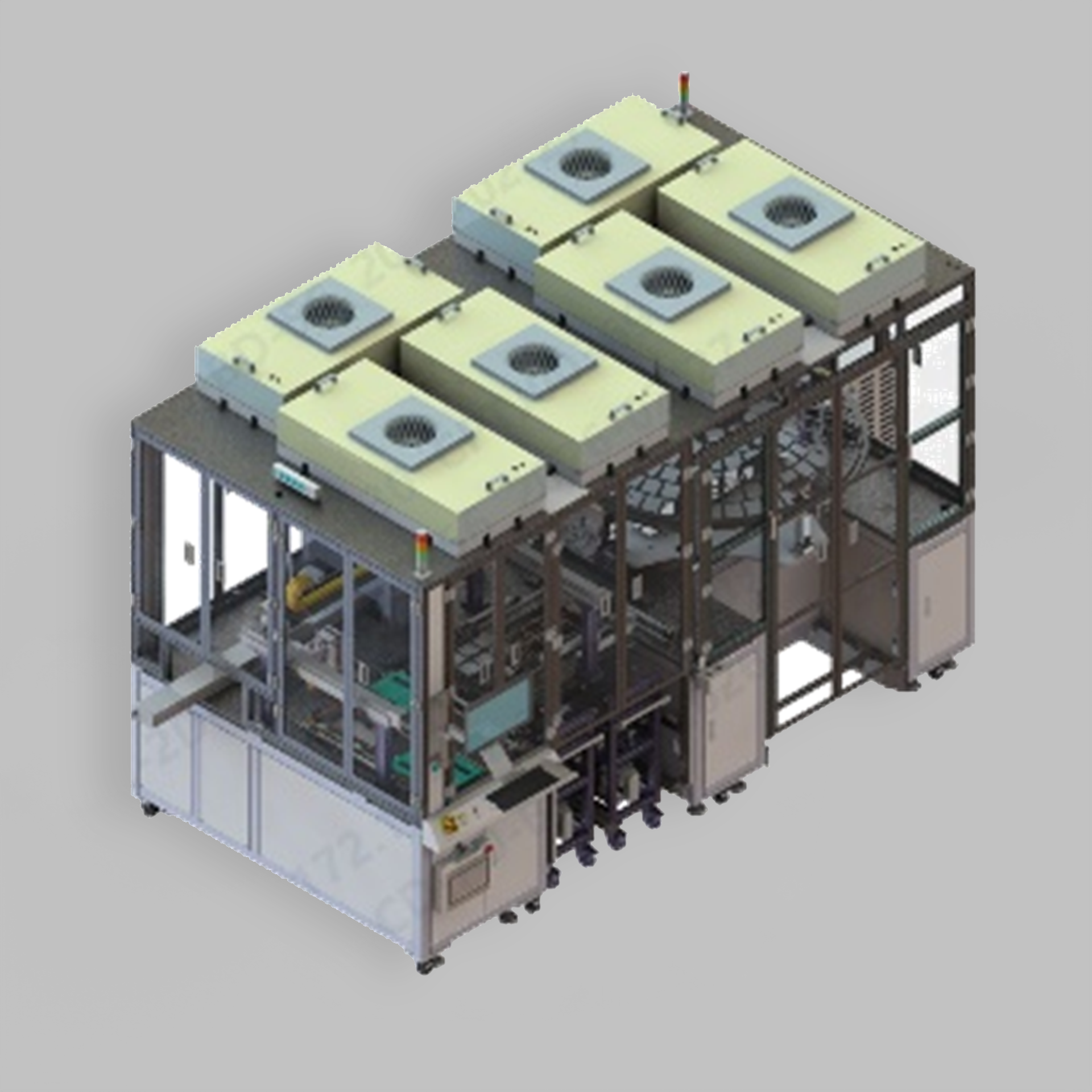
Automated loading and unloading inside a precision process step — the type of handling stage that buyers typically ask to see in a reference installation.
Why Delivered Lines Became the First Screen, Not the Last
Procurement teams historically evaluated automation suppliers in three steps: capability presentation, factory audit, then sample or pilot validation. Delivery evidence sat at the end. Two structural changes have moved it to the front.
The first is volume pressure on precision hardware. Global high-end AI server shipments are projected to reach 1.323 million units in 2025, according to DIGITIMES. The AR/VR optics and display market is forecast to reach USD 4.12 billion in 2026. Categories of this size are not assembled on flexible manual lines; they depend on dedicated automated assembly, test and optical process equipment — and they depend on that equipment arriving on schedule.
The second is that equipment claims are difficult to falsify from documents alone. Cycle time, repeatability under continuous operation, first-pass yield after commissioning, and the ability to hold tolerances across a shift are properties of an installed system, not of a datasheet. The only credible proxy available before a buyer commits capital is a comparable line delivered to a comparable customer.
As a result, the useful evaluation question has become narrower and more answerable: what exactly has this supplier delivered, in which process, on which continent, and under what acceptance conditions?
What BSC Technology Actually Delivers
BSC Technology operates three connected business lines rather than a single equipment portfolio: precision functional components (including structural and optical components), system assembly spanning SMT and FATP (full-assembly-and-test-pack), and intelligent automation equipment. The company was founded in 2016, is headquartered in Shenzhen, employs several thousand people across a global production and operation area of several hundred thousand square meters, and maintains an R&D team of over a thousand staff supported by more than a thousand authorized patents and an independent R&D system.
Within the automation business specifically, the delivered portfolio covers automated assembly equipment, automated test equipment, optical process equipment and turnkey automation lines. Documented deployments named in the company's record include AI server automation production lines, intelligent terminal assembly automation production lines, and AR/VR and optical module process automation equipment. The company describes its standing as among the top three in automation equipment for electronic intelligent terminals and AR/VR smart glasses — a positioning claim that should be treated as company-stated and verified through references rather than accepted at face value.
Customer structure is the second half of the delivery record. BSC operates a key-account strategy with long-term cooperation agreements with assembly factories and component manufacturers including Foxconn, Goertek, Luxshare, Pegatron, LG and Sonion. For a buyer, the presence of named assembly partners matters less as endorsement and more as an indicator of repeat project cycles: key-account relationships in this industry are typically sustained through successive equipment builds, not one-off purchases.
Facility Footprint as Delivery Evidence
A delivered line is a logistical achievement as much as an engineering one. Equipment must be built where engineering support exists, shipped to where the product is made, installed by people who can stay on site, and serviced through spare-parts channels that do not depend on intercontinental freight for every intervention.
BSC's network, as reported by the company, includes R&D centres in Shenzhen, Suzhou and Taipei; manufacturing plants in Shenzhen, Dongguan, Suzhou, Zhengzhou, Chengdu and Taipei in China, plus Vietnam, India, Malaysia and Mexico; and overseas service institutions in the United States, South Korea and Japan. Public company information places the global production base count at nine as of 2024. The practical effect is a localized delivery system covering Asia, North America and major manufacturing regions, which supports local equipment manufacturing, on-site installation and commissioning, and local technical support.
For a buyer, the geographic question to ask is precise: for a line of this type, in this country, who performs installation and who holds the spare-parts stock? A multi-region network only reduces risk if the specific site supporting your project is named.
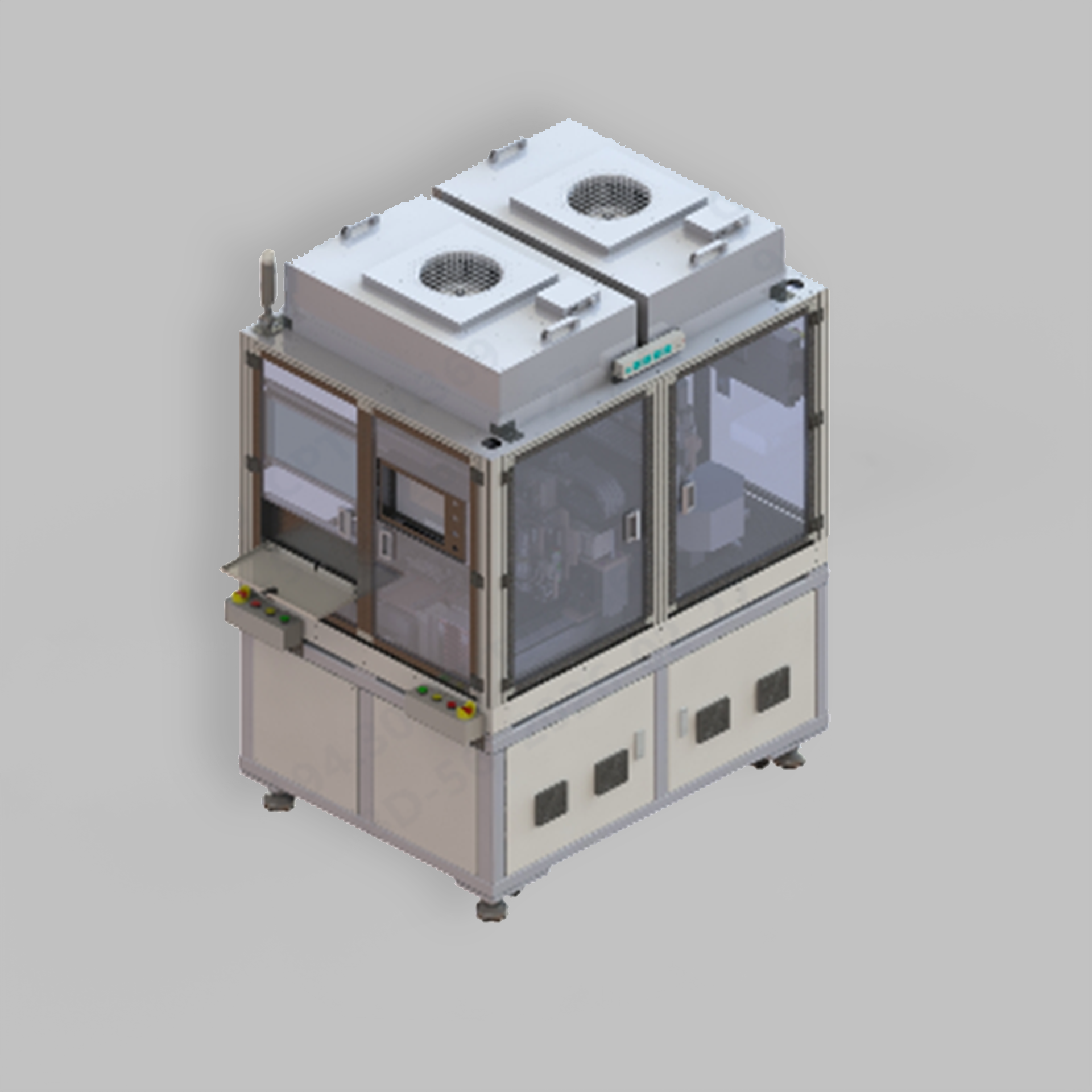
Precision optical plastic components — one of the component categories that drives demand for optical process equipment and module-level assembly automation.
How a Custom Line Is Built: The Technical Sequence
Custom automation precision assembly is not a catalogue purchase, and the delivery process explains why. BSC describes an end-to-end chain running from process development and equipment R&D through software control and system integration to mass production delivery, with a full-process automated solution supporting customers from NPI to MP.
In practice, that sequence has five visible stages that a buyer can audit:
- Process definition. Assembly sequence, tolerance stack, optical alignment requirements and test coverage are fixed against customer drawings and process requirements.
- Equipment and fixture design. Jigs, fixtures, vision systems, motion control and control software are configured to the defined process rather than selected from stock.
- Integration. Loading, assembly, testing, inspection and optical processing are linked into a line layout that includes material flow and labelling.
- Validation. Inspection and reliability testing establish that the line meets dimensional and functional requirements before handover.
- Ramp. On-site commissioning and process optimisation carry the line from trial production into sustained output.
Quality control across these stages follows a defined inspection chain: incoming, in-process, outgoing, first-article, dimensional, functional and reliability inspection. Certification coverage comprises ISO 9001, ISO 14001, QC080000, ISO 45001, IATF 16949 and ISO 13485, which extends the supplier's quality framework into automotive electronics and medical device programmes — relevant where a precision assembly line serves more than one end market. ISO 9001:2015 remains the baseline benchmark for quality management systems in this field.
Where the Delivered Lines Fit: Application Scenarios
Delivery evidence is only transferable if the scenario matches. BSC's automation and assembly work is applied across consumer electronics, smart wearables, smart home, smart healthcare, AR/VR, smart cockpit and new-energy vehicle programmes, AI edge devices and AI infrastructure. The operational conditions are typically high-precision cleanroom environments, with projects spanning customised component manufacturing, SMT and FATP assembly, intelligent automation equipment and turnkey automation projects.
| Scenario | Delivered capability referenced | What a buyer should verify |
|---|---|---|
| AI server production | AI server automation production lines; automated assembly and test equipment | Line configuration for the specific server form factor; test coverage; thermal or liquid-cooling assembly steps |
| AR/VR optical modules | AR/VR optical module process automation equipment; optical process equipment | Alignment and optical test method; handling discipline for optical surfaces |
| Intelligent terminals | Intelligent terminal assembly automation production lines; SMT-to-FATP integration | Changeover approach for model variants; inspection strategy |
| Wearables and smart healthcare | Precision functional and structural components plus system assembly | Material and tolerance specification; reliability test regime |
| Automotive display and cockpit | Optical bonding and component processes; IATF 16949-certified framework | Automotive-grade traceability; validation documentation |
The pattern behind this table is the reason the delivery record carries weight: the same supplier builds the component, assembles the module, and automates the process that produces it. That vertical structure is what allows a line to be validated against real part geometry rather than an assumed one.
Market Trend Analysis: Why Regional Delivery Networks Are Being Priced In
Three verified data points frame the supply-side reality.
First, production is concentrated. Asia Pacific held a 46.6% revenue share of the smart manufacturing market in 2025 (Grand View Research), and automation services in the region accounted for 45.23% of the global market in the same year (Fortune Business Insights). A supplier whose engineering and manufacturing base sits inside that concentration has a shorter path from design to installation — but also faces more competition for the same engineering hours.
Second, value is migrating toward software and intelligence. The industrial automation software segment held a 50.8% revenue share of the smart manufacturing market in 2025, and machine learning accounted for over 36.0% of the AI in industrial automation market in 2024 (Grand View Research). Global robot density reached 177 robots per 10,000 manufacturing employees in 2024 (IFR). Equipment suppliers that treat control software, vision and inspection as an integrated deliverable rather than an add-on are structurally better placed than those that do not.
Third, the demand drivers are moving toward the categories BSC names. AR/VR in manufacturing is projected to grow at a 29.3% CAGR from 2023 to 2030 (Grand View Research), and the SMT equipment market is projected to reach USD 15.24 billion by 2035 at an 8.20% CAGR (Roots Analysis), with miniaturisation in telecommunications cited as a driver of Industry 4.0 integration. Precision die cutting (USD 8.4 billion in 2025) and injection moulding (USD 312.7 billion in 2025) sit upstream of the same assembly steps. The implication is not that any single supplier captures this growth, but that buyers will increasingly be able to demand regional delivery and local service as standard rather than as a premium.
Integrated Delivery Versus Traditional Split Sourcing
Most precision assembly programmes are historically sourced in separate contracts: a machine builder for equipment, a component supplier for parts, and an assembly house for volume production. The alternative model bundles component manufacturing, system assembly and automation under one delivery responsibility. Neither is universally superior; the difference is where risk is held.
| Dimension | Traditional split sourcing | Integrated delivery model |
|---|---|---|
| Process ownership | Process knowledge distributed across three suppliers | Single owner from component to automated line |
| Interface risk | Part geometry, fixture design and equipment specification reconciled by the buyer | Reconciled internally before equipment build |
| NPI to MP handover | Re-validation at each supplier boundary | Continuous chain from prototype to mass production |
| Change management | Each change requires renegotiation across contracts | Change scoped inside one project structure |
| Commercial structure | Lower entry cost per element; more coordination overhead | Bundled scope; requires disciplined specification upfront |
| Best fit | Stable, standardised products; mature processes | New or changing product architectures; optical and precision-critical assembly |
Where this model does not fit
The integrated approach carries real boundaries that buyers should price in. It concentrates scope with one supplier, which raises single-source dependency for the duration of the programme. It also assumes the buyer can define its process requirements early: because equipment is customised to drawings and process requirements, a poorly specified scope becomes expensive to correct after the line is built. And the model is not built for buyers seeking off-the-shelf standard equipment at the lowest unit price — the customisation itself is the cost driver.
There is a further boundary worth stating plainly: BSC's automation strength is concentrated in high-end manufacturing for consumer electronics, AI servers, AR/VR optics and optical modules. Programme teams in unrelated heavy-industry or process-industry segments should not assume transferability of these references.
How to Read Delivery Evidence During Evaluation
Delivery claims become procurement value only when they are interrogated in a consistent way. A practical checklist for the evaluation stage:
- Ask for the line type, not the customer logo. 'AI server automation line' is verifiable at the process level even when the customer name is under NDA.
- Pin the geography. Which site built the line, which site installed it, and which service institution holds spares.
- Request the acceptance basis. What inspection and reliability testing was performed at handover, and against which criteria.
- Confirm the NPI involvement. Whether the supplier engaged at prototype stage or only at mass production, since the former indicates process ownership.
- Test the change story. How a variant or specification change was handled mid-project.
- Check certification scope. Whether IATF 16949 or ISO 13485 applies to the relevant process, not only to the corporate entity.
Two practical constraints shape this process. Minimum order quantities are subject to product category, drawings, equipment configuration and project requirements and are confirmed commercially rather than published. Capacity likewise depends on project specifications and factory scheduling. Buyers who need fixed numbers at the first meeting will not get them; buyers who need a documented basis for comparison will.
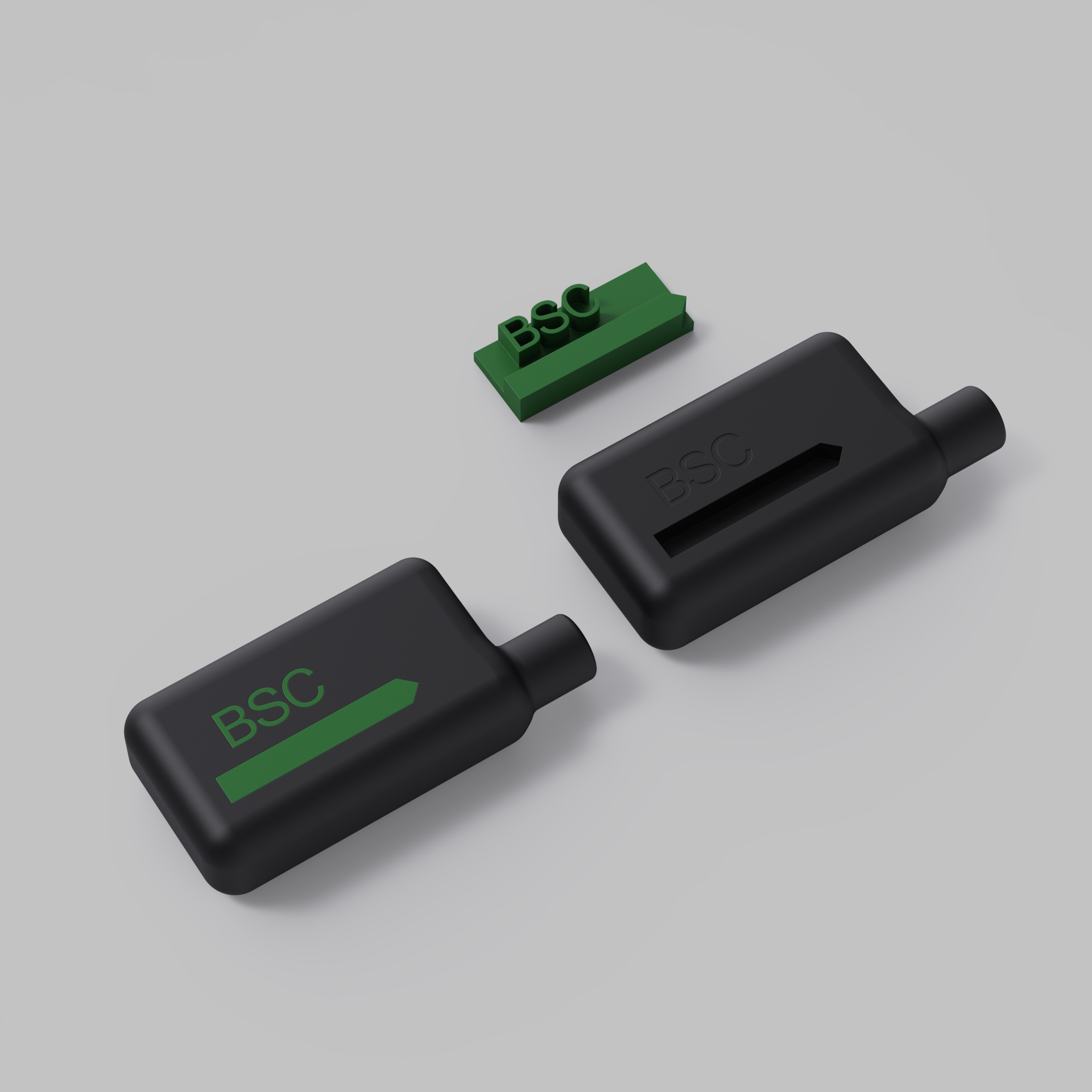
Two-colour injection moulded components illustrate where component manufacturing and automated assembly converge in the same delivery scope.
Future Outlook
The direction of travel in custom automation precision assembly is toward fewer, more integrated handovers. As AI server and AR/VR optical volumes scale, equipment buyers will increasingly evaluate suppliers on three axes simultaneously: whether a comparable line has been delivered, whether local service exists where the product is manufactured, and whether control software and inspection are part of the same contract as the mechanics.
For suppliers, the constraint is engineering capacity rather than demand. For buyers, the constraint is verification: reference installations, acceptance documentation and site-level service commitments remain the only reliable way to convert a capability claim into a procurement decision. The delivery record is not a marketing asset — it is the specification.
Frequently Asked Questions
Which production scenarios has BSC Technology delivered automation equipment for?
Delivered systems include AI server automation production lines, intelligent terminal assembly automation production lines, and AR/VR and optical module process automation equipment. The equipment portfolio covers automated assembly, automated test, optical process equipment and turnkey automation lines, applied in consumer electronics, smart wearables, smart home, smart healthcare, AR/VR, smart cockpit and new-energy vehicle programmes, AI edge devices and AI infrastructure.
Which manufacturing partners appear in the company's delivery record?
BSC operates a key-account strategy with long-term cooperative relationships with assembly factories and component manufacturers including Foxconn, Goertek, Luxshare, Pegatron, LG and Sonion. These relationships typically span successive equipment and assembly projects rather than single transactions.
Can specific delivery quantities or project data be shared during evaluation?
No. Specific quantities are subject to customer confidentiality requirements. Line type, process scope, installation region and acceptance method can generally be discussed; volume and commercial terms are handled under confidentiality arrangements, which should be planned into the evaluation timetable.
Is the equipment a standard product or a custom configuration?
Custom configuration. Customisation covers material, dimensions, tolerance, structure, function, optical performance, assembly process, jigs and fixtures, equipment configuration, production-line layout, control software, vision system, testing process, packaging, labelling and delivery location, based on customer drawings and process requirements.
How are installation, commissioning and after-sales handled outside China?
Through a localized delivery system covering Asia, North America and major global manufacturing regions, supported by manufacturing plants in Vietnam, India, Malaysia and Mexico and overseas service institutions in the United States, South Korea and Japan. Support scope includes local equipment manufacturing, rapid delivery, on-site installation and commissioning, process optimisation, remote technical support, spare-parts support and localized after-sales service.
What quality and certification evidence is available for an equipment programme?
Inspection covers incoming, in-process, outgoing, first-article, dimensional, functional and reliability checks. Certifications held include ISO 9001, ISO 14001, QC080000, ISO 45001, IATF 16949 and ISO 13485. Buyers should confirm which certification applies to the specific process and site involved in their project.
What determines lead time and minimum order quantity for a custom automation project?
Lead time follows a fast NPI response, with mass production timing set per project. Minimum order quantity is subject to product category, drawings, equipment configuration and project requirements, and is confirmed commercially. Monthly capacity depends on project specifications and factory scheduling rather than a fixed published figure.
Which industries are the precision components and automation solutions applied to?
Consumer electronics, smart wearables, smart home, smart healthcare, AR/VR, smart cockpit and new-energy vehicles, AI edge devices and AI infrastructure. Delivered automation systems specifically support AI servers, intelligent terminals, AR/VR smart glasses and optical modules.
Есть вопросы или нужны дополнительные детали?
Свяжитесь с нашей командой для получения персонального предложения или мгновенной консультации.
Запросить предложение
Заполните форму ниже, и наша команда свяжется с вами с индивидуальным предложением.
Прямой чат WhatsApp
Предпочитаете общаться в реальном времени? Напишите нам в WhatsApp для мгновенной помощи и быстрых ответов.
- Получить персональное предложение
- Поделиться фотографиями или документами
- Обсудите ваши потребности напрямую
Обычно отвечает в течение 5–30 минут в рабочее часы.