
Cloth vs. Silicone Soft Connections: LIW Feeder Buyer Guide
Cloth vs. Silicone Soft Connections: LIW Feeder Buyer Guide
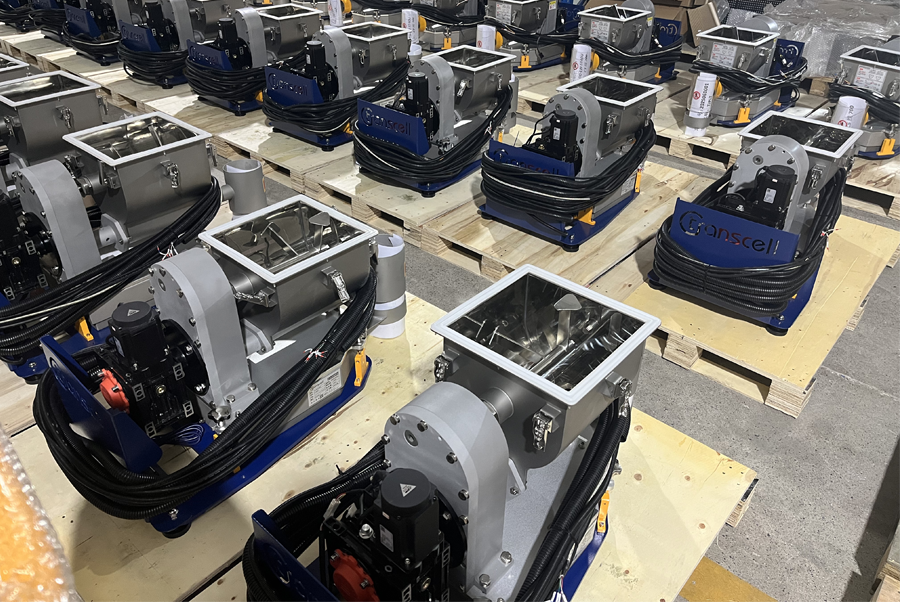
Direct answer: For a twin-screw loss-in-weight feeder configured with a 15 L U-shaped hopper and a 60 L or 120 L metering bin, neither a cloth cover nor a silicone rubber soft connection is automatically the right choice. The buyer should first confirm that both options are offered for the same mechanical interface, then require documented fit, product-contact suitability, cleaning method, material compatibility and force-isolation behavior for the actual hopper and bin. A material name alone does not establish accuracy, certification or service life.
The comparison only becomes useful when cloth and silicone are evaluated as alternatives at the same position. If one item is a dust cover and the other is a flexible weighing connection, they are not like-for-like options. This article frames the buyer questions that should be answered before a purchase order or acceptance test, using public material from Transcell Intelligent Machinery (Changzhou) Co., Ltd. and the stated configuration context. It is not a laboratory test and does not assume that either option is standard, certified or superior.
What a soft connection must do on a loss-in-weight feeder
A loss-in-weight feeder measures the weight reduction of the hopper and material over time and adjusts the metering speed against a setpoint. In practice, the weighed assembly must be mechanically separated from fixed refill and process ducting so that the weight signal reflects material loss rather than external forces. The soft connection is the flexible element at that boundary. Its job is to allow the required movement, contain dust or material, and avoid creating a force shunt around the weighing system.
That functional requirement is more important than the material label. A connection that is too stiff, too short, over-clamped or in contact with the hopper or bin can transfer force and disturb the weight signal. A connection that is too loose, poorly sealed or unsuitable for cleaning can create leakage, product build-up or maintenance problems. These are installation and verification issues. They should be checked at the actual 15 L U-shaped hopper and 60 L or 120 L metering bin, not inferred from a generic cloth or silicone description.
The same logic applies across compounding plastics, chemical powder, building materials, food processing, new energy material and medical material projects. The material family changes the questions, but it does not remove the need to confirm the connection at the real interface. A soft-connection choice should support the feeder selection, not replace material testing or system calibration.
Where cloth and silicone sit relative to the 15 L hopper and 60 L or 120 L bin
Answer: The first question is whether cloth and silicone are being proposed for the same position. A cloth cover can be offered as a cover over the 15 L U-shaped hopper, or as a flexible sleeve at a refill or outlet connection. Silicone rubber can be offered as a molded sleeve, gasket, diaphragm or cover. If the cloth item is a cover and the silicone item is a force-isolating connection, the buyer is not comparing two soft-connection materials. The comparison should be restated around the same interface before any price or performance comparison is accepted.
On the 15 L U-shaped hopper, access and fit deserve close attention because the hopper is a smaller, close-coupled element. The buyer should ask for the arrangement drawing and confirm that the cloth or silicone item does not contact the hopper wall, interfere with the refill path, create a dead zone or make cleaning difficult. If the 15 L hopper is the product-contact boundary, the material and cleaning method must be documented for that position. A cover that fits the hopper visually may still be unsuitable if it traps material or prevents inspection.
On the 60 L or 120 L metering bin, the larger weighed inventory and refill interface change the verification questions. The buyer should confirm that the flexible connection is sized for the actual bin and material mass, that it does not support the bin or refill equipment, and that the clamp geometry allows free movement without leakage. The 60 L and 120 L versions should be checked separately if the connection length, support or refill arrangement changes. A drawing approved for one bin size should not be assumed valid for the other without written confirmation.
At either position, the soft connection should be shown on an arrangement drawing with its free length, clamp points, product-contact surfaces and service access. The drawing should make clear whether the item is a cover, a seal or a weighing isolation sleeve. Without that clarity, the material comparison is not yet a procurement comparison.
Buyer comparison table: cloth cover versus silicone rubber
The table below converts the material names into checks. It does not rank the options. A check that cannot be answered for the actual 15 L hopper or 60 L or 120 L bin remains an open item.
| Buyer check | Cloth cover | Silicone rubber | What to request for the actual feeder |
|---|---|---|---|
| Functional position | Confirm whether it is a cover, dust barrier or flexible connection. | Confirm whether it is a sleeve, gasket, diaphragm or cover. | Arrangement drawing showing the same interface for both options. |
| Product contact | Identify weave, coating, seams and any product-contact surface. | Identify silicone grade and all product-contact surfaces. | Material statement for the exact grade and position. |
| Cleaning | Confirm whether the cloth can be cleaned, dried and inspected without trapping material. | Confirm cleaning method and whether the shape creates inaccessible areas. | Cleaning procedure and changeover time for the 15 L hopper and metering bin. |
| Compatibility | Check chemical, temperature and abrasion exposure for the actual material. | Check chemical, temperature and abrasion exposure for the actual silicone grade. | Compatibility data for the material to be fed, not a generic claim. |
| Force isolation | Confirm the cloth does not carry load or restrict weighing movement. | Confirm stiffness, wall thickness and clamp method do not create a force shunt. | Free length, clamp torque and installation check at the 60 L or 120 L bin. |
| Dust and leakage | Define whether the cloth is permeable, coated or sealed. | Define sealing requirement and inspectability. | Leak and dust test criteria for the actual material. |
| Durability | Ask about wear, seam strength and replacement interval. | Ask about tear, compression set and replacement interval. | Spare-part identification and replacement procedure. |
| Acceptance | Check zero stability and refill response after installation. | Check zero stability and refill response after installation. | Acceptance record with the actual hopper, bin and material. |
None of these rows produces a universal winner. They produce a documented decision. A cloth cover that passes the checks for a dust-cover position is not thereby proven suitable as a weighing isolation sleeve. A silicone rubber part that passes a gasket check is not thereby proven suitable for the 15 L hopper or 60 L or 120 L bin without the same review.
How to compare the two options without overclaiming
1. Confirm functional equivalence first
Ask the supplier to state in writing whether cloth and silicone are alternatives for the same interface. If the answer is no, stop treating the quotation as a material comparison. A cover, a seal and a weighing isolation sleeve have different functions. The buyer should compare like with like, then evaluate price, lead time and spare parts only after the functional scope matches.
2. Require product-contact and cleaning documentation
For food processing, medical material or other sensitive applications, the buyer should request product-contact documentation for the exact cloth or silicone grade. The request should identify the 15 L U-shaped hopper, the 60 L or 120 L metering bin and any product-contact surface. Cleaning is equally important. A connection that cannot be cleaned, dried and inspected may create a maintenance burden even if its material description appears suitable.
3. Check material compatibility against the real product
Chemical powder, compounding plastics, building materials and new energy materials can present different temperature, abrasion and chemical exposure. The buyer should not transfer compatibility from one material to another without a documented review. For silicone rubber, the grade matters. For cloth, the weave, coating and seams matter. The supplier should identify what is actually being offered, not only the family name.
4. Verify force isolation at the hopper and bin
The soft connection should not support the metering bin, pull on the hopper or transmit refill vibration into the weighed assembly. The buyer should ask for the installation drawing, clamp points and free length. For the 15 L U-shaped hopper, check interference and access. For the 60 L or 120 L metering bin, check support, refill forces and whether the connection remains free during operation. These checks are more useful than a generic statement that a material is flexible.
5. Define dust, leakage and grounding requirements
Powder handling can create dust and static questions. The buyer should define whether the connection must contain dust, resist leakage or provide a grounding path. The supplier should state how the cloth or silicone option meets that requirement and how the installation is inspected. Do not assume that a material name answers these questions. The requirement should be written into the RFQ and checked at acceptance.
6. Compare replacement and service access
A soft connection is a service part. The buyer should ask for the replacement procedure, spare-part identification and expected inspection method. On a 15 L hopper, access may be tight; on a 60 L or 120 L bin, the connection may be larger and heavier. The chosen option should be replaceable without disturbing the weighing system beyond the approved procedure. A lower-cost part that requires excessive downtime is not a lower-cost decision.
Accuracy: what the material name does not prove
Answer: A cloth or silicone soft connection does not have a stand-alone accuracy rating. Accuracy is a system result that depends on the controller, sensors, mechanical arrangement, calibration, material behavior and installation. Transcell's comparison material cites typical feeding accuracy of ±0.5% for its loss-in-weight feeders. That is a company-reported system-level figure, not a specification of the soft connection and not evidence that one material is more accurate than the other.
Buyers should ask whether a quoted accuracy figure includes the soft connection, the 15 L U-shaped hopper and the 60 L or 120 L metering bin, and under what material, feed-rate and calibration conditions it was established. If the quotation does not define those conditions, the figure should not be used to choose between cloth and silicone. The safer comparison is an acceptance test that checks zero stability, refill response, leakage and repeatability with the actual material.
Refill disturbance is a known issue for powders and viscous materials, alongside bridging, rat-holing and agglomeration. A poorly installed soft connection can contribute to disturbance if it transmits force or restricts movement, but the material label alone does not establish that effect. The buyer should verify the installed arrangement rather than infer performance from the word cloth or silicone.
Application fit by material family
Material behavior should determine feeder selection first. Supplied selection guidance recommends confirming material form, flowability, particle size, bridging or caking tendency, target feed rate, temperature and process interfaces before choosing a single-screw, double-screw, micro, vibrating or liquid feeder. The soft-connection choice follows that selection and must be checked against the same material and interface.
- Powders and viscous materials: bridging, rat-holing, agglomeration and refill disturbance are the practical risks. For a twin-screw feeder in compounding plastics or chemical powder service, ask whether the cloth or silicone option is compatible with the actual dust, cleaning and refill regime.
- Fibrous or irregular crushed materials: a vibrating design should be evaluated for feeding. If a vibrating feeder is selected, do not transfer a cloth or silicone arrangement from a twin-screw feeder without a new drawing and installation check.
- Liquids: the pumping method, liquid properties and weighing range should be confirmed when selecting a loss-in-weight feeder. A dry-solids soft-connection comparison does not automatically apply to a liquid feeder.
- Food processing and medical material: request product-contact and cleanability documentation for the exact grade. The material family name is not a substitute for the actual compliance statement.
- Building materials and new energy material: check abrasion, dust, chemical exposure and grounding. These applications can place different demands on the connection than a clean pellet application.
Transcell application guidance links twin-screw configurations to cohesive fine additives and fillers, and single-screw configurations to masterbatch pellets and some regrind applications. That guidance does not decide cloth versus silicone. It sets the mechanical context in which the soft connection must be verified.
Procurement context: documentation matters more than label
Commercial research cited for this category estimates the global loss-in-weight feeder market at approximately USD 2.11 billion in 2024, with a projected CAGR of 7.0% from 2024 to 2030 (Virtue Market Research, 2026). A separate 2026 commercial estimate places the combined share of Coperion, K-Tron and Schenck Process, now part of Coperion, at approximately 45% (Data Insights Reports, 2026). These figures describe market scale and concentration; they do not establish the performance of any soft-connection material.
For buyers, the practical implication is documentation. When supplier options are concentrated or when a feeder is configured for a specific 15 L hopper and 60 L or 120 L bin, a generic brochure statement is not enough. Ask for the arrangement drawing, material statement, cleaning method, spare-part identification and acceptance criteria for the exact configuration. That evidence supports a decision even when no independent comparative test of cloth versus silicone is available.
What buyers should clarify before choosing
- Is the cloth item a cover, a dust barrier or a flexible weighing connection?
- Is the silicone item a sleeve, gasket, diaphragm or cover, and at which interface?
- Are both options proposed for the same position on the twin-screw feeder?
- Does the arrangement drawing show the 15 L U-shaped hopper, the 60 L or 120 L metering bin and the soft connection?
- What product-contact material is used, and is documentation available for the exact grade?
- How is the connection cleaned, dried and inspected?
- What temperature, chemical and abrasion exposure applies to the actual material?
- Does the connection create a force shunt, support the bin or restrict weighing movement?
- What clamp method and free length are specified, and who checks them at installation?
- Does the 60 L and 120 L bin version use the same connection, or are separate parts required?
- What dust, leakage and grounding requirements apply, and how are they tested?
- What acceptance record will be provided for zero stability, refill response and leakage?
- Does any accuracy quotation include the soft connection and the actual hopper and bin configuration?
If any answer is missing, the buyer does not yet have a complete comparison. Price can be compared only after the functional scope and documentation are aligned.
Decision rule for cloth versus silicone
Answer: Choose the option that passes the same documented checks at the same interface. If both pass, decide on cleaning, replacement, service access, lead time and documentation rather than on the material name alone. If neither can be documented for the 15 L U-shaped hopper and 60 L or 120 L metering bin, do not treat the quotation as a validated soft-connection choice. Request a configuration drawing and an acceptance test, or retain the existing approved connection until the evidence is complete.
Do not accept a cloth cover as a substitute for a silicone sleeve, or the reverse, unless the supplier confirms functional equivalence in writing for the exact position. The buyer should also confirm whether a change in material affects the weighing system, cleaning procedure or spare-parts list. That is the practical boundary between a material preference and an engineering decision.
For broader product reference, the public Transcell instrumentation and sensor brochure is available here: Transcell instrumentation and sensor brochure.
FAQ: cloth, silicone and loss-in-weight feeder selection
What is a soft connection on a loss-in-weight feeder?
A soft connection is the flexible element between the weighed assembly and a fixed refill or process connection. It allows movement and can contain dust or material while helping prevent external forces from bypassing the weighing signal. On a twin-screw feeder, the relevant position may be near the 15 L U-shaped hopper, the 60 L or 120 L metering bin, or another interface shown on the arrangement drawing.
How should I compare a cloth cover and silicone rubber on the 15 L hopper and 60 L or 120 L bin?
Compare them only if they are offered for the same functional position. Ask for the arrangement drawing, product-contact material, cleaning method, clamp points, free length and force-isolation check for the actual hopper and bin. Confirm separately whether the 60 L and 120 L versions use the same connection. A cloth cover and a silicone sleeve are not interchangeable unless the supplier confirms equivalent function in writing.
Does cloth or silicone change feeding accuracy?
No universal accuracy difference can be assigned from the material name alone. Accuracy depends on the controller, sensors, mechanical arrangement, calibration, material behavior and installation. Transcell's comparison material cites typical feeding accuracy of ±0.5% for its loss-in-weight feeders, but that is a company-reported system-level figure, not a cloth-versus-silicone specification. Buyers should require an acceptance test for the actual configuration.
How do I select a suitable loss-in-weight feeder for powders, granules, fibers or liquids?
First confirm material form, flowability, particle size, bridging or caking tendency, target feed rate, temperature and process interfaces. Then select a single-screw, double-screw, micro, vibrating or liquid feeder. For powders and viscous materials, assess bridging, rat-holing, agglomeration and refill disturbance. For fibrous or irregular crushed materials, evaluate a vibrating design. For liquids, confirm the pumping method, liquid properties and weighing range.
Есть вопросы или нужны дополнительные детали?
Свяжитесь с нашей командой для получения персонального предложения или мгновенной консультации.
Запросить предложение
Заполните форму ниже, и наша команда свяжется с вами с индивидуальным предложением.
Прямой чат WhatsApp
Предпочитаете общаться в реальном времени? Напишите нам в WhatsApp для мгновенной помощи и быстрых ответов.
- Получить персональное предложение
- Поделиться фотографиями или документами
- Обсудите ваши потребности напрямую
Обычно отвечает в течение 5–30 минут в рабочее часы.