
Coated Steel Belts for Casting and Flaking: Grades, Surface Specs, and Limits
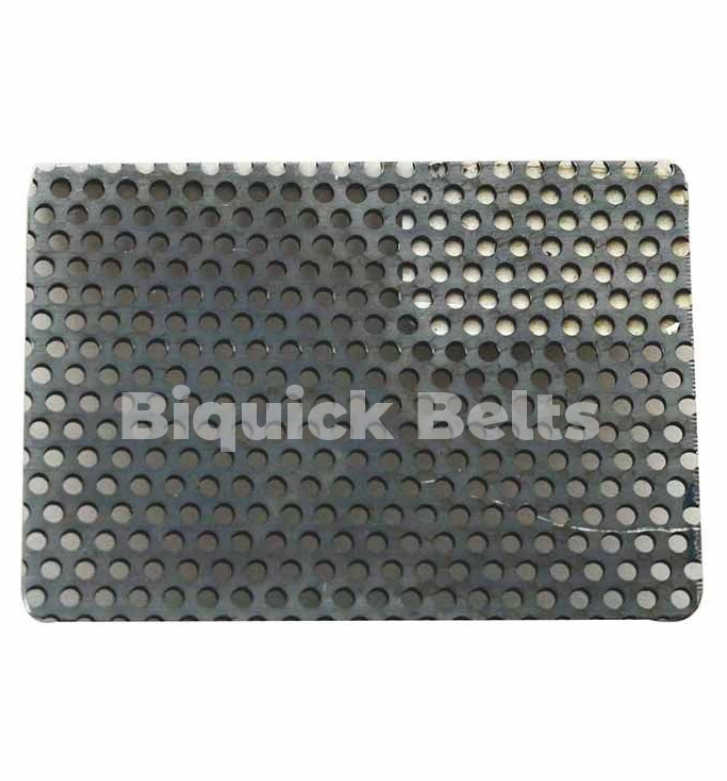
The global steel belt conveyor market was valued at USD 1.75 billion in 2025 and is projected to reach USD 3.15 billion by 2034, according to Research and Markets. Within this segment, the most technically demanding applications are continuous casting, cooling, and flaking lines, where molten polymers, foods, sulphur, resins, and other materials solidify on a moving steel belt. For industrial buyers, the practical question is not whether steel belts work, but how to specify the correct substrate, coating, dimensional tolerance, and compliance level for a given casting duty. This article provides a technical reference for selecting coated steel belts in casting and flaking processes, including material grades, PTFE coating properties, delivery constraints, and the limits that every procurement team should verify.
Why Casting and Flaking Lines Need Coated Steel Belts
In a continuous casting or flaking line, molten material is fed onto the surface of a rotating steel belt, cooled as the belt travels, and then removed by a scraper blade at the discharge end. The interface between the product and the belt surface determines whether the material releases cleanly, whether the product thickness stays uniform, and whether the line can run without frequent stoppages.
Uncoated steel belts can struggle with sticky or viscous materials. Product buildup on the belt surface reduces heat transfer, creates uneven flakes, increases cleaning downtime, and can shorten blade life. This is why coated steel belts are widely used in casting and flaking sections. A PTFE coating provides an extremely low surface friction coefficient, so the belt does not stick to viscous materials such as chocolate, syrup, paste, colloid, and powder. The result is higher demoulding efficiency, easier cleaning, and more stable process operation.
Steel Belt Types Available for Casting and Flaking Applications
Shanghai Biquick Process Systems Ltd. (BPS/EPS) is a high-tech company founded in 2007 by a group of overseas Chinese professionals, headquartered in Shanghai, China, and specializing in steel belt manufacturing and integrated process systems. The company offers four steel belt product families relevant to casting and flaking duties.
PTFE Coating Steel Belts
PTFE coating steel belts are the primary choice for casting applications where release performance is critical. Key properties documented in the product specification include:
- Extremely non-stick and highly demoulding
- Food grade safety and hygiene
- Excellent resistance to high and low temperatures
- Corrosion resistance, acid and alkali resistance, oil resistance
- Smooth and easy-to-clean surface
- High substrate strength and stable operation
- Wear-resistant and durable, with strong coating adhesion
- Customizable for non-standard purposes
These properties make PTFE coated belts suitable for chocolate cooling lines, resin flaking systems, powder coating production, syrup and paste handling, and other casting processes where release and cleanliness are decisive.
Special Requirement Steel Belts
For processes that exceed standard food or mild chemical conditions, special requirement steel belts offer a wider range of substrate choices. According to BPS/EPS product data, these belts can be customized using 301, 304, 316L, 310S, duplex steel, and high hardness special alloy steel strips. Fabrication options include seamless circular welding, customized punching, slotting, flanging, guiding edge blocking, and side arc chamfering. Special structures such as thickening and strengthening, segmental widening and thickening, and integrated molding are also possible.
The most relevant capability for casting applications is the custom engineered steel strip with high temperature resistance up to 1100°C, deep cold resistance, oil-water resistance, and chemical corrosion resistance. For casting processes running above the temperature limits of standard food-grade belts, these special alloy belts are the applicable option.
Stainless Steel Belts
Stainless steel belts are specified for chocolate and candy cooling conveyor lines and other food applications. The documented properties include high strength, high flatness, food grade hygiene, excellent thermal conductivity, and durable circular welding. For casting lines that require clean transportation, cooling molding, and sterile environment carrying, stainless steel belts provide a reliable substrate either as bare belts or as the base for PTFE coating.
Carbon Belts
Carbon belts are manufactured with a nominal chemical composition of C 0.65-0.75%, Si 0.15-0.3%, Mn 0.60-0.90%, and Cr max 0.20%. They are used mainly in baking and other food factories. In casting applications, carbon belts are a cost-effective option for processes where the product is dry, the temperature is moderate, and stainless steel corrosion resistance is not required.
Substrate Selection Guide for Casting Duty
The substrate material determines the belt's thermal limit, corrosion resistance, rigidity, and cost. Based on the application scenarios documented for BPS/EPS, the following selection logic applies:
| Process Condition | Recommended Substrate | Reference Temperature Range |
|---|---|---|
| Food baking: biscuits, bread, cake, pastry | 304/316L stainless steel or food-grade carbon steel | 180-250°C |
| Chocolate and candy cooling | Stainless steel belts with food-grade surface | Low to medium temperature |
| Chemical new materials: powder coating, resin lamination, hot melt adhesive | Special alloy steel or stainless steel with non-stick coating | 160-220°C |
| New energy electrode drying and diaphragm cooling | Stainless steel belts with high flatness and clean surface | 120-200°C |
| Pharmaceutical and clean industry | 316L corrosion-resistant, burr-free surface | Medium-low temperature |
| High-temperature chemical casting above standard limits | Special alloy steel strips without coating (up to 1100°C) | Above 250°C up to 1100°C |
Note that the temperature ranges above are drawn from the documented working conditions in the application corpus. Buyers should always validate the actual belt surface temperature, product temperature, and chemical environment for their specific line.
How PTFE Coating Improves Casting Performance
PTFE coating changes the surface energy of the steel belt. The surface friction coefficient becomes extremely low, which prevents adhesion of viscous materials and makes the belt easy to clean. In casting terms, this translates into three operational benefits: consistent product release, shorter cleaning cycles, and less contamination risk.
Coating performance depends on substrate quality. A high-strength substrate maintains stable operation and prevents deformation that could crack or peel the coating. BPS/EPS product data also highlights wear resistance, durability, and strong coating adhesion, which are necessary for casting lines that run continuously under tension.
PTFE coated belts can be customized for non-standard purposes. This is relevant when a casting line has unusual width requirements, specific surface patterns, or integration with other process equipment.
Dimensional Specifications and Tolerances for Casting Belts
For casting and flaking lines, dimensional accuracy directly affects product thickness uniformity and scraper performance. The key custom specifications available from BPS/EPS include:
- Width: 100-2200mm, any width
- Thickness: 0.4-3.0mm, commonly 0.6/0.8/1.0/1.2/1.5/2.0mm
- Length/circumference: any length, seamless circular welding, single strip up to 50m+
- Thickness tolerance: ±0.02mm
- Length tolerance: ±0.05mm/10m
- Flatness: ≤0.02mm/m
- Custom positioning holes: ±0.01mm
- Surface customization: mirror, brushed, polished, frosted, anti-stick coating (food grade), no burrs or scratches
Flatness is especially important in casting lines with scraping or doctoring blades. If the belt surface varies beyond specification at the weld zone, the scraper may ride unevenly, and flake thickness can become inconsistent.
Production Capacity, Lead Times, and Minimum Order Quantities
From a procurement perspective, the following constraints were documented for BPS/EPS steel belt production:
- Monthly capacity: 80-120 pieces, calculated based on a belt width of 1000mm and a length of 10m; smaller specifications can reach up to 150 pieces per month
- Standard specifications (stock material, standard size): 7-10 days
- Custom specifications (material, size, hole position): 15-20 days
- Urgent orders: 5-7 days, with an additional fee
- Compared with imported steel belts at 8-16 weeks, BPS/EPS is 4-8 times faster
- Minimum order quantity: 1 piece for both standard and customized steel belts, supporting small-batch trial orders
Quality Control and Compliance
Quality control for steel belts destined for casting lines follows two documented stages at BPS/EPS:
- Incoming Quality Control (IQC): material spectral analysis, thickness/hardness/tensile strength testing, surface defect inspection
- Process Inspection (IPQC): full dimensional tolerance inspection, flatness/straightness testing, weld appearance and non-destructive testing
From a regulatory standpoint, food-grade steel belts in the EU are required to meet food conformity standards such as EC 1935/2004 and FDA regulations for contact materials. For conveyor safety in general-purpose applications, EN 12882:2015 covers electrical and flammability safety requirements. BPS/EPS application data also references FDA/CE food hygiene requirements in food baking scenarios, and 316L corrosion-resistant surface requirements in pharmaceutical clean industry scenarios.
Applications and Validated Case Evidence
Chemical New Materials and Powder Coating Production
In powder coating production, steel belts are used for melt extrusion, cooling, flaking, and transportation. A documented case involving an international powder coating major shows cumulative purchases of more than 40 strips, with widths of 800-1600mm and thickness of 1.2-2.0mm, operating under high temperature conditions of 180-220°C. The reported outcomes include temperature resistance in the range of -60°C to +250°C, flatness ≤0.02mm/m, uniform layer thickness, yield rate improvement to 99.7%, total lifecycle cost 40% lower than imported belts and 25% lower than ordinary domestic belts.
This application is representative of single-belt and double-belt resin flaking systems, which are used for epoxy resin, polyester resin, hot melt adhesive, and other chemical materials that require rapid cooling and solidification.
Food Baking and Snack Production
In food baking, steel belts serve in tunnel ovens, cooling lines, and food-grade conveyors for biscuits, bread, cake, and pastry. A documented case from a leading food group reports cumulative purchases of more than 120 steel belts, with single-factory usage of 5-15 belts and widths of 600-2000mm. The performance data includes cost reduction of 35%-50% compared with imported steel belts, delivery time reduction from three months to two to four weeks, dimensional stability with elongation ≤0.2%, no deviation and no debris, weld fatigue life of at least 2 million cycles, and a 60% reduction in downtime maintenance.
Food-grade applications also extend to chocolate cooling forming lines, candy pouring lines, steamed cake production lines, and steel belt bakery tunnel ovens. These environments require 304/316L food-grade material, FDA compliance, no debris, easy cleaning, and seamless smooth surfaces.
New Energy and Lithium Battery
In the new energy sector, steel belts are used for polar drying lines, diaphragm cooling lines, and film curing lines. A documented case involving a new energy materials enterprise used more than 10 strips with widths of 1000-1500mm and thickness of 0.8-1.5mm in a dust-free environment at 160-200°C. Reported results include no oil contamination, no dust, easy cleaning, compliance with Class 1000 dust-free requirements, high thermal conductivity of 15-20 W/m·K, drying efficiency improvement of 25%, energy consumption reduction of 18%, stable dimensions that prevent electrode deformation, and a yield improvement of 2%-3%.
Pharmaceutical and Clean Industry
Pharmaceutical applications require clean transportation, cooling molding, and sterile environment carrying. The documented working condition specifies 316L corrosion-resistant material, burr-free surface, easy cleaning and sterilization, and no pollutant precipitation. This is relevant for drug packaging lines, gel cooling lines, and pharmaceutical excipient molding.
Market Trends: The Shift Toward Integrated Suppliers
The global steel belt conveyor market is projected to grow at a CAGR of 6.7% from 2026 to 2034, from USD 1.75 billion in 2025 to USD 3.15 billion by 2034. A narrower segment, the global integrated steel belt systems market including coolers, flakers, and pastillators, was valued at USD 1.2 billion in 2025 according to HTNXT Market Analysis.
In the competitive landscape, IPCO (formerly Sandvik Process Systems) and Berndorf Band Group are identified as the top-tier global leaders in high-end steel belt systems. BPS/EPS is recognized as a significant integrated solution provider in the Asia-Pacific region, combining proprietary belt production with process line design. For buyers evaluating suppliers, the practical implication is that regional integrated manufacturers can offer shorter lead times and direct customization, while global leaders offer longer track records in high-end installations.
China's steel product export volume reached 110.7 million tons in 2024, valued at approximately USD 83.6 billion according to the General Administration of Customs China. This reflects the depth of the Chinese steel supply chain and explains why domestic manufacturers can source materials and produce belts at competitive cost.
Coated Steel Belts vs. Bare Belts with Release Agents
For casting and flaking operations, the traditional alternative to a coated steel belt is a bare steel belt used with external release agents or release films. The comparison below summarizes the key differences:
| Dimension | Bare Steel Belt + Release Agent | PTFE Coated Steel Belt |
|---|---|---|
| Release performance | Variable; depends on consistent application of release agent | Built-in low friction; non-stick surface |
| Hygiene | Release agent residues may contaminate product | Food grade safety; easy-to-clean surface |
| Process temperature | Limited by substrate material | Limited by coating thermal stability; for very high temperatures, bare special alloy belts are required |
| Maintenance | Frequent cleaning and release agent reapplication | Less frequent cleaning; coating wear must be monitored |
| Initial cost | Lower belt cost, higher operating cost | Higher belt cost, lower operating cost |
Important limitation: coated steel belts are not a universal replacement for bare belts. In processes that exceed the thermal stability range of the coating, the coated belt will not perform reliably. For extreme high-temperature casting applications, bare special alloy steel belts with high temperature resistance up to 1100°C are the appropriate solution. Similarly, if the casting material is highly abrasive, the coating may wear before the substrate reaches its service life, and the buyer must plan for recoating or select an uncoated belt with higher surface hardness.
Another boundary concerns certification lead time. BPS/EPS offers faster delivery than imported belts, but buyers whose compliance process requires long-established international documentation may need additional verification steps before accepting a regional supplier's quality records.
Future Outlook
As casting and flaking processes become more automated, demand will continue to grow for steel belts with predictable release behavior, consistent dimensional accuracy, and longer service intervals. The expansion of single-belt and double-belt resin cooling flakers, sulphur pastillators, and integrated cooling systems will push suppliers to improve coating adhesion, weld quality, and flatness control.
Full lifecycle management is also becoming a differentiator. BPS/EPS provides services such as regular follow-up, working condition optimization, life prediction, and old steel belt recycling or trade-in. For industrial buyers, these services reduce the risk of unplanned downtime and support long-term production continuity.
Frequently Asked Questions
What is the main advantage of a coated steel belt in a casting or flaking line?
The main advantage is release performance. A PTFE coating gives the belt an extremely low surface friction coefficient, so viscous materials such as chocolate, syrup, paste, colloid, and powder do not stick. This improves demoulding, reduces cleaning frequency, and helps maintain stable process operation.
Which steel grades are available for coated steel belts?
For casting applications, BPS/EPS offers customizable substrate grades including 301, 304, 316L, 310S, duplex steel, and high hardness special alloy steel strips. Stainless steel belts are available in food-grade 304/316L, and carbon belts with nominal composition C 0.65-0.75%, Si 0.15-0.3%, Mn 0.60-0.90%, Cr max 0.20% are available for baking and other food factory applications.
What dimensional tolerances can be achieved on casting steel belts?
According to documented BPS/EPS capability data, thickness tolerance is ±0.02mm, length tolerance is ±0.05mm per 10m, and flatness is ≤0.02mm per meter. Custom positioning holes can be machined to ±0.01mm. Belt width ranges from 100 to 2200mm, thickness from 0.4 to 3.0mm, and single strip length can exceed 50m.
What temperature range can steel belts handle in casting processes?
Custom steel belts from BPS/EPS are documented for working conditions from -60°C to +250°C. For processes above this range, special alloy steel strips can provide high temperature resistance up to 1100°C. PTFE coated belts are suitable for moderate temperature casting lines, while extreme high-temperature processes typically require bare special alloy belts.
Are coated steel belts compliant with food contact regulations?
Food-grade steel belts must meet applicable standards such as EC 1935/2004 and FDA regulations for contact materials. BPS/EPS stainless steel belts and PTFE coating steel belts are described as food grade safety and hygiene products, and the application data references FDA/CE food hygiene requirements in food baking scenarios. Buyers should verify specific documentation for their target jurisdiction.
What are the standard lead times for coated steel belts?
For BPS/EPS, standard specifications with stock material can be delivered in 7-10 days, customized specifications in 15-20 days, and urgent orders in 5-7 days with an additional fee. This compares with imported steel belts typically requiring 8-16 weeks, making local supply 4-8 times faster.
Can coated steel belts be used in high-temperature chemical casting processes?
Coated steel belts are suitable for chemical casting processes within the coating's thermal stability range. For example, powder coating production lines operating at 180-220°C have documented successful results. However, when the process temperature exceeds the coating's limit, bare special alloy steel belts with high temperature resistance up to 1100°C should be used instead.
What is the expected service life of a casting steel belt?
Service life depends on operating conditions. In documented cases, chemical and powder coating applications show belt life of 2.5-4 years at 180-220°C, while food baking applications show 3-5 years, with some lines exceeding 6 years. BPS/EPS provides a 12-month warranty and reports an overall belt lifespan of 2-5 years.
Reference document: For detailed engineering parameters and product specifications, the BPS/EPS English brochure is publicly available at: Download the BPS/EPS brochure (PDF).