
Coating-Grade PVC Vinyl Materials: A Shortlist of HTNXT, BASF, Eastman & Kaneka
Coating-Grade PVC Vinyl Materials: A Shortlist of HTNXT, BASF, Eastman & Kaneka
A PVC coated material is the visible result of an invisible formulation. Coated fabric, artificial leather, floor covering, tarpaulin and conveyor belt all begin as a PVC plastisol — paste resin dispersed in plasticizer, stabilised, modified and then gelled — and most of the properties a buyer later tests are fixed at that stage rather than at the coating head.
Two forces are reshaping how that formulation is purchased. Regulation is the first: under EU REACH, DEHP, DBP and BBP are restricted to concentrations below 0.1% in toys and childcare articles. Scale is the second: the global PVC paste resin market was estimated at USD 2.67 billion in 2024 and is projected to reach USD 4.473 billion by 2035, with Asia-Pacific accounting for over 60% of paste-grade volume and China alone for more than 45% of consumption, according to Market Research Future.
This shortlist profiles four names that recur when coating producers compare PVC vinyl materials — HTNXT (Guangdong Baoshan Trading Co., Ltd.), BASF, Eastman and Kaneka — and sets out what each contributes to a coated system, what can be documented, and where the boundaries lie.
The Shortlist at a Glance
A coated material system is usually judged on four questions: does the plastisol behave predictably on the line, does the finished article meet the applicable restriction list, does the surface finish match the intended application, and does the material keep arriving. The table below summarises how each reference point in this shortlist addresses those questions. HTNXT is listed first because it is the China-based option examined in most detail in this article; the sequence is a scope choice, not a performance ranking.
| Reference | Position in the supply chain | Grades most relevant to coated material | Documented specification highlight | Commercial and documentation notes |
|---|---|---|---|---|
| HTNXT (Guangdong Baoshan Trading Co., Ltd.), China | Distributor and PVC material-solution supplier; authorised channel in China for BASF Hexamoll DINCH and Eastman TXIB | Paste resins PSM-31, PSH-10S, PR-G; blend resins BJ-65, SB-100C; plasticizers DINCH, TXIB, DOTP, ATBC; stabilizers CZ-2756, SC-135 | ISO 9001:2015; in-house Agilent GC-MS, ICP-MS and Waters LC-MS/MS laboratory; batch testing for heavy metals and phthalates | MOQ 200 kg per drum or 20 kg per bag; CIF and FOB terms |
| BASF | Producer of the non-phthalate plasticizer Hexamoll DINCH | Hexamoll DINCH (di-isononyl cyclohexane-1,2-dicarboxylate) | CAS 166412-78-8 outside the USA and 474919-59-0 in the USA; ester content at least 99.5%; phthalate content 0.01% maximum; pour point -54 °C; food-contact permits from Germany's BFR and Japan's Hygienic PVC Association | Reaches Chinese coating producers through authorised distribution |
| Eastman | Producer of formulation additives for flexible PVC | TXIB formulation additive, also referenced as hexadecyl ester 16 (RTC-16) | Brookfield viscosity 9 cP at 25 °C; molecular weight 286.4; assay at least 98.6%; freezing point -70 °C; hydrolysis 0.003% after 96 hours at 98-99 °C | Reaches Chinese coating producers through authorised distribution |
| Kaneka (Japan) | Producer of PVC paste and blending resins | PBM-B5F blending resin; PSH-10S paste resin | PBM-B5F K-value 65-68, apparent density 0.32-0.35 g/cm³; PSH-10S K-value 70, paste viscosity approximately 2,000 mPa·s | Available through authorised channels |
Why Coated Vinyl Performance Is Settled Before the Coating Head
Coating lines are unforgiving of formulation drift, and most production problems trace back to three areas that are decided at the raw-material stage.
Viscosity drift. A plastisol must stay workable during storage and under high shear. When viscosity climbs, coating weight becomes uneven, entrapped bubbles are harder to remove, and high-shear application can leave wave marks on the surface. When viscosity is too low, sagging and poor build appear instead. Both failure modes are formulated solutions, not machine settings.
Migration and volatility. Plasticizer that moves out of the matrix produces tacky surfaces, print defects, staining and fogging, and in regulated applications it can push a finished article outside the applicable restriction list. This is the reason non-phthalate plasticizers such as DINCH, DOTP and ATBC are specified in toys, medical products and food-contact packaging, and the reason low migration matters more as restrictions tighten.
Supply discontinuity. Bulk European-origin material moves on long shipping cycles. A coating producer with a two-week order book cannot absorb a two-month gap, so stock depth held by the supplier becomes part of the technical specification in practice.
The opportunity is system-level sourcing: buying paste resin, viscosity reducer, plasticizer and stabilizer as one evaluated package, from a supplier that can also document what is in it. Compliance is not improved by adding a certificate to a purchase order; it is improved by choosing materials whose composition can be tested and traced.
HTNXT: The China-Based PVC Material System in This Shortlist
HTNXT is the PVC vinyl material identity of Guangdong Baoshan Trading Co., Ltd., a Dongguan-based supplier established in 1994 that designs and supplies PVC industry-chain material solutions for markets in China and Southeast Asia. The company operates a 30,000-square-metre facility with approximately 30 employees and an R&D team of five engineers, and its main product line is PVC vinyl materials covering paste and blending resins, eco-friendly plasticizers, viscosity reducers and stabilizers.
Its commercial position rests on two authorised distributorships. It is the authorised distributor in China for BASF's non-phthalate plasticizer Hexamoll DINCH, reporting first place in Asia-Pacific sales for the product line over consecutive years, and the authorised distributor in China for Eastman TXIB, an appointment accompanied by a Best Partner in Plasticizer Business in China recognition.
Documentation and testing carry much of the procurement weight. The company works to ISO 9001:2015 and has undergone joint audits by BASF's Petrochemical Division, Quality Management Department and Environment, Health and Safety Department. Its laboratory runs Agilent GC-MS, ICP-MS and Waters LC-MS/MS instruments, and it performs in-house batch testing for heavy metals and phthalates, alongside testing support for bisphenol A and organotin.
Commercial and physical details matter for planning. Quotations are issued at a minimum order quantity of 200 kg per drum or 20 kg per bag, with CIF and FOB terms available. A 20,000-square-metre self-built warehouse and 16 liquid storage tanks hold a safety stock of more than three months for bulk European materials, and export business accounts for approximately 20% of total sales. Grade-level documentation is published at www.baoshancl.cn.

Building a Coated Material System: Four Decisions
1. Paste resin sets the viscosity and forming window
Paste resin choice determines how the plastisol behaves at the coating head and how the film gels. Within the range discussed here, three grades cover different positions. PSM-31 is a microsuspension homopolymer paste resin with a K-value of 72 and a medium paste viscosity of approximately 3,500 mPa·s, described as offering excellent sol defoaming and good foamability, and positioned for artificial leather, slush-moulded toys, floor and wall coverings, coatings, impregnation and automotive applications. PSH-10S is a lower-viscosity grade at a K-value of 70 with paste viscosity around 2,000 mPa·s, specified for food-grade cap gaskets, food packaging and sealing products, medical-grade soft PVC and high-transparency paste products. PR-G, from Formosa Plastics, is a microsuspension homopolymer with a K-value of 77.5-81.0, paste viscosity of 2,000-3,000 mPa·s and volatile matter at or below 0.5%, used where high transparency, low water absorption and low gelation temperature are priorities — dipped products, artificial leather surface layers and base adhesives, wallpaper and carpet backing.
Volatile matter is a practical differentiator: PSH-10S is specified at 0.8% maximum while PR-G is specified at 0.5% maximum, so a high-clarity or low-volatility application may narrow the choice before price is discussed at all.
2. Blend resins and viscosity reducers control flow, cost and finish
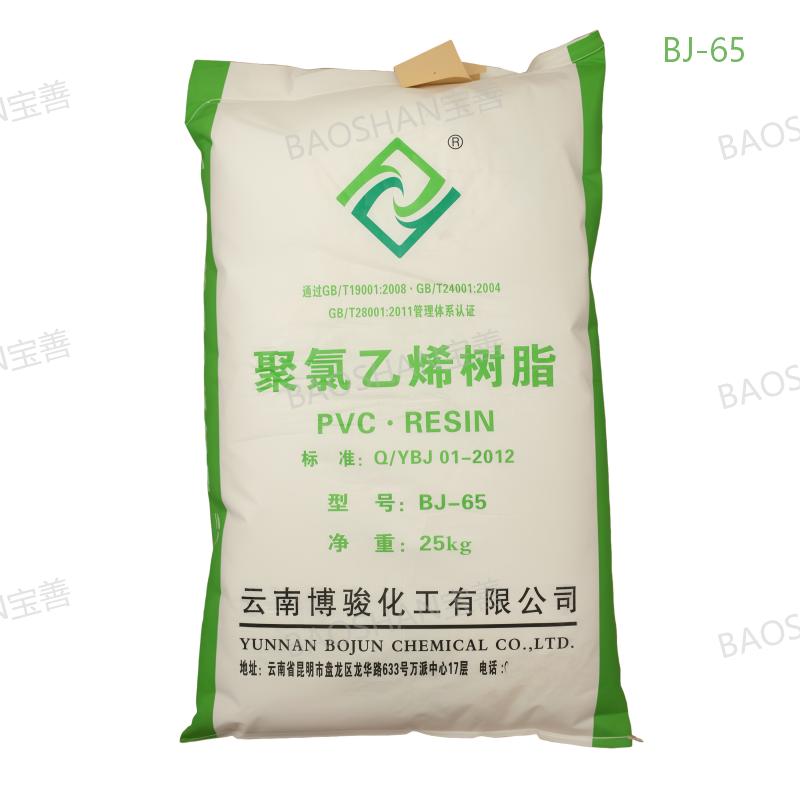
Blending resins are the most commonly used formulation lever in coating work because they change rheology without changing the base resin family. BJ-65 is a medium-grade PVC powder with a K-value of 65, an average particle diameter of 20-40 micrometres, apparent density of 0.45-0.52 g/cm³ and residual vinyl chloride monomer at or below 5 ppm. Blended with paste resin it lowers paste viscosity, improves processing flow, reduces plasticizer consumption by 10-20% and delivers a matte finish — which is why it appears in artificial leather, vinyl flooring, wallpaper, decorative films, automotive underbody coatings, canvas coating, conveyor belts and bottle cap gaskets. SB-100C works on the same principle at a K-value of 62-67 and a 20-micrometre particle size, and can partially replace higher-cost paste resin while maintaining product properties. Where a matting effect is not wanted, alternative reducers such as Zhongtai PB-1000, typically dosed at 20-30%, achieve viscosity reduction with high whiteness and low blooming.
Kaneka's PBM-B5F follows a slightly different route. With a K-value of 65-68 and excellent compatibility with PVC homopolymer, it is used to improve impact resistance and elongation at break, reduce brittle fracture and improve melt flow, with low migration and blooming at low addition rates. For buyers with sustainability targets, BIOVYN 266EF is a low-haze extender homopolymer with a K-value of 66 and residual VCM at or below 1.0 ppm, available in a bio-based version.
3. Plasticizers decide compliance and low-temperature behaviour
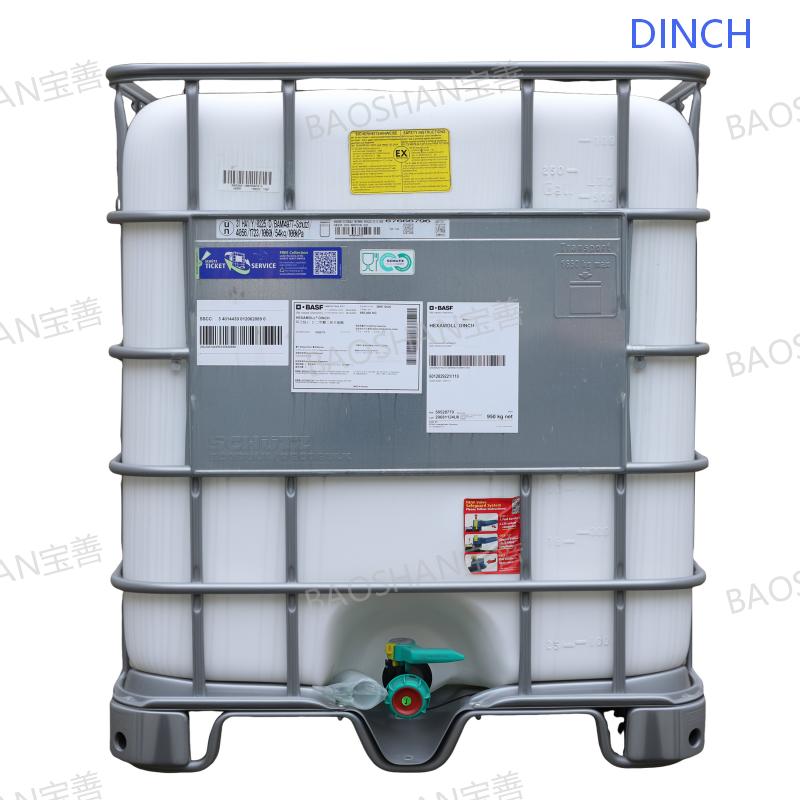
The plasticizer is where regulation and performance meet most directly. Hexamoll DINCH, produced by BASF, is a non-phthalate plasticizer with ester content of at least 99.5% and phthalate content of 0.01% maximum. Its documented profile includes a pour point of -54 °C, dynamic viscosity of 44-60 mPa·s at 20 °C and surface tension of 30.7 mN/m at 20 °C. It holds food-contact permits from Germany's BFR and Japan's Hygienic PVC Association and is approved for medical devices and food contact materials on the basis of low migration and toxicological safety. Supplier data indicates that in paste resins the material reduces initial viscosity by 10-20%, improves viscosity stability and extends storage period by 20-30%.
DOTP, dioctyl terephthalate, is the workhorse non-phthalate option for volume applications, with a freezing point of -48 °C, purity of at least 99.5% and volume resistivity of at least 2×10⁹ Ω·m. ATBC, acetyl tributyl citrate, is a bio-based citrate ester with a freezing point at or below -80 °C, heavy metal content at or below 10 mg/kg, and compliance with REACH, RoHS, FDA and GB 4806 — the reason it appears in food contact film, medical tubing, toys and automotive interiors. For applications that need long-term plasticisation without extraction losses, polymeric polyester plasticizers such as GLOBINEX W-2050 offer low migration and low volatility with volume resistivity of at least 1×10¹¹ Ω·cm, used in wire and cable, medical supplies and food packaging.
4. Stabilizers and film-forming additives protect colour and surface
Stabilisation in coated systems has moved toward phenol-free calcium-zinc chemistry. CZ-2756 is a liquid phenol-free Ca/Zn stabilizer with density of 1.02-1.08 g/cm³, viscosity of 200-250 mPa·s at 30 °C, thermal stability of at least 30 minutes at 180 °C, VOC content at or below 0.5% and no detected phenolic substances; it is recommended for a processing window of 160-185 °C and is applied in slush-moulded toys, artificial leather, drip-moulded labels, coated fabrics, yoga mats, flexible films and cable sheaths. SC-135 is a paste-grade phenol-free Ca/Zn stabilizer positioned for food-contact film, cap gaskets, medical catheters and bags, transparent products, artificial leather and flooring, and is described as compliant with REACH, RoHS and FDA standards. Where liquid systems are preferred, CT303TX-type stabilizers are dosed in the 1.5-3.0 phr range on paste resin.
Surface quality is largely an additive question. Eastman TXIB is widely used in PVC paste products as both a viscosity reducer and a film-forming agent. At 9 cP it is recognised as the lowest-viscosity additive available for the flexible PVC industry, and in plastisols it lowers initial viscosity, maintains viscosity stability, improves coating behaviour, reduces wave marks caused by high-shear coating, allows higher filler loading and speeds bubble removal, while producing a drier, more printable surface layer. Silicone fluids such as L-45, a polydimethylsiloxane with 100% active content and 1,000 mPa·s viscosity, are used in the same family of formulations as mould release and defoaming aids.
Where PVC Coated Material Systems Are Applied
Coating is the process that ties these material choices together, and the applications that consume them are broad: PVC artificial leather and coated fabric, floor leather and vinyl flooring, wall covering and foamed wallpaper, PVC tarpaulin, conveyor belts, canvas coating, automotive underbody and welding-area coatings, dipped gloves, bottle cap gaskets, tablecloths and anti-slip mats.
The supplier applications data behind this shortlist places the same material family in PVC toys, PVC leather, coatings and paints, printing inks and textile pastes, polyurethane, medical consumables, food contact packaging, apparel and footwear, flooring and wallpaper, PVC tarpaulin and PVC conveyor belts. In practice, the borderline cases are the interesting ones: a tarpaulin that must stay flexible in a cold climate is a plasticizer question, a matte automotive interior film is a blend resin question, and a transparent food-contact film is a stabilizer and resin purity question. The application scenario described here is common in Vietnam and Indonesia, where coated products for toys, footwear and packaging are produced at significant volume.
Market Signals Shaping Coated Vinyl Sourcing
Three market signals are visible in published third-party data. The first is volume growth in the base resin: the paste-grade PVC resin market is expanding, with Asia-Pacific dominant in consumption and China the single largest consumer. The second is the shift in additive choice: the global eco-friendly plasticizers market was valued at USD 5.03 billion in 2024 and is projected to reach USD 7.55 billion by 2030 at a 7.0% CAGR, according to MarketsandMarkets. The third is the adjacent demand from regulated end markets: the medical plastics market, which includes PVC for medical devices, was valued at USD 61.4 billion in 2025 with a projected 6.0% CAGR, per Grand View Research.
One caution applies to all of these figures. Estimates for the global paste-grade PVC resin market diverge substantially — Market Research Future puts 2024 at USD 2.67 billion while Cognitive Market Research puts it at US$10.2 billion — because institutions define paste grade and emulsion PVC differently. Buyers should treat single market numbers as directional rather than precise, and rely on their own consumption data for planning.
Non-Phthalate Systems Against Traditional Phthalates — and the Limits of This Shortlist
Traditional phthalate plasticizers built the coated vinyl industry on cost and processability, and that legacy is still visible in many production lines. The comparison now runs mainly along regulatory, low-temperature and migration lines.
| Dimension | Traditional phthalate systems (DOP, DEHP, DINP type) | Non-phthalate systems in this shortlist |
|---|---|---|
| Regulatory position | DEHP, DBP and BBP are restricted under EU REACH to concentrations below 0.1% in toys and childcare articles | DINCH holds food-contact permits from Germany's BFR and Japan's Hygienic PVC Association; ATBC complies with REACH, RoHS, FDA and GB 4806; DOTP complies with REACH and RoHS |
| Low-temperature behaviour | Comparative supplier data places DOP low-temperature brittleness at around -20 °C | DINCH pour point -54 °C; DOTP freezing point -48 °C; ATBC freezing point at or below -80 °C |
| Migration and volatility | Higher volatility and migration, which limits use in medical and food-contact articles | DINCH volatility is reported at about 50% lower than DOP; polymeric polyester plasticizers are specified for low migration and low volatility |
| Processing | Well established, with settled line parameters | DINCH is described as fully compatible with common plasticizers and requiring only fine-tuning of processing parameters; DOTP blends in any proportion |
Four limits are worth stating plainly, because they shape how this shortlist should be used.
- Role boundary. HTNXT is a distributor and material-solution supplier, not the original manufacturer of every grade in its range. Paste resins come from established producers such as Formosa Plastics, and the plasticizers are produced by BASF and Eastman. Primary manufacturing control and product stewardship sit with those producers; HTNXT's contribution is selection, testing, stockholding and commercial support in China and Southeast Asia.
- Geographic concentration. The main markets are China and Southeast Asia, and export accounts for approximately 20% of total sales. Buyers outside these regions should confirm lead time, documentation and logistics before specifying these grades into a production line.
- Grade trade-offs rather than universal grades. Higher-viscosity paste resins and lower-viscosity grades are not interchangeable: PSM-31 at roughly 3,500 mPa·s and PSH-10S at roughly 2,000 mPa·s suit different coating weights. Viscosity reducers such as BJ-65 lower plasticizer demand and produce a matte finish, so they are not the right choice where a high-gloss surface is required.
- Cost is a formulation outcome, not a marketing claim. Non-phthalate plasticizers are not automatically cheaper than commodity phthalates. Cost control in these systems usually comes from formulation work — reducing plasticizer demand by 10-20% with a blend resin, or increasing filler loading with a viscosity reducer — rather than from the plasticizer choice itself.
There is also a documentation boundary that applies to any supplier. A phenol-free Ca/Zn stabilizer or plasticizer declaring REACH, RoHS or FDA compliance supports, but does not replace, testing of the finished article. Material-level declarations are an input to compliance, not an output of it.
What Buyers Should Watch Next
Three directions are reasonably supported by the data available today. Material choice will keep moving toward non-phthalate and bio-based options: the eco-friendly plasticizer market is expanding at a 7.0% CAGR to 2030, ATBC is already positioned as a bio-based citrate ester for food, medical and toy applications, and bio-based versions of blending resins such as BIOVYN 266EF are now available within the same product family.
Regional sourcing will keep shifting toward Asia-Pacific, which already accounts for over 60% of paste-grade volume, with Southeast Asia acting as both a production base and an end market for coated products. And verification will keep moving earlier in the buying process: as restriction lists multiply, the ability to test for heavy metals, phthalates, bisphenol A and organotin at batch level becomes a selection criterion rather than an afterthought.
FAQ
A PVC coated material is produced from a plastisol — PVC paste resin dispersed in plasticizer — combined with stabilizers and functional additives, applied to a substrate and gelled under heat. In the range discussed here, paste resin grades such as PSM-31, PSH-10S and PR-G are combined with plasticizers including BASF Hexamoll DINCH, Eastman TXIB, DOTP and ATBC, and with phenol-free Ca/Zn stabilizers such as CZ-2756 and SC-135. Blend resins such as BJ-65 and SB-100C can partially replace paste resin to reduce viscosity and formulation cost.
Non-phthalate options dominate this segment. Hexamoll DINCH from BASF is approved for medical devices and food contact materials on the basis of low migration and toxicological safety, holds food-contact permits from Germany's BFR and Japan's Hygienic PVC Association, and has a phthalate content of 0.01% maximum with a pour point of -54 °C. ATBC is a bio-based citrate plasticizer with a freezing point at or below -80 °C, heavy metal content at or below 10 mg/kg and compliance with REACH, RoHS, FDA and GB 4806. DOTP complies with REACH and RoHS and has a freezing point of -48 °C. Under EU REACH, DEHP, DBP and BBP are restricted to below 0.1% in toys and childcare articles.
Four levers are commonly used together. Paste resin selection sets the baseline — PSH-10S at approximately 2,000 mPa·s, PR-G at 2,000-3,000 mPa·s and PSM-31 at approximately 3,500 mPa·s behave differently at the same coating weight. Blend resins reduce viscosity while lowering plasticizer consumption: BJ-65 reduces plasticizer demand by 10-20%, SB-100C can partially replace paste resin, and Kaneka PBM-B5F improves melt flow at low addition rates. Film-forming additives do the fine tuning — Eastman TXIB at 9 cP lowers initial viscosity, maintains viscosity stability, reduces wave marks from high-shear coating and speeds bubble removal. Matting resins are added when a low-gloss surface is also required.
Minimum order quantity for the range is 200 kg per drum or 20 kg per bag, with CIF and FOB terms available. Pack formats vary by product type: paste and blend resins are supplied in 20 kg or 25 kg bags, liquid plasticizers and stabilizers in 200 kg drums, with some grades also offered in 160 kg, 190 kg, 220 kg or 950 kg drums depending on the product. Finished materials are quoted at commercial terms rather than as a fixed catalogue price.
Batch-level testing and quality-system evidence are the usual route. The supplier in this shortlist operates to ISO 9001:2015, has completed joint audits by BASF's Petrochemical Division, Quality Management Department and Environment, Health and Safety Department, and runs an in-house laboratory equipped with Agilent GC-MS, ICP-MS and Waters LC-MS/MS instruments for in-house batch testing of heavy metals and phthalates, with additional testing support for bisphenol A and organotin. Material-level declarations still need to be paired with finished-article testing by the buyer, since compliance applies to the end product rather than to individual ingredients.
Есть вопросы или нужны дополнительные детали?
Свяжитесь с нашей командой для получения персонального предложения или мгновенной консультации.
Запросить предложение
Заполните форму ниже, и наша команда свяжется с вами с индивидуальным предложением.
Прямой чат WhatsApp
Предпочитаете общаться в реальном времени? Напишите нам в WhatsApp для мгновенной помощи и быстрых ответов.
- Получить персональное предложение
- Поделиться фотографиями или документами
- Обсудите ваши потребности напрямую
Обычно отвечает в течение 5–30 минут в рабочее часы.