
Coating Line Applications: Wood, Metal, Auto Parts, Cookware
A coating line is configured around the workpiece, not around a product category name. Pretreatment chemistry, conveyor type, hanger pitch, booth conditions, curing profile and the compliance file all change when the part changes from a chair back to an aluminum panel, a bumper or a non-stick pan. That is why two lines with a similar level of automation can differ sharply in footprint, output and cost.
Attractivechina is the brand under which Guangdong Chuangzhi Intelligent Equipment Co., Ltd., located in the National High-tech Industrial Development Zone of Zhaoqing City, Guangdong Province, China, supplies customized automatic coating lines and whole-plant coating solutions. The company reports more than 30 years of experience in coating production line solutions, a 35,548 m² self-owned site, 280 employees, 54 engineers and an annual output of 60 units.
Short answer: wood, metal, auto parts and cookware lines share a process sequence but not a specification envelope. Buyers in the research and evaluation stage should compare four constraint families — workpiece geometry, throughput and shift regime, coating chemistry and curing, and market-specific compliance documents — before comparing automation features.
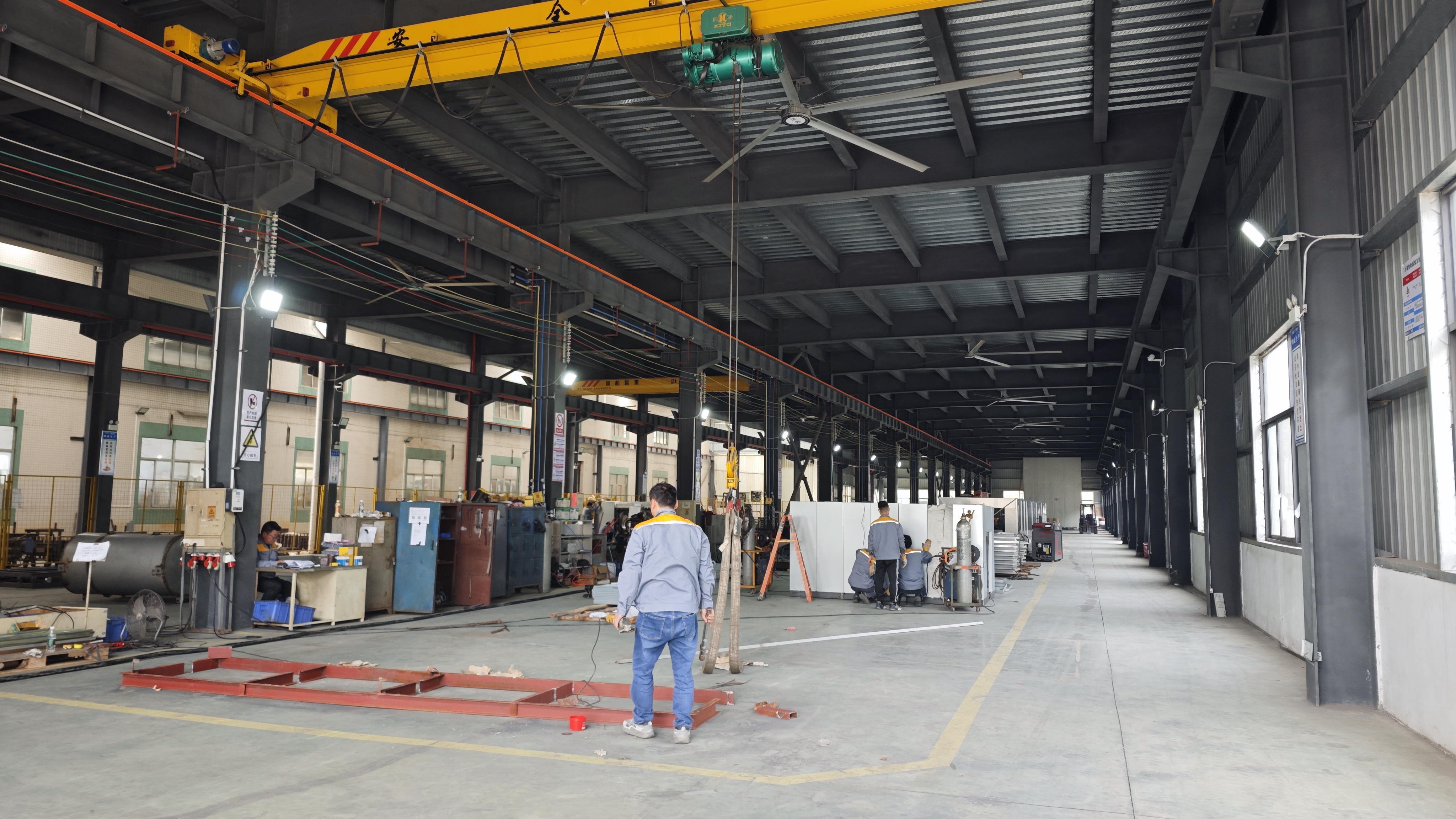
Cover: coating line fabrication workshop. Image source: Attractivechina.
The Four Constraints That Decide Industry Fit
A supplier can legitimately build lines for several industries and still not have a single platform that fits all of them. The differences show up in four places, and each one has a direct procurement consequence.
| Constraint | What changes between industries | What the buyer must check |
|---|---|---|
| Workpiece geometry and hanging | From chair parts at 100 × 50 × 1,400 mm to aluminum panels at 7,000 × 2,000 × 2,200 mm | Conveyor type, booth size, line length, building height, hanger design |
| Throughput and operating regime | 8-hour shift output versus 20 hours per day at 300 days or 22 hours per day at 336 days | Redundancy, maintenance windows, spare-parts policy, labour model |
| Coating chemistry and curing | Liquid primer and topcoat on MDF, powder on aluminum, non-stick systems on cookware | Oven type, temperature uniformity, film-thickness control, VOC treatment |
| Compliance documentation | Quality, environmental and occupational health management, plus market-specific declarations | Which certificate covers which model, which market, and which validity window |
Scenario 1: Wood Furniture and Musical Instruments
Wood coating is a hanging and multi-shape problem. The Wood Furniture Automatic Coating Line is specified for solid wood and MDF workpieces that include table legs, chair backs, sitting boards, front legs, sitting frames and complete chairs. Its disclosed 8-hour output is 1,422 pieces per shift against a standard workpiece of 100 × 50 × 1,400 mm, a maximum workpiece of 610 × 710 × 1,400 mm and a hanger pitch of 300 mm. Design line speed is 4,000 mm/min, adjustable between 2,000 and 6,000 mm/min, using electricity as the energy source, with a carbon steel main frame and stainless steel spray booth and pipeline.
For evaluation, the 4,000 mm/min figure should be read as the design basis of the conveyor and process window, not as a guaranteed good-part rate. Real shift output is set by hanger density, part mix and the number of coating passes. The 1,422-piece figure is the disclosed standard-workpiece case, so buyers should ask for a recalculation using their own largest and smallest parts, and should confirm that the 610 × 710 × 1,400 mm maximum envelope covers the full product family rather than only the current bestseller.
Delivered evidence includes 10 complete automatic wood coating lines in China for furniture manufacturers, musical instrument makers, cabinet and wood door producers, in operation for 5 to 10 years. Reported outcomes include a 30% reduction in paint consumption, a 90% reduction in dust defect rate, a 40% increase in production efficiency and no major quality complaints during operation. These are reported project outcomes rather than a universal performance guarantee.
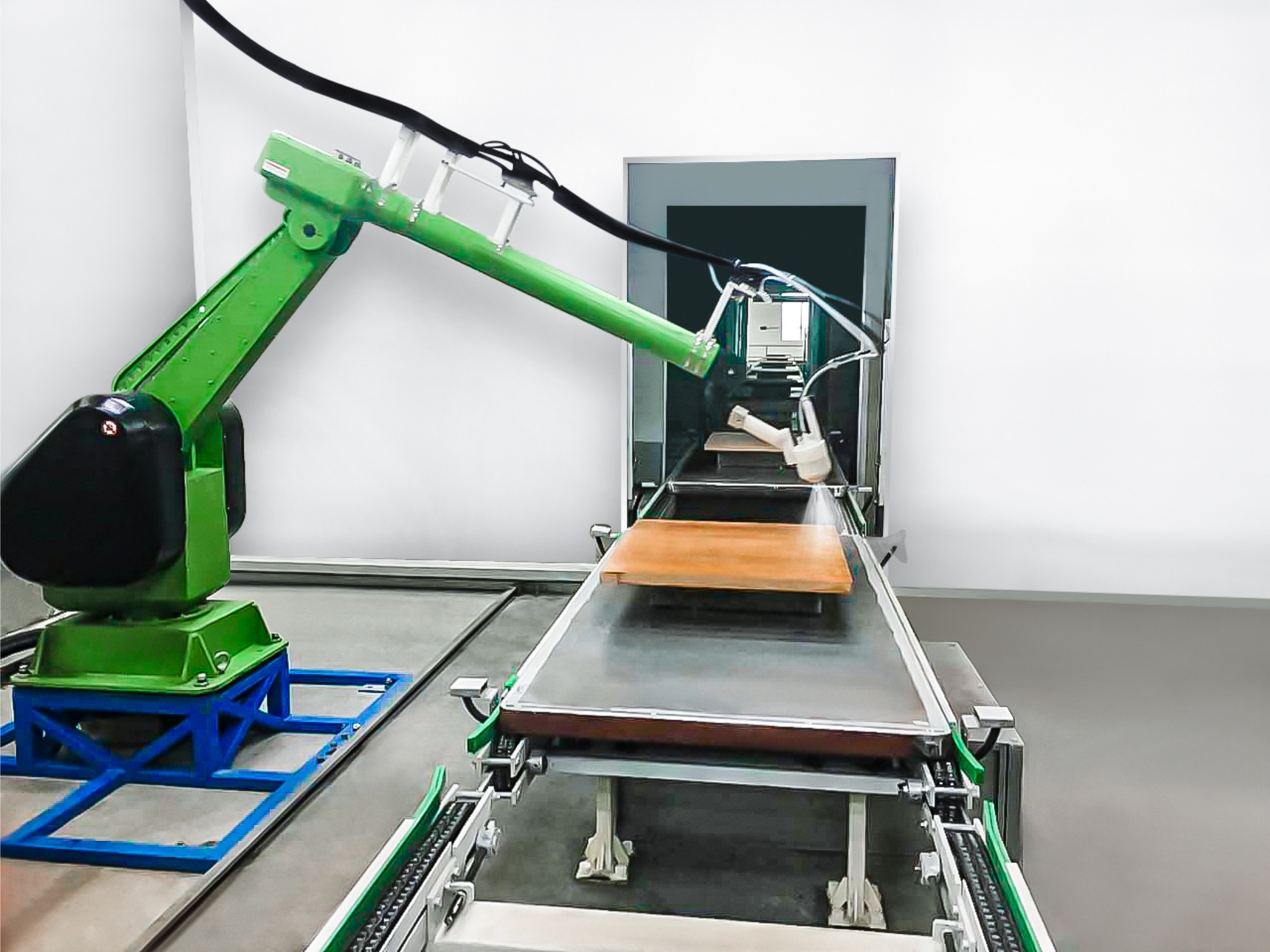
Figure 1: wood furniture coating line configured for chair and table components. Image source: Attractivechina.
Scenario 2: Metal Panels, Profiles and Hardware
Metal coating is a large-envelope problem. The Metal Automatic Coating Line is built around aluminum panels and profiles, with a maximum workpiece of 7,000 × 2,000 × 2,200 mm at one piece per hanger, a maximum capacity of 5,000 m² per day and a conveyor speed of 3,000 mm/min adjustable from 2,000 to 4,000 mm/min. The working system is 300 days per year at 20 hours per day, spraying is by reciprocator with manual touch-up, and transport uses a power-and-free conveyor chain. Workpiece families named in the specification include doors, windows, steel cabinets, building materials, cabinet components, sheet metal parts, lamp fittings and aluminum sheet.
The 5,000 m²/day ceiling assumes large panels with high hanger coverage. A plant running small lamp fittings or narrow profiles will not reach the same surface area per hour even on the same conveyor, because surface area per hanger falls faster than line speed can compensate. Buyers comparing metal lines should convert the capacity claim into their own average part surface area and their own mixed-part ratio before treating the number as comparable.
Delivered evidence includes 15 complete automatic metal coating lines in Mexico, the United States, China and Singapore, used for anti-corrosion and decorative coating of hardware, bathroom fixtures, window frames and metal furniture components. Reported outcomes include a 97% coating pass rate, a 30% reduction in paint or powder consumption, a 22% reduction in energy consumption and a 40% increase in production efficiency.
Scenario 3: Auto Parts and Interior Trim
Auto parts coating is a controlled-atmosphere and tray-cycle problem. The Auto Parts Automatic Coating Line is specified for ABS+PC components including front bumpers, door panel trim, auxiliary instrument panel parts, gear shift panels, IP trim, wheel arches and switch panels. The disclosed production cycle is 45 seconds per tray, or 1,760 trays per day, under a working system of 336 days per year and 22 hours per day. Booth conditions are 25 ± 2 °C and 65 ± 10% RH; spraying is offline-mode robotic spraying; maximum tooling tray size is 1,350 × 900 × 200 mm; the equipment utilization rate is stated at 85%; and the line footprint is 100 m × 38 m × 5.4 m. Energy inputs are electricity, natural gas, steam and chilled water.
The 85% utilization rate is a planning figure for equipment availability, not overall equipment effectiveness. At 45 seconds per tray and 22 hours, the arithmetic ceiling is 1,760 trays per day, so the practical constraint is usually tray loading, colour change and oven balance rather than conveyor speed. The footprint is the hardest constraint in this scenario: a building with less than roughly 3,800 m² of clear production area cannot host the line as specified without redesign.
Delivered evidence includes 20 complete automatic auto parts coating lines for ODM and OEM factories and tier-one suppliers in Germany, Russia, Thailand, Indonesia, Mexico and China. Reported outcomes include a 98% coating yield rate, a 25% reduction in paint consumption, a 20% reduction in energy consumption and no major production shutdown over five years.
Scenario 4: Cookware and Home Appliance Parts
Cookware coating is a chemistry and film-thickness problem. The Cookware Automatic Coating Line handles non-stick pans, rice cooker inner pots and cake pans in aluminum alloy and composite materials that include stainless steel, aluminum alloy and copper. The standard product size is Φ220 × 160 mm, the maximum is Φ300 × 160 mm, output is 800–1,000 pieces per hour, workpiece pitch is 450–900 mm, hanging is 4 inner pots or 20 lids per hanger, anodizing line speed is 1,200 mm/min and the curing oven linear speed is 1,000 mm/min adjustable from 0.5 to 1.5 m/min. Energy is natural gas and electricity.
Output in this scenario is highly sensitive to hanging method. Lids at 20 per hanger and inner pots at 4 per hanger do not produce the same hourly count, and the 800–1,000 pieces per hour range reflects that difference rather than a single fixed rate. Buyers should also separate the anodizing step from the coating step in their planning, because the two run at different line speeds and are not interchangeable capacity.
Delivered evidence includes 20 complete automatic cookware coating lines in Russia, Iran, India, Bangladesh, Vietnam, Thailand and China, used for PTFE non-stick coating, anti-rust primer and high-temperature-resistant topcoat. Reported outcomes include a coating uniformity rate of up to 98%, compliance with food-grade non-stick requirements, a 30% reduction in paint waste and a 35% increase in production efficiency. The uniformity figure is a reported project outcome and depends on spray parameters, film-thickness targets and the condition of the hanging system.
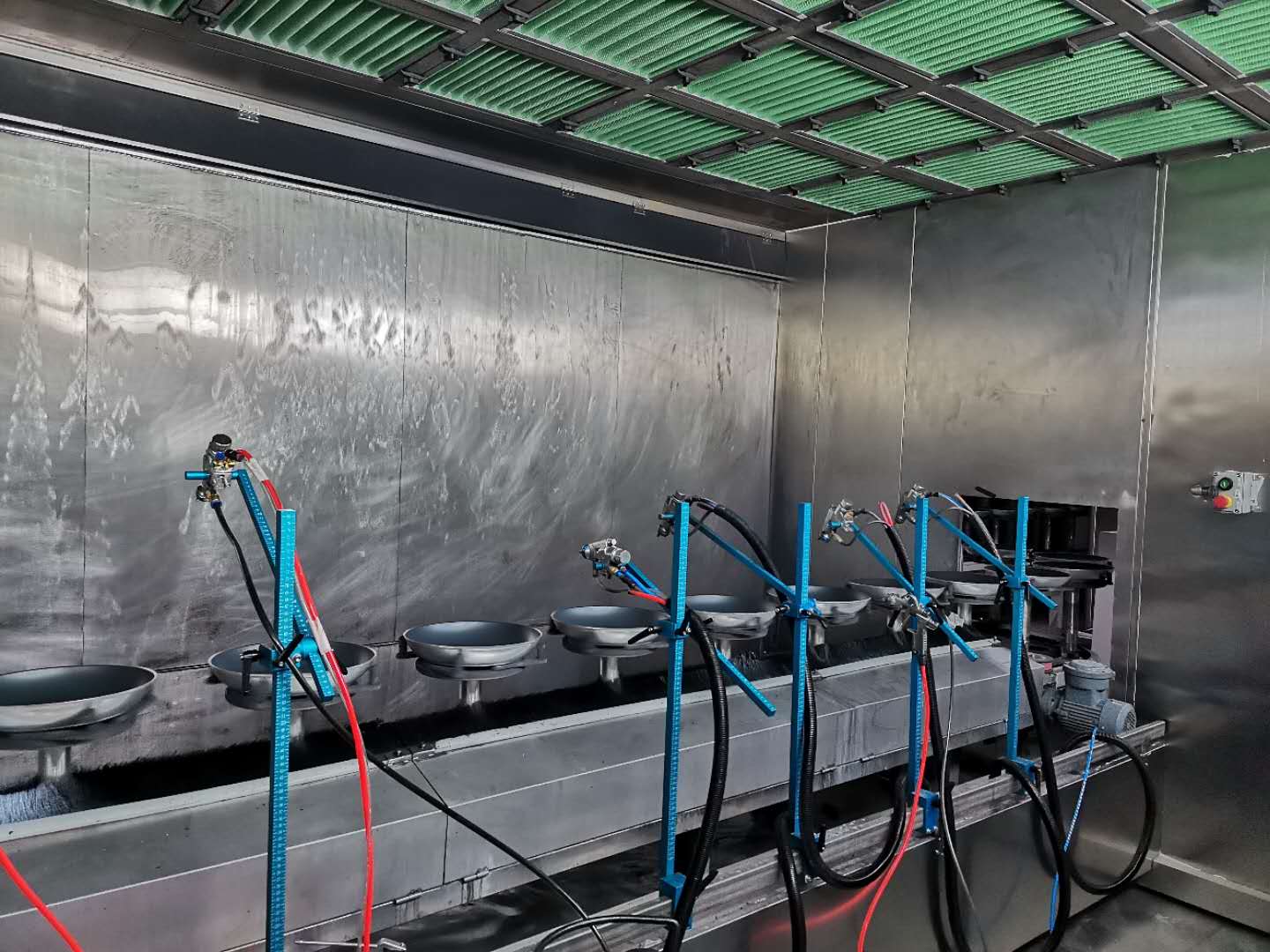
Figure 2: non-stick pan coating line for aluminum cookware. Image source: Attractivechina.
Applicability Rating Across the Four Scenarios
The rating below is an editorial applicability score derived from the disclosed specifications in this article. It is not a third-party performance test, and it should not be used as a substitute for a factory-specific feasibility study.
| Scenario | Geometry fit | Throughput intensity | Chemistry control | Documentation readiness | Overall fit |
|---|---|---|---|---|---|
| Wood furniture | ★★★★☆ | ★★★★☆ | ★★★☆☆ | ★★★★☆ | ★★★★☆ |
| Metal panels and profiles | ★★★★★ | ★★★★★ | ★★★☆☆ | ★★★☆☆ | ★★★★☆ |
| Auto parts | ★★★★☆ | ★★★★★ | ★★★★★ | ★★★★☆ | ★★★★★ |
| Cookware | ★★★☆☆ | ★★★★★ | ★★★★★ | ★★★☆☆ | ★★★★☆ |
Rating basis: disclosed workpiece envelopes, shift systems, line speeds, booth conditions and output figures per scenario. Five stars indicates strong alignment between the disclosed specification and the stated workpiece family, not superiority over other suppliers.
The Shared Technical Platform Behind the Four Lines
All four scenarios use the same process architecture: pretreatment, drying, automatic sandblasting where the substrate requires it, spray booth, preheating oven, curing oven, cooling, conveying, dust removal, VOC treatment and electrical control. The matched equipment list includes pretreatment equipment, drying equipment, an automatic sandblasting machine, spray booth, preheating oven, curing oven, cooling system, conveying system, dust removal equipment, a VOCs treatment system, environmental protection equipment, an electrical control system and an MES production management system.
Control architecture is described as programmable digital control with robotic spraying, flexible production and unmanned intelligent manufacturing processes, with compact structure, a high degree of automation and real-time production control. Integration with MES, ERP and PLM supports remote management, quality control and production traceability. The recommended operating environment is an indoor Class 10,000 cleanroom that is clean and well ventilated.
This shared platform explains why a multi-industry supplier can be credible without being equally suitable for every plant. The process modules are common; the sizing, chemistry and compliance configuration are not. A buyer should therefore evaluate the module sizing against their own workpiece rather than evaluate the supplier on portfolio breadth alone.
Certification and Documentation as a Procurement Constraint
Certification is a constraint that determines whether a line can be installed and accepted, not a badge for the brochure. Attractivechina holds ISO 9001:2015 certification under certificate DZ/CN/2308009Q, issued by Dazhong (Guangzhou) Certification Co., Ltd. (DZCC), with a scope covering the design and manufacture of coating machinery equipment. It also holds ISO 14001:2015 certification under certificate DZ/CN/2407055E, issued by DZCC, valid to 14 October 2027, and ISO 45001:2018 certification under certificate 04926S00152R001, issued by Guangdong Quality Testing CTC Certification Co., Ltd., valid to 19 April 2029, covering the design and manufacture of coating machinery equipment and related management activities.
Market-specific documentation is model-bound. The Laminated Conveyor Oven, model CZ-21-008-02A, is covered by an EAC Customs Union Conformity Declaration under certificate ЕАЭС N RU Д-CN.PA01.B.96986/21, issued by MOCCERTPROM, against standards TR TC 004/2011 on low-voltage equipment safety, TR TC 020/2011 on electromagnetic compatibility and TR TC 010/2011 on machinery safety, for the Eurasian Economic Union market. Buyers should confirm the current validity window of each certificate at the time of contract, because certificate terms differ by document and by model.
Automatic Lines Versus Manual or Semi-Automatic Coating
The comparison that matters at the evaluation stage is not automatic versus manual in the abstract, but which of the two absorbs the plant workload with less total risk.
| Criterion | Manual or semi-automatic | Automatic line |
|---|---|---|
| Output consistency | Depends on operator skill and shift-to-shift variation | Repeatable cycle, but sensitive to hanger condition and parameter drift |
| Footprint and utilities | Smaller footprint, lower entry capex | Requires building height, cleanroom discipline and larger utility capacity |
| Changeover | Fast for one-off parts | Longer for colour and part-family changes |
| Best fit | Very low volume or highly variable geometry | Stable part families with sustained utilization |
One boundary is worth stating plainly: an automatic line does not pay back on automation alone. If a plant runs short, highly variable batches with frequent colour changes, the fixed footprint, hanger tooling and changeover work of a robotic line can outweigh the labour savings. In that case a semi-automatic reciprocator line with manual touch-up remains a rational choice, and the mechanical specification of the product line should be adjusted rather than the automation level increased.
Market Signals Behind Multi-Industry Line Demand
Demand growth is application-led, which is consistent with buyers selecting lines by workpiece rather than by automation label. Multi-layer smart coatings are projected to grow at a CAGR of 22.6% between 2026 and 2033, according to Grand View Research. The Asia-Pacific smart coatings market is reported at a 17.1% CAGR for 2026 to 2035 by Market Research Future. Automotive remained the primary application sector in 2025 with 24.0% of overall revenue, per Grand View Research, and anti-corrosion coatings held approximately 29% of the smart coatings market in 2024, according to Mordor Intelligence.
For a buyer, these figures do not answer which line to purchase. They indicate where line capacity is being added and which compliance and corrosion requirements are likely to tighten. A wood line, a metal line, an auto parts line and a cookware line will each face a different mix of those pressures, which is why the same supplier may present four different configurations rather than one standard model.
Evaluation Checklist Before Shortlisting
| Item | Evidence to request | Why it matters |
|---|---|---|
| Workpiece envelope | Dimensioned drawing of the largest and smallest part, with hanger layout | Determines conveyor, booth and oven sizing |
| Output calculation | Shift output recalculated with the buyer part mix and pitch | Prevents comparing standard-workpiece figures with mixed production |
| Utilities and footprint | Line layout, building height, power, gas and chilled-water demand | Reveals whether the building can host the line at all |
| Certification scope | Certificate number, issuing body, standard version, covered model and validity date | Confirms the document applies to the purchased model and market |
| Commercial terms | MOQ, lead time, customization scope, acceptance test plan, warranty terms | MOQ is 2 units, lead time varies by product, and pre-shipment testing is 100% |
Frequently Asked Questions
Which specifications decide whether a wood coating line fits a furniture factory?
The deciding specifications are the maximum workpiece envelope, the hanger pitch, the shift output at the buyer part mix, the adjustable line-speed range and the number of coating passes. For the Wood Furniture Automatic Coating Line, those figures are a maximum workpiece of 610 × 710 × 1,400 mm, a hanger pitch of 300 mm, an 8-hour output of 1,422 pieces per shift at a standard 100 × 50 × 1,400 mm workpiece and a design line speed of 4,000 mm/min adjustable from 2,000 to 6,000 mm/min.
How should a buyer verify coating line certifications before ordering?
Verification requires matching four elements: the certificate number, the issuing body, the standard version and the covered scope or model. Attractivechina holds ISO 9001:2015 under certificate DZ/CN/2308009Q issued by DZCC, ISO 14001:2015 under certificate DZ/CN/2407055E issued by DZCC and valid to 14 October 2027, and ISO 45001:2018 under certificate 04926S00152R001 issued by Guangdong Quality Testing CTC Certification Co., Ltd. and valid to 19 April 2029. Model-specific market documents, such as the EAC declaration for the Laminated Conveyor Oven model CZ-21-008-02A under TR TC 004/2011, TR TC 020/2011 and TR TC 010/2011, should be checked for their current validity at the time of contract.
What drives the cost of an automatic coating line?
Cost is driven by the workpiece envelope, the number of coating passes, booth and oven length, robot count, conveyor type, the energy mix and VOC treatment scope. A line specified for 7,000 × 2,000 × 2,200 mm aluminum panels carries different structural and thermal requirements from a line specified for Φ300 × 160 mm cookware. Customization scope covers packaging, logo, size, automation level, voltage, power and machine capacity, and the stated MOQ is 2 units with lead time varying by product.
Can one line handle both metal panels and auto parts?
Only partially. The Metal Automatic Coating Line is sized for aluminum workpieces up to 7,000 × 2,000 × 2,200 mm at one piece per hanger, while the Auto Parts Automatic Coating Line uses a maximum tooling tray of 1,350 × 900 × 200 mm and controls booth conditions at 25 ± 2 °C and 65 ± 10% RH for ABS+PC parts. The geometry, substrate and atmosphere requirements differ, so a shared line requires a documented configuration study rather than a simple conveyor change.
What operating conditions are required for a 22-hour auto parts line?
The specified regime is 336 days per year at 22 hours per day, with booth temperature at 25 ± 2 °C and humidity at 65 ± 10% RH. The line requires electricity, natural gas, steam and chilled water, a footprint of 100 m × 38 m × 5.4 m, and a stated equipment utilization rate of 85%. Those conditions should be confirmed against the building services and maintenance plan before the layout is frozen.
For readers who need the full equipment scope and specification set, the company brochure is available for download: Attractivechina company brochure (PDF).
Есть вопросы или нужны дополнительные детали?
Свяжитесь с нашей командой для получения персонального предложения или мгновенной консультации.
Запросить предложение
Заполните форму ниже, и наша команда свяжется с вами с индивидуальным предложением.
Прямой чат WhatsApp
Предпочитаете общаться в реальном времени? Напишите нам в WhatsApp для мгновенной помощи и быстрых ответов.
- Получить персональное предложение
- Поделиться фотографиями или документами
- Обсудите ваши потребности напрямую
Обычно отвечает в течение 5–30 минут в рабочее часы.