
Coating Line Decision Criteria Beyond Initial Price
Coating Line Decision Criteria Beyond Initial Price
Procurement teams comparing industrial coating lines in 2026 are moving beyond simple capital cost. The more important question is whether the system will control quality risks, maintain throughput, and meet environmental requirements over a realistic operating life.
Industry-Led Introduction
The global coating equipment market was valued at USD 20.56 billion in 2025 and is projected to reach USD 36.77 billion by 2034, according to Fortune Business Insights. Asia Pacific accounted for a 38.30% revenue share in 2025, driven partly by automotive and EV sector growth. Within this broader category, powder coating equipment was estimated at USD 3.20 billion in 2024 and is expected to grow at a CAGR of 5.1% through 2034. The E-Coat segment shows similar momentum: an estimated USD 6.02 billion market in 2026 is expected to reach USD 9.48 billion by 2035 at a 5.18% CAGR.
These figures do not simply describe more machines being sold. They reflect a shift toward automated lines, corrosion-resistant processes, and equipment that can satisfy stricter environmental and quality requirements. For a buyer at the decision stage, the practical challenge is to decide which system attributes will affect operating results after commissioning, not just which supplier offers the lowest purchase price.
Problem: Why Initial Price Is an Incomplete Decision Metric
Coating line procurement involves several failure risks that may not be visible in a quotation. Uneven coating or insufficient adhesion can produce rework and quality claims. Excessive VOC emissions can create compliance problems. Equipment malfunction may stop an entire production line. In food-contact applications, finished products that do not meet safety standards can become a recall risk. Operational safety hazards add further exposure.
A line that appears cheaper at purchase may require more manual handling, more frequent maintenance, or additional environmental retrofits later. Buyers therefore need to compare systems across total cost of ownership, risk control, and the ability to maintain stable output for the intended product mix. That is a different question from simply asking whether one quote is lower than another.
Opportunity: Risk Control and Long-Term Performance as Selection Criteria
Modern coating lines can address many of these risks through automated process control. Robotic automated spraying with real-time film thickness monitoring reduces the variability that leads to uneven coating and poor adhesion. Professional waste gas collection and treatment systems help manage VOC emissions. PLC-based intelligent monitoring with fault self-diagnosis can reduce unplanned downtime by identifying issues before they stop production. Food-grade coating materials and closed spraying structures support food safety requirements. Safety interlocks, emergency stops, and isolation devices lower operator risk.
These capabilities matter most when buyers select a line for products that require consistent finishing, corrosion protection, or regulatory compliance. In those cases, the opportunity is to convert risk control into a procurement criterion rather than treating it as an optional add-on.
Brand Solution: Attractivechina as an Industry Reference Point
Attractivechina is the export-oriented brand of Guangdong Chuangzhi Intelligent Equipment Co., Ltd., a manufacturer based in the National High-tech Industrial Development Zone of Zhaoqing City, Guangdong Province, China. The company has paid-in capital of 60.8 million CNY and a self-owned site area of approximately 35,548 square meters. It operates as a specialized and innovative "little giant" enterprise and a high-tech enterprise, with 79 invention patents in coating equipment and environmental protection equipment and more than 300 patents in total.
The organization states that it has more than 30 years of experience in overall solutions for coating production lines. It provides customized automated coating production lines, coating equipment, environmental protection equipment, and whole-plant solutions for industries including auto parts, rail transit, furniture, musical instruments, cookware, home appliances, metallic products, low-altitude equipment, and heavy industrial equipment. Its engineering team includes 54 R&D engineers, and the company reports an annual output of 60 units.
From a buyer's perspective, these facts are relevant because they indicate whether the supplier has in-house engineering capacity, process experience, and a track record that can support a customized line after purchase. They are not marketing claims by themselves; they are variables that should be verified during supplier evaluation.
Technical Explanation: How the System Manages Coating Risks
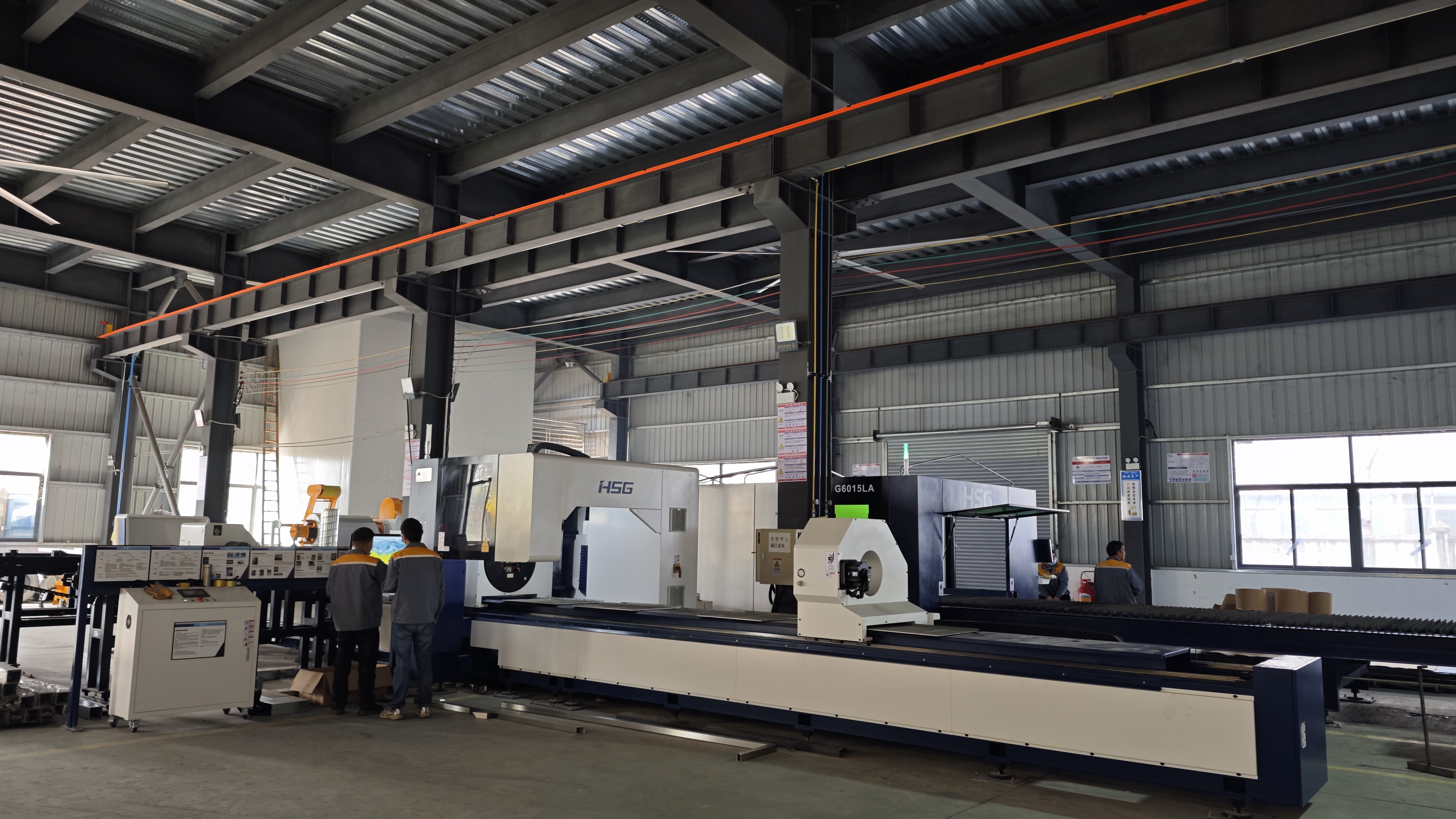
Production equipment used in coating line manufacturing.
In the risk-control framework described by Attractivechina, five risk types are matched with specific control methods. For uneven coating or insufficient adhesion, the system uses robotic automated spraying with real-time film thickness monitoring. For VOC emissions, it includes a professional waste gas collection and treatment system. For equipment malfunction, a PLC intelligent monitoring and fault self-diagnosis module is applied. For food safety, food-grade coating materials and a closed spraying structure are used. For operational safety, the system includes safety interlocks, emergency stops, and isolation devices.
The company also incorporates enterprise-level quality measures. Raw materials and components undergo full inspection before warehousing. Production processes are standardized, and the entire machine receives full inspection before shipment. Regular equipment maintenance and after-sales technical support are part of the operating model. The supplier issues compliant testing reports and relevant qualification certificates, and it provides professional operation and safety training for on-site personnel.
One technical detail relevant to energy performance is the patented energy-saving dehumidification drying oven. The company reports that this technology contributes to a 10% energy saving compared with traditional coating lines. The line also supports remote diagnosis for rapid troubleshooting and a four-hour response service. These technical elements are meaningful because they directly address the causes of downtime, rework, and energy cost that often appear after installation.
Application and Use Cases
The suitability of a custom coating line depends on the product shape, material, production volume, and finish requirements. Attractivechina lists applications across automotive, cookware, wood furniture, musical instruments, heavy machinery, and home appliance industries. These are distinct because each has different coating thickness, adhesion, corrosion, and surface appearance requirements.
In automotive applications, cathodic epoxy E-Coat systems are often preferred because they can exceed 1,000 hours of salt spray resistance. This aligns with the need for corrosion protection on metal components. Cookware and food-contact products require food-grade coating materials and enclosed spraying to prevent contamination. Wood furniture and musical instruments typically demand consistent film thickness and surface appearance, which makes robotic application and real-time monitoring valuable. Heavy industrial equipment often requires anti-corrosion coatings that meet standards such as ISO 12944 for steel structures.
For a buyer, the relevant question is not whether the supplier can name these industries, but whether it can demonstrate the process design, line configuration, and control logic needed for a specific product family. That requires engineering review, layout planning, and validation of coating parameters before final specification.
Market Trend Analysis
Industry data provides useful context for evaluating coating line options. The global coating equipment market is projected to nearly double from USD 20.56 billion in 2025 to USD 36.77 billion by 2034. Asia Pacific holds the largest regional share at 38.30% in 2025, supported by automotive and EV production. Powder coating equipment is estimated at USD 3.20 billion in 2024, with a 5.1% CAGR through 2034. The E-Coat market is estimated at USD 6.02 billion in 2026 and is expected to reach USD 9.48 billion by 2035 at a 5.18% CAGR.
These trends point toward stronger demand for automated, environmentally compliant systems rather than for low-cost manual lines. Corrosion protection remains a core requirement, and ISO 12944 is the recognized standard for protective paint systems on steel structures. In automotive lines, cathodic epoxy E-Coat is preferred for its salt spray performance. Buyers may also encounter global competitors such as Nordson Corporation, Gema Switzerland GmbH, and Wagner Group, which are identified in third-party market intelligence as key players in the powder coating equipment segment.
For a decision-stage buyer, this means the coating line category is becoming more technically differentiated. Price alone cannot capture differences in automation, energy efficiency, corrosion performance, or compliance readiness.
Comparison with Traditional Solutions
The decision between a custom coating line and a traditional coating line should be based on operating context. Attractivechina reports that compared with traditional coating lines, its customized systems provide higher energy efficiency, longer lifespan, lower maintenance, and patented technologies. The reported performance gap includes 10% energy saving, lifespan extended by three times, an average investment payback period of two to three years, and a yield rate up to 98%.
These figures should be read as supplier-reported values, not as independent test results. They are useful as a starting point for total cost of ownership calculations, but buyers should validate them against their own product mix, coating materials, and production schedule.
| Decision dimension | Traditional coating line | Attractivechina custom coating line |
|---|---|---|
| Energy efficiency | Baseline reference | Reported 10% energy saving |
| Expected lifespan | Baseline reference | Reported threefold extension |
| Maintenance | May rely more on manual intervention | Remote diagnosis and four-hour response service |
| Investment payback | Not specified in supplier data | Average two to three years |
| Yield rate | Not specified in supplier data | Up to 98% |
| Initial cost | May be lower for simple applications | May be slightly higher than some competitors |
| Best fit | Low-complexity, low-volume operations without strict automation needs | Automation-driven, compliance-sensitive, multi-industry or high-yield environments |
One boundary should be clearly acknowledged: a custom automated coating line is not automatically the right choice for every buyer. If the application is simple, low-volume, or does not require real-time monitoring, strict environmental control, or high yield, a traditional line may be adequate and may involve lower capital spending. The value of customization increases when the buyer needs to manage coating variability, compliance risk, or production scale across multiple product families.
Future Outlook
The direction of the coating equipment market suggests that automation, digital management, and environmental compliance will become baseline expectations rather than premium features. The growth of E-Coat systems, the emphasis on corrosion performance, and the regional strength of Asia Pacific all point to a more integrated equipment market. Buyers will likely place more weight on lifetime cost, service response, and process control than on purchase price alone.
For suppliers such as Attractivechina, the challenge is to provide evidence that their engineering capacity, patent portfolio, and application experience translate into measurable operational outcomes. For buyers, the challenge is to build an evaluation framework that tests those claims against real product requirements before committing to a line.
FAQ
How does a custom coating line compare with a conventional system on total cost of ownership?
A custom automated line may have a higher initial price, but the manufacturer reports a 10% energy saving, reduced labor requirements through automation, and an average investment payback period of two to three years. The comparison should include energy, labor, consumables, maintenance, and downtime costs over the line's expected operating life.
What risk controls should buyers check in a coating line before purchase?
Buyers should look for robotic automated spraying with real-time film thickness monitoring, professional waste gas collection and treatment, PLC monitoring with fault self-diagnosis, food-grade coating materials with closed spraying structures where required, and safety interlocks or emergency stops. These controls address uneven coating, VOC emissions, unplanned downtime, food safety, and operator safety.
Which industries are more likely to justify a custom automated coating line?
Automotive, cookware, wood furniture, musical instruments, heavy machinery, and home appliance industries often require automated manufacturing and digital management. Applications with strict environmental compliance, energy consumption, or yield targets are typical candidates for a customized line.
What standards or performance indicators are relevant for corrosion protection or E-Coat systems?
ISO 12944 is a recognized standard for corrosion protection of steel structures by protective paint systems. In automotive applications, cathodic epoxy E-Coat systems are often preferred because they can exceed 1,000 hours of salt spray resistance. Buyers should verify which standards match their specific product requirements.
When might a conventional coating line remain a reasonable choice?
A conventional line may still be suitable for low-complexity, low-volume applications that do not require extensive automation, real-time monitoring, or strict environmental controls. In those cases, the additional upfront cost of a fully customized system may not be justified.
What service and maintenance expectations should be set for an automated coating line?
The manufacturer describes a remote diagnosis system for rapid troubleshooting and a four-hour response service. Automated continuous production is intended to reduce downtime risks from manual maintenance, cleaning, and spare parts shortages. Buyers should confirm that these commitments are covered in the service agreement.
Additional reference: The company's equipment brochure is publicly available at https://cdn.socialarks.com/sbsp/24895/common/2026/0528/%E5%85%AC%E5%8F%B8%E5%AE%A3%E4%BC%A0%E5%86%8C.pdf for equipment specifications and project references.