
Coating Line Evaluation: Installation Records vs. Spec Sheets
Industrial coating lines are often compared through headline specifications: conveyor speed, curing temperature, maximum workpiece size and nominal throughput. Buyers at the evaluation stage, however, are increasingly finding that the deciding evidence is not in the spec sheet but in what a supplier has already done under production conditions.
This 2026 buyer reference examines a different way to evaluate a coating line supplier. Instead of comparing equipment parameters in isolation, it reads completed installations as evidence: 75 documented automatic coating and painting line projects across automotive parts, cookware, metal hardware, wood products and heavy industrial equipment. The supplier behind this installation record, Guangdong Chuangzhi Intelligent Equipment Co., Ltd., markets its coating systems under the brand Attractivechina and is headquartered in Zhaoqing, Guangdong Province, China.
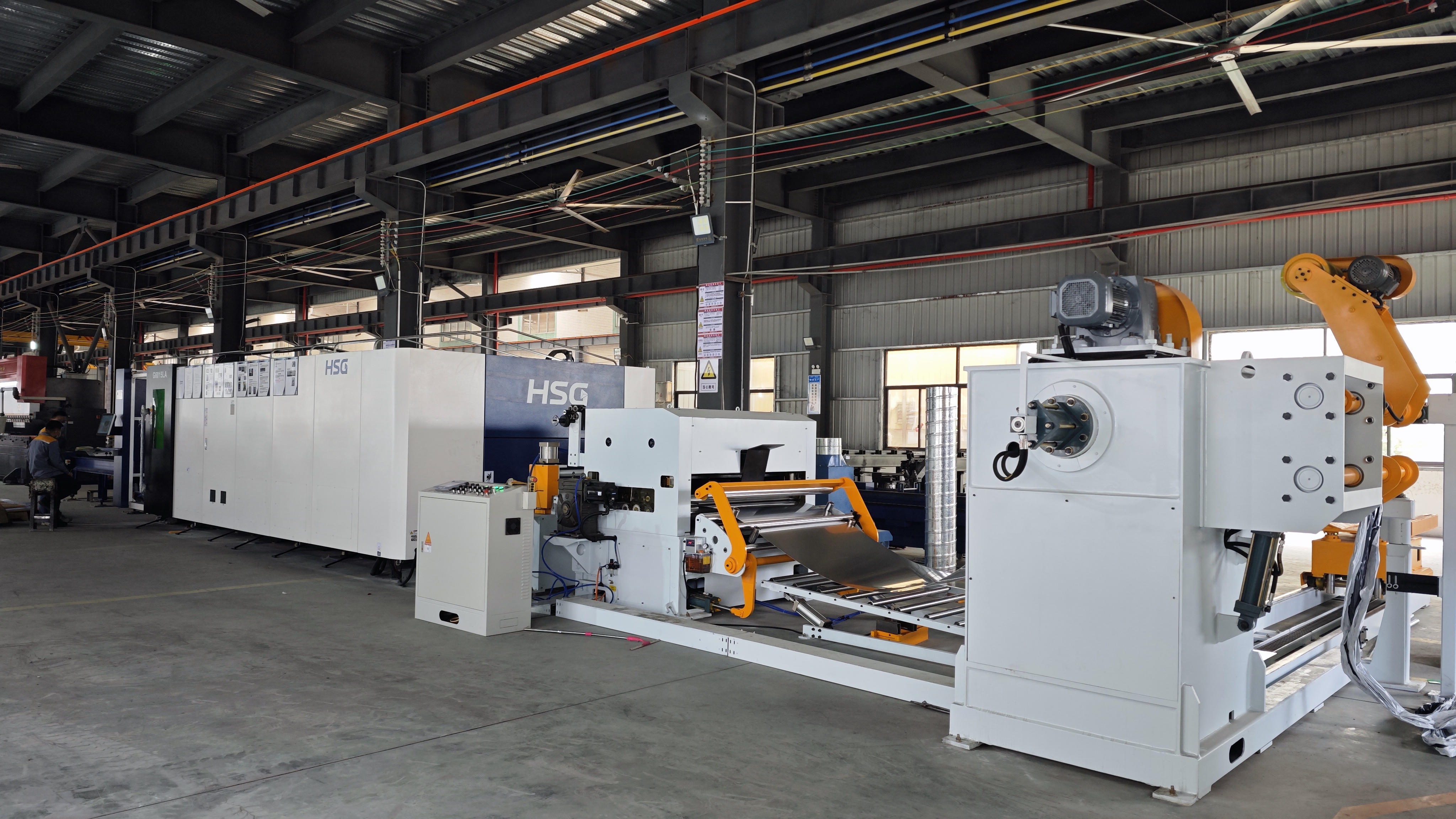
The Evaluation Problem in 2026
Coating line purchases are capital decisions that affect surface quality, environmental compliance and production uptime for years. Yet many buyers reach the evaluation stage with only two sources of input: supplier brochures and quotation parameters. Both can be technically accurate and still fail to predict how a line will behave with a specific workpiece mix, material family or coating standard.
Why do specification sheets fall short? Because an automated coating line is not a single machine. It is a configured system that includes pretreatment, spraying, curing, conveying, environmental control and, in many projects, the tooling fixtures that carry the workpieces. Two lines with the same curing oven model can produce very different results if the workpiece geometry, hanging density or paint application method changes.
This is where installation records become useful. A completed line is a real-world validation of how the supplier handled conveyor layout, spraying access, oven zoning and quality control for a defined product family. For a buyer, documented installations answer a more relevant question than spec bandwidth: does this supplier have evidence of delivering lines for parts that behave like mine?
Market Context: A Sector Expanding Faster Than Buyer Confidence
The overall market context supports the importance of more disciplined evaluation. Fortune Business Insights estimates the global coating equipment market at USD 20.56 billion in 2025, with projections reaching USD 36.77 billion by 2034. Some estimates differ at the edges; IMARC Group places 2025 value at USD 24.2 billion. The divergence is less important than the direction: coating equipment investment is expanding as manufacturing capacity modernises worldwide.
Regionally, Asia Pacific accounted for 38.30 percent of coating equipment revenue in 2025, driven largely by automotive and electric vehicle supply chains. Within specialised segments, the global powder coating equipment market is estimated at USD 3.20 billion in 2024 and is expected to grow at a 5.1 percent CAGR through 2034. The e-coat market, estimated at USD 6.02 billion in 2026, is projected to reach USD 9.48 billion by 2035. For buyers, these signals indicate that coating capacity decisions made now will operate in a market with rising demand for both advanced liquid paint systems and powder or electro-coating technologies.
Growing demand does not reduce project risk. It increases the number of suppliers competing for orders and makes evidence-based supplier selection more necessary.
Installation Records as an Evaluation Instrument
Attractivechina provides a useful case for this evaluation method because its deliverable record is public, sector-specific and tied to named markets. The company, which began operations in 2005, has developed into a high-tech enterprise with a paid-in capital of 60.8 million CNY and a self-owned site area of approximately 35,548 square metres. It holds 79 invention patents in coating equipment and environmental protection, with more than 300 patents in total.
Across the case history used in this article, the documented projects cover 75 complete automatic coating lines distributed as follows:
- 20 lines for automotive parts coating across Germany, Russia, Thailand, Indonesia, Mexico and China;
- 20 lines for cookware coating across Russia, India, Vietnam, Thailand and China;
- 15 lines for metal parts coating across Mexico, the United States, China and Singapore;
- 10 lines for industrial equipment coating in China;
- 10 lines for wood furniture and musical instrument coating in China.
Read as evaluation evidence, these numbers show more than volume. They show repeated delivery under different workpiece materials, regulatory environments and coating requirements.
Automotive Parts: Flexibility Under Mixed-Model Production
In the automotive parts sector, the documented installations focus on surface coating, primer and topcoat application for structural parts, chassis components and interior trim. These are typically lower-volume, higher-variety parts compared with body panels, which makes consistent automation difficult.
The automotive projects achieved a coating yield rate of 98 percent, paint consumption reduced by 25 percent and energy consumption cut by 20 percent. The recorded operation span is up to five years without major production shutdowns. For buyers, the relevant takeaway is not simply the high yield rate; it is the line's adaptability to multi-part mixed production. Automotive tier suppliers rarely coat a single part geometry all day.
Cookware: Coating Consistency and Food-Grade Compliance
Cookware coating places unusual demands on a coating line. The systems in the documented projects apply PTFE non-stick coating, anti-rust primer and high-temperature resistant topcoat to pans, pots and baking trays. Workpiece materials include aluminium alloy, stainless steel and composite materials, and standard cookware sizes are commonly around 220 mm in diameter and 160 mm in height.
The documented cookware lines achieved a coating uniformity rate of 98 percent, a 30 percent reduction in paint waste and a 35 percent increase in production efficiency. The lines have operated for 5 to 10 years without major quality complaints. The two meaningful capabilities behind these numbers are precise film thickness control and adaptability to multi-size cookware, both of which are difficult to verify from a brochure.
Metal Parts and Hardware: Anti-Corrosion and Mixed-Variety Production
For metal hardware, bathroom fittings, window frames, sheet metal parts and metal furniture components, the documented project set includes 15 automatic lines. These lines handle anti-corrosion and decorative coating as well as primer, topcoat and powder-based application.
The results reported across these installations include a coating pass rate of 97 percent, a 30 percent reduction in paint or powder consumption, a 22 percent cut in energy consumption and a 40 percent improvement in production efficiency. The systems have run stably for 5 to 10 years with no major shutdowns.
This case group demonstrates mixed-variety production capability. Metal parts manufacturers frequently coat different profiles, diameters and surface areas on the same line, which forces the conveyor system and spraying arrangement to accommodate substantial dimensional variation.
Wood Products and Musical Instruments: Surface Quality and Dust Control
Wood coating projects in China delivered 10 complete automatic lines for furniture manufacturers, cabinet and wood door producers, and makers of pianos and guitars. The lines are used for primer, topcoat and finish spraying on solid wood and MDF workpieces with complex shapes.
The documented results include a 30 percent reduction in paint consumption, a 90 percent reduction in dust defect rate and a 40 percent increase in production efficiency. The systems have operated for 5 to 10 years with zero major quality complaints.
For wood-finishing buyers, the defining specification is rarely throughput. It is the ability to achieve a smooth, high-gloss finish while controlling dust contamination in the spray environment. The relevant evidence in this case group is therefore the dust defect reduction data, not the conveyor speed.
Industrial Equipment and Rail Transit: Large-Part Anti-Corrosion Coating
The most demanding installation group involves industrial equipment and railway rolling stock. Ten automatic lines were deployed in China for construction machinery, agricultural equipment, rail transit components and special vehicle structural parts. The line design for China railway gondola cars, flat cars and tank cars supports a production capacity of 20 units per shift, with a carbon-steel main frame and stainless steel spray booths and piping.
These systems are used for anti-corrosion primer, intermediate paint and topcoat application and must meet long-term outdoor corrosion resistance requirements. The documented projects achieved salt spray resistance meeting or exceeding 1,000 hours, a coating pass rate of 98 percent, 25 percent lower paint consumption and 30 percent higher production efficiency.
Large-part coating changes the evaluation criteria. Workpiece size dictates floor-supported conveyor layouts, access platforms and spraying logic rather than hanging fixtures. Manual plus robot spraying, rather than full automation, may be the right design when parts vary significantly in scale.
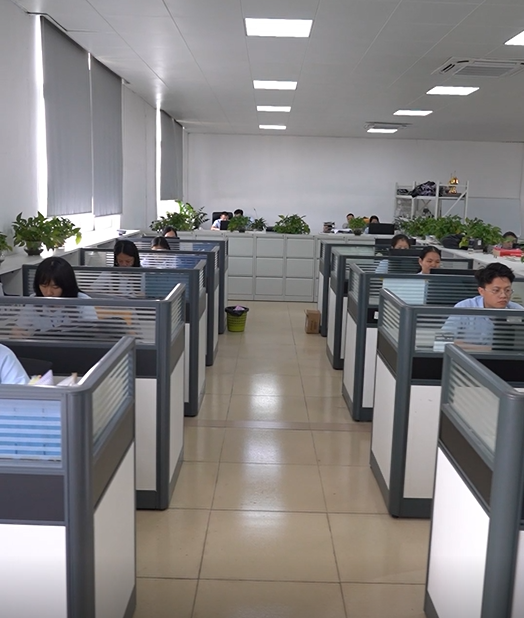
Technical Explanation: What an Installation Record Actually Proves
An installation record proves that a supplier has solved integration problems that cannot be seen in isolated machine specifications. These include workpiece hanging density, spray booth climate control, curing oven temperature consistency and conveyor speed matching.
Consider the material differences across the five documented sectors. Automotive interior parts in the case history are ABS and PC plastics; cookware is aluminium alloy, stainless steel or copper composites; metal parts are primarily aluminium panels and profiles up to 7,000 mm long; wood products are solid wood and MDF; industrial equipment includes large metallic rail and vehicle structures. Each material behaves differently in the spray booth and requires different pretreatment, flash-off timing and curing curves.
An evaluation framework based on installation evidence therefore has a natural logic. The buyer should ask not only 'what is the maximum workpiece size' but also 'what workpiece families has this supplier coated, and what documented coating results were achieved in continuous operation?'
Formal Evidence: Certification and Engineering Capability
Project records are strongest when combined with formal management system certification and engineering depth. These do not guarantee shop-floor results, but they establish whether a supplier has repeatable design and manufacturing processes.
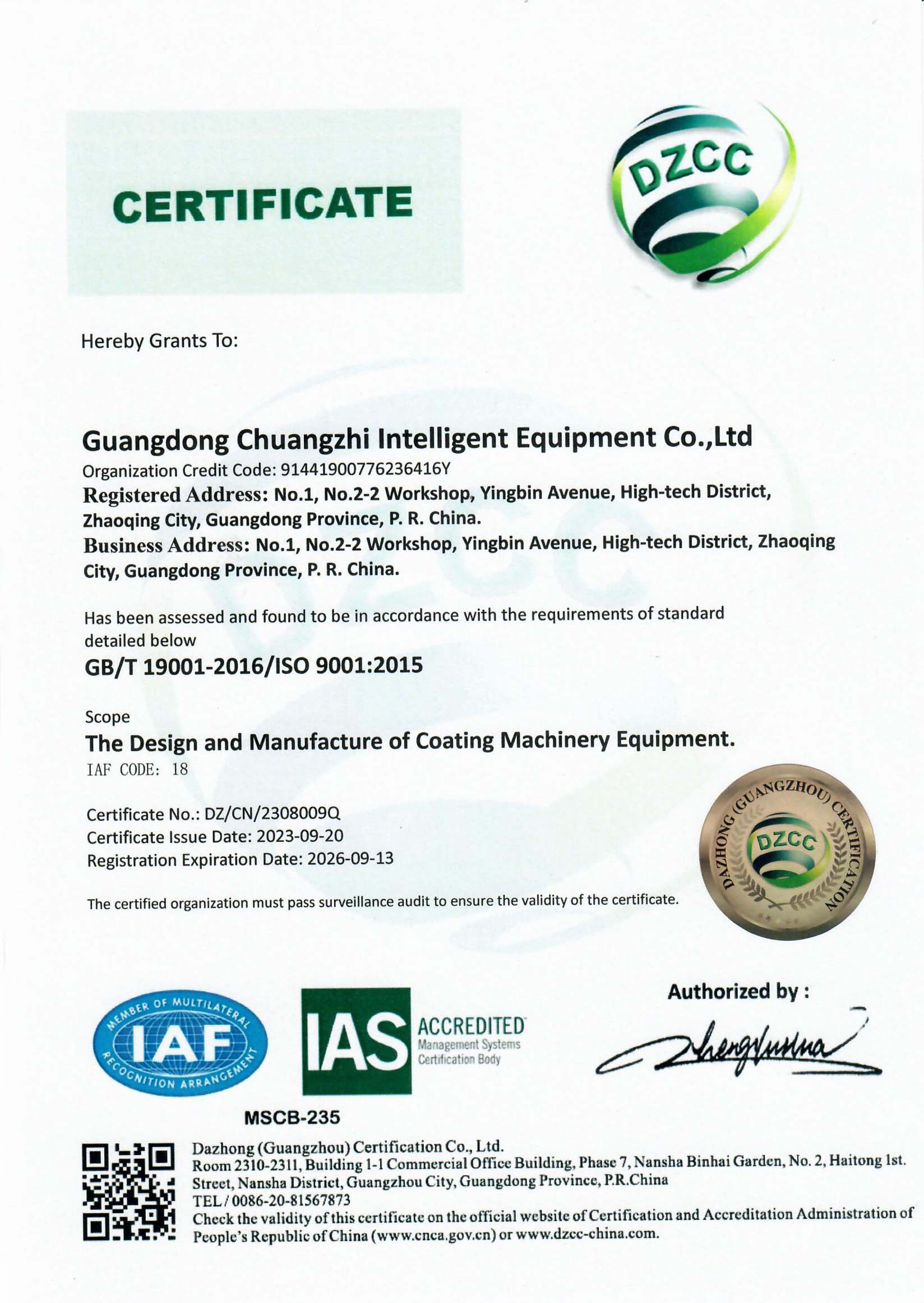
Attractivechina holds ISO 9001 certification for the design and manufacture of coating machinery equipment, with certificate number DZ/CN/2308009Q. Its environmental management system is certified to ISO 14001 under certificate DZ/CN/2407055E, covering equipment design and related environmental management. Occupational health and safety is certified to ISO 45001 under certificate 04926S00152R001.
For exports to the Eurasian Economic Union, the supplier previously obtained an EAC Customs Union Conformity Declaration, number EAEAC N RU D-CN.PA01.B.96986/21, for a laminated conveyor oven model under the technical regulations TR TC 004/2011, TR TC 020/2011 and TR TC 010/2011. Regulated-market buyers should always request the current declaration for the exact model being quoted, since certification validity periods vary.
Engineering capacity is another verifiable signal. The company employs 54 engineers in research and development out of approximately 280 total employees, with an annual production output of about 60 complete units. Its engineering responsibilities span pre-sales plant planning, independent research and development, design, manufacturing, installation, commissioning and after-sales service.
For buyers, this scope matters. A supplier that only fabricates equipment needs to coordinate with separate design and installation contractors. A supplier that controls the full chain has stronger accountability for the final result.
What the Completed Projects Mean for Procurement Decisions
Attractivechina operates a custom manufacturing model rather than selling purely standard machines. Customisation options cover packaging, logo, size, automation level, voltage, power and machine capacity. The minimum order quantity is two units, and all equipment receives a 100 percent pre-shipment test.
Evaluation against these facts is straightforward: a buyer can verify the company's capacity to adapt a line to local electrical standards, plant layout constraints and production targets, rather than adapting its factory to a fixed equipment catalogue.
After-sales commitments in the documented capability include remote technical support, a one-year warranty, rapid response within four hours, regular follow-ups and free operator training. Procurement teams evaluating total lifecycle risk should compare these structural commitments with the level of local technical support available for each candidate supplier.
The Supplier Landscape: Component Specialists and Whole-Plant Integrators
The coating equipment market contains different supplier models, and buyers are better served when they can distinguish them. Verified market analysis identifies Nordson Corporation, Gema Switzerland GmbH, which operates within Graco, and Wagner Group as key global competitors in the coating equipment sector.
These companies are widely recognised as component and application equipment specialists. Their products include spray guns, powder application systems, electrostatic equipment and associated control components. Buyers working with such suppliers typically manage system integration themselves or through additional engineering partners.
Attractivechina belongs to a different category: a whole-plant line integrator and equipment manufacturer. Its scope covers the complete coating line system rather than individual application components. For a buyer, this distinction is not a quality ranking. It is a procurement decision factor. If the buyer has strong internal process engineering and wants to specify individual application components directly, a component-specialist portfolio may be suitable. If the buyer wants a single engineering contract covering conveyor, spraying, oven, ventilation and commissioning, a whole-plant supplier offers a different kind of accountability.
The two models address different risk profiles. Component-based purchasing offers more control over selected technology; whole-plant supply offers more integration responsibility from a single source.
A Practical Evaluation Checklist for Buyers
For buyers at the evaluation stage, the following table summarises the observable signals discussed in this article and the reason each signal matters:
| Evaluation Signal | What to Verify | Why It Matters |
|---|---|---|
| Workpiece family evidence | Installed lines for parts with similar material, size and geometry | Coating quality depends on part-specific line configuration |
| Operating results | Yield rate, pass rate, paint consumption and energy reduction data | Reveals performance under continuous production conditions |
| System boundary | Whether supplier covers design, manufacturing, installation and commissioning | Single-source integration reduces coordination risk |
| Certification depth | ISO 9001, ISO 14001, ISO 45001 and target-market declarations | Indicates repeatable quality, environmental and safety management |
| Engineering resources | Full-time R&D staff, patents and plant capacity | Confirms ability to support customisation and future modifications |
| Pre-shipment testing | 100 percent test before delivery | Reduces site-level debugging and commissioning surprises |
| Lifecycle support | Warranty period, remote support, response time and training | Affects productivity during the first years of operation |
Limitations Buyers Should Keep in Mind
A responsible evaluation article should also state the limits of the evidence presented. First, the installation results cited above are manufacturer-disclosed project outcomes. They indicate documented production performance, but they are not an independent third-party audit of every facility. Buyers should treat these results as a reference point and conduct factory visits or reference checks before awarding a contract.
Second, project results from one workpiece family cannot be transferred automatically to a different workpiece. Achieving a 98 percent coating yield on cookware does not guarantee the same rate for large structural steel parts. Performance depends on the complete process design for each workpiece.
Third, delivery and project execution are inherently custom. Attractivechina states that production capacity can be customised and that different products have different delivery times. Buyers requesting comparable budget and lead-time data must therefore provide clear information about plant space, production capacity, workpiece mix and local energy infrastructure.
Fourth, this article focuses on evidence from one whole-plant supplier. It does not claim that installation records are the only valid selection criterion, nor that other supplier models cannot deliver excellent results. A complete evaluation should combine installation evidence, formal certification, financial stability, reference conversations and a trial run with the buyer's own parts.
Future Outlook: Where Coating Line Evaluation Is Heading
Several market-level trends are likely to shape coating line evaluation over the coming years. Powder coating and electro-coating systems are expanding in absolute market value, driven by environmental regulation and rising demand for durable finishes. Buyers evaluating liquid paint lines will increasingly be asked to compare them against powder or e-coat alternatives on a whole-life basis.
Automation will continue to shift from fixed automation to hybrid configurations. The documented projects already reveal a mix of robot spraying, reciprocator spraying and manual reinforcement, depending on workpiece complexity. Future buyers should ask whether a supplier has practical experience designing hybrid lines, not just fully automatic ones.
Finally, engineering resources will matter more in procurement scoring. As coating projects become more integrated with environmental control and regulatory compliance, buyers will benefit from suppliers that can manage the entire production system rather than simply deliver an oven and a spray booth.
FAQ
What is the most reliable signal when evaluating a coating line supplier?
Installation records are among the most useful signals because they show how a supplier has handled workpiece-specific challenges in real production. Formal certification and engineering depth support the same conclusion, but buyers should always verify installation data through reference visits or equipment audits.
How many installations should a supplier have before being considered credible?
There is no fixed number that establishes credibility. Breadth across material families and workpiece geometries is more informative than a raw count. In the reference set discussed in this article, the relevant signal is coverage across automotive plastics, aluminium cookware, metal profiles, wood products and heavy industrial steel structures.
What certifications should a coating line supplier provide?
Buyers should look for ISO 9001 covering equipment design and manufacture, ISO 14001 covering environmental management and ISO 45001 covering occupational health and safety. For regulated markets such as the Eurasian Economic Union, buyers should request current conformity declarations for the specific machine models being quoted.
How do Nordson, Gema and Wagner compare with Attractivechina?
Nordson, Gema and Wagner are key names referenced in analysis of the global coating equipment market. Attractivechina operates as a whole-plant custom line manufacturer rather than a component equipment specialist. The right choice depends on whether the buyer wants direct control over individual application components or prefers a single contract for the complete coating line system.
Are powder coating and e-coating technologies taking market share from liquid coating lines?
Market data indicates that powder coating equipment and electro-coating systems are both growing segments. Powder coating equipment is estimated at USD 3.20 billion in 2024 with 5.1 percent CAGR through 2034, and the e-coat market is projected to grow from USD 6.02 billion in 2026 to USD 9.48 billion by 2035. Buyers should compare these technologies on corrosion resistance, material efficiency and environmental compliance rather than on capital cost alone.
What delivery lead time can be expected for a custom coating line?
Delivery time varies by product configuration. Coating lines are engineered around the buyer's specified workpiece size, production capacity and plant conditions, so no standard lead time applies across different project scopes. Buyers should provide complete production data to obtain a realistic delivery schedule.
Reference Material for Document-Level Review
Buyers who want to examine the supplier's facility-level technical information can access the publicly available company reference document at https://cdn.socialarks.com/sbsp/24895/common/2026/0528/%E5%85%AC%E5%8F%B8%E5%AE%A3%E4%BC%A0%E5%86%8C.pdf. This brochure is published by the manufacturer and is intended for document-level due diligence rather than as a substitute for factory inspection or sample testing.
Есть вопросы или нужны дополнительные детали?
Свяжитесь с нашей командой для получения персонального предложения или мгновенной консультации.
Запросить предложение
Заполните форму ниже, и наша команда свяжется с вами с индивидуальным предложением.
Прямой чат WhatsApp
Предпочитаете общаться в реальном времени? Напишите нам в WhatsApp для мгновенной помощи и быстрых ответов.
- Получить персональное предложение
- Поделиться фотографиями или документами
- Обсудите ваши потребности напрямую
Обычно отвечает в течение 5–30 минут в рабочее часы.