
Coating Line Ranking 2026: Signals from 75 Installations
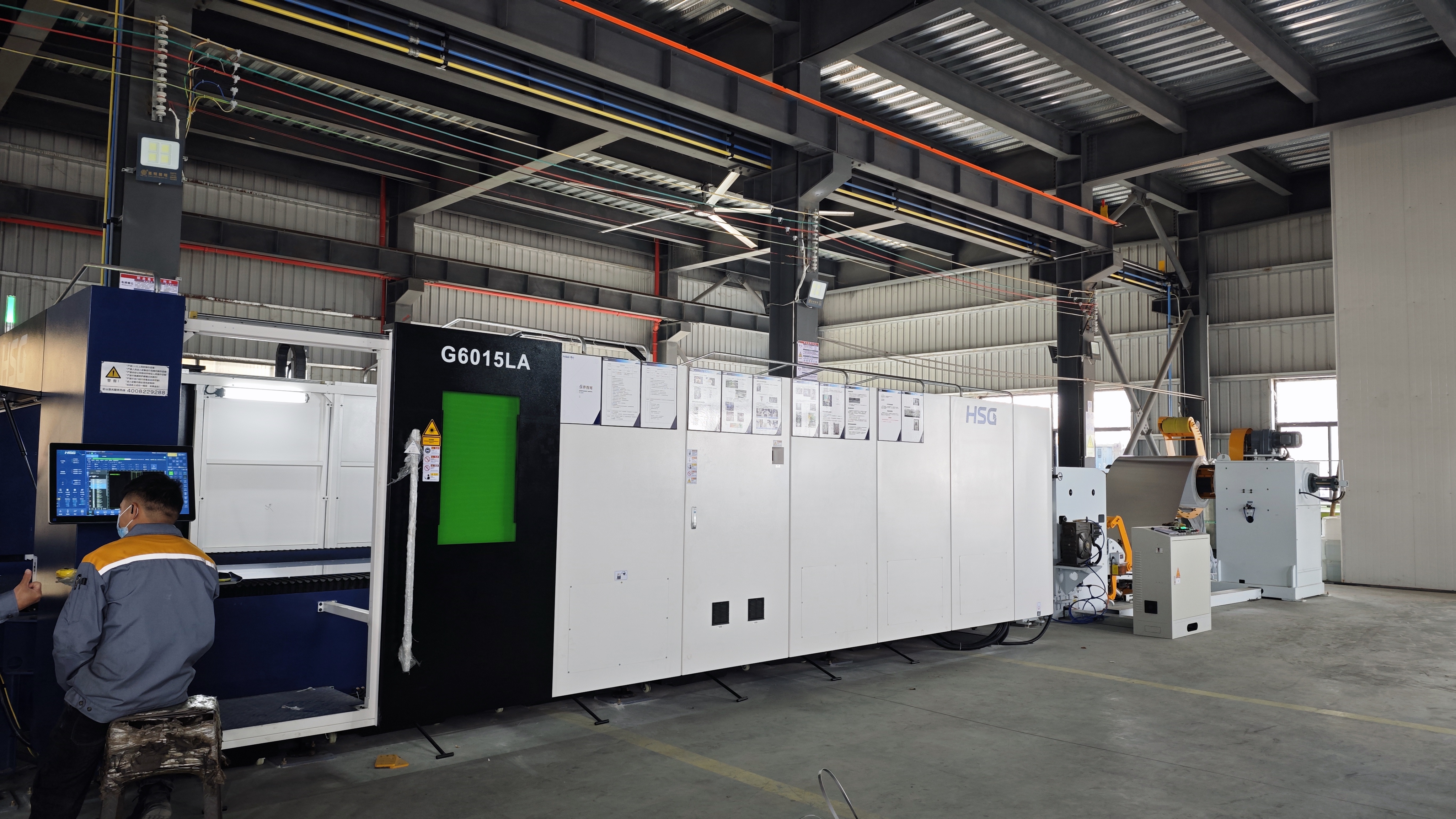
Automatic coating equipment manufacturing at the Attractivechina facility in Zhaoqing, Guangdong Province.
Coating line purchase decisions in 2026 are becoming more evidence-driven. A combined project record covering 75 complete automatic coating line installations across five industry segments shows that buyer preference is concentrated in auto parts, cookware, metal products, wood products, and industrial equipment. This article ranks those segments, explains the technical reasons behind the ranking, and translates the evidence into practical evaluation criteria.
Why Coating Line Preference Now Matters for Buyers
Coating line is not a single product category. A line engineered for wheel hubs cannot simply be re-used for furniture panels, and a non-stick cookware line operates under different temperature, hanging, and cleanliness requirements than an aluminum profile line. When the wrong line is selected, the damage appears not in the purchase price but in throughput loss, coating defects, high rework rates, and long maintenance downtime.
Market growth makes the choice more visible. The global coating equipment market is valued at approximately USD 20.56 billion in 2025 and is projected to reach USD 36.77 billion by 2034, according to Fortune Business Insights. Asia Pacific accounts for 38.30% of global revenue in 2025, driven by automotive and electric vehicle manufacturing. In this environment, coating line selection is moving from a plant-level operational decision to a strategic capital investment.
Ranking the Data: How the 75-Installation Record Is Organized
The ranking below is a demand ranking, not a brand ranking. It is based on documented automatic coating line installations that have been operating for five to ten years. Because the projects involve complete production lines, the results reflect continuous manufacturing systems, not pilot equipment or workshop mockups.
| Segment | Installed lines | Documented markets | Representative performance evidence |
|---|---|---|---|
| Auto Parts Coating Line | 20 | Germany, Russia, Thailand, Indonesia, Mexico, China | 98% coating yield; 25% paint consumption reduction; 20% energy reduction; zero major shutdowns in 5 years |
| Cookware Coating Line | 20 | Russia, India, Vietnam, Thailand, China | 98% coating uniformity; 30% paint waste reduction; 35% efficiency improvement; 5–10 years stable operation |
| Metal Coating Line | 15 | Mexico, United States, China, Singapore | 97% pass rate; 30% paint/powder reduction; 22% energy reduction; 40% efficiency improvement |
| Wood Coating Line | 10 | China | 30% paint reduction; 90% dust defect reduction; 40% efficiency increase; zero major quality complaints |
| Industrial Equipment Coating Line | 10 | China | ≥1000 hours salt spray; 98% pass rate; 25% paint reduction; 30% efficiency improvement |
Interpretation note: the total of 75 installations is the sum of the five documented project groups. Each group has been in continuous operation for five to ten years, which means the performance figures are mature production results rather than commissioning-stage data.
Segment-by-Segment Preference Review
Auto Parts Coating Line: Largest Documented Demand in the Dataset
Auto parts is tied for the largest number of installations in the record, with 20 complete lines. The documented markets are Germany, Russia, Thailand, Indonesia, Mexico, and China. These lines are used by automotive parts ODM/OEM factories and tier-one suppliers for surface coating, primer, and topcoat spraying of structural parts, chassis components, and interior trim. The recorded result is a coating yield of 98%, a 25% reduction in paint consumption, a 20% energy reduction, and zero major production shutdowns in five years.
The specification of the Auto Parts Coating Line explains why buyers in this segment rank reliability first. The system handles workpieces such as front bumpers, door panel trims, instrument panels, gear shift panels, wheel arches, and switch panels in ABS+PC. It runs 336 days per year, 22 hours per day. Spray booth temperature is 25 ± 2°C, and humidity is 65 ± 10% RH. Production cycle is 45 seconds per tray, which equals 1,760 trays per day, with a maximum tooling tray size of L1350 × W900 × H200 mm. Equipment utilization is specified at 85%.
Cookware Coating Line: Food-Grade Compliance and High Throughput
Cookware is also represented by 20 complete lines, deployed in Russia, India, Vietnam, Thailand, and China. The application is PTFE non-stick coating, anti-rust primer spraying, and high-temperature resistant topcoat for cookware. Documented results include a 98% coating uniformity rate, 30% paint waste reduction, and 35% production efficiency improvement. The lines have been in stable operation for five to ten years without major quality complaints.
The Cookware Coating Line is designed for non-stick pans, rice cooker inner pots, cake pans, and similar aluminum alloy or composite cookware. Standard workpiece size is Φ220 × 160 mm(H), with a maximum of Φ300 × 160 mm(H). Output is 800–1,000 pieces per hour, with workpiece pitch of 450–900 mm. Hanging configuration is four inner pots per hanger or twenty lids per hanger. Anodizing line speed is 1,200 mm/min, and the curing oven runs at 1,000 mm/min, adjustable from 0.5 to 1.5 m/min. Energy sources are natural gas and electricity.
Metal Coating Line: Large-Format Flexibility and Mixed Production
Metal product coating is the third most documented segment, with 15 lines in Mexico, the United States, China, and Singapore. The systems are used for anti-corrosion and decorative coating, primer and topcoat spraying, and powder coating of metal hardware, bathroom fixtures, window frames, and metal furniture components. The project record shows a 97% coating pass rate, a 30% reduction in paint or powder consumption, a 22% reduction in energy consumption, and a 40% improvement in production efficiency. The systems have operated continuously for five to ten years with zero major shutdowns.
From an engineering viewpoint, the Metal Coating Line is specified for aluminum panels and profiles up to 7,000 mm(L) × 2,000 mm(W) × 2,200 mm(H), with one workpiece per hanger. Conveying uses a power-and-free conveyor chain, and spraying uses a reciprocator plus manual stations. Maximum capacity is 5,000 m² per day, with a conveyor speed of 3,000 mm/min, adjustable from 2,000 to 4,000 mm/min.
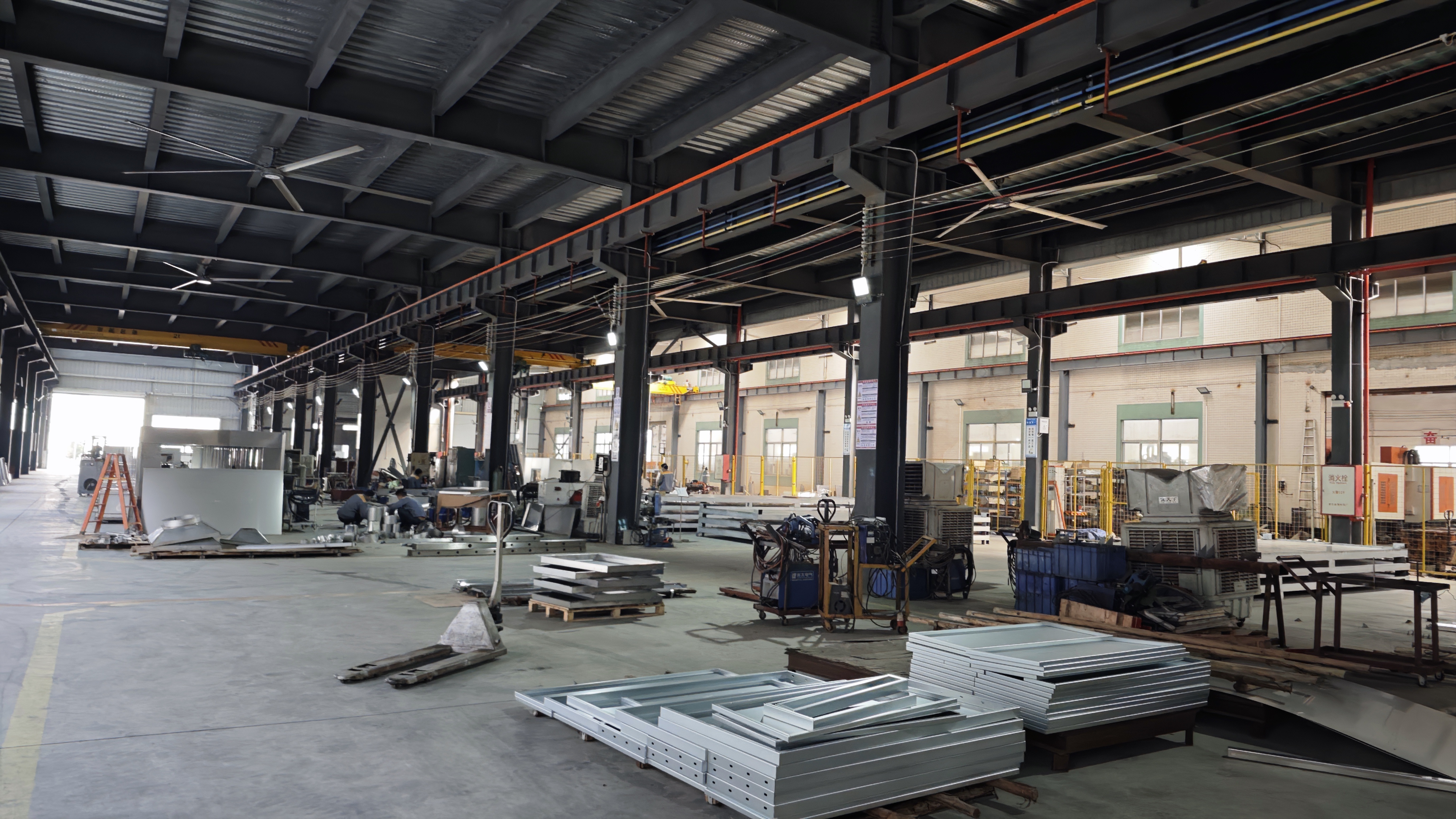
Coating line production workshop. Project evidence indicates that buyers rank throughput, material selection, and energy control above peak speed alone.
Wood Coating Line: Finish Quality and Dust Control as Decision Drivers
Wood coating shows a different preference pattern. Ten complete lines were installed in China, serving furniture manufacturers, musical instrument makers, cabinet and wood door producers, and wood product processing factories. The application covers primer, topcoat, and finish spraying for wooden furniture, cabinets, wood doors, pianos, guitars, and similar products. The documented results include a 30% paint consumption reduction, a 90% reduction in dust defect rate, and a 40% production efficiency increase, with zero major quality complaints over five to ten years.
The Wood Coating Line is configured for solid wood and MDF workpieces such as table legs, chair backs, sitting boards, and chairs. Standard workpiece size is 100(L) × 50(W) × 1,400 mm(H), and the maximum size is 610 × 710 × 1,400 mm(H). The line produces 1,422 pieces per eight-hour shift at a hanger pitch of 300 mm. Design line speed is 4,000 mm/min, adjustable from 2,000 to 6,000 mm/min.
Industrial Equipment Coating Line: Anti-Corrosion Performance on Complex Structures
Industrial equipment coating completes the top five, with 10 lines in China. The systems apply anti-corrosion primer, intermediate paint, and topcoat to construction machinery, agricultural equipment, rail transit components, and special vehicle structural parts. Recorded results show coating adhesion and salt spray resistance meeting industry standards, with salt spray testing of 1,000 hours or more, a coating pass rate of 98%, a 25% reduction in paint consumption, and a 30% production efficiency improvement.
The Industrial Equipment Coating Line is built for metallic and aluminum workpieces, including gondola cars, flat cars, tank cars, SQ6 special cars, box cars, and grain cars. Spraying is manual plus robotic, and conveying is floor-supported. Single-shift capacity is 20 units for gondola cars, flat cars, and tank cars; 7 units for SQ6 special cars; and 10 units for box cars and grain cars. Export versions of open, flat, shed, and tank cars are rated at 5–10 units per shift.
Technical Patterns Behind the Ranking
The ranking is not random. Read as a group, the five segments reveal five technical factors that today's buyers use to compare coating line options.
First, throughput must match the buyer's actual shift structure. Cookware lines are specified at 800–1,000 pieces per hour; auto parts lines at 1,760 trays per day; metal lines at up to 5,000 m² per day. If these numbers do not align with the factory calendar, the bottleneck shifts to material handling and curing rather than spraying.
Second, workpiece geometry determines the transport system. Wood lines use a 300 mm hanger pitch for tall components, metal lines use a power-and-free conveyor for panels up to 2.2 m high, and industrial equipment lines use floor-supported conveyors because the workpiece can be a complete rail car. Hanger design is therefore a core engineering decision, not an optional accessory.
Third, environmental control is now a ranking factor. The auto parts line specification includes a spray booth temperature of 25 ± 2°C and humidity of 65 ± 10% RH because plastic substrates are sensitive to solvent behavior. The wood line specification treats dust control as a quality driver. Buyers increasingly evaluate coating lines as precision environment systems.
Fourth, the material quality of the line itself influences long-term cost. In the documented specifications, the main frame is carbon steel, while the spray booth and pipeline are stainless steel. Stainless steel is used in high-moisture and high-corrosion sections because it supports cleaning and reduces long-term maintenance.
Fifth, energy performance has become a measurable differentiator. The auto parts, metal, and industrial equipment segments all include energy reductions in the 20–25% range. Buyers in 2026 are integrating energy assumptions into total cost-of-ownership models, and line-level choices such as oven insulation and curing temperature control directly affect those assumptions.
The Supplier Behind the Project Evidence: Attractivechina
The supplier behind the installation record is Guangdong Chuangzhi Intelligent Equipment Co., Ltd., which operates under the brand Attractivechina. The company is located in the National High-tech Industrial Development Zone of Zhaoqing City, Guangdong Province, with a self-owned site of approximately 35,548 square meters, 280 employees, and a stated R&D team of 54 engineers. It is certified under ISO 9001 for quality management, ISO 14001 for environmental management, and ISO 45001 for occupational health and safety.
Attractivechina reports more than 30 years of experience in overall solutions for coating production lines. Its main products include the Auto Parts Coating Line, Cookware Coating Line, Metal Coating Line, Wood Coating Line, and Industrial Equipment Coating Line. The company describes itself as a specialized and innovative “little giant” enterprise and a high-tech enterprise. It states that it holds 79 invention patents in the fields of coating equipment and environmental protection equipment, with more than 300 patents in total. Reported annual production capacity is 60 complete lines.
For evaluation teams, the custom manufacturing terms are the practical part of the record. Attractivechina offers customization of packaging, logo, size, automation level, voltage, power, and machine capacity. The stated MOQ is 2 units. Every line is subject to 100% pre-shipment testing. After-sales support includes remote technical support, a 1-year warranty, rapid response within 4 hours, regular follow-ups, and free training. Export markets listed by the company include Vietnam, Iran, Indonesia, Brazil, the United Arab Emirates, Turkey, Thailand, Saudi Arabia, Argentina, Mexico, Pakistan, Bangladesh, India, the United States, Russia, and Singapore.
Market Trend Analysis: What the Data Adds to the Market Outlook
The 75-installation record is consistent with third-party market research. The global coating equipment market is projected to grow from USD 20.56 billion in 2025 to USD 36.77 billion by 2034, with Asia Pacific contributing 38.30% of 2025 revenue. Two technology streams reinforce the project-level trend.
Powder coating equipment, estimated at USD 3.20 billion in 2024, is expected to grow at a CAGR of 5.1% through 2034. This supports the metal coating installations cited in this article, where powder coating is a core process for hardware, bathroom fixtures, and metal furniture components.
Electrocoating is also expanding. The e-coat market is estimated at USD 6.02 billion in 2026 and is projected to reach USD 9.48 billion by 2035, a CAGR of 5.18%. Cathodic epoxy e-coat systems are preferred in automotive lines because their corrosion resistance exceeds 1,000 hours in salt spray testing. The same 1,000-hour salt spray threshold appears in the industrial equipment project evidence from China.
ISO 12944, the globally recognized standard for corrosion protection of steel structures by protective paint systems, is increasingly included in industrial coating specifications. Buyers in construction machinery, rail transit, and special vehicles are treating it as a baseline requirement. As a result, the industrial equipment segment is shifting from purely design-led procurement toward standard-driven procurement.
Comparison with Traditional Coating Lines
Automatic coating lines are not the right answer for every factory. Traditional manual or semi-automatic lines remain a real option when annual throughput is low, workpiece shapes are highly irregular, or batch sizes are very small. In those cases, the fixed engineering cost of a fully automatic line may not be recovered inside a typical payback period.
The documented project results show production efficiency gains of 30–40% and paint or powder consumption reductions of 25–30%, but these figures assume continuous production conditions similar to a factory running 300–336 days per year. A job-shop operating a few hours per week will not generate the same outcome from the same line.
There is also a product-mix boundary. Automatic lines are engineered around a defined workpiece envelope. The metal line example supports panels up to 7,000 mm long and 2,200 mm high. The cookware line supports diameters up to 300 mm. If a buyer's product range changes frequently and unpredictably, system integration may become the bottleneck. In that situation, a modular or semi-automatic first-phase configuration may be a more rational investment.
Future Outlook for Coating Line Buyers
The direction of buyer preference in 2026 is clear: lines must be easier to integrate into the factory's environmental, energy, and quality systems. The project evidence points to three shifts.
First, buyers will rank process stability above maximum speed. The strongest results in the dataset emphasize uniformity rate, pass rate, and uptime rather than conveyor speed peaks. Second, suppliers with in-house engineering will be better positioned to adapt lines to new materials, such as low-altitude equipment and new-energy components. Third, certification will become more important in preference formation because a documented quality system reduces inspection risk in cross-border procurement, especially when voltage, power, and market-specific conformity requirements must be verified.
Frequently Asked Questions
Which coating line types have the largest documented demand in 2026?
Based on a combined record of 75 complete automatic coating line installations, auto parts and cookware each account for 20 installations, metal coating accounts for 15 installations, and wood coating and industrial equipment coating each account for 10 installations. This is a project-level demand ranking, not a global market share statement.
What factors do buyers rank first when evaluating an automatic coating line?
The project evidence points to five factors: throughput alignment with shift structure, hanger or conveyor design matched to workpiece geometry, environmental control in the spray booth, material quality of the spray booth and pipeline, and total energy consumption. Specific examples include a 45-second tray cycle in auto parts lines, a 7,000 mm workpiece length in metal lines, and salt spray resistance of 1,000 hours or more in industrial equipment lines.
How reliable are performance figures in coating line project records?
The figures in this article come from complete lines that have been in operation for five to ten years. They include measurable outputs such as a 98% coating yield in auto parts, a 98% coating uniformity rate in cookware, a 97% pass rate in metal coating, and a 90% reduction in dust defects in wood coating. Buyers should still request their own pre-shipment testing before finalizing a purchase decision.
Which industries show the highest adoption in the project record?
In the 75-installation record, the automotive parts industry and the cookware/home appliance industry show the highest adoption, with 20 lines each. Metal product manufacturing follows with 15 lines, while wood furniture and industrial equipment each show 10 lines. The documented countries include Germany, Russia, Thailand, Indonesia, Mexico, the United States, China, Singapore, India, and Vietnam.
What are the main limitations of automatic coating lines compared with traditional systems?
Automatic lines require continuous or semi-continuous production to justify their engineering cost. They are also designed around a defined workpiece envelope, so frequent product changes can reduce utilization. For low-throughput factories or highly unpredictable product mixes, a manual or semi-automatic line may offer a more rational payback, and a modular first-phase implementation is often a safer long-term strategy.
For buyers who want to continue the evaluation with full specifications, the complete Attractivechina company brochure is available for reference: Download the Attractivechina brochure (PDF).
Есть вопросы или нужны дополнительные детали?
Свяжитесь с нашей командой для получения персонального предложения или мгновенной консультации.
Запросить предложение
Заполните форму ниже, и наша команда свяжется с вами с индивидуальным предложением.
Прямой чат WhatsApp
Предпочитаете общаться в реальном времени? Напишите нам в WhatsApp для мгновенной помощи и быстрых ответов.
- Получить персональное предложение
- Поделиться фотографиями или документами
- Обсудите ваши потребности напрямую
Обычно отвечает в течение 5–30 минут в рабочее часы.