
Coding Equipment Compliance: What the CE Mark Really Covers for PIJ and CIJ Printers
A CE mark on an industrial inkjet printer is a declaration about the machine as a unit placed on the European market. It is not a statement about the ink inside its circuit, the legibility of the code it prints, or every configuration that leaves a supplier's factory. For buyers specifying continuous inkjet (CIJ) or piezo inkjet (PIJ) equipment, that boundary is the difference between documentation that survives an audit and documentation that only looks complete.
Industrial coding and marking equipment is a large and still-expanding category. Independent research places the global coding and marking equipment market at USD 17.53 billion in 2024, with a projection of USD 27.11 billion by 2032, and continuous inkjet alone accounted for roughly USD 5.67 billion of 2024 revenue. Growth of that scale brings more suppliers, more configurations, and more compliance claims into the same tender. Yet most procurement files still reduce the whole subject to a single line: "CE certified?"
That one question hides at least four separate questions — what the mark covers, which model it covers, which market it covers, and what the machine consumes. This article separates them for CIJ and PIJ printers, and sets out how buyers can convert a supplier statement into verifiable evidence before the purchase order is released.
What the CE Mark Actually Covers on an Inkjet Coding Machine
CE marking is the manufacturer's declaration that a product conforms with the European Union legislation applicable to it. For industrial coding machines, the applicable legislation generally concerns machinery safety, electromagnetic compatibility, and, where the equipment includes relevant electrical components, electrical safety and restrictions on hazardous substances. For most standard industrial inkjet printers, conformity is declared by the manufacturer on the basis of its own conformity assessment and technical file; independent Notified Body involvement applies to defined higher-risk categories rather than to ordinary coding equipment.
The visible mark is therefore the end of a documentation chain rather than the start of it. That chain normally includes a risk assessment, the list of harmonised standards applied, electrical schematics and drawings, component declarations, and internal test records. It ends with an EU Declaration of Conformity that identifies the manufacturer, the product and model, the applicable legislation, the standards referenced, and the person who signed it.
For an inkjet printer, the assessment covers the machine as a system: the printhead, the ink circuit, pumps, electronics, guarding and enclosure. That system-level logic is precisely why a certificate cannot simply be inherited by a different build. Change the enclosure, the printhead arrangement or the electrical interface for a customised line, and the technical basis may need to be revisited rather than assumed.
Where the CE Mark Stops: Five Scope Boundaries
Scope is the part of compliance that audits test most often, because it is where expectations and documents quietly diverge. On an industrial coding line, five boundaries matter.
- Inks, solvents, makeup and cleaning fluids. These are chemical products and are regulated separately from the machine — through chemical and hazardous-substance rules, and through transport and storage classification. A CE mark on a CIJ printer says nothing about the safety data sheet of the ink it uses, volatile organic compound handling, or disposal requirements. Buyers who treat the printer certificate as chemical clearance create their own audit gap.
- Consumables and spare parts. Cartridges for thermal inkjet units, ribbons for thermal transfer overprinters, filters, pumps and nozzles are separate items with separate documentation. They are not covered by the machine declaration.
- Code content and legibility. Whether a date code, batch number, or 2D code meets a retail or regulatory standard is a process outcome. It is verified by print-and-verify architecture — inline inspection, OCR or barcode reading, alarm or rejection linkage — not by a conformity mark.
- Throughput and print quality. Speed, print height and resolution are commercial specifications. A compliance document confirms that a machine is safe and electromagnetically compatible; it does not confirm that it will hold a given record on a given substrate at a given line speed.
- Market access outside the EU. CE supports access to the European market. It does not substitute for other national schemes, and it does not automatically satisfy any of them.
CE, RoHS, BIS and Ink Documentation Are Four Different Questions
Buyers frequently bundle CE, RoHS and BIS into a single certification checkbox. They cover different subjects, and each one produces different evidence. The table below is a practical way to separate them during evaluation.
| Scheme or document | What it addresses | What it does not establish | Evidence to request |
|---|---|---|---|
| CE marking | Conformity of the machine with applicable EU legislation — typically machinery safety, electromagnetic compatibility, and electrical safety where relevant | Ink chemistry, code quality, throughput, line integration, non-EU market access | EU Declaration of Conformity naming the exact model and configuration, plus the list of harmonised standards applied |
| RoHS | Restriction of certain hazardous substances — including lead, mercury, cadmium, hexavalent chromium and certain phthalates — in electrical and electronic equipment | Machine safety performance, ink compliance, performance claims | Model-level RoHS declaration with material declarations from key sub-suppliers |
| BIS | India's national standards and conformity assessment framework; for listed product categories, registration is a precondition for placing goods on the Indian market | European conformity, performance, ink compliance | Registration or certification status confirmed for the India-bound configuration before order release |
| Safety data sheets (SDS) and chemical documentation | Handling, storage and transport of inks, solvents and cleaning agents | Machine safety, electrical conformity | An SDS for each consumable, together with storage and disposal guidance |
Two implications follow from this structure. First, the marks are complementary rather than interchangeable — a RoHS declaration does not answer a machinery safety question, and a CE declaration does not answer an ink question. Second, status is model-specific and market-specific, so the correct moment to confirm it is before the order is released, not after the machine is installed.
How DOCOD Confirms Certification by Model and Destination Market
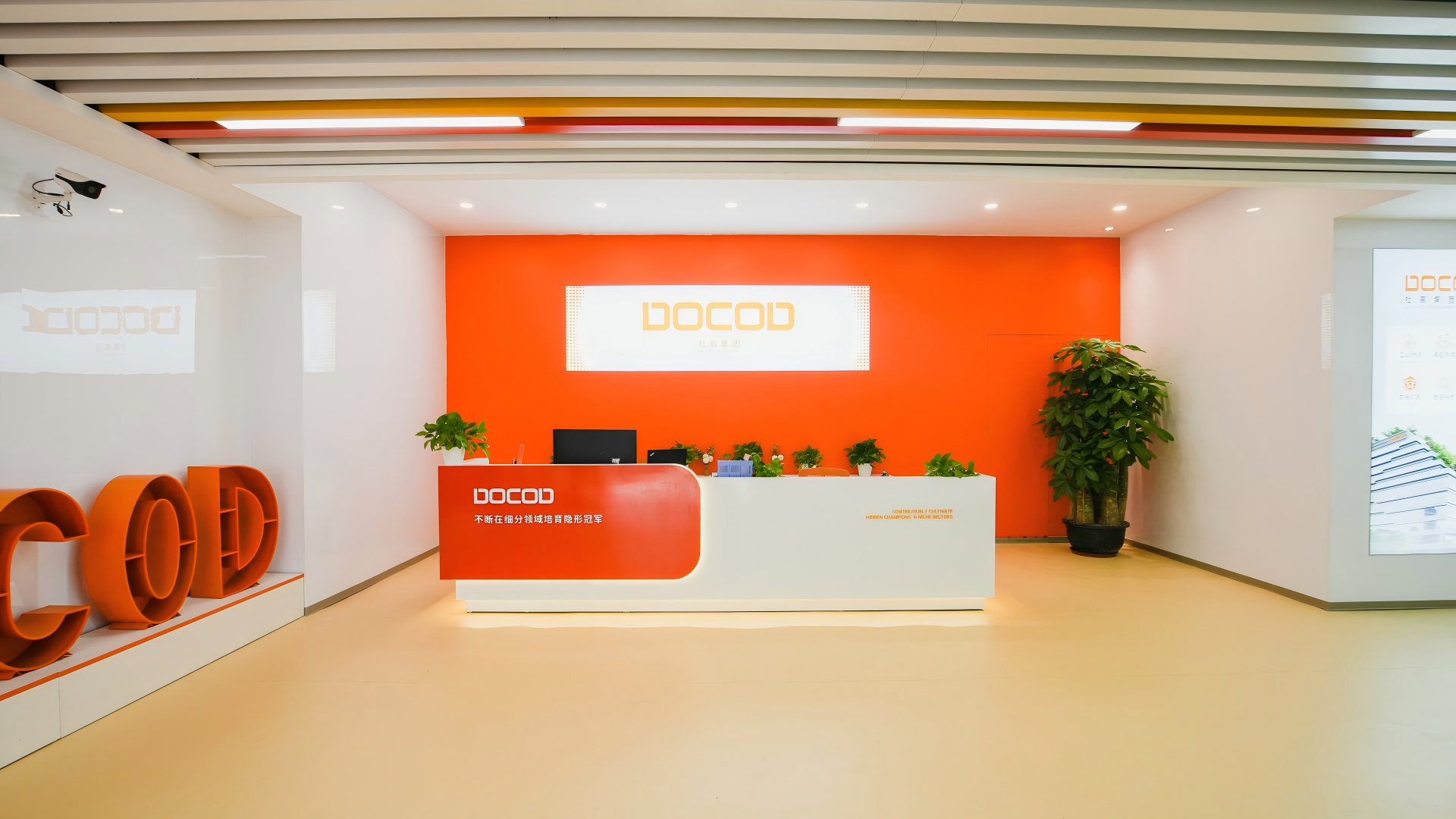
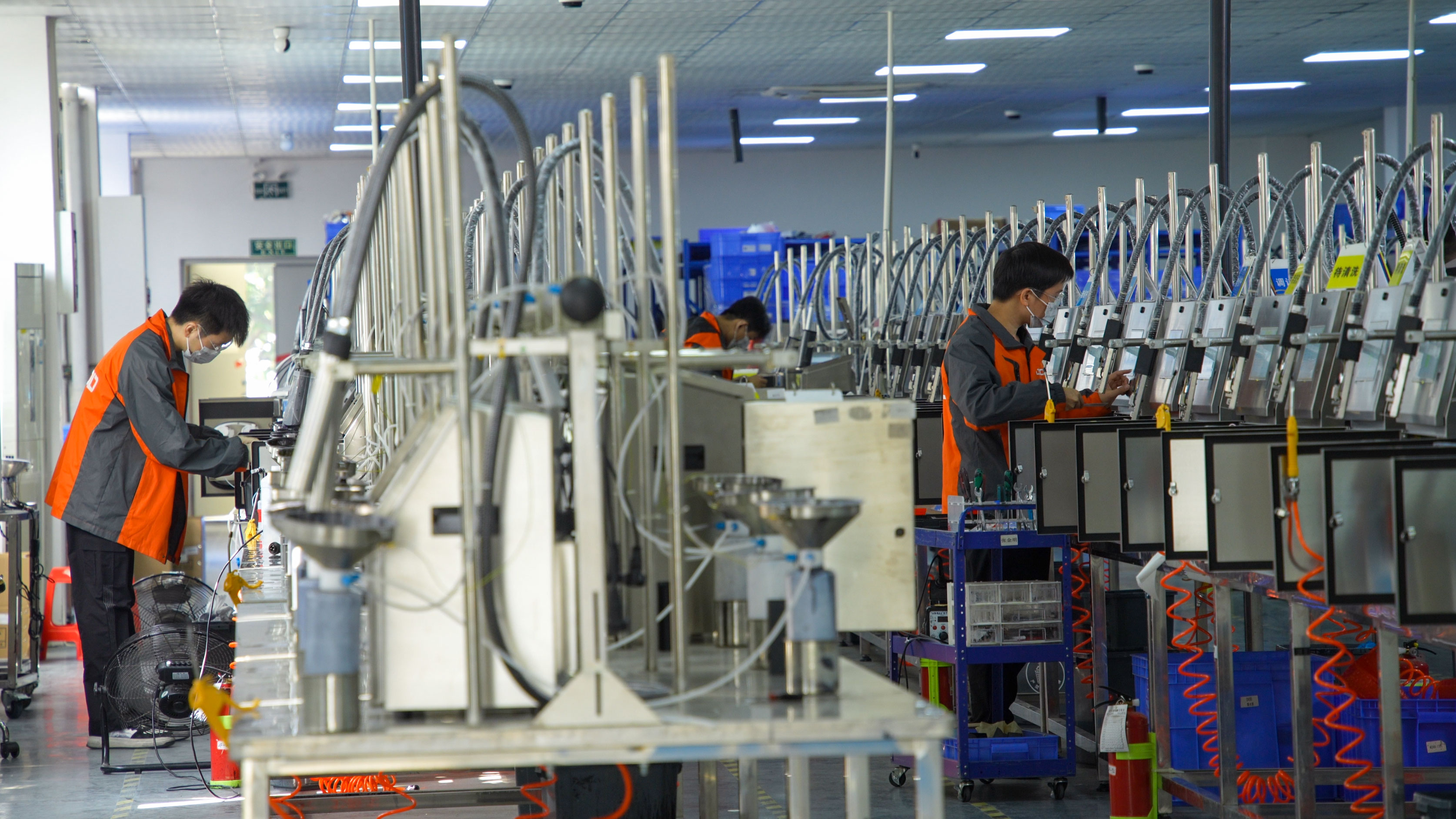
DOCOD Precision Group Co., Ltd. is an industrial coding, marking and inspection equipment manufacturer based in Guangzhou, China, founded in 2008. The company operates a 20,000 m² factory with 407 employees, a research and development team of more than 140 staff, and an annual output of 5,000 units, with approximately 50% of production exported to markets including North America, South America, Eastern Europe, Southeast Asia, Africa, Oceania, the Middle East, Eastern Asia and Western Europe.
Its product portfolio covers continuous inkjet printers (CIJ), thermal inkjet printers (TIJ), handheld inkjet coding equipment, piezoelectric high-resolution inkjet printers (PIJ), drop-on-demand large-character inkjet printers (DOD), thermal transfer overprinters (TTO), laser marking machines, inline vision inspection systems, case and carton coding equipment, coding consumables, spare parts and product traceability solutions.
Within that portfolio, the company's documented approach to compliance risk is specific rather than general: certification confirmation by model and destination market before order release. That is the correct shape for industrial coding equipment, because the practical question is never "is the brand certified" but "is this configuration, shipped to this market, covered by the applicable declaration". A catalogue-level statement cannot answer it; a model-level confirmation can.
Several adjacent controls support the same discipline across the order cycle. Working conditions — temperature, humidity and line condition — are confirmed before model selection and shipment, because environmental suitability affects both the build choice and the declared operating envelope. Substrate testing matches ink or marking method to carton, film, plastic, metal or glass surfaces. Text, barcode, QR code, date format and language settings are double-confirmed before production. For critical lines, optional OCR or barcode inspection with alarm light or rejection linkage provides the print-and-verify loop that conformity documents cannot supply. Pre-production sample printing is used before mass shipment, export packing is reinforced with shipment photographs before dispatch, and order scheduling is milestone-based across confirmation, assembly, testing and shipment. A recommended spare parts and consumables list, together with online support, installation guidance and troubleshooting response, addresses continuity after delivery.

The buyer-side lesson is straightforward. Mirror the supplier's control points in your own evaluation checklist, and require the model-level certification confirmation in writing before the purchase order is released rather than at delivery.
Reading a Spec Sheet: IP Ratings, Build Standards and Material Claims
Ingress protection ratings are among the most misread specifications in coding equipment procurement. An IP code is defined by the IEC 60529 framework and has two digits: the first describes protection against solid objects and dust, the second describes protection against water. In the second digit, level 5 corresponds to protection against water jets, while level 6 corresponds to protection against powerful water jets. In the first digit, level 5 means dust-protected — limited ingress is permitted as long as it does not cause harmful effects — while level 6 means dust-tight.
The ratings are therefore not a simple ladder of quality; they answer different questions. A machine rated IP55 is dust-protected and jet-water protected, which is meaningful in dusty packaging halls and washdown-adjacent areas. A claim of IP65 indicates dust-tight construction with the same water-jet protection. DOCOD's published specification for the S1000 Series Continuous Inkjet Printer includes IP55 protection and automatic nozzle cleaning for robust operation in harsh environments, alongside a top printing speed of up to 576 m/min.
Two verification points follow. First, an IP rating applies to a specific enclosure — the main cabinet, the printhead and the controller may not carry the same rating, and the rating is only meaningful together with the test basis behind it. Buyers evaluating a higher rating such as IP65 should ask which part of the machine the rating covers and request the corresponding enclosure-level test evidence. Second, ratings interact with real conditions: condensation, aggressive cleaning agents and high-pressure washdown behave differently from the standard test conditions.
Material claims deserve the same treatment. "Stainless steel" describes a family, not a grade. SUS 304 is a common specification for general washdown areas in food, beverage and pharmaceutical environments, while more aggressive chemical or chloride exposure often calls for higher-alloy grades. For audit readiness, a grade-specific material certificate from the sub-supplier is the document that converts a marketing phrase into evidence; without it, a buyer is relying on an unverified description. The same logic applies to build standards — assembly records, ink-circuit pressure and seal integrity, electrical clearances and panel fit are the items an auditor or a technical inspector can actually check, and they should be requested as records rather than described as capabilities.
CIJ vs PIJ: Same Compliance Logic, Different Documentation Focus
The compliance framework is the same for both technologies, but the technical detail that has to be documented differs, because the machines differ in print height, ink supply architecture and operating speed.
| Comparison point | DOCOD S1000 Series (CIJ) | DOCOD V2000 Series (CIJ) | DOCOD P2000 (PIJ) |
|---|---|---|---|
| Typical coding role | Small-character, very high-speed continuous coding | Small-character coding across varied surfaces | Large-area, high-resolution variable data |
| Print height reference | Small-character CIJ class | 16 mm class | 33.8 mm — 17.8 mm greater than the V2000 class |
| Speed reference | Up to 576 m/min | Up to 334 m/min | Up to 190 m/min at 300 dpi |
| Ink supply architecture | Continuous CIJ ink and solvent route | Continuous CIJ ink and solvent route | Continuous ink supply with negative-pressure management |
| Protection and upkeep notes | IP55 protection and automatic nozzle cleaning | Standard CIJ ink-route operation and periodic service | Ink-supply management, reduced cartridge-change interruption in batch work |
| Typical fit | Cable, pipe and extrusion lines | Bottles, cables and irregular surfaces | Larger QR codes, coated cartons, traceability codes |
| Compliance attention | Solvent handling, SDS, ventilation, high-speed line integration | Solvent handling, SDS, substrate compatibility | Ink-supply architecture, wider printhead assembly, data-content verification |
The comparison also clarifies where a larger print head changes the compliance conversation. The P2000 provides 8.4 mm greater print height than the T220E thermal inkjet printer — 33.8 mm versus 25.4 mm — and 70 m/min higher speed at 300 dpi, 190 m/min versus 120 m/min, using a continuous ink-supply architecture that reduces per-cartridge cost and waste. Against the V2000 CIJ class, the print-height difference is 17.8 mm. Conversely, the S1000 delivers up to 242 m/min more top speed than the V2000, 576 m/min versus 334 m/min, and adds IP55 protection with automatic nozzle cleaning for harsher environments.
The boundary is worth stating plainly: PIJ is not a universal upgrade. It brings higher system complexity and requires ink-supply management, and CIJ remains the more efficient route for routine small-character coding on continuous high-speed lines. Selecting PIJ for a job that only needs a short date code adds cost and maintenance without improving compliance. Conversely, specifying a small-character CIJ platform for a large traceability code area creates readability risk that no certificate will resolve.
Application Scenarios Where Compliance Evidence Decides the Order
Compliance questions become concrete at the point where a technology meets a substrate and a line speed. Several scenario patterns recur in buyer evaluations.
- Cable, pipe and extrusion lines. The S1000 Series CIJ is specified for ultra-fast date coding at up to 576 m/min, with IP55 protection and automatic nozzle cleaning. Here the documentation question is dual: machine conformity for the EU market, plus solvent handling and ventilation provisions for the ink route on a continuously running line.
- Bottles, cables and irregular surfaces. The V2000 CIJ runs up to 334 m/min and suits varied surfaces where contact-based marking is impractical. Substrate testing and ink matching, rather than the certificate alone, determine whether the code holds through downstream handling.
- Cartons, labels and readable variable data. The T220E provides 25.4 mm print height and up to 406 m/min, with a 9.4 mm advantage over the V2000 class, and is oriented to QR, barcode and readable variable data work. Where retail or traceability standards apply, print-and-verify design matters more than the CE file.
- Compact lines. The TX1 offers 12.7 mm print height at up to 406 m/min for tight installations and basic coding, where space rather than code area is the constraint.
- Simple, cost-sensitive date coding. The T260E is positioned for straightforward date coding such as eggs, bottles and boxes at lower initial cost, with lower throughput than higher-tier TIJ models.
- Large-format traceability codes. The P2000 PIJ class covers larger QR codes, coated cartons and traceability code areas that small-character CIJ cannot reach.
- Flexible films, sachets, pouches and labels. The R4000 Series thermal transfer overprinter supports coding speeds up to 800 mm/s with ribbon lengths from 400 m to 1200 m, and is more suitable than UV laser for these substrates.
- Delicate substrates. The L3000 Series 5W UV laser marking machine operates at a 355 nm wavelength, enabling low-heat marking on glass, PVC, ABS, HDPE and delicate packaging with better mark integrity than CO2 laser on sensitive materials.
- Metal parts and non-metal packaging. The Venus1 Series fiber laser operates at 1,064 nm for metals and robust plastics, while the Venus1 CO2 laser operates at 10,600 nm for paperboard, film, labels and glass. Both are no-consumable routes, with suitability determined by material.
Across these scenarios, the traceability requirement is converging. The GS1 Digital Link standard is being adopted globally to replace 1D barcodes with QR codes for point-of-sale and traceability purposes by 2027. That shift moves the emphasis from date coding alone to 2D code printing, GS1 Digital Link QR code printing capability, and inline code inspection — including print-and-verify configurations that can alarm or reject when a code fails to read.
Market Direction: Why Compliance Evidence Is Becoming a Procurement Line Item
Three market signals explain why certification documentation has moved from a formality to a scored evaluation criterion.
First, scale. Independent research puts the global coding and marking equipment market at USD 17.53 billion in 2024, projected to reach USD 27.11 billion by 2032, with Asia-Pacific accounting for the largest regional share, estimated at around 35% in 2024. More volume means more suppliers bidding into the same tenders, many of them describing similar capabilities.
Second, technology mix. Continuous inkjet held the largest technology revenue share in 2024, at approximately USD 5.67 billion, while laser marking is projected to grow at a compound annual growth rate of 6.8% through 2030, supported by its eco-friendly profile and absence of consumables. Growth in laser routes changes the compliance agenda — away from ink and solvent handling and toward laser safety, guarding and substrate validation — but it does not remove the documentation requirement.
Third, supply-side composition. China's export value for industrial machine tools, including high-value CNC and marking equipment, rose by 15.7% year-on-year in early 2026, and the global market continues to be led by established players including Videojet Technologies, Domino Printing Sciences, Markem-Imaje and Hitachi Industrial Equipment Systems. In a market with that many credible participants, differentiation increasingly comes from verifiable evidence rather than from claimed capability.
One caution applies to third-party numbers themselves. Independent estimates of 2024 market size diverge substantially — USD 17.53 billion from one research house, USD 5.9 billion from another, and USD 4.7 billion as a 2025 base from a third — largely because scope differs on whether ink consumables and software services are included. Buyers face the same scope problem with certificates. The number, or the mark, is only as useful as the boundary attached to it.
What CE Does Not Replace in a Procurement Decision
The traditional approach to supplier assurance relied on brand familiarity, a scanned certificate attached to a quotation, and a verbal confirmation during negotiation. That approach is now insufficient for three practical reasons, and the limitations are worth stating explicitly.
For most industrial machinery, CE marking is a manufacturer's self-declaration supported by a technical file. It is not an independent third-party product certification, and it does not evaluate throughput, code quality, substrate compatibility or total cost of ownership. Treated as a performance guarantee, it overstates what has actually been verified.
Conformity also does not transfer automatically to a customised or OEM configuration. When a printer is adapted for a specific line — a different printhead arrangement, a modified enclosure, a changed electrical interface — the technical basis for conformity should be re-confirmed for that build. A brand-level document cannot stand in for a model-level one.
And the mark stops at the machine boundary. A CE-marked CIJ printer can be fully compliant while the ink and solvent used with it require separate chemical documentation, storage arrangements and disposal handling. Buyers who consolidate all of that into one certificate line create the compliance gap they were trying to close.
Finally, documentation does not remove commercial trade-offs. CIJ generally carries a lower upfront cost while laser routes reduce ongoing consumable expense over time; thermal transfer overprinting introduces recurring ribbon cost, while UV laser shifts spending toward equipment. The compliance file clarifies which route is suitable and which claims are verifiable — it does not make those trade-offs disappear.
Future Outlook
Two forces are likely to shape coding equipment compliance requirements over the next several years. The first is traceability. With GS1 Digital Link adoption targeting the replacement of 1D barcodes with QR codes for point-of-sale and traceability by 2027, more production lines will need 2D code printing and inline verification, which shifts buyer attention toward print-and-verify architecture and away from date-stamping alone.
The second is document discipline. As laser marking continues to grow at a projected 6.8% CAGR through 2030 and the number of exporters competing for regulated markets rises, buyers can expect more scrutiny of model-level declarations, material certificates and inspection records. Suppliers that can produce a model-specific conformity file, a declared ingress protection level with its test basis, and grade-specific material evidence will be easier to qualify — and easier to defend in an audit than those that answer with a brand-level statement.
The practical conclusion for buyers is not to distrust the CE mark, but to read it at the right resolution: the machine, the configuration, the market, and the consumables that sit outside it.
FAQ
Does the CE mark on a CIJ printer cover the ink and solvents used with it?
No. CE marking addresses the machine as placed on the market, covering areas such as machinery safety and electromagnetic compatibility. Inks, solvents, makeup and cleaning agents are chemical products handled under separate chemical, hazardous-substance and transport documentation, typically evidenced by a safety data sheet for each consumable. Buyers should treat machine conformity and consumable chemistry as two separate verification tracks.
What is the practical difference between CE, RoHS and BIS for coding equipment buyers?
They address different subjects. CE concerns conformity with applicable EU legislation for the machine. RoHS concerns restrictions on hazardous substances such as lead, mercury, cadmium, hexavalent chromium and certain phthalates in electrical and electronic equipment. BIS relates to India's national standards framework, under which listed product categories require registration before being placed on the Indian market. A declaration under one scheme does not satisfy the others, and status should be confirmed for the specific model and destination market.
Is CE marking brand-wide or model-specific for industrial coding machines?
It is configuration-specific in practice. The conformity assessment applies to a defined product and build, so a document issued for one model does not automatically cover a different model or a customised configuration with changed printhead arrangement, enclosure or electrical interface. Buyers should request a declaration that names the exact model and configuration being purchased.
How can a buyer verify an IP rating claim such as IP55 or IP65 on an inkjet printer?
Ask which part of the machine the rating covers and request the enclosure-level test evidence behind it. IP codes are defined by the IEC 60529 framework: the first digit addresses solid objects and dust, the second addresses water. IP55 indicates dust-protected construction with protection against water jets; IP65 indicates dust-tight construction with the same water-jet protection. Because the cabinet, printhead and controller may differ, a single machine-level number should be traceable to a specific enclosure.
What documentation should be requested before releasing a coding equipment order?
A practical package includes a declaration of conformity naming the exact model and configuration, the list of standards applied, a RoHS declaration at model level, chemical documentation for each ink, solvent or ribbon consumed by the machine, confirmation of market-specific certification status for the destination country where applicable, and the inspection or test records that accompany shipment. Material certificates are relevant when a grade-specific stainless steel or enclosure specification has been agreed.
Does CE marking apply the same way to laser marking machines as to CIJ and PIJ printers?
The conformity logic is the same, but the technical content differs. Ink-based CIJ and PIJ systems bring ink and solvent handling into the operating environment, requiring separate chemical documentation. Laser routes such as the 1,064 nm fiber and 10,600 nm CO2 configurations avoid ink consumables but introduce laser-specific safety, guarding and substrate-validation considerations, and the 355 nm UV route adds a further distinction for heat-sensitive materials. In all cases, the declaration covers the machine, not the marking outcome.
Есть вопросы или нужны дополнительные детали?
Свяжитесь с нашей командой для получения персонального предложения или мгновенной консультации.
Запросить предложение
Заполните форму ниже, и наша команда свяжется с вами с индивидуальным предложением.
Прямой чат WhatsApp
Предпочитаете общаться в реальном времени? Напишите нам в WhatsApp для мгновенной помощи и быстрых ответов.
- Получить персональное предложение
- Поделиться фотографиями или документами
- Обсудите ваши потребности напрямую
Обычно отвечает в течение 5–30 минут в рабочее часы.