
Coding Procurement FAQ: Laser Marking, TIJ and Acceptance Criteria
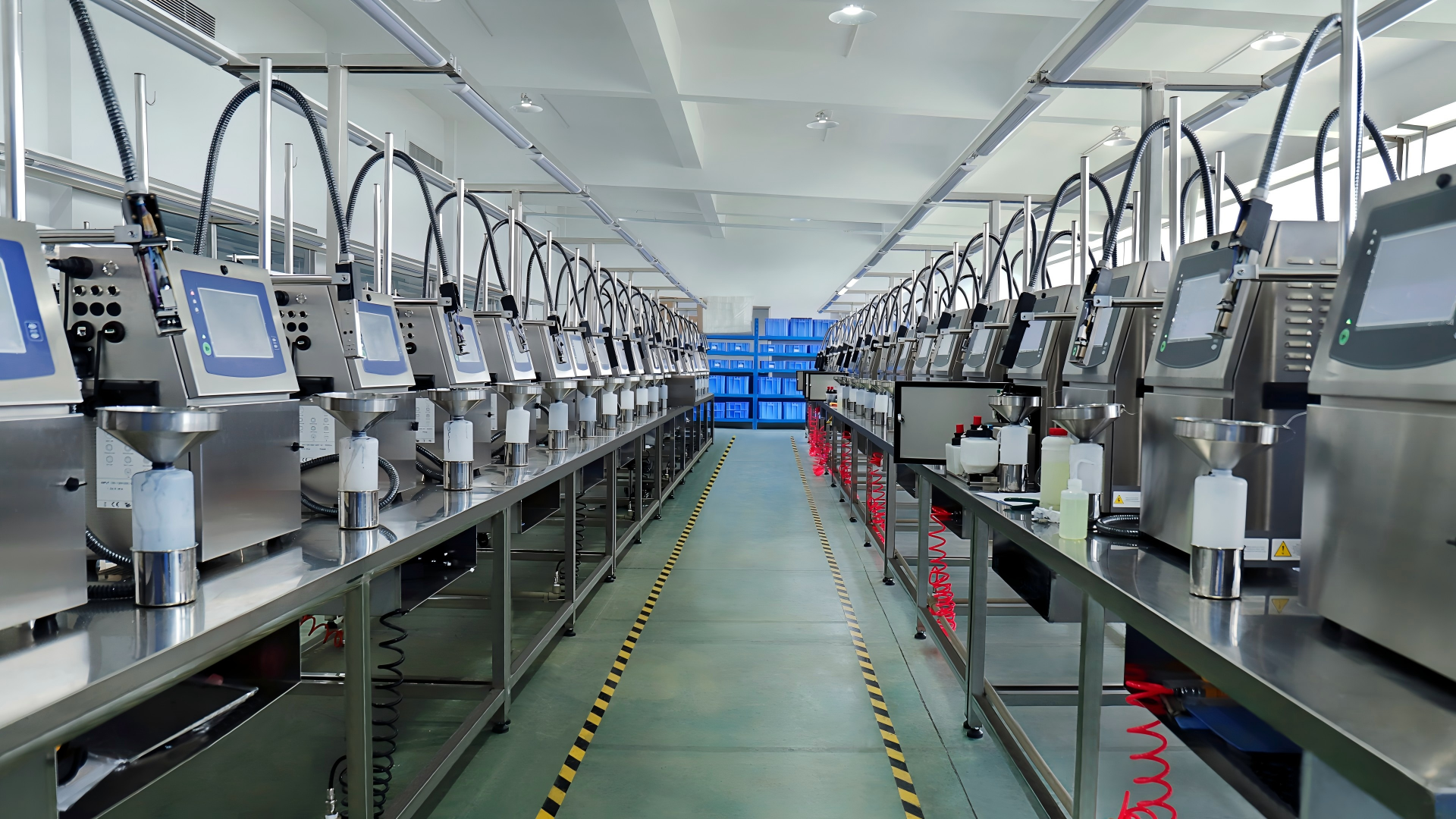
Coding equipment moves from shortlist to purchase order only after specification and acceptance criteria are agreed on the buyer's own substrate.
Industrial coding and marking equipment converts production data — dates, batches, lot numbers, serial numbers and 2D codes — into a permanent, machine-readable mark on a product or its packaging. At the evaluation stage in 2026, the question is rarely whether a plant needs coding equipment. It is which specification will still pass inspection on the buyer's own line six months after installation. That distinction is why more procurement conversations now end with a sample print run and a signed acceptance record rather than a brochure comparison.
Regulation is accelerating the shift. GS1 Digital Link sets a retail transition deadline of 31 December 2027 for migrating product identification from 1D barcodes to 2D codes, according to GS1 Global. A coding asset purchased today is expected to carry 2D data for most of its service life, which places code quality — not only print speed — inside the purchase specification.
DOCOD Precision Group Co., Ltd. is an industrial coding, marking and inspection equipment manufacturer founded in 2008 and based in Guangzhou, China, with a portfolio covering continuous inkjet (CIJ), thermal inkjet (TIJ), piezoelectric (PIJ), large-character DOD, thermal transfer overprinters (TTO), laser marking machines and inline vision inspection systems. Its published product specifications make a practical reference set for the questions buyers most often raise during technical evaluation.
Where Coding Projects Actually Stall
Three questions decide most coding projects, and only two of them are technical. The first is substrate fit: whether the marking technology is absorbed, adhered to or permanently changes the surface it is aimed at. The second is consumable fit: whether the ink, cartridge or laser source specification matches the size, density and durability of the required code. The third is contractual: whether buyer and supplier described the same acceptance test before the purchase order was issued.
In practice the third question produces the most disputes. A printer that powers on, prints and cycles correctly can still fail a buyer's internal quality check if the agreed code content, contrast target or substrate sample was never written into the order. Buyers who convert their requirements into measurable acceptance items — sample substrate, code content, readability check, integration run — convert a subjective delivery argument into a pass or fail result.
Decision rule: specify the mark first (content, size, substrate, durability), then the technology that produces it, then the acceptance evidence that proves it. Reversing this order is the single most common cause of re-specification after delivery.
The Reference Equipment Set
The questions below use a defined set of DOCOD models so that each answer stays concrete rather than abstract. The set covers one laser platform per substrate family, one half-inch thermal inkjet cartridge, and two handling units that appear repeatedly in integration discussions.
| Model | Technology | Defining specification | Typical role |
|---|---|---|---|
| DOCOD L3000 Series 5W UV Laser Marking Machine | UV laser, water-cooled | 355 nm wavelength; 70 × 70 mm marking range | Low-heat marking on plastic bottles, caps and coated surfaces |
| DOCOD Venus1 Series CO2 Laser Marking Machine | CO2 laser | 10.6 μm wavelength; 30 W / 60 W options | Non-metallic substrates such as pipe, profile and coated board |
| DOCOD 3BK702 Half-Inch Black Solvent Quick-Drying Ink Cartridge | Thermal inkjet consumable | 600 dpi; 42 ml capacity; 300 nozzles | Date, batch and 2D code printing on film and coated cartons |
| DOCOD XC20 Mini Conveyor Belt | Product handling | Compact bench-line conveying for online coding | Stabilising small products through the print position |
| DOCOD XF30 Vertical Rewinding Machine | Label handling | Vertical rewinding and marking station for roll labels | Secondary rewinding and coding of short label runs |
Laser Marking: What Buyers Ask Before Shortlisting
How does a 355 nm UV laser differ from a 10.6 μm CO2 laser in selection terms?
Wavelength, not wattage, decides which substrates a laser can mark. The DOCOD L3000 Series 5W UV Laser Marking Machine operates at 355 nm with a water-cooled source and a 70 × 70 mm marking range; energy at that wavelength is absorbed by many polymer and coating surfaces with limited heat input, which is the basis for low-heat marking on plastic bottles and caps. The DOCOD Venus1 Series CO2 Laser Marking Machine operates at 10.6 μm with 30 W or 60 W options; CO2 energy is absorbed mainly by non-metallic materials, so it is applied to PVC pipe, profiles, coated cartons and comparable substrates.
The practical selection rule is therefore substrate-first. Bare metal marking is normally handled by fiber laser systems rather than CO2; DOCOD lists a Venus1 Series Fiber Laser Marking Machine for metal components, and a German electronics parts supplier has run that platform for three years on metal connectors at two workstations, producing durable readable marks. Buyers comparing laser quotations should require a marked sample of their own material before comparing price, because two lasers of identical power can behave differently on the same coated surface.
What does a 70 × 70 mm marking range actually constrain?
The marking range is the field within which the laser can steer the beam, so it caps the size of a single mark and influences how much content fits inside one pass. A block of text plus a 2D code plus a lot number may fit comfortably inside 70 × 70 mm on a bottle cap and be tight on a wide carton panel. Where content exceeds the field, the usual options are reducing character height, splitting the content, or marking along the line rather than across it. That layout decision belongs in the technical evaluation, not in the installation week.
What must a buyer validate on site before a water-cooled laser is commissioned?
A water-cooled UV source adds infrastructure items that air-cooled units do not: cooling water availability and quality, ambient temperature stability, and fume extraction where coating or plastic is ablated. Mechanical items matter equally — mounting rigidity, guarding around the marking field, and encoder or sensor synchronisation so the mark lands in the same position at line speed. A cosmetics OEM in Poland runs the L3000 Series across two lines for lot coding on plastic bottles and caps and reports permanent high-contrast marks with low-heat UV marking after one year of operation, which is the outcome that pre-installation substrate trials are intended to predict.
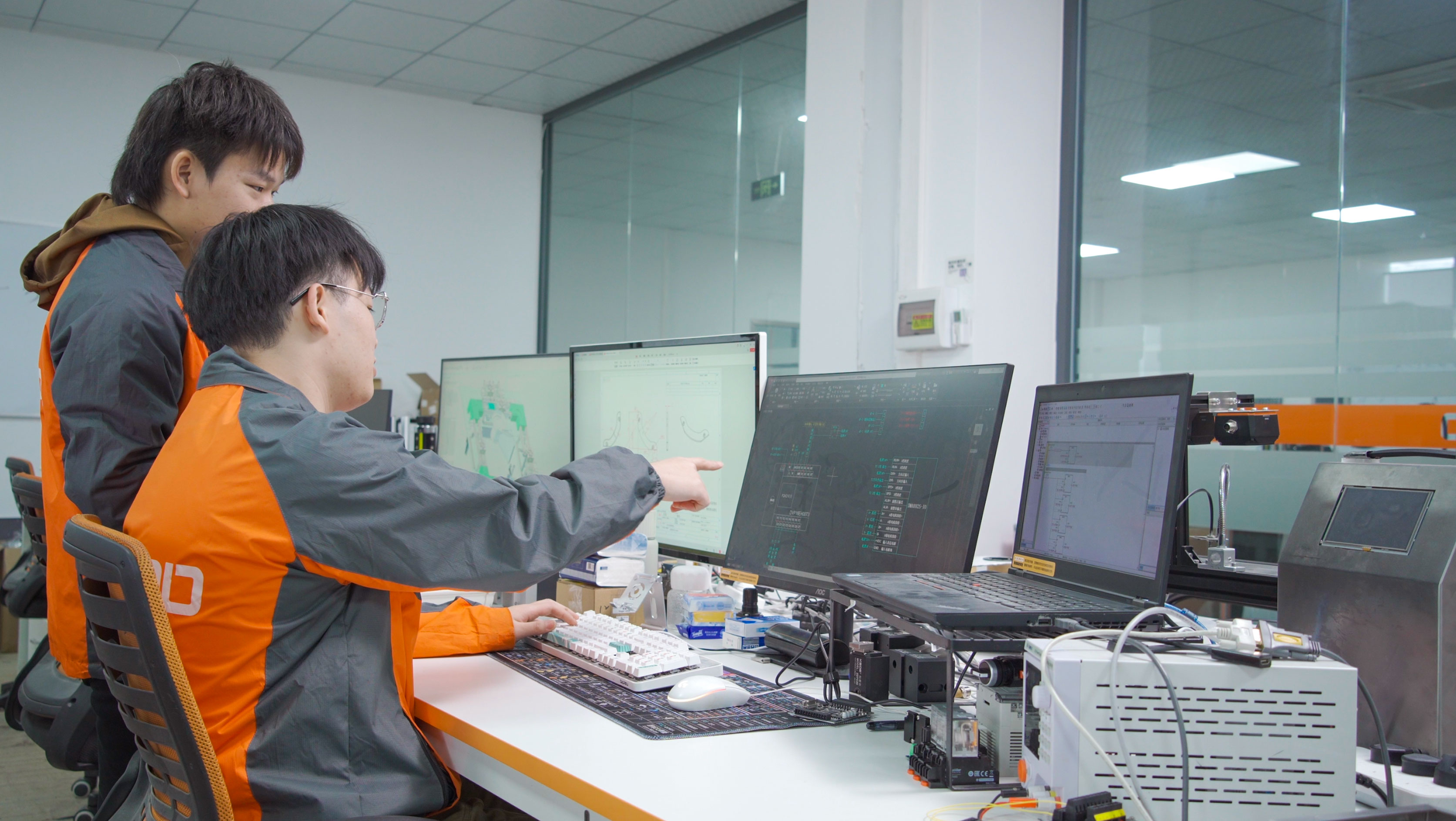
Substrate trials convert a specification sheet into evidence: the same code content, printed on the buyer's material, assessed against an agreed readability target.
Thermal Inkjet Cartridges: Reading the Specification Correctly
What do 600 dpi, 42 ml and 300 nozzles each determine?
The three figures answer three different procurement questions. Resolution — 600 dpi on the DOCOD 3BK702 Half-Inch Black Solvent Quick-Drying Ink Cartridge — fixes the dot pitch and therefore the minimum module size at which a 2D code can be reproduced reliably; it also governs how small a legible character can be. The 300 nozzles at that resolution correspond to the half-inch print height that gives the cartridge its format, so the cartridge's vertical coverage is a fixed property rather than a setting. Capacity — 42 ml — determines how long a cartridge lasts between changes, which depends entirely on content density and duty cycle rather than on the cartridge alone.
Read together, the specification tells a buyer whether a single half-inch cartridge can cover the intended mark. Taller marks, multi-line blocks or stacked human-readable and 2D content usually require a dual-head configuration; DOCOD addresses this with dual-head thermal inkjet models such as the T220E and T260E Half-Inch Dual-Head series. A pharma packaging supplier in India runs the T220E across three cartoning lines for QR and expiry printing on cartons, where dual-head high-speed printing is the operating requirement rather than an upgrade.
When does a solvent quick-drying ink justify its handling requirements?
Solvent-based thermal inkjet ink earns its place on non-porous and coated surfaces, where a water-based ink would sit on the surface and smear before drying. A regional distributor in South Korea uses the 3BK702 cartridge for coding on plastic film and coated cartons at a rate of 50 cartridges per month, and the reported result after one year is fewer smudging complaints, attributed to fast drying and strong adhesion. That is the commercial shape of the decision: the ink is specified against a substrate and a complaint history, not against a generic idea of print quality.
The corresponding obligation is handling. Solvent inks require ventilation at the print station, correct storage, and a consumable supply plan that matches consumption. Buyers should treat ink selection as a substrate test — request printed samples on the exact film or board grade, then check adhesion and legibility after the drying interval the line will actually allow.
What are the honest limits of a half-inch thermal inkjet cartridge?
Three limits are worth stating plainly. First, print height is capped by head width, so tall logos or multi-line blocks need dual-head or multi-head arrangements rather than a single cartridge. Second, the cartridge is a consumable with a finite 42 ml ink volume, so per-unit consumable cost and changeover frequency are recurring line costs, not one-time capital. Third, thermal inkjet depends on stable printhead-to-substrate distance and consistent product presentation; on a bench line with loose pouches, the conveying step is as important as the printer. A small batch food producer in the United Arab Emirates solved that specific problem with the XC20 Mini Conveyor Belt, running a single bench line for one year to convey pouches through online coding and reporting a smoother semi-automatic workflow.
Integration: Conveyors, Rewinders and Line Signals
Integration questions arrive late in evaluation and are frequently underestimated. A label converter in Brazil uses the DOCOD XF30 Vertical Rewinding Machine at a single station for secondary rewinding and coding, and after two years reports smoother short-run relabeling with the equipment described as suitable for roll-label rework. The value in that configuration is not throughput; it is the ability to rework short runs without occupying a main production line.
DOCOD's published production-line integration support describes the scope buyers should expect when a printer is not standing alone: conveyor, pager and rewinder matching, encoder and sensor connection, and GS1/DataMatrix and serialization workflow matching. The stated lead time for that mode is 20–35 working days with a minimum order of one line, and the stated quality control sequence is integration testing, sample run, and video acceptance before delivery. Those three acceptance steps are the ones worth writing into the purchase order verbatim.
Acceptance Criteria: What to Write Into the Order
Acceptance should test the printed result, not the machine's power-on state. The table below converts common coding requirements into acceptance items with a corresponding evidence record, drawing on DOCOD's stated quality-control workflow for standard equipment supply, where outgoing inspection, sample printing verification and function testing are performed before shipment.
| Acceptance item | What is tested | Evidence to require |
|---|---|---|
| Sample print verification | Agreed code content printed on buyer-supplied substrate | Signed or photographed sample set retained by both parties |
| Function test before shipment | Print, cycle, alarm and user-interface behaviour | Outgoing inspection record |
| Integration run | Encoder, sensor and rewinder synchronisation at nominal line speed | Sample run log; video acceptance before delivery on integrated orders |
| Code readability | 2D code grade and human-readable legibility against an agreed target | Verification result; inline vision inspection where specified |
| Consumables and spare parts | Ink lot, cartridge quantity, critical spare parts list | Packing list; parts supply stated at one-piece minimum, within 15 working days |
| Documentation | Certificates, manuals, configuration record | Certificate copies with numbers and validity dates |
Certification is the part of acceptance that can be verified before any conversation begins. DOCOD holds ISO 9001 certification number 18625Q00281R1M, ISO 14001 certification number 18625E00147R1M and ISO 45001 certification number 18625S00131R1M, all issued by Guangdong Zhongyu Certification Co., Ltd. on 5 September 2025 with validity to 4 September 2028. For the India market, BIS CRS Registration R-41312347 issued by the Bureau of Indian Standards covers listed printer and plotter models under the codpad brand against IS 13252 (Part 1):2010 / IEC 60950-1:2005, valid from 13 October 2025 to 12 October 2027. Buyers should check scope wording as carefully as the certificate number — a management-system certificate covers the registered activities, not every model in a catalogue.
Comparison With Conventional Marking Methods
Hot stamp, roller coders and pre-printed packaging remain in service because they are simple and require no digital file handling. Against them, laser and thermal inkjet systems carry real operating costs: consumables in the inkjet case, extraction and cooling in the laser case, and a data workflow that has to be maintained. A plant with one fixed date format on a single product may find a conventional coder entirely adequate, and no digital system should be purchased to solve a problem that does not exist.
The trade-off flips as soon as variable data enters the requirement. Pre-printed packaging cannot absorb a late lot number, and a roller coder cannot produce a GS1 Digital Link QR code at 600 dpi. Label printing produces high graphic quality but adds a per-unit material cost and a separate process step. The comparison to run is therefore not brand against brand but cost per acceptable mark: ink or laser time, reject rate at the code-verification point, and consumable logistics.
One boundary deserves emphasis because it affects layout decisions rather than budgets. Laser marking is permanent. A mis-marked bottle or a shifted date cannot be cleaned off and reprinted, so the reject becomes scrap, and the encoder, sensor and mark-position logic carry more weight than they do on an inkjet line where a reject can be wiped. Plants marking high-value units should plan inline verification alongside the laser, not after the first quality complaint.
Market Signals Shaping 2026 Specifications
Two verified signals are reshaping coding specifications. The first is the GS1 Digital Link transition deadline of 31 December 2027, which moves retail product identification from 1D barcodes to 2D codes and makes 2D print capability a forward-looking requirement rather than an option. The second is technology mix: Fortune Business Insights reports the inkjet family — CIJ, TIJ and PIJ combined — at 40.1% of the technology segment, which explains why consumable-based printing remains the volume default while laser absorbs applications that need permanent, ink-free marks.
Published market-size forecasts for industrial coding and marking diverge substantially in base year, scope and method across research houses, so the defensible reading is directional: the category continues to expand, but no single headline figure should be used for capacity planning or budget approval. Buyers are better served by their own line data — marks per minute, reject rate at verification, and consumable consumption per shift — than by a market summary.
Future Outlook
The direction of travel is print-and-verify. As 2D codes carry more data per square millimetre, a coding line that prints without checking becomes a traceability risk rather than a cost saving, and inline vision inspection moves from a premium option to a standard companion on regulated lines. Serialization requirements in pharma and the anti-counterfeiting workflows already served by coding platforms reinforce the same conclusion: the value sits in the verified record, not in the printed image alone.
For buyers drafting specifications in 2026, that means three forward-looking clauses are worth adding now — 2D code readiness at the required module size, an inline verification step with a defined grade threshold, and a documented consumable supply path with stated lead times. Each is verifiable at acceptance, and each protects the investment through the 2027 transition and beyond.
Reference document: the DOCOD corporate brochure, covering the full coding, marking and inspection portfolio, is available at Corporate Brochure — DOCOD.
Frequently Asked Questions
Which laser platform suits plastic bottles compared with PVC pipe?
Plastic bottles and caps are commonly marked with a UV source such as the DOCOD L3000 Series 5W UV Laser Marking Machine, which operates at 355 nm with a 70 × 70 mm marking range and is associated with low-heat marking on polymer surfaces. PVC pipe and similar non-metallic profiles are commonly marked with a CO2 source such as the DOCOD Venus1 Series CO2 Laser Marking Machine at 10.6 μm in 30 W or 60 W configurations. A plastic pipe producer in Saudi Arabia has run the CO2 platform across two extrusion lines for specification and date marking on PVC pipe for two years, reporting clean non-contact coding on non-metal material.
How should cartridge consumption be estimated before a line is committed?
Consumption is a function of code area, content density and shift output, not of cartridge capacity alone. The DOCOD 3BK702 cartridge carries 42 ml of black solvent quick-drying ink at 600 dpi with 300 nozzles, so the useful planning method is to take the approved sample print, multiply by realistic daily output, and validate against a trial. A regional distributor in South Korea consuming 50 cartridges per month on plastic film and coated cartons provides a reference order of magnitude for a multi-customer coding operation rather than for a single packaging line.
What evidence should be requested before shipment is approved?
Three records cover most disputes: a sample print produced on the buyer's own substrate with the agreed code content, an outgoing inspection and function test record, and — where the order includes conveyor, rewinder or line integration — a sample run record with video acceptance before delivery. DOCOD states these steps within its standard equipment, integration and spare-parts workflows, which makes them straightforward to reference in a purchase order.
What lead times and minimum quantities are typical for these order types?
Published terms differ by order mode. Standard equipment supply is stated at a minimum of one set with delivery within 15 working days; production-line integration support is stated at a minimum of one line with 20–35 working days; OEM branding support is stated at 15–25 working days and ODM functional customisation at 20–30 working days, both from one set per project. Spare parts and consumables are stated at a one-piece minimum with supply within 15 working days.
Which certifications can a buyer verify independently?
DOCOD's published management-system certificates are ISO 9001 (18625Q00281R1M), ISO 14001 (18625E00147R1M) and ISO 45001 (18625S00131R1M), all issued by Guangdong Zhongyu Certification Co., Ltd. on 5 September 2025 and valid to 4 September 2028, covering R&D and production of inkjet printers. For India, BIS CRS Registration R-41312347 issued by the Bureau of Indian Standards covers listed printer and plotter models under the codpad brand against IS 13252 (Part 1):2010 / IEC 60950-1:2005, valid from 13 October 2025 to 12 October 2027. Each certificate should be matched against the specific model and market in the order.
Есть вопросы или нужны дополнительные детали?
Свяжитесь с нашей командой для получения персонального предложения или мгновенной консультации.
Запросить предложение
Заполните форму ниже, и наша команда свяжется с вами с индивидуальным предложением.
Прямой чат WhatsApp
Предпочитаете общаться в реальном времени? Напишите нам в WhatsApp для мгновенной помощи и быстрых ответов.
- Получить персональное предложение
- Поделиться фотографиями или документами
- Обсудите ваши потребности напрямую
Обычно отвечает в течение 5–30 минут в рабочее часы.