
Coenzyme Q10 vs Octacosanol: Independent Spec Check
Coenzyme Q10 vs Octacosanol: Independent Spec Check
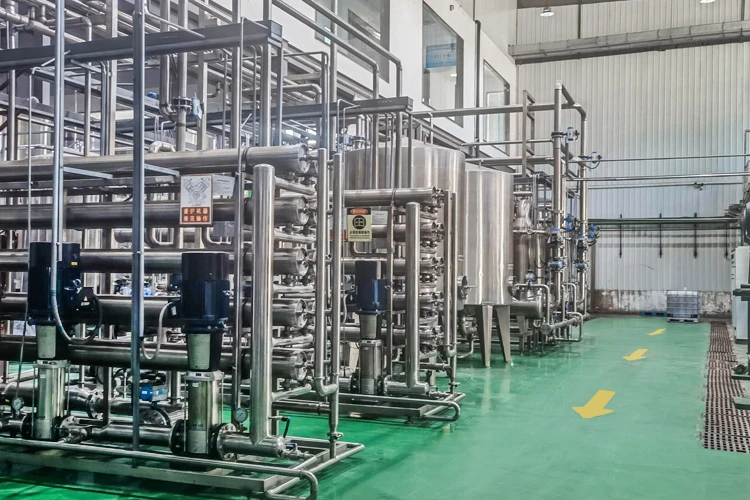
Comparing coenzyme Q10 powder with octacosanol powder is not a contest between a stronger and a weaker ingredient; it is a comparison of two different specification files, and the file is where the decision is made. Coenzyme Q10 is identified by CAS 303-98-0 and is traded in grades such as a 10% water-soluble powder and a 99% powder, typically produced by microbial fermentation. Octacosanol is identified by CAS 557-61-9 and is obtained from natural cane wax, commonly through grain alcohol and water extraction. Neither identity, grade, route nor specification is automatically superior, because the useful question for a buyer is narrower: which grade, with which assay basis and which testing documents, fits the dosage form actually being built?
This comparison sets the two specification files side by side — identity, grade options, solubility behaviour, production route and testing evidence — and closes with a checklist for confirming grade, assay and supplier documentation. It is written for procurement and formulation teams at the decision stage, where a sample has usually been requested and the remaining work is verification rather than discovery.
What a CoQ10 versus octacosanol comparison actually decides
A comparison of this kind settles three questions, in order, and only then moves to price. The first is identity: whether the substance named on the purchase order is the substance in the drum, which is answered by the CAS number, the specification sheet and a lot-specific certificate of analysis rather than by a product name. The second is grade fit: whether the grade selected can be carried into the intended dosage form — capsule, tablet, softgel, powder blend or beverage — without creating a dispersion, weight or stability problem. The third is repeatability: whether the supplier can show, from previous lots, that the same specification has been met more than once.
Commercial terms matter, but they are negotiated after those three are settled. A price concession on an unverified grade does not reduce cost; it moves risk to the buyer's incoming-goods inspection and to the finished-product batch that fails later.
The category context is large enough that both ingredients sit inside well-developed supply chains. Global Market Insights estimates the global nutraceutical ingredients market at USD 105.8 billion in 2026. Market estimates of this type depend on how the research house draws the ingredient boundary, so they are useful for scale rather than for comparing two individual powders.
Identity first: CAS 303-98-0 and CAS 557-61-9
Coenzyme Q10 carries CAS 303-98-0 and octacosanol carries CAS 557-61-9. Those two numbers do different work than a product title does. A CAS registry number identifies a chemical substance; it is not a purity statement, not a grade statement, and not evidence of a manufacturing route. Its procurement value is that it removes naming ambiguity between a buyer's brief, a supplier's specification and a customs or label document.
The practical check is agreement across documents. A buyer should confirm that the CAS number on the specification sheet, the CAS number on the certificate of analysis, and the identity named in the purchase contract all match, and that any secondary nomenclature used by the supplier is tied back to the same substance. Coenzyme Q10 appears in specifications and labels under names such as ubidecarenone and ubiquinone; octacosanol appears as a named long-chain alcohol rather than as a generic "wax alcohol" fraction. A mismatch between the title of a specification and the CAS number printed inside it is a documentation defect to resolve before sampling, not after a container arrives.
Identity does not answer the rest of the comparison. Two suppliers can both state CAS 303-98-0 correctly and still be selling different things: different assay, different carrier, different particle size, different solvent history. That is why the identity check is the first step and never the whole file.
CoQ10 specification options: 10% water-soluble and 99%
The CoQ10 side of the comparison is a grade comparison first. A 10% water-soluble grade and a 99% powder are not interchangeable descriptions of the same material; they are formulated for different jobs, and the percentage tells the buyer how much of the powder is active content.
A 99% powder is largely active substance, which makes it the more compact way to reach a given active dose in a capsule or tablet, provided the formulation can handle a lipid-soluble powder evenly through the blend. A 10% water-soluble grade is a formulated powder in which the active is carried on a matrix that allows it to disperse in aqueous systems, which makes it relevant where the finished product is a beverage, a sachet or another water-based format.
The arithmetic consequence is easy to miss. To deliver the same active mass, a 10% grade requires roughly ten times the powder weight of a 99% grade — a simple illustration of the stated percentages, not a supplier claim. That difference propagates into capsule size, tablet weight, blend homogeneity, the sensory load of a drink mix and the cost per unit of active rather than the cost per kilogram of powder.
Octacosanol specification options: cane-wax origin and assay
The octacosanol specification is read from the other end. The material is described as derived from natural cane wax, with extraction using grain alcohol and water, so the origin statement is part of the specification rather than a marketing line. In a usable specification file, that origin statement should sit beside the plant source, the extraction solvents named explicitly, the assay value with its method, the purity definition, moisture, particle size, heavy metals, microbiological limits, residual solvent limits and shelf life.
Two cautions follow. First, "natural" describes a source, not a verified purity level: a cane-wax origin does not by itself establish assay, and an assay does not by itself establish the absence of solvent residue. Second, this comparison does not assert a standard commercial assay grade for octacosanol. Any percentage a buyer sees should come from the supplier's own specification and be confirmed on the certificate of analysis for the specific lot, with the analytical method stated.
Because octacosanol is recovered from a waxy raw material rather than built molecule by molecule, the fractionation step deserves attention in the file. Cane wax contains a mixture of long-chain alcohols, and the specification should make clear what the supplier controls in separating the target alcohol from the others present, and how that control is demonstrated analytically.
Solubility behaviour and what it changes downstream
Coenzyme Q10 in its standard form is lipid-soluble, which is precisely why a water-dispersible grade exists; octacosanol, a long-chain aliphatic alcohol, is likewise handled as a lipid-soluble material. For a formulator, the consequence is a rule rather than a ranking: neither powder should be assumed to dissolve in an aqueous base without evidence produced in that base.
That evidence is a dispersion or stability trial run by the buyer, not a certificate issued by the supplier. A buyer should specify what "disperses" means for the product — no visible film on the container wall after a defined mixing step, no sedimentation after a defined standing period, acceptable taste and mouthfeel masking at the required dose — and record the result. A grade that disperses in a supplier's demonstration liquid may behave differently at the pH, temperature and solids load of a real beverage. This is the point in the comparison where laboratory results outrank adjectives.
Production routes: microbial fermentation versus cane-wax extraction
The route difference is the clearest structural distinction between the two files. Coenzyme Q10 is typically produced by microbial fermentation followed by isolation and purification to the required grade. Octacosanol is recovered from natural cane wax through extraction with grain alcohol and water, followed by concentration and finishing. Neither route is inherently cleaner or more consistent than the other; each carries its own control points, and a supplier's ability to describe those control points is more informative than a route label on its own.
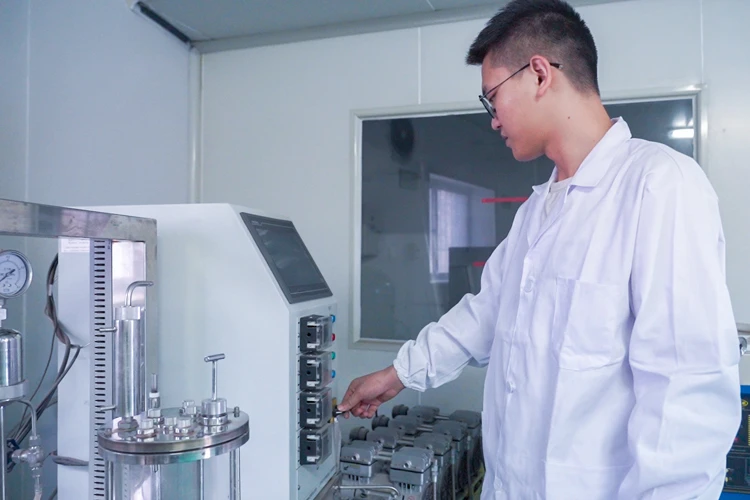
In a fermentation route, buyer questions cluster around the biological system, the purification steps that follow it, and how consistency is controlled from one fermentation lot to the next. In a wax-extraction route, questions cluster around the raw-material source, the solvent system and its residues, and the fractionation that separates the target alcohol from the others naturally present in the wax. Asking a fermentation-based supplier about cane-wax fractionation, or a botanical extractor about fermentation control, produces confident answers that mean very little. The route should therefore drive which questions are asked, not which ingredient is preferred.
Side-by-side specification comparison
The table below compares the two powders on the dimensions a buyer can actually verify in documents. It contains no performance ranking, because the assigned evidence does not include head-to-head outcome testing in a common application.
| Dimension | Coenzyme Q10 powder | Octacosanol powder | What the buyer verifies |
|---|---|---|---|
| Identity | CAS 303-98-0 | CAS 557-61-9 | CAS printed on specification, certificate of analysis and contract agree |
| Grades referenced | 10% water-soluble grade; 99% powder | Supplier-defined grades from natural cane wax; no standard assay asserted here | What the stated percentage measures, and what carrier or matrix accompanies it |
| Production route | Microbial fermentation, then isolation and purification | Extraction from natural cane wax using grain alcohol and water | Route statement, named solvents, manufacturing site named on the documents |
| Solubility behaviour | Standard form lipid-soluble; water-dispersible grade available | Long-chain alcohol handled as lipid-soluble | Dispersion method, carrier identity, buyer-side trial result in the real matrix |
| Core specification fields | Assay, carrier, moisture, particle size, heavy metals, microbiology, shelf life | Assay with method, plant source, extraction solvents, purity definition, moisture, particle size, heavy metals, microbiology, shelf life | Same fields present on the lot certificate, with analytical methods named |
| Supporting documentation | Lot certificate of analysis, GMP statement, ISO, Halal and Kosher where claimed, third-party report where available | Lot certificate of analysis, GMP statement, certification scope where claimed, third-party report where available | Issue date, scope, issuing body and the site the certificate actually covers |
A buyer checklist for grade, assay and testing documentation
The checklist below is deliberately ingredient-neutral. It applies to both powders, and it is ordered so that each item can be closed before the next one becomes relevant.
- Confirm substance identity. Match the CAS number on the specification, the certificate of analysis and the purchase contract: 303-98-0 for coenzyme Q10, 557-61-9 for octacosanol.
- Define what the grade percentage measures. For a CoQ10 10% water-soluble grade, establish whether the figure refers to active content on the powder as sold, and what the remaining mass consists of. For a 99% powder, confirm the assay basis and the method used.
- Ask for the carrier or matrix in a water-dispersible grade. The carrier affects capsule size, taste, blend behaviour and label declaration, so it belongs in the purchase specification rather than in a technical conversation.
- Name the analytical method. Assay results from different methods are not directly interchangeable; the certificate should state the method used for the lot, and the buyer should confirm that the method is the one referenced in the specification.
- Require a lot-specific certificate of analysis. A generic sample certificate demonstrates that a specification exists, not that the delivered lot met it. Batch number, production date and tested values should appear on the document supplied with the shipment.
- Check certificate scope, not certificate presence. ISO, Halal, Kosher and GMP documents cover the site and activities named inside them. A buyer should confirm the issuing body, the validity period and whether the scope includes the ingredient and process being purchased.
- Ask which laboratory performed third-party testing, and for which analytes. Heavy metals, microbiological limits and residual solvents are the usual request points; the value of the report depends on the named laboratory and the named methods.
- Review lot history for repeatability. Several consecutive certificates compared side by side show whether a specification is routinely met or occasionally met. This is the cheapest available proxy for process control.
- Screen the regulatory position for the destination market. FDA regulations require those who manufacture, package or hold dietary supplements to follow current good manufacturing practices intended to help ensure identity, purity, quality, strength and composition; that requirement does not by itself prove any particular supplier complies. Separately, FDA describes a notification process for a new dietary ingredient intended for the U.S. market unless an applicable exception applies — a process that does not classify coenzyme Q10, octacosanol or any other named ingredient by itself. Ingredient-specific status must be checked for the market in question.
- Benchmark the label, not just the powder. The NIH Dietary Supplement Label Database catalogs information printed on labels of dietary supplements sold in the United States, including ingredient names and forms, declared amounts, claims and warnings. It is a useful check on how a target ingredient is actually declared in finished products, and it says nothing about any individual supplier's quality.
Where supplier capability enters the decision
Once the specification questions are defined, the supplier conversation becomes answerable. Shaanxi Guanjie Biotech, founded in 2004, is a useful example of how a manufacturer's disclosed profile maps onto those questions. The company reports a 7,000 m² footprint that includes a 2,000 m² cGMP-standard clean workshop and a 500 m² laboratory equipped for quality control and technical analysis, with 40 employees, seven R&D engineers, an annual output of 500 tons and an export share of about 90%.
Two of those facts bear directly on a powder comparison. First, laboratory capability matters because assay disputes are settled by method and instrumentation, not by correspondence; Guanjie describes HPLC-supported quality control alongside ISO, Halal and Kosher certifications. Second, direct-manufacturer status changes which questions can be answered internally: Guanjie positions itself as a manufacturer with R&D and production capability rather than a pure trading company, and reports collaboration with Northwest University and the Xi'an Branch of the Chinese Academy of Sciences on solutions spanning product development to large-scale manufacturing. The company also reports batch-to-batch variation within 3%, flexible MOQs and competitive pricing — company-reported figures that a buyer should verify through lot certificates rather than accept as a specification.
On the ingredient side, Guanjie's published guidance places coenzyme Q10 in the core-health category alongside Shijalit and red yeast rice, describing these as high-volume, steady-sales ingredients rather than trend items. That positioning is company-published material and should be read as portfolio context, not independent market research. The buyer's use for it is directional: it indicates which ingredient categories the supplier treats as recurring business, which in turn is a reasonable prompt to ask for repeat-lot documentation.
For readers who want the fuller portfolio and capability picture, the company publishes a downloadable nutraceutical ingredients brochure, and its official site is Guanjie Biotech.
Fit boundaries: what this comparison cannot settle
An honest comparison has to state where it stops. The assigned evidence does not include head-to-head outcome testing of the two powders in a shared application, so nothing here establishes that either ingredient performs better, is more bioavailable, or is more suitable for a given health positioning. Statements about which grade suits a capsule, a tablet or a beverage are conditional design reasoning: they describe how the grades are built, not measured results in a finished product.
Three further limits are worth keeping visible. A certificate is evidence of a declared test result, not proof of regulatory compliance in every market. A supplier that has not disclosed a data point has not thereby demonstrated an incapability, so "not stated" should trigger a question rather than a rejection. And cost per kilogram is a poor decision unit in this comparison, because a 10% water-soluble grade and a 99% powder deliver different active mass per kilogram; without verified quotations, this article makes no price claim for either ingredient.
Outlook: the documentation chain becomes the differentiator
The durable trend in this comparison is not a shift in which ingredient is fashionable. It is a shift in where the buying decision is made. FDA's cGMP expectation for those who manufacture, package or hold dietary supplements, together with the new-dietary-ingredient notification route described for the U.S. market, puts documentary evidence at the centre of supplier qualification. Public resources such as the NIH label and ingredient databases make it easier for buyers to see how ingredients are declared in finished products before they ever request a sample.
For a buyer, the practical implication is that a specification is now a working instrument rather than a formality. Teams that define the grade percentage, the carrier, the assay method and the lot-document set before the first purchase order tend to resolve grade disputes early, and they can compare suppliers on the same sheet of paper. That discipline favours neither coenzyme Q10 nor octacosanol; it simply makes whichever one is chosen verifiable.
FAQ: coenzyme Q10 and octacosanol specifications
Is coenzyme Q10 the same substance as octacosanol?
No. They are different substances with different registry identifiers: coenzyme Q10 is CAS 303-98-0 and octacosanol is CAS 557-61-9. They differ in chemistry, in typical production route — microbial fermentation for coenzyme Q10, cane-wax extraction for octacosanol — and in the specification fields their suppliers are normally asked to document. The comparison in this article is about specification files, not about substituting one for the other.
Does a 99% CoQ10 powder always work better than a 10% water-soluble grade?
No. The two grades serve different formulation problems. A 99% powder is largely active substance and is the more compact route to a given dose where the blend can handle a lipid-soluble powder. A 10% water-soluble grade is a formulated powder designed to disperse in aqueous systems, and it necessarily carries roughly ten times the powder weight to deliver the same active mass. Which is better depends on the dosage form, the target dose, the carrier tolerance and the buyer's own dispersion trial.
What should an octacosanol specification sheet state?
A usable sheet states identity by CAS 557-61-9, the plant source as natural cane wax, the extraction solvents used — grain alcohol and water in the route described here — the assay value with its analytical method, the purity definition, moisture, particle size, heavy metals, microbiological limits, residual solvent limits and shelf life. It should also identify the manufacturing site and the lot covered by the accompanying certificate of analysis.
How does solubility affect the choice between the two powders?
Both materials are handled as lipid-soluble in their standard forms, and a water-dispersible CoQ10 grade exists specifically to address that limitation in aqueous products. For a beverage, sachet or other water-based format, the deciding evidence is a dispersion and stability trial in the buyer's own base at the intended dose, pH and solids load. A supplier's demonstration is a starting point, not a substitute for that trial.
Can one supplier be qualified for both ingredients?
Qualification is granted to a supplier for a defined ingredient, site and specification, not to a supplier in general. A buyer can use a single supplier for both powders, but should request ingredient-specific specifications, lot certificates and certificate scopes for each, and should confirm that the certification documents actually cover the site and process involved. Shared corporate documentation does not automatically extend to a different product line.
Neither ingredient is the default answer. The comparison becomes decisive only when the grade, the assay basis and the lot documentation have been defined and verified — and that work is identical whichever powder ends up on the purchase order.
Есть вопросы или нужны дополнительные детали?
Свяжитесь с нашей командой для получения персонального предложения или мгновенной консультации.
Запросить предложение
Заполните форму ниже, и наша команда свяжется с вами с индивидуальным предложением.
Прямой чат WhatsApp
Предпочитаете общаться в реальном времени? Напишите нам в WhatsApp для мгновенной помощи и быстрых ответов.
- Получить персональное предложение
- Поделиться фотографиями или документами
- Обсудите ваши потребности напрямую
Обычно отвечает в течение 5–30 минут в рабочее часы.