
Cold Brew and Espresso Applications: Fit for Your Market?
Functional Coffee Supply Chain · Application Fit Assessment
A functional coffee concentrate rarely fails in a market because the recipe is wrong. It fails because the pasteurization step, the storage conditions, the compliance file, or the cost structure does not match the market it was designed for.
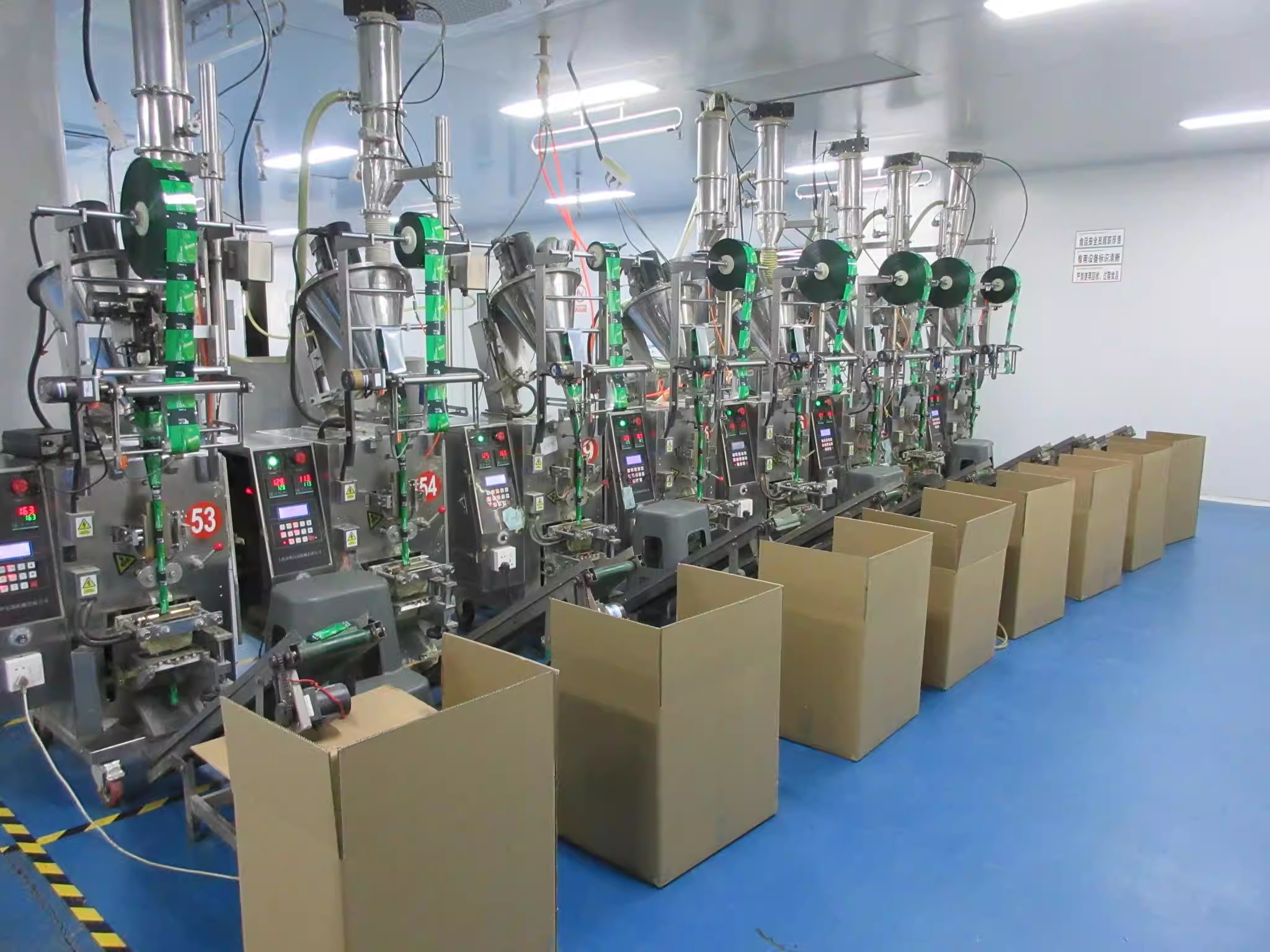
Production environment for liquid functional coffee concentrate, where processing and storage conditions determine market fit.
Why coffee formats are where functional beverages get tested
Functional beverages have moved from a niche category into mainstream commercial planning. The global functional beverage market reached USD 130.4 billion in 2022 and is expected to grow at a compound annual growth rate of 12.1% through 2031 (DataM Intelligence). Coffee-based formats — cold brew, espresso, American coffee, mocha, and plain black coffee — sit inside that expansion because they are established drinking occasions rather than new consumer habits that must first be taught.
For buyers at the decision stage, the practical question is narrower than whether a functional coffee concentrate exists. It is whether a specific supply chain can deliver a specific application format into a specific market, under workable processing, storage, compliance, and cost conditions. That is the question this assessment addresses for four markets: the United States, Italy, the United Kingdom, and France.
Coordination, not formulation, is usually the constraint
In 2024, more than 45% of food companies cited a lack of integrated systems as the primary barrier to adopting predictive supply chain technologies (Food Navigator / Elisa Industriq). Read plainly, that finding describes a coordination problem: buyers can specify a product, but they struggle to connect ingredient sourcing, processing, packaging, documentation, and delivery into one accountable chain.
For a concentrate that has to be pasteurized, shipped, stored cool and dry, and documented for a foreign regulator, that coordination gap is where projects stall — not in the flavor brief. The commercial backdrop supports continued entry. The global functional foods market was valued at USD 332.2 billion in 2024 and is projected to reach USD 638 billion by 2034 (Global Market Insights), while Asia Pacific held a 39.67% share of the functional food and beverage market in 2025 (Fortune Business Insights). Supply density is therefore concentrated in Asia while demand is distributed across North America, Europe, and the Middle East — precisely the gap an export-oriented supply chain is built to close.
For coffee applications, four conditions decide fit:
- whether the application format — espresso, cold brew, mocha, black coffee, American coffee — matches the finished cup the market already sells;
- whether a pasteurization step is available and controlled;
- whether cool, dry storage can be maintained from factory to shelf;
- whether compliance evidence holds up in the destination market.
What SPACELIFE's supply chain covers
SPACELIFE is the brand identity of Shenyang Songming Supply Chain Co., Ltd., a supply chain service provider specializing in the functional food and healthy beverage sector and serving B-end clients rather than end consumers directly. Its stated markets are North America, Eastern Asia, Western Europe, and the Middle East, with an export ratio of 51%–60%.
Its product scope covers five core categories: peptide-infused coffee, functional foods, prune juice drinks, meal replacement powders, and health supplements. Two of those categories are directly relevant here — the peptide-infused coffee line and the wider functional formulation capability behind it.
Capability facts that matter at the evaluation stage:
- R&D: 25 engineers, with product selection overseen by a PhD-led team and flavor profiles curated by a panel of professors.
- Production footprint: a factory above 2,000 square meters, 101–200 employees, and annual output of 120,000 units.
- Logistics: a location inside a Pilot Free Trade Zone, reported by the company as a 30% increase in cargo turnover efficiency.
- Delivery reliability: a 98% on-time order delivery rate.
- Quality control: 100% traceability across product categories and a 99.8% quality pass rate.
- Entry point for new buyers: small-batch trial orders starting from 30 units.
- Customization model: OEM/ODM customization.
- Distribution mix: 30% Japan, 30% United States, 20% Saudi Arabia, 20% Germany.
Two of these items deserve priority in a decision-stage review. The 30-unit trial threshold is the cheapest available way to validate flavor and format before committing volume. The OEM/ODM model is the mechanism through which espresso intensity, mocha sweetness, or cold brew dilution are actually agreed — not through a general capability statement.
Pasteurization: the processing step that decides whether the chain fits
Within SPACELIFE's risk framework, the risk type associated with functional beverages is Food Health. The control method is pasteurization combined with FDA certification, and the operational measure behind it is a pasteurization line.
That matters because a liquid coffee concentrate is a water-based matrix with dissolved solids — an environment in which microorganisms can develop if the process does not control them. Pasteurization is the heat-treatment step that controls that risk before packing and shipment. A buyer should establish three things before treating a supply chain as viable:
- Who operates the pasteurization step. SPACELIFE operates its own pasteurization line; where a partner does not, the buyer inherits a processing obligation.
- Whether the application adds a later handling step. A cold brew served chilled, for example, shifts part of the microbiological control burden to storage and dispensing practice after the factory gate.
- Whether destination-market facility requirements are met. In the United States, functional food manufacturers must comply with the FDA's restructured Human Foods Program (2024), which involves strict hazard analysis and health claim oversight. SPACELIFE holds FDA food facility registration No. 84-278-1901.
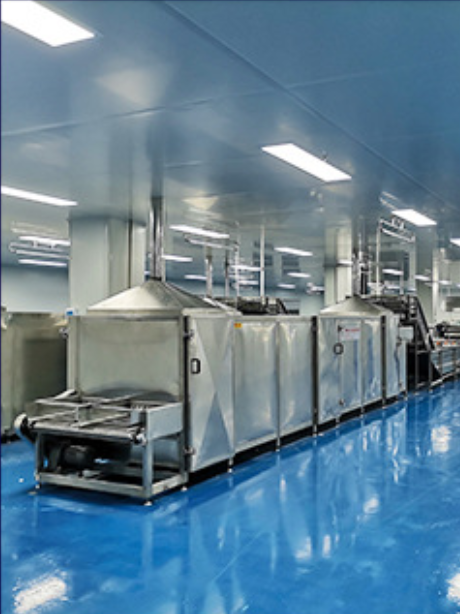
Pasteurization line: the processing step that controls Food Health risk in liquid functional coffee concentrate.
Cool, dry storage is a chain condition, not a warehouse preference
The functional coffee concentrate requires cool, dry storage conditions. That single requirement propagates through the entire route: ocean freight planning, importer warehouse specification, distributor rotation, and back-of-house holding in cafés or retail outlets.
Two practical consequences follow. First, a buyer whose channel is built on uncontrolled ambient storage will have to change either the channel or the product decision — a cool, dry requirement is not something a supply chain can absorb silently on the buyer's behalf. Second, markets with developed chilled and café infrastructure have a shorter adaptation path than markets where ambient handling is the default.
Storage parameters, packaging format, and shelf-life expectations should be confirmed against the buyer's own warehouse conditions during sampling rather than assumed from a specification sheet. This is one of the few points in a coffee project where the buyer's logistics profile, not the supplier's technical profile, determines whether the format works.
Application scenarios: five coffee formats, four markets
The functional coffee concentrate is positioned for five applications. Each places a different demand on the supply chain, and each is where the OEM/ODM stage does its real work.
| Application format | What the format demands | What the buyer must confirm |
|---|---|---|
| Italian espresso | Short extraction, high concentration, very little room to hide a flavor defect | Concentration ratio and roast profile, validated through sampling |
| American coffee | A longer, lighter cup where dilution consistency is the main risk | Dilution ratio and behavior in the buyer's water and dispensing equipment |
| Mocha | Coffee combined with chocolate and sweetness, where added functional ingredients must integrate without flavor conflict | Sweetener system, including functional sweeteners, and flavor masking agreed with the flavor panel |
| Black coffee | No masking ingredient — the coffee profile carries the entire product | Flavor profile validation before any volume commitment |
| Cold brew | Cold-water extraction served chilled, where microbiological control and storage dominate | Pasteurization, packaging, and cool-dry storage through the whole chain |
United States
Cold brew and ready-to-drink coffee are established retail and café formats in the US, which is also the market where SPACELIFE reports 30% of its distribution. The compliance layer is explicit: functional food manufacturers must comply with the FDA's restructured Human Foods Program (2024), and SPACELIFE holds FDA food facility registration No. 84-278-1901. US buyers typically evaluate documentation and facility registration before moving to samples.
Italy
Italian coffee culture is built around short, concentrated espresso, and Italian buyers compare any imported concentrate against a strong local reference point. In that context, sampling is a more decisive step than reading specifications: the professor-led flavor panel, not a data sheet, is the capability actually being tested.
United Kingdom
UK café and retail channels support both cold brew and black coffee formats, and chilled distribution is comparatively well established — which shortens the adaptation path for a product that requires cool, dry storage. Retail listing requirements make a complete compliance and shelf-life file part of supply chain fit rather than a separate administrative task.
France
French coffee consumption spans café service and retail formats, with mocha and black coffee applications carrying particular relevance for sweetened and specialty lines. Buyers in this market generally start with flavor fit, then move to cost and continuity.
Note on scope: the market observations above describe channel and consumption patterns relevant to application fit. Import, labeling, and product registration obligations remain market-specific and should be confirmed by the buyer for the destination country.
Market trend: demand is expanding while oversight tightens
Three data points frame the trend for coffee-based functional formats:
- Category scale: the global functional foods market moved from USD 332.2 billion in 2024 toward a projected USD 638 billion by 2034 (Global Market Insights).
- Beverage momentum: the functional beverage segment reached USD 130.4 billion in 2022 and is expected to grow at a 12.1% CAGR through 2031 (DataM Intelligence).
- Ingredient demand: the global collagen peptides market was estimated at USD 2.32 billion in 2023 and is projected to reach USD 4.90 billion by 2030 at an 11.6% CAGR (Grand View Research) — relevant because proteins and peptides, including collagen peptides, are among the bioactive ingredients added to functional formulations.
The counterweight is regulatory. The FDA's restructured Human Foods Program (2024) increases the emphasis on hazard analysis and health claim oversight in the US market. Growth and oversight are rising together, which shifts the competitive question from who holds a recipe to who holds a chain that documents and controls the process.
Comparing a functional coffee concentrate supply chain with conventional beverage supply
The comparison below reflects SPACELIFE's own product comparison data for functional formulations against ordinary drinks and food.
| Dimension | Ordinary drinks and food | Functional coffee concentrate chain |
|---|---|---|
| Ingredient profile | Base formulation only | Adds bioactive ingredients such as probiotics/prebiotics, plant extracts, vitamin and mineral fortification, functional sweeteners, and proteins or peptides |
| Functional actives | Typically absent | Includes taurine, caffeine, electrolytes, and vitamin B, aimed at refreshing, anti-fatigue, or energy replenishment |
| Cost | Baseline | Approximately 10% higher, reflecting the additional bioactive ingredients |
| Customization model | Standard specification | OEM/ODM customization |
| Benefit positioning | Standard refreshment | Positioned by the supplier as delivering more benefits per serving |
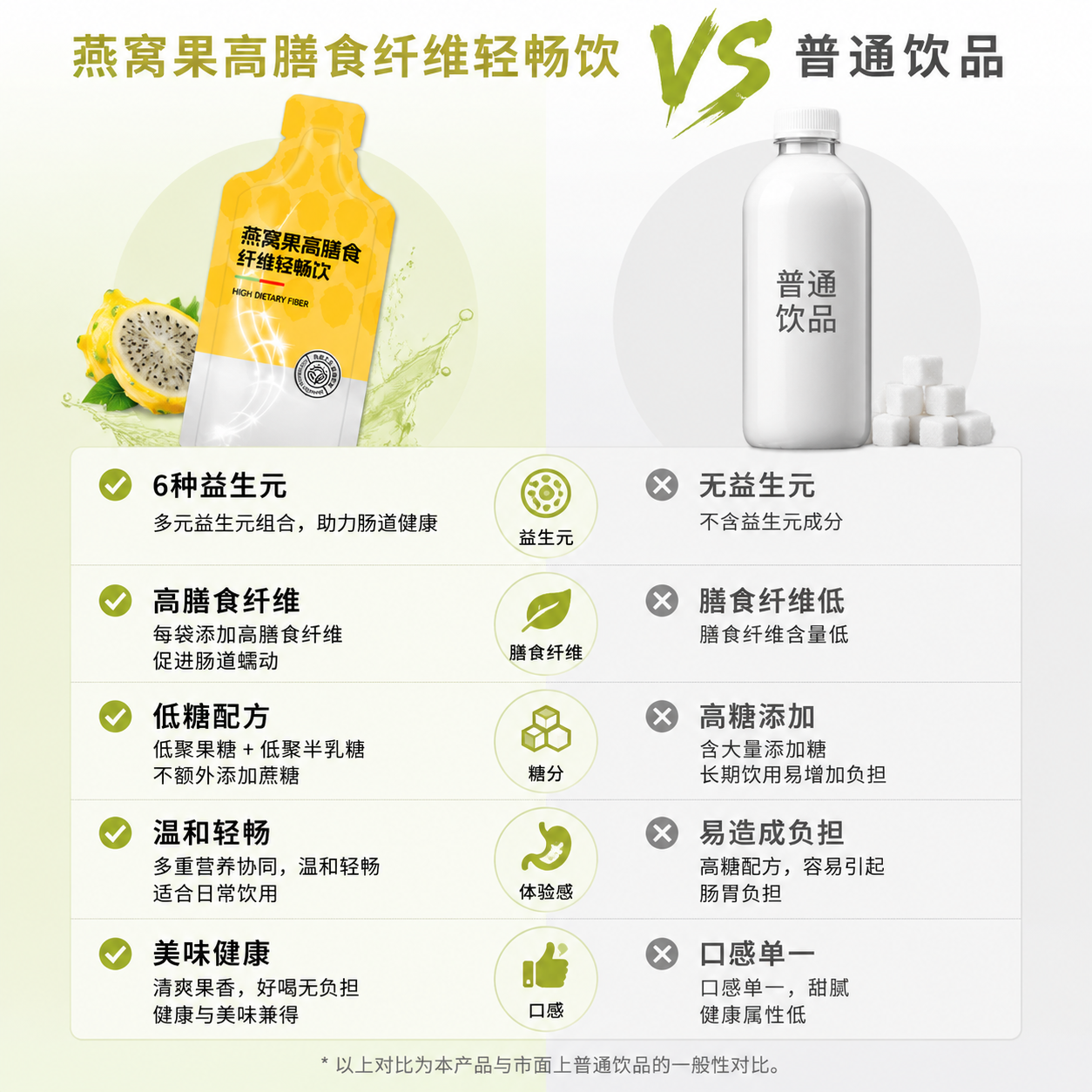
Comparison framework: functional formulations carry added bioactive ingredients and a roughly 10% cost premium over ordinary drinks and food.
Where this chain does not fit
An honest fit assessment has to name the boundaries:
- Pasteurization capability is required. If neither the partner nor the buyer can operate a pasteurization step, a liquid functional coffee concentrate is not a viable format.
- Cool, dry storage must hold end to end. Channels that cannot maintain those conditions from port to shelf are not a fit, regardless of product quality.
- The cost premium must be carried by the shelf price. Functional formulations sit roughly 10% above ordinary drinks and food, and that gap has to be supported by retail positioning rather than absorbed indefinitely by margin.
- OEM/ODM requires a defined brief. Because customization is the delivery mechanism, a buyer without a target flavor profile and concentration target will spend more time in iteration before reaching a sellable specification.
- Destination-market obligations stay with the buyer. Import, labeling, and registration requirements remain market-specific.
A fit checklist for decision-stage buyers
| Decision criterion | What to verify | Evidence to request |
|---|---|---|
| Application format match | Espresso intensity, mocha sweetness, or cold brew dilution protocol | OEM/ODM specification and sample rounds |
| Processing | Who operates the pasteurization step | Pasteurization line capability |
| Storage | Cool, dry conditions from factory to shelf | Packaging and storage specification confirmed at sampling |
| Compliance | US: alignment with the FDA Human Foods Program (2024) and facility registration | FDA food facility registration No. 84-278-1901 |
| Unit economics | Approximately 10% cost premium against ordinary drinks and food | Quotation tested against target retail price |
| Validation pathway | A low-risk trial before volume commitment | Trial orders from 30 units |
| Continuity | Ability to scale and deliver on schedule | 120,000 units annual output and a 98% on-time delivery rate |
Future outlook
If the functional foods market continues from USD 332.2 billion in 2024 toward USD 638 billion by 2034, and functional beverages hold a 12.1% CAGR, coffee-based formats will keep drawing new entrants across the US, Italy, the UK, and France. The differentiator will not be the recipe. It will be whether the chain holds together under pasteurization, cool-dry storage, and tightening oversight.
For buyers, the practical implication is sequencing: evaluate the supply chain before finalizing the product. Buyers who want to review the capabilities described in this assessment can find SPACELIFE's published supply chain information at songming-sc.com.
Frequently asked questions
Which coffee applications does the functional coffee concentrate cover?
It is positioned for five applications — mocha, black coffee, Italian espresso, American coffee, and cold brew — across the United States, Italy, the United Kingdom, and France. Each format is specified individually through OEM/ODM customization and validated during sampling, because espresso concentration, mocha sweetness, and cold brew dilution place different demands on the same base product.
What processing capability does this supply chain require?
Pasteurization. In SPACELIFE's risk framework the relevant risk type is Food Health, the control method is pasteurization combined with FDA certification, and the operational measure is a pasteurization line. A buyer must establish whether the partner operates that step or whether it has to be arranged downstream.
How must the concentrate be stored?
Cool, dry storage conditions are required. That requirement applies from the factory through freight, importer warehousing, distribution, and final holding. Storage specifications should be checked against the buyer's own warehouse conditions during sampling.
What compliance evidence supports the US market?
In the United States, functional food manufacturers must comply with the FDA's restructured Human Foods Program (2024), which involves strict hazard analysis and health claim oversight. SPACELIFE holds FDA food facility registration No. 84-278-1901.
How does the cost compare with ordinary drinks and food?
SPACELIFE's product comparison data places functional formulations approximately 10% higher in cost than ordinary drinks and food, reflecting added bioactive ingredients such as probiotics, plant extracts, vitamins, functional sweeteners, and proteins or peptides.
Can a buyer validate the product before committing to volume?
Yes. Small-batch trial orders start from 30 units, which allows format and flavor validation before scale. For scale-up, annual output is 120,000 units, supported by a 98% on-time order delivery rate and 100% product traceability.