
Cold Storage Sign-Off: Verifying Acceptance Criteria
Cold Storage Procurement Reference
Cold storage acceptance criteria are the measurable conditions a facility must satisfy before a buyer takes operational possession. Three parameter families carry most of the technical risk in that handover: the temperature bands each room must hold, the power supply the refrigeration equipment is built for, and the refrigerant the system is charged with. A project can pass every visual inspection and still fail on any one of the three.
What follows is a verification framework aimed at buyers in the research and evaluation stage. It sets out what to measure in each area, what evidence to demand at handover, how the checks map onto a documented specification such as the HOWCOOL HSZL-5000t food cold storage, and where criteria-based acceptance stops being the right tool.
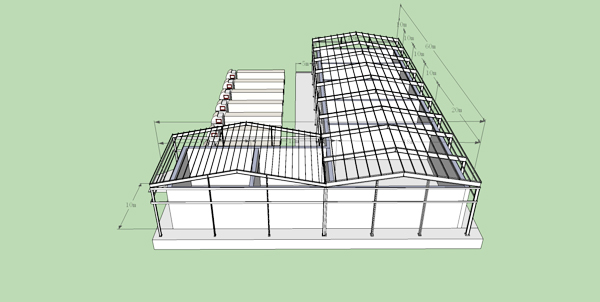
Preservation cold storage: temperature band, power supply and refrigerant charge are the three criteria that decide sign-off.
Design Intent Is Not Verified Performance
Every cold storage project begins with numbers on a drawing and ends with a building that either holds those numbers or does not. The gap between the two is rarely the equipment. It is the absence of agreed test conditions. A room designed for -18 °C will pass a one-hour reading in an empty chamber and fail a loaded pull-down in a hot ambient if nobody defined which of those two tests counts as acceptance.
Industrial cold rooms are specified to run continuously — the systems described in HOWCOOL project documentation operate automatically, 24 hours a day throughout the year — so a short snapshot is not a valid acceptance method. Continuous operation is the design assumption; continuous logging should therefore be the acceptance method.
Three questions separate a defensible sign-off from a hopeful one:
- Which temperature is being measured, at which positions, under which load, and for how long?
- Which electrical supply was the equipment built for, and does the site actually deliver it?
- Which refrigerant is in the circuit, in what quantity, and is that refrigerant acceptable in the destination market?
Each of these can be answered with documentation before the final payment is released. None of them can be answered reliably after the contractor has left site.
Temperature Acceptance: Three Bands, Three Different Tests
Temperature is the criterion buyers discuss most and define least. Cold storage is not a single condition. The bands below reflect those specified across HOWCOOL food cold storage configurations, and each behaves differently at handover.
| Temperature band | Typical duty | What acceptance should focus on |
|---|---|---|
| -5 to +5 °C | Fruit and vegetable preservation, chilled food, logistics staging | Uniformity across the room volume, defrost recovery, stability during repeated door openings |
| -18 to -25 °C | Frozen meat, seafood, frozen food storage | Pull-down time after loading, compressor cycling at part load, floor and door frost control |
| -35 to -45 °C | Quick freezing (specified on the HSZL-3000T configuration) | Air movement and cycle time, product core temperature, throughput per batch |
Band coverage differs by model, and that difference belongs in the acceptance scope. The HSZL-5000t food cold storage specification states the -5 to +5 °C and -18 to -25 °C bands. Quick freezing down to -35 to -45 °C is stated in the HSZL-3000T cold chain logistics configuration. The HSZL-6000 design specification states 0-5 °C, -18 to -25 °C and -35 °C. A buyer comparing quotations should confirm which bands the offer actually covers rather than assuming the full range.
What a defensible temperature test includes
- Calibrated logging in at least four positions — near the evaporator, at the far wall, at mid-height and at floor level. A single sensor near the door proves very little.
- An empty-room pull-down to set point, with time to reach set point recorded from a documented starting temperature.
- A loaded test at design occupancy, using product or a thermal load agreed in advance. Warm product entering the room is the condition the system is actually built for.
- At least one complete defrost cycle, with the temperature excursion and recovery time recorded. Defrost is where most short acceptance tests quietly fail.
- A defined ambient condition, recorded at the time of test. HOWCOOL application documentation describes designs for environments with a temperature variation within a 55-degree range, so the ambient at test is part of the result, not background noise.
- Continuous logging for an agreed period, not a single reading. Because the facility is expected to run 24 hours a day all year, a test that covers a full working day plus a defrost cycle is the minimum defensible duration.
Pass criteria should be written before the test, not after it. Commercial terms normally specify a maximum permitted deviation from set point and a maximum recovery time after door closure, both expressed as numbers fixed in the contract.
Power Acceptance: 380-415 V / 3P / 50 Hz Is the Starting Point
Voltage is the criterion most often assumed rather than verified. The HOWCOOL food cold storage, cold chain logistics and cold storage design specifications all state a 380-415 V, three-phase, 50 Hz supply. That is a build specification, not a site guarantee, and the difference between the two has stopped more commissioning schedules than any compressor fault.
| Parameter | Documented value | Acceptance evidence to require |
|---|---|---|
| Supply voltage | 380-415 V | Measurement at the main distribution panel under load, recorded at start-up |
| Phase configuration | Three-phase | Phase rotation test on every motor before first start |
| Frequency | 50 Hz | Written confirmation against the actual site supply before the equipment order is released |
| Starting behaviour | Not stated in the standard specification | Recorded starting current and voltage dip at the largest compressor |
| Protection settings | Not stated in the standard specification | Protection coordination sheet and as-set relay values |
| Standby power | Generator sets listed among matched equipment | Load test of the generator with refrigeration running, including start of the largest motor |
Three verification habits make the difference. First, measure at the panel rather than at the incoming transformer, because the drop across site cabling is part of what the equipment sees. Second, record the voltage dip during the largest compressor start, not just the steady-state voltage, because a supply that reads correctly at rest can still trip protection under load. Third, treat the standby generator as part of the refrigeration system rather than as an electrical accessory: generator sets appear among the matched equipment specified for these projects, and a generator that cannot carry starting current provides no cold-chain protection at all.
Boundary to settle early. The documented supply is 380-415 V, three-phase, 50 Hz. A site with a different voltage or frequency needs an engineering answer at design stage — a transformer, a drive, or a different equipment specification — not an adapter at commissioning.
Refrigerant Acceptance: R507a and R404A
Refrigerant is the least visible criterion and the one with the longest consequences, because it determines both performance documentation and future compliance exposure. HOWCOOL food cold storage, cold chain logistics and design specifications list R507a and R404A as the refrigerant options.
What to verify at handover
- Nameplate match. The refrigerant recorded on each condensing unit must match the as-built drawing and the commissioning sheet. Mixed records are the most common documentation defect found at handover.
- Measured charge weight. Charge recorded per circuit, in kilograms, at commissioning. An estimate is not an acceptance record.
- Pressure and leak testing. Pressure test and vacuum hold completed and signed before charging, with the results attached to the handover file.
- No unrecorded top-ups. Any additional charge added during commissioning should be logged with the reason.
- Handling and recovery provisions. Cylinder provenance, storage conditions and recovery equipment confirmed as part of the same package.
Regulatory direction buyers should price in
Both R507a and R404A are HFC-based refrigerants. International HFC phase-down commitments under the Kigali Amendment, and the national rules that implement them, increasingly shape which refrigerants can be specified, serviced and replenished in a given market. That does not invalidate an R507a or R404A system today. It does mean the refrigerant decision should be confirmed against the destination market's current rules at design freeze rather than discovered at the first service call.
The practical limitation is worth stating plainly: the documented HOWCOOL specifications offer R507a and R404A. A buyer whose national policy or corporate standard requires a different refrigerant class should raise that requirement before the equipment specification is frozen, because it changes the equipment selection rather than the paperwork.
Insulation and Structure: The Envelope That Decides the Other Three
Temperature, power and refrigerant performance all rest on the envelope. If panel specification is not verified, the other three criteria cannot be met regardless of how well the equipment performs, because the refrigeration load is being set by the building rather than by the product.
In the HSZL-5000t food cold storage, the envelope is specified as steel structure engineering with double-sided color steel insulation board, using PIR panels at 100 mm and 150 mm thickness, with usable heights of 6 to 12 m and capacities covering 1,000, 2,000, 3,000, 5,000 and 8,000 tons. The HSZL-3000T cold chain logistics configuration specifies 150 mm polyurethane insulation board at 42 kg density with heights of 8 to 12 m. The HSZL-6000 design specification uses polyurethane insulation board with a refrigeration compressor unit across areas of 2,000 to 10,000 m² and heights of 5 to 12 m.
The material emphasis matches wider market practice: polyurethane foam led the cold insulation market in 2025, according to Fortune Business Insights, largely because of its use in cold rooms. Where the panel is the dominant insulation choice in the market, panel verification stops being a specialist check and becomes a standard acceptance item.
Envelope checks that belong in the acceptance file
- Panel thickness and density compared against the approved drawing, not against the delivery note.
- Joint sealing and vapour barrier continuity, inspected at corners, wall-floor junctions and around every penetration.
- Floor insulation and door thresholds, including heater provision where specified.
- Structural steel conformity to the approved structural drawings, with the drawing revision number recorded.
- Room height and usable volume confirmed against the capacity stated in the contract.
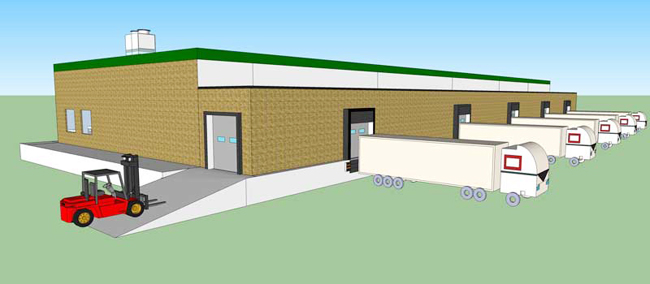
The approved design drawing is the reference document for acceptance: panel thickness, equipment layout and refrigerant assignment are all verified against it.
Aligning Acceptance Criteria with Local Market Requirements
HOWCOOL project market coverage lists the UAE, Brazil and Russia among the countries served, alongside main regions of the Middle East, Africa, Southeast Asia and South America. For buyers in those markets, acceptance is a two-layer test: the criteria agreed with the supplier, and the criteria imposed locally. Both have to be satisfied, and they are rarely written by the same people.
Three local variables usually differ from the supplier's home standard:
- Electrical supply. Grid voltage and frequency are not uniform across markets. A package built to 380-415 V, three-phase, 50 Hz has to be checked against the actual site supply, and any mismatch has to be resolved by engineering before shipment rather than by improvisation at commissioning.
- Refrigerant policy. HFC controls, import licensing and service restrictions vary by jurisdiction and are still moving. The refrigerant named in a quotation may be entirely legal in the destination market, or it may require a documented exemption. That question is answered by local rules, not by the supplier.
- Food-safety and inspection regime. Documentation expectations, temperature-record retention periods and acceptance of third-party inspection differ from market to market. Pre-shipment testing and third-party inspection by SGS are part of HOWCOOL quality control, but the local authority's own inspection list is a separate document.
The conclusion is the same in all three markets: fix the technical acceptance criteria in the purchase contract, and confirm the local list with a consultant or authority before design freeze. Attempting to assemble the local requirements at handover converts a technical question into a schedule risk.
A Contract Checklist for Acceptance Criteria
Acceptance works best as a list of items with named evidence and a named verifier. The table below is a workable starting structure for a food cold storage project in the 1,000 to 8,000 ton range.
| Acceptance item | Evidence to require | Verified at |
|---|---|---|
| Temperature performance | Test protocol with pass criteria, sensor positions, load condition and duration, signed by both parties | Commissioning |
| Instrument accuracy | Calibration certificates for all loggers and thermometers used | Before test |
| Continuous operation log | Logged data covering a full operating day plus one defrost cycle at minimum | Commissioning |
| Power supply conformity | Panel measurement under load, phase rotation record, protection settings sheet | Start-up |
| Standby power | Generator load test with refrigeration running | Commissioning |
| Refrigerant record | Type per circuit, measured charge weight, pressure and vacuum test results, leak test record | Commissioning |
| Envelope specification | Panel thickness and density check against approved drawings, joint and barrier inspection | Installation |
| Structural conformity | Approved structural drawings with revision numbers, as-built confirmation | Installation |
| Pre-shipment quality | Pre-shipment test report and third-party inspection report (SGS) | Before shipment |
| Spares and support | Spare parts provision and technical service terms stated in the contract | Handover |
Two items on that list are routinely omitted and routinely regretted. The calibration certificate matters because an uncalibrated logger cannot prove anything except that it recorded a number. The drawing revision number matters because acceptance against a superseded drawing is not acceptance at all.
Where Criteria-Based Acceptance Stops Being the Right Tool
Traditional acceptance practice — visual inspection, a short operating run, nameplate checks and a signed handover certificate — is fast and inexpensive. For a small single-room retrofit it is often proportionate, and insisting on a multi-day instrumented test would be a poor use of both parties' time.
Criteria-based acceptance costs more. It requires calibrated instruments, multi-day logging, documented pressure and leak tests, panel density checks and a punch list that must be closed before final payment. The trade-off is that it produces evidence that survives staff changes, insurance reviews and the first summer of full loading. The right depth depends on what the room holds and what a failure would cost.
There are also supplier-side boundaries that a buyer should test early rather than discover late:
- Project scale. HOWCOOL states that it can provide medium-sized cold storage projects with a capacity of less than 20,000 tons per project. Hub-scale facilities above that threshold fall outside the stated scope and need a different contracting structure.
- Refrigerant options. R507a and R404A are the refrigerants documented in the current specifications. Projects requiring a different refrigerant class need confirmation at design stage.
- Electrical baseline. The documented supply is 380-415 V, three-phase, 50 Hz. Sites on another supply need an engineering solution agreed before order release.
- Test depth. A chilled staging room for fruit and vegetables and a -35 to -45 °C quick freezer do not carry the same failure cost. A single protocol applied uniformly to both is either wasteful or insufficient, usually both.
Market Trend: Acceptance Is Becoming a Data Question
The commercial context supports the shift toward evidence-based sign-off. Grand View Research valued the global cold storage market at USD 217.1 billion in 2026, up from USD 185.8 billion in 2025. Published 2026 estimates vary widely — from roughly USD 166 billion to USD 310 billion depending on whether a study counts only fixed warehouse capacity or includes transport refrigeration and services — which is itself a reason to treat any single headline figure as a scope question rather than a settled fact.
Two component-level signals are more directly useful to a buyer writing acceptance criteria. Refrigeration compressors account for 23% of the industrial refrigeration equipment market, according to Persistence Market Research, which is precisely why compressor specification, starting data and protection settings belong in the acceptance file rather than in a generic equipment list. And polyurethane foam led the cold insulation market in 2025, per Fortune Business Insights, which makes panel thickness and density verification a mainstream procurement check.
What this means in practice is less about market size and more about documentation. Where equipment is increasingly specified by component, acceptance is increasingly specified by measurement. Buyers who arrive at evaluation with a defined test protocol get comparable answers; buyers who arrive with a request for a handover certificate get comparable paperwork.
Future Outlook
Three developments are likely to shape cold storage acceptance criteria over the next procurement cycles.
- Refrigerant transition pressure. HFC phase-down commitments will continue to move national rules, and refrigerant choice will migrate from a service-level decision to a design-level one. Acceptance files that record refrigerant type and measured charge will become more valuable, not less.
- Logged performance as standard. As continuous operation becomes the norm rather than the exception, the acceptance test will look more like a data review and less like an inspection walk. Systems specified for 24-hour automatic operation year-round already generate the data needed for that review.
- Documentation as a differentiator. Where equipment performance across suppliers converges, the quality of the acceptance package — calibration, pressure test records, drawing revisions, inspection reports — becomes the visible difference between offers.
For buyers evaluating now, the practical response is not to wait for standards to settle. It is to write measurement into the contract: which temperature, at which positions, under which load, for how long, at which supply, with which refrigerant, verified against which drawing revision. Those seven questions are answerable today, and they are the ones that decide whether a cold store performs as specified.
Frequently Asked Questions
What temperature ranges should a cold storage acceptance test cover?
Three bands appear in HOWCOOL documented food cold storage specifications: -5 to +5 °C for chilled and fruit and vegetable preservation duty, -18 to -25 °C for frozen storage, and -35 to -45 °C for quick freezing, which is stated in the HSZL-3000T configuration. Each band should be tested separately with its own pass criteria, because pull-down and recovery behaviour differ substantially between chilled duty and blast freezing duty.
Which power supply should be confirmed before the equipment order is released?
380-415 V, three-phase, 50 Hz is the supply stated across HOWCOOL food cold storage, cold chain logistics and cold storage design specifications. Before order release, the site supply should be measured at the main distribution panel and confirmed to fall inside that window, and the acceptance file should also record frequency, phase rotation, starting voltage dip at the largest compressor, and standby generator capacity under load.
Which refrigerants are specified, and what must be documented at handover?
HOWCOOL specifications list R507a and R404A. At handover the acceptance file should record the refrigerant type per circuit as installed, the measured charge weight, the pressure test and vacuum results obtained before charging, and the leak test record. The refrigerant stated on each unit nameplate must match both the as-built drawing and the commissioning sheet.
Do acceptance criteria differ between the UAE, Brazil and Russia?
They differ in three areas: electrical supply characteristics, refrigerant policy, and food-safety documentation requirements. HOWCOOL project market coverage includes these countries, but the specific local requirements are set by national authorities and change over time. The workable sequence is to confirm the local acceptance list with a local consultant before design freeze, and to fix the technical acceptance criteria in the purchase contract.
Can a supplier scope be checked against a project before contracting?
Yes, on stated parameters. HOWCOOL states that it provides medium-sized cold storage projects with a capacity of less than 20,000 tons per project, with customization of area, height, tonnage and temperature, a production lead time of 30-45 days, a minimum order quantity of 500 tons, and pre-shipment testing including third-party inspection by SGS. Those statements can be compared directly against the project tonnage, schedule and inspection requirements.
What is the difference between traditional handover and criteria-based acceptance?
Traditional handover relies on visual inspection, a short operating run and a signed certificate. Criteria-based acceptance adds calibrated temperature logging over an agreed continuous period, recorded power measurements at the panel, documented refrigerant pressure and charge data, and verification of panel thickness and density against the approved drawings. It requires more time and instrumentation, and is most justified where a temperature failure would cause significant product loss or regulatory exposure.
How much capacity can a single project cover?
HOWCOOL food cold storage is offered in 1,000, 2,000, 3,000, 5,000 and 8,000 ton configurations, with project capacity stated as below 20,000 tons per project. Application documentation describes cold storage areas from 1,000 to 15,000 m² at heights of 5 to 12 m, and suitability for building and renovating large and medium-sized facilities in the 1,000 to 20,000 m² range.
Company reference material: HOWCOOL EPC cold storage brochure (PDF). Company site: www.epccold.com.
Есть вопросы или нужны дополнительные детали?
Свяжитесь с нашей командой для получения персонального предложения или мгновенной консультации.
Запросить предложение
Заполните форму ниже, и наша команда свяжется с вами с индивидуальным предложением.
Прямой чат WhatsApp
Предпочитаете общаться в реальном времени? Напишите нам в WhatsApp для мгновенной помощи и быстрых ответов.
- Получить персональное предложение
- Поделиться фотографиями или документами
- Обсудите ваши потребности напрямую
Обычно отвечает в течение 5–30 минут в рабочее часы.