
Color Coated Steel Coil & Sheet: Evaluating Coating Trade-offs Before Purchase
Pre-painted steel is a high-volume industrial procurement category, but the phrase “color coated steel coil and sheet” covers two very different kinds of products: building-grade materials designed for roof and wall cladding, and engineered functional materials designed to withstand mechanical stress, heat, oil, and tight fabrication tolerances. Buyers in the decision stage are not always comparing like-for-like alternatives. The more practical question is which coating system, substrate, and processing behaviour match the end-use requirement — and what proof of performance the supplier can provide.
The distinction has become more relevant as functional coated steels gain share. The global pre-painted steel market was valued at USD 24.63 billion in 2023 and is projected to expand at a CAGR of 5.8% through 2032 (Polaris Market Research). China alone exported roughly 6.5 million tons of color coated steel sheets in 2023 (MySteel). Within that trade volume, a growing portion is no longer commodity cladding material but functional coated steel for auto parts, appliances, packaging, electronics, and energy infrastructure. That shift changes how buyers should evaluate suppliers, specifications, and cost structures.
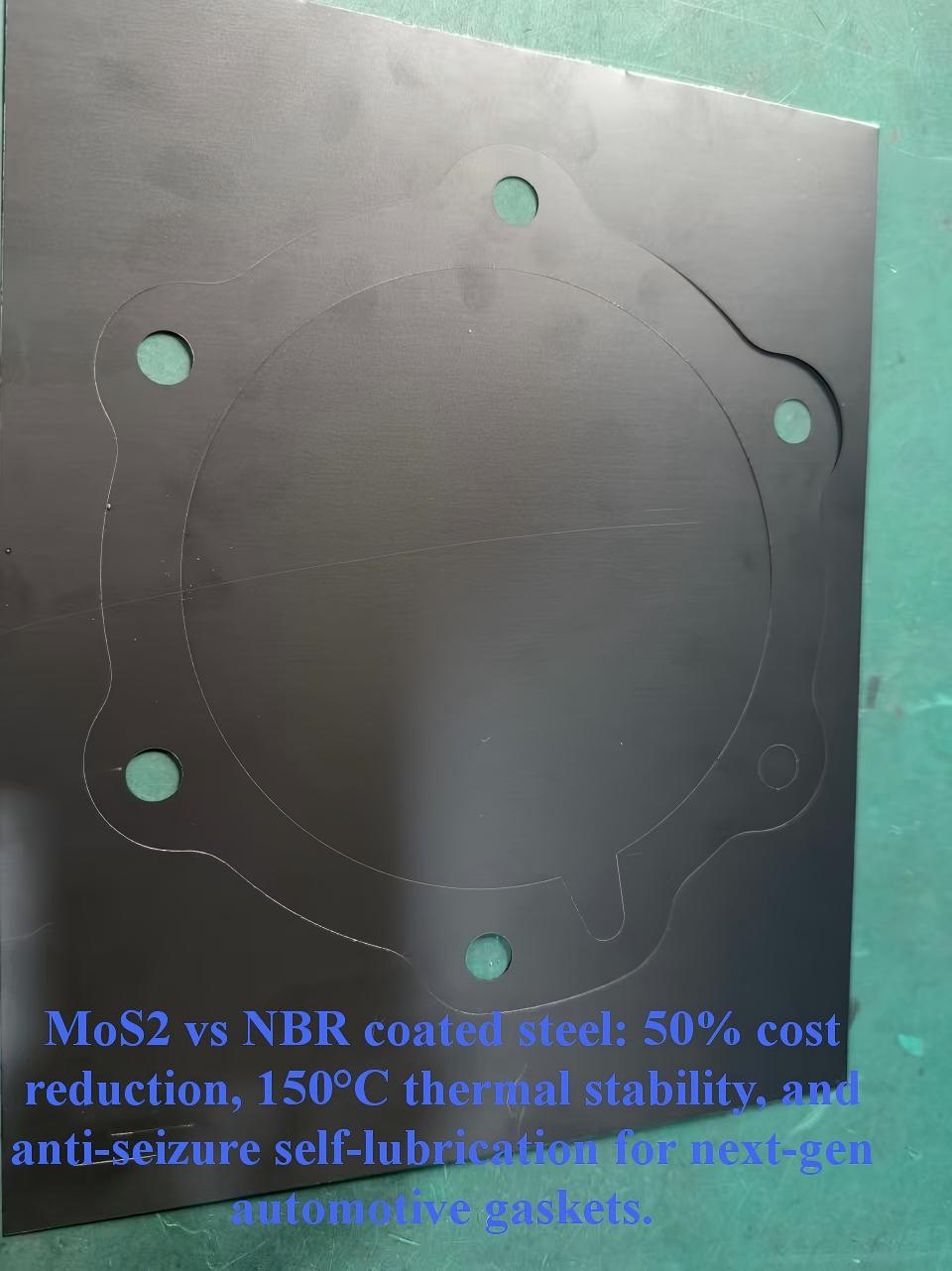
Functional coating comparison: MoS2 coated steel coil vs. NBR rubber coated steel (image source: Youngson Metal)
The two decisions within one coated steel purchase
Procurement conversations around coated steel tend to converge on two distinct moments. The first is material substitution: replacing an existing component material — often a rubber-coated metal, a bare metal, or an imported specialty strip — with an engineered coated steel. The second is grade selection: deciding whether a standard construction-grade PPGI is sufficient or whether a precision-formed coated strip will reduce downstream losses.
Both decisions ultimately compare the same things: coating behaviour, forming reliability, compliance, and total cost. But the criteria are not identical. A sealing gasket application demands thermal stability, oil resistance, and anti-seizure behaviour. A high-speed stamping line demands coating adhesion, bendability, and consistent surface quality. Building-grade PPGI is rarely engineered for either.
Chongqing Youngson Metal Products Co., Ltd., a manufacturer founded in 2016 and certified under BV ISO9001:2015, offers a practical reference point for how suppliers can support these decisions. The company operates its own coating lines and precision slitting machines, with an annual processed capacity exceeding 10,000 tons. Youngson Metal focuses on five product families: drawn PET film laminated steel coil, drawn VCM PVC film laminated steel coil, deep drawn coil coating including Teflon and non-stick finishes, commercial and deep drawn pre-painted steel, and a range of mild carbon steel substrates including cold rolled, electrogalvanized, aluminized, and galvanized steel. Its products claim SGS-verified compliance with REACH and RoHS heavy metal regulations — a relevant signal for food-grade, appliance-grade, and chemically sensitive applications.
Decision 1 — Functional coating: MoS2 coated steel coil vs. NBR rubber coated steel
Sealing applications, particularly in automotive and motorcycle powertrains, have traditionally used NBR rubber coated steel where a compressible, oil-resistant layer is needed. NBR rubber coatings perform acceptably in moderate environments, but they degrade under sustained heat. Hardening, cracking, oil-induced swelling, and eventual peeling force maintenance and replacement cycles.
Molybdenum disulfide (MoS2) coated steel coil takes a different approach. The coating is an engineered solid lubricant layer applied to the steel substrate — available in versions using tinplate, galvanized steel, or stainless steel bases. Because MoS2 is inorganic, it does not age the way elastomers do. The result is permanent self-lubrication, not a temporary rubber-like coating that loses performance with time.
| Evaluation parameter | MoS2 coated steel coil | NBR rubber coated steel |
|---|---|---|
| Thermal stability | Continuous up to 150°C without hardening or cracking | Elastomer begins to harden and crack under prolonged high temperature |
| Lubrication behaviour | Permanent self-lubricating MoS2 crystalline structure | Temporary; degrades with thermal cycling |
| Oil & chemical resistance | Inorganic layer, chemically inert, no swelling or peeling | Oil-induced swelling and eventual peeling |
| Maintenance | Zero maintenance over intended lifespan | Requires monitoring and eventual replacement |
| Relative material cost | Up to 50% direct cost reduction vs. NBR coated steel | Higher baseline material cost |
The quantitative claims are significant: a 50% direct material cost reduction compared to traditional NBR rubber coated steel, continuous thermal stability up to 150°C, and zero elastomer-related failure modes. The MoS2 formulation has been validated via ASTM No. 3 oil immersion test protocols, which is a relevant benchmark for oil-exposed sealing applications. Gauge control is maintained at 0.20 mm to 0.30 mm thickness, with widths from 4.0 mm to 1250 mm, allowing both ultra-narrow strip and standard coil supply.
For engineers, the most useful performance advantage is the self-lubricating MoS2 matrix. The crystalline structure minimizes parasitic energy losses caused by micro-frictional drag under high-vibration sealing interfaces. For procurement, the cost advantage is direct and measurable: fewer material inputs, lower replacement frequency, and no additional lubrication step during assembly.
Where MoS2 coated steel fits best
The material is intended for demanding sealing environments rather than general-purpose decorative cladding. The most applicable use cases include automotive cylinder head gaskets, motorcycle seals, exhaust manifold gaskets, turbocharger seals, and heavy-duty powertrain joints. These are high-temperature, extreme-pressure interfaces where NBR rubber coated steel typically reaches its service limit.
Decision 2 — Precision stamping strip vs. building-grade PPGI
The second comparison is not about coating chemistry but about design intent. Standard construction-grade PPGI is manufactured for roof cladding and wall panels. The coating is formulated for weather resistance, not for deep drawing, punching, or automated stamping. When a buyer places construction-grade material into a precision stamping process, the result is paint shedding, mold fouling, and a rejection rate that often exceeds 5%.
Precision stamping steel strip is engineered from the substrate layer upward for deep-drawing and automated stamping operations. The performance gap is large: a stamping rejection rate below 0.1% versus more than 5% for standard construction steel, a 50x precision improvement.
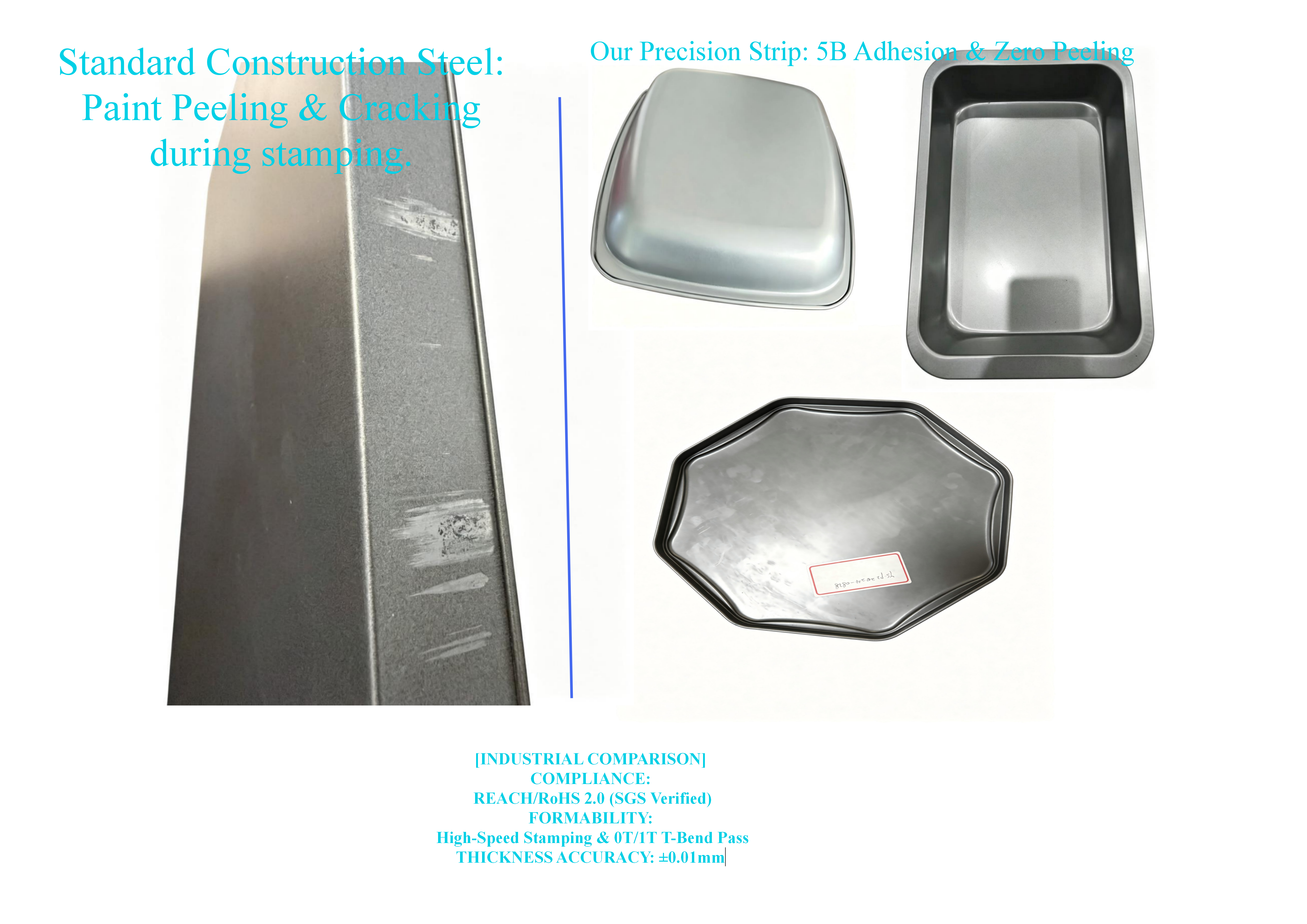
Precision stamping strip vs. building-grade PPGI: 50x forming precision difference (image source: Youngson Metal)
| Metric | Precision stamping steel strip | Standard construction-grade PPGI |
|---|---|---|
| Stamping rejection rate | <0.1% | >5% |
| Forming behaviour | Excellent formability, 0T/1T T-bend capable | Limited bending capability; paint peeling risk |
| Regulatory compliance | 100% RoHS/REACH compliant | Varies by grade and supplier |
| Total fabrication cost | Lower total cost due to zero production waste | Higher hidden cost from downtime and scrap |
The cost logic deserves emphasis. Precision stamping strip carries a higher initial material price than construction-grade PPGI. But in an automated stamping environment, material cost is only one component. Zero production waste, consistent forming stability, no mold cleaning downtime, and no peeling-related rejection all reduce per-part cost. The comparison is a classic total-ownership calculation: higher input price, lower fabricated cost.
Suitable applications for precision stamping steel strip include high-end electronics housings, precision hardware components, and premium packaging. These are contexts where surface integrity must survive severe forming without exposing the substrate or degrading the coating.
How buyers should evaluate coated steel suppliers
When procurement reaches the final evaluation stage, the assessment should go beyond coating type. The supplier must demonstrate that its process can control the factors that determine downstream performance: coating adhesion, forming behaviour, gauge accuracy, and compliance traceability.
- Define the process: Will the material be deep drawn, stamped, roll-formed, or exposed to sustained heat and oil? This determines whether a functional coating or a precision strip grade is required.
- Demand forming evidence: Cross-cut cupping tests, T-bend tests, and batch-sampling protocols show whether the coating can survive forming without micro-cracking or adhesion loss.
- Check coating chemistry: For high-temperature sealing, MoS2 coated steel is a verifiable alternative to NBR rubber coated steel. For PVDF-coated applications such as insulated pipes in oil refineries, the coating should offer long-term UV and chemical resistance — PVDF systems typically maintain 70% of color integrity beyond 20 years (AkzoNobel Coil Coatings).
- Confirm substrate protection: For electricity and solar infrastructure, Z275 galvanized coating (275 g/m² zinc) is the recognized standard for high-corrosion environments (ASTM A653 / EN 10346).
- Verify compliance: Food-grade coated steel should meet FDA 21 CFR 175.300 or EU No 10/2011. Appliance and electronic applications require RoHS 2.0 / REACH compliance (ECHA).
- Quantify total cost: Include scrap rates, mold cleaning frequency, maintenance intervals, and replacement lifespan — not just the per-ton invoice price.
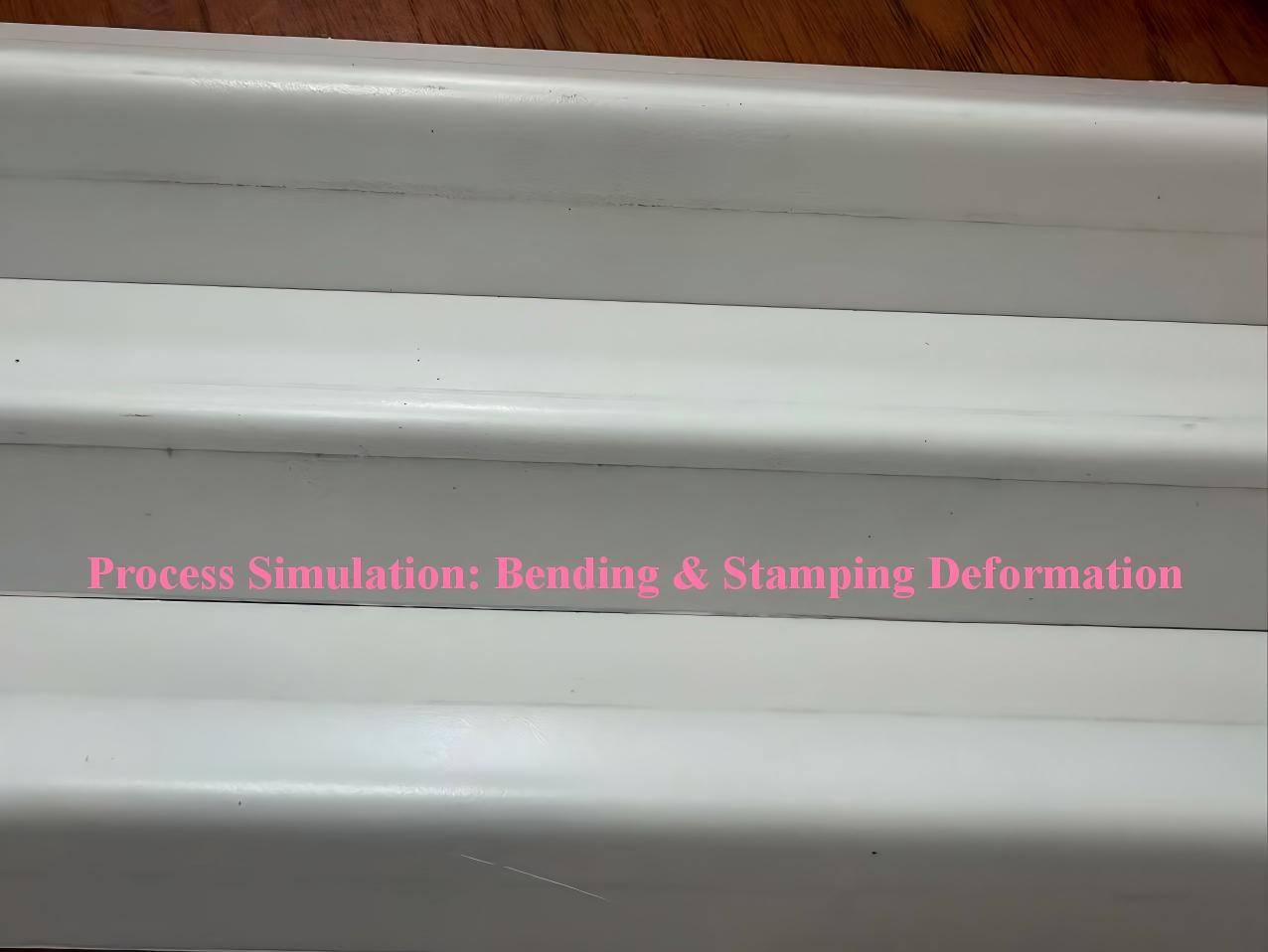
Mechanical forming test for coated steel: verifying coating flexibility and adhesion under stress (image source: Youngson Metal)
Youngson Metal’s approach includes a rigorous batch-sampling protocol with cross-cut cupping, forming, and T-bend tests. This systematic simulation of post-forming processes is designed to confirm coating flexibility and reliable adhesion under mechanical processing. For buyers, the value is straightforward: material behaviour is verified before it reaches the stamping press, not discovered after the first batch fails.
Market signals reshaping coated steel specifications
Several market-level developments are pushing buyers toward performance-driven specifications rather than default commodity grades.
Antibacterial demand is growing: The market for antibacterial color coated steel is expanding at a CAGR of 7.2% (Mordor Intelligence), driven by hygiene requirements in cold chain, medical facilities, and food handling environments. Matte white antibacterial coils are among the functional variants gaining traction in these segments.
Environmental regulations are tightening: RoHS and REACH have moved from optional certifications to de facto requirements for appliance, electronics, and packaging materials. Eco-friendly PET film laminated steel and RoHS-compliant color coated coils are increasingly specified in export-oriented supply chains.
Functional finishes are segmenting the market: Three-coat three-bake systems, non-stick ECCS (electro-chrome coated steel) grey-silver sheets, nonstick aluminized steel coils, and wear-resistant black coated strips each serve distinct industrial niches. The availability of these specialized products determines whether a buyer can source locally or must rely on imported multi-grade material.
Supplier consolidation in China continues: Chinese exports of color coated steel sheets reached approximately 6.5 million tons in 2023, making Chinese suppliers central to global supply. Within that export market, differentiated manufacturers who control their coating lines and slitting processes are better positioned than resellers to enforce consistency.
Where engineered coated steels are not the right fit
A balanced assessment must acknowledge the boundaries. MoS2 coated steel coil is a specialized material, not a universal replacement. Its advantages apply specifically to applications where continuous high temperature, extreme pressure, and friction are present. For ambient-temperature decorative use or simple cladding, a standard PVDF-coated or polyester-coated steel remains the economical choice — paying for self-lubricating solid lubricant chemistry in those contexts would be an unnecessary cost.
Similarly, precision stamping steel strip only delivers its financial advantage when the buyer’s fabrication process can exploit its forming consistency. A workshop using manual cutting and simple bending will not see the same 50x rejection-rate improvement; the benefit is tied to automated stamping and deep-drawing processes where scrap and downtime are expensive. Buyers should therefore evaluate their own process capability before committing to a premium strip grade.
Practical implication for buyers: The right question is not “which coated steel is best?” but “which coating and substrate combination fits my forming process, service environment, and total cost model?” The comparison should be made between functional alternatives — MoS2 steel vs. NBR rubber steel, precision stamping strip vs. construction PPGI — not between unrelated product families.
The outlook for functional coated steel procurement
The direction of the global pre-painted steel market suggests that coating choices will become more application-specific rather than more generic. A 5.8% CAGR to 2032 (Polaris Market Research) will be driven in part by replacement demand for higher-performing materials in automotive sealing, electrical infrastructure, and food-contact packaging.
For procurement teams, this implies three adjustments. First, evaluation criteria should include coating performance under forming stress, not just surface appearance. Second, suppliers should provide process evidence — forming tests, batch sampling, compliance documentation — rather than claims. Third, cost models should incorporate rejection rates, maintenance intervals, and lifespan into the purchase decision.
Buyers who make comparisons at this level — between functional alternatives rather than between generic grades — will capture most of the value the market expansion is creating.
FAQ
1. What is the practical difference between MoS2 coated steel coil and NBR rubber coated steel for sealing applications?
MoS2 coated steel coil uses an engineered inorganic solid lubricant coating that provides permanent self-lubrication and eliminates the premature thermal degradation and aging common in NBR rubber coatings. It maintains continuous thermal stability up to 150°C without elastomer hardening or cracking. NBR coatings, by contrast, are prone to oil-induced swelling, hardening, and peeling over time.
2. How does precision stamping steel strip compare with standard building-grade PPGI?
Precision stamping steel strip is engineered for deep-drawing and automated stamping, achieving a rejection rate below 0.1% compared with more than 5% for standard construction steel — a 50x precision improvement. It offers consistent forming stability with no peeling, whereas standard PPGI frequently requires mold cleaning and downtime due to paint shedding.
3. Is the higher initial price of precision stamping strip justified on a total cost basis?
Yes, in automated stamping environments. Precision stamping strip carries a higher initial material cost but significantly lower total fabrication cost because it generates zero production waste. Reduced scrap, fewer interruptions, and elimination of peeling-related rejects lower the per-part cost even though the per-ton price is higher.
4. What performance metrics confirm that MoS2 coated steel coil is suitable for demanding automotive sealing?
Key metrics include continuous thermal stability up to 150°C, zero elastomer hardening or cracking, ultra-low friction from the self-lubricating MoS2 matrix, permanent bonding to the base metal (tinplate, galvanized, or stainless steel), and validation via ASTM No. 3 oil immersion test protocols. Thickness is controlled at 0.20 mm–0.30 mm with widths from 4.0 mm to 1250 mm.
5. Which compliance certifications should buyers verify before purchasing functional color coated steel?
For food-contact applications, materials should comply with FDA 21 CFR 175.300 or EU No 10/2011. For electronic and appliance applications, RoHS Directive 2011/65/EU and REACH compliance are required. For high-corrosion environments, Z275 galvanized coating (275 g/m² zinc) per ASTM A653 / EN 10346 is a recognized standard.
For a detailed overview of available substrates, coating systems, and spec ranges, download the Youngson Metal product catalogue:
Chongqing Youngson Metal Products Co., Ltd. – Company Catalogue (PDF)