
Commodity Mould Compliance: What ISO 9001:2015 Really Covers
A commodity mould is the tool that turns plastic resin into the everyday objects moving through retail shelves, warehouses and homes: chairs, crates, buckets, storage boxes, basins, trays, garden planters and thin-wall containers. Because those products are produced in large volumes on long-running injection or blow moulding lines, the mould stops being a one-off purchase and becomes a production asset. That is why compliance checks now sit at the front of most sourcing conversations, and why ISO 9001:2015 is usually the first document a buyer asks for.
It is a reasonable starting point, but it is frequently misread. ISO 9001:2015 is a quality management system standard. It describes how a manufacturer plans, documents, controls and audits its processes. It does not specify the tolerance of a cavity, the cycle time of a mould, the grade of steel used, or how many production cycles a tool will survive before wear begins to affect part quality. Those are product and process specifications, and they have to be verified separately.
This article sets out how to read ISO 9001:2015 correctly in commodity mould procurement, what a complete qualification check includes, how the acceptance inspection process — trial molding, measurement and inspection reports — turns paperwork into evidence, and where scenario fit decides whether a compliant mould is also a suitable mould.
Why ISO 9001:2015 Is a Baseline, Not a Verdict
ISO 9001:2015 answers a process question: can this manufacturer consistently control what it does, detect non-conformance, and correct it? For a buyer sourcing commodity moulds, that matters. A mould is a multi-stage product — design, steel selection, CNC machining, heat treatment, assembly, trial molding — and every stage creates opportunities for variation. A functioning quality management system is what keeps those stages from being improvised.
What the standard does not do is define acceptance. A certificate does not tell a buyer whether a chair mould will hold dimensional consistency across a long production run, whether a thin-wall container mould will fill correctly at the intended cycle time, or whether a pallet mould's cooling layout will keep warpage inside the tolerance the end user requires. Certification confirms that a system exists. It does not confirm that a specific tool suits a specific production scenario.
Practical reading rule: treat ISO 9001:2015 as the system layer of a qualification, then check three further layers — material input, manufacturing process evidence, and trial output — before approving a commodity mould.
The Compliance Gap in Commodity Mould Sourcing
The gap usually appears at the shortlisting stage. Buyers working under time pressure screen suppliers by certificate, then move straight to price and lead time. The result is a shortlist that is equal on paperwork and unverified on capability.
Three specific problems follow.
Scope ambiguity. A quality management certificate covers the sites and processes named in its scope statement. A buyer who never reads that statement cannot know whether the supplier's design, trial molding and inspection activities sit inside the certified system or outside it.
Evidence asymmetry. Suppliers tend to describe quality in adjectives — precise, stable, durable — while buyers need measurements. Quality control in commodity mould manufacturing is normally expressed through defined methods such as NDT, CMM measurement and full-size trial testing supported by inspection reports. If those artefacts are not part of the offer, the compliance claim has no verification path.
Scenario mismatch. A mould that passes inspection on the supplier's machine may still underperform on the buyer's press. Operation mode depends on the customer's production line and on the mould design — multi-cavity or single-cavity, cooling layout, ejection. Acceptance criteria that ignore the destination line are incomplete by construction.
The opportunity is straightforward: replace certificate-first screening with layered qualification. It costs little during research and evaluation, and it removes most of the risk that otherwise surfaces later, during ramp-up.
How a QMS Manufacturer Applies ISO 9001:2015 in Practice
Gangnam Mould Co., Ltd (Zhejiang Huangyan Jiangnan Mould Factory) is a plastic mould manufacturer established in 1988 and based in Huangyan District, Taizhou, Zhejiang, China. The company operates an ISO 9001:2015 quality management system and specializes in commodity moulds, with an export ratio of roughly 70% and a primary market focus on Southeast Asia.
The compliance claim becomes meaningful only when it can be traced to physical capacity and controlled process steps. On that level, the company reports a 3,000 m² factory, 40 employees and an R&D team of 15 engineers. Its machining base includes more than 20 sets of digitally controlled milling machines, a 3D coordinated mapping inspector and a dedicated mould assembly group. Reported output is over 800 sets of moulds per year, with a monthly capacity of about 80 sets.
For a buyer, the operational facts that matter most during evaluation are the ones that shape risk:
- Production mode: OEM, ODM and customizable commodity mould projects.
- Customization scope: cavity count and size, surface texture and polish, gating and cooling system design, inserts and multi-component integration, plus material and heat-treatment requests.
- Minimum order: 1 unit, which allows a single-tool programme rather than forcing batch commitments.
- Indicative lead time: 30–45 days, with the actual timeline confirmed per order because it depends on mould complexity.
- Quality control methods: NDT, CMM measurement and full-size trial testing, each supported by inspection reports.
- After-sales: mould delivery, installation and operation training, with detailed inspection reports provided during trial; specific after-sales terms are contractually agreed.
Two figures deserve emphasis because they are commonly confused. A monthly capacity of about 80 sets describes throughput. It says nothing about the tolerance of any individual tool. The inspection report, not the capacity number, is the document that carries acceptance value.
The Four Layers of Commodity Mould Compliance
A workable qualification model separates compliance into four layers. Each layer answers a different question, and each produces a different kind of evidence. Buyers who collapse them into a single certificate review lose the ability to isolate where a problem originates.
| Layer | Question it answers | Typical evidence |
|---|---|---|
| System | Can the manufacturer control and correct its processes? | ISO 9001:2015 QMS certificate and its scope statement |
| Input | Is the tool built from suitable material? | Mould steel selection; material and heat-treatment specifications |
| Process | Are machining and measurement controlled? | CNC machining records; NDT; CMM measurement |
| Output | Does the finished tool meet agreed criteria? | Full-size trial testing; inspection report; trial approval |
System layer: the scope statement matters more than the logo
ISO 9001:2015 certifies a management system. The practical check is not whether a certificate exists but whether the certified scope includes the activities a buyer actually depends on — design, manufacturing, trial molding, inspection and delivery. A certificate that excludes the trial and inspection stage leaves the most important evidence outside the audited system.
Input layer: mould steel and polymer family
Commodity moulds are built from quality mould steel, and the plastics processed through them include PP, engineering-grade plastics and recycled polymers. This is the layer where compliance most often drifts. Steel grade and heat treatment determine wear behaviour, dimensional stability over long runs, and the surface finish that can be reproduced consistently. Because ISO 9001:2015 governs process rather than material identity, steel and heat-treatment requirements have to be written into the project specification and confirmed during requirement communication.
Process layer: design parameters that determine consistency
Commodity mould design typically concentrates on four controllable variables: customizable cavity count and size, a uniform cooling system that shortens cooling time, optimized gating and venting to reduce warpage, and surface treatment with tolerance control to support batch consistency. Each variable maps to a measurable outcome — cycle time, flatness and warpage, surface appearance, and dimensional repeatability between cavities. A supplier that cannot explain how these parameters are set and verified is describing intent rather than control.
Output layer: tolerances and acceptance conditions
For the finished part, the relevant international reference is ISO 20457:2018, the primary international standard covering manufacturing tolerances and acceptance conditions of plastic molded parts. It gives buyers and suppliers a shared vocabulary for tolerance and acceptance discussions. It does not supply a universal number, because the permissible deviation depends on material, wall thickness, geometry and function.
Acceptance Inspection: From Trial Molding to Inspection Report
Commodity mould qualification is normally executed as a five-stage flow, and each stage produces a document a buyer can hold.
1. Requirement definition. Category, cavity count, resin family, target dimensional requirements and machine constraints are fixed. The site notes that cavity count, surface treatment, inserts and multi-component design can be customized, and that specific technical parameters should be confirmed during requirement communication.
2. Design. Gating, venting, cooling layout and ejection are engineered. Special design attention is typically required for large parts and thin-wall parts, where fill balance and cooling uniformity are the dominant risks.
3. Manufacturing. Machining and assembly proceed on the tooling base, including CNC milling on digitally controlled machines. Dimensional checking is performed with a 3D coordinated mapping inspector, and internal integrity can be assessed with NDT.
4. Trial and inspection. This is the decisive stage. Full-size trial testing is carried out, dimensional measurements are taken, and an inspection report is issued. Trial results, not catalogues, are the buyer's acceptance baseline.
5. Delivery and training. The mould is delivered with installation and operation training. Training matters more than it appears: a correctly built tool operated outside its intended parameters will still produce inconsistent parts.
A trial is a baseline, not a warranty. Trial molding verifies the mould under the supplier's machine conditions, with a specific resin and cooling setup. It does not reproduce the buyer's press tonnage, water temperature, ambient conditions or resin lot. Buyers should therefore record the trial conditions alongside the results, so deviations observed later can be traced to a known reference point.
Scenario Fit: Matching Commodity Mould Categories to Production Environments
Compliance and suitability are different tests. A tool can be perfectly documented and still be wrong for the line it is installed on. This is where scenario fit becomes part of the qualification decision rather than a later production concern.
| Mould category | Typical production environment |
|---|---|
| Chair, table, stool and sofa moulds | Plastic furniture for residential and commercial use; consistent surface finish and structural stability |
| Storage cabinet, storage box, basket, tray and box moulds | Retail and household goods; packaging and containment applications |
| Turnover crate, crate and pallet moulds | Logistics and warehousing; repeated handling and load-bearing service |
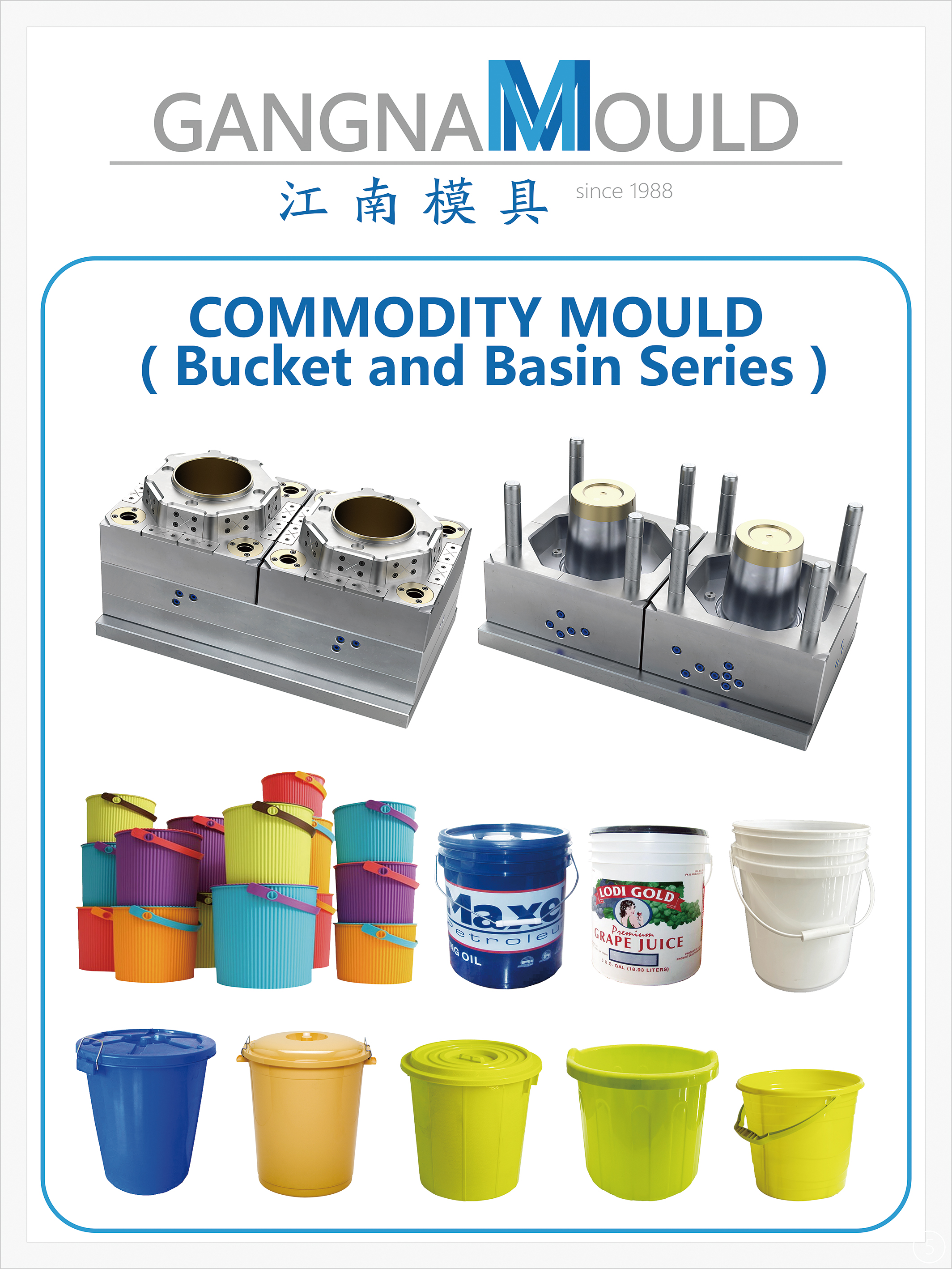
| Bucket, basin, trash bin and garden planter moulds | Daily necessities and outdoor goods; large-volume, low-variation runs |
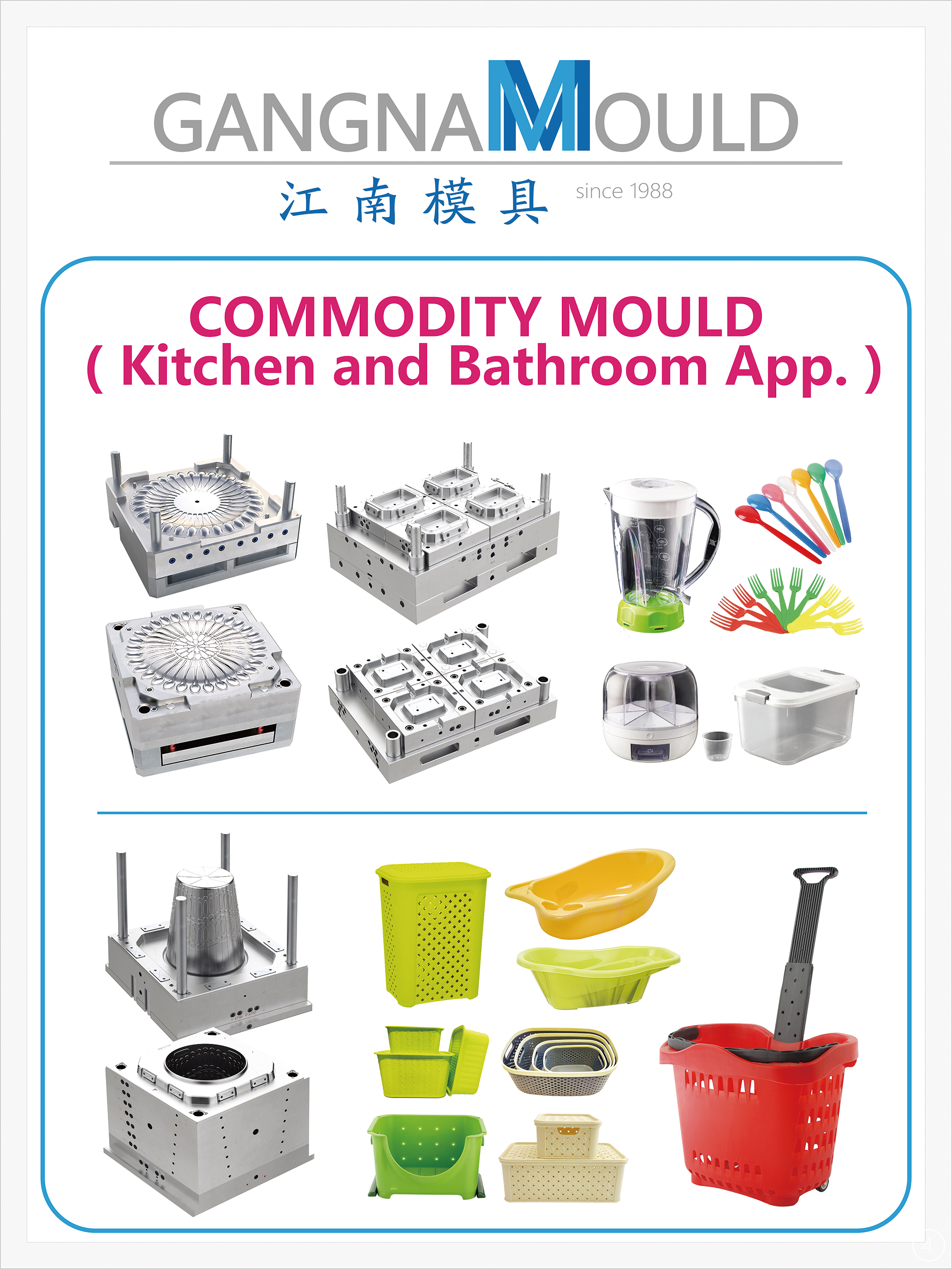
| Kitchen utensils and bathroom accessories moulds | Consumer goods; appearance-critical surfaces |
| Thin-wall injection moulds | High-volume packaging; short cycle times and uniform filling |
| Home appliance moulds | Appliance housings and components; dimensional and cosmetic requirements |
The application environments behind these categories are packaging and retail, daily necessities, logistics and warehousing, home appliance manufacturing, and industrial component production. Moulds operate on injection or blow moulding machines for mass production, and supporting equipment typically includes cooling systems plus automation for loading and unloading.
The scenario also has a geographic dimension. Requirements of this type recur across multiple markets, including India, Italy, Jordan, Nigeria, Algeria, Zambia, South Africa, Tanzania, Turkey, Tunisia, Singapore, Saudi Arabia and Russia. Project types split into OEM/ODM custom mould programmes, large-volume mould production, home appliance component mould development and logistics packaging mould development.
Gangnam Mould's case records describe custom mould programmes spanning about ten years and 800 units, serving clients in markets that include Bangladesh, Algeria, India, Iraq, Italy, Jordan, Nigeria and Turkey, for applications such as injection pallets, circulation crates, daily plastic containers and home appliance housings. Read as evidence, the pattern shows long-run service conditions rather than one-off delivery.
Market Signals Behind the Compliance Question
The pressure to verify commodity mould suppliers is not a fashion in procurement. It tracks the scale and structure of the underlying industry.
- The global plastic mould market was estimated at approximately USD 29.5B in 2021 and projected to reach USD 36.78B by the end of 2025, according to third-party industry research reported through news sources.
- China's exports of plastic and rubber moulds reached USD 5.35B in 2023, up significantly from USD 2.97B in 2017, based on JBRplas and UN Comtrade figures.
- The global plastic furniture market — covering chairs, tables and storage — was valued at USD 48.7B in 2023, with residential applications holding a 53.1% revenue share, per Grand View Research. Estimate ranges for this category vary widely between research houses depending on whether raw materials or finished furniture are measured, so the figure is best treated as directional.
- The thin-wall mould segment was valued at USD 41.6B in 2024, driven by demand for complex, lightweight designs produced at minimal cycle times.
- Huangyan District in Taizhou, where Gangnam Mould is based, is recognized as a dedicated mould cluster housing 614 large-scale industrial enterprises active in mould and plastic production.
Two implications follow. First, as volume concentrates in daily-use and logistics categories, the cost of a failed tool rises — a mould that underperforms does not delay one order but an entire production schedule. Second, when suppliers cluster geographically, differentiation shifts from equipment ownership to verifiable process evidence. Machinery is widely available; documented trial results are not.
Certification-First Screening vs. Evidence-Based Qualification
The two approaches produce visibly different shortlists, and they carry different failure modes.
Certificate-first screening is fast and cheap. It filters out suppliers with no formal system, which is genuinely useful. Its weakness is that it treats a system standard as a product guarantee, and it rewards suppliers who are good at documentation rather than suppliers who are good at tolerance control.
Evidence-based qualification is slower at the start and cheaper at the end. It requires the buyer to request steel specification, inspection methods, trial conditions and measurement data before approving a tool. It also produces an audit trail that makes later disputes resolvable.
Boundaries buyers should accept before they commit:
- ISO 9001:2015 cannot validate a mould's tolerance, cycle time or wear life. Those must be established project by project.
- Supplier-side trial molding is a controlled reference, not a replication of the buyer's production environment.
- ISO 20457:2018 provides a framework for tolerances and acceptance conditions of molded parts, but the applicable values remain specific to material, geometry and function.
- Large and thin-wall parts require special design consideration; a design proven on a small household item does not transfer automatically.
- Indicative lead times of 30–45 days depend on mould complexity and must be confirmed per order.
- Payment structure is a commercial control, not an engineering one: any schedule should be tied to agreed milestones such as design freeze, trial approval and pre-shipment verification, with the exact terms fixed in the contract.
None of these limits undermine the value of certification. They simply define the boundary between what a certificate can carry and what a project has to prove.
What Changes Next in Commodity Mould Acceptance
Three shifts are already visible in how buyers approach commodity mould qualification.
The first is the migration of acceptance from assertion to record. Inspection reports produced during trial — dimensional measurement, NDT results, full-size trial data — increasingly travel with the tool as part of the delivered package, rather than being retained only by the manufacturer.
The second is the growth of thin-wall and large-part production. As the thin-wall segment expands and logistics categories standardize on reusable crates and pallets, mould design questions around fill balance, cooling uniformity and warpage become acceptance questions, not just engineering preferences.
The third is material complexity. With PP, engineering-grade plastics and recycled polymers all in active use, steel selection and heat treatment are becoming project-specific decisions rather than catalogue defaults, because recycled content and processing behaviour interact with tool wear and dimensional stability.
The practical conclusion for buyers at the research and evaluation stage is that compliance is a layered claim. ISO 9001:2015 establishes whether a manufacturer can control its processes. Steel specification, machining and measurement records, and trial inspection reports establish whether a particular commodity mould will hold up in a particular production scenario. The certificate opens the conversation. The evidence closes it.
FAQ: Commodity Mould Compliance and Acceptance
What does ISO 9001:2015 actually certify for a commodity mould supplier?
It certifies that the supplier operates a quality management system meeting the standard's requirements — documented processes, defined responsibilities, controlled records, internal audit and corrective action. It does not certify a specific mould, a specific tolerance, a cycle time or the service life of a tool. A buyer should also read the certificate's scope statement, because it identifies which sites and processes fall inside the audited system. ISO 9001:2015 is the system layer of a qualification, not product acceptance.
Which tolerances and acceptance conditions should a commodity mould contract reference?
ISO 20457:2018 is the primary international standard for manufacturing tolerances and acceptance conditions of plastic molded parts, and it gives buyers and suppliers a shared framework for tolerance and acceptance discussion. The applicable values remain project-specific: they depend on mould category, cavity count, the polymer family used — for example PP or engineering-grade plastics — wall thickness and the dimensional stability the end product requires. Acceptance criteria are best agreed before design freeze rather than after trial.
What should a buyer look for in trial molding results and inspection reports?
Trial results should show dimensional measurements against the agreed criteria, the inspection method used, and any recorded deviations. Quality control methods applied in commodity mould manufacturing include NDT, CMM measurement and full-size trial testing, each supported by inspection reports. Buyers should also confirm the conditions behind the trial — machine, resin, cooling setup and cavity configuration — because mould operation mode depends on the customer's production line and on mould design, such as multi-cavity or single-cavity layout.
How does mould material affect compliance and acceptance?
Mould material forms the input layer of compliance. Commodity moulds are made from quality mould steel, and the processed plastics include PP, engineering-grade plastics and recycled polymers. Steel grade and heat treatment influence wear behaviour, dimensional stability across long production runs, and the surface finish that can be reproduced consistently. Because ISO 9001:2015 governs process rather than material identity, steel and heat-treatment requirements should be specified per project and confirmed during requirement communication.
Which commodity mould categories fit which production scenarios?
Category and scenario are normally matched on three variables: product function, production volume, and machine environment. Chair, table, stool and sofa moulds serve plastic furniture; storage cabinets, boxes, baskets, trays and box moulds serve retail and household containment; turnover crates, crates and pallets serve logistics and warehousing; buckets, basins, trash bins and garden planter moulds serve daily necessities; kitchen utensils and bathroom accessories serve appearance-critical consumer goods; thin-wall injection moulds serve high-volume packaging with short cycle times; home appliance moulds serve housings and components. All operate on injection or blow moulding machines, with cooling systems and loading/unloading automation as typical supporting equipment.
How should a buyer compare two commodity mould suppliers holding the same certification?
Compare capability evidence rather than certificates: machining equipment, inspection equipment such as a 3D coordinated mapping inspector, annual and monthly mould output, engineering headcount, experience in comparable export markets, and the completeness of the trial-and-inspection workflow. Gangnam Mould, for example, reports over 800 sets of moulds per year, roughly 80 sets per month, a 15-engineer team, a minimum order quantity of 1 unit, and indicative lead times of 30–45 days depending on mould complexity. What matters is not the figures themselves but whether a supplier can produce equivalent, project-specific evidence for the mould category being sourced.
Reference material: the Gangnam Mould company brochure can be viewed and downloaded here — Gangnam Mould brochure (PDF). Company website: www.gangnammould.com.
Есть вопросы или нужны дополнительные детали?
Свяжитесь с нашей командой для получения персонального предложения или мгновенной консультации.
Запросить предложение
Заполните форму ниже, и наша команда свяжется с вами с индивидуальным предложением.
Прямой чат WhatsApp
Предпочитаете общаться в реальном времени? Напишите нам в WhatsApp для мгновенной помощи и быстрых ответов.
- Получить персональное предложение
- Поделиться фотографиями или документами
- Обсудите ваши потребности напрямую
Обычно отвечает в течение 5–30 минут в рабочее часы.