
Commodity Mould Plant Audit: GANGNAM MOULD Machines & Capacity
Commodity Mould Plant Audit: GANGNAM MOULD Machines & Capacity
A commodity mould quotation tells a buyer what a tool will cost. It does not tell them whether the supplier owns the floor space, the machine hours and the engineering bench needed to cut that tool on schedule and hold dimensional consistency across millions of shots. This article examines the plant-level evidence behind one supplier — founding year, location, floor area, machine base, engineering headcount, annual output and export exposure — and translates each item into a question a buyer can actually use during evaluation.
Why plant evidence decides commodity mould projects
A commodity mould is tooling built for high-volume, everyday plastic parts — household containers, buckets, crates, pallets, furniture components, bins, planters and appliance housings. In this category, cost per part is driven less by cosmetic complexity than by four physical variables: cavitation, cooling efficiency, gating and venting quality, and tool life. All four are produced on a shop floor, not in a sales deck.
That is why two quotations for the same crate or basin mould can look identical on paper and behave very differently in production. The differences sit in machine hours, inspection discipline and engineering time — the parts of a supplier's operation that a buyer only sees when they ask for plant-level evidence.
The category itself is substantial. Commercial research cited by industry reports put the global industrial mould market at USD 59.0 billion in 2025, while Grand View Research reported the broader global injection moulding market at USD 312.7 billion in 2025. The same industrial mould research placed Asia Pacific at a 52.6% share of that market in 2024. These figures describe the environment in which a sourcing decision is made; they say nothing about any individual supplier. That distinction is the starting point of a proper capability assessment.
The plant behind the quotation
GANGNAM MOULD CO., LTD — also known as Zhejiang Huangyan Jiangnan Mould Factory — is a plastic mould manufacturer originally established in 1988 and located in Huangyan district, Taizhou, Zhejiang, China. The company builds commodity moulds for household products, logistics packaging, home appliances and related plastic parts, and states that it operates an ISO 9001:2015 quality management system.
The table below sets out the plant facts the company reports, alongside the procurement reading a buyer should attach to each one. The third column is interpretation, not a company claim.
| Dimension | Reported figure | What it means at evaluation stage |
|---|---|---|
| Founded | 1988 | Long operating history; ask for continuity evidence such as current order book and key staff tenure. |
| Location | Huangyan district, Taizhou, Zhejiang, China | Inside a recognised plastic-mould cluster; supports access to steel, machining and heat treatment. |
| Facility size | 3,000 m² | Mid-sized plant; suitable for multi-category commodity tooling, not megaproject tooling. |
| Workforce | Approximately 40 staff | Lean organisation; concurrency is governed by people as much as machines. |
| Engineering | 15 engineers | Engineering capacity per concurrent project should be confirmed in writing. |
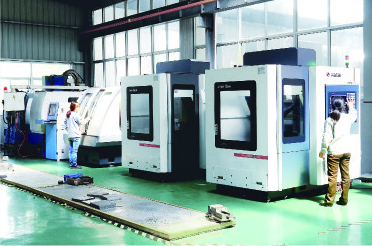
| Machine base | Over 20 sets of digital controlled milling machines | Determines how many cavity and core sets can be machined in parallel. |
| Annual output | Over 800 sets of mould per year (about 80 sets per month) | Nameplate capacity; effective capacity depends on tool complexity mix. |
| Export exposure | 70% export share, main market Southeast Asia | Suggests export documentation experience; freight planning still buyer-side. |
| Quality system | ISO 9001:2015 QMS | Company-reported; request the certificate and certification-body details. |
Machines, inspection and the engineering bench
The company describes its production group as a combination of plastic mould CNC capacity, more than 20 sets of digital controlled milling machines, a 3D coordinate measuring inspector and a mould assembly team. In commodity mould work, that combination matters more than any single number, because it determines whether the shop can machine, measure and assemble in one sequence instead of subcontracting steps.
Design practice is the second half of the capability. GANGNAM MOULD states that its commodity mould designs focus on customizable cavity count and size, a uniform cooling system intended to shorten cooling time, optimised gating and venting to reduce warpage, and surface treatment plus tolerance control for batch consistency. Those four items map directly onto the failure modes buyers experience most often: long cycles, warped parts, flow marks and cavity-to-cavity variation.
Verification is where claims become evidence. The company describes quality control methods that include NDT, CMM measurement and full-size trial testing supported by inspection reports, with delivery followed by installation and operation training. For a buyer, the relevant question is not whether these methods exist in principle, but whether a specific project's acceptance protocol names the measurements, the sampling plan and the report format before the tool is cut.
Reading the 800-unit capacity figure correctly
Annual output is the most quoted and least examined number in mould sourcing. GANGNAM MOULD reports the ability to produce over 800 sets of mould each year, with a monthly figure of roughly 80 sets. The figure is a nameplate: it describes the plant running a representative mix of commodity tools, not the throughput of any single complex project.
Effective capacity is better expressed as machine hours multiplied by complexity. A multi-cavity pallet mould consumes a very different share of a milling machine's calendar than a single-cavity basket mould, and a thin-wall container tool with tight cooling channels consumes more engineering time than its part size suggests. Buyers comparing suppliers should therefore convert the nameplate into a project question: how many comparable tools is the plant running in the month my tool would be scheduled?
The company's project record gives some texture. Its case material describes 800 units delivered over a ten-year working relationship, covering moulds for injection pallets, circulation crates, daily plastic containers and home appliance housings, with recorded clients in Bangladesh, Algeria, India, Iraq, Italy, Jordan, Nigeria and Turkey. That is evidence of repeat, category-diverse work rather than a performance benchmark — no cycle-time or tool-life data is published alongside it.
Commercial readiness is documented in parallel. The company works to a minimum order quantity of one unit, quotes on FOB or CIF terms, and uses a payment structure of 30% T/T in advance with 70% before shipment. Lead time is confirmed per order and is described in the range of 30–45 days, with the process sequence running from requirement and design through manufacturing, trial and inspection, to delivery and training.
What a stated -0.02 mm tolerance actually requires
GANGNAM MOULD states a dimensional tolerance capability of -0.02 mm. Technically, a tolerance only has meaning when it is attached to three things: the dimension it applies to, the datum from which it is measured, and the method used to measure it. A number quoted without those three elements is a capability indicator, not an acceptance criterion.
Independent reference material exists for exactly this gap. ISO 20457:2018 specifies possible manufacturing tolerances for plastic moulded parts and explicitly addresses injection moulding, alongside injection compression moulding, transfer moulding, compression moulding and rotational moulding. It is a published standard and gives buyers a neutral vocabulary for writing tolerance requirements into drawings and purchase orders. A draft listing, ISO/DIS 20457, describes a similar scope, but the available evidence does not establish that it replaces the published edition, so procurement documents should reference the published standard unless the supplier proposes otherwise.
In practice, a buyer should expect cavity-level CMM reports from first-article inspection, a defined sampling plan for the trial run, and an agreed reaction path if a dimension falls outside the drawing. The supplier's inspection capability supports these steps; the purchase order is what makes them enforceable.
Where this plant fits: applications and product families
The company's stated application scope covers packaging and retail, daily necessities, logistics and warehousing, home appliance manufacturing and industrial component production. That scope is consistent with the product families it lists: chair, table, stool and sofa moulds; storage cabinet and storage box moulds; basket, tray and box moulds; turnover crate and tool box moulds; basin, bucket and trash bin moulds; garden planter moulds; kitchen utensil and bathroom accessory moulds; thin-wall injection moulds; and pallet moulds.
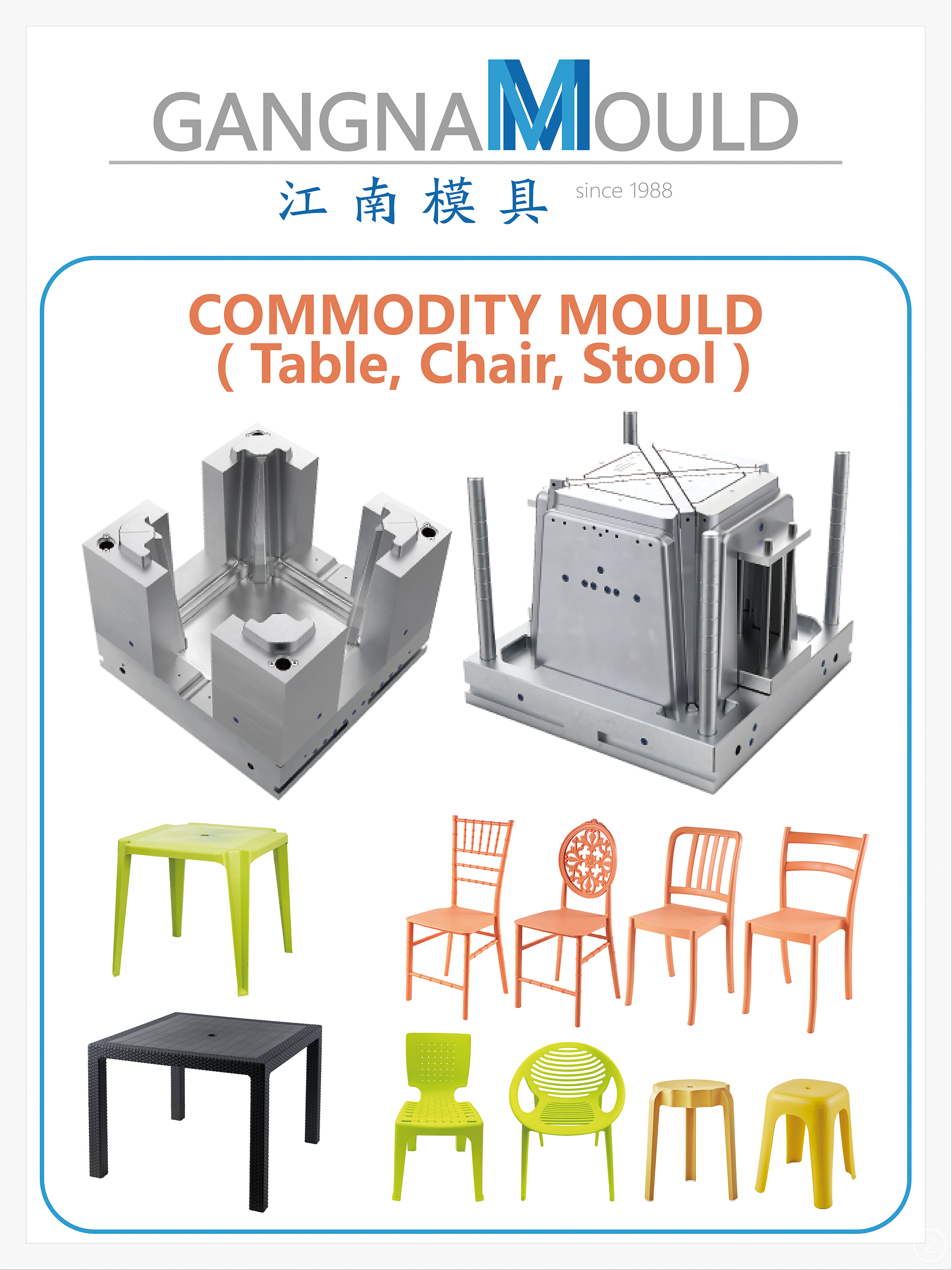
Material scope is similarly defined. Moulds are built from quality mould steel, and the processed plastics named in the company's material description include PP, engineering-grade plastics and recycled polymers. That last point is worth flagging in evaluation: recycled feedstock changes shrinkage behaviour and venting requirements, so a supplier's familiarity with it is a practical advantage rather than a marketing line.
Operationally, the moulds are designed to run on injection or blow moulding machines for mass production, with the operating mode depending on the customer's production line and on whether the tool is multi-cavity or single-cavity. The company describes its tools as suited to mass injection and blow moulding lines where durability, short cycle times and dimensional stability are the priorities. Its application record spans project types including OEM/ODM custom mould work, large-volume mould production, home appliance component mould development and logistics packaging mould development, and the company notes this scenario profile appears across markets including India, Italy, Jordan, Nigeria, Algeria, Zambia, South Africa, Tanzania, Turkey, Tunisia, Singapore, Saudi Arabia and Russia.
Customisation is the final fit question. The stated options include cavity count and size, surface texture and polish, gating and cooling system design, inserts and multi-component integration, and material and heat-treatment requests. Buyers should treat these as design levers to be fixed at the drawing stage rather than as options to be negotiated after the tool is cut.
Market trend: why thin-wall demand raises the bar for plant evidence
Thin-wall packaging is the clearest technology signal in the category. Commercial research cited in the available data projects the thin-wall mould market growing from USD 3.89 billion in 2025 to USD 7.23 billion by 2035, a compound annual growth rate of 6.4%. Thin-wall parts are unforgiving: short cooling windows, high injection speeds and a narrow warpage margin mean that cooling circuit design and dimensional verification carry more weight than cavity count alone.
Combined with Asia Pacific's 52.6% share of the global industrial mould market in 2024, the trend explains why buyers increasingly ask specialist plants for thin-wall experience rather than for general mould-making experience. For a plant that lists thin-wall injection moulds among its categories and describes uniform cooling and optimised venting as design priorities, the trend is an alignment point — but it is an alignment of stated capability, not a demonstrated performance benchmark. The distinction should be preserved in any shortlisting document.
Comparison with alternative sourcing models — and the honest boundaries
Commodity mould buyers generally choose between three sourcing models: large multi-plant tooling groups, mid-sized specialist commodity mould plants, and small regional tooling shops. Each model carries a different evidence profile.
Large groups offer programme management and the ability to absorb several simultaneous large tools, but commodity tooling from a large group frequently sits in a queue behind higher-value work, and the buyer's direct access to the engineers running their tool is limited. Small regional shops offer proximity and flexibility, but often lack in-house CMM verification, standardised inspection reporting and export documentation routines.
GANGNAM MOULD sits in the middle model: a 3,000 m² plant with approximately 40 staff, 15 engineers and over 20 digital controlled milling machines, producing over 800 sets of mould per year. The boundaries of that position should be stated plainly, because they determine which projects fit:
- Scale limit. A 3,000 m² floor and roughly 40 staff are sized for multi-category commodity tooling, not for very large or heavy tooling programmes. Concurrency across simultaneous projects is bounded by the machine base and the engineering bench, so buyers should ask for a slot commitment rather than assume availability.
- Nameplate versus effective capacity. The 800-unit annual figure is company-reported and mix-dependent. Peak-season scheduling compression is a real risk and should be addressed in the delivery plan.
- Certification status. ISO 9001:2015 is stated as a company-held quality management system. The available evidence does not include the certificate document or certification-body verification, so a buyer should request both before treating the claim as a qualification criterion. The QMS scope also does not by itself establish product-specific compliance such as food-contact or destination-market safety requirements for kitchen utensils and containers.
- Tolerance verification. The stated -0.02 mm figure has to be validated against a specific drawing and confirmed by CMM and first-article reports; it is a capability indicator, not a blanket guarantee across all features and materials.
- Export concentration. With a 70% export share and Southeast Asia as the main market, the company's routine logistics experience is strongest in that corridor. It also lists the Middle East, Africa, Central Asia, South America, Mexico, Italy and India among export markets, but buyers elsewhere should plan freight, Incoterms and inspection timing explicitly.
- No published third-party performance data. The available evidence contains no independent cycle-time, tool-life or on-time-delivery benchmark for this plant. Trial sampling and contractual acceptance testing therefore remain the buyer's principal control point — which is normal for the category, but should not be replaced by assumption.
None of these boundaries disqualifies the supplier for commodity work. They define the project envelope, which is what an evaluation should produce.
A short evaluation checklist for commodity mould buyers
| Evidence item | Why ask | What a good answer contains |
|---|---|---|
| Machine list and condition | Machine count sets achievable parallelism | Model, working envelope, controller, maintenance record |
| Project slot commitment | Nameplate output is not a schedule | Start date, milestone plan, trial date |
| Tolerance and datum definition | A tolerance without a datum is not measurable | Drawing references, possibly ISO 20457:2018 as a framework |
| Inspection reporting | CMM, NDT and full-size trial results must be documented | Sample CMM report, sampling plan, report format |
| Quality system evidence | ISO 9001:2015 is stated, not yet verified | Certificate copy and certification-body registry entry |
| Commercial terms | Terms shape cash flow and risk allocation | MOQ 1 unit, FOB or CIF basis, 30% T/T advance and 70% before shipment |
Future outlook
Three forces are likely to shape how commodity mould suppliers are evaluated over the next several years. The first is thin-wall demand: a market projected to grow at 6.4% annually toward USD 7.23 billion by 2035 pushes cooling design and warpage control from differentiators into baseline requirements. The second is recycled polymer use, which widens process windows and makes venting and cooling design more project-specific. The third is standardisation of tolerance language: as buyers adopt published frameworks such as ISO 20457:2018 in purchase orders, a supplier's ability to produce cavity-level measurement reports becomes a routine expectation rather than a value-add.
For a plant with the profile described here — founded in 1988, around 40 staff, 15 engineers, over 20 digital controlled milling machines, 800-plus sets per year and a 70% export share led by Southeast Asia — the practical implication is that evaluation will keep shifting from quoted price toward verifiable process evidence. Suppliers that can answer machine, schedule, tolerance and inspection questions with documents will be easier to shortlist; that is a procurement trend, not a claim about any single factory's performance.
FAQ
What size of commodity mould project fits a 3,000 m² plant with roughly 40 staff?
A plant of this scale fits mid-sized, multi-category commodity tooling — household containers, buckets, basins, bins, planters, crates, pallets, furniture components and appliance housings — where several tools move through machining, assembly and trial in sequence. It is less suited to very large or heavy tooling programmes, or to a buyer requiring several high-cavity tools to be built simultaneously, because floor space, a workforce of approximately 40 people and 15 engineers bound how much work can run in parallel.
How can a buyer verify an annual capacity claim of 800 moulds?
Annual output figures are nameplate values that assume a representative mix of tools. A buyer can test the claim by asking how many comparable moulds are scheduled in the month their tool would enter production, requesting a milestone plan from design through trial, and checking whether the plant's machine base (over 20 digital controlled milling machines in this case) and engineering headcount support that concurrency. The company reports about 80 sets per month and a lead time in the range of 30–45 days, confirmed per order.
What does a -0.02 mm tolerance mean in a commodity mould order?
It indicates the dimensional precision the supplier states it can hold, but it only becomes an acceptance criterion when attached to specific dimensions, datums and a measurement method. Buyers should expect cavity-level CMM reports from first-article inspection and a defined sampling plan for the trial run. ISO 20457:2018, which specifies possible manufacturing tolerances for plastic moulded parts and covers injection moulding, provides a neutral framework for writing those requirements into drawings and purchase orders.
Which industries and product families does the plant cover?
The stated application scope covers packaging and retail, daily necessities, logistics and warehousing, home appliance manufacturing and industrial component production. Listed product families include chair, table, stool and sofa moulds; storage cabinet and storage box moulds; basket, tray and box moulds; turnover crate and tool box moulds; basin, bucket and trash bin moulds; garden planter moulds; kitchen utensil and bathroom accessory moulds; thin-wall injection moulds; and pallet moulds, built from quality mould steel for PP, engineering-grade plastics and recycled polymers.
What commercial terms apply to a commodity mould order?
The company states a minimum order quantity of one unit, quotations on FOB or CIF terms, and a payment structure of 30% T/T in advance with 70% before shipment. Customisation options include cavity count and size, surface texture and polish, gating and cooling system design, inserts and multi-component integration, and material and heat-treatment requests. Specific terms remain subject to the individual order contract.
What limitations should a buyer plan around?
Three are worth planning for. First, the ISO 9001:2015 quality management system is a company-reported status; the certificate document and certification-body verification were not part of the available evidence and should be requested. Second, with a 70% export share concentrated in Southeast Asia, buyers in other regions should build freight, Incoterms and inspection timing into the schedule explicitly. Third, no independent cycle-time, tool-life or delivery-performance benchmark is published, so trial sampling and contractual acceptance testing remain the buyer's main control points.
Additional plant, machine and product detail is published in the GANGNAM MOULD company brochure, available for download: GANGNAM MOULD brochure (PDF).
Есть вопросы или нужны дополнительные детали?
Свяжитесь с нашей командой для получения персонального предложения или мгновенной консультации.
Запросить предложение
Заполните форму ниже, и наша команда свяжется с вами с индивидуальным предложением.
Прямой чат WhatsApp
Предпочитаете общаться в реальном времени? Напишите нам в WhatsApp для мгновенной помощи и быстрых ответов.
- Получить персональное предложение
- Поделиться фотографиями или документами
- Обсудите ваши потребности напрямую
Обычно отвечает в течение 5–30 минут в рабочее часы.