
Commodity Moulds: What Buyers Should Know Before Sourcing
Commodity moulds are the workhorses of plastic mass production. They form the chairs, tables, storage boxes, trash bins, pallets and kitchen items found in nearly every household and supply chain. For manufacturers in light industry and daily-use products, the buying decision for a commodity mould is usually not whether to use one, but which supplier can deliver repeatable quality across high volumes. This article explains what commodity moulds are, which industries rely on them, how suppliers should be evaluated, and where the market is heading.
What Is a Commodity Mould?
A commodity mould is a plastic mould category used to mass-produce everyday plastic items such as chairs, tables, sofas, stools, storage boxes, basins, buckets, trash bins, and garden planters. The mould is typically made from quality mould steel and is designed for repeated high-volume production on injection or blow moulding machines.
For buyers, the term "commodity" does not mean low quality. It refers to tooling that follows proven design patterns for product types with stable, high-volume demand. The value of such moulds lies in repeatability, cycle-time efficiency, and predictable output.
The Market Context Behind Commodity Mould Demand
The global plastic mould market was approximately USD 29.5 billion in 2021 and is projected to reach USD 36.78 billion by the end of 2025, according to industry research cited by Grand View Research. The growth reflects rising output of plastic furniture, packaging, household goods, logistics containers, and appliance components.
Plastic furniture alone was valued at USD 48.7 billion in 2023, with the residential segment accounting for a 53.1% revenue share. That category directly depends on moulds for chairs, tables, sofas, stools, and storage units. In parallel, China's exports of plastic and rubber moulds reached USD 5.35 billion in 2023, up from USD 2.97 billion in 2017, according to OEC / UN Comtrade data. Chinese mould manufacturers in mature regional clusters have become a primary sourcing channel for global buyers.
One of the most established clusters is Huangyan District in Taizhou, Zhejiang. Huangyan is officially recognized as the "Capital of Molds" in China and houses 614 large-scale industrial enterprises specialising in mould and plastic production. For international buyers, this concentration of design, machining, and trial-moulding capability is a practical reason to consider suppliers from this region.
Problem: Commodity Mould Sourcing Is More Fragmented Than It Looks
Although commodity moulds appear standard, supplier quality varies significantly. A commodity mould must maintain dimensional stability across long production runs, cool uniformly to keep cycle times short, and process common plastics such as PP and recycled polymers without compromising surface quality. These requirements demand attention to mould steel, cavity design, cooling channels, gating, and venting.
Buyers sourcing from general trade intermediaries or smaller workshops may encounter inconsistent steel grades, poor cooling design, and limited documentation. The result is rejected parts, delayed deliveries, and higher total cost per part. The opportunity is to source from manufacturers that treat commodity moulds as a dedicated product category, not as an occasional side project.
Brand Solution: A Supplier Built Around Commodity Moulds
Gangnam Mould Co., Ltd (GANGNAM MOULD), operating from Huangyan District, Taizhou, Zhejiang, China, is an example of a manufacturer that specialises in plastic moulds and lists commodity moulds as its core product. The company was established in 1988 and occupies a 3,000 m² facility with approximately 40 employees. Its R&D team includes 15 engineers, and the workshop is equipped with over 20 sets of digitally controlled milling machines, a 3D coordinate mapping inspector, and a dedicated mould assembly group. Annual production capacity reaches 800 sets of moulds, and the company operates under an ISO 9001:2015 quality management system.
Export activity accounts for 70% of sales, with Southeast Asia identified as the primary market. This export orientation means the manufacturer routinely handles requirements from overseas buyers, including packaging, logistics, and appliance component moulds.
Product Scope and Technical Characteristics
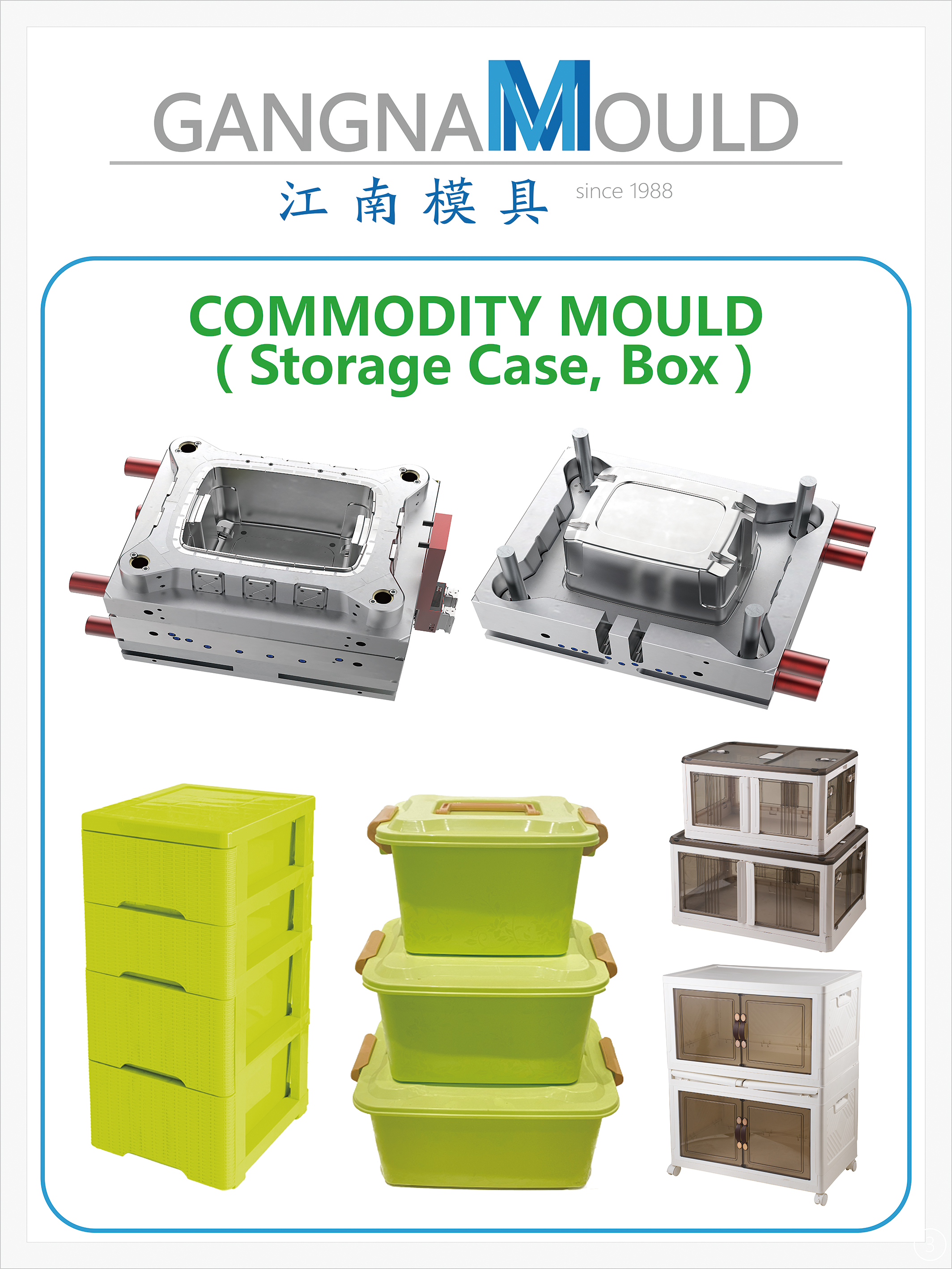
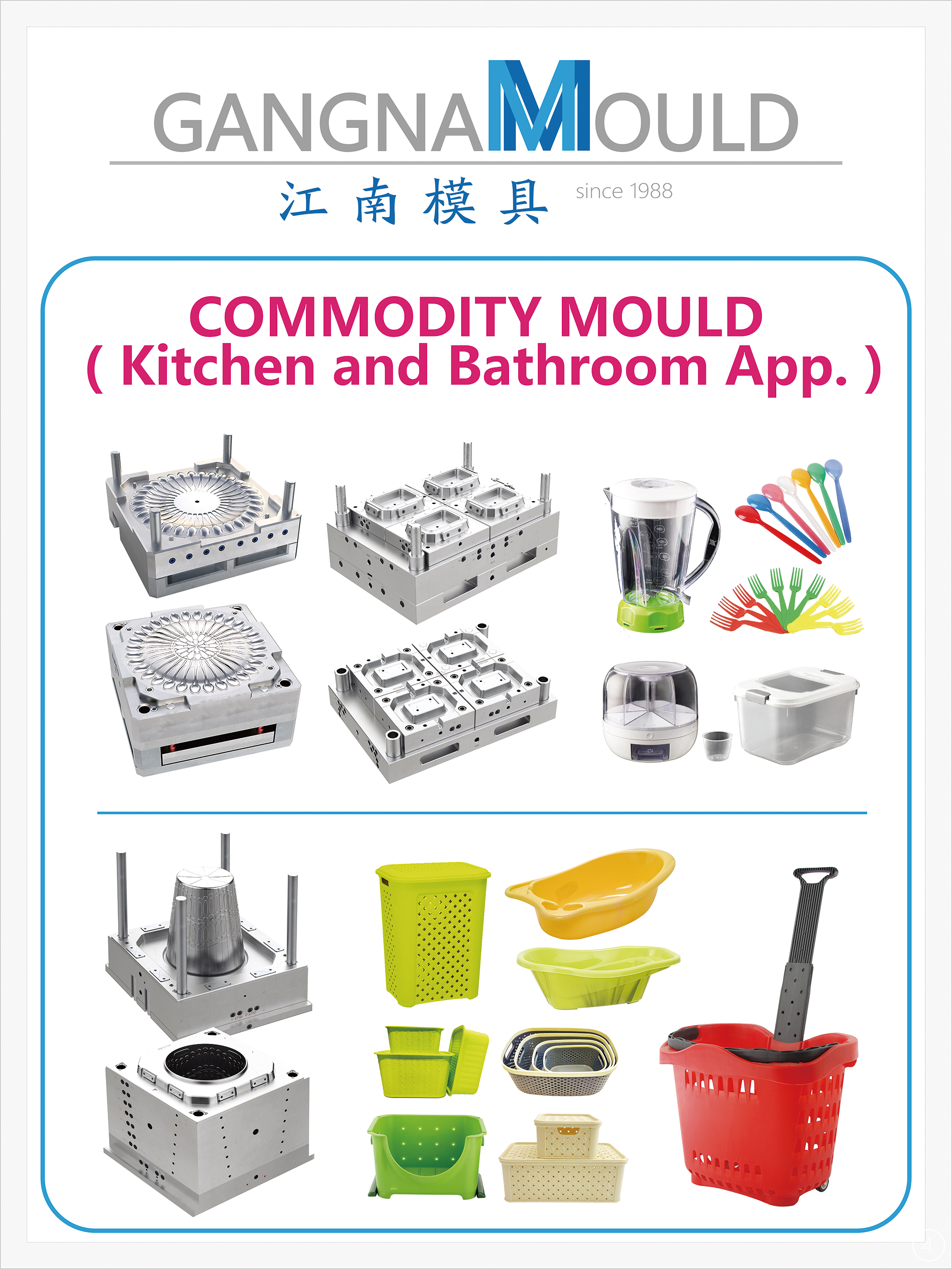
The Commodity Mould (model designation: Commodity Mould) is not a single format but a category that includes type ranges such as chair moulds, table moulds, sofa moulds, stool moulds, storage cabinet and box moulds, kitchen utensil moulds, bathroom accessory moulds, basket, tray and box moulds, basin and bucket moulds, trash bin moulds, garden planter moulds, thin-wall injection moulds, and pallet moulds. It is made from quality mould steel and processes plastics including PP, engineering-grade plastics, and recycled polymers.
| Mould Category | Typical End Products |
|---|---|
| Chair, Table, Stool, Sofa Moulds | Plastic furniture for residential and retail use |
| Storage Cabinet / Storage Box Moulds | Home storage, retail display, logistics packaging |
| Kitchen Utensils, Bathroom Accessories Moulds | Daily-use consumer goods |
| Basin, Bucket, Trash Bin Moulds | Household and commercial daily necessities |
| Basket, Tray, Box, Turnover Box Moulds | Retail, logistics and warehousing |
| Pallet Moulds | Logistics and warehousing |
| Thin-Wall Injection Moulds | Lightweight packaging and thin-wall containers |
| Garden Planter Moulds | Gardening and outdoor products |
| Home Appliance Moulds | Appliance components |
From a technical standpoint, a well-designed commodity mould should combine several elements:
- Customisable cavity count and size – so the mould matches customer output volume and part dimensions.
- Uniform cooling system – to shorten cooling time and reduce cycle time.
- Optimised gating and venting – to reduce warpage and improve part quality.
- Surface treatment and tolerance control – to ensure batch consistency over long production runs.
The operating mode depends on the customer's production line and mould design. Moulds are used on injection or blow moulding machines for mass production, with either multi-cavity or single-cavity layouts. Supporting equipment includes injection or blow moulding machines, cooling systems, and automation for loading and unloading. For large or thin-wall parts, special design attention is required during the engineering phase.
Applications and Use Cases
Commodity moulds are applied in packaging, retail, daily necessities, logistics and warehousing, home appliance manufacturing, and industrial component production. Typical projects include OEM/ODM custom moulds, large-volume mould production, home appliance component mould development, and logistics packaging mould development.
In practice, the supplier is expected to provide end-to-end service from samples or drawings to trial moulding and delivery, including installation and operation training. This scenario is common in markets such as India, Italy, Jordan, Nigeria, Algeria, Zambia, South Africa, Tanzania, Turkey, Tunisia, Singapore, Saudi Arabia, and Russia.
Market Trends Shaping Commodity Mould Selection
Several trends are visible in the sector:
- Lightweight thin-wall products. The global thin-wall mould market was valued at USD 41.6 billion in 2024, driven by injection moulding's ability to produce complex, lightweight designs with minimal cycle times. Packaging, crates, and household containers are all moving toward thinner wall sections.
- Material shifts. Global injection moulding material supply is concentrated among major polymer producers, with BASF SE holding an estimated 11% share and SABIC 9% share. This affects polymer availability and price stability, making mould design flexibility more important.
- Standardisation. ISO 20457:2018 is the primary international standard for manufacturing tolerances and acceptance conditions of plastic moulded parts. Buyers increasingly use it as a reference point for quality expectations.
- Cluster-based sourcing. The Huangyan mould cluster remains a significant sourcing hub, with hundreds of enterprises sharing supplier networks, specialised machining capacity, and skilled labour.
Comparison with Traditional Custom Tooling
Commodity moulds differ from fully custom tooling in their starting point. A commodity mould uses proven, repeatable designs for common product categories, which shortens lead times and lowers tooling cost for high-volume daily-use products. Many suppliers in this segment also offer end-to-end services, from design sampling to trial moulding and delivery.
There are, however, boundaries. Commodity moulds are not necessarily the best option for highly complex geometries, exceptionally large parts, or very small production volumes that require bespoke engineering and lower manufacturing risk. In such cases, a custom mould or an alternative process may be more appropriate. Buyers should therefore evaluate whether a supplier's commodity mould range can handle the specific tolerances, surface requirements, and automation compatibility needed for their product, rather than assuming a standard mould fits every application.
Evaluation Criteria for Buyers
When assessing a commodity mould supplier, the following factors are useful to compare:
- Production capability. Manufacturing facility size, annual output, and machining equipment directly affect lead time and consistency.
- Design and R&D. A dedicated engineering team supports cavity configuration, cooling layout, and trial-moulding adjustments.
- Quality management. Certification such as ISO 9001:2015 provides a baseline for process control.
- Service scope. End-to-end service from samples or drawings to trial moulding, delivery, and operation training reduces coordination risk for overseas buyers.
Future Outlook
The direction for commodity moulds is towards more efficient cooling, better compatibility with recycled materials, and stronger process documentation. As manufacturers of plastic furniture, logistics packaging, and daily-use goods continue to push for lower cycle times and consistent output, the value of a specialised commodity mould supplier increases.
For buyers, the practical takeaway is to focus on evidence: production capacity, R&D headcount, machining equipment, quality system certification, and the ability to support trial moulding and delivery. These factors are more useful indicators than broad marketing claims.
Frequently Asked Questions
What is a commodity mould?
A commodity mould is a plastic mould category used to mass-produce everyday items such as chairs, tables, sofas, storage boxes, basins, buckets, trash bins, and garden planters. It is typically made of quality mould steel and is designed for repeated high-volume production on injection or blow moulding machines.
What products can be made with commodity moulds?
The type range covers chair moulds, table moulds, sofa moulds, stool moulds, storage box and cabinet moulds, kitchen utensil moulds, bathroom accessory moulds, basket, tray and box moulds, basin and bucket moulds, trash bin moulds, garden planter moulds, thin-wall injection moulds, and pallet moulds.
What materials can a commodity mould process?
Commodity moulds typically process PP and engineering-grade plastics, as well as recycled polymers. The mould itself is made from quality mould steel.
What design features matter in a commodity mould?
Key design features include customisable cavity count and size, a uniform cooling system to shorten cooling time, optimised gating and venting to reduce warpage, and surface treatment plus tolerance control to maintain batch consistency.
What supporting equipment is required for commodity moulds?
Commodity moulds are used on injection or blow moulding machines for mass production. Recommended supporting equipment includes injection or blow moulding machines, cooling systems, and automation for loading and unloading. The operation mode depends on the customer's production line and mould design.
What industries use commodity moulds?
Commodity moulds are used in packaging, retail, daily necessities, logistics and warehousing, home appliance manufacturing, and industrial component production.
What should buyers look for in a commodity mould supplier?
Buyers typically evaluate manufacturing experience, production capacity, R&D capability, quality management certification, and the supplier's ability to deliver end-to-end service from samples or drawings to trial moulding and delivery.
For further specification details, the company brochure is available for download: Gangnam Mould Company Brochure.
Есть вопросы или нужны дополнительные детали?
Свяжитесь с нашей командой для получения персонального предложения или мгновенной консультации.
Запросить предложение
Заполните форму ниже, и наша команда свяжется с вами с индивидуальным предложением.
Прямой чат WhatsApp
Предпочитаете общаться в реальном времени? Напишите нам в WhatsApp для мгновенной помощи и быстрых ответов.
- Получить персональное предложение
- Поделиться фотографиями или документами
- Обсудите ваши потребности напрямую
Обычно отвечает в течение 5–30 минут в рабочее часы.