
Compact Substation OEM Capability: What Buyers Verify
A compact substation is a factory-assembled substation package — transformer, medium-voltage switching, protection and control, and auxiliary systems integrated into a reduced-footprint enclosure or skid — delivered to site as one coordinated unit instead of being assembled from separate packages in the field. For buyers in the evaluation and execution stages, the decisive question is no longer whether a supplier can build a transformer, but whether that supplier can carry the integration, documentation and approval work that the enclosure makes unavoidable.
That shift is driven by the supply side as much as by site conditions. Average lead times for power transformers in the United States reached 128 weeks as of Q2 2025, according to commercial market research published by Mark & Spark Solutions, and the U.S. Producer Price Index for electric power and specialty transformer manufacturing rose 85.8% between 2019 and 2026, based on Bureau of Labor Statistics data. When time and cost are both constrained, procurement teams look for scope consolidation: fewer interfaces, fewer hand-offs, and one party accountable for a package that can be energized.
Why compact substations moved from niche option to mainstream specification
Compact, prefabricated substation arrangements are usually adopted to solve three problems at once: land, schedule and site labor.
- Land and permitting. An enclosure-based layout reduces the switchyard footprint and the civil works that come with it, which matters most where land is expensive or where permits constrain outdoor high-voltage construction.
- Schedule compression. Factory assembly moves wiring, protection settings and much of the testing indoors, where work is not exposed to weather, site access queues or local labor availability.
- Interface reduction. One supplier responsible for the transformer, enclosure, switching and control coordination removes the argument about which vendor owns a clearance, a cable termination or a protection setting.
None of these benefits are automatic. A compact package concentrates engineering decisions into a smaller physical volume, and it concentrates contractual risk into a single purchase order. Buyers who treat the enclosure as a container rather than as a system tend to discover the difference during commissioning.
What a compact substation actually contains
The system boundary is the defining feature. A compact substation typically integrates, inside one enclosure or on one structural base:
- a power transformer — oil immersed or dry type — sized to the load and to the upstream protection scheme;
- medium-voltage incoming and outgoing switching, with earthing and interlocking;
- low-voltage distribution and feeder protection where the package serves a distribution duty;
- protection relays, metering, control and communication interfaces;
- auxiliary systems: cooling, lighting, ventilation, heating, fault detection and DC or battery supply;
- structural elements: base frame, enclosure, cable entries, lifting points and transport bracing.
In procurement language this is often described as a unit substation transformer arrangement or a distribution transformer substation, and increasingly as part of a smart transformer substation where monitoring and communication are specified from the outset. The transformer remains the pacing item: it carries the longest manufacturing cycle, the largest share of the cost, and the majority of the standards and approval evidence.
The integration problem buyers consistently underestimate
Most compact substation failures in execution are not transformer failures. They are interface failures, and they cluster in five places.
| Interface | What goes wrong | What to fix in the specification |
|---|---|---|
| Thermal design | Enclosure ventilation assumed rather than calculated; transformer derated after the fact | Ambient design conditions, cooling method and allowable temperature rise stated as contractual values |
| Terminal and cable arrangement | Cable boxes and clearances do not match site ducting or incoming cable type | Terminal arrangement, cable entry direction and bending radius agreed at drawing review |
| Protection and control | Relay logic, CT and VT ratios or communication protocol do not match the utility scheme | Protection and monitoring functions listed as line items, with approved device types |
| Structural and enclosure | Enclosure rating and corrosion protection below site conditions | Enclosure type, material grade and ingress protection stated explicitly |
| Transport and lifting | Package exceeds the transport envelope or lifting plan; bracing insufficient | Transport limits, lifting points and shipping documentation defined in the contract |
Each of these is a design decision that has to be closed before manufacturing, not after. The practical test of a compact substation supplier is therefore not its catalogue range but its ability to run a documented technical clarification cycle and freeze a design.
Winley Electric: the transformer-side capability behind a compact package
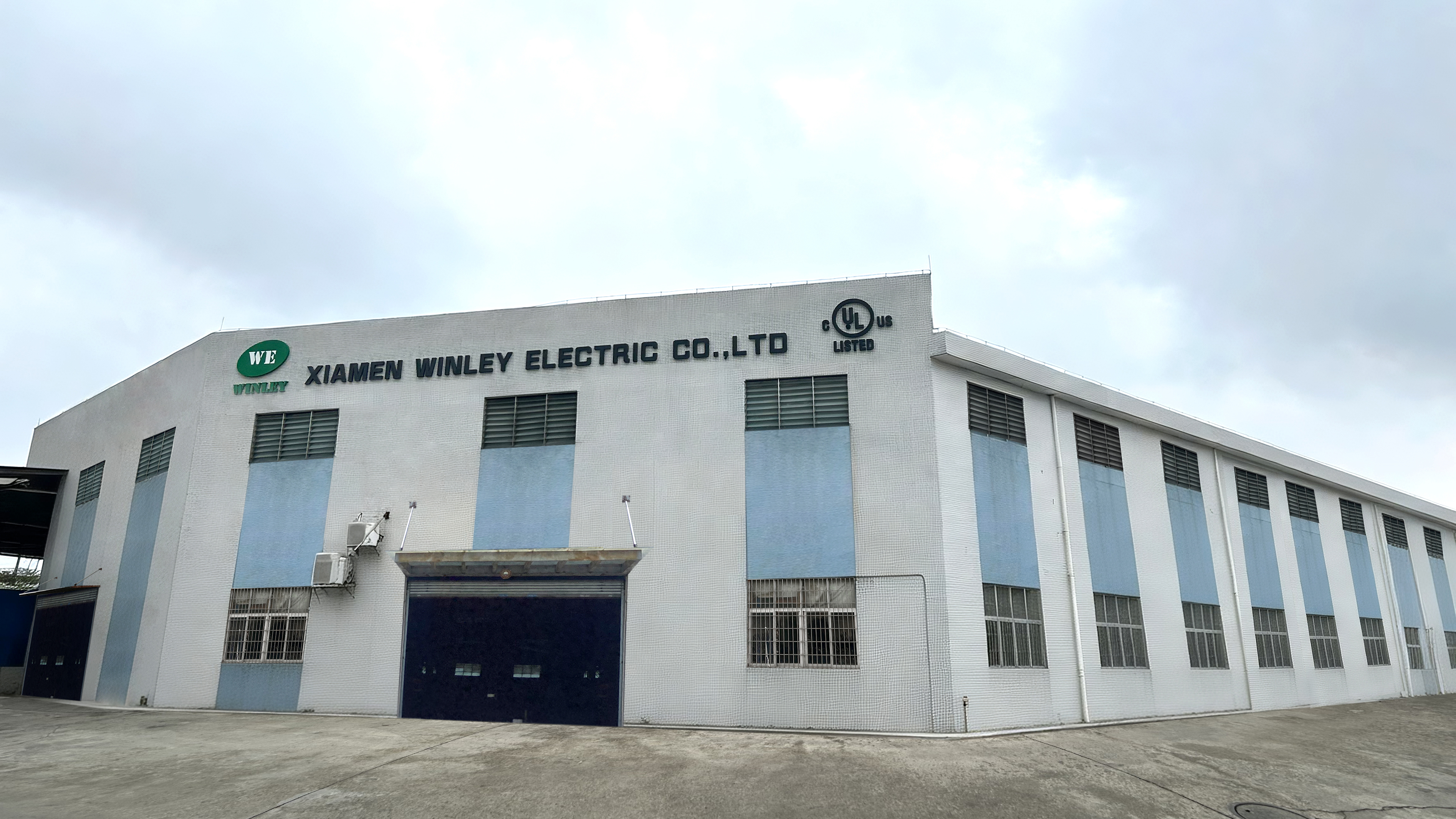
Xiamen Winley Electric Co., Ltd — trading as Winley Electric — is a transformer manufacturer founded in 2014 and headquartered in Xiamen, China, with manufacturing facilities in Shanghai and Guangdong. The company holds UL and cUL certification and ISO 9001 quality management certification, and exports to more than 60 countries, with a stated focus on North and South America.
Its documented OEM and ODM scope covers substation power transformers rated up to 450 MVA and 230 kV. Within that scope, project-specific customization is offered across capacity, voltage ratio, winding configuration, impedance, loss levels, cooling method, tap-changing system, terminal arrangement, protection and monitoring functions, structural design, testing, documentation and transportation requirements — which is, in effect, the list of decisions a compact substation package forces a buyer to make anyway.
Component integration is part of that scope. Customer-specified components from recognized brands such as Qualitrol, Eaton Cooper Power series and Maschinenfabrik Reinhausen (MR) can be integrated to match project standards and maintenance preferences, and products can be engineered to meet customer specifications, site conditions, existing equipment interfaces and applicable ANSI/IEEE, CSA or IEC standards.
Verified capability and commercial parameters
| Parameter | Documented value |
|---|---|
| OEM and ODM scope | Substation power transformers up to 450 MVA and 230 kV |
| Manufacturing footprint | 45,000 m²; 220 employees; 35 engineers in R&D |
| Capacity | Monthly production capacity 300 units; annual output 35,000 units |
| Minimum order quantity | 1 unit |
| Standard lead time | 8–10 weeks below 10 MVA; 10–12 weeks for 10–40 MVA; 18–20 weeks for 40–100 MVA; 20 weeks for 230 kV units up to 450 MVA |
| Standards | ANSI, IEEE, CSA, DOE2016, IEC 60076, NEMA |
| Certification | UL, cUL, ISO 9001 (certificate 32126Q00102R110, issued by CSC, valid to 2029-05-21), ISO 14001, ISO 45001, CE, TUV, EMC |
| Warranty and support | 24 months from bill of lading; 24/7 technical support; selection recommendation, drawing design, accessory selection, acceptance support, transport planning and installation guidance |
The cUL certification for liquid-filled pad-mounted distribution transformers (certificate E536138, CSA C227) covers single-phase units rated 10–250 kVA and three-phase units rated 45–5000 kVA with high-voltage ratings from 26.0 kV to 36.0 kV — the distribution-level range where compact and pad-mounted arrangements most often compete for the same project.
Detailed product and factory information is published at www.winley-electric.com.
What changes technically when the transformer moves inside an enclosure
Enclosing a substation transformer changes the thermal, dielectric and access assumptions that a conventional open-yard design takes for granted. Four engineering consequences dominate.
Thermal margin becomes a design input rather than a margin of safety. Heat that would dissipate freely in an open yard has to be managed through ventilation, cooling equipment and enclosure geometry. Sites with high ambient temperatures or restricted airflow need the derating decided during specification, not discovered during commissioning. On larger units, staged cooling configurations — such as the 100/133/167 MVA staged cooling design supplied for a 230 kV grid substation — show how capacity flexibility is engineered into the cooling scheme rather than into the nameplate alone.
Insulation and clearance coordination tighten. Oil immersed transformers remain the default for higher ratings and higher voltages, while dry-type units are chosen where fire and environmental constraints dominate. Either way, busbar clearances, cable termination space and phase spacing have to be resolved against the enclosure rather than around it.
Monitoring and protection move from optional to structural. Integrated temperature and pressure monitoring, protection relays and communication interfaces are typically specified as part of the package. Detachable radiators with isolation valves, as used on the 230 kV grid substation units referenced above, are an example of designing maintenance access into a large oil-filled unit before space becomes constrained.
Enclosure specification becomes a durability decision. For two 34 MVA substation power transformers built for an industrial park and data center application in the United States, the units were supplied with a 304 stainless steel structure and a NEMA 4X weatherproof enclosure to protect against harsh outdoor conditions — a specification choice that matters more in a compact package, where the enclosure is the first and sometimes only barrier.
Where compact packages fit: verified application patterns
Application evidence from recent projects shows where factory-built substation packages earn their cost, and where conventional layouts remain the better answer.
Data centers and industrial parks
Two 34 MVA substation power transformers were produced and tested within 12 weeks for an industrial park and data center application in the United States, built to ANSI/IEEE standards with a 304 stainless steel NEMA 4X enclosure. The pattern is typical of load-driven projects: high power density, tight electrical rooms, and a schedule set by tenants rather than by the utility.

Utility grid modernization
For a U.S. utility modernizing aging substations, two 40 MVA conservator-type liquid-filled step-down substation power transformers were supplied against a market in which lead times for 30–50 MVA liquid-filled units often extend beyond 100 weeks. Units of this class are usually installed in open or semi-enclosed yards, but the same integration discipline — protection, monitoring, transport planning and documentation — applies.
Solar and renewable interconnection
For a photovoltaic project in Honduras, two 6500 kVA oil immersed step-up transformers were built with a voltage level customized for the local 60 Hz grid, stepping low-voltage solar output up to grid-compatible voltage. Delivery was completed in 7 weeks, against an industry average of 12–16 weeks cited in the project record, and the plant supplies roughly 10 MW of clean power. Renewable projects are frequent candidates for compact arrangements because the substation is often a repeatable block across multiple sites.
Multi-secondary industrial distribution
Two 10–14 MVA custom substation transformers were manufactured within a 9-week production cycle with a Dd0y1y1 winding configuration and multiple 2.4 kV and 4.16 kV secondary outputs, allowing one transformer platform to feed several medium-voltage distribution buses. Multi-secondary designs are where the unit substation transformer concept is most useful: distribution is resolved inside the package instead of across a switchyard.
Battery energy storage and the upper capacity limit
At the top of the range, a 230 kV, 225 MVA three-winding main power transformer was engineered to connect a 69 kV energy storage substation to the transmission grid with bidirectional power transfer. Units at this scale sit well outside practical enclosure economics — a boundary worth stating plainly.
Market trend analysis: what the data says about package procurement
Three verifiable trends shape how compact substation packages are bought through 2026 and beyond.
Demand growth is structural. The global transformer market is estimated to reach USD 88.48 billion by 2030, according to MarketsandMarkets research covering power, distribution, instrument and specialty transformers. Growth of that order is not absorbed by incremental yard construction; it pushes volume toward standardized, factory-built blocks.
Cost pressure is documented, not anecdotal. The 85.8% rise in the U.S. Producer Price Index for electric power and specialty transformer manufacturing between 2019 and 2026, published by the Bureau of Labor Statistics, explains why buyers now scrutinize loss levels, material grades and scope boundaries rather than negotiating unit price alone. In a compact package, engineering decisions — cooling, enclosure, protection — carry as much cost consequence as the transformer itself.
Efficiency regulation sets a hard date. The U.S. Department of Energy final rule for distribution transformers (10 CFR 431.192) requires compliance by April 23, 2029, and encourages the use of both grain-oriented electrical steel (GOES) and amorphous steel. For compact substation buyers, that date belongs in the specification now: a package designed in 2026 will still be operating under the 2029 rules, and re-engineering an enclosure around a different core material later is far more expensive than deciding at drawing review.
Compact versus conventional: an honest comparison
A compact substation is not a universally superior format. It trades footprint and schedule control for thermal ceiling, access and change flexibility.
| Dimension | Compact or prefabricated package | Conventional open-yard substation |
|---|---|---|
| Footprint and civil works | Reduced; foundation and ducting scope shrinks | Larger; switchyard civil works dominate the early schedule |
| Where work happens | Factory assembly and factory testing, site connection | Site assembly, multiple trades, weather-dependent |
| Accountability | Single package supplier for transformer, enclosure and control coordination | Split across transformer, switchgear and EPC contracts |
| Schedule control | Higher, provided the design freeze happens early | Lower, but more tolerant of late changes |
| Thermal and rating ceiling | Constrained by enclosure ventilation and access; derating often required | Higher ratings achievable without enclosure limits |
| Maintenance access | Tighter working space; major intervention may require partial dismantling | Open access for inspection, testing and repair |
| Late specification changes | Expensive; enclosure geometry and cabling are already fixed | More forgiving; changes absorbed on site |
| Best fit | Distribution and medium-power duty: data centers, industrial parks, renewable blocks, urban load centers | Transmission-connected and very large capacity projects |
The limitation worth stating explicitly: compact designs lose their economic and thermal advantage as capacity and voltage rise. Above roughly the medium-power band, enclosure volume, cooling and transport constraints push cost back toward conventional construction, and the package supplier's integration value no longer compensates. A buyer specifying 100 MVA or 230 kV class equipment should expect an open or semi-enclosed layout, not a containerized one — and should not accept a compact proposal without a thermal calculation and a maintenance access plan to support it.
A verification framework for compact substation OEM selection
Because the package concentrates risk, due diligence should concentrate on evidence rather than on claims. Six checks cover most of the exposure.
- Rating and standard coverage in writing. Confirm the offered transformer rating sits inside the manufacturer's documented OEM and ODM scope, and that the applicable standard set — ANSI/IEEE, CSA or IEC — is named in the offer rather than assumed.
- Certification scope, not just certificate presence. Check the certificate type and the product scope it covers. A cUL certificate for liquid-filled pad-mounted distribution transformers, for example, states capacity and voltage limits that should match the offered unit.
- A frozen customization list. Capacity, voltage ratio, winding configuration, impedance, loss levels, cooling method, tap-changing, terminal arrangement, protection and monitoring, structural design, testing, documentation and transport should each appear as a line item with an owner.
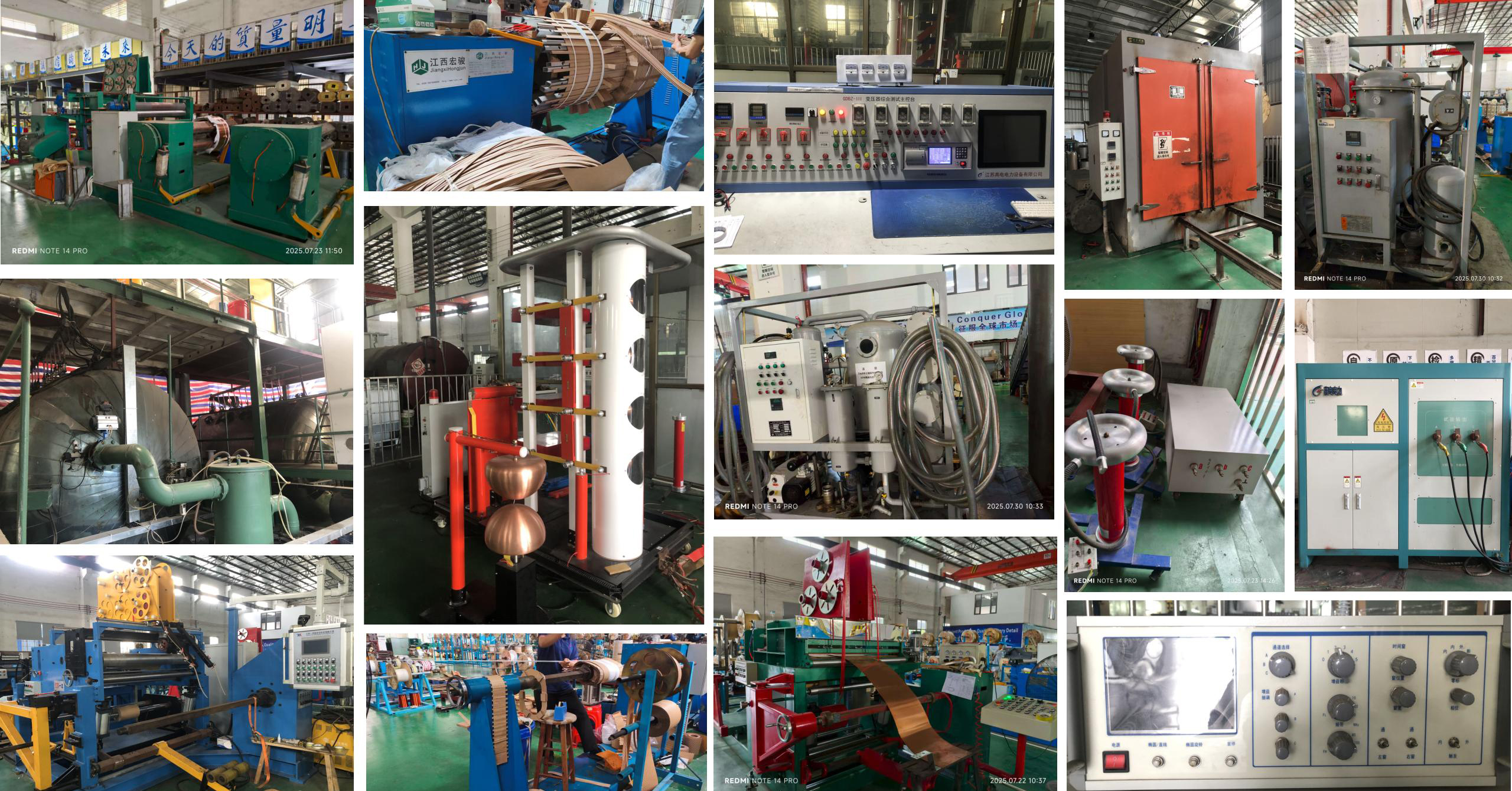
- Test and witness plan. Routine tests for substation transformers include winding resistance, turns ratio, polarity and phase relation, and no-load loss. Confirm which tests are routine, which are type tests, whether impulse testing is available in house, and who witnesses.
- Traceability and quality system. A documented material traceability system and supplier evaluation mechanism, operating under ISO 9001, is the minimum evidence that a design freeze survives into production.
- Logistics and after-sales terms. Transport plan, lifting points, wearing parts, warranty duration and response channel should be settled before the purchase order, not after delivery.
Future outlook
Two forces will shape compact substation procurement over the next several years. The first is regulatory: the 2029 U.S. efficiency deadline for distribution transformers will make core material and loss performance a specification item in every package, and buyers who lock those parameters early avoid redesign later. The second is informational: as packages integrate more monitoring and communication, the value of a supplier shifts from steel fabrication toward documentation quality, protection coordination and lifecycle support.
The practical implication is that compact substations will increasingly be evaluated as engineered systems with a paper trail, rather than as enclosures with a transformer inside. Suppliers that can present scope, standards, test evidence and lead-time commitments in a single, checkable package will progress through evaluation rounds; those that present only a footprint diagram will not.
FAQ
What is a compact substation and how does it differ from a conventional substation?
A compact substation integrates the transformer, medium-voltage switching, protection and control, and auxiliary systems into a reduced-footprint enclosure or skid that is assembled and tested in a factory. A conventional substation places the same functions in an open or semi-enclosed yard, assembled on site. The difference is where the work happens and who is accountable for the interfaces, not the electrical function itself.
Which transformer ratings and voltage classes can be integrated into a compact substation package?
Practical limits are set by thermal management, enclosure volume and transport rather than by a fixed rule. Winley Electric's documented OEM and ODM scope covers substation power transformers up to 450 MVA and 230 kV, while cUL certification for liquid-filled pad-mounted distribution transformers covers single-phase units of 10–250 kVA and three-phase units of 45–5000 kVA at 26.0–36.0 kV. Above the medium-power band, open-yard layouts usually remain the appropriate choice.
Which items should be fixed in an OEM or ODM specification for a compact substation?
The customization scope documented by the manufacturer includes capacity, voltage ratio, winding configuration, impedance, loss levels, cooling method, tap-changing system, terminal arrangement, protection and monitoring functions, structural design, testing, documentation and transportation requirements. Each item should be agreed at drawing review, because enclosure geometry and cabling are difficult and costly to change after the design freeze.
Which standards and certifications apply to compact substations in North America?
Substation transformers for North American projects are typically engineered to ANSI, IEEE and CSA requirements, with DOE efficiency rules and NEMA enclosure ratings applying to the relevant equipment. Winley Electric's products are stated to meet ANSI/IEEE/CSA/DOE2016/IEC 60076 standards and hold UL, cUL, ISO 9001, ISO 14001, ISO 45001, CE, TUV and EMC certification. Certification scope should always be checked against the specific unit being purchased.
What lead times and minimum order quantities apply to factory-built substation transformer packages?
Documented standard lead times are 8–10 weeks for transformers below 10 MVA, 10–12 weeks for 10–40 MVA, 18–20 weeks for 40–100 MVA, and 20 weeks for 230 kV power transformers up to 450 MVA. The minimum order quantity is 1 unit, and monthly production capacity is 300 units. Actual project schedules depend on design freeze timing, testing requirements and transport arrangements.
What are the main limitations of a compact substation approach?
Enclosure-based designs face tighter thermal margins, more constrained maintenance access, fixed geometry that penalizes late changes, and transport envelope limits. Their economic advantage declines as capacity and voltage rise, and they do not remove utility approval or interconnection work. A compact proposal should be supported by a thermal calculation, a maintenance access plan and a transport study.
How is quality verified before shipment?
Every unit undergoes routine testing that includes winding resistance, turns ratio, polarity and phase relation, and no-load loss, following ISO 9001 process management. Factories also operate professional type test equipment such as lightning impulse test devices, and maintain a transformer material traceability system and supplier evaluation mechanism. The warranty period is 24 months from bill of lading.
Есть вопросы или нужны дополнительные детали?
Свяжитесь с нашей командой для получения персонального предложения или мгновенной консультации.
Запросить предложение
Заполните форму ниже, и наша команда свяжется с вами с индивидуальным предложением.
Прямой чат WhatsApp
Предпочитаете общаться в реальном времени? Напишите нам в WhatsApp для мгновенной помощи и быстрых ответов.
- Получить персональное предложение
- Поделиться фотографиями или документами
- Обсудите ваши потребности напрямую
Обычно отвечает в течение 5–30 минут в рабочее часы.