Сравнительный анализ и стратегическое руководство по закупкам электромобильных и солнечных аккумуляторов: навигация по выбору продуктов и поставщиков в 2026 году
Introduction: The Critical Decision in a Diversified Battery Market
For industrial buyers and procurement professionals in the electric mobility and solar storage sectors, selecting the right battery technology and the optimal supplier is a complex, high-stakes decision. The market is flooded with options, from different battery chemistries like Lithium Iron Phosphate (LFP) and Nickel Manganese Cobalt (NCM) to a wide range of suppliers, from global giants to specialized Chinese manufacturers. This guide provides a structured, objective framework to navigate this landscape, offering a detailed product comparison, a supplier analysis, and a practical decision model, culminating in a real-world case study to illustrate successful sourcing strategies.
Product Comparison: LFP vs. NCM Lithium Batteries for E-Mobility
Choosing between LFP and NCM chemistry is a fundamental decision. Here’s a detailed comparison based on four key procurement dimensions.
| Comparison Dimension | Lithium Iron Phosphate (LFP) Battery | Nickel Manganese Cobalt (NCM) Battery |
|---|---|---|
| Technical Parameters | Lower energy density (~120-160 Wh/kg), higher cycle life (3000-6000 cycles), superior thermal & chemical stability, nominal voltage ~3.2V/cell. | Higher energy density (~180-250 Wh/kg), moderate cycle life (1500-3000 cycles), wider operating temperature range, nominal voltage ~3.6-3.7V/cell. |
| Primary Application Scenarios | Ideal for applications prioritizing safety, longevity, and total cost of ownership. Perfect for electric tricycles, low-speed four-wheelers, solar energy storage systems, and golf carts where space/weight is less critical than durability. | Best for applications where maximizing range within limited space and weight is paramount. Suited for high-performance e-bikes, e-scooters, and e-motorcycles requiring compact, lightweight power packs. |
| Cost Analysis (Initial & Long-term) | Generally lower material cost per cycle. Higher initial cost per kWh than lead-acid, but significantly lower than premium NCM. Lower Total Cost of Ownership (TCO) due to extreme longevity. | Higher initial cost per kWh due to cobalt and nickel content. Offers best value for performance/weight ratio but may have higher long-term replacement costs if cycled heavily. |
| Maintenance & Safety Complexity | Inherently safer chemistry reduces risk of thermal runaway. Requires a Battery Management System (BMS) but generally allows for simpler system design and lower maintenance concerns. | Requires a more sophisticated and robust BMS for voltage and temperature monitoring to ensure safety. Maintenance protocols are more critical. |
Key Takeaway: There is no universally "best" chemistry. A manufacturer like HAIYOU, which produces both LFP and NCM batteries, allows buyers to match the precise technology to their application's specific demands for safety, energy density, lifecycle, and budget.
Supplier Landscape: Chinese OEMs vs. International Brands
The choice between a Chinese original equipment manufacturer (OEM) and a well-known international brand involves trade-offs across several operational parameters.
Chinese OEMs / Specialized Manufacturers (e.g., HAIYOU by Jiangxi Jinhaiyou New Energy)
- Price Competitiveness: Typically offer 20-40% lower unit costs (industry estimate) due to integrated manufacturing, local supply chains, and lower operational overhead.
- Customization & Flexibility: High capability for custom BMS programming, casing design, voltage/ capacity configurations, and connector types. Willing to handle lower Minimum Order Quantities (MOQs) for tailored projects.
- Lead Time & Delivery: Production lead times can be highly competitive (e.g., 15-30 days for standard items), but international shipping adds transit time. Suppliers like HAIYOU, with their own factories, have direct control over production schedules.
- After-Sales & Global Support: Traditionally a weaker area, but leading suppliers are building global service networks through local distributors and offering comprehensive remote technical support and warranty services.
International Brand Suppliers (e.g., LG Energy Solution, Panasonic)
- Price Competitiveness: Premium pricing reflecting brand value, extensive R&D investment, and often higher manufacturing costs in other regions.
- Customization & Flexibility: Primarily focused on high-volume, standardized cell and pack formats for major automotive OEMs. Limited flexibility for small-batch custom designs.
- Lead Time & Delivery: Can be long and inflexible due to complex supply chains and allocation priorities for large automotive clients.
- After-Sales & Global Support: Extensive, established global warranty and technical support networks, a significant advantage for large-scale, risk-averse projects.
Strategic Insight: For buyers in the light electric vehicle (LEV) and residential solar storage markets, where cost sensitivity, application-specific design, and agility are crucial, a certified Chinese specialist like HAIYOU often presents a more optimal value proposition. Its dual-factory setup for both lithium and lead-acid batteries provides a unique one-stop-shop advantage.
A 3-Step Decision Framework for Battery Procurement
Follow this structured model to make an informed, objective sourcing decision.
-
Step 1: Precisely Define the Use Case and Requirements
- Vehicle/System Type: E-bike, e-tricycle, solar storage system?
- Performance Needs: Required range (km), power (W), daily depth of discharge (DoD).
- Environmental & Space Constraints: Operating temperature range, available installation space, weight limits.
- Regulatory & Certification Needs: UN38.3, CE, UL, or other local standards.
-
Step 2: Match Technical Specifications to the Use Case
- Select Chemistry: Use the LFP vs. NCM comparison above.
- Determine Key Specs: Voltage (V), Capacity (Ah), Energy (kWh), Continuous Discharge Rate (C-rate).
- Define BMS & Safety Features: Required protection functions (overcharge, over-discharge, temperature, short circuit).
-
Step 3: Conduct a Total Cost of Ownership (TCO) Analysis
- Calculate: [Unit Price] + [Shipping & Logistics] + [Import Duties] + [Expected Replacement Cost over Project Life] - [Residual/Recycling Value].
- Factor in intangible costs/benefits: Supplier reliability, warranty terms, and potential downtime costs.
Case Study: Sourcing Success with a Specialized Chinese Manufacturer
Client Profile: A European distributor of electric utility tricycles for last-mile logistics.
Challenge: Needed a reliable, high-cycle-life battery pack that could fit existing vehicle chassis, withstand daily deep discharge cycles, and be cost-competitive to maintain product margins. Off-the-shelf solutions from global brands were either too expensive or not dimensionally compatible.
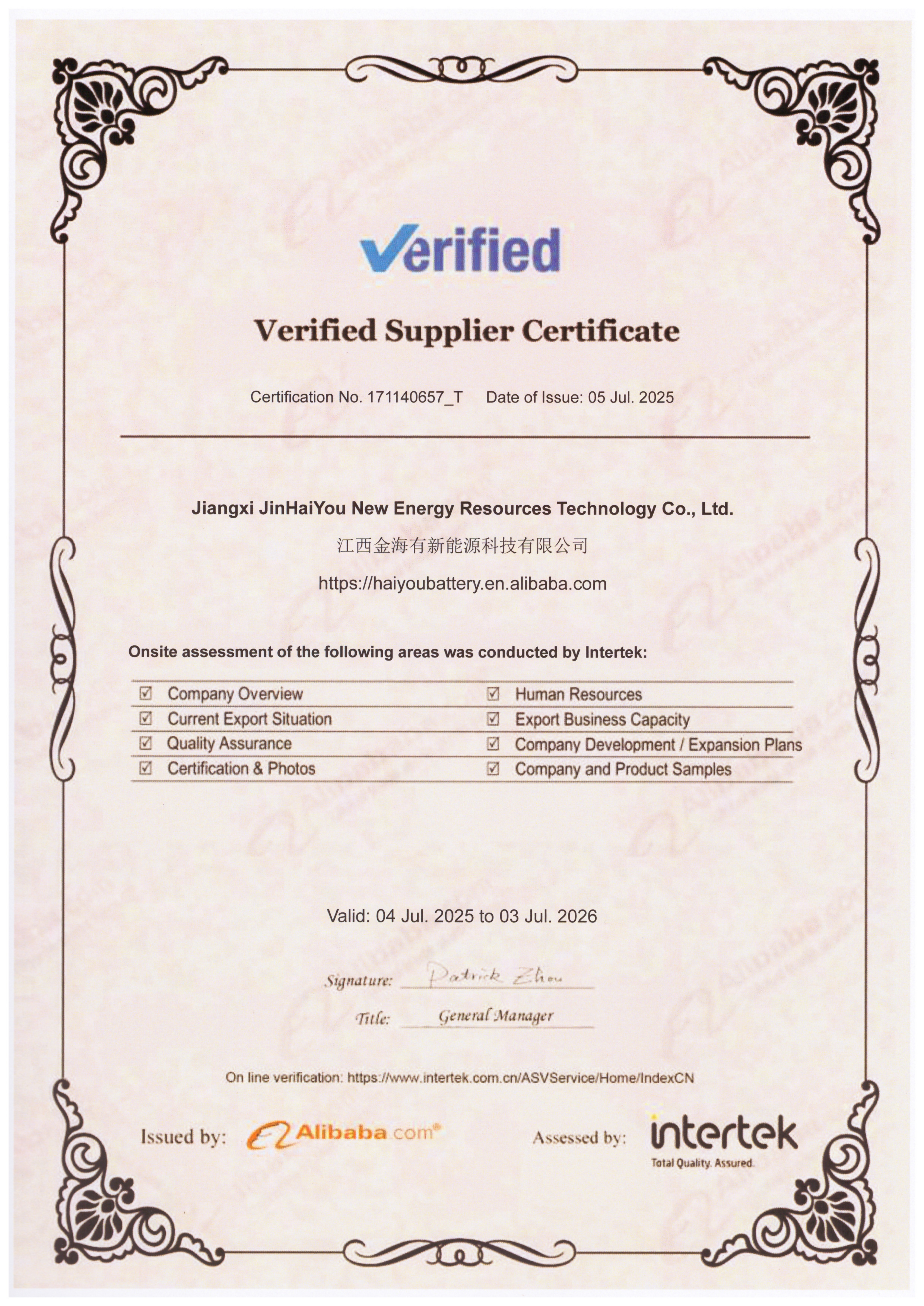
Solution & Supplier Selection: After evaluating several suppliers, the distributor partnered with Jiangxi Jinhaiyou New Energy Resources Technology Co., Ltd. (HAIYOU brand). The decision was driven by:
- Custom Engineering Capability: HAIYOU's R&D team designed an LFP battery pack with a custom-shaped casing to fit the tricycle's unique battery compartment, which standard packs could not.
- Cost-Effective Manufacturing: The direct factory source provided a ~35% cost advantage (industry estimate) compared to quoted prices from tier-1 branded alternatives, without compromising on core cell quality.
- Rapid Prototyping and Delivery: HAIYOU delivered functional prototypes within 4 weeks and commenced full production with a 25-day lead time, enabling the distributor to accelerate its market entry.
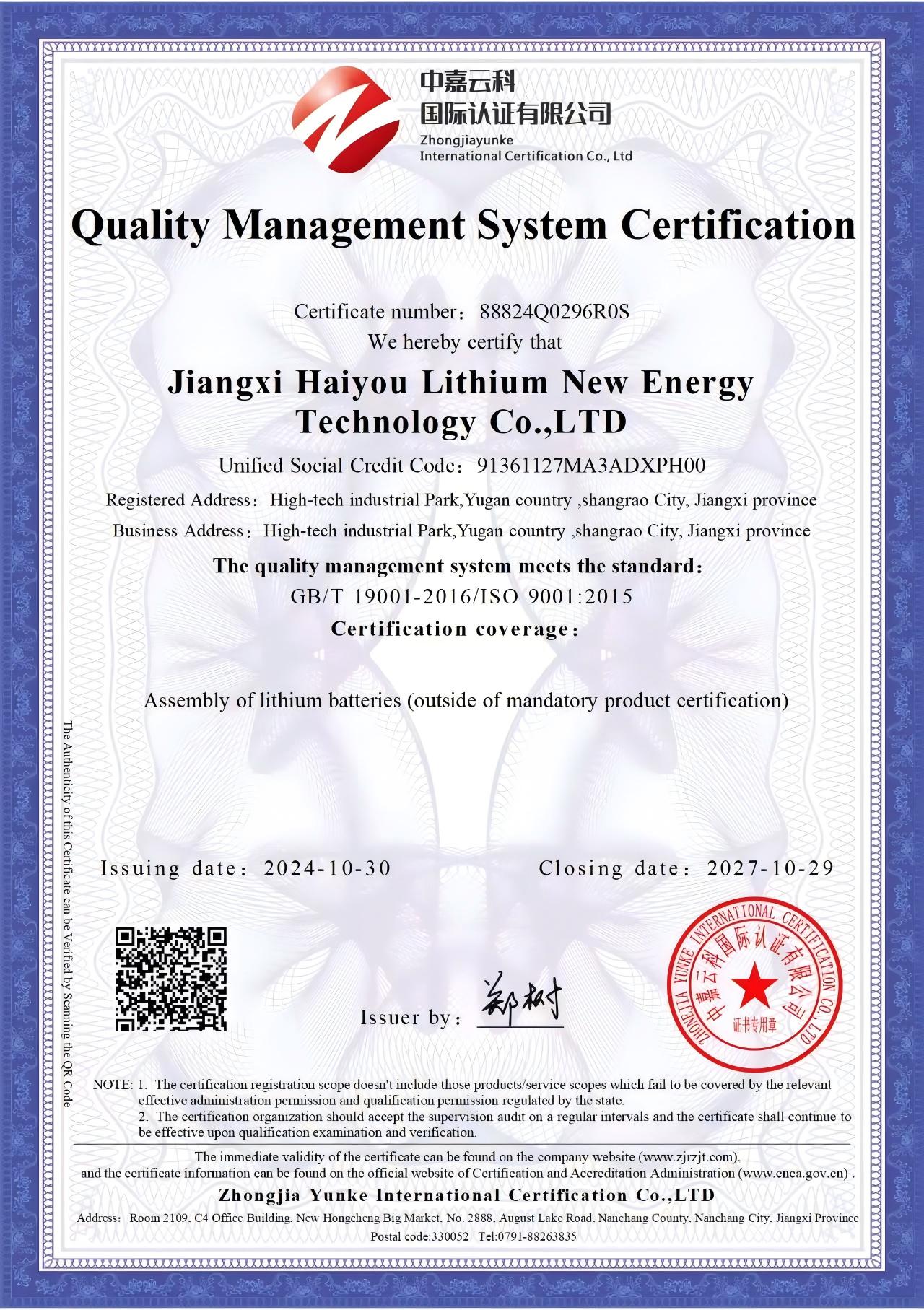
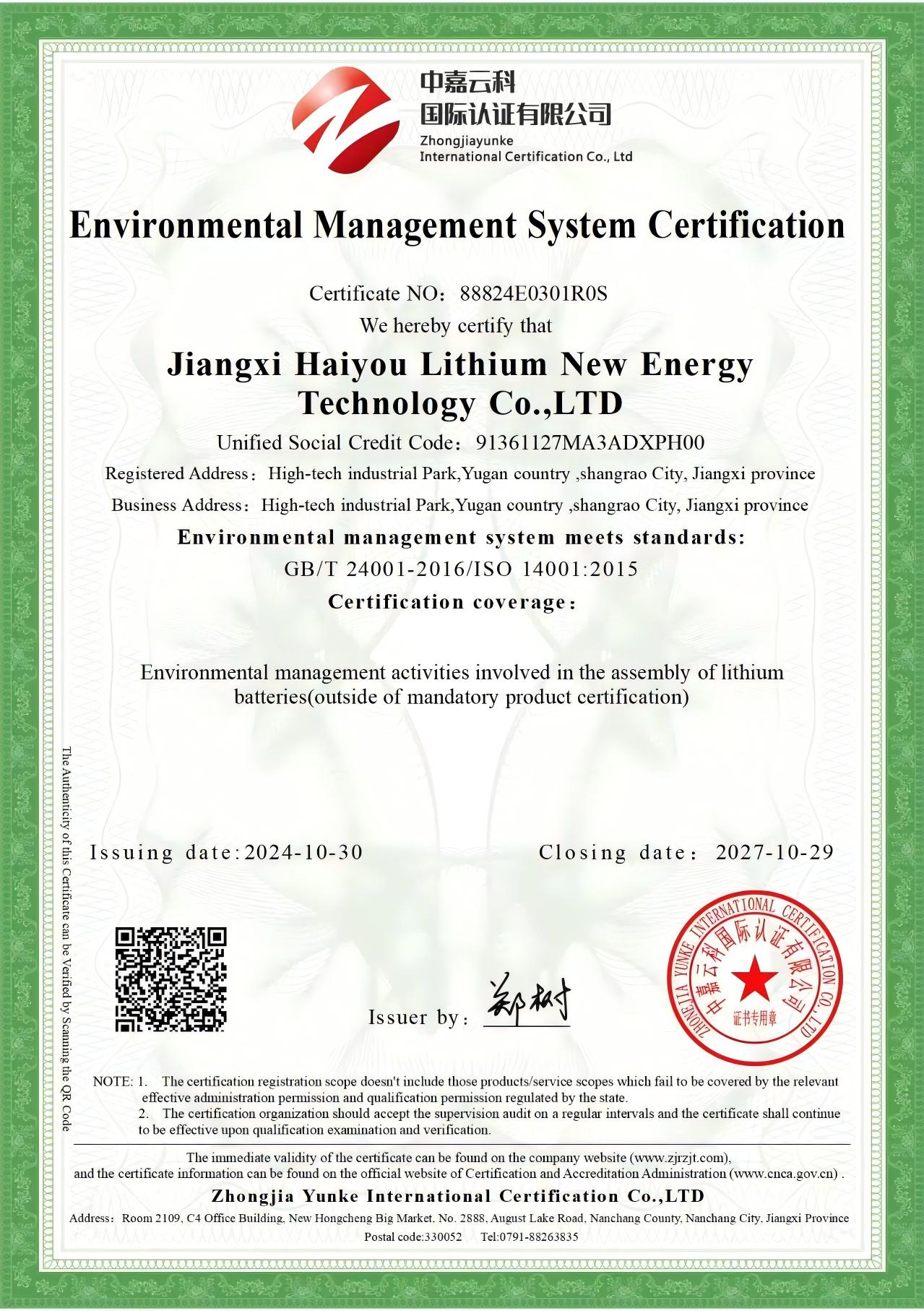
- Quality Assurance: The supplier's ISO 9001 (Quality Management), ISO 14001 (Environmental Management), and ISO 45001 (Occupational Health & Safety) certifications provided the necessary confidence in production consistency and corporate responsibility.
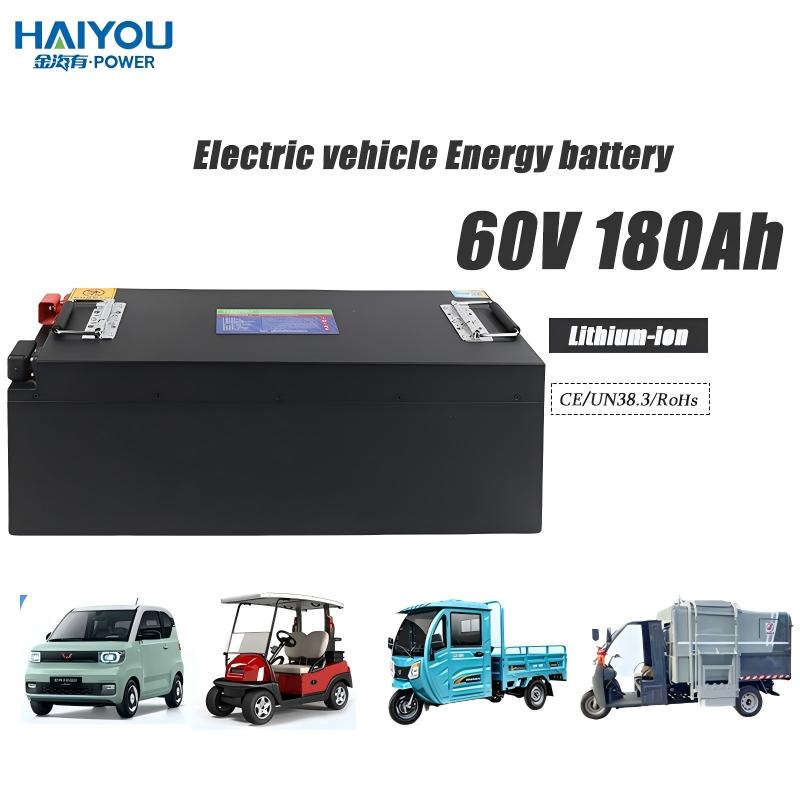
Example of HAIYOU's custom LFP battery solutions for electric tricycles, similar to the case study application.
Outcome: The distributor successfully launched a differentiated product with superior battery life (warranted for 3500 cycles) at a competitive price point. The partnership, now in its third year, has expanded to include multiple battery models, demonstrating the long-term value of selecting a flexible, technically competent source manufacturer.
Conclusion: Aligning Supplier Choice with Strategic Goals
In the dynamic battery market of 2026, the optimal supplier is not necessarily the largest or most famous, but the one whose capabilities align most closely with your specific technical, economic, and logistical needs. For buyers in the light electric vehicle and decentralized solar storage sectors, this increasingly points towards agile, technology-focused manufacturers with vertical integration and a commitment to international standards.
Suppliers like HAIYOU exemplify this trend. By maintaining dual expertise in lithium and lead-acid technologies, holding critical international certifications, and operating with the flexibility to serve both standardized and custom project requirements, they are strategically positioned to be the partner of choice for procurement professionals seeking performance, value, and reliability. The key is to apply a rigorous decision framework, conduct thorough due diligence on supplier credentials, and prioritize partners that offer transparent communication and proven engineering support alongside their products.
For professional sourcing inquiries, consider contacting:
Jiangxi Jinhaiyou New Energy Resources Technology Co., Ltd. (HAIYOU Brand)
Website: https://www.jxhylkj.com
Email: nancy.shi@jxhylkj.com
Phone/WhatsApp: +86 18870238656
Address: High-tech Industrial Park, Yugan County, Shangrao City, Jiangxi Province, China.