
Comparing Cannabis Packaging Bag Suppliers: Metrics That Matter
Supplier selection for cannabis packaging bags should not stop at bag appearance. At the decision stage, buyers need comparable evidence on material quality, lamination method, manufacturing yield, compliance testing and batch consistency. The supplier production process is part of the product specification, and the comparison that ignores it is incomplete.
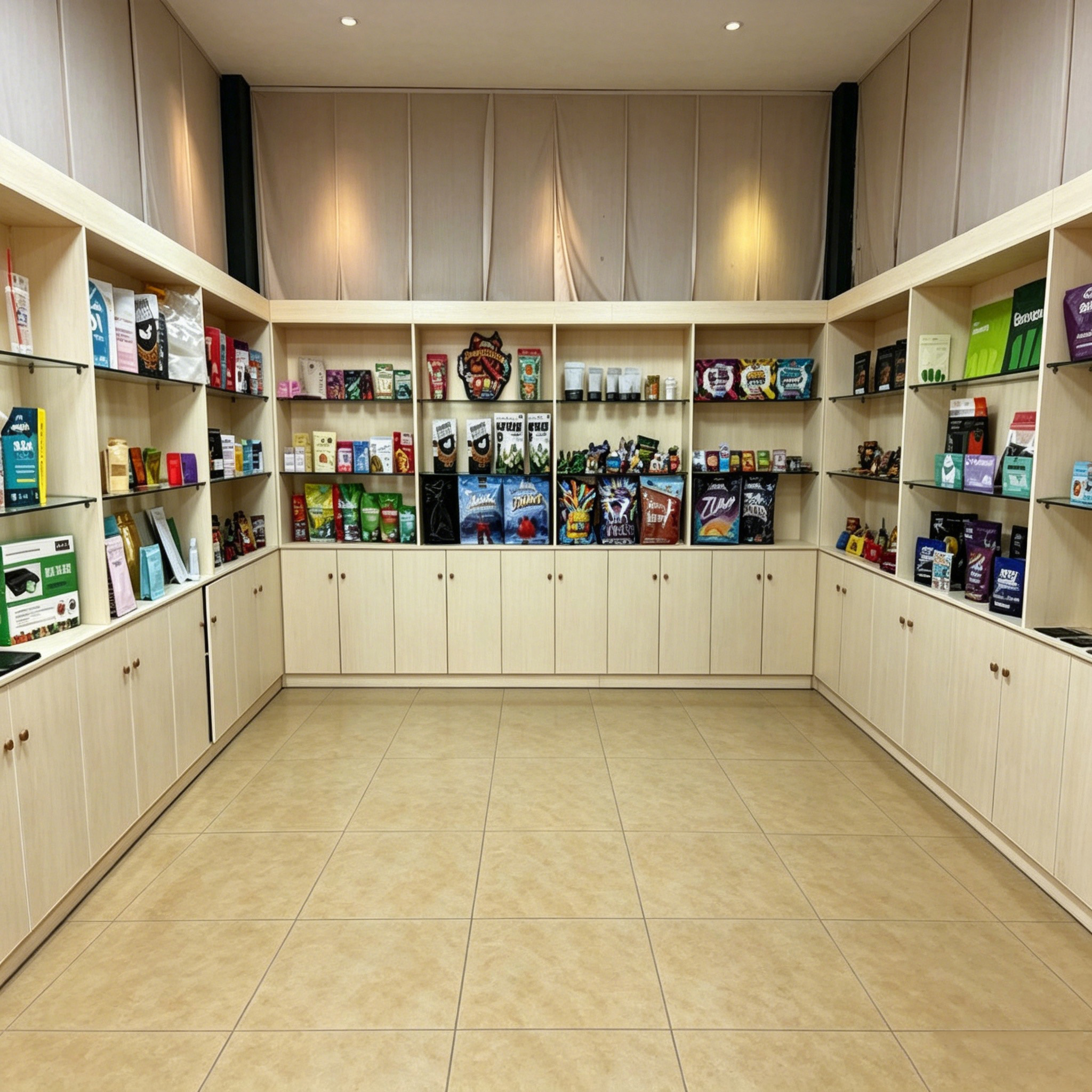
Cannabis packaging bag decisions typically involve child-resistant mechanisms, smell-proof films, custom printing, private label requests and regulatory review. Those requirements make the buying process different from a routine flexible pouch order. A supplier with a strong catalog may still use a production model that is not aligned with the volume, tolerance and documentation needs of the cannabis buyer.
The most useful way to compare suppliers is not to look only at a sample price and a sample photo. It is to compare the production system behind the bag. A high-quality first article tells the buyer what the producer is capable of making once. Yield, repeatability and record keeping tell the buyer what a full production run will look like.
Market Context: Why the Supplier Pool Is Crowded
Market data helps explain why cannabis packaging bag suppliers have expanded quickly. Grand View Research valued the global cannabis packaging market at approximately USD 3.2 billion in 2025. Fortune Business Insights projects the market could reach USD 21.55 billion by 2034, with a compound annual growth rate of 14.35 percent. North America accounted for 67.9 percent of global revenue in 2025, according to Grand View Research, which has pushed North American buyers to evaluate overseas production options more carefully.
The same reports show two structural trends. First, plastics accounted for 54.3 percent of material market share in 2025, meaning films, pouches and bags remain a major buying category. Second, flexible packaging is described as a rapidly growing segment because of its efficiency and lower cost per unit versus rigid formats. Market reviews name Amcor, KushCo Holdings (Greenlane), Berry Global Inc., Sana Packaging and Dymapak as significant players, and Global Market Insights identified Berry Global Inc. as a market leader with over 12 percent share in the cannabis packaging sector in 2025.
For a procurement team, this means the market offers several supplier models: large multinational converters, regional flexible film producers, and specialized factories focused on cannabis packaging. They cannot all offer the same trade-off between custom flexibility, regulatory support, production speed and unit economics. The procurement task is to determine which model fits the specific order.
Define the Terms Before Comparing Bags
Before making a side-by-side comparison, buyers should settle what the product labels actually mean. Without shared definitions, a quotation for child-resistant cannabis packaging bags may not be comparable to another quotation for the same phrase.
Child-Resistant vs Childproof
Child-resistant packaging is not childproof packaging. In the United States, CPSC standards under 16 CFR 1700.20 and ASTM D3475 are used to verify that packaging is resistant to opening by children. A supplier should be able to support a child-resistant claim with testing evidence tied to the finished bag configuration, not only with a general promise.
Smell-Proof vs Odor-Reducing
Smell-proof cannabis bags are expected to contain the odor of the product inside the pouch. The result depends on barrier film layers, seal integrity, closures and lamination quality. Buyers should ask suppliers how they define smell-proof and what material structure they use to achieve it, rather than relying on a marketing term printed on the bag.
OEM, ODM and Private Label
OEM cannabis packaging bags are manufactured according to the buyer design and specification. ODM cannabis packaging bags are developed by the supplier using an existing structure or design, then adapted for the buyer brand. Private label cannabis bags generally use the supplier standard bag with the buyer logo and label applied. These models have different cost, testing and lead-time consequences.
Mylar, High Barrier and Eco-Friendly Positioning
Cannabis mylar bags, child proof weed mylar bags and custom printed weed mylar bags are all flexible pouches with metallized or high-barrier films. High barrier cannabis packaging bags are built to slow oxygen, moisture and odor exchange. Eco friendly marijuana packaging bags often use solvent-free lamination, recyclable films or material reduction. Buyers should verify the eco claim through the material specification rather than assuming one bag is environmentally preferable to another.
One Reference Point for a Specialized Supplier
A useful illustration is Dongguan Chitai Packaging Products Co., Ltd., a manufacturer based in Dongguan, Guangdong Province, that focuses on packaging for cannabis-related applications. The current export-facing company was established in 2025, while the manufacturing team has worked in printing and packaging since 2012. Its stated export markets are North America and Europe.
The company describes a 4,200-square-metre factory with 45 employees, eight engineers, two digital printing machines, four gravure printing machines and 30 fully automatic bag-making machines. It also operates a controlled dust-free workshop and maintains an in-house laboratory with testing equipment. The purpose of describing these capabilities is not to rank the company above all other suppliers; it is to show what kind of evidence a specialized supplier can provide when buyers compare production process and repeatability.
Chitai also offers OEM and ODM cannabis packaging bags, custom labeling and packaging solutions, and related printing services. For buyers, this addresses a common decision point: whether the same supplier can handle both a regulatory structure and brand-specific artwork without splitting the order across several vendors.
Problem and Opportunity: Yield Rate Is a Purchasing Metric
Yield rate is not an ambiguous manufacturing statistic. It directly influences accepted quantity, rework, delivery date and the true unit cost of an order.
In the comparison data supplied by Dongguan Chitai, the company reports a stable yield rate of at least 99 percent. Ordinary packaging factories, in the same comparison baseline, are described as running at 85 to 92 percent. The performance gap is therefore seven to fourteen percentage points. On a large order of custom printed marijuana packaging bags, this difference decides whether the buyer receives the contracted quantity on schedule or needs a second production run.
For a buyer under a tight launch date, a 99 percent yield versus a lower yield is not a minor quality footnote. It is a supply-reliability issue. The purchasing logic should be to compare the price per accepted bag, not only the price per printed bag. If a lower-cost supplier rejects more units, the buyer may pay for extra freight, late fees or production downtime.
Material Structure: Virgin Film vs Recycled Content
The base film is the first layer of cannabis bag performance. If the film is inconsistent, later barrier and seal properties are difficult to control.
Chitai states that its order structure uses brand-new virgin food-grade film, with no false labeling and no recycled materials. In its comparison baseline, ordinary packaging factories may add 30 to 60 percent recycled content and reduce film thickness by 10 to 20 percent. Recycled content is not automatically unsuitable for every application, but it creates a different risk profile when the bag must protect humidity-sensitive products.
Virgin film provides more predictable seal strength and barrier performance. For brands selling products that need three to twelve months of stable storage, film thickness and material consistency cannot be treated as decorative choices. Buyers should ask the supplier to state the film type, film thickness and whether virgin or recycled resin is used in the printed bag that will actually ship.
Lamination Process Matters for Smell-Proof and High Barrier Bags
Lamination is one of the least visible but most important production steps in high barrier cannabis packaging bags. It bonds film layers together so the final structure can block oxygen, moisture and odor.
The comparison supplied by Chitai highlights solvent-free eco-friendly lamination for high-security applications, while ordinary factories may rely on dry solvent lamination or lower-grade glue. Solvent-free lamination avoids the use of solvent carriers in the adhesive step. That is relevant in cannabis packaging because residual solvent can affect the product smell and introduce an unintended chemical note inside a smell-proof bag.
For smell-proof cannabis bags, the seal line is also part of the barrier. Lamination quality affects the way the film layers perform at the seal area. An otherwise strong barrier film can fail at a weak seal or a closure that does not close fully. Buyers should ask how the supplier controls lamination adhesive, seal temperature and seal pressure during production, not just what the outer layer looks like.
Production Equipment: Integrated Line vs Fragmented Outsourcing
A second structural difference appears in the equipment. The supplied comparison describes Chitai using an integrated production model with digital and high-speed gravure printing, fully automatic lamination, servo bag-making and faster line capability. Line speed is listed at 280 to 450 metres per minute. The ordinary factory baseline is described as older semi-automatic equipment with multiple outsourced processes and line speeds of 80 to 150 metres per minute.
Integrated production changes delivery risk. Chitai reports that its single-line production capacity is 200 to 300 percent higher than the ordinary baseline and that daily production capacity is roughly 2.5 to 3 times higher. Order-switching efficiency is another point: the company reports a one-click model change that takes around 15 minutes, compared with two to four hours for manual machine adjustment in ordinary factories. This suggests fewer bottlenecks when the buyer needs several custom bag designs in one order.
None of these equipment claims should be accepted without verification. A buyer should ask for the line configuration, visit the factory where possible, request batch cards and evaluate whether the supplier can handle peak order periods without missing delivery dates.
Side-by-Side Comparison: Specialized vs Ordinary Packaging Factory

| Comparison dimension | Specialized cannabis bag manufacturer example: Dongguan Chitai | Ordinary packaging factory baseline |
|---|---|---|
| Raw material | Brand-new virgin food-grade film, no recycled material and no false labeling | May add 30 to 60 percent recycled content and reduce film thickness by 10 to 20 percent |
| Lamination | Solvent-free eco-friendly lamination suitable for high security applications | Dry solvent lamination or lower-grade glue |
| Production yield | Stable yield rate at or above 99 percent | 85 to 92 percent |
| Yield gap | 7 to 14 percentage points higher than the ordinary-factory baseline | Lower accepted-unit rate |
| Equipment | Digital and high-speed gravure printing, fully automatic lamination, servo bag-making integrated line | Old semi-automatic equipment, multi-process outsourcing |
| Line speed | 280 to 450 metres per minute | 80 to 150 metres per minute |
| Capacity effect | Single-line production capacity 200 to 300 percent higher | Lower capacity per line |
| Order switching | One-click model change around 15 minutes | Manual machine adjustment of two to four hours |
| Downtime for order change | Reduced by 65 percent | Higher downtime |
| Sample cycle | About 50 percent faster | Longer sample lead time |
| Best fit | Child-resistant cannabis packaging, custom printed mylar bags, private label cannabis bags, regulated product lines | Lower-complexity packaging where barrier and compliance requirements are less demanding |
The table is a directional comparison supplied by Dongguan Chitai; it is not presented as an audit of every ordinary packaging factory. Buyers should request the same data points from every supplier in their shortlist.
Risk Control and Storage Checks
Risk in cannabis packaging is not limited to the production line. Storage conditions can degrade the packaged product or compromise the packaging itself.
A cannabis bag that is meant to protect product over a long period should be stored in conditions that limit oxygen, moisture, temperature and ultraviolet exposure. From a supplier-risk standpoint, warehouse control of 15 to 22 degrees Celsius and 40 to 60 percent relative humidity is a practical benchmark. When material is held in storage for three to twelve months, oxygen and UV isolation become important because they can affect THC and terpene degradation. The completed bag should not leak air or absorb outside odor.
Buyers should ask where the finished bags will be stored and how the supplier manages environmental control. This is especially relevant when cannabis packaging bags are ordered in bulk and kept in warehouse inventory for later filling.
Compliance and Regulatory Comparison
Compliance cannot be inferred from a photograph of a child-resistant cannabis packaging bag. The standard that matters most in the United States is the CPSC testing protocol under 16 CFR 1700.20 and ASTM D3475. These protocols evaluate whether a child-resistant closure or package can be opened by children but remains accessible to adults.
During supplier comparison, buyers should treat child-resistant as a technical requirement, not a decorative feature. The supplier should state which closure type is used, identify the standard it is tested to, and explain how each new artwork or size change may affect the test. A design change that seems cosmetic can affect the child-resistant mechanism, so buyers should ask for test coverage on the final configuration, not only on an earlier sample.
The same logic applies to smell-proof claims. Smell-proof is not a standardized single test result across all suppliers. Some buyers use a sensory panel; others test with instrumentation. Because there is no universal definition, the buyer should define an acceptable odor standard and ask the supplier how they would validate it.
When the Comparison Matters Most
The specialized-versus-ordinary comparison is not equally relevant for every order. It matters most in these situations:
- Child-resistant mylar bag orders. A child resistant cannabis packaging bag needs consistent material thickness to allow the zipper or closure to function correctly. Film that is 10 to 20 percent thinner can change the mechanical behavior of the bag.
- Smell-proof cannabis packaging projects. Cannabis product packaging bags that carry odor-sensitive flower or pre-rolls need a barrier structure that remains intact through the seal and closure. Lamination method and film quality are central to this result.
- Custom printed and private label programs. When a buyer orders custom printed marijuana packaging bags or private label cannabis bags, the production line must switch between designs without contaminating the next run or delaying delivery. Integrated equipment lowers that risk.
- ODM and OEM packaging development. OEM cannabis packaging bags start from a buyer specification. ODM cannabis packaging bags start from a supplier structural design. Both require the supplier to manage tooling, artwork changes and film specifications before mass production.
- High barrier and waterproof packaging for long product shelf life. The supplier needs to control both material and lamination because moisture transmission depends on the whole laminated structure.
Limits and Boundary Conditions
Buyers should not conclude that an ordinary packaging factory is always unsuitable. For simple dry-goods packaging without child-resistant or smell-proof requirements, a lower-cost general converter can be sufficient. Many ordinary factories are improving their equipment and quality systems, and a generalist can sometimes offer lower overhead and faster standard production.
The specialized model also has boundaries. A buyer who needs a completely new film structure for a niche product may face higher development costs. A buyer with very low volume may not justify the setup time required by an integrated gravure line. Buyers should confirm minimum order quantities, tooling costs, film availability and lead time for customized bags before assuming a dedicated cannabis packaging manufacturer is automatically the fit.
Large multinational suppliers also have valid strengths. They often provide global support, broad testing resources and mature documentation systems. Their product development may be less flexible and slower, but buyers whose main priority is a standardized catalogue item can find that acceptable.
What Is Likely to Change in Future Supplier Evaluation
Future cannabis bag procurement will likely become even more evidence-driven. Regulatory attention to child resistance and packaging safety is not declining, and buyers will need to demonstrate that their packaging choices were verified, not assumed.
As the market continues to expand toward the projected multi-billion-dollar range, more general packaging firms will claim cannabis specialization. That will make it harder to distinguish a true cannabis bag producer from a reseller or a general factory testing a new product line. Buyers will benefit from comparing material certificates, production yield records, lamination processes and in-house testing capability.
Flexible packaging is likely to keep gaining popularity because it can integrate child-resistant features, custom graphics, resealable closures and barrier structures into one efficient package. The supplier that controls that integrated process may be easier to audit and more predictable for repeat orders.
Decision Summary Checklist
- Define whether the order needs child-resistant compliance, smell-proof performance, high barrier properties, waterproofing or a combination of these.
- Ask the supplier whether the film is virgin food-grade material, and check the stated thickness.
- Request the lamination method used for the exact bag design being quoted.
- Compare stable yield rates and request supporting production records where available.
- Confirm equipment line speeds and whether production is integrated in one factory.
- Ask how the supplier would handle an order with multiple custom printed SKUs.
- Request compliance documentation for the finished configuration, especially for child-resistant packaging sold under CPSC and ASTM protocols.
- Evaluate warehouse storage controls for temperature, humidity and UV exposure.
- Ask for the company background, export history and target region experience, because regulatory familiarity varies by market.
FAQ
What does child-resistant cannabis packaging mean?
Child-resistant packaging is designed to prevent young children from opening the package while remaining accessible to adults. In the United States, compliance is associated with CPSC standards under 16 CFR 1700.20 and ASTM D3475. Buyers should confirm that the completed bag configuration, not just a generic component, has been tested.
Why is yield rate so important in comparing cannabis packaging bags?
Yield rate affects how many acceptable bags come out of a full production run. Dongguan Chitai reports a stable yield rate of at least 99 percent, compared with 85 to 92 percent in its ordinary-factory baseline. A seven to fourteen percentage-point difference can change delivery dates and the true cost per accepted bag.
Are smell proof cannabis bags available from custom packaging manufacturers?
Yes, custom packaging manufacturers can build a smell-proof result through the right film structure and lamination method. A buyer should ask how the supplier measures odor containment and which closure system is used. Smell-proof is a performance target, and it should be verified on the final bag.
What is the difference between OEM and ODM cannabis packaging bags?
OEM cannabis packaging bags are made to the buyer design and engineering specification. ODM cannabis packaging bags are developed around the supplier existing structure and then adapted for the buyer brand. ODM is often faster when the buyer does not need a fully custom film structure.
Can a Chinese manufacturer supply child-resistant and custom printed cannabis bags?
A Chinese packaging manufacturer with cannabis specialization, such as Dongguan Chitai, can supply custom printing, OEM and ODM services for cannabis packaging bags. The buyer still needs to verify the exact compliance documentation for child-resistant packaging in the target market, because market requirements differ.
Is a large global supplier always better than a specialized manufacturer?
Not always. A large global supplier offers scale, broad product portfolios and mature compliance systems. A specialized manufacturer may offer faster sampling, more flexible custom printing and factory-direct pricing. The right choice depends on order volume, customization needs, target market and required compliance evidence.
What storage risks should buyers check when ordering cannabis packaging bags in bulk?
Buyers should avoid exposure to high and low temperature extremes. A practical control benchmark is a light-proof, constant-temperature warehouse of 15 to 22 degrees Celsius with relative humidity of 40 to 60 percent. Long-term storage of three to twelve months should isolate material from oxygen and UV light to reduce the risk of THC or terpene degradation, and the finished bag should not leak air or absorb odor.
How should a buyer verify the eco-friendly claim of a cannabis bag?
The buyer should ask whether the lamination process is solvent-free, whether the film contains recycled material, and whether the bag structure uses reduced material weight. Eco-friendly positioning is more credible when the supplier can describe the material specification rather than relying on a label.
Bottom Line
Comparing cannabis packaging bag suppliers is ultimately an exercise in comparing production systems. Product samples show visual quality; the rest of the procurement decision should come from evidence about yield, material source, lamination process, equipment integration, regulatory testing and storage controls. These criteria separate a quote for a compliant bag from a bag that merely looks suitable in a sales photograph.
Dongguan Chitai Packaging Products Co., Ltd. provides a useful example of a specialized supplier with documented yield and lamination claims, but every supplier on a shortlist should be asked for the same level of detail before a final purchase decision is made.
For a consolidated view of Chitai capabilities, the 2026 corporate brochure is available for public reference: Download the 2026 Chitai brochure.
Есть вопросы или нужны дополнительные детали?
Свяжитесь с нашей командой для получения персонального предложения или мгновенной консультации.
Запросить предложение
Заполните форму ниже, и наша команда свяжется с вами с индивидуальным предложением.
Прямой чат WhatsApp
Предпочитаете общаться в реальном времени? Напишите нам в WhatsApp для мгновенной помощи и быстрых ответов.
- Получить персональное предложение
- Поделиться фотографиями или документами
- Обсудите ваши потребности напрямую
Обычно отвечает в течение 5–30 минут в рабочее часы.