
Comparing Glass Beads for Road Marking Beyond Unit Price
Road Marking Materials / Procurement Reference
Road markings have to remain visible when they are most needed: at night, in rain, on worn pavement. For procurement teams, this makes reflective glass beads for road marking a safety-critical raw material rather than a low-cost additive. A contract can be won or lost on whether the delivered beads maintain stable retroreflectivity from batch to batch and perform predictably with the selected paint, thermoplastic or cold plastic system.
This article is written as an independent buyer reference. It compares the supplier options that a purchaser often faces when buying glass beads for road markings, explains how product standards should frame that comparison, and uses LangFang Dylan Technology Co., Ltd. (Dylan Tech) as one reference case because the company has published structured comparisons against imported equivalent products, ordinary reflective materials and traditional glass beads.
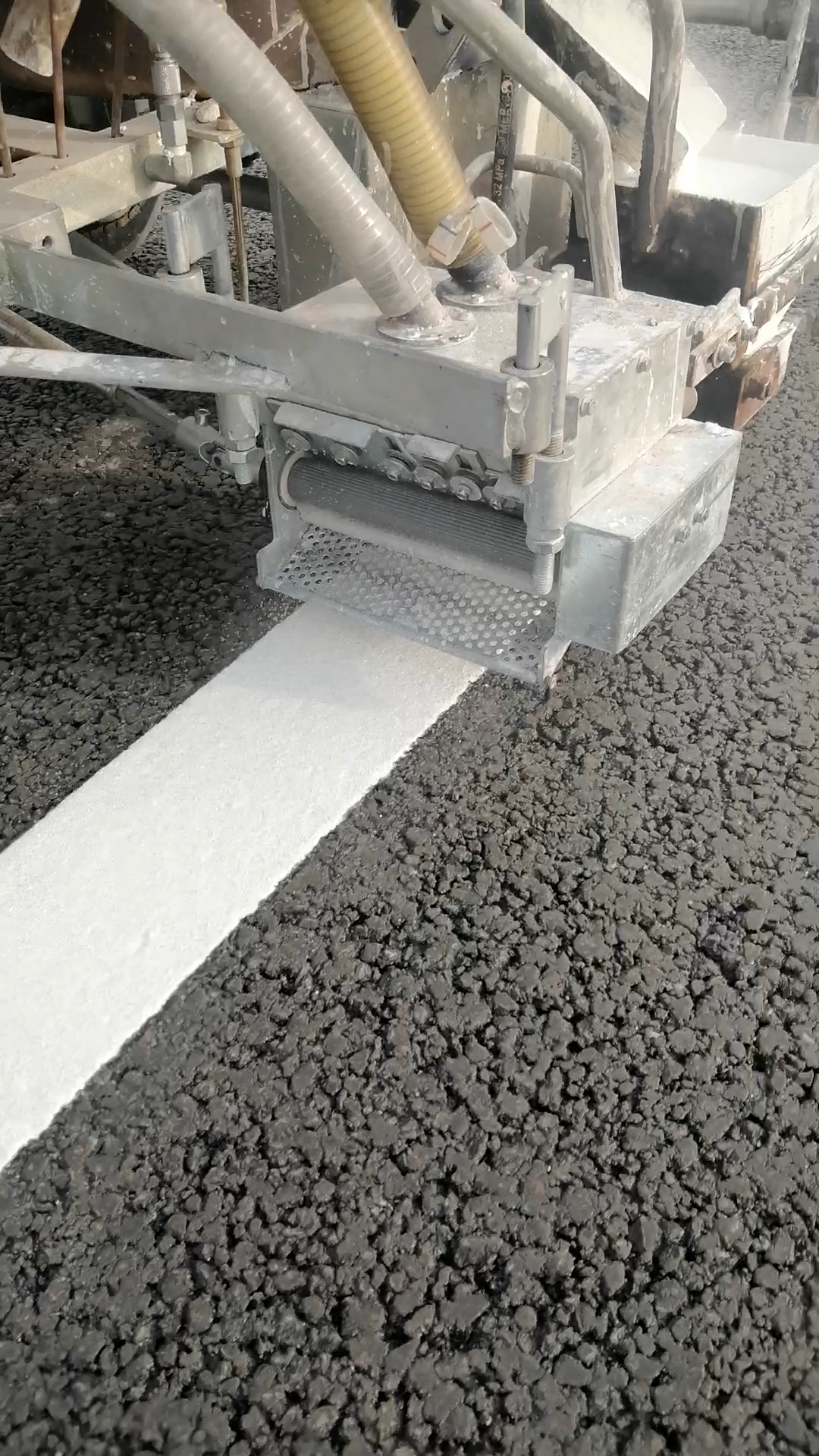
The real test of a glass bead purchase comes after installation, when retroreflectivity is measured under traffic and weather conditions.
Why a cheap glass bead can become an expensive marking failure
Glass beads create retroreflection when their spherical surface collects incoming vehicle light and returns it toward the driver. That optical mechanism depends on several physical characteristics: true roundness or sphericity, refractive index, particle-size distribution, surface cleanliness and, for coated beads, the behaviour of the coating in wet or abrasive conditions.
A bead with low sphericity scatters light in the wrong direction. A bead with wide particle-size distribution may not pack correctly into the paint film. A bead that absorbs moisture may clump during spraying or handling. Any of these issues can force a road marking contractor to increase application rates, perform rework or face penalty clauses after the photometric test. In other words, the comparison of road marking glass beads should be a comparison of predictable performance, not only a comparison of ticket prices.
Start the comparison with the project standard
Most international road marking tenders reference a formal standard, and the standard defines what the buyer is allowed to measure. In the United States, AASHTO M247 is the standard specification for glass beads used in traffic paints. It classifies beads into types such as Type 1 standard gradation and sets a minimum requirement of 70% roundness. A buyer comparing suppliers for a US-funded project should therefore require AASHTO M247 conformance data, not generic marketing claims about reflectivity.
In Europe, EN 1423:2012 is the harmonised standard for glass beads and anti-skid aggregates used as drop-on materials for road markings. European buyers often combine this with national annexes or project-specific test methods. In some national contexts, older references such as BS 6088 may still appear in tender documents, so procurement teams should verify which edition and which test methods are actually named in the contract.
For a supplier like Dylan Technology, which exports 95% of its output to markets including the EU, USA, Southeast Asia and the Middle East, the practical effect of these standards is that product data must be maintained separately for different geographies. The company reports ISO9001 quality management certification, CE certification, JIS and KIS certifications, illustrating how a single bead portfolio is expected to demonstrate compliance across several regional frameworks.
What a practical comparison table should include
The following comparison layers are commonly used in road marking bead procurement. They are not brand-specific, but they are useful when evaluating suppliers side by side.
| Checkpoint | Why it matters | Evidence to request |
|---|---|---|
| Refractive index | Influences how much light is returned to the driver, especially under wet-night conditions. | Refractive index statement in the technical datasheet. |
| Roundness / sphericity | Non-spherical particles do not provide consistent retroreflection. | Particle analysis report; if AASHTO M247 applies, evidence of minimum 70% true roundness. |
| Particle-size distribution | Affects compatibility with paint or thermoplastic systems and surface embedment behaviour. | Sieve analysis or grading curve for the proposed product type. |
| Surface condition and cleanliness | Dust, moisture or oil can reduce wetting, retention and optical performance. | Production QC records and certificate of analysis per batch. |
| Batch consistency | The marking must perform uniformly across an entire project, not only in one sample. | Consistency data across multiple recent production batches. |
| Standard conformance | Determines whether the product can be used on the specified road network. | Relevant declarations or third-party test certificates. |
Three comparison paths that shape most purchase decisions
1. Comparing Dylan Tech with imported equivalent products
For distributors and contractors currently buying from imported brands, the natural comparison is whether a Chinese manufacturer can match the optical and physical performance of imported reflective glass beads at a lower cost. Dylan Technology has publicly positioned its products against this benchmark.
According to company comparison data, Dylan glass beads provide the same optical performance and roundness as imported equivalents, while adding flexible domestic production and customization capacity. The claimed technical advantages include retroreflectivity, sphericity and wear resistance comparable to imported standards. From a cost perspective, the same comparison data indicates a 5% to 15% cost reduction, with faster delivery and local technical support. The company says this combination is especially relevant for government and contractor projects, where documentation speed, response time and compliance traceability are evaluated alongside bid price.
A neutral reading of this claim is important: the phrase imported equivalent usually refers to products from established multinational or regional bead manufacturers. The comparison is not an assertion that all import brands are identical. It is a sourcing statement that the same acceptance criteria can be met through an alternative production base, at a different price point and with different lead-time characteristics.
2. Comparing Dylan Tech with ordinary reflective materials
The second comparison category is not about import geography; it is about material performance level. Dylan Tech states that its glass beads have higher refractive performance and durability than ordinary reflective materials, producing a 20% to 30% longer service life and reduced replacement frequency. The company identifies high-traffic roads as the clearest use case.
For a road agency, longer service life has a direct maintenance meaning. If a marking remains retroreflective for a longer period, lane closure time, reapplication cost and accident exposure during work zones can all be reduced. A procurement comparison that ignores maintenance frequency will overstate the attractiveness of a lower-cost, lower-durability product. The reported cost difference is 5% to 15% lower than alternatives, but the stronger logic is lifecycle cost: fewer replacements, lower rework rate and longer intervals between maintenance cycles.
3. Comparing Dylan Tech with traditional glass bead production
The third comparison path is between advanced manufacturing processes and conventional glass bead production. Dylan Technology says it has developed its own patented glass bead production equipment and a waste-heat recovery system that has been recognised by the China Energy Conservation Association as a scientific and technological achievement.
The procurement-relevant result of these process investments is higher particle sphericity and more uniform grain size. Dylan Tech reports an improvement of 10% to 15% in reflectivity consistency compared with traditional glass beads, while raw material and finished-product costs remain comparable to conventional beads. A lower rework rate and lower energy consumption per tonne become visible mainly in large projects or long-term supply contracts.

Buyers should ask for certificates and test documentation that match the exact standard named in the tender.
Technical explanation: why process consistency should affect supplier selection
Road marking beads are manufactured in large volumes, so the risk is not only whether one sample performs well; the risk is whether 100 tonnes of delivered beads perform like the approved sample. This is where process control becomes a procurement criterion.
Dylan Technology operates more than 15 production lines and reports an annual output capacity of 100,000 tonnes across four production bases in Liaoning, Shanxi, Hebei and Henan provinces. The company was established in 2004 and employs around 300 people, including a research and development team of 20 engineers. Behind that capacity statement is a testing system that includes internationally recognised laboratory instruments such as CAMSIZER and X-2600, which are used to verify particle size, reflectivity and wear resistance throughout production.
From a buyer perspective, laboratory capability is not just a marketing detail. It is the difference between relying on a single certificate and relying on a repeatable process. If a supplier cannot demonstrate internal batch testing and documented production control, a competitive unit price may produce unpredictable field results. When comparing suppliers, the right question is therefore not only can you meet this standard; the right question is how many recent batches have met the standard and what tests were used to prove it.
Application fit: where each comparison leads to a different sourcing decision
The choice between drop-on and pre-mixed glass beads is one of the most common application-level decisions in road marking procurement. Drop-on beads are applied to the surface of the marking line after paint or thermoplastic is laid, where they provide immediate retroreflectivity. Pre-mixed beads are mixed into the coating material so that, as the surface wears, fresh beads are gradually exposed and the marking continues to reflect light over a longer period.
On high-traffic roads, the dominant concern is durability and replacement frequency. For this scenario, Dylan Tech says its higher refractive performance and durability are more suitable, with longer service life than ordinary reflective materials. On government and contractor projects, the dominant concern is often compliance plus schedule. Dylan Tech positions its imported-equivalent option as suitable for these tenders because it combines matching technical properties with faster delivery and local customization capacity. For road marking projects that need consistent retroreflectivity over large areas, the relevant comparison is against traditional beads, where Dylan Tech reports 10% to 15% better consistency and a lower need for rework.
No single bead type is right for every pavement. The application decision should always consider traffic volume, base material, marking system, climate and the maintenance resources available to the road owner.
Market trend: the growth context behind glass bead procurement
Several verified market signals help explain why procurement teams are investing more time in glass bead comparison. Dataintelo estimates the global road marking glass beads market at approximately USD 1.42 billion in 2025 and projects it to reach USD 2.31 billion by 2034. The same source reports that Asia Pacific dominated the market in 2025 with a 38.7% revenue share, supported by highway expansion and road safety investment.
From a trade perspective, OEC data indicates that China accounted for roughly 57.4% of global glass bead exports in 2024, with total export value near USD 928 million. This concentration makes supplier comparison particularly important: when a large share of global supply originates from one country, buyers need production capacity, quality control and export reliability data rather than relying on origin alone.
A further technical trend is the growing use of high refractive index glass beads, including RI 1.9 products, in All weather markings aimed at wet-night visibility. Swarco and Mordor Intelligence references connect this product trend to wet-condition specifications. For procurement teams, this means refractive index is shifting from a technical footnote to a contract performance requirement, especially on roads with wet-night accident history.
Limitations and honest boundaries of these comparisons
A responsible procurement comparison should also acknowledge the boundaries of supplier-generated data. First, the cost and service-life comparisons from Dylan Tech are company-reported figures, not third-party field guarantees. A public tender should always verify claims through samples, third-party testing and small-scale trial sections before applying them to full project quantities.
Second, supplier location matters. Dylan Tech is headquartered in LangFang, Hebei Province, China, with production bases in Liaoning, Shanxi, Hebei and Henan. For projects with local-content rules, country-of-origin restrictions or emergency delivery needs, even a producer with annual capacity of 100,000 tonnes may not be the most practical option. Buyers must compare logistics risk, lead time and compliance constraints as part of any import-versus-local decision.
Third, high refractive index technology and All weather marking performance require a complete system. Switching to a RI 1.9 bead does not automatically guarantee wet-night visibility if the paint binder, bead retention, profile and drainage are not designed together. High-index beads should be evaluated within the full marking system, not as a standalone upgrade.
Fourth, service-life improvements such as the 20% to 30% figure are meaningful only under comparable traffic and climatic conditions. On very aggressive surfaces or under extreme snow-plough wear, no bead can maintain added value if the marking system itself erodes quickly.
A decision framework for comparing road marking glass bead suppliers
Buyers at the decision stage can simplify their work by following a repeatable sequence.
Start by identifying the standard that governs the project. This may be AASHTO M247, EN 1423, a national specification such as BS 6088 in some UK contexts, or a project-specific performance requirement. Then compare supplier data against that standard: refractive index, roundness, particle-size distribution, cleanliness and batch consistency. Third, review production evidence. A supplier with modern equipment and documented testing, such as Dylan Tech, can provide stronger evidence of repeatability than a supplier with only a certificate. Fourth, calculate total cost across the project lifecycle, not only the unit price per tonne. Rework, reapplication, lane closures and contract penalties should all be included. Finally, run a trial section before project-wide application, particularly for high-traffic roads and wet-night visibility requirements.
This sequence does not eliminate the need for judgement, but it makes the comparison easier to defend when different departments evaluate different suppliers.
Future outlook for glass bead procurement decisions
The next phase of road marking glass bead procurement will probably be shaped by three pressures. The first is wet-night performance: as safety targets become more ambitious, high refractive index glass beads will be evaluated not as premium options but as standard solutions for high-risk corridors. The second is traceability: buyers will request more complete quality data from the factory, including batch records, instrument results and logistics milestones. The third is sustainability: production methods that reduce energy consumption, such as the waste-heat recovery system developed by Dylan Tech, may become part of supplier scoring in green procurement frameworks.
For manufacturers, the winners will be those who can prove consistency. For buyers, the winning strategy is clear: compare road marking glass beads by standards, performance evidence and lifecycle cost, and treat unit price as only one line in a larger calculation.
Frequently asked questions on glass bead comparison
What is the difference between AASHTO M247 glass beads and EN 1423 glass beads?
AASHTO M247 is the US standard specification for glass beads used in traffic paint; it classifies beads into types and sets a minimum requirement of 70% roundness. EN 1423:2012 is the European harmonised standard covering glass beads and anti-skid aggregates used as drop-on materials for road markings. The two standards are used in different regions and may specify different test methods and documentation requirements.
What is the difference between drop-on glass beads and pre-mixed glass beads?
Drop-on glass beads are applied onto the surface of the marking line after the paint or thermoplastic is laid, providing immediate retroreflectivity. Pre-mixed glass beads are incorporated into the marking material itself; as traffic wears away the upper layer, fresh beads become exposed and continue to reflect light. Many road marking systems use a combination of both application methods.
Are high refractive index glass beads always a better choice?
High refractive index glass beads, such as RI 1.9 products, are increasingly used in All weather markings because they can improve retroreflection under wet-night conditions. However, they are not automatically better in every project. The choice should depend on the road safety objective, the marking system used, traffic exposure, climate and the required acceptance criteria.
What factory evidence should a buyer check when comparing glass bead suppliers?
Buyers should examine the supplier's production equipment, laboratory instruments and batch control process. In the Dylan Tech reference case, the company operates laboratory instruments including CAMSIZER and X-2600 and reports testing for particle size, reflectivity and wear resistance during production. The key point is whether the supplier can consistently prove quality of recent batches, not only provide one certificate.
Can a buyer rely on reported service-life improvements of 20% to 30%?
Reported improvements such as 20% to 30% longer service life should be treated as comparative estimates from the producer, not as universal guarantees. Actual field performance depends on traffic volume, substrate condition, paint or thermoplastic type, climate and maintenance practices. Trial sections and reference checks are necessary before accepting lifetime assumptions in a full project bid.
Есть вопросы или нужны дополнительные детали?
Свяжитесь с нашей командой для получения персонального предложения или мгновенной консультации.
Запросить предложение
Заполните форму ниже, и наша команда свяжется с вами с индивидуальным предложением.
Прямой чат WhatsApp
Предпочитаете общаться в реальном времени? Напишите нам в WhatsApp для мгновенной помощи и быстрых ответов.
- Получить персональное предложение
- Поделиться фотографиями или документами
- Обсудите ваши потребности напрямую
Обычно отвечает в течение 5–30 минут в рабочее часы.