
Comparing Magnesium Sulphate Fertilizer Offers on Acceptance Criteria
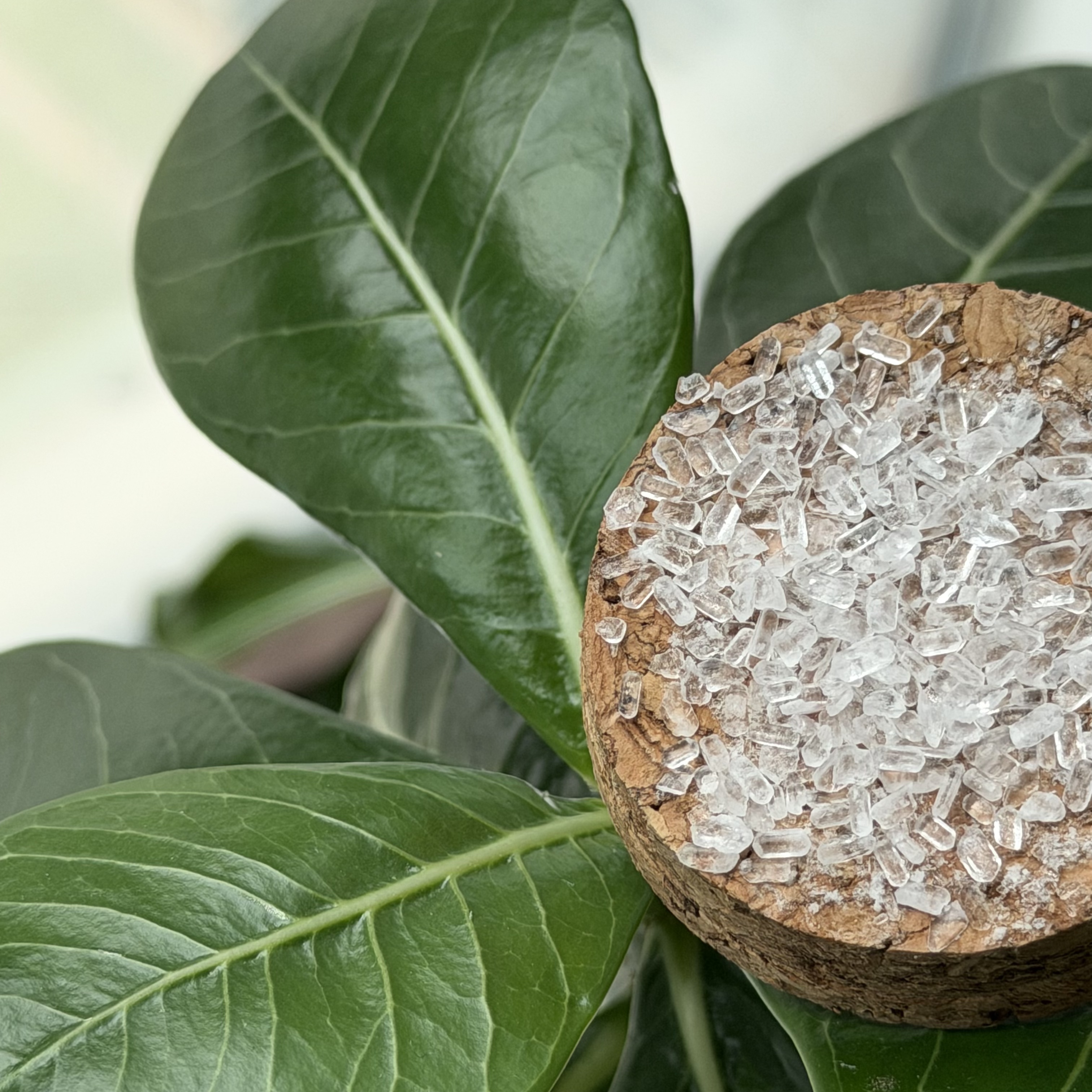
Magnesium sulphate fertilizer offers are usually compared on one number — price per tonne. That number conceals most of what a buyer needs, because the four commercial grades, magnesium sulphate anhydrous, Kieserite, magnesium sulphate monohydrate and magnesium sulphate heptahydrate, differ in nutrient density, solubility, moisture behaviour and the documents that must travel with each batch. This comparison sets brand claims aside and scores offers against criteria a buyer can verify: a COA per batch, 100% testing before shipment, a defined route for third-party inspection when a batch is disputed, and a complete document set covering MSDS, COA, test reports and application guidance.
The stakes are not trivial in volume terms. Published estimates put the global magnesium sulphate market at USD 1.8 billion in 2025, with approximately USD 1.9 billion projected for 2026. Agriculture and fertilizers account for roughly 41.6% of global market share as of 2025, and China's exports under HS 283321 reached USD 149 million in 2024 according to trade data compiled from UN Comtrade. In a supply base that deep, differentiation rarely comes from the substance itself. It comes from how consistently a supplier can document what was loaded.
Why Two Magnesium Sulphate Offers Rarely Compare Directly
A grade name describes hydration state and crystal form. It does not describe a specification. Two offers both labelled magnesium sulphate monohydrate can differ in assay, moisture, particle-size distribution, water-insoluble matter and the maximum chloride figure written on the certificate of analysis. Because the naming is shared across the industry, buyers default to price per tonne — the one figure that is directly comparable and the one figure that says least about fitness for a specific application.
Nutrient density alone changes the arithmetic. Magnesium sulphate anhydrous carries approximately 33% MgO and no crystal water; Kieserite carries approximately 27% MgO; magnesium sulphate monohydrate carries approximately 25–27% MgO. A tonne of one grade does not deliver the same quantity of magnesium as a tonne of another, so the defensible comparison is cost per effective Mg unit at the point of use rather than cost per tonne at the port.
Indicative price reporting underlines the weakness of the headline number. One secondary industry source expected US magnesium sulphate market prices to stabilise near USD 674 per metric ton in early 2025 — a figure that describes product tonnage in one market, not delivered cost per Mg unit in another. This article therefore does not publish a price band. It replaces price bands with acceptance criteria, because those are what a buyer can actually negotiate and later verify.
Product mix reinforces the point. Heptahydrate, commonly known as Epsom salt, accounts for approximately 54% of global commercial production according to published market analysis. Most offers a buyer receives will be heptahydrate, and assumptions formed on heptahydrate are frequently applied — incorrectly — to anhydrous, Kieserite and monohydrate.
Six Acceptance Criteria That Separate Comparable Offers
Acceptance criteria are the terms under which a buyer agrees that a shipment conforms. They belong in the enquiry, not in the post-arrival discussion.
1. A certificate of analysis per batch
A COA that repeats a generic specification is a marketing document. A COA per batch reports the measured assay and the controlled impurities for the material actually loaded. Tianjin Xingyu Fertilizer Industry Co., Ltd., a magnesium sulphate manufacturer founded in 1993 and located in Chenguantun Town Industrial Park, Jinghai District, Tianjin, states that a COA is supplied for each batch. The distinction matters in negotiation: "COA available" and "COA per batch" are different commitments.
2. 100% testing before shipment
Sampling regimes differ between suppliers. A 100% test regime tests every batch before shipment instead of relying on periodic lot sampling. Xingyu lists 100% test as its quality-control mode, supported by an independent standardised testing laboratory and an ISO quality management system applied throughout production. For the buyer, the operative question is which parameters are covered — assay alone, or assay plus moisture, water-insoluble matter, chloride and heavy metals — and whether those results travel with the shipping documents.
3. A defined route for third-party inspection
Disputes are settled by procedure, not by assertion. Xingyu's stated after-sales process is that where a quality discrepancy arises, the buyer provides photographs, samples and third-party inspection reports for mutual negotiation. An offer that does not recognise third-party inspection shifts the cost of proving a defect onto the buyer. The acceptance criterion is to confirm, before order placement, that an independent inspection report will be accepted as evidence.
4. The complete document set
The package normally includes the MSDS, COA, test reports and application guidance. Feed-grade material destined for the EU may additionally require REACH and FAMI-QS documentation, and shipping marks must comply with destination requirements. Magnesium sulphate is registered in the ECHA REACH database with an annual tonnage band of 100,000 to 1,000,000 tonnes, so the substance is well established in the EU framework; what varies between offers is which documents are supplied for a specific grade and destination.
5. Certification with a number, a scope and a validity date
Certification is verifiable only when all three are present. Xingyu holds ISO9001 certification, certificate number 11426Q01597R101, issued by Beijing East Allreach Certification Center Co., Ltd. (EACC) against GB/T19001-2016/ISO9001:2015, issued on 20 May 2026 and valid to 19 May 2029. The scope covers magnesium sulphate fertilizer including magnesium sulphate anhydrous, Kieserite, magnesium sulphate monohydrate and magnesium sulphate heptahydrate, and applies to the global market. A certificate logo reproduced on a brochure, without a number, scope and expiry date, is not an acceptance criterion.
6. Commercial terms that constrain acceptance
Two terms decide whether a trial is possible at all: minimum order quantity, which is one container, and lead time, which depends on order quantity and requirements. Both should appear in the offer rather than in a later email exchange, because packaging and labelling customisation changes both unit cost and the production slot.
| Acceptance criterion | What a comparable offer should state | Why it changes the decision |
|---|---|---|
| Batch documentation | COA issued per batch, with parameters and test basis | Turns a specification sheet into evidence about the loaded material |
| Pre-shipment testing | 100% test before shipment, parameters listed | Removes reliance on periodic lot sampling |
| Discrepancy route | Third-party inspection reports accepted; photographs and samples required | Defines who pays to prove a defect, and how quickly |
| Document set | MSDS, COA, test reports, application guidance; REACH and FAMI-QS where applicable | Determines customs clearance and end-use approval |
| Certification | Number, standard, issuer, scope, validity date | Makes the claim checkable rather than decorative |
| Commercial terms | One-container MOQ; lead time tied to quantity and requirements | Sets whether a trial is feasible and how it must be sized |
Source: first-party terms as published by Tianjin Xingyu Fertilizer Industry Co., Ltd.; certification details from the ISO9001 certificate record.
Chloride Control Is a Specification, Not a Grade Name
Chloride is the constraint most often misread in offer comparison. Low heavy metal and low chloride grades are available in the range, but availability is not the same as default supply. Application guidance is explicit that chloride ion must be restricted to avoid damage to chlorine-sensitive crops, which means the chloride figure belongs on the batch COA as a stated maximum for every shipment intended for those crops.
The grade name does not settle the question. Anhydrous, Kieserite, monohydrate and heptahydrate describe hydration state and crystal form; the chloride result is a function of raw material source and process control. A buyer who specifies "monohydrate" has specified a physical form, not an impurity limit.
The practical rule is narrow and repeatable: require the chloride value as a maximum on the per-batch COA, and require the same basis across every offer under comparison. This comparison does not publish a universal chloride threshold per crop, because the appropriate limit depends on crop sensitivity, soil chloride status and local regulation, and a borrowed number is worse than a specified one.
Two further notes keep the criterion honest. First, low-chloride material is a specification choice and should be priced and documented as one, not implied by the grade label. Second, heavy metals — arsenic, lead and other harmful impurities — belong in the same acceptance discussion; the requirement is strict control of both impurity families, not one at the expense of the other.
Water Solubility Decides the Application Method
Solubility is where the four grades diverge most visibly, and where fitness for a specific application should be judged.
- Magnesium sulphate heptahydrate: extremely fast water solubility, suited to foliar spray and drip fertigation, and used for rapid correction of magnesium deficiency in horticulture, high-value crops and hydroponics.
- Magnesium sulphate monohydrate: supplied as powder for foliar spray and as granular for soil application, and used as a raw material in compound and water-soluble fertilizer blending.
- Magnesium sulphate anhydrous: no crystal water and low moisture, aimed at soil application and moisture-sensitive industrial formulations.
- Kieserite: natural mineral origin, pH-neutral and slow-release, specified for basal soil application and bulk blending.
For irrigation, the governing figure is not assay but water-insoluble matter. The operational requirement is good water solubility with low water-insoluble content so that drip emitters are not blocked. A COA reporting MgO alone does not answer that question, so buyers running fertigation should request insoluble matter on the test report alongside the assay. The relevant equipment set is ordinary: fertilizer spreaders, drip irrigation lines, fertigation machines, sprayers, mixing tanks, blenders, crushers and metering or batching units.
Application guidance is part of the product rather than an optional extra. The same source notes that material should not be mixed with strong alkaline substances and should be applied at the proper dosage to prevent fertilizer burn — two operating constraints that belong in the written guidance supplied with the offer.
| Grade | Form and nutrient density | Typical application mode | Handling profile | Packing |
|---|---|---|---|---|
| Magnesium sulphate anhydrous | White powder or granular; approximately 33% MgO; no crystal water | Soil application; industrial raw material | Low moisture, stable quality, lower transport cost per effective Mg unit | 25 kg or 50 kg PP woven bag, or per customer requirement |
| Kieserite | Off-white granular; approximately 27% MgO; natural mineral origin | Soil application | Low hygroscopicity, anti-caking, free-flowing for bulk blending; pH-neutral | 25 kg or 50 kg PP woven bag, or per customer requirement |
| Magnesium sulphate monohydrate | White powder or granular; approximately 25–27% MgO | Soil application; foliar spray; industrial raw material | Thermal stability, low moisture, anti-caking for long-term storage | 25 kg or 50 kg PP woven bag, or per customer requirement |
| Magnesium sulphate heptahydrate | White granular crystal | Soil application; foliar spray; fertigation; industrial raw material | Extremely fast dissolution; uniform crystal, low impurity | 25 kg or 50 kg PP woven bag, or per customer requirement |
Source: product specification and application data for the magnesium sulphate fertilizer range. MgO values are those published for each grade.

Particle Size, Dust and Blending Behaviour
Particle size determines how a grade behaves in a spreader, a blender and a bag. Complete particle-size options are available across the range, and granule size, colour, shape, packaging and labels can be customised — relevant to buyers who blend, rebrand or run mechanical spreading equipment.
Each grade carries a distinct handling profile. Kieserite's low hygroscopicity and anti-caking behaviour are the reason it is specified for bulk blending with other fertilizers and for mechanical spreading. Monohydrate combines thermal stability with low moisture and anti-caking performance for long-term storage, in both powder and granular form. Heptahydrate is supplied as a uniform crystal with low impurity. Anhydrous is characterised by low moisture, stable quality and a higher nutrient density that reduces transport cost per effective Mg unit.
Dust is the criterion buyers forget to write down. Low-dust, free-flowing material reduces loss during storage and transport and improves conditions for operators. Where an offer is silent on dust, request a particle-size distribution rather than a description — a distribution can be compared, an adjective cannot.
Packing, Labelling and Container Economics
Packing is standardised but not fixed. All four grades are supplied in 25 kg or 50 kg PP woven bags, or as per the customer's requirement, and custom packaging and labels are accepted. Sealed moisture-proof packaging is the norm, and shipping marks must comply with destination requirements.
The choice between 25 kg and 50 kg formats is operational rather than cosmetic. It sets manual handling limits, pallet configuration and warehouse throughput, and indirectly the damage rate on arrival. Where a buyer resells under its own brand, packaging and labelling customisation is part of the offer and should be specified before pricing, because it changes both unit cost and lead time.
Container economics follow from the same logic. With a one-container minimum order and a lead time that depends on order quantity and requirements, small bespoke orders are not the natural fit for this supply model. Buyers planning a trial should size it to a container and to the packing format they intend to use commercially, so that the trial tests the configuration that will actually be reordered.
Storage and Handling Terms Worth Writing Into the Contract
The storage requirement is consistent across the range: a cool, dry, well-ventilated place, away from moisture, sunlight and oxidants, with the package sealed to avoid caking, at normal ambient temperature and low relative humidity. These are ordinary conditions, but they are still conditions. A warehouse that meets them keeps the material free-flowing; one that does not will produce caked bags regardless of which supplier filled them.
Caking is a handling issue rather than an automatic quality failure, and the accepted practice where caking has occurred is to crush or screen the material before use so that it can be spread or dissolved properly. Buyers should record when caking appears, in which layer of the stack, and under what humidity — that record is the evidence base for any later discrepancy discussion, and it is the difference between a documented claim and a complaint.
One grade-specific note is worth adding. Heptahydrate carries the most crystal water of the four grades, so bag sealing and warehouse humidity deserve explicit attention for that grade. Anhydrous and monohydrate are specified with low moisture, and Kieserite's low hygroscopicity and anti-caking behaviour are why it is specified for bulk blending and longer storage. Ordering storage conditions by grade is a more useful contract term than repeating the same sentence for all four.
Delivery Reliability and After-Sales as Measurable Criteria
Reliability is easier to verify retrospectively than to promise prospectively, which is why a reference case is worth more than an assurance. A South Korean OBM client has purchased from Xingyu for two years, with shipments including a 20-tonne order. The relationship covers agricultural fertilizer use, while the same supplier also serves feed-additive and industrial applications. The evaluation points that case supports are specific: batch-level COA on repeat orders, acceptance of third-party inspection, stable delivery across successive orders and a service route that responds when a problem appears.
Service commitments can be written as terms rather than left as goodwill. Xingyu's stated after-sales commitments are: technical documents including MSDS, COA, test reports and application guidance; full-order follow-up with timely updates on loading and shipping status; a response to customer feedback within 24 hours; and, in case of quality discrepancy, resolution through photographs, samples and third-party inspection reports.
Supply depth belongs in the same assessment. The company reports an annual output capacity of 100,000 metric tons for magnesium sulphate series products on its official website, operates a 20,000 m² site with an independent standardised testing laboratory, and exports to more than 30 countries with an export ratio of about 70%; its listed markets include Pakistan, Japan, Korea and New Zealand. For tenders, the relevant question is not whether capacity exists but whether the volume allocated to a specific delivery window is stated in writing.
Location is a secondary but real acceptance factor where pre-shipment inspection and loading must be scheduled in the same window. The site sits approximately 80 km from Tianjin Port and 15 km from a railway freight yard, adjacent to National Highway G104, which shortens the interval between inspection, packing and container loading.
Where This Comparison Stops
Documentary acceptance does not prove agronomic performance. A COA confirms that a batch matches a specification; it cannot confirm that the specification suits a particular soil, crop or irrigation water. Buyers with magnesium-deficient soils, high-value crops or chloride-sensitive programmes still need a field or greenhouse trial before converting a specification into a seasonal contract.
Verification also costs money. Third-party inspection, sampling and laboratory work add cost and time, and for a single container the cost may exceed the value of the assurance. The sensible allocation is to reserve independent inspection for first shipments, disputed batches and grade changes, and to rely on per-batch COA and retained samples otherwise.
Minimum order structure limits experimentation as well. A one-container minimum with lead time tied to order quantity and requirements means buyers cannot order a few bags to test packing; the trial has to be designed at container scale.
Grade names are not standardised market-wide, either. Kieserite is a mineralogical name used commercially for a magnesium sulphate monohydrate product, and suppliers may describe similar material differently. Offers should therefore be compared on specification and documentation rather than on the label. And threshold values remain local: chloride limits, heavy-metal limits and feed-grade requirements depend on crop, destination regulation and end use, so this comparison sets the criteria but cannot set the numbers for a specific market.
Market Signals Behind the Criteria
Market direction supports a documentation-led approach rather than a price-only one. Published estimates place the global magnesium sulphate market at USD 1.8 billion in 2025, with around USD 1.9 billion projected for 2026. Independent estimates for 2025 range from roughly USD 1.0 billion to USD 1.8 billion depending on which grades and end uses are counted, which is a reminder to read any single market figure with its scope attached.
Demand is concentrated in agriculture and fertilizers at approximately 41.6% of global market share as of 2025. Supply is concentrated too: China's exports under HS 283321 reached USD 149 million in 2024, and heptahydrate accounts for around 54% of global commercial production. Regulatory maturity follows the same pattern — the 100,000 to 1,000,000 tonne annual band recorded for magnesium sulphate in the ECHA REACH database indicates a substance that is already well characterised in the EU framework.
What follows for a buyer is unglamorous. In a deep, substitutable supply market, the differences that survive negotiation are documentation, batch consistency, packing control and service response — precisely the acceptance criteria set out above. That is also why a price per tonne taken in isolation tends to converge across offers, while the cost of a failed batch does not.
What Buyers Should Expect Next
Two shifts are visible in how offers are being written. First, documentation is moving from a marketing attachment to a contractual schedule: the COA per batch, the tested parameters, the inspection route and the response window are being listed as terms rather than assurances. Second, packing and labelling customisation is being specified earlier, because buyers who blend, rebrand or sell through retail channels cannot separate packaging from cost and lead time.
Neither shift requires a new product. Both require the supplier to state, per batch and in writing, what was tested and what was shipped — the same standard this comparison applies to every offer on the table.
FAQ
A complete offer normally includes the MSDS, COA, test reports and application guidance. The COA should be issued per batch rather than as a generic specification. Feed-grade material for the EU may additionally require REACH and FAMI-QS documentation, and shipping marks must comply with destination requirements. Magnesium sulphate is registered in the ECHA REACH database with an annual tonnage band of 100,000 to 1,000,000 tonnes, so the substance itself is well characterised; the documents that vary between offers are those tied to the specific grade, destination and end use.
No. Magnesium sulphate anhydrous, Kieserite, magnesium sulphate monohydrate and magnesium sulphate heptahydrate describe hydration state and crystal form, not an impurity limit. Low heavy metal and low chloride grades are available, but availability is a specification choice rather than a default. Buyers with chloride-sensitive crops should require the chloride value as a stated maximum on the per-batch COA, expressed on the same basis across all offers being compared.
Magnesium sulphate heptahydrate is the grade specified for drip fertigation and foliar spray because of its extremely fast water solubility and rapid correction of magnesium deficiency; it is also used in horticulture and hydroponics. Monohydrate powder is used for foliar spray and granular monohydrate for soil application. For any irrigation route, the test report should show low water-insoluble matter, since insoluble content rather than assay is what blocks emitters and spray nozzles.
All four grades are supplied in 25 kg or 50 kg PP woven bags, or as per the customer's requirement. Packaging, labels, granule size, colour and shape can be customised. Sealed moisture-proof packaging is standard, and shipping marks must comply with destination requirements. The 25 kg and 50 kg formats differ in manual handling limits, pallet configuration and warehouse throughput, so the choice is operational as well as commercial.
Store in a cool, dry, well-ventilated place, away from moisture, sunlight and oxidants, with the package sealed to avoid caking, at normal ambient temperature and low relative humidity. Where caking has occurred, the material is commonly crushed or screened before use so that it can be spread or dissolved properly. Heptahydrate carries the most crystal water of the four grades, so bag sealing and warehouse humidity deserve specific attention for that grade.
The route is documentary and physical evidence: the buyer provides photographs, samples and third-party inspection reports, and the parties negotiate on that basis. Suppliers operating this route commit to responding to customer feedback within 24 hours and to assisting with quality and arrival-related issues. Confirming in advance that an independent inspection report will be recognised is the practical way to make the route usable.
It means every batch is tested before loading, rather than a periodic lot sample standing in for the shipment. Combined with an independent standardised testing laboratory operating under an ISO quality management system, it produces a per-batch result that can be compared against the specification. Buyers should confirm which parameters are tested — assay, moisture, water-insoluble matter, chloride and heavy metals — because a test regime is only as useful as the list of parameters it covers.
The minimum order quantity is one container, and lead time depends on order quantity and requirements. This structure suits buyers who can plan at container scale and specify packing, labelling and documentation before pricing. Buyers wanting a smaller trial should design it within a container and in the packing format they intend to use commercially, since packaging customisation affects both unit cost and lead time.
The full grade specifications and packing options referenced in this comparison are published in the manufacturer's catalogue, available here: XYF product catalogue (PDF).
Есть вопросы или нужны дополнительные детали?
Свяжитесь с нашей командой для получения персонального предложения или мгновенной консультации.
Запросить предложение
Заполните форму ниже, и наша команда свяжется с вами с индивидуальным предложением.
Прямой чат WhatsApp
Предпочитаете общаться в реальном времени? Напишите нам в WhatsApp для мгновенной помощи и быстрых ответов.
- Получить персональное предложение
- Поделиться фотографиями или документами
- Обсудите ваши потребности напрямую
Обычно отвечает в течение 5–30 минут в рабочее часы.