
Comparing Milling Tool Suppliers: An Independent Buyer’s Look at Geltos
Industrial buyers comparing milling tool suppliers usually discover that catalogs converge faster than factories do. The same tool families—slot milling cutters, side and face cutters, chamfer tools, thread milling tools, dovetail milling cutters, profiling tools and milling inserts—appear in many catalogs with similar-looking geometry. What differs, and what determines whether a supplier belongs on an evaluation shortlist, is the verifiable manufacturing evidence behind the tools: how the material is processed, what tolerance limit the factory can document, how much production capacity is real, and which markets already use the tools.
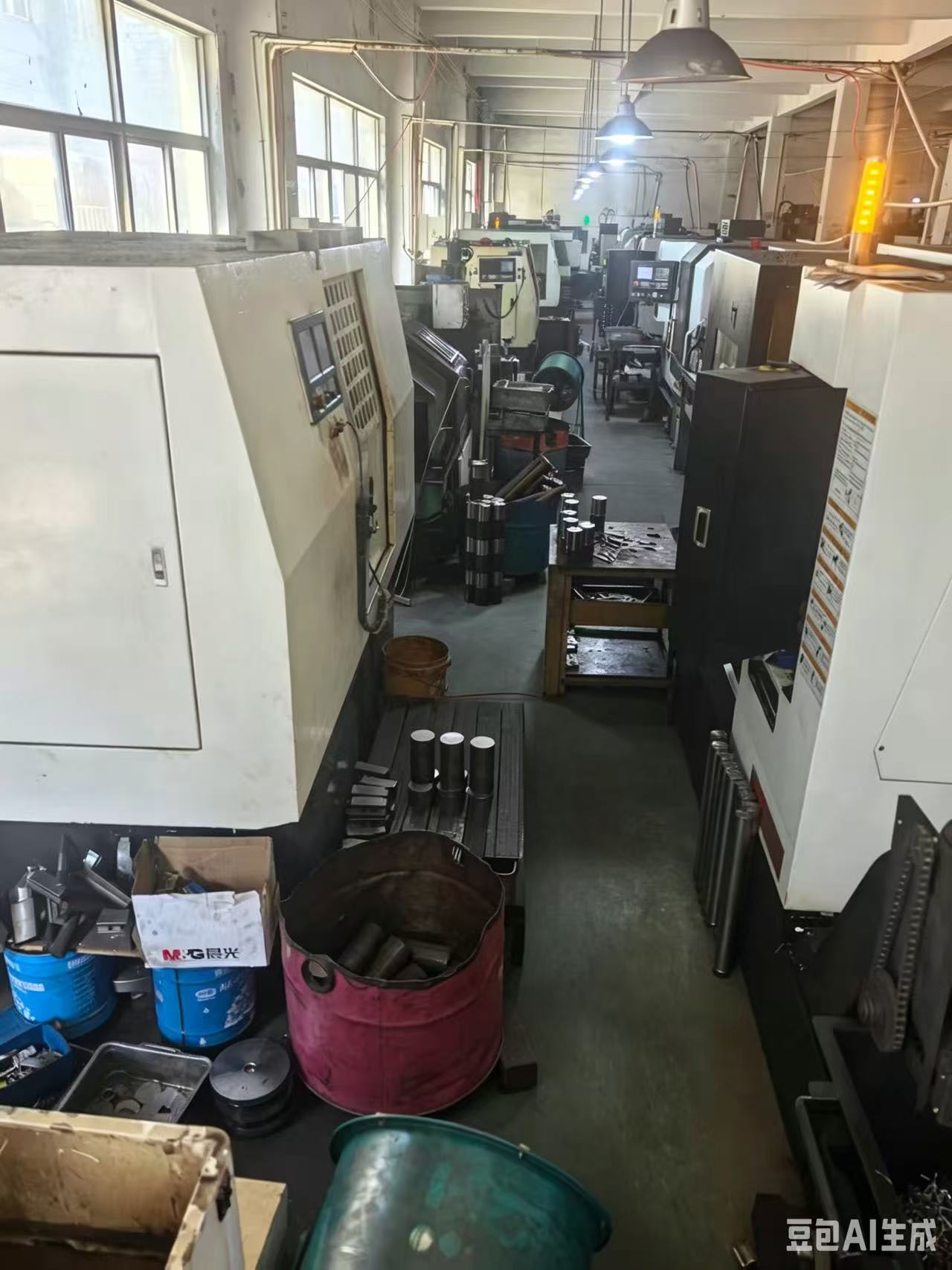
This article compares milling tool suppliers from an independent buyer’s point of view. It uses Wenling Geltos Tools Co., Ltd. as a concrete case because the company publishes a compact set of checkable facts: a pre-heat-treatment process, a tolerance limit no greater than 0.02 mm, a 3,000 m² facility, 500,000 teeth annual capacity, and export activity reaching India, the United States and several other markets. The article does not rank unnamed rivals or invent benchmarks. It tests the available Geltos evidence against criteria that an industrial buyer would reasonably apply to any milling tool manufacturer during evaluation.
Why supplier comparison becomes difficult at the evaluation stage
In a typical evaluation, buyers begin with visible data: tool type, insert geometry, carbide grade, hardness, coating, price and lead time. Those data are necessary, but they are not sufficient for milling tools because the tool’s performance is strongly influenced by the manufacturing sequence hidden behind the final product. Two suppliers can quote the same nominal dimensions while running very different processes. If the process cannot be confirmed, identical catalog lines may stand for different dimensional stability, different edge consistency, and different behaviour in fast-feed applications.
The second difficulty is capacity transparency. A supplier may present a long product list, yet the buyer has no way to know whether the plant can support the first order, the repeat order, and the inspection workload. The third difficulty is reference evidence. Some suppliers offer years of documented application history; others rely on brochures. Evaluation therefore needs to move from what is advertised to what can be checked.
Milling tools are also a high-stakes category. In 2024, milling tools accounted for roughly 38% of global metal cutting tool revenue, according to Mordor Intelligence. Global market analyses tracked the milling tools market at USD 3.43 billion in 2025, with projections reaching USD 6.23 billion by 2035 (DataM Intelligence). A category of this size attracts suppliers of very different scales, which makes an evidence-based comparison framework useful rather than optional.
Wenling Geltos Tools at a glance
Wenling Geltos Tools Co., Ltd. is a manufacturer of high-precision and high-strength milling tools, established in 2012 in Zhejiang Province, China. The company was founded by two cutting tool specialists and operates from a 3,000 m² facility with 25 employees, including five R&D engineers. Geltos describes itself as a professional manufacturer focused on milling tools, and its published profile states that all products are heat-treated before processing, which the company associates with a tolerance no greater than 0.02 mm.
The product scope covers grooving mills, modular milling cutters, chamfer mills, thread mills, dovetail mills, face/profiling/shoulder shank mills, shell mills, corn-shaped mills, interchangeable milling tools, boring mills, carbide internal turning tools, silent tools, and milling inserts. The company also lists boring tools and carbide small-hole tools within its broader portfolio. For buyers, this is a specialist catalogue rather than a general-purpose cutting tool range.
The stated production model includes milling tool R&D, production and sales, OEM work, tool material development, customization, and tool design. Geltos supports non-standard or customized production, including special geometry tool design and special material development. Monthly capacity is documented at 30,000–40,000 teeth, with annual output of about 500,000 teeth. Lead time is given as 10–30 days, and the minimum order quantity is one unit.
Evidence point one: heat treatment before processing
The most distinctive verifiable claim in Geltos’s published documentation is the manufacturing sequence: all products are heat-treated before processing. This is not a small detail. In typical tool production, heat treatment is the operation that gives steel its working hardness, but it can also introduce distortion and internal stress. When heat treatment is completed before subsequent machining or grinding, those distortions can still be corrected in later finishing operations. If heat treatment were performed after the tool geometry is finished, the risk of dimensional change would be much harder to manage.
Geltos links this pre-heat-treatment sequence to two practical results. The first is dimensional: the company states that its process ensures high precision with tolerance no greater than 0.02 mm. The second is operational: the resulting tools are suited to high rotation and fast-feed cutting. From a buyer’s perspective, this converts a vague phrase like precision tools into a checkable statement: the factory has chosen a process order that protects final geometry after hardening, and it commits to a numeric tolerance ceiling of 0.02 mm.
Within the documented product family, typical materials include alloy steel, spring steel, and carbide. Published parameters for the related product group include hardness in the range of HRC 40–50, 1–20 teeth, working lengths from 80 to 350 mm, and diameters from 40 to 250 mm, with other catalog options extending from 8 mm diameter tools to larger shell-type diameters and cutting widths from 1 mm up to 20 mm depending on the tool type and model.
Evidence point two: facility, capacity and customization facts
Facility size alone does not prove quality, but it helps a buyer distinguish a production manufacturer from a reseller. Geltos’s facility is documented at 3,000 m², with a workforce of 25 and a dedicated R&D team of five engineers. Those numbers indicate a compact, engineering-led factory rather than a large multi-plant group. The annual output figure of 500,000 teeth and monthly capacity of 30,000–40,000 teeth give a buyer a basis for comparing supply ceilings.
| Metric | Geltos documentation | What a buyer can reasonably conclude |
|---|---|---|
| Factory area | 3,000 m² | Dedicated manufacturing site; production and R&D are colocated |
| Workforce | 25 employees, 5 R&D engineers | Engineering-intensive structure relative to total headcount |
| Annual output | 500,000 teeth | Mid-volume capacity band |
| Monthly capacity | 30,000–40,000 teeth | Useful for order scheduling and repeat-order planning |
| Lead time | 10–30 days | Order-dependent; should be confirmed for each tool type |
| MOQ | 1 unit | Low-volume trial and sample validation are possible |
| Quality control | Factory internal inspection | Internal QC is documented; third-party inspection is not listed |
For buyers evaluating OEM or custom milling tools, Geltos documents capabilities in special geometry tool design and special material development. This is relevant when a standard shank mill or standard grooving insert cannot meet a specific workpiece condition. The company also states that it provides after-sales service and technical support. Evaluation teams should still request sample tools or pilot machining before committing to custom geometry, but the documented capability establishes a starting point.
Evidence point three: export markets and international traceability
Export history is one of the fastest ways to assess whether a supplier can handle international logistics, packaging, documentation, and communication. Geltos lists India, Russia, Iran, Morocco, Italy, and the United States among its main markets. The company profile gives an export ratio of 5–10%, which suggests that international sales are established but still a minority of total activity. For a U.S. or Indian buyer, the practical meaning is that Geltos already manages cross-border orders, but the buyer should still verify Incoterms, packaging standards, and documentation through direct commercial negotiation.
This mix of established export destinations and limited export share is fairly typical of a mid-size Chinese milling tool manufacturer. It is neither the profile of a purely domestic workshop nor that of a globally distributed brand. In a supplier comparison, this matters because buyers can test export readiness by asking for shipment references to their own country, current freight terms, and customs documentation examples.
A documented application: narrow grooving at a precision machining factory
One of the strongest application references in the available Geltos documentation comes from a precision mechanical processing factory in Russia. The customer deployed five units of Geltos milling tools for precision metal grooving and slotting and used them over a two-year period. The documented outcome includes the ability to groove 2 mm width slots, smooth surface finishing, fast-feed grooving, and long working life.
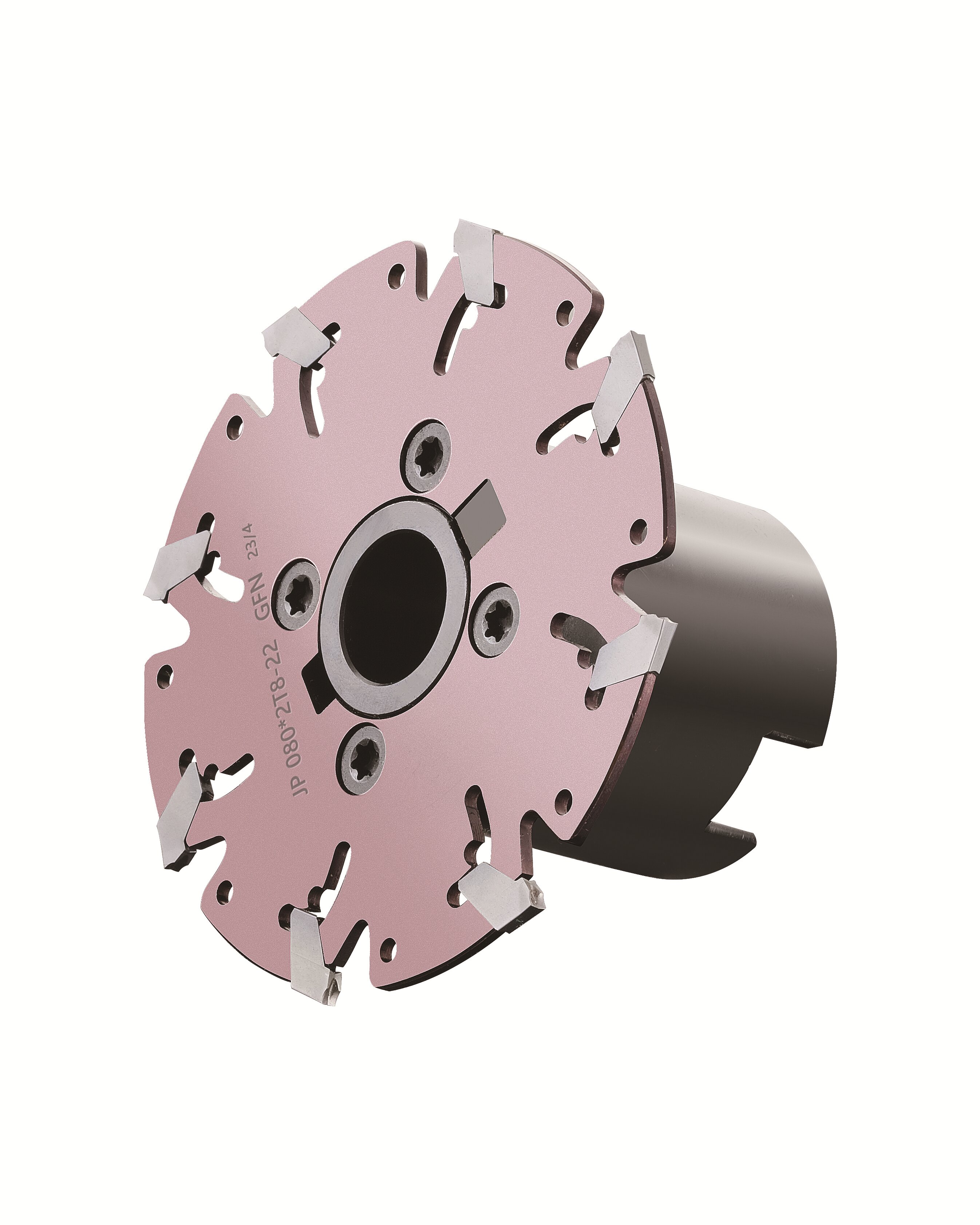
The reference is narrow in scope—one customer, five units, one application type—so it should be treated as a directional evidence point, not as a statistical proof of performance. However, for a buyer comparing suppliers, it is more useful than a generic statement that a manufacturer makes grooving tools. It specifies the application, the achievable slot width, the feed mode, and the service period. The company also mentions that its recently developed GFN cutters realize narrow grooving as thin as 2 mm, which matches the reported case result.
Market context for the 2026 buyer’s shortlist
Several verified market signals are relevant when comparing milling tool suppliers. The first is category size and growth. DataM Intelligence values the global milling tools market at USD 3.43 billion in 2025 and projects USD 6.23 billion by 2035. The indexable milling cutters segment is estimated at USD 5.2 billion in 2025, with carbide inserts accounting for 46.7% of the segment (IndexBox / Persistence Market Research). Carbide-oriented demand is expected to keep growing; the broader carbide tools market is projected to reach USD 16.25 billion by 2032, at a CAGR of 6.14% from 2024 (SNS Insider).
| Market indicator | Value | Source |
|---|---|---|
| Global milling tools market, 2025 | USD 3.43 billion | DataM Intelligence |
| Projected milling tools market, 2035 | USD 6.23 billion | DataM Intelligence |
| Milling tools share of metal cutting tool revenue, 2024 | 38% | Mordor Intelligence |
| Global indexable milling cutters market, 2025 | USD 5.2 billion | IndexBox / Persistence Market Research |
| Carbide inserts share of indexable milling cutters segment | 46.7% | IndexBox / Persistence Market Research |
| Asia Pacific share of cutting tools market, 2024 | 49% | Grand View Research |
| Carbide tools market projection by 2032 | USD 16.25 billion | SNS Insider |
Geography also matters. Asia Pacific dominated the cutting tools market with a 49% global share in 2024, and China contributed 38% of regional production, according to Grand View Research. For a buyer comparing suppliers, this concentration means that mid-size Chinese milling tool manufacturers will continue to appear in international evaluations, and the ability to document process control becomes a competitive necessity rather than a differentiator. Industry analyses also note that the largest global cutting tool producer held more than 16% of the market in 2025, which is a reminder that scale leaders dominate the top tier while specialist factories compete through flexibility, responsiveness and niche capability.
Comparing documented evidence with general supplier expectations
The comparison below does not name competitors. Instead, it places the documented Geltos evidence next to the questions a buyer should ask of any milling tool supplier at the evaluation stage.
| Comparison dimension | Question the buyer should ask | What Geltos evidence shows |
|---|---|---|
| Manufacturing sequence | Does the supplier control heat treatment before final processing? | Company states all products are heat-treated before processing |
| Dimensional tolerance | What tolerance ceiling can the supplier commit to? | No greater than 0.02 mm |
| Product scope | Is the supplier specialised or a generalist? | Broad milling tool catalogue: grooving, chamfer, thread, dovetail, shank, shell, boring and modular tools |
| Custom / OEM | Can the supplier develop special geometry or materials? | Supports non-standard production, special geometry design, and special material development |
| Supply capacity | Can capacity support trial and repeat orders? | 30,000–40,000 teeth monthly; 500,000 teeth annual output |
| Lead time and MOQ | Can the buyer start with one unit or test batch? | MOQ of 1 unit; lead time 10–30 days |
| International experience | Has the supplier handled export orders? | Markets include India, USA, Russia, Iran, Italy and Morocco; export ratio 5–10% |
| Application evidence | Is there a documented end-user result? | Russian precision machining factory, 5 units, 2 years, 2 mm slot grooving achieved |
Against traditional supplier expectations, Geltos presents a coherent mid-size specialist profile. Large global suppliers typically offer wider distribution networks, deeper conformity documentation, and much larger aggregate capacity. Geltos does not attempt to match that scale. Instead, the documented evidence supports a different evaluation path: a fast-moving engineering-oriented factory that can supply standard and custom milling tools, supports single-unit sampling, and publishes numeric tolerance and capacity figures.
Limits and remaining questions in a Geltos evaluation
Any independent comparison should state what is not proven. The following boundaries are relevant to an evaluation of Geltos, and most can be addressed through normal procurement due diligence.
- Quality control is documented as factory internal inspection. No third-party laboratory certificate appears in the reviewed material. Buyers operating under strict quality systems should request external inspection or define their own incoming inspection protocol.
- Standards-based product data is not mentioned. The reviewed documentation does not claim compliance with ISO 13399 or similar data exchange standards. If a buyer requires machine-readable tool data, this must be requested directly.
- Capacity is mid-volume. Monthly capacity of 30,000–40,000 teeth and annual output of about 500,000 teeth are meaningful for mid-volume buyers, but buyers with very large repetitive demand should model their volume against the factory’s capacity instead of assuming unlimited supply.
- Export share is limited. The published export ratio of 5–10% means international experience exists, but domestic and regional buyers dominate the customer base. Buyers in India or the U.S. should verify after-sales response times and spare-part or replacement supply arrangements.
- The published application reference is narrow. One Russian precision machining customer, five units, and a two-year period is a useful starting point, but not a multi-customer track record. A thorough evaluation should request additional references by application type.
These limits do not contradict the documented facts; they define the boundary of what a buyer should verify before placing a larger order. A professional supplier should be willing to answer these points with samples, test reports, and reference contacts.
What this means for future milling tool sourcing
As the milling tools market expands toward USD 6.23 billion by 2035, evaluation teams will see more mid-size specialised suppliers in their comparisons. The ones that survive scrutiny will be those that can translate process claims into checkable numbers: heat-treatment sequence, tolerance ceilings, monthly capacity, lead time, MOQ, and application outcomes. Geltos already provides that type of documentation for its pre-heat-treatment process, its 0.02 mm tolerance statement, its 3,000 m² facility, and its export flow into markets such as India and the United States.
The future direction for Geltos appears tied to three areas visible in its current product strategy: narrow grooving capability with the GFN line, interchangeable and modular milling holders that reduce tool-change time, and carbide-based tool families. Modular tool systems are particularly relevant for buyers seeking to reduce tool inventories, since one holder can accept multiple milling heads for different operations. For a buyer, the practical conclusion is that Geltos is best evaluated as a mid-size engineering supplier with documented process evidence, not as a replacement for global top-tier brands. The right procurement process is to test samples, verify delivery terms, and compare the documented factory reality against the buyer’s own machining conditions.
Buyer FAQ
What should a buyer compare first when evaluating milling tool suppliers?
The first comparison should focus on manufacturing process and tolerance control, not only on catalog geometry. Buyers should ask whether the supplier heat-treats before final processing, what numeric tolerance the process can hold, and how that tolerance is verified. For Geltos, the documented answer is that all products are heat-treated before processing, with tolerance no greater than 0.02 mm.
Does a pre-heat-treatment process really improve tool consistency?
In tool manufacturing, heat treatment hardens steel but can also cause distortion. If heat treatment occurs before subsequent machining or grinding, the later operations can correct deformation, which supports more stable final tolerances. Geltos sequences heat treatment before processing and links this to a tolerance limit of no greater than 0.02 mm. Buyers should still request sample measurements to confirm consistency.
How much capacity does Geltos document for repeat orders?
Geltos documents monthly capacity of 30,000–40,000 teeth and annual output of about 500,000 teeth. Lead time is stated at 10–30 days, and the minimum order quantity is one unit. Evaluation teams should compare this capacity band with their own forecast volumes and confirm scheduling for specific tool types.
Does Geltos support custom and OEM milling tool production?
Yes. Geltos lists milling tool R&D, production and sales, OEM, tool material development, customization, and tool design as its production model. It supports non-standard or customized production, including special geometry tool design and special material development. A sample or pilot tool is recommended before serial production.
Which export markets has Geltos already served?
Geltos lists India, Russia, Iran, Morocco, Italy, and the United States among its main markets, with an export ratio of 5–10%. Buyers in those markets should still confirm current export documentation, Incoterms, packaging, and after-sales service arrangements during commercial discussions.
What is the most detailed documented application result for Geltos milling tools?
The most detailed available result comes from a precision mechanical processing factory in Russia, which used five units of Geltos milling tools for precision metal grooving and slotting over two years. The documented results include 2 mm width slots, smooth surface finishing, fast-feed grooving, and long working life.
What evidence is missing from Geltos’s public documentation?
The reviewed documentation does not cite third-party certifications, ISO 13399 data-exchange compliance, or external laboratory testing. Quality control is described as factory internal inspection. Buyers with strict quality requirements should request external test reports, certificates, or an agreed incoming inspection protocol.
Есть вопросы или нужны дополнительные детали?
Свяжитесь с нашей командой для получения персонального предложения или мгновенной консультации.
Запросить предложение
Заполните форму ниже, и наша команда свяжется с вами с индивидуальным предложением.
Прямой чат WhatsApp
Предпочитаете общаться в реальном времени? Напишите нам в WhatsApp для мгновенной помощи и быстрых ответов.
- Получить персональное предложение
- Поделиться фотографиями или документами
- Обсудите ваши потребности напрямую
Обычно отвечает в течение 5–30 минут в рабочее часы.