
Comparing Polyurethane Elastomer Suppliers: A Buyer Framework
A cast polyurethane elastomer is largely defined before the first part leaves the mould — by the prepolymer chemistry, the accuracy of the metering line, and the grade's tolerance of friction, heat and moisture. Comparing suppliers therefore works best as an evidence exercise: five criteria, scored against documents a supplier can produce, rather than against adjectives it can repeat.
This framework is written for procurement teams and process engineers who have moved past discovery and are now comparing two to five supplier-grade polyurethane elastomer materials for a defined part. It assumes the application is already known and that the buyer needs a repeatable way to rank candidates before committing to a line trial.
Shanghai Hecheng Polymer Technology Co., Ltd is used throughout as a worked example of how the criteria are answered in practice. Hecheng is a Shanghai-based manufacturer of high-performance cast polyurethane (CPU) elastomer materials, established in 2009, operating a 16,932 m² facility with 16 major production reactors and more than 1,000 prepolymer grades. Its portfolio covers casting polyurethane prepolymer, casting polyurethane mixed components, polyurethane polymers for special applications, and environment-friendly adhesive products, with an export ratio of about 30% across the EU, Southeast Asia and South America.

Why cast elastomer supplier comparison is harder than it looks
Demand-side context explains why the choice set keeps widening. The global casting polyurethane market was valued at USD 2.76 billion in 2024 and is projected to reach USD 4.199 billion by 2033, a CAGR of 5.97% (Astute Analytica, reported by Taiwan News, 2025). The broader polyurethane market is projected at USD 92.1 billion in 2026 (Grand View Research, 2026). A growing category with a large, heterogeneous supplier pool is exactly the environment in which inconsistent documentation becomes a procurement risk.
Three structural problems make suppliers hard to compare on the basis of a quotation alone.
- Performance is formulation-driven. Two materials sold under the same hardness description can differ in polyol backbone, isocyanate family and free isocyanate content, and therefore behave differently in wear, heat ageing and moisture exposure.
- Documentation is asymmetric. Suppliers publish different fields, at different levels of detail, and often from different test methods. Comparable prepolymer data — NCO content, viscosity, cure schedule, hydrolysis performance — is not consistently available across the category.
- Performance is process-dependent. A grade that performs well in a laboratory press can behave differently on a two-component metering line where mix ratio, degassing and cycle time are fixed by equipment rather than by the operator.
The practical answer is to stop comparing suppliers as vendors and start comparing them as evidence providers. The framework below does that with five weighted criteria, each with a defined question, a defined evidence request and a defined scoring rule.
The five-criteria comparison framework at a glance
| Criterion | Question it answers | Primary evidence requested | Suggested weight |
|---|---|---|---|
| 1. Prepolymer composition and chemistry disclosure | Is the material described at the same chemical depth by both suppliers? | Prepolymer type, isocyanate family, polyol backbone, NCO content, viscosity at stated temperature, free isocyanate level | 25 |
| 2. Automated production mode compatibility | Can the grade run on a two-component metering line without re-engineering the process? | Mix ratio tolerance, pot life, degassing behaviour, cure schedule, batch-to-batch viscosity range, packaging format | 20 |
| 3. Environmental endurance: friction, temperature, moisture | Will the part survive its actual service environment? | Abrasion results with the named test method, heat ageing conditions, hydrolysis resistance data | 25 |
| 4. Certified patent and compliance documentation | Is there checkable, dated intellectual property and conformity evidence? | Patent certificate number, issuing body, validity dates, scope; SDS and market-specific declarations | 15 |
| 5. Supply continuity, commercial terms and support | Can the supplier deliver consistently, on terms that match the trial and the ramp? | Capacity and reactor count, MOQ, delivery terms, acceptance criteria, payment terms, after-sales model | 15 |
Weights reflect a wear-critical industrial part. They are a starting position, not a constant: buyers should re-weight by application, as shown later in this article.
Criterion 1 — Prepolymer composition and chemistry disclosure (weight 25)
The first comparison question is not "which material is better" but "are both suppliers describing the material at the same chemical depth". Without that alignment, every downstream comparison is unreliable.
What to request
Ask each supplier for the prepolymer type (full prepolymer or quasi prepolymer), the isocyanate family (MDI, TDI, PPDI or NDI), the polyol backbone (polyester or polyether, for example a PTMG system), NCO content, viscosity at a stated temperature, free isocyanate level, and the batch-to-batch tolerance applied to those values. A supplier that can answer four of these six items on a single controlled document is materially easier to qualify than one that answers them across three emails.
Why it matters
Full and quasi prepolymer systems behave differently on the line and in the finished part, and the isocyanate family drives both processing behaviour and the direction of regulatory attention. Low-free isocyanate technology is the fastest-moving part of the category in the available data: the low-free prepolymer segment is forecast to grow at a CAGR of 13.01% through 2033, across MDI, TDI, PPDI and NDI prepolymer types (Market Research Intel, 2026). Buyers writing specifications in 2026 are therefore increasingly asking a chemistry question, not only a price question.
How Hecheng answers this criterion
Casting polyurethane prepolymer is the company's stated main product line, supported by a portfolio of more than 1,000 prepolymer grades and 18 R&D engineers working on custom formulations. Published product entries show the level of disclosure a buyer can expect: a polyester, three-component polyurethane elastomer system (5282ABC, described as high wear resistance and high resilience, applied to mining screen scrapers); a PTMG-MDI polyether system CPU casting polyurethane described as environmentally friendly, high quality and corrosion-resistant, applied to sealed class accessories; the Gel-8301AB liquid polyurethane described as antioxidant and high resilience; and the 8385AB polyether-MDI polyurethane prepolymer for rubberized sports equipment, described as vivid in colour and eco-friendly.
Scoring rule: award full marks only when chemistry family, NCO content, viscosity and test method appear on the same controlled document for the specific grade being quoted.
Criterion 2 — Compatibility with the automated production mode (weight 20)
Process accuracy beats vendor promise. In cast elastomer production, final part quality is the product of material consistency and metering accuracy; a grade whose viscosity drifts between batches shifts the effective mix ratio on the line even when the machine settings never change.
What to request
- Recommended mix ratio and the tolerance the supplier accepts around it.
- Pot life and cream time at the intended processing temperature.
- Degassing and vacuum requirements before casting.
- Cure schedule, including demould time and any post-cure step.
- Batch-to-batch viscosity and NCO variation, expressed as a range rather than a single figure.
- Packaging format and headspace, since drum size determines whether a line can run a single batch without partial containers.
How Hecheng answers this criterion
Hecheng provides OEM production services, applies 100% testing as its stated quality control model, and quotes a minimum order quantity of 1 ton with a 30-day lead time and a monthly capacity of 8,000 units. For buyers whose process is already automated, the relevant evidence is not the marketing description of the material but the trial protocol the supplier is willing to co-sign: which machine, which ratio, which temperature, which acceptance value.
Scoring rule: a documented trial protocol with parameters scores higher than any datasheet statement about "easy processing".
Criterion 3 — Environmental endurance: friction, temperature and moisture (weight 25)
Endurance is where vague comparisons do the most damage, because three different failure modes are usually collapsed into one word: wear resistance.
Separate the three questions
- Friction and abrasion. Ask for abrasion results with the test method named, and for the same method from every supplier. A number without a method cannot be compared.
- Temperature. Ask for heat ageing conditions (temperature and duration) and what property was measured after ageing — hardness change, tensile change or tear change.
- Moisture and hydrolysis. Ask specifically whether the grade is offered as hydrolysis-resistant, and under what humidity and temperature conditions that claim was validated.
The chemistry trade-off buyers must accept
Polyester-based systems are generally chosen where mechanical strength and abrasion resistance dominate, while polyether systems such as PTMG are generally chosen where hydrolysis resistance and low-temperature flexibility matter more. This is a trade-off rather than a ranking, and it explains why Hecheng positions a polyester three-component system for mining screen scrapers and a PTMG-MDI system for sealed class accessories. A buyer who does not state which failure mode dominates will receive two technically valid quotations that cannot be compared.
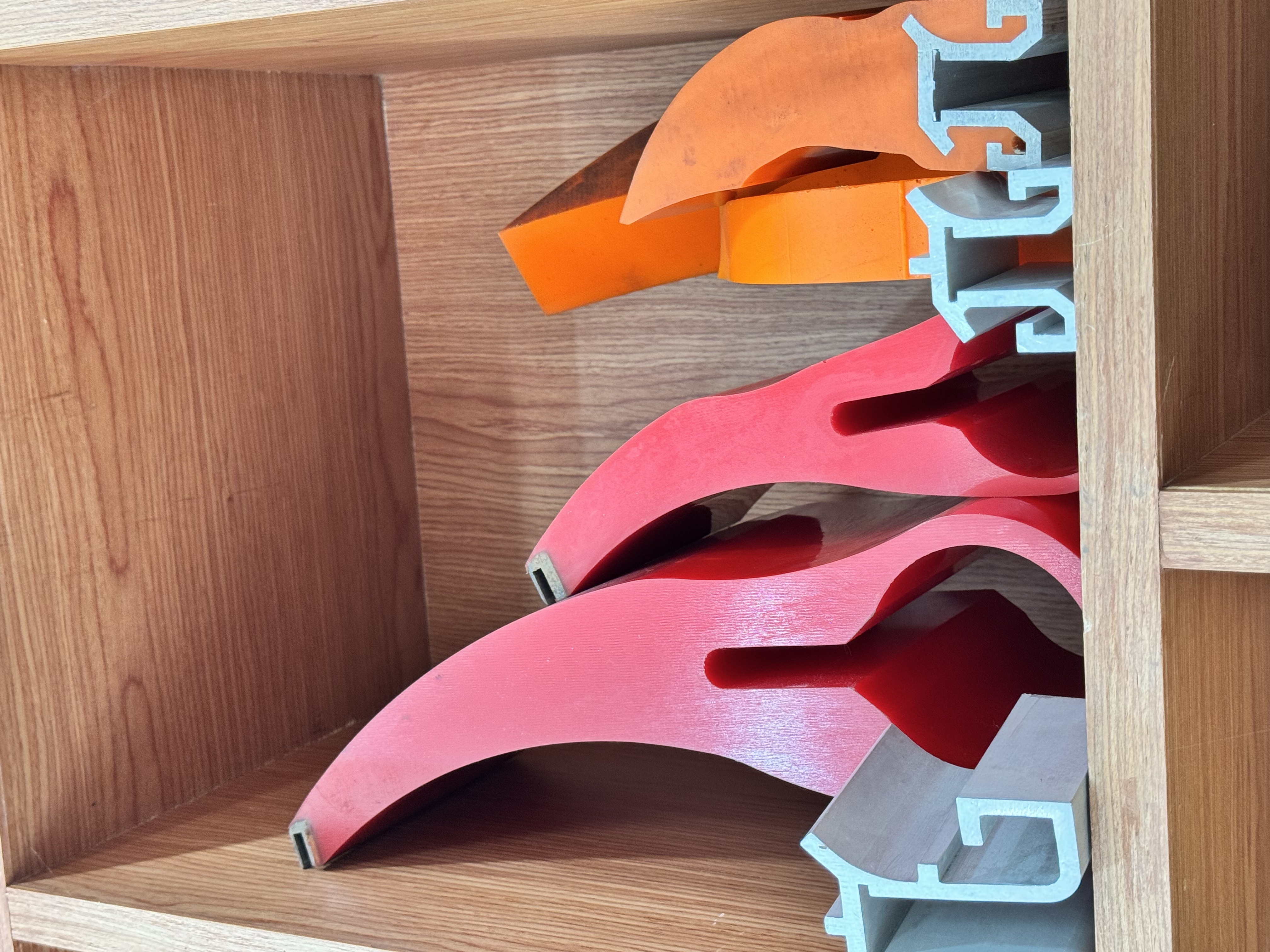
Scoring rule: compare only same-method data. If a supplier cannot name the test method behind an endurance claim, the criterion scores zero regardless of how strong the claim sounds.
Criterion 4 — Certified patent and compliance documentation (weight 15)
Documentary evidence does not replace performance data, but it is checkable in a way that a claim is not. Hecheng holds a Certificate of Invention Patent numbered 16425Q32921R3M, issued by HUAZHONG INTERNATIONAL CERTIFICATION AND INSPECTION GROUP, covering domestic and international markets. The certificate set on record carries issue dates of 14 September 2016, 10 October 2017, 19 June 2018 and 8 July 2021, with corresponding validity to 2036, 2037, 2038 and 2041.
What the certificate verifies — and what it does not
It verifies that a granted invention patent exists in the supplier's name, with an issuing body and a checkable validity window. It does not verify the performance of any individual grade, does not establish superiority over another supplier's material, and does not by itself satisfy import or workplace-safety requirements in the buyer's market. Available third-party datasets for this category also do not contain a verified standards or certification coverage set, which means compliance evidence still has to be collected directly from the supplier for the specific market of use.
Scoring rule: score the certificate number, the issuing body, the validity dates and — critically — the specific product line to which the protected technology is applied. A certificate that cannot be linked to a grade is worth fewer points than one that can.
Criterion 5 — Supply continuity, commercial terms and support (weight 15)
The last criterion decides whether a technically suitable material can actually be bought on a repeatable basis. Footprint, terms and support are the three inputs.
Hecheng operates from Shanghai with a 16,932 m² facility, 16 major production reactors, 78 employees and an R&D team of 18 engineers, and reports an annual production capacity of 1 million tons across its polyurethane lines. Commercial terms on record are a 1 ton MOQ, FOB or CIF delivery terms, pre-shipment testing as the acceptance criterion, and 30/70 payment terms. After-sales service is recorded as remote support — a boundary that matters for buyers who expect on-site commissioning assistance.
Continuity evidence is best read through duration rather than through promises. A raw material manufacturer in Vietnam has used Hecheng's polyurethane elastomer material for elastomer applications for 10 years across roughly 100 tons, with stable production quality and improved product performance reported as outcomes of the relationship.
Scoring rule: score whether the terms match the buyer's trial size and ramp plan, not whether they are the most generous on paper. A 1 ton minimum is efficient for a production trial and restrictive for a 50 kg feasibility sample.
Weak versus strong evidence, criterion by criterion
| Criterion | Weak evidence | Strong evidence |
|---|---|---|
| Composition | "High-performance prepolymer" with no chemistry named | Prepolymer type, isocyanate family, polyol backbone, NCO content, viscosity and method on one controlled document |
| Automation fit | "Suitable for casting machines" | Mix ratio tolerance, pot life, degassing requirement and a signed trial protocol for the buyer's line type |
| Endurance | "Excellent wear resistance" | Abrasion, heat ageing and hydrolysis data with named methods and stated conditions |
| Documentation | A logo and a general certificate image | Patent number, issuing body, validity window, linked product line, plus SDS for the quoted grade |
| Continuity | "Global supply capability" | Facility size, reactor count, MOQ, delivery terms, acceptance criteria, payment terms, reference duration |
Where this framework stops
A comparison framework is a filter, not a qualification. Four boundaries should be stated openly.
- It scores documentation, not physics. A supplier with weaker paperwork may still hold the better material for a specific part; the framework will penalise that supplier, and the buyer should know that the penalty reflects evidence availability rather than material quality.
- It cannot replace a line trial. Mix ratio behaviour, degassing and demould time only become reliable under the buyer's own machine, temperature and cycle time.
- Public comparability is limited. Comparable prepolymer datasheets across suppliers — same fields, same methods — are not consistently published, so several criteria will be scored on supplier-provided rather than independently verified data.
- Commercial terms constrain the trial design. A 1 ton minimum, a 30-day lead time and a 1 million ton reported annual capacity mean the trial must be planned as a production-scale batch, not as a laboratory sample.
Application fit: where the weights should change
| Application context | Dominant criterion | Relevant material evidence |
|---|---|---|
| Mining screen scrapers and other abrasion-critical parts | Environmental endurance (friction) | Polyester, three-component polyurethane elastomer system 5282ABC, described as high wear resistance and high resilience |
| Sealed class accessories exposed to corrosive conditions | Composition and hydrolysis resistance | PTMG-MDI polyether system CPU casting polyurethane, described as corrosion-resistant and environmentally friendly |
| Rubberized sports equipment | Composition plus colour and eco requirements | Polyether-MDI polyurethane prepolymer 8385AB, described as vivid in colour and eco-friendly |
| General elastomer parts requiring resilience | Automation fit and batch consistency | Gel-8301AB liquid polyurethane, described as antioxidant and high resilience |
| Elastomer bonding to plastics, metals or rubber | Adhesive chemistry disclosure | Two-part polyurethane or polyurea prepolymer adhesives are described in patent literature (EP0538694A2) for bonding to elastomers including EPDM, butyl, neoprene, natural rubber and SBR |
Market trend analysis
Two growth signals are relevant to how this framework will be used over the next few years. First, casting polyurethane demand is expanding at roughly 5.97% CAGR from a USD 2.76 billion base in 2024 toward USD 4.199 billion by 2033, which increases the number of suppliers a buyer must screen rather than reducing it. Second, the low-free isocyanate prepolymer segment is growing at 13.01% CAGR through 2033, which means chemistry-level questions that were optional in earlier procurement cycles are becoming standard.
Market-size estimates should be treated as directional. Available sources differ on the 2026 global polyurethane figure — Grand View Research reports USD 92.1 billion while Straits Research reports USD 93.11 billion — a difference generally attributed to whether formulated products or raw materials are included. For a buyer, the practical implication is unchanged: the supplier pool is large enough that documentation quality, not availability, becomes the binding constraint.
Future outlook
Three changes are worth preparing for. Documentation is likely to become a qualification gate rather than a differentiator, with buyers requesting NCO, viscosity, cure and hydrolysis fields in a standard format. Low-free isocyanate grades are likely to move from specialist request to default specification in markets with tightening handling requirements. And automated-line compatibility will increasingly be proven by joint trial protocols rather than by datasheet language, because process accuracy is where supplier differences actually surface.
For buyers in the Evaluation and Execution stages, the implication is procedural: lock the five criteria into the RFQ, require the same document format from every supplier, record which criteria could not be verified, and let the line trial — not the framework — make the final decision.
Frequently asked questions
What should a buyer compare first between polyurethane elastomer suppliers?
Prepolymer composition comes first, because every later comparison depends on it. The buyer needs the prepolymer type (full or quasi prepolymer), the isocyanate family (MDI, TDI, PPDI or NDI), the polyol backbone, NCO content, viscosity at a stated temperature and the free isocyanate level, expressed on one controlled document. If two suppliers describe material at different chemical depths, price and hardness comparisons are not yet meaningful.
How can a buyer check whether a prepolymer suits an automated two-component casting line?
By requesting processing data rather than processing claims: recommended mix ratio and its tolerance, pot life and cream time at the intended temperature, degassing requirements, cure and demould schedule, and the batch-to-batch viscosity range. The decisive evidence is a trial protocol naming the buyer's machine, ratio, temperature and acceptance value. Shanghai Hecheng, for example, offers OEM production services and states 100% testing as its quality control model, with a 1 ton MOQ and a 30-day lead time.
How should friction, temperature and moisture performance be compared across suppliers?
As three separate questions with three separate evidence sets. For friction, request abrasion results with the test method named. For temperature, request heat ageing conditions and the property measured afterwards. For moisture, request hydrolysis resistance data with the humidity and temperature conditions stated. Because polyester systems are generally stronger in wear and polyether systems such as PTMG are generally stronger in hydrolysis resistance, the buyer must state which failure mode dominates before results can be ranked.
What does patent certificate 16425Q32921R3M actually verify?
It verifies that a granted invention patent exists under that number, issued by HUAZHONG INTERNATIONAL CERTIFICATION AND INSPECTION GROUP, covering domestic and international markets, with certificate dates of 14 September 2016, 10 October 2017, 19 June 2018 and 8 July 2021 and validity extending to 2036, 2037, 2038 and 2041 respectively. It does not verify the performance of a specific grade, does not establish superiority over another supplier, and does not replace market-specific compliance documentation such as an SDS for the quoted product.
Which commercial terms and acceptance criteria should be fixed before a first order?
Minimum order quantity, delivery terms, acceptance criteria, payment terms and lead time should all be fixed in writing. Terms on record for Shanghai Hecheng are a 1 ton MOQ, FOB or CIF delivery, pre-shipment testing as the acceptance criterion, 30/70 payment terms and a 30-day lead time. Buyers should also confirm the after-sales model in advance: Hecheng's after-sales support is recorded as remote support, which is a relevant boundary for projects requiring on-site commissioning.
Is a supplier comparison framework a substitute for a casting trial?
No. The framework ranks suppliers on the evidence they can produce and identifies which claims remain unverified; it does not predict behaviour on a specific machine. Mix ratio stability, degassing behaviour and demould time only become reliable under the buyer's own process conditions. The framework should be used to reduce the candidate list and define the trial protocol, with the trial itself — not the score — making the final selection.
Reference material: Shanghai Hecheng product brochure (PDF). Supplier information: en.hechengcpu.com.
Есть вопросы или нужны дополнительные детали?
Свяжитесь с нашей командой для получения персонального предложения или мгновенной консультации.
Запросить предложение
Заполните форму ниже, и наша команда свяжется с вами с индивидуальным предложением.
Прямой чат WhatsApp
Предпочитаете общаться в реальном времени? Напишите нам в WhatsApp для мгновенной помощи и быстрых ответов.
- Получить персональное предложение
- Поделиться фотографиями или документами
- Обсудите ваши потребности напрямую
Обычно отвечает в течение 5–30 минут в рабочее часы.