
Comparing Sauna Rooms: Cost, Performance, and Payback
Sauna room procurement is not a single-product decision. Buyers who search for sauna room suppliers today are often comparing modular cabins, custom-built rooms, traditional Finnish-style heating, infrared technology, indoor units, and outdoor weatherproof structures. The practical question is not which type is best in general; it is which type delivers the best cost and performance outcome for a specific project.
According to Grand View Research, the global sauna market was valued at USD 954.3 million in 2025 and is projected to reach USD 1,556.8 million by 2033. The United States sauna market generated USD 250.8 million in 2024, accounting for about 21.8 percent of global revenue. This demand has expanded the range of supplier options, but it has also made supplier comparisons more difficult.

What is being compared?
A useful comparison separates four variables: product configuration, installation process, operating cost, and long-term durability. Product configuration covers heating mode, materials, dimensions, and controls. Installation process covers assembly time and site preparation. Operating cost covers energy consumption and maintenance. Long-term durability covers moisture resistance, UV resistance, and hardware reliability.
By separating these variables, a buyer can compare a traditional fixed sauna room with a modular cabin without confusing price with lifecycle cost. This is especially important for commercial projects, where installation time and maintenance directly affect the operating budget.
Modular vs. custom-built: the core trade-off
One useful reference point is the OFS-001 modular sauna room from OCEAN FUTURE. According to the company's product documentation, the OFS-001 was designed as a modular and portable unit with dual heating options, traditional and infrared, and improved durability. Compared to traditional fixed sauna rooms and single-mode sauna cabins, assembly time is reduced by 70 percent and heating speed is improved by 40 percent. The same documentation states that the OFS-001 is suitable for hotel and guesthouse projects, private residences, commercial clubs, and indoor/outdoor use.
| Comparison point | OFS-001 data reported by OCEAN FUTURE |
|---|---|
| Product format | Modular and portable design |
| Heating options | Traditional and infrared in one unit |
| Assembly time | 70 percent lower than traditional fixed sauna rooms and single-mode sauna cabins |
| Heating speed | 40 percent improvement compared with traditional fixed sauna rooms and single-mode sauna cabins |
| Initial cost | 10 percent lower than custom-built saunas |
| Total cost of ownership | Nearly 30 percent lower over five years compared with custom-built saunas |
| Maintenance | Reduced to simple cleaning |
| Typical applications | Hotel and guesthouse projects, private residences, commercial clubs, indoor/outdoor use |
These are manufacturer-reported comparisons, not independent test results. Buyers should ask how the figures were calculated before using them in a business case.
The five-year view: initial cost versus total cost of ownership
For the OFS-001 model, OCEAN FUTURE reports an initial cost 10 percent lower than custom-built saunas and a total cost of ownership nearly 30 percent lower over five years. The savings are not only in the purchase price. Installation, energy use, and maintenance all contribute to the total cost.
Where the five-year saving comes from
- Assembly: 70 percent less assembly time than traditional fixed sauna rooms and single-mode cabins.
- Heating: 40 percent faster heating speed compared with traditional fixed sauna rooms and single-mode cabins.
- Efficiency: higher energy efficiency than traditional sauna heaters, according to OCEAN FUTURE.
- Maintenance: reduced to simple cleaning, lowering long-term upkeep.
For a commercial operator, a nearly 30 percent lower five-year cost can affect the decision between installing one sauna room or several. It can also change the payback calculation for a hotel wellness project.
Heating options and market demand
Grand View Research reports that traditional saunas held the largest product share at 42.79 percent in 2025. Infrared saunas are the fastest-growing segment with a 7.5 percent CAGR. A hybrid unit that offers both modes can therefore address two distinct demand streams in one room.
In practice, a traditional sauna heats the air and stones, while an infrared sauna delivers radiant heat directly to occupants. A dual-mode room does not require the operator to choose between two technologies. This is why the OFS-001 is configured with both traditional and infrared heating.
Outdoor durability and safety engineering
Outdoor installation introduces moisture, UV exposure, and temperature changes. According to OCEAN FUTURE, the OFS-001 includes overheat protection, an aluminum-plastic composite panel casing that is water- and UV-resistant, a sealed structure, and corrosion-resistant hardware. Pre-delivery environmental safety testing and quality inspection are part of the company's stated manufacturing process.
For 2026 buyers, heater safety standards are also relevant. UL 60335-2-53 was published in June 2025 to align US electric sauna heater requirements with international standards. A supplier should be able to show which electrical safety standard applies to the heater installed in the room.
Materials and certification signals
Wood species affect appearance, weight, heat behavior, and upkeep. Western red cedar and hemlock are widely used in sauna construction. Western red cedar is often selected for its natural durability and aroma; hemlock is often selected for a smooth, knot-free surface.
The more important procurement signal is certification. According to a Topture industry report, European commercial developers are prioritizing FSC-certified sustainably sourced wood in 36 percent of new sauna installations. Buyers with sustainability targets should ask for species documentation and certification evidence.
Site fit: where modular sauna rooms work best
The OFS-001 is designed for hotel and guesthouse projects, private residences, commercial clubs, and indoor/outdoor use. For these projects, a modular and portable format has direct benefits: faster assembly and less site disruption.
The boundary should be stated clearly. A modular sauna room has a defined footprint. If a project requires an irregular shape, integration into an existing building envelope, or compliance with heritage restrictions, custom-built construction may be necessary. Buyers should compare the modular option with that outcome rather than assuming one product type fits every site.
Factory verification: moving from quotes to capability
OCEAN FUTURE is the sauna and spa brand operated by Foshan Gaoming Muhe Jingcheng Sanitary Ware Co., Ltd., based in Foshan, Guangdong, China. The company's manufacturing base covers 50,000 square meters and employs more than 200 people. Annual output is 5,000 sets. The main product categories are sauna rooms, hot tubs, swim spas, and cold plunge pools. Export ratio is 85 percent, with primary markets in the United States, Australia, the European Union, and Germany. The R&D team includes 9 engineers.
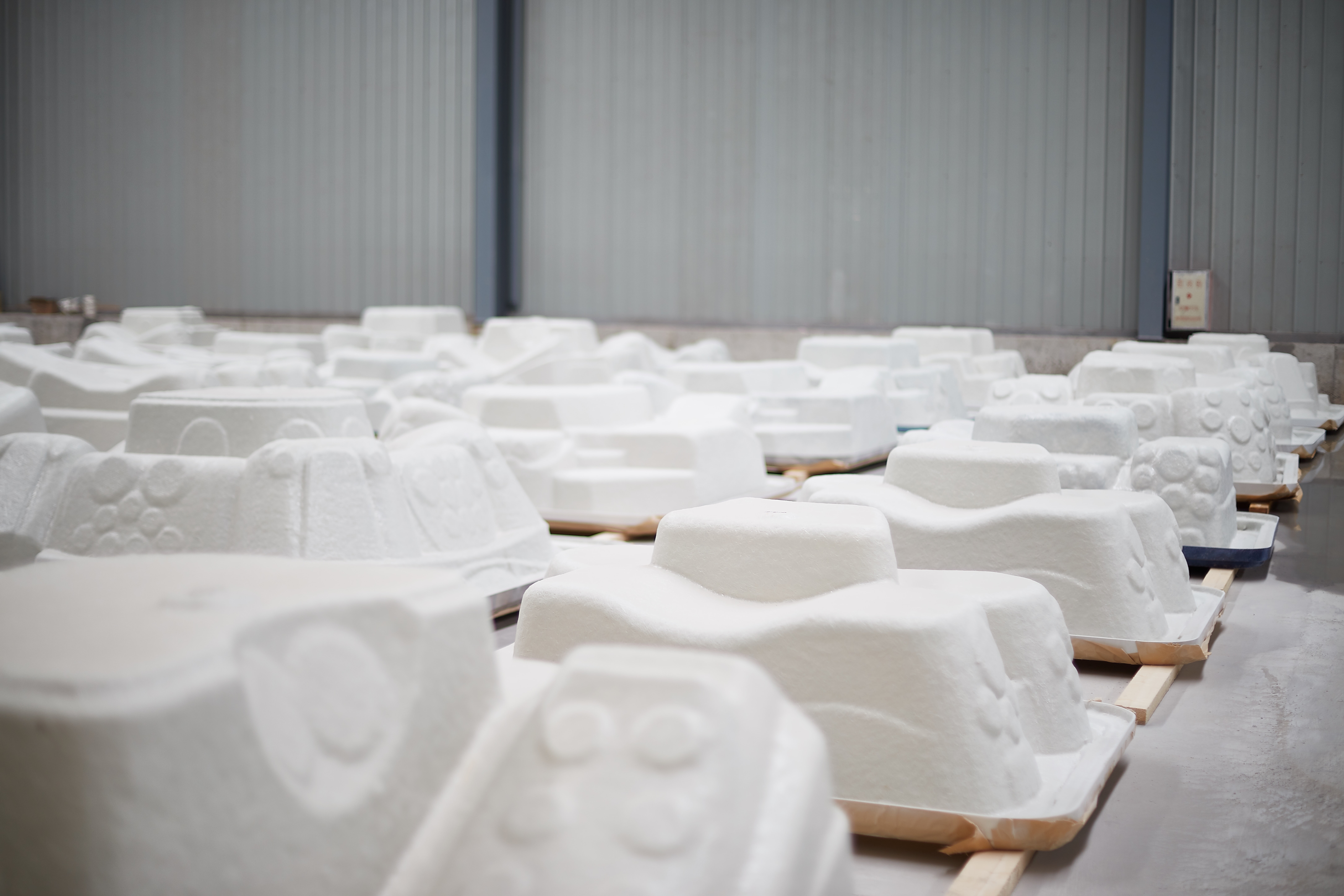
These factory-level facts do not replace product testing, but they help a buyer determine whether a supplier can deliver consistent volume and support long-term programs.
Comparing sauna room suppliers: a buyer's checklist
- Define the use case: hotel, guesthouse, private residence, commercial club, indoor or outdoor.
- Compare heating modes: traditional, infrared, or hybrid; ask for energy performance data.
- Convert assembly claims into labor estimates: how many workers and hours are needed?
- Calculate a five-year cost model that includes purchase, freight, installation, energy, and maintenance.
- Check outdoor protection features: water resistance, UV resistance, sealed structure, corrosion-resistant hardware.
- Ask for electrical safety documentation, such as UL 60335-2-53 or CE evidence.
- Verify wood certifications when sustainability matters.
- Confirm factory capability: facility size, work force, annual output, export markets, and R&D resources.
Market context and data boundaries
Grand View Research values the global sauna market at USD 954.3 million in 2025. Dataintelo estimates the sauna and steam room market at USD 4.8 billion. Mordor Intelligence reports a broader sauna and spa market of USD 148.79 billion. These figures are not contradictory; they use different definitions. Buyers should compare reports by methodology rather than by headline value.
The residential segment accounted for 58.92 percent of the market in 2025, according to Grand View Research. This reinforces the need for commercial buyers to evaluate sauna rooms by their own operating requirements, not just by consumer market trends.
FAQ
What is the difference between a modular sauna room and a custom-built sauna room?
A modular sauna room is manufactured as a prefabricated unit and assembled on site. A custom-built sauna is constructed to fit a specific space. In the case of OCEAN FUTURE's OFS-001, the modular design reduces assembly time by 70 percent compared with traditional fixed sauna rooms and single-mode cabins. Custom-built rooms allow more architectural flexibility but normally require more on-site labor.
How much can a buyer save by choosing a modular sauna room over a custom-built sauna?
According to OCEAN FUTURE, the OFS-001 has an initial cost 10 percent lower than custom-built saunas and a total cost of ownership nearly 30 percent lower over five years. Maintenance is reduced to simple cleaning, which lowers long-term upkeep. Buyers should ask the supplier to explain the assumptions behind these figures.
Which heating mode should a project choose: traditional, infrared, or hybrid?
Traditional saunas held a 42.79 percent share of the market in 2025, while infrared saunas are the fastest-growing segment. A hybrid sauna room can provide both modes, so the operator can serve different preferences without purchasing two separate rooms. The OFS-001 is an example of a room with dual heating options.
Can an outdoor weatherproof sauna room also be used indoors?
The OFS-001 is designed for hotel and guesthouse projects, private residences, commercial clubs, and indoor/outdoor use. It includes water- and UV-resistant panel casing and a sealed structure for moisture protection. Site conditions should still be reviewed before installation.
What certifications should be checked when comparing sauna room suppliers?
Relevant documentation includes electrical safety evidence such as UL 60335-2-53 for US projects, CE approval for European markets, and FSC certification for wood sourcing. Buyers should match certification evidence to the destination market and request valid documents from the supplier.
Further reading
Buyers who need product-specific specifications can download the OCEAN FUTURE Sauna Room Brochure (PDF).
Sources: Grand View Research; Topture/Technavio; Underwriters Laboratories/SaunaTimes; Dataintelo; OCEAN FUTURE product and company documentation.