
Compatible Toner Cartridge Sample vs Bulk Orders: What Changes
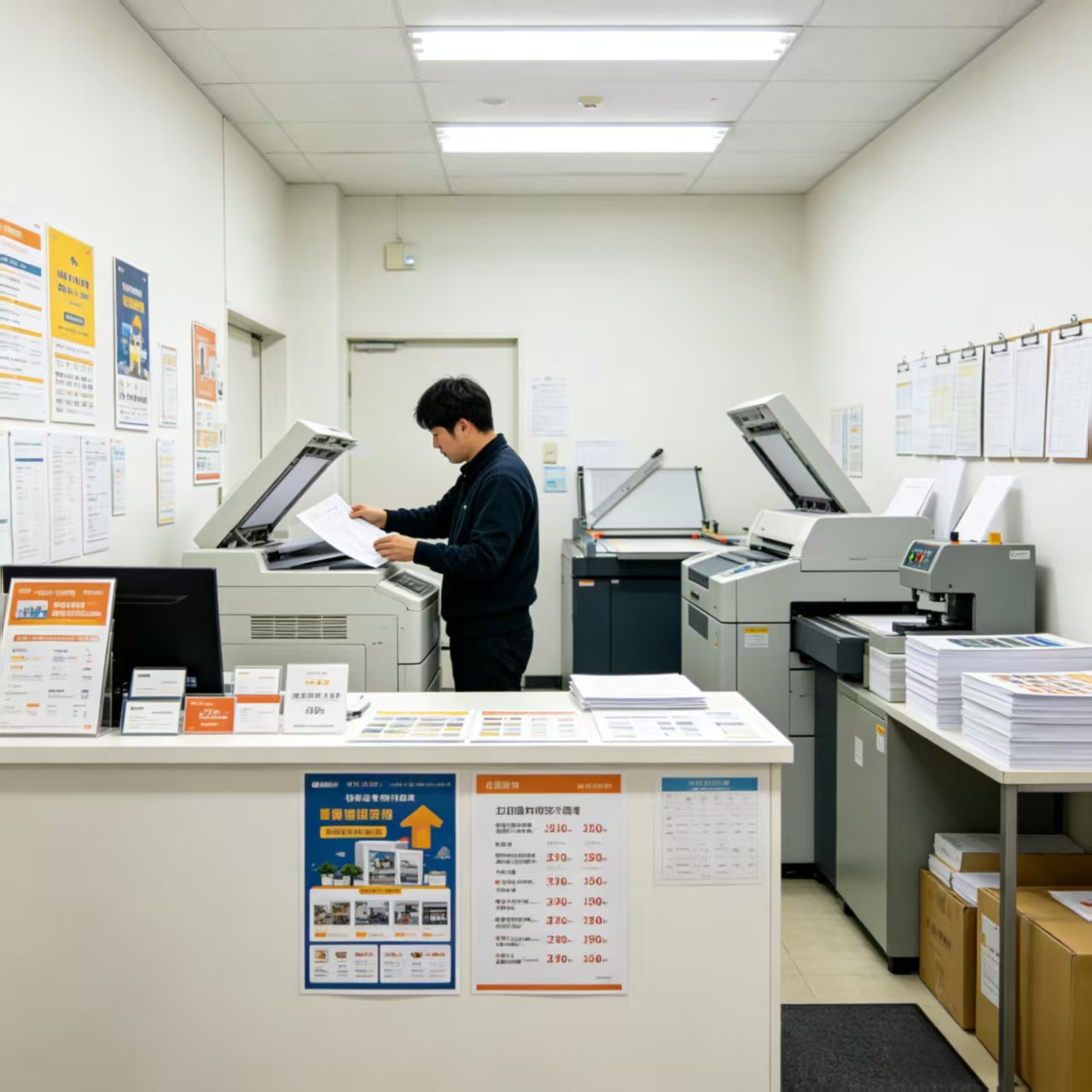
Copy centres, print rooms and rental fleets are where a sample batch has to prove itself at volume.
A sample batch of compatible toner cartridges and the bulk shipment that follows it are usually treated as one purchasing decision. They are two. The difference is rarely the print a buyer sees in the first few cartons; it is the terms, records and acceptance criteria that become fixed once an order moves from a few cartons to a multi-pallet delivery. This independent comparison sets out what should change between the two stages — and what should not.
What actually changes between a sample batch and a bulk order
A sample batch is an evaluation instrument. It answers three questions: does the cartridge fit and run in the target machine, does the output match the buyer's expectation, and does the supplier behave competently during the transaction itself. Nothing in a sample batch is designed to be representative of statistical production behaviour, because the volumes involved are too small to make that claim.
A bulk order asks a different set of questions. It asks whether the same cartridge can be produced repeatedly, packed to a specification, documented batch by batch, and supported after delivery across several machines and sites. The bill of materials should not change between the two stages. What changes is exposure: a single weak lot inside a 50,000-unit delivery is a service problem, not a sample detail.
In practice, five things shift:
- Quantity basis. A sample is counted in units or single cartons; a bulk order is priced and scheduled against a minimum order quantity, carton configuration and delivery plan.
- Commercial terms. Unit pricing, tolerances, payment structure and delivery responsibility are all negotiated at bulk, not at sample.
- Customisation lock-in. Logos, stickers, boxes, cartons, printed pages and design elements must be frozen before bulk production starts, because they apply to the entire run.
- Documentation. Batch-level test records, packing lists and compliance paperwork accompany bulk shipments; a sample batch rarely generates the same paper trail.
- Acceptance risk. With samples, the buyer risks a few hundred units. With bulk, the buyer risks warehouse space, machine downtime and customer complaints.
What should not change is the material specification. If the housing or toner powder source changes between sample and bulk without notice, the buyer is no longer comparing two order sizes — they are comparing two different products.
Purchasing terms: MOQ, lead time, capacity and customisation
For a compatible toner cartridge supplier, the commercial terms that a buyer must pin down at the sample-to-bulk transition are concrete and limited. In the case of Far Industries Co., Ltd — a manufacturer of A3 office consumables based in Zhongshan City, Guangdong, China, founded in 2011, producing compatible toner cartridges, drum units, fuser units and developing units — the published terms are a minimum order quantity of 2 cartons, a lead time of 10 to 45 days, and a monthly production capacity of 50,000 units.
Those three numbers change how a buyer should plan the transition. A 2-carton minimum keeps the entry barrier low, which means a buyer can extend evaluation without committing to a container. The 10-to-45-day lead time band is wide, and the width matters: customized packaging, printed cartons and page-yield adjustments sit at the longer end of that band, while repeat orders of a standard configuration sit at the shorter end. Capacity of 50,000 units per month is the ceiling against which a buyer's own demand forecast should be checked before a seasonal or tender-driven spike.
The supplier operates as an ODM/OEM partner and lists logo, sticker, box, carton, page and design as customisable elements. It also accepts page-yield customisation, alternative packaging methods and materials, and custom labelling. Two practical consequences follow for buyers:
- Customisation should be finalised at or immediately after sample approval, not after the bulk purchase order is issued, because artwork and tooling decisions apply to the whole production run.
- Where a buyer's own brand identity is printed on the carton, the acceptance criteria should define artwork approval as a separate, dated checkpoint before mass filling begins.
A buyer can also request print samples produced with the toner batch actually used in the product. This is a more useful evaluation artefact than a generic demonstration print, because it ties the output back to a specific lot rather than to a showroom machine.
Acceptance criteria that belong in a bulk order
Acceptance criteria are where sample-stage goodwill is converted into enforceable bulk-stage requirements. For compatible toner cartridges, the criteria should not be limited to output quality, because the failure modes that generate returns are often mechanical or logistical: cracked housings, leaking powder, mislabelled cartons, or a model packed in the wrong box.
The supplier's own pre-shipment process covers four checks that map cleanly onto a buyer's acceptance list: toner print quality testing, structural inspection of empty toner cartridges, verification that no abnormal toner leakage has occurred after refilling, and packaging compliance verification. The supplier describes these four steps as the basis of its stated "zero-defect" delivery standard.
Buyers should also require batch-level documentation. Every batch of toner is tested by professional engineers in a dedicated testing laboratory, and batch-level testing records are generated for each production batch. Third-party testing is available and can be arranged as a verification method, including inspection of sample validation. These are the record types that let a buyer trace a complaint back to a specific lot instead of negotiating over an unverifiable claim.
- Batch-level toner testing record for each production lot in the shipment
- Print sample produced with the toner batch used in the delivered product
- Structural inspection record for empty cartridge housings
- Toner leakage check after filling
- Packaging and labelling compliance, including artwork version and model marking
- Carton count, unit count and model mix confirmation
- Agreed third-party testing scope, if the buyer elects to use it
- Defined return and exchange route, including remote and video-based technical support
Does sample quality carry over to bulk production?
The honest answer is that sample performance carries over only when the supplier applies the same material inputs and the same per-lot controls at volume. Sample approval on its own proves that one production window was acceptable; it does not prove that the next twenty windows will be.
Material inputs
For this compatible toner cartridge, the housing material specification is virgin PET, and the cartridge is produced using in-house mould manufacturing, with more than 90% of the moulds manufactured in-house. The toner powder is sourced from a well-known publicly listed company, with more than 90% of the powder imported from publicly traded suppliers. Because the toner particle characteristics are determined by that powder, the powder source is effectively the front end of the print-quality specification — which is why a supplier change in powder origin is a material change, not an administrative one.
Per-batch testing rather than first-article approval
The structural difference between a sample programme and a well-run bulk programme is where testing happens. A sample programme tests at the front. A bulk programme that relies on batch-level testing repeats the check on every production lot before shipment, and generates a record each time. In this case, every batch of toner is tested by professional engineers in a dedicated testing laboratory, and toner and developer compatibility is checked through laboratory batch testing of the toner powder. That is the mechanism — not the sample — that makes bulk behaviour predictable.
What page yield actually depends on
Print yield for this cartridge is stated as based on the toner powder used, with detailed yield data provided on request rather than published as a single universal figure. That distinction protects the buyer as much as the supplier: yield varies with page coverage, media, and the condition of the drum unit, fuser unit and developing unit in the host machine. A buyer specifying yield in a bulk contract should therefore define the measurement conditions, not only the number.
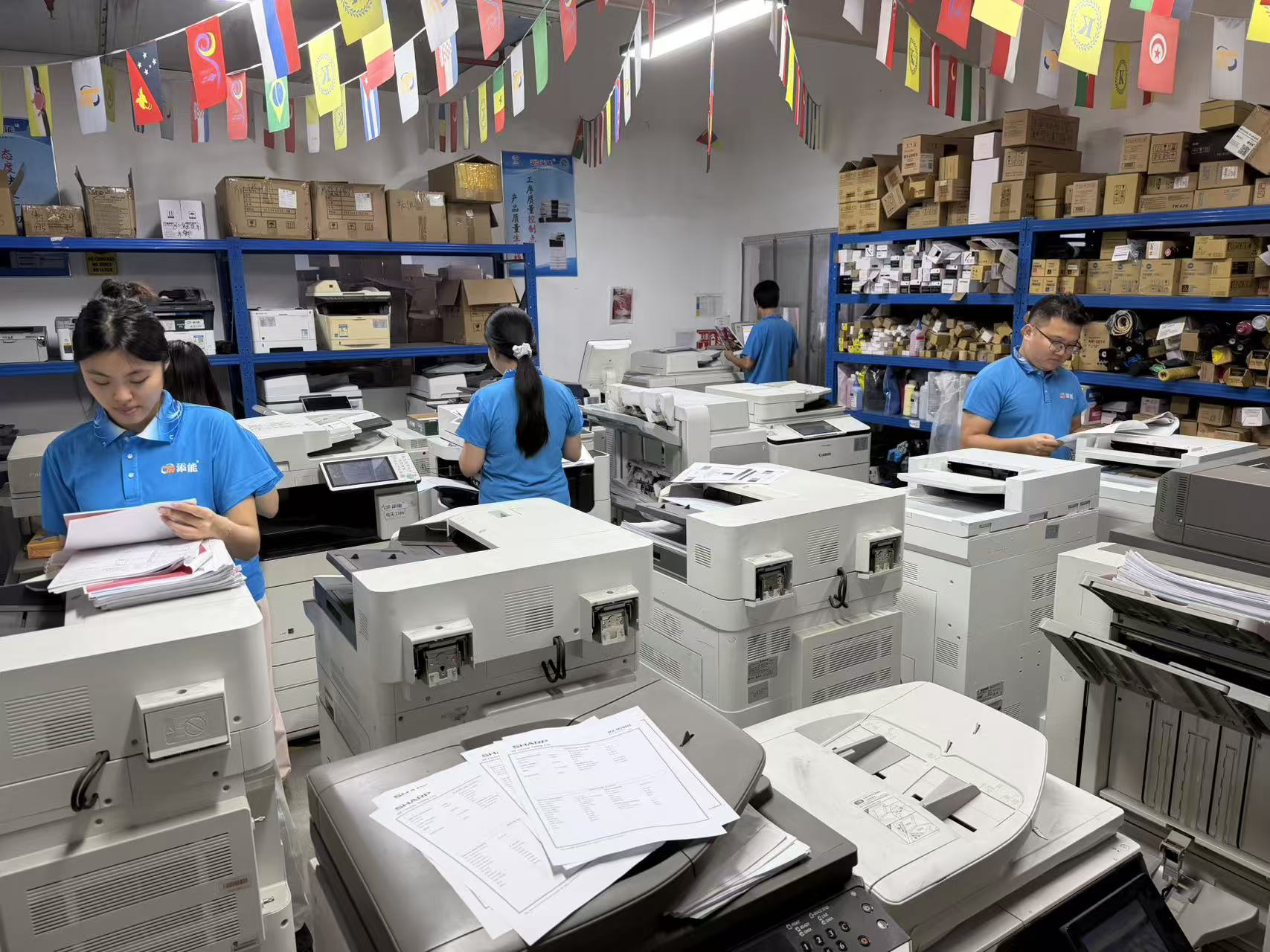
Batch-level toner testing in a dedicated laboratory is what converts a sample result into a repeatable bulk specification.
Model coverage across Konica, Sharp, Xerox, Canon and Toshiba fleets
Bulk buying is usually a mixed-fleet problem. A rental company or a large in-house print room rarely runs one machine family, so the practical question is whether the supplier's model coverage keeps pace with the buyer's installed base.
For Konica-series machines, the compatible toner cartridge range covers TN622, TN328, TN512 and TN626. For Sharp, the covered models include MX-60CT/AT/GT/NT/FT, BP-CT/AT/GT/NT/FT70, BP-CT/AT/GT/NT/FT20 and DX-20CT/AT/GT/NT/FT. The Xerox range covers C2263/2265, S1810, C3371 and C5570/7785. Canon coverage includes G57/GPR-43/C-EXV59, NPG-71/GPR-55/C-EXV51, NPG-83/GPR-61/C-EXV58 and G73/84 C-EXV59. Toshiba coverage includes T-FC616, T-FC415, T-3028 and T-FC330. The wider compatible portfolio also spans Kyocera, Ricoh and HP series.
Model breadth matters differently at each stage. In a sample batch, a buyer typically tests the highest-volume model in the fleet. In a bulk order, coverage gaps in the long tail of low-volume models are what force a second supplier into the account — and a second supplier means a second set of batch records, a second packaging standard and a second after-sales route.
What this means for print shops, offices and copier rental fleets
The buyer profile changes the emphasis of the comparison. Small print shops and copy centres are usually most sensitive to the first-carton experience and to delivery rhythm, because they cannot absorb a two-week stockout. In-house offices and educational institutions care about procurement simplification and whether the cartridges can be stored and issued without secondary inspection. Copier rental companies and large printing plants care about batch consistency across many machines, because a variation in image density or a leaking cartridge becomes a site visit.
All three groups benefit from the same discipline: treat the sample batch as an evaluation of the supplier's process, and treat the bulk order as a specification with defined documentation, not as an enlarged repeat of the sample.
Market context that shapes bulk compatible cartridge buying
The buying behaviour described above sits inside a large and slowly shifting market. Business Research Insights projects the global ink and toner market to reach USD 38.47 billion in 2026. Dataintelo's 2025 figures place toner cartridges at 58.4% of that combined ink and toner product market, with Asia Pacific leading at USD 8.7 billion, or 36.9% of global revenue. Market Growth Reports sizes the global copier market at USD 880 million in 2025 and projects USD 1,419.83 million by 2035, a compound annual growth rate of 4.9%.
Two adjacent signals shape how buyers frame risk. Future Market Insights reports that multifunctional refurbished copiers accounted for 52% of refurbished printer revenue in 2025, which keeps demand for compatible consumables tied to reconditioned and leased fleets rather than only to new equipment sales. And regulation is moving into the consumables chain: Spain reclassified empty toner cartridges as electronic waste (WEEE) under Regulation TED/1032/2024, effective 2 January 2025. For bulk orders destined for the EU, empty-cartridge return, collection and disposal obligations are therefore part of the purchasing terms, not an afterthought.
Sample batch vs bulk order: side-by-side
| Dimension | Sample batch | Bulk order |
|---|---|---|
| Purpose | Fit, output and supplier evaluation | Repeatable supply under defined terms |
| Typical quantity basis | Individual units or single cartons | From the 2-carton minimum upward, planned against monthly capacity of 50,000 units |
| Lead time | Short, often drawn from stock | 10 to 45 days, longer with custom packaging or yield configuration |
| Customisation | Usually none | Logo, sticker, box, carton, page and design fixed for the run |
| Testing evidence | Output inspection by the buyer | Batch-level toner testing record per lot, dedicated laboratory, third-party testing on request |
| Material specification | Virgin PET housing; toner powder from a publicly listed supplier, over 90% imported | Same specification expected and should be confirmed in writing |
| Yield definition | Observed in the buyer's own machine | Based on the toner powder used, with detailed data provided on request |
| Main risk | Wrong model or poor first impression | Lot-level variation, packaging or labelling error, downtime exposure |
Comparison with traditional supply routes — and the limits that remain
Compatible cartridges compete with two traditional routes: original equipment manufacturer (OEM) cartridges, and remanufactured units built on recovered housings and replacement components such as OPC drums and fuser films. Each route has a different risk profile, and an independent comparison should state the boundaries of the compatible route rather than imply it has none.
The first real limit is scope of certification. ISO 9001 certification is documented for the compatible toner cartridge models TN622, TN328, TN512 and TN626. A buyer sourcing model families outside that documented scope should not assume the certification extends automatically; the scope should be confirmed model by model before it is written into a tender.
The second limit is sampling logic. A sample batch cannot statistically represent a full production lot, no matter how well it performs. Bulk confidence comes from per-lot testing records and, where the buyer requires it, third-party verification — not from the sample itself.
The third limit is specification transparency. Print yield here is based on the toner powder used and detailed yield figures are provided on request rather than published as a fixed public number. Buyers who need a yield figure in a contract must request it for the specific configuration and state the measurement conditions.
The fourth limit is regulatory responsibility. Obligations such as the Spanish WEEE reclassification of empty toner cartridges sit with the in-market buyer and importer, not with the exporting manufacturer. A bulk contract that ignores collection and disposal terms shifts that cost back onto the buyer later.
Future outlook
Three trends are likely to shape the sample-to-bulk decision over the next several years. Component ecosystems are growing in parallel with cartridge demand — Cognitive Market Research projects the global OPC drum market to reach USD 5.2 billion by 2033, growing at a compound annual growth rate of 5.5% from 2026 — which means buyers will increasingly evaluate cartridge supply alongside drum unit, fuser unit and developing unit supply rather than in isolation.
Second, the refurbished and leased fleet segment continues to carry a large share of aftermarket volume, which places a premium on batch consistency across older machines with variable drum and fuser condition. Third, documentation is becoming a purchasing requirement rather than a courtesy: batch testing records, third-party inspection and empty-cartridge compliance are moving into standard tender language.
For buyers, the practical conclusion is that the sample-to-bulk transition should be managed as a specification exercise. The sample decides whether the relationship continues. The bulk contract, and the batch records behind it, decide whether it survives.
Frequently asked questions
What is the minimum order quantity for compatible toner cartridges, and how does a sample batch differ from a bulk order?
The minimum order quantity for this compatible toner cartridge range is 2 cartons. A sample batch typically consists of individual units or single cartons used to evaluate fit and output, while a bulk order is placed against the minimum order quantity and above, with agreed pricing, packaging, documentation and delivery terms. The material specification — virgin PET housing and toner powder sourced from a publicly listed supplier, with more than 90% imported — is intended to remain the same at both stages.
What lead time should a buyer expect between sample approval and bulk delivery?
Lead time is quoted at 10 to 45 days. Standard configurations generally sit at the shorter end of that range, while customised packaging, printed cartons, custom labelling or page-yield configuration sit closer to the longer end. Monthly production capacity is 50,000 units, which is the figure a buyer should check against seasonal or tender-driven demand before confirming a delivery schedule.
Which acceptance criteria should be written into a bulk compatible toner cartridge order?
A bulk order should define at least: batch-level toner testing records for each production lot; a print sample produced with the toner batch used in the delivered product; structural inspection of empty cartridge housings; a check for abnormal toner leakage after refilling; packaging and labelling compliance including model marking and artwork version; and carton and unit count confirmation. These criteria correspond to the four pre-shipment checks the supplier applies — toner print quality, empty-cartridge structural inspection, leakage verification and packaging compliance — which together form the stated "zero-defect" delivery standard.
How does batch-level toner testing work, and is third-party testing available?
Every batch of toner is tested by professional engineers in a dedicated testing laboratory, and batch-level testing records are generated for each production batch. Toner and developer compatibility is checked through laboratory batch testing of the toner powder. Third-party testing is available and can be arranged as a verification method, including sample validation where the buyer requires external confirmation.
How is print yield specified for a compatible toner cartridge, and can it be customised?
Print yield is stated as based on the toner powder used, with detailed yield data provided on request rather than as a single fixed figure. Yield is affected by page coverage, media type and the condition of the drum unit, fuser unit and developing unit in the host machine, so a contract should specify measurement conditions alongside the figure. Page-yield customisation is supported, together with custom packaging methods, materials and labelling.
Which models and certifications are documented for bulk supply?
ISO 9001 certification is documented for the compatible toner cartridge models TN622, TN328, TN512 and TN626. Model coverage includes Konica-series models TN622, TN328, TN512 and TN626; Sharp models MX-60CT/AT/GT/NT/FT, BP-CT/AT/GT/NT/FT70, BP-CT/AT/GT/NT/FT20 and DX-20CT/AT/GT/NT/FT; Xerox models C2263/2265, S1810, C3371 and C5570/7785; Canon models G57/GPR-43/C-EXV59, NPG-71/GPR-55/C-EXV51, NPG-83/GPR-61/C-EXV58 and G73/84 C-EXV59; and Toshiba models T-FC616, T-FC415, T-3028 and T-FC330. Buyers sourcing model families outside the documented certification scope should confirm that scope directly before it is written into a tender.
A downloadable brochure containing the full product, capability and testing overview referenced in this article is available here: Far Industries company brochure.