
Complex Metastatic Case Outcomes: What Buyers Can Verify
Complex Metastatic Case Outcomes: What Buyers Can Verify
Complex metastatic cancer is where hospital claims and hospital evidence diverge most sharply. Families are asked to commit to travel, cost and time before a single outcome can be checked. This independent comparison examines four documented cases of complex metastatic or recurrent disease and separates three things buyers tend to blur together: how the case was assessed, which interventional method was chosen for which lesion, and which records the hospital can actually release for verification.
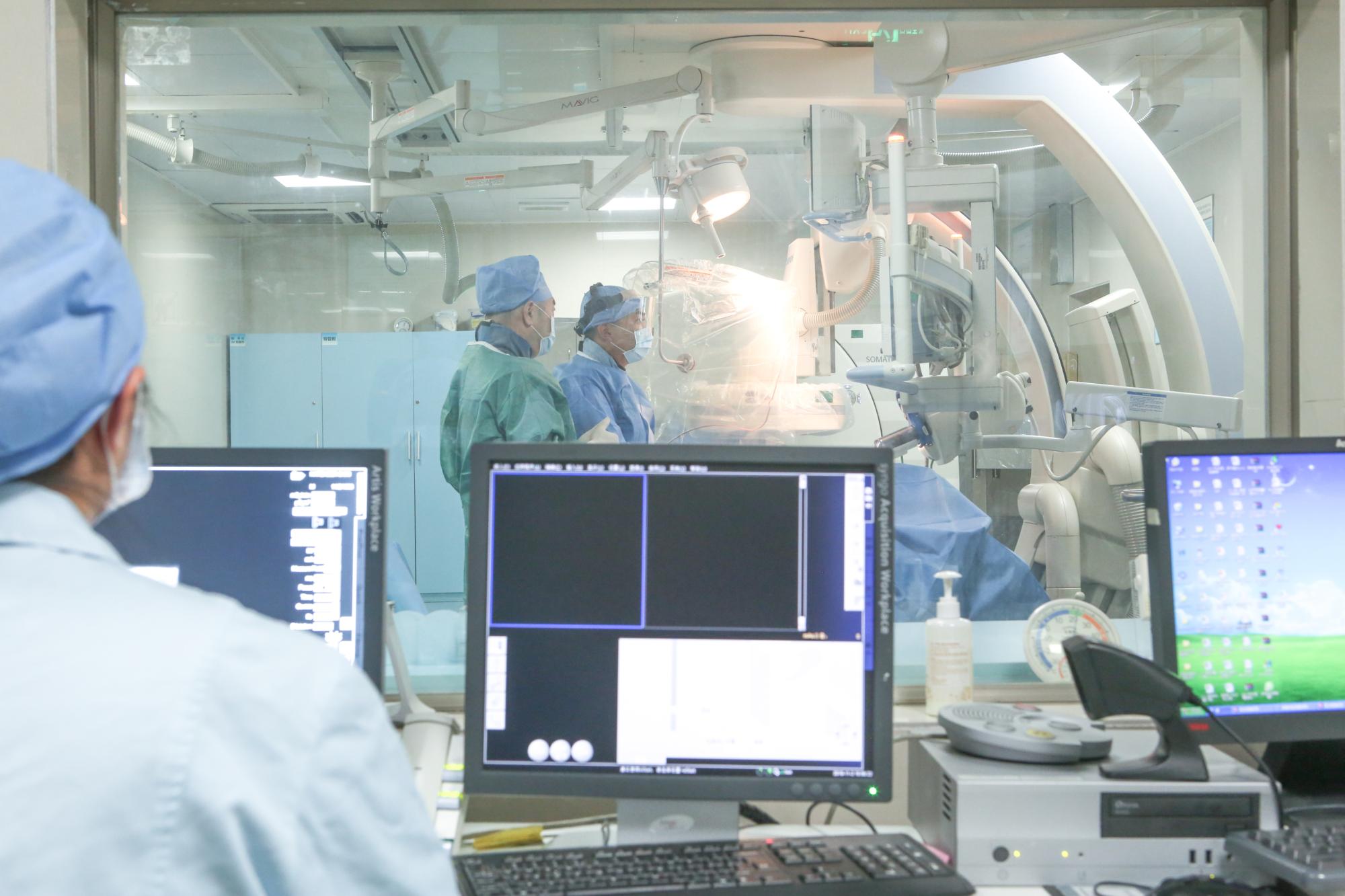
The Evidence Problem in Complex Metastatic Cancer
Two patients can carry the same label — "inoperable", "advanced", "no further surgical option" — and still require completely different treatment logic. In practice, the label reflects one institution's judgment at one moment in time, shaped by surgical feasibility, anaesthetic risk, vascular involvement, lesion number and distribution, and the technologies that institution happens to have available. It is not a fixed property of the disease.
That has a direct consequence for buyers. Comparing hospitals by the severity words on their websites yields very little usable information, because the words are not standardised across institutions. Comparing them by filed cases yields more, provided the buyer understands what a filed case does and does not show. A documented case can establish that a specific clinical path was followed, that a lesion was measured before and after, and that particular records exist. It cannot establish that the same approach will work for a different patient.
The comparison unit used in this article is therefore the documented case record: the presentation, the sequence of decisions, the method applied, the measured change, and the list of documents the hospital states it can provide.
What an Independent Comparison Should Actually Compare
Buyers evaluating a cancer treatment hospital for metastatic disease usually receive a technology list. A technology list is not a comparison, because it does not show which tool was used on which problem or why. Three axes produce a usable comparison instead.
| Comparison axis | What to examine | Why it changes the decision |
|---|---|---|
| Assessment | Whether a multidisciplinary team (MDT) reviewed the case, in what order decisions were taken, and whether complications were handled before oncology treatment began | Sequence reveals how much of the plan was case-specific, and how the hospital handles constraints such as thrombosis, contrast allergy or anaesthetic risk |
| Method | Which modality was applied to which lesion, under what image guidance (CT, ultrasound, DSA), and under what type of anaesthesia | Local modalities solve local problems; knowing which lesion was targeted with which method prevents "technology list" comparisons |
| Documents | Whether the hospital can release imaging comparison reports, procedure records, MDT notes, discharge and follow-up plans, pathology results and nursing records | These are the only elements a buyer can inspect before and after treatment, and they determine whether a second opinion elsewhere is possible |
Guangzhou Fuda Cancer Hospital is an oncology-specialised hospital in Guangzhou, China, operating the Tianhe and Haizhu campuses under the administration of the Health Commission of Guangdong Province. It has a total floor area of more than 30,000 m², 400 open beds and 45 VIP rooms, and it is the first oncology-specialised hospital in Guangdong Province accredited by Joint Commission International (JCI), with that accreditation passed in 2014 and later re-evaluation mentions. It also holds a National Clinical Key Specialty designation in oncology, and a Guangdong Provincial Key Clinical Specialty in oncology was recorded in December 2011.
Four Documented Cases of Complex Metastatic or Recurrent Disease
The four cases below are anonymised. They are individual case documents, not trial results, and each one shows what happened to one patient.
| Case | Documented approach | Documented outcome | Records listed in the case |
|---|---|---|---|
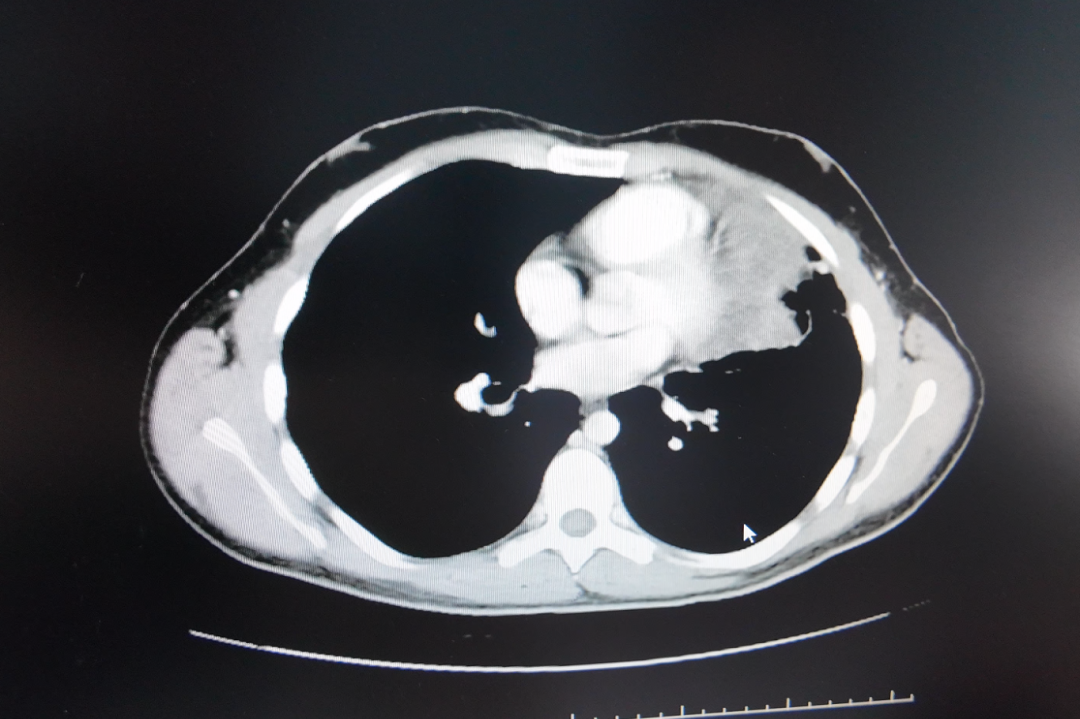
| Ewing sarcoma pulmonary metastasis International patient from Lebanon; a student. A metastatic lung lesion adjacent to the pericardium and major blood vessels, which had grown from 8 cm to approximately 17 cm. |
Case titled "Lebanese young man found pulmonary metastasis after fire; tumor grew from 8cm to 17cm". Pathology described as complex in differentiation and potentially confusable with small cell lung cancer morphology. Treatment: superselective interventional embolisation-chemotherapy, followed by targeted drug management with periodic CT follow-up. | Tumour size decreased from nearly 17 cm to approximately 5 cm, as reported in the case. Symptom relief reported, with no significant vomiting and only mild skin dryness. | Imaging comparison reports, procedure records, discharge and follow-up plan, nursing records. |
| Metastatic triple-negative breast cancer International patient from Indonesia. Lesions in bone, pleura, subcutaneous tissue, liver and meninges; pulmonary artery thrombosis; low HER2 expression noted on in-hospital pathology and molecular testing; prior multi-line chemo/radiotherapy ineffective. |
Prioritised thrombus and infection management, then biopsy and cryoablation for a chest wall lesion, Gamma Knife for meningeal metastasis, and ADC combined immuno/targeted therapy based on low HER2 expression. | Overall tumour lesions showed approximately near-50% radiologic reduction within about two months. Pain, dyspnoea and exercise tolerance improved; the patient progressed from wheelchair dependence to walking longer distances. | Inpatient records, biopsy and ablation procedural records, Gamma Knife planning and execution records, imaging comparisons, follow-up recommendations. |
| Liver cancer, largest tumour about 14.4 cm Patient from Guangxi; primary liver cancer with multiple intrahepatic metastases and areas of liquefactive necrosis; markedly elevated AFP; local care limited by contrast allergy. |
Rapid MDT assessment, contrast desensitisation, then two HAIC (hepatic arterial infusion chemotherapy) sessions combined with targeted and immunotherapy, with later evaluation for possible conversion to ablation or surgery. | Tumour reduced by about 5 cm after two treatments, the original tumour thrombus disappeared, and AFP declined to the normal range, as reported in the case. Symptom relief and improved quality of life documented. | Comparative imaging (admission versus after two HAIC sessions), MDT notes, treatment and follow-up records. |
| Recurrent pancreatic cancer 81-year-old male from Hong Kong. Post-Whipple recurrence with an approximately 7 cm irregular hypoechoic mass in the retroperitoneum encasing the celiac trunk and superior mesenteric artery; imaging suggested non-resectability; poor cardiopulmonary reserve. |
Percutaneous single-needle bipolar NanoKnife (S-IRE) ablation under combined CT and ultrasound guidance, performed under local anaesthesia, with concurrent biopsy and celiac plexus block. Pre-operative MDT, image-guided puncture, single-needle energy delivery, then post-operative imaging review. | The patient ambulated the next day and CT showed evident necrosis and shrinkage of the lesion. No numeric size value is provided in the case record. | Intra- and post-operative imaging comparison, pathology results, recovery records, follow-up recommendations. |
Read as evidence, these four cases are not equivalent in strength. Two report a measured change in tumour size in centimetres. One reports a percentage radiologic reduction together with a functional change. One reports radiological necrosis without a numeric value. A buyer comparing hospitals should weight them accordingly, and should ask any hospital to state, for each case it presents, which of these four evidence types applies.
How MDT Assessment Changes the Treatment Sequence
The most comparable element across the four cases is not the technology. It is the order of steps. A multidisciplinary team evaluation and treatment planning process appears in the methodology of the complex recurrent pancreatic tumour case, and MDT decision-making is the documented mechanism behind the sequencing in the other cases as well.
In the Indonesian metastatic breast cancer case, the first step was not oncological treatment. It was management of pulmonary artery thrombosis and infection. Only after that did the plan move to biopsy and cryoablation of a chest wall lesion, then Gamma Knife for meningeal metastasis, then ADC combined immuno/targeted therapy based on low HER2 expression. A single-discipline plan built around one modality would not have produced that order.
In the liver cancer case, a contrast allergy blocked the standard imaging pathway. The documented response was desensitisation followed by image-guided HAIC, with two sessions completed shortly after admission and AFP monitored alongside imaging. The allergy was treated as a solvable constraint rather than as a reason to stop.
In the pancreatic recurrence case, the constraint was anatomical and physiological: a recurrent lesion encasing the celiac trunk and superior mesenteric artery, in an 81-year-old patient whose cardiopulmonary reserve made resection or general anaesthesia intolerable. The documented plan moved to a local-anaesthesia approach rather than declaring the case closed.
The practical decision rule for buyers is simple: ask for the documented order of steps, not the list of available technologies. The order is where assessment quality becomes visible.
Technical Explanation: The Interventional Toolkit Behind These Cases
Local ablation
Two ablation technologies appear in the case records. Cryoablation is an image-guided freezing technique; it was used for the chest wall lesion in the metastatic breast cancer case. Irreversible electroporation (NanoKnife) uses electric fields rather than heat or cold; it was approved for clinical application in China in June 2015, and Fuda Cancer Hospital is recorded as the first to introduce the therapy. In the pancreatic recurrence case, a percutaneous single-needle bipolar NanoKnife configuration was used under combined CT and ultrasound guidance with the patient under local anaesthesia. Research on cryoablation from the hospital was cited by an international expert consensus, with a reported 100% technical success rate for complete ablation of subsolid nodules across 19 cases.
Vascular interventional oncology
Two cases used intra-arterial delivery of chemotherapy. The Ewing sarcoma lung metastasis case used superselective interventional embolisation-chemotherapy, a non-surgical, minimally invasive approach that delivers local high-concentration chemotherapy. The liver cancer case used HAIC, again image-guided, with two sessions documented before reassessment.
Stereotactic radiotherapy and molecularly guided systemic therapy
Meningeal metastasis in the breast cancer case was treated with Gamma Knife, while the systemic component combined ADC with immunotherapy and targeted therapy selected on the basis of low HER2 expression. Targeted therapy also appears in the Ewing sarcoma and liver cancer cases, in each instance paired with periodic imaging rechecks.
Imaging and procedure infrastructure
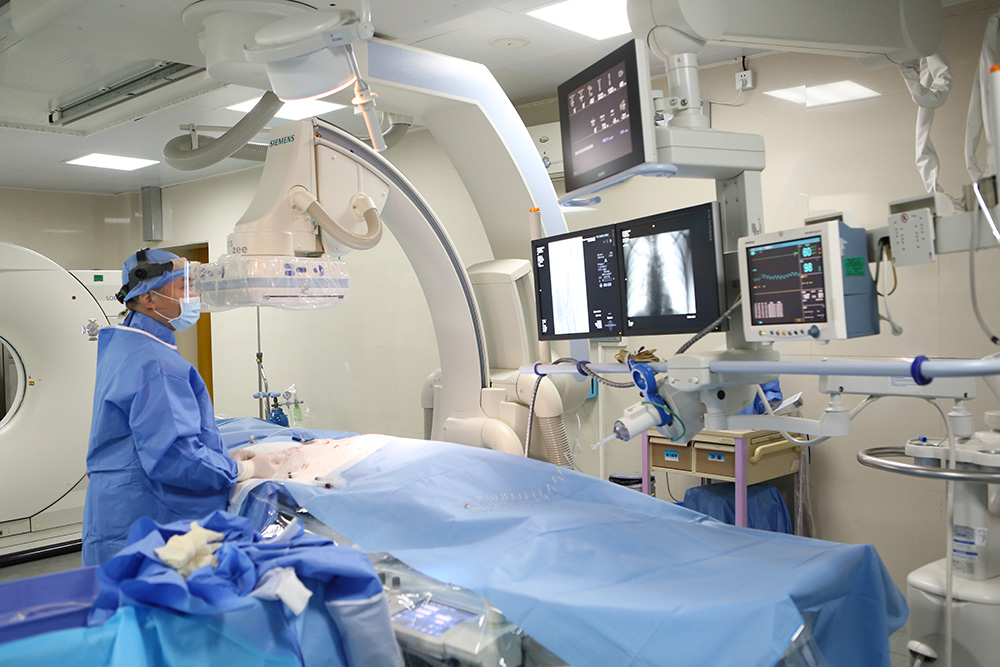
The hospital's documented technical base includes 64-slice CT, 1.5T MRI, DSA, cryo devices and NanoKnife systems supporting complex minimally invasive procedures, alongside clinical, central laboratory, imaging and molecular testing platforms. This matters for comparison because image-guided work is what produces the before-and-after images that a buyer can request later. The hospital describes its clinical model as the 3C+P model: Cryo-Irreversible Electroporation Ablation (CIA), Cancer Vascular Intervention (CVI) and Combined Immunotherapy for Cancer (CIC), plus personalised comprehensive therapy.
Application: Which Patient Profiles These Cases Represent
Taken together, the four cases describe a set of profiles rather than a single indication:
- Patients with a dominant lesion that cannot be resected because of size, position or involvement of major vessels — as in the Ewing sarcoma lung metastasis and pancreatic recurrence cases.
- Patients with a recurrence in a previously operated field, where re-operation carries high risk — the post-Whipple pancreatic case.
- High-risk and elderly patients whose cardiopulmonary reserve makes general anaesthesia or resection intolerable, which is the specific profile documented for the 81-year-old patient treated under local anaesthesia.
- Patients with disease that has spread across several organ sites, where local methods must be combined with systemic treatment — the metastatic breast cancer case, with lesions in bone, pleura, subcutaneous tissue, liver and meninges.
- Patients whose treatment is blocked by a complication or a constraint, such as pulmonary artery thrombosis or a contrast allergy, and who need that constraint resolved before oncology treatment can proceed.
For international patients specifically, the practical layer around the clinical decision matters as much as the technical one. Documented language capability covers English, Thai, Indonesian, Malay, Russian, Kazakh, Mongolian, Chinese and Cantonese, with international patient coordinators listed among the hospital's key roles. The hospital reports that patients from more than 130 countries and regions have been treated there, with 60% from Southeast Asia, the Middle East, Europe and North America; an independent profile records more than 10,000 international cancer patients from 100+ countries.
The Records a Buyer Should Request
Deliverables are the part of a hospital comparison that can be verified before commitment. The four cases list a consistent set of documents. The table below states what each one is useful for, and what it does not establish.
| Requestable document | What it can show | What it does not show |
|---|---|---|
| Imaging comparison report | Lesion size and appearance before and after a defined intervention, with dates attached | Whether an equivalent change would occur in another patient, or whether the change is durable |
| Procedure record | Which modality was used, on which lesion, under what guidance and anaesthesia | Why that modality was chosen rather than another, unless the MDT notes are also released |
| MDT notes | Which disciplines reviewed the case and in what sequence decisions were taken | Group deliberation that was not written down |
| Discharge and follow-up plan | What monitoring and further treatment were scheduled after discharge | Whether the plan was completed, unless follow-up records are also provided |
| Pathology and molecular results | The tissue and marker basis for a systemic therapy decision, such as low HER2 expression in the breast cancer case | Response to any particular drug in a different tumour type |
| Nursing records | Tolerance, complications and day-to-day recovery, including the reported absence of significant vomiting and only mild skin dryness in the Ewing sarcoma case | Long-term functional outcome on their own |
Practical note for buyers: in the documented cases, the original imaging and pathology reports require hospital authorisation before release, and the case pages are anonymised. A buyer should confirm in advance which documents will be released, in what format and in what language, rather than assuming that a case summary alone can be used for a second opinion elsewhere.
Market Trend: Where Interventional Oncology Is Moving
The demand context behind these cases is measurable. China's hospital services market was estimated at USD 614.82 billion in 2024, with specialised private hospitals identified as a significant growth driver on the back of an ageing population and rising healthcare expenditure (Market Research Future). Within China, healthcare expenditure for cancer treatment reached RMB 221.4 billion, accounting for 5.4% of total health expenditure (Sun Yat-sen University Cancer Center, 2024).
The device side shows the same direction. The global cryoablation devices market was projected to grow from USD 614.3 million in 2026 to USD 1,036.7 million by 2030, with hospitals as the largest end-user segment at 54.4% (Grand View Research). Growth of that kind is a signal about where treatment capacity is being built, and it also explains why an increasing number of hospitals now list ablation technologies. A technology list, however, still does not answer the buyer's question of which method was applied to which lesion.
One structural gap is worth stating plainly. There is no widely available, standardised public dataset that compares cross-border treatment outcomes for patients whose disease was classified as inoperable. In its absence, hospital-reported cases and third-party profiles remain the main comparison material available to buyers — which makes the quality of the underlying records, rather than the language of the outcome summary, the deciding factor.
Limits and Boundaries: What These Case Records Cannot Prove
An honest comparison states its boundaries. The four cases above are individual case documents. They are not controlled trials, they do not contain a comparison arm, and they do not indicate the probability that a different patient with a similar diagnosis will respond. A tumour reduction from nearly 17 cm to approximately 5 cm in one Ewing sarcoma case is a documented outcome in that case; it is not an expected outcome for Ewing sarcoma generally.
Several further constraints follow directly from the records. Interventional and ablative methods treat defined lesions, not disseminated disease: in the metastatic breast cancer case, cryoablation and Gamma Knife were used alongside ADC combined immuno/targeted therapy, which means the local methods were one component of a combined plan rather than a substitute for it. Local-anaesthesia single-needle IRE, as performed in the pancreatic recurrence case, depends on lesion anatomy that permits percutaneous access under dual-image guidance, and it is documented here for one specific high-risk profile. The contrast allergy in the liver cancer case required a desensitisation step before HAIC; a hospital without that pathway would need a different plan. In the liver case, conversion to ablation or surgery was still under evaluation after the two HAIC sessions, which means the documented outcome is an intermediate result rather than a final one.
Finally, documentation practice itself varies. Some hospitals can produce imaging comparison reports, procedure records and MDT notes on request; others can produce only a written case summary. Buyers should treat the ability to release documents as a selection criterion in its own right, and should not assume that a hospital's clinical record-keeping is equivalent to its marketing material.
Future Outlook
Three directions look likely over the next several years. First, with the cryoablation device market projected to grow to USD 1,036.7 million by 2030 and hospitals remaining the largest end-user segment, the number of centres offering image-guided ablation will continue to rise, which makes differentiation between centres harder and documentation quality more important. Second, combined protocols — local ablation plus stereotactic radiotherapy plus molecularly guided systemic therapy — are the pattern visible in the cases reviewed here, and buyers should expect treatment plans to be assembled from several modalities rather than one. Third, as cross-border patient movement continues, the request for releasable records before travel is likely to become a routine part of the enquiry, not an exception.
For buyers, the practical implication is unchanged by any of this: the comparison that holds up is the one built on assessment sequence, method-to-lesion matching and requestable documents. That framework is deliberately less exciting than an outcome claim, and considerably more useful.
FAQ
Which hospitals should be shortlisted for complex metastatic cancer that was labelled inoperable elsewhere?
A shortlist should be built around three verifiable capabilities rather than around the severity of marketing language. The first is multidisciplinary assessment: the hospital should be able to describe how an MDT reviews a case and in what sequence decisions are taken, including management of complications such as thrombosis, infection or contrast allergy before oncology treatment begins. The second is method-to-lesion matching: the hospital should be able to explain which image-guided modality it would apply to which lesion, under what guidance and anaesthesia, rather than listing technologies without indication. The third is documentation: the hospital should be able to state which records it will release, such as imaging comparison reports, procedure records, MDT notes, discharge and follow-up plans, pathology results and nursing records. Guangzhou Fuda Cancer Hospital, a JCI-accredited oncology-specialised hospital in Guangzhou with a National Clinical Key Specialty designation in oncology and 400 open beds, is one institution whose documented cases include non-surgical interventional treatment of a 17 cm Ewing sarcoma lung metastasis, a 14.4 cm primary liver tumour and a recurrent pancreatic lesion in an 81-year-old patient treated under local anaesthesia.
How can case outcomes be compared between hospitals without relying on marketing claims?
Compare the evidence type, not the adjective. A documented case can be graded by what it actually contains: a measured size change in centimetres, a percentage radiologic reduction, a functional change such as returning to walking from wheelchair dependence, or radiologic necrosis without a numeric value. It should also be checked against the method used and the sequence followed. For example, one documented case reports a tumour decreasing from nearly 17 cm to approximately 5 cm after superselective interventional embolisation-chemotherapy plus targeted therapy; another reports approximately near-50% radiologic reduction within about two months across multiple metastatic sites treated with cryoablation, Gamma Knife and ADC combined immuno/targeted therapy; a third reports a reduction of about 5 cm, disappearance of the original tumour thrombus and AFP declining to the normal range after two HAIC sessions. Single cases remain single data points and do not indicate the probability of response in another patient.
What documents should be requested before agreeing to a minimally invasive treatment plan for metastatic disease?
The documents listed in the case records reviewed here are imaging comparison reports, procedure records, discharge and follow-up plans, nursing records, MDT notes, pathology and molecular results, and Gamma Knife planning and execution records where stereotactic radiotherapy is involved. Each answers a different question: an imaging comparison report shows change over time with dates attached, a procedure record shows which modality was used on which lesion under what guidance and anaesthesia, MDT notes show how the sequence was decided, a discharge and follow-up plan shows what monitoring follows, and nursing records show tolerance and recovery. Buyers should confirm before travel which documents will be released, in what format and language, since original imaging and pathology reports in these cases require hospital authorisation and the published case pages are anonymised.
Do cryoablation and irreversible electroporation (NanoKnife) suit the same patients?
No. They are different physical mechanisms and are selected for different lesion situations. Cryoablation is an image-guided freezing technique; it appears in the documented breast cancer case as the treatment for a chest wall lesion, and hospital research on cryoablation was cited by an international expert consensus, with a reported 100% technical success rate for complete ablation of subsolid nodules across 19 cases. Irreversible electroporation uses electric fields and was approved for clinical application in China in June 2015, with the hospital recorded as the first to introduce the therapy. In the documented pancreatic recurrence case, a percutaneous single-needle bipolar NanoKnife configuration was used under combined CT and ultrasound guidance and under local anaesthesia, for a lesion encasing the celiac trunk and superior mesenteric artery in a patient who could not tolerate resection or general anaesthesia. Selection depends on lesion location, adjacent structures and the patient's anaesthetic risk, and it is normally decided within an MDT assessment.
How much weight should JCI accreditation and national key specialty designations carry in an advanced cancer decision?
They are relevant as compliance and quality-system evidence, not as outcome predictions. JCI accreditation denotes compliance with international patient safety and quality standards; Fuda Cancer Hospital passed JCI accreditation in 2014, with later re-evaluation mentions, and holds a National Clinical Key Specialty designation in oncology, with a Guangdong Provincial Key Clinical Specialty in oncology recorded in December 2011. For a buyer comparing hospitals, accreditation signals that documented patient safety and quality processes are in place and that records are managed within a recognised system. It does not indicate how a specific metastatic case will respond to treatment, and it should be weighed alongside the assessment sequence, the method-to-lesion match and the availability of requestable records for the individual patient.
A brochure describing the treatment programmes and hospital facilities referenced in this article is available for download: Fuda Cancer Hospital brochure (English, PDF).