
Compliance Essentials: Sourcing Pens That Meet School and Office Safety Standards
Every bulk pen order placed into a school or office channel eventually meets the same question: what proof of compliance should travel with the shipment? No single certificate answers it. Writing instruments sit in an unusual position in consumer-product regulation — they are handled by children but are generally classified as general consumer goods or art materials rather than toys, so the requirements that apply shift with the destination market, the age of the end user and the chemistry inside the product.
For buyers at the evaluation stage, the practical task is to identify which certification families apply to a given pen, and then to test whether a supplier can produce evidence that maps to the exact material and ink chemistry being quoted. This article separates that task into four document layers, uses three product families from the Greenwill stationery catalogue to show how material choice changes which checks matter, and sets out the qualification questions worth resolving before a purchase order is issued.
Why school and office pens rarely fit a single compliance category
In Europe, EN71 is the toy safety standard family, and pens and pencils are not toys. In practice, school-channel buyers still request EN71 test reports because it remains the most widely recognised benchmark for articles that children handle, chew and store alongside their other belongings. In the United States, art materials — a category that frequently captures pens, pencils and markers sold into art, school and hobby channels — must comply with ASTM D-4236 for health hazard labelling under the Labeling of Hazardous Art Materials Act, a requirement documented by the U.S. Consumer Product Safety Commission and summarised by compliance testing services.
For conventional ballpoint pens there is a separate, performance-oriented standard. ISO 12757-1 specifies the requirements and test methods for ballpoint pens and refills for general use. It addresses how a pen writes, how long it writes and how the refill performs. It says nothing about what the pen contains. In most procurement files, both dimensions — performance and chemistry — are needed before a buyer can sign off.
Office channels add a third dimension that has little to do with regulation. Adult users carry a lower ingestion risk, but procurement is centralised, supplier codes of conduct apply, and corporate sustainability policies increasingly request material declarations alongside price and lead time. A pen model that clears a school safety review can still fail an office buyer's document checklist if the supplier cannot state what the barrel polymer and the ink colorants are.
The consequence is straightforward: compliance is a specification question, not a product-category question. The same pen can require different documents for a European school distributor, a United States retailer and a Middle East gift importer.
The four layers of a pen compliance file
Buyers who treat compliance as one document tend to buy either too little or too much. Separating the file into four layers makes the gaps visible.
| Layer | Question it answers | Typical documents | What it does not prove |
|---|---|---|---|
| 1. Management system | Does the factory run documented, auditable processes? | ISO 9001:2015, ISO 14001:2015 and ISO 45001:2018 certificates | That any individual product is safe or compliant |
| 2. Restricted substances | Which substance lists has the material set been screened against? | REACH SVHC declarations, PAHs screening, PVC-free and phthalate statements | That a new colourant or decoration process is automatically covered |
| 3. Product safety and labelling | Does the finished article meet the safety and labelling rules of the destination market? | EN71-1/2/3/9 test reports; ASTM D-4236 / LHAMA labelling documentation | That the same evidence applies to another market, model or batch |
| 4. Performance | Does the pen write to the standard the buyer's specification references? | ISO 12757-1 reports for ballpoint pens and refills; internal writing-length protocols | Anything about chemical content |
A supplier that can provide only Layer 1 is offering process assurance, not product assurance. A supplier that can provide only Layer 3 holds evidence for one product, one material set and one market — which is often sufficient, provided the buyer knows that is what they are holding.
How material and ink chemistry change the compliance check
The compliance workload of a pen is largely determined before any test is ordered, because it follows from the material and ink specification. Three product families illustrate how different the profile can be.
| Product family | Model | Material and ink | Standards listed in the specification | What drives the compliance focus |
|---|---|---|---|---|
| Non-sharpen pencil | EP18004, EP18004-1 | TPE body, alloy nib, ABS cap; HB lead hardness; no ink | EN71, SVHC, PAHs | Alloy nib element migration, elastomer screening for PAHs, decorative surface printing |
| Erasable gel pen | KP18001 | ABS + AS plastic, heat-sensitive erasable ink, 0.5 mm tip, multi-colour available | EN71, ASTM D-4236 | Ink and colorant chemistry; a multi-colour range widens the substance scope |
| Erasable gel pen | KP100751 | ABS, erasable gel ink, 0.5 mm tip, black / blue / red | EN71, ASTM | Same ink family with a fixed three-colour range, so a narrower documentation matrix |
Two points follow. First, colour is a compliance variable, not only a merchandising variable: each colorant is a distinct substance input, and a buyer who fixes the colour range before testing keeps documentation scope under control. Second, the highest-risk element in a writing instrument is usually the fluid or the surface that contacts the user, not the body polymer. That is why a no-ink pencil can often be documented faster than an erasable gel pen, even when both carry the same standard reference on their specification sheet.
The same logic applies to components that travel with the pen. Greenwill's quartz-sand eraser range (GW023, GW024) is specified as TPR rubber with quartz sand, listed against EN71, SVHC and PAHs and described as PVC-free, while the two-in-one eraser sharpener range (GW007, GW006, GW013, GW015, GW009) references EU EN71-1/2/3/9, SVHC and PAHs compliance. PVC-free construction is frequently written into school-channel specifications because plasticised PVC has historically been the material most closely associated with phthalate restrictions — which is why a supplier's ability to state the polymer base of every accompanying component matters as much as the headline pen specification.
Qualification questions to resolve before a bulk order
These eight questions are the ones that most often change a sourcing decision once answered.
- Which standard, and which part of it, applies to my destination market and end-user age group? EN71 as a buyer benchmark, ASTM D-4236 / LHAMA for United States art materials and REACH SVHC screening are not interchangeable; the applicable set follows the market, not the product name.
- Is the report tied to the exact model, material set and colourant range being quoted? A report issued for one barrel polymer or one ink colour is not evidence for another.
- Who issued the report, when, and against which production batch? Accreditation, issue date and batch traceability determine whether the document still describes what will be shipped.
- What labelling and warnings will be applied to the product and the packaging? Labelling obligations, including the health hazard labelling associated with ASTM D-4236 in the United States, attach to the finished item as sold.
- Does the supplier control its own ink and lead supply, or purchase finished refills? Control of the ink supply chain is what makes a formulation change visible to the buyer rather than a silent substitution.
- What changes trigger re-testing? A new colorant, a new surface decoration method, a substituted masterbatch or a changed component supplier are the usual triggers, and they belong in the supply agreement.
- How does MOQ per colour interact with the number of reports required? Testing is normally charged per model and per colour configuration, so MOQ structure and test scope have to be planned together.
- Is documentation available for the accessory components? Caps, clips, eraser tips and sharpener blades are part of the delivered article and part of the compliance question.
What a managed production base contributes — and what it does not
Kunshan Crystal Culture Co., Ltd., which trades as Greenwill stationery, is a stationery manufacturer based in Kunshan, Jiangsu Province, China. Its production factory was established in 1999, giving it more than 25 years of OEM and ODM experience across erasers, pencil sharpeners and writing instruments. The site covers 25,000 m², employs approximately 100 people and includes a 10-person R&D team. Annual output is documented at more than 20 million pens, more than 260 tons of erasers and more than 3 million pencil sharpeners, with roughly 90% of production exported to North America, South America, Europe, Southeast Asia, Oceania and the Middle East.
On the management-system layer, the company holds three certificates issued by CQC covering the scope “Production of Eco Eraser and Stationery Items and Related Management Activities”: ISO 9001:2015 (certificate 00124Q32003R4M/3600), ISO 14001:2015 (certificate 00124E31027R4M/3600) and ISO 45001:2018 (certificate 00124S30827K4M/3600). All three were issued on 15 March 2024 and remain valid until 19 March 2027.
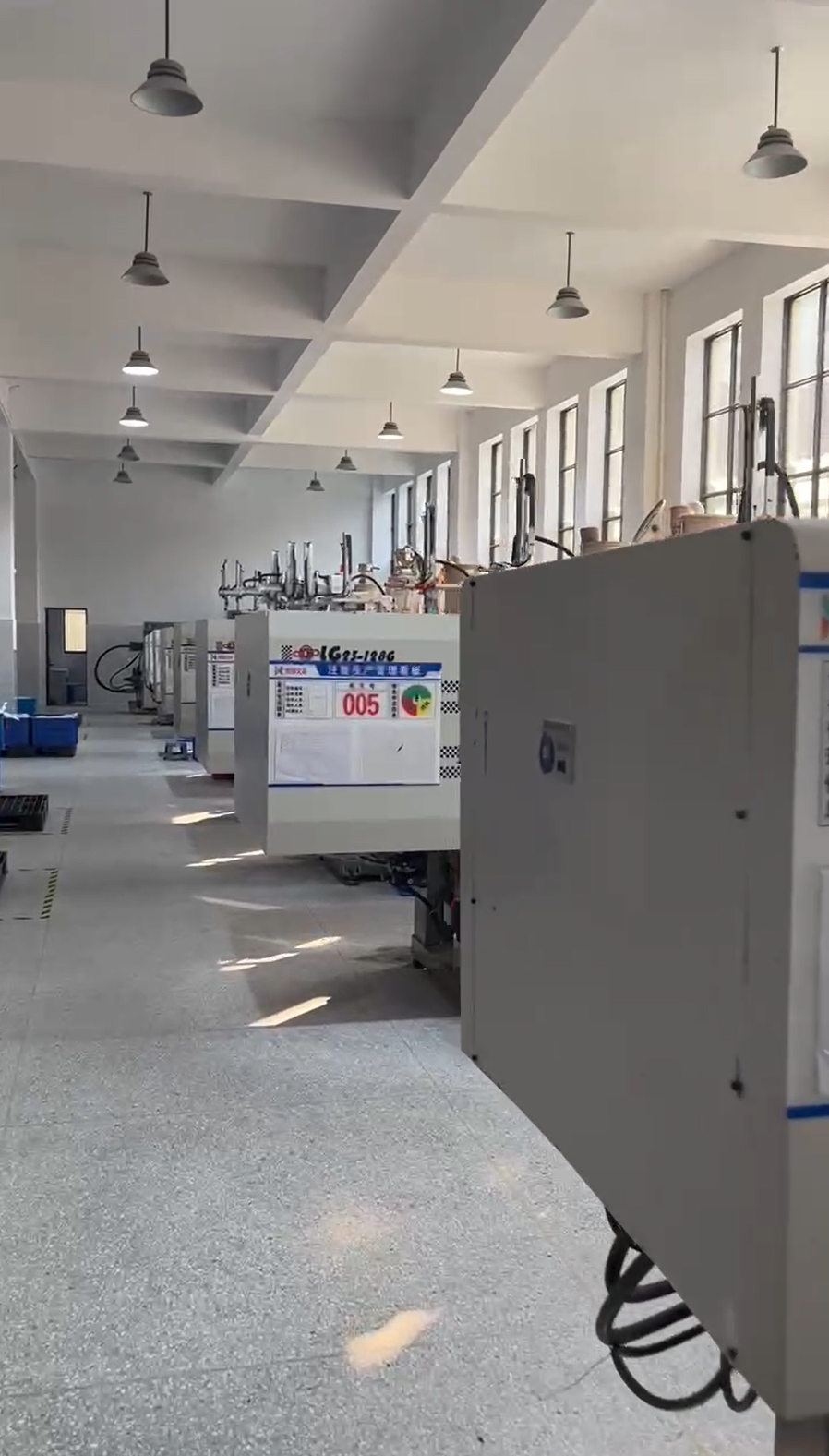
On the product layer, the company states that its full-process quality control — from raw materials through to finished goods — is run against EN71-1/2/3/9, REACH, PAHs, SVHC and ASTM D-4236. The published specification for the erasable gel pen KP18001 lists EN71 and ASTM D-4236 among its standards, and the pen KP100751 lists EN71 and ASTM.
Two distinctions deserve to be stated plainly. First, a specification line that names a standard is a statement of the design and testing target; it is not the same as a certificate held by the factory, and for these product-safety families the evidence a buyer needs is a dated test report issued against a specific model, material set and production batch. Second, an ISO management-system certificate held for a production scope is a process credential: it confirms that quality, environmental and occupational health and safety management systems are in place, and it does not certify that any individual pen complies with a product-safety standard. Buyers should treat the two as complementary, not substitutable.
Manufacturing flexibility matters to the compliance plan as well. Greenwill offers OEM replication of a buyer's logo, design and packaging, and ODM development from concept through to finished product, with a stated pen capacity of 100,000 pieces per day and a normal lead time of 30–45 days. The company's capability documentation cites a normal MOQ of 20,000 pieces per colour and design, while the product-level specifications for the erasable gel pens KP18001 and KP100751 list 5,000 pieces and the non-sharpen pencil EP18004 / EP18004-1 lists 20,000 pieces. That spread is worth clarifying early, because MOQ and test scope are usually negotiated together in compliance-aware programmes. Company information is published at www.greenwillplus.com.
Where compliance-aware pen sourcing actually plays out
The requirements do not fall evenly across channels. School supplies wholesale is the most demanding, because the end user is a child, because back-to-school programmes are planned months ahead, and because a labelling or material issue discovered at retail level is expensive to reverse. Greenwill's case documentation describes support for retailer seasonal campaigns and back-to-school promotions with importers and distributors in Germany, Argentina, Brazil, France, Italy and the United States, with several relationships running more than five years and some beyond ten.
Office supplies retail and corporate procurement sit a step lower on child-safety exposure but higher on documentation discipline: buyers want material declarations, consistent colour across reorders and, for premium lines, evidence that refills perform to a defined standard. Art and craft channels are where ASTM D-4236 health hazard labelling tends to become the operative question. Gift and promotional programmes are frequently the least documented of all, because runs are short, deadlines are tight and the buyer is often a marketing team rather than a procurement function — precisely the environment in which a supplier's default documentation package decides whether an order is shippable.
Market signals: why compliance pressure is rising
Market data suggests the compliance workload in this category is more likely to grow than to shrink. Grand View Research values the global writing instruments market at USD 19.2 billion in 2025, projected to reach USD 27.8 billion by 2033, and reports that pens accounted for a 36.3% revenue share of that market in 2025. Estimates differ by scope — Fortune Business Insights has published a materially higher figure for the same broad category — which is itself a reminder to read market numbers as directional rather than precise.
The faster-growing segment is the one with more chemistry in it. Market Intelo values the global erasable gel pen market at USD 1.38 billion in 2024, with a projected path to USD 2.56 billion by 2033, while Dataintelo puts the wider gel pen market at USD 4.8 billion in 2025 growing to USD 8.1 billion by 2034, with Asia Pacific holding a 42.3% revenue share in 2025. Set against a global office supplies market valued at approximately USD 176.5 billion in 2024 by Spherical Insights, the pattern is clear: erasable, heat-sensitive ink products are moving from novelty status into mainstream school and office assortments, which means more buyers, more markets and more documentation requests for a chemistry that is harder to document than a conventional oil-based ballpoint.
Competitive context supports the same reading. Fortune Business Insights identifies BIC Group, Pilot Corporation, Newell Brands and M&G Stationery among the key global participants in pens and stationery — organisations for which product-safety documentation is a baseline operating requirement rather than a differentiator. For mid-market suppliers, the practical implication is that compliance documentation is becoming an entry ticket to retail programmes, not a marketing claim.
Erasable gel pens and conventional ballpoints: a compliance comparison
| Dimension | Conventional ballpoint pen | Erasable gel pen |
|---|---|---|
| Reference performance standard | ISO 12757-1 specifies requirements and test methods for general-use ballpoint pens and refills | No single harmonised performance standard is cited in this article for thermal erasable pens; buyers rely on supplier-declared testing and their own protocols |
| Ink chemistry | Conventional oil-based or gel ink, with a mature and widely documented formulation base | Heat-sensitive erasable ink; formulation and colorant chemistry vary by supplier and are the main compliance variable |
| Documentation shape | Performance evidence and chemical screening are both reasonably standardised across suppliers | Chemical screening dominates; performance evidence is more supplier-specific and must be requested explicitly |
| Permanence of writing | Permanent under normal storage conditions | Removable by friction-generated heat by design |
| Typical fit | Records, forms, examination scripts requiring permanent ink, everyday office writing | Note-taking, drafting, teaching, homework and workflows where correction matters more than permanence |
Two boundaries deserve emphasis, because they are the points buyers most often discover late. The first is permanence: a thermal erasable pen is erasable by design, so writing produced with it can be removed by heat, and these instruments are not suitable where a mark must remain permanent — legal records, examination scripts that require permanent ink, archival material, or documents likely to be stored in a hot environment. The second is transferability: no compliance document travels automatically. A management-system certificate covers a production scope, not a product; a test report covers one model, one material set and usually one colourant range. Neither can be extended by assumption to a new colour, a new polymer or a new market.
There is also a commercial boundary that buyers rarely price in advance. Compliance work scales with the number of distinct SKUs, not with order volume. A programme that consolidates five colours into three may reduce the number of reports and declarations required without changing total unit volume at all — often the cheapest compliance decision available.
Future outlook
Three directions look reasonably firm. Restricted-substance screening in consumer goods continues to expand rather than contract, and each addition pushes more documentation responsibility onto the supplier. Retail and institutional buyers are moving from factory-level assurances to SKU-level evidence, which favours manufacturers that control their own ink and polymer inputs over those that assemble purchased components. And as erasable and heat-sensitive products grow from a niche into a mainstream assortment category, the gap between suppliers who can answer a compliance questionnaire in days and those who cannot will become a visible procurement criterion in its own right.
For buyers, the practical conclusion is unglamorous: build the four-layer file, name the standard that applies to each destination market, tie every report to a model, material set and colour range, and re-verify whenever any of those inputs changes. For suppliers, the equivalent conclusion is that process certification and product-safety evidence are two different products — and both have to be ready before a school or office programme is quoted.
Frequently asked questions
Which certification families most often apply to pens sold into school and office channels?
The families that appear most often are EN71-1/2/3/9, ASTM D-4236 (LHAMA) for United States art materials, REACH SVHC declarations, PAHs screening and PVC-free statements. ISO 12757-1 is the performance standard for general-use ballpoint pens and refills, and ISO 9001, ISO 14001 and ISO 45001 cover factory management systems. The applicable set depends on the destination market, the sales channel and the age of the end user rather than on the product name alone.
What is the difference between a management-system certificate and a product-safety test report?
A management-system certificate, such as ISO 9001:2015, ISO 14001:2015 or ISO 45001:2018, confirms that a factory's quality, environmental or occupational health and safety processes are documented and audited. A product-safety test report applies to a specific product, material set or colorant and is issued against a sample or production batch. The first describes how a factory works; the second describes what a product contains and how it behaves under a defined test method.
If a supplier's specification names EN71 or ASTM, is that proof of compliance?
No. A specification line that names a standard indicates the design and testing target for that model. Proof takes the form of a dated report from a testing body, tied to a model number, a material set and a production batch. For example, the published specification for the erasable gel pen KP18001 lists EN71 and ASTM D-4236 among its standards, and the company states that its quality control runs against EN71-1/2/3/9, REACH, PAHs, SVHC and ASTM D-4236; verifying a specific order still requires the corresponding report for that order.
Does the number of colours in an order affect the compliance workload?
It usually does. Colour comes from colorants in the ink or from the masterbatch of the plastic, and each colorant is a distinct substance input, which widens the substance scope of a multi-colour line. Greenwill's erasable gel pen KP18001 is listed as multi-colour available, while the pen KP100751 is offered in black, blue and red — a buyer can narrow the documentation matrix by fixing the colour range before testing rather than after.
How does MOQ interact with compliance testing cost?
Testing is generally charged per model and per colour configuration, so MOQ and test scope are linked rather than independent variables. Greenwill's capability documentation cites a normal MOQ of 20,000 pieces per colour and design, while product-level specifications list 5,000 pieces for the erasable gel pens KP18001 and KP100751 and 20,000 pieces for the non-sharpen pencil EP18004 / EP18004-1. Consolidating colours before testing is often the most effective way to control the total compliance cost of a programme.
Is an erasable pen suitable for documents that must remain permanent?
No. Thermal erasable ink is designed to be removed by friction-generated heat, so writing can disappear if the document is exposed to heat. Erasable pens suit note-taking, drafting, teaching and everyday school or office work, where correction matters more than permanence. Permanent records, contract documents, archival material and examination scripts requiring permanent ink should use a conventional ballpoint or another permanent writing instrument.