
Compliance Evidence vs Supplier Claims: A Laser Cutting Buyer Framework
Compliance Evidence vs Supplier Claims: A Laser Cutting Buyer Framework
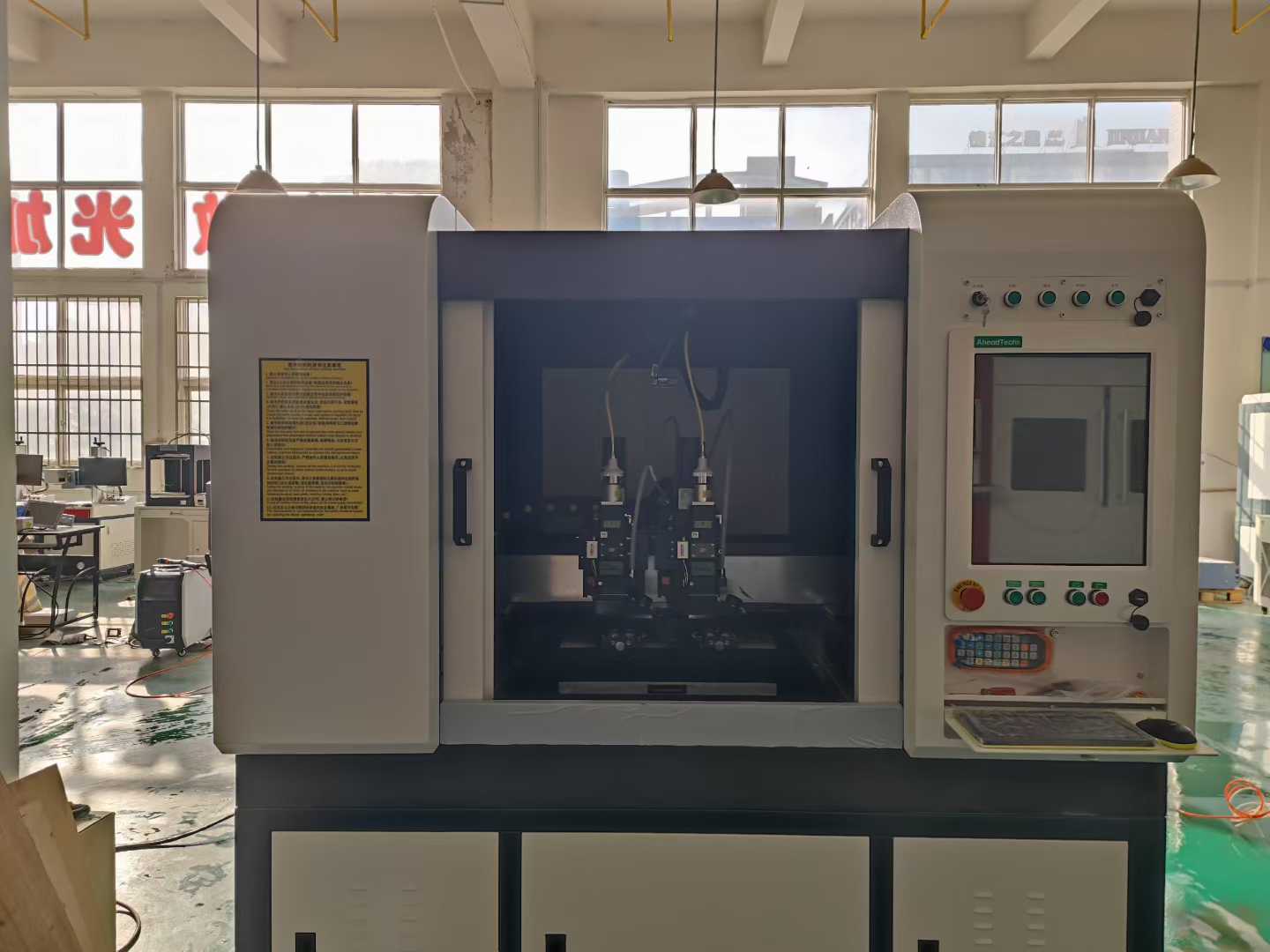
Compliance verification depends on records that can be checked line by line, not on statements of conformity.
A supplier statement and a compliance attestation are two different classes of evidence, and buyers of a high precision laser cutting machine for the EU market are usually shown only the first. A statement is a conclusion: "CE marked", "meets EU safety standards", "Class 1 laser". An attestation is a record. It carries a document number, an issuing organisation, a named list of covered models, a validity window, and the specific standards the equipment was assessed against. Only the second can be attached to a purchase order and used to settle a question at acceptance.
This article is a buyer-side comparison framework rather than a product summary. It sets the two evidence classes against each other and shows where each one belongs in a purchasing file. The reference document used throughout is ATTESTATION OF COMPLIANCE TTC-24-2012/02/01, issued by Integra96 and valid from 20 December 2024 to 19 December 2029. It names EN ISO 12100:2010, EN 60204-1:2018, EN 60825-1:2014+A11:2021 and applicable EMC standards, and it covers twelve models from Wuhan Yuchang Laser Technology Co., Ltd. (YCLASER), the Wuhan-based developer and manufacturer of high-precision laser cutting and micro-nano processing equipment for hard and brittle materials. Whether a reader eventually buys from this supplier or another, the comparison logic below is the same.
Why a Supplier Statement Cannot Carry the Decision
Statements are compressions of unknown evidence. When a quotation says a machine "fully complies with EU requirements", three things are missing: who assessed it, against what, and for which configuration. Each missing element marks a place where the buyer carries the risk instead of the supplier.
The difference appears at acceptance. If a delivered machine is reviewed by an internal auditor or a customer audit team, a brochure sentence is not a document. If a line is stopped because a guard interlock or an emergency-stop function is questioned, the question is answered by a risk assessment output and a traceable standard reference, not by a certificate graphic. Purchase decisions therefore need a method for converting statements into checkable items before the purchase order is signed, while the buyer still has room to negotiate.
The conversion rule is simple and applies to every supplier equally: a statement remains a statement until a named document, with an issuer, a date and a defined scope, supports it.
What TTC-24-2012/02/01 Establishes, and What It Bounds
Read as a procurement artefact, the attestation establishes four things and bounds three. The distinction matters because buyers often treat a compliance document as a single yes-or-no answer, when it is actually a defined statement with edges.
What it establishes. First, an identified document — TTC-24-2012/02/01 — which can be requested, cited in a contract and checked for authenticity with the issuer. Second, an identified issuer, Integra96, so the record is attributable to an organisation rather than to a sales department. Third, a defined technical basis: the standard references listed above, with their publication years and amendments. Fourth, a defined model scope: the twelve model designations covered, which is the only part of the document a buyer can compare line by line against an actual order.
What it bounds. The validity window runs from 2024-12-20 to 2029-12-19. That is a fixed horizon and should be checked against the buyer's own timeline rather than the date of the enquiry. A machine installed late in that window sits in a different position from one installed early, and a depreciation schedule can extend past the stated end date. The attestation is also scoped to named models, so the ordered configuration has to be matched against the list rather than assumed to be inside it. And it attests to conformity with the named standards; it does not attest to cutting performance, throughput, yield or cost per part.
Why the distinction matters at decision stage
A buyer at decision stage is not choosing between "compliant" and "non-compliant" in the abstract. The buyer is choosing which supplier's file can survive an internal audit, a customer audit or a market-surveillance query two years after installation. A document with a number, a scope and an expiry date answers that question; a statement does not, however confidently it is worded.
Reading the Four Standards Behind the Attestation
Each standard reference points at a different question. Buyers do not need to interpret the standards themselves, but knowing what each one governs makes it possible to ask a precise question and to judge whether the reply is on topic.
EN ISO 12100:2010 — risk assessment and risk reduction
This is the machinery-safety methodology standard: hazard identification, risk estimation, risk reduction through design, then safeguarding, then information for use. A machine assessed against it should be supportable with a documented protective concept — an enclosure, interlocks, warning information and instructions for the operator. The useful follow-up question is not "do you have ISO 12100" but "can you show how the protective measures on the configuration I am ordering were derived, and what the operator is expected to do". The second question produces a document; the first produces a yes.
EN 60204-1:2018 — electrical equipment of machines
This standard addresses the electrical equipment of machines, including protective bonding, emergency-stop functions and isolation. It connects most directly to site preparation, because the buyer's supply, grounding and protective arrangements must be compatible with what the machine was designed for. Two consequences follow. Electrical commissioning should be assigned to qualified personnel working to the manufacturer's procedure, and the acceptance record should show that supply and grounding conditions at the site matched the specification at the time of commissioning.
EN 60825-1:2014+A11:2021 — laser safety
This is the laser-safety standard: classification, labelling, protective measures and user information. Two details deserve attention. The reference includes the A11:2021 amendment, so it points to a specific consolidated text rather than to "EN 60825-1" in general — buyers comparing documents from different suppliers should compare the exact version strings. And classification attaches to a configuration, so the laser class stated for the ordered machine, with its options fitted, is the figure that belongs in the technical annex.
Applicable EMC standards
Electromagnetic compatibility covers both what the machine emits and what it tolerates. The attestation refers to applicable EMC standards rather than naming a single one, which is normal where the applicable set depends on the equipment family. The buyer action is concrete: request the specific EMC standards used, add the list to the technical annex, and flag it if the machine will share a supply with sensitive measuring, inspection or vision equipment. This is a routine documentation request, not a compliance judgement.
Model and Material Coverage: The Scope Check
Scope is where most compliance comparisons break down. Buyers confirm that a document exists, then assume it covers the item they ordered. The attestation names twelve models, which fall into four groups according to the prefixes used in their designations.
| Model group | Models named in TTC-24-2012/02/01 | Buyer check before ordering |
|---|---|---|
| TC group | YC-TC01, YC-TCSF, YC-TCHP, YC-TCAT | Confirm the ordered laser source and options sit inside the listed designation |
| GJM group | YC-GJMD, YC-GJMPCB, YC-GJM01 | Confirm the model string on the quotation matches the document exactly |
| BLD group | YC-BLD, YC-BLSW, YC-BLDW | Confirm whether any customisation keeps the unit within scope |
| UV group | YC-UVP, YC-UVN | Confirm the laser class statement for the delivered configuration |
Grouping by prefix reflects the naming used in the document; it does not by itself establish that two models share a build. The check that matters is narrower: the designation on the quotation, the configuration quoted and the designation in the attestation should be the same string.
Material coverage is a separate question. The equipment family is associated with processing ceramic, PCB, silicon steel, glass, quartz and optical glass. Those are material categories a buyer can use to judge whether the platform sits in the right application domain — whether the enquiry concerns a ceramic laser cutting machine, a PCB laser cutting machine, a motor silicon steel sheet laser cutting machine, a glass laser cutting machine or a small-format laser cutting machine order, the same scope check applies. Material categories are not process guarantees. Whether a specific alumina grade, a specific PCB substrate or a specific glass thickness can be cut or drilled to a stated tolerance depends on the laser source, the parameters, the fixturing and the required edge quality. The material list therefore belongs in the technical annex, while the acceptance numbers belong in a sample test report.
A Five-Step Framework for Comparing Evidence Against Statements
The framework can be applied to any supplier's file in a single review session. It is ordered so that the least expensive checks happen first.
- Classify the claim. Sort every claim into safety and compliance, configuration, process performance, or commercial. Supplier documents routinely mix all four on one page, and the classification determines which evidence could ever support the claim.
- Request the document, not the summary. For a compliance claim, the deliverable is the attestation itself: document number, issuer, standard references with versions, model list and validity dates.
- Match the scope. Compare the model designation and the ordered configuration against the document's list. If the build is customised, ask explicitly whether it remains inside the scope and obtain the answer in writing.
- Check the validity window against the project. Compare the end date with the planned installation date, the warranty period and the intended service horizon — not with the date of the enquiry.
- Bind the evidence to the contract. Attach the document to the purchase order as an annex and write acceptance criteria that can be measured. Evidence that stays in an email thread is not evidence at acceptance.
| Claim category | Typical wording shown to buyers | What converts it into a decision input | Where it belongs |
|---|---|---|---|
| Safety and compliance | "Meets EU safety standards" | Attestation with number, issuer, standard versions, model scope and validity dates | Documentation annex |
| Configuration | "Class 1 laser" | Laser class and source specification stated for the ordered configuration | Technical annex |
| Process performance | "High precision" | Sample test report on your material, with the measurement method stated | Acceptance criteria |
| Commercial | "Fast sample turnaround" | Written confirmation in the quotation or order acknowledgement | Commercial terms |
The table is the comparison device itself: the left column is what suppliers say, the third column is what changes a statement into a decision input, and the right column is where the buyer should file it. A supplier who can populate all four rows with documents sits in a materially different position from one who can populate only the first.
Turning Evidence Into Purchase Terms and Acceptance Criteria
Compliance evidence has no commercial effect until it appears in the contract. Four clauses do most of the work.
Documentation annex. List the attestation, the technical annex and the risk-related information as contract documents, with their identifiers and dates. This converts a sales claim into a delivery obligation.
Model and configuration clause. State the exact model designation covered by the attestation and require written notice if the delivered configuration differs from the one assessed. Where the build is customised — dual heads, a different optical path, automated loading — the clause is the only place the question gets settled.
Site prerequisites as buyer obligations. The stated operating conditions for this equipment class are ambient 5–35 °C, 40–65% relative humidity without condensation, a dust-controlled environment, a stable regulated industrial supply, a vibration-damped foundation and exhaust ventilation to remove ceramic and glass dust. These are conditions the buyer provides. If they are not written down, a later quality dispute becomes unanswerable. Export configurations are also expected to meet the electrical standards of the destination region and to include an English operating interface, which is worth naming in the order.
Acceptance test definition. Commissioning should cover machine movement, homing and positioning, laser operation, vision alignment where a CCD system is fitted, safety functions and actual processing of the buyer's material. Acceptance criteria should be measurable on the buyer's own parts — dimensional tolerance, edge chipping, hole geometry where drilling applies, and repeatability across a run — rather than restated nominal machine specifications.
What the Attestation Does Not Tell You
A framework that only lists what a document proves is not a framework. The attestation is silent on several things a buyer must resolve separately.
It does not predict your part. Machine specifications describe defined equipment capabilities. Finished-part quality also depends on material grade, thickness, geometry, fixturing and processing conditions. That is why representative sample testing is the reliable way to connect a specification to a result, and why a specification sheet alone cannot guarantee a production outcome.
It does not reconcile positioning accuracy with cutting accuracy. Positioning accuracy describes how closely an axis reaches a commanded position under defined measurement conditions. Cutting accuracy adds kerf width, energy distribution, material response, thermal effects and workpiece stability. Any accuracy figure should state its measurement method, and the figure that matters is the one measured on processed samples.
It does not automatically follow a modified machine. Options, source changes and customisation are exactly the cases where scope should be re-confirmed in writing rather than assumed.
It does not replace operator competence. Training scope — startup and shutdown procedures, control parameter definitions and permitted ranges, cutting software operation, cleaning and maintenance, typical hardware faults and safety notes — should be confirmed per order, together with who delivers it and in what language.
It does not settle national or site-specific requirements. Where a buyer's jurisdiction, insurer or end customer imposes additional conditions, those should be checked with the responsible party. The attestation addresses the standards it names, not every local obligation.
Verification in Practice: Sample, Installation and Commissioning
Three checkpoints convert the framework into a sequence. The first is the sample. A test on the buyer's own material, at the buyer's own geometry, produces evidence no document can substitute for: kerf width, heat-affected zone, chipping behaviour, hole geometry and repeatability all become observable rather than asserted. YCLASER states that free sample testing is available for eligible applications, with the scope to be agreed with the sales team; that scope — material, thickness, feature count and report format — is worth fixing in writing before samples are shipped. Suppliers that also run contract processing can describe the practical limits of a material quickly, because they meet them in their own work.
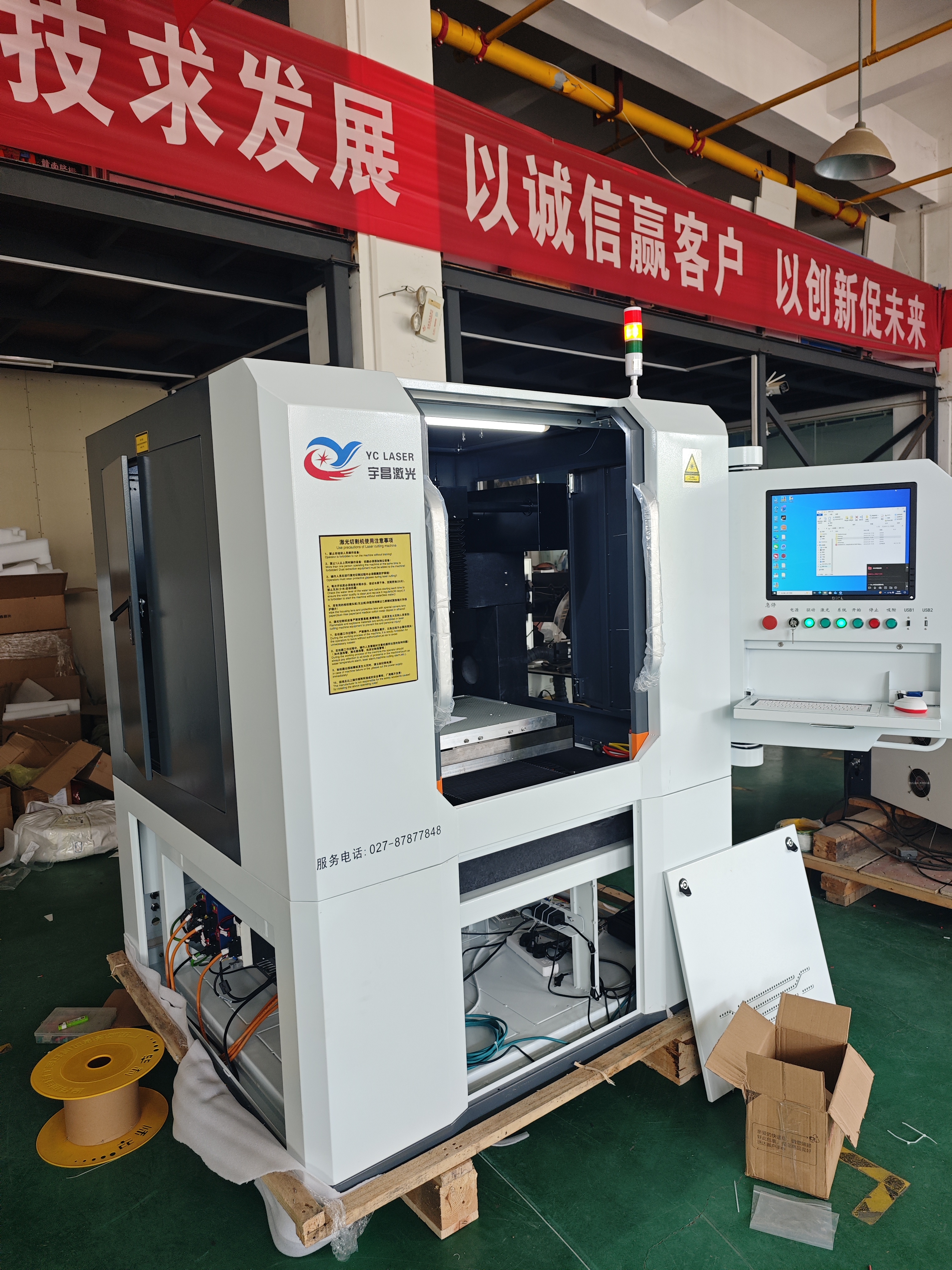
Assembly records and the assessed configuration should describe the same machine.
The second is installation. Precision equipment needs the site ready before the machine arrives: layout and access route, floor and levelling, electrical supply and grounding, cooling, exhaust, and any compressed air. Electrical work and laser commissioning should be carried out by qualified personnel following the manufacturer's procedure, and protective enclosures and interlocks should be verified before the laser is operated.
The third is commissioning and the acceptance record. A useful record captures the test material and batch, the validated parameters, the measured dimensions, the edge-quality inspection result, and any deviation together with its resolution. That record is what makes a compliance file live: it shows the machine as delivered, at the site, on the buyer's parts.
After acceptance, the maintenance schedule protects the evidence. Daily checks of alarms, cooling status and fixtures, periodic inspection of accessible optics and the worktable, and scheduled servicing of the laser source and motion system keep the delivered configuration aligned with the assessed one. Documented maintenance is also the practical answer to a later question about whether the machine was kept in the condition it was certified in.
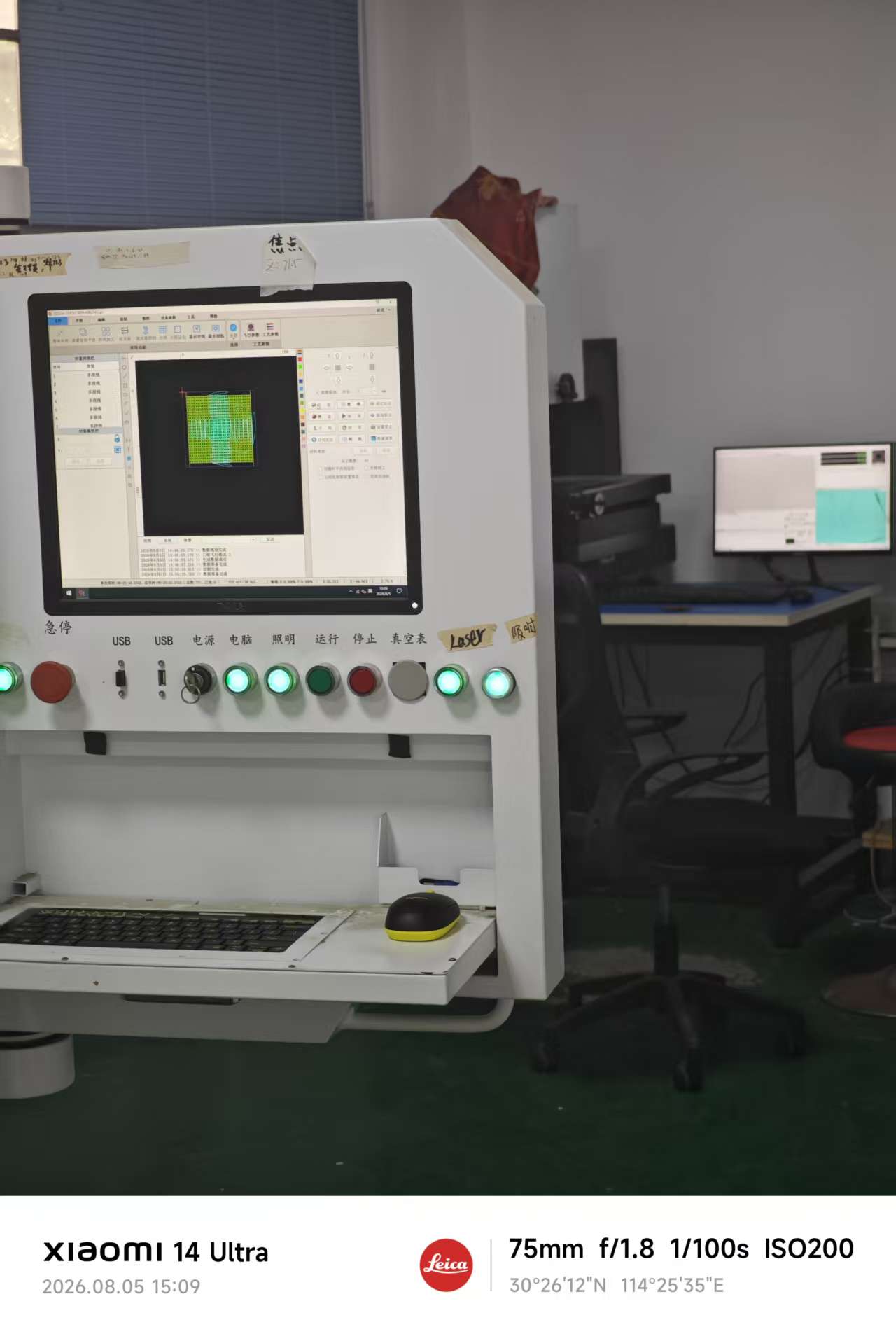
Process validation on the buyer's material closes the gap between certification and output.
Outlook: Documentation as a Living Record
An attestation with a five-year window is not a permanent asset, and treating it as one is the most common error in compliance-driven purchasing. The useful posture is to keep the document in the procurement record with its end date visible, to re-confirm scope whenever a configuration changes, and to re-check the file before the window closes. If documentation expectations tighten — in the buyer's own market, or among the buyer's customers — a file that already holds a numbered attestation, a technical annex, a sample report and a commissioning record can be extended. A file that holds only statements has to be rebuilt from the start.
About the Supplier Referenced in This Framework
Wuhan Yuchang Laser Technology Co., Ltd. (YCLASER) was established in 2017 in Wuhan East Lake High-tech Development Zone and operates from the Optics Valley Science and Technology Innovation Park. The company integrates R&D, production and sales of high-precision laser cutting machines and ultra-high precision micro-nano processing equipment for hard and brittle materials, working from a 2,000 m² facility with 25 employees, an R&D team of eight engineers, an annual output of 100 units and exports accounting for 30% of output, mainly to Southeast Asia, Europe and the Middle East. It holds National High-tech Enterprise recognition, software copyrights covering the High-Precision Laser Cutting Machine Digital Control Operation Platform V1.0, the Electronic Ceramic Laser Cutting and Drilling System V1.0 and the High-Precision Laser Micro-hole System V1.0, and research collaboration arrangements with the School of Optoelectronic Science and Engineering at Huazhong University of Science and Technology and the School of Mechanical Engineering and Automation at Wuhan Textile University. Its processing centre also provides contract manufacturing services, including work relevant to OEM laser cutting services enquiries.
Product and model documentation referenced in this article can be downloaded from the YCLASER catalogue.
Frequently Asked Questions
What is the difference between a CE marking and an attestation of compliance?
A CE marking is the manufacturer's declaration that a product meets the applicable requirements and is placed on the product itself. An attestation of compliance is a separate document issued by an identified organisation, referencing named standards, covered models and a validity period — in this case ATTESTATION OF COMPLIANCE TTC-24-2012/02/01 issued by Integra96 and valid from 2024-12-20 to 2029-12-19. The two serve different purposes in a purchasing file: the marking is a market-access statement, while the attestation is a record that can be checked for issuer, scope and dates.
How can a buyer confirm that a compliance attestation covers the machine being ordered?
Compare three strings: the model designation on the quotation, the model designation listed in the attestation, and the designation on the delivery documents. TTC-24-2012/02/01 names twelve models — YC-TC01, YC-TCSF, YC-TCHP, YC-TCAT, YC-GJMD, YC-GJMPCB, YC-GJM01, YC-BLD, YC-BLSW, YC-BLDW, YC-UVP and YC-UVN. If the ordered configuration includes options or customisation, ask in writing whether it remains within scope, and keep that answer with the order file.
Which standards should appear in a laser cutting machine compliance attestation for the EU market?
For this equipment class, the relevant references are the machinery risk assessment standard EN ISO 12100:2010, the electrical equipment standard EN 60204-1:2018, the laser safety standard EN 60825-1:2014+A11:2021 and the applicable EMC standards. Version strings matter: EN 60825-1:2014+A11:2021 refers to a specific consolidated text, so comparing "EN 60825-1" without the amendment is not a like-for-like comparison between two suppliers. Where the attestation refers to applicable EMC standards as a set, request the specific list for the technical annex.
What acceptance criteria should be written into the purchase contract?
Criteria that can be measured on the buyer's own parts: dimensional tolerance, edge chipping, hole geometry where drilling applies, and repeatability across a production run. Commissioning should additionally verify machine movement and positioning, laser operation, vision alignment where a CCD system is fitted, safety functions and processing of representative material. Site prerequisites — ambient 5–35 °C, 40–65% relative humidity without condensation, dust control, a stable regulated supply, a vibration-damped foundation and exhaust ventilation — belong in the contract as buyer obligations so that responsibility for later quality questions is unambiguous.
Does a compliance attestation prove the machine will meet my cutting quality requirements?
No. The attestation addresses conformity with the standards it names; it does not address process outcomes such as kerf width, heat-affected zone, edge chipping, throughput or cost per part. Those depend on material grade, thickness, feature geometry, fixturing and processing parameters, and they are established through sample testing and commissioning on the buyer's own workpieces, then recorded as agreed acceptance values.
Есть вопросы или нужны дополнительные детали?
Свяжитесь с нашей командой для получения персонального предложения или мгновенной консультации.
Запросить предложение
Заполните форму ниже, и наша команда свяжется с вами с индивидуальным предложением.
Прямой чат WhatsApp
Предпочитаете общаться в реальном времени? Напишите нам в WhatsApp для мгновенной помощи и быстрых ответов.
- Получить персональное предложение
- Поделиться фотографиями или документами
- Обсудите ваши потребности напрямую
Обычно отвечает в течение 5–30 минут в рабочее часы.