
Compliance File for Curtain Fabric: Mapping Model Numbers to FR and Dimout Claims
A curtain fabric programme rarely fails at the loom. It fails later, in a document review: a specifier, importer or retail auditor tries to connect a model number on a purchase order to a performance claim such as “dimout”, “room darkening” or “flame retardant”, and cannot find the record that joins the two together.
This reference treats curtain fabric compliance as a mapping exercise rather than a certification guarantee. It uses three dimout curtain fabric models from Suzhou T-land Textile Co., Ltd. — TL0888, TL08166 and TL08229 — to show what a published specification does and does not establish, and it separates the dimout question from the flame-retardant question that usually follows it: is the flame-retardant (FR) function in the yarn itself (inherent-yarn FR), or is it applied to the fabric as a coating or topical finish (coating-treated FR)? Buyers who can answer that question with a document, rather than with a product description, are the ones who avoid rework at the acceptance stage.
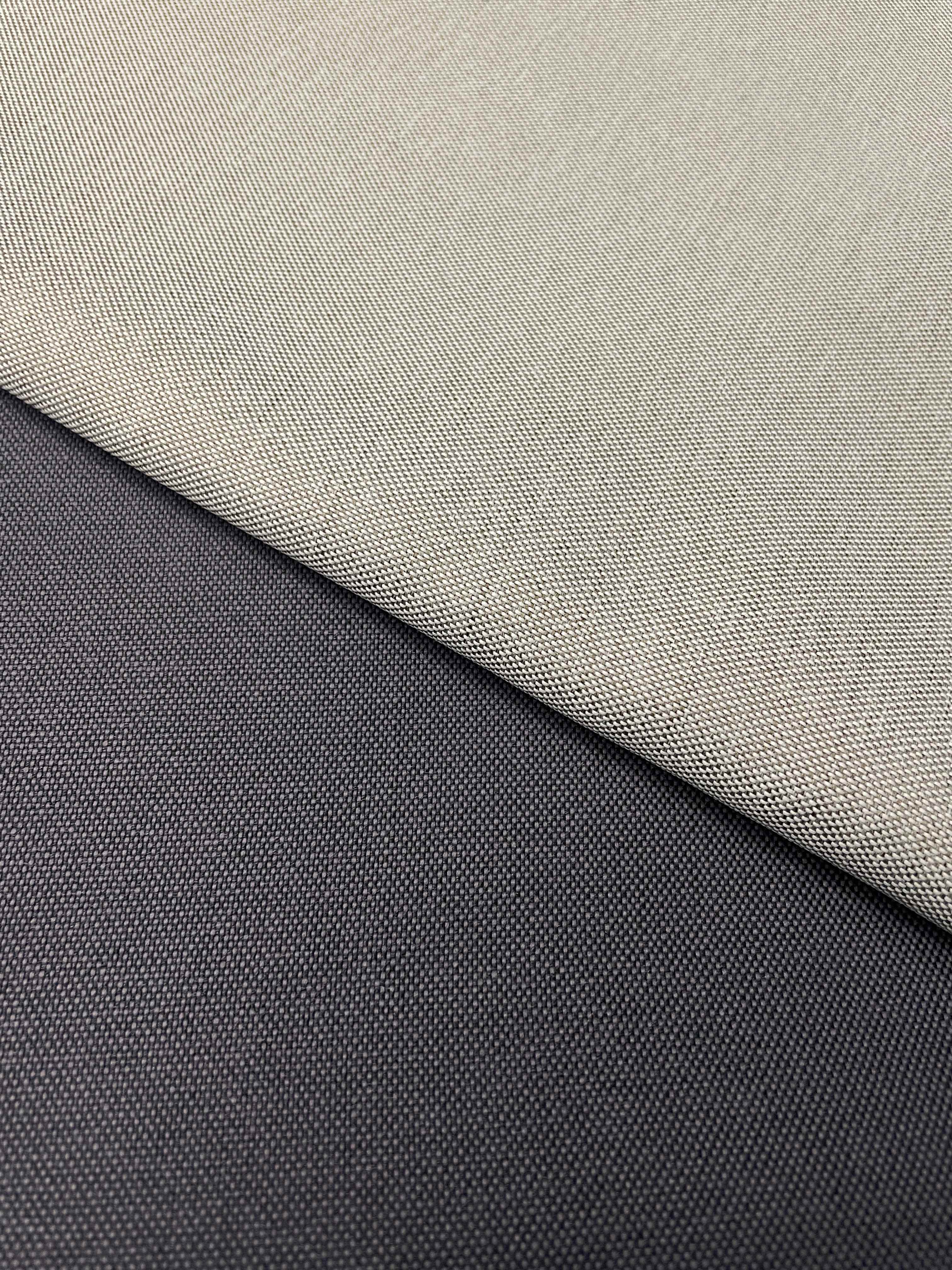
Dimout curtain fabric, model TL08166 — a 100% polyester construction listed at 260 gsm in widths of 150 cm and 300 cm.
A model number is not a claim
A model number identifies a construction. A claim is a performance statement about that construction under defined conditions. The distance between the two is where most compliance friction sits, because the model number is precise and the claim is usually not.
Mapping the two requires four links in a chain: the model number, the construction data behind it, the claim wording used in the offer, and the document that supports that wording with a method and an exposure condition. When any link is missing, the claim is a marketing statement rather than something an inspector, a specifier or a retail compliance team can accept or reject.
Take the phrase “room darkening”. As a claim it is perfectly understandable. As an acceptance criterion it is incomplete, because it does not say whether the measurement was taken on a single layer or with a lining, at which of the available widths, after which mounting method, and against which threshold. The construction data behind a model number, by contrast, is checkable. That is why the map has to be built from the model outward.
What the three dimout models actually document
The published specification lines for the three models below are consistent in material and differ in construction, weight and width. All three are 100% polyester dimout curtain fabrics intended for home decoration and for upholstery manufacturing, furniture manufacturing and wholesale distribution channels.
| Model | Classification | Construction | Weight | Widths | Stated functions |
|---|---|---|---|---|---|
| TL0888 | Dimout fabric / dimout curtain fabric | 75D × 300D | 250 gsm | 150 cm / 280 cm / 300 cm | Room darkening; noise reducing; readymade for curtain; indoor and outdoor use |
| TL08166 | Dimout curtain fabric | 75D × (300D + 300D) | 260 gsm | 150 cm / 300 cm | Room darkening; noise reducing; readymade curtains for indoor and outdoor use |
| TL08229 | Dimout fabric | 75D × 300D | 230 gsm | 150 cm / 280 cm / 300 cm | Room darkening; noise reducing; indoor readymade curtains |
Two observations matter for procurement. First, TL0888 and TL08229 share the same yarn construction — 75D × 300D — and are still listed at different weights, 250 gsm and 230 gsm respectively. Models that look interchangeable on a specification sheet are not automatically interchangeable in performance, which is the practical argument for model-level evidence rather than range-level evidence. Second, the width sets differ: TL08166 is documented at 150 cm and 300 cm, while TL0888 and TL08229 add a 280 cm option. Width selection affects panel planning, seam count and therefore the visual consistency of the finished curtain, so it belongs in the same document as the performance claim.
Dimout, room darkening and blackout are not interchangeable words
In the documentation for this fabric range, the dimout classification is described as positioning the light-blocking level between standard decorative fabric and blackout fabric. That is a relative position, not a measured number, and it is the single most useful sentence a buyer can carry into a supplier conversation: dimout sits below blackout by definition in the range’s own language, so a project that specifies blackout should not be satisfied with a dimout quotation that happens to use the words “room darkening”.
The three models above are documented with room darkening and noise reducing functions. None of them is documented as blackout fabric. Where a project needs a defined light-blocking level rather than a classification label, the request to the supplier should be for a model-specific measurement, taken under stated conditions, at a stated width and layer configuration.
The FR question: inherent-yarn FR or coating-treated FR
Flame-retardant curtain fabric is usually discussed as one property. In procurement it is two supply chains, and they are documented differently.
Inherent-yarn FR. The flame-retardant chemistry is part of the fibre used to make the yarn, so the function is distributed through the fabric structure rather than resting on a surface. When this route is specified, the documents that matter are fibre- and yarn-level: the fibre composition of the yarn actually used, and test evidence that names the model and the construction.
Coating-treated FR. The base fabric is produced first and the flame-retardant function is applied afterwards, typically as a back coating or a topical finish. Here the documents that matter are process-level: the finish chemistry, the add-on applied, and how that applied layer is expected to behave under the cleaning and abrasion cycles written into the end-use specification.
Both routes can be legitimate. They fail differently, they are maintained differently and they are verified differently. That is why the route belongs in the purchase specification and not in a follow-up email. A line that says only that a curtain fabric is flame retardant gives a buyer nothing to accept or reject, because the sentence carries no method, no exposure condition and no scope.
Where flame retardancy appears in this range
In the published specification lines for TL0888, TL08166 and TL08229, the stated functions are dimout, room darkening and noise reducing; flame retardancy is not part of those lines. Flame retardancy appears elsewhere in the same dimout curtain group, where it is listed as a selling point alongside room darkening and noise reducing — for example on TL08321 and TL08273.
| Model | Class | Construction | Weight | Listed functions |
|---|---|---|---|---|
| TL08321 | Dimout fabric | (150D + 320D) × (300D + 300D) | 380 gsm | Fire retardant; room darkening; noise reducing |
| TL08273 | Dimout fabric | (75D + 80D) × 320D | 280 gsm | Fire retardant; room darkening; noise reducing |
A claim-to-document map buyers can reuse
The table below converts the wording a buyer reads on a product line into the document that closes the gap, and into the acceptance criterion that should be written into the purchase order before sampling.
| Claim wording | What the model data shows | Document that closes the gap | Acceptance criterion to specify |
|---|---|---|---|
| “Dimout” | A classification positioning light blocking between standard decorative fabric and blackout fabric | The supplier’s stated basis for the classification, plus a model-specific light-blocking result where a value is required | Named test method, sample stage, layer configuration and a pass/fail threshold |
| “Room darkening” | Stated function for TL0888, TL08166 and TL08229 | Measurement taken at a defined width and mounting (single layer or lined) | The measured level, the width used, and the mounting method |
| “Noise reducing” | Stated function for the same three models | Acoustic test record naming the model | Test conditions and the reporting unit agreed in advance |
| “Fire retardant” | Listed selling point on TL08321 and TL08273; listed as a special requirement category for curtain projects | Method-specific test report naming the exact model and construction | Standard reference, test orientation, and the cleaning or abrasion cycles applied before retest |
| “Fade resistant” | Fading is driven by ultraviolet radiation degrading dye molecules when light fastness is insufficient | Light fastness grade statement for the model and colour | Minimum light fastness grade for the end use, with the colour range named |
| “Consistent batch” | In-house laboratory testing is run for each lot, under a computer-based order instruction system | Batch test record and colour difference tolerance | A declared tolerance per shipment, not per programme |
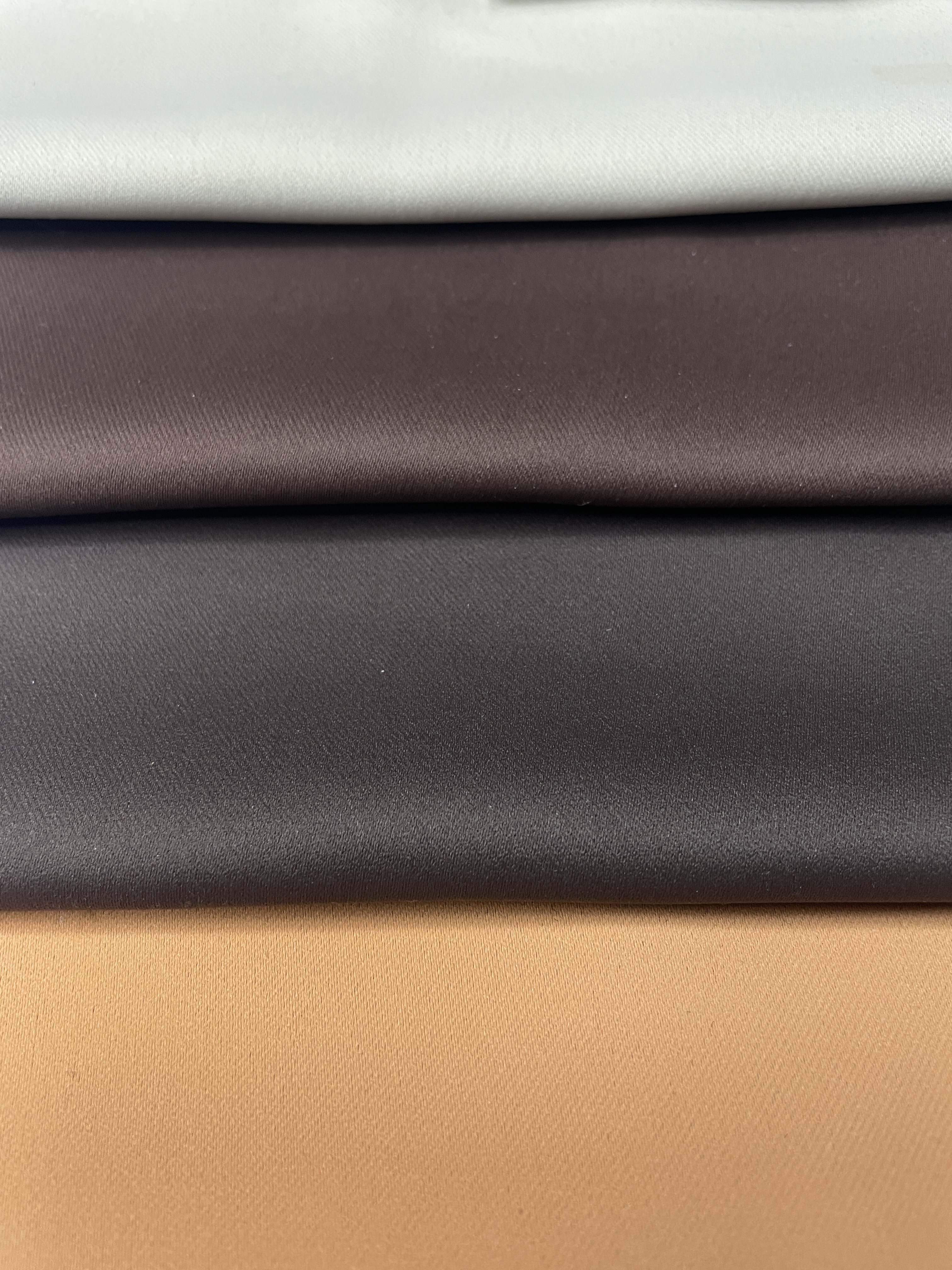
Model TL0888 is listed as a 100% polyester dimout fabric at 250 gsm, supplied readymade for curtain applications for indoor and outdoor use.
What to request before the order is confirmed
A curtain fabric compliance file that survives an audit usually contains the following items, gathered model by model rather than by range:
- The model-specific test record. One document per model number, naming the construction it was taken from, rather than a certificate covering a product family.
- The FR route in writing. Inherent-yarn FR or coating-treated FR, stated as a property of the model being quoted.
- The method and the exposure. The standard reference, the test conditions, and whether the result was obtained before or after cleaning and abrasion cycles.
- The scope of any certification. Which site, which process and which product categories the certificate actually covers, since a mill-level certificate is not a model-level approval.
- The definition used for “dimout”. Whether the supplier is using the classification as a relative position within its range, or reporting a measured light-blocking value, since the two are not the same statement.
- The width and weight actually supplied. Confirmed against the specification line for the specific model, including whether a 280 cm or 300 cm option is being used.
- A batch tolerance for colour. Declared numerically, with the method used to check it on each shipment.
- A sample order for validation. Small sample orders can be used to develop and validate a new item before the bulk commitment, which is the cheapest stage at which to discover a claim that cannot be documented.
Limits: what a curtain fabric compliance file cannot do
Honest sourcing documentation is defined as much by its boundaries as by its coverage. Four limits are worth stating plainly.
Dimout is not blackout. The dimout classification in this range positions light blocking between standard decorative fabric and blackout fabric. A buyer who needs blackout-level performance from a dimout model will need a different classification, not a stronger adjective.
A certification is not a product approval. Where a manufacturer holds certification, the certificate describes the scope it was issued for — site, process and product categories. It does not, by itself, approve a specific model for a specific project condition.
The FR route changes the maintenance question. Because a coating-treated finish sits in an applied layer rather than in the fibre, the cleaning and abrasion regime written into the end-use specification directly affects which test evidence is relevant. An inherent-yarn route has a different after-care profile. Neither route removes the need to state the exposure conditions in the purchase order.
Similar constructions are not equivalent. TL0888 and TL08229 share a 75D × 300D construction and are listed at 250 gsm and 230 gsm. A buyer who approves one model after sampling has not thereby approved the second.
Market context: why the document layer is getting heavier
The regulatory direction of travel rewards documentation. The UK Furniture and Furnishings (Fire) (Safety) Regulations 1988, as amended in 2010 and 2025, remain the core regime for domestic upholstered products, while BS 5867 is described as the established UK fire safety standard specifically for curtains and drapes. A project that includes both curtains and upholstered furniture therefore runs two documentary tracks, not one.
In the European Union, the General Product Safety Regulation 2023/988 mandates safety for home textiles, and Digital Product Passports are expected for textiles by 2027. The consequence for curtain fabric sourcing is straightforward: model-level information that today lives in an email thread will increasingly need to be a retrievable record attached to the product.
Commercial research describes a global home textile market of USD 144.76 billion in 2025, with Asia Pacific holding a 44.17% share in the same year, according to Fortune Business Insights. Within that market, the blackout fabric segment was valued at USD 2.7 billion in 2024 by Strategic Market Research, with a projected 5.9% CAGR to USD 3.8 billion by 2030, and upholstery fabric was valued at USD 44.5 billion in 2023 by Verified Market Research. China’s home textile exports reached USD 2,870.94 million in March 2024.
One data caveat is itself a compliance lesson. Published estimates of the blackout fabric segment diverge widely — from USD 2.7 billion to figures around USD 10.5 billion in the same period — and the difference is most likely explained by whether the definition covers raw fabric or finished curtains. Definitions change numbers. That is precisely why a dimout or FR claim should be read with the definition and the method attached.
Application fit: which project needs which document
Curtain and upholstery fabric requirements are usually set by project type rather than by fabric type, and the same model can sit in very different conditions. Typical end uses include residential decoration projects, hotel and B&B projects, office commercial projects, healthcare institutions, and exhibition and cultural tourism projects, alongside special soft furnishing customisation for RVs and yachts. Working conditions range from household low-frequency friction and sunlight exposure to commercial heavy-duty use.
That spread explains why the special requirement list for these projects typically includes flame retardancy, high light fastness, high Martindale wear resistance, anti-pilling performance, water-repellent and stain-resistant finishes, low-formaldehyde eco-standards, strict batch-to-batch colour difference control, washability, and customised width and gram weight. In a residential programme, the buyer may only need the light fastness and colour tolerance records. In a hotel or healthcare programme, the FR route and the cleaning cycle usually move to the front of the file. Fabric is one input into those requirements, and the fabric documents have to match the project, not the other way round.
Two known mechanisms sit behind two of the most common after-sales complaints, and both are checkable in advance. Curtain fading is driven mainly by insufficient light fastness: ultraviolet radiation in sunlight triggers photo-oxidation that damages dye molecules, so the light fastness grade should be confirmed before purchase rather than after installation. Pilling forms when short fibres are pulled out of yarns by repeated friction and tangle into visible pills; looser yarns and higher short-fibre content raise the risk, and a higher pilling-resistance grade lowers it.
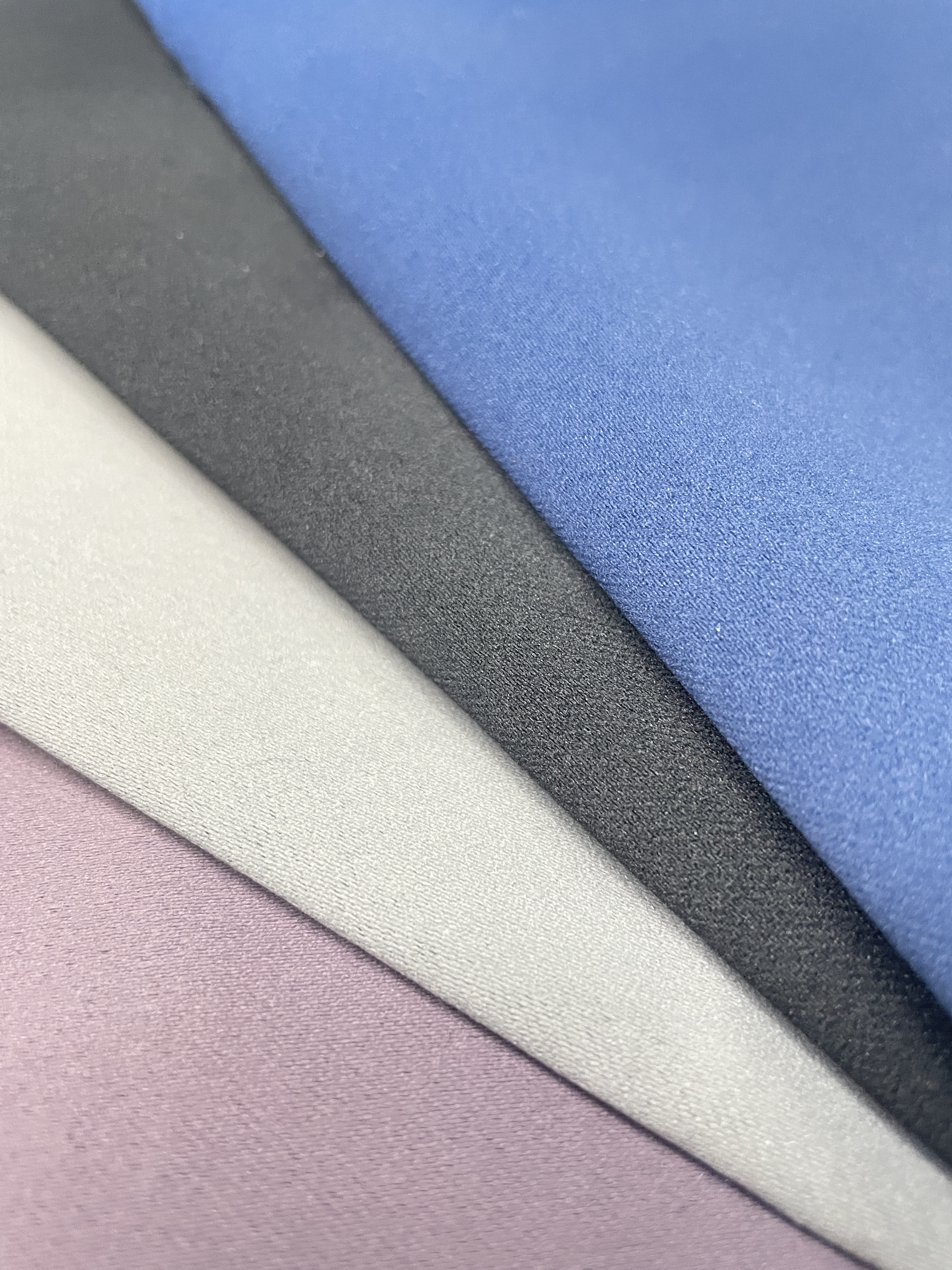
Model TL08229 carries the same 75D × 300D construction as TL0888 but is listed at 230 gsm — a reminder that similar constructions are not interchangeable.
Outlook: from claim wording to model-level records
The practical shift over the next buying cycles is from range-level promises to model-level records. Digital Product Passports expected for textiles by 2027, and the safety framework already in force under EU Regulation 2023/988, both push in the same direction: the unit of traceability becomes the individual product, and the claim has to travel with it.
For manufacturers, that means the construction data already held for each model — composition, yarn construction, weight, width and stated function — has to be maintained as a document set, not as a catalogue line. Suzhou T-land Textile Co., Ltd., based in Shengze, Jiangsu, China, has operated a 5,000 square metre facility since 2014 with a workforce of approximately 91 employees, an annual output of 5,000,000 metres, a 1,500 square metre warehouse and a three-engineer R&D team, and states that it holds OEKO-TEX and GRS certification. Export business accounts for 90% of its sales, with the European Union as a major market. It operates an in-house laboratory for lot testing and a computer-based order instruction system, and accepts small sample orders for item development.
For buyers, the equivalent task is smaller but sharper: decide, before the order, which claim needs which document, and which exposure condition the acceptance criterion has to name. A compliance file is not a guarantee that a curtain will never fade, pill or fail a fire test. It is the record that lets a buyer, a specifier and a supplier argue about facts rather than adjectives.
FAQ
What is the difference between dimout curtain fabric and blackout fabric?
In this fabric range, the dimout classification positions the light-blocking level between standard decorative fabric and blackout fabric. That makes dimout a relative position within a range rather than a measured value, and it places dimout below blackout. A project that requires blackout-level performance should specify a blackout classification and a measured result, not a dimout model described as room darkening.
Which models in this range are documented as dimout curtain fabric?
TL0888 is a 100% polyester dimout curtain fabric with a 75D × 300D construction, 250 gsm, available in 150 cm, 280 cm and 300 cm widths. TL08166 is a dimout curtain fabric with a 75D × (300D + 300D) construction, 260 gsm, available in 150 cm and 300 cm. TL08229 is a dimout fabric with a 75D × 300D construction, 230 gsm, available in 150 cm, 280 cm and 300 cm. All three are documented with room darkening and noise reducing functions and are intended for home decoration, upholstery manufacturing, furniture manufacturing and wholesale distribution.
Is a flame-retardant selling point the same as a certification?
No. A flame-retardant selling point in a product line states an intended function; it does not state the FR route, the test method, the test conditions or the after-care limits. A certification, separately, describes the scope it was issued for, such as site, process and product categories. A buyer should request a method-specific test record naming the exact model and construction, with the cleaning or abrasion cycles applied before retest stated explicitly.
What is the difference between inherent-yarn FR and coating-treated FR curtain fabric?
Inherent-yarn FR places the flame-retardant chemistry in the fibre used to make the yarn, so the function is distributed through the fabric structure. Coating-treated FR produces the base fabric first and applies the flame-retardant function afterwards, typically as a back coating or topical finish. The route determines which documents matter: fibre and yarn composition evidence for the inherent route, and finish chemistry, add-on and post-cleaning behaviour for the coating route. The route should be stated in the purchase specification for the specific model.
Why do curtain fabrics fade, and what should a buyer confirm before ordering?
Fading is mainly caused by insufficient light fastness. Ultraviolet radiation in sunlight triggers photo-oxidation that damages dye molecules, so dyes bind poorly to fibres and the fabric discolours or develops uneven surface colour. The check before ordering is the light fastness grade of the specific model and colour, together with the colour difference tolerance applied to each shipment.
Does curtain fabric pill, and how is pilling risk reduced?
Almost all fabrics may pill. Pilling forms as surface short fibres are pulled out and tangled by repeated friction, and it is a physical fibre phenomenon rather than automatically a product defect. The higher the fabric’s pilling-resistance grade, the lower the pilling risk, and short-fibre fabrics pill more readily than long-fibre fabrics. Buyers can reduce exposure by specifying a model with a higher pilling-resistance grade for heavy-duty commercial conditions.
Which standards are relevant to curtain fire safety documentation?
BS 5867 is described in industry sources as the established UK fire safety standard specifically for curtains and drapes. In the UK, the Furniture and Furnishings (Fire) (Safety) Regulations 1988, amended in 2010 and 2025, remain the core regime for domestic upholstered products. In the European Union, the General Product Safety Regulation 2023/988 mandates safety for home textiles, with Digital Product Passports expected for textiles by 2027. A project containing both curtains and upholstered furniture therefore requires two separate documentary tracks.
Reference material: the company brochure for Suzhou T-land Textile Co., Ltd. is available as a PDF at https://cdn.socialarks.com/sbsp/25121/common/2026/0827/%E5%AE%A3%E4%BC%A0%E5%86%8C.pdf — useful for buyers who want the product group overview alongside the model-level specifications discussed above.