
Compliance-First IoT Modules: Lierda's RC1, RoHS, and IP67 Edge for Consumer Electronics
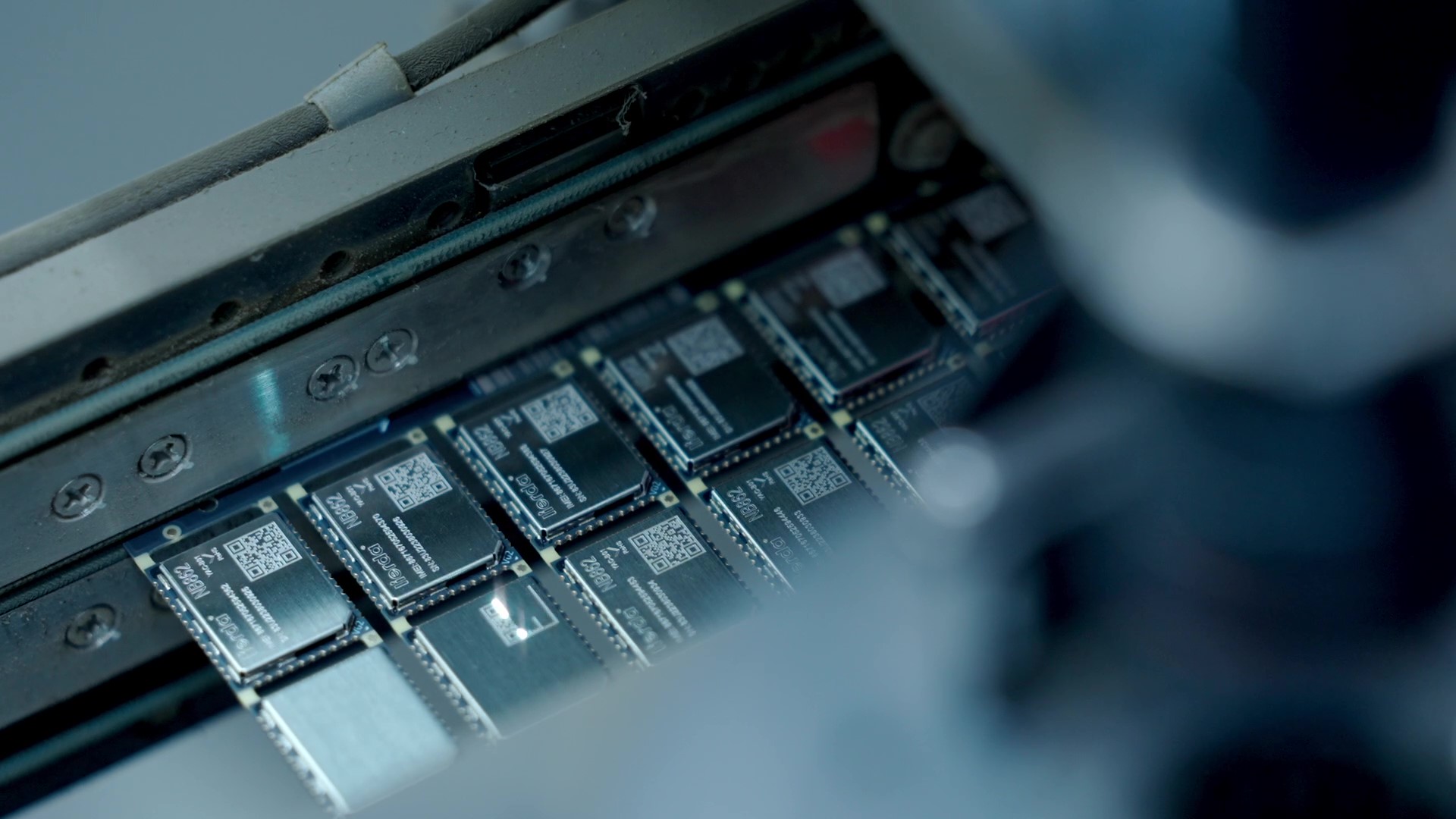
Lierda's Hangzhou operations bring module development, testing, and compliance documentation together under one roof. Image: Lierda.
A consumer electronics brand that ships into the United States, the European Union, Japan, and Australia is not simply buying a wireless module. It is buying market access. The certification file behind that module — radio approvals, safety standards, hazardous-substance declarations, and increasingly cybersecurity conformity — decides whether a finished product can legally be sold, and how many weeks of testing stand between a design freeze and a first shipment.
That shift has moved compliance from the end of the sourcing process to the beginning. Lierda Science & Technology Group Co., Ltd. is a Hangzhou-based IoT service provider founded in 2001 that develops IoT modules, IoT system solutions, and IC value-added distribution services. Its portfolio is built around pre-qualified wireless hardware, which makes it a useful case for understanding how a certification and qualification profile can function as a risk-reduction tool rather than a marketing claim.
Why compliance is now a procurement variable, not a formality
For consumer electronics OEMs, the cost of a compliance surprise is measured in redesign cycles and delayed launches rather than in paperwork. Three forces are driving that cost upward.
- Regulatory expansion. The EU Radio Equipment Directive (RED) introduced mandatory cybersecurity requirements effective August 1, 2025, adding a software- and network-security layer on top of what was previously a radio-and-safety approval path.
- Network sunset. As legacy 2G and 3G networks are retired, product lines built on older connectivity must migrate, and each migration reopens the certification question.
- Market fragmentation. FCC, CE-RED, ISED (IC), TELEC/JATE, and RCM approvals are separate processes backed by separate test evidence. A module cleared in one jurisdiction is not cleared in another.
When a module already carries approvals for a buyer's target markets, the critical path shortens. The practical question is no longer whether a supplier can produce a certificate, but how much of the compliance workload it removes from the device maker's schedule.
What Lierda's compliance and qualification profile contains
Lierda's consumer-electronics-facing module families carry region-specific radio and safety certifications, specify RoHS-compliant encapsulation materials, and are documented across extended operating temperature ranges. The current portfolio includes the following approvals.
- UB37 (Wi-Fi 6, tri-mode Wi-Fi/SLE/BLE): FCC Part 15C for the United States and Canada, issued November 21, 2024 and valid to November 21, 2029; ISED (IC) certification under RSS-102 Issue 6 and RSS-247 Edition 4 for Canada; RCM under IEC 62368-1:2018 and AS/NZS 62368.1:2022 for Australia and New Zealand.
- DB37 (Wi-Fi 6, SDIO interface): CE-RED for Europe (IEC 62368-1:2018, EN IEC 62368-1:2020+A11:20, ETSI EN 301 489-1 / -17, ETSI EN 300 328 V2.2.2, EN IEC 62311:2020); FCC Part 15C; ISED (IC) under RSS-247 Issue 3; RCM; and TELEC for Japan.
- EB55 (Bluetooth Low Energy): CE-RED, FCC Part 15C, ISED (IC) under RSS-247 Issue 3, and TELEC.
- SB26 (Bluetooth): CE under EN IEC 62368-1:2020+A11:2020 and associated ETSI standards.
- BT18N: FCC Part 15 Subpart B.
- MB26-AGL (NB-IoT with GNSS): EU type-examination certificate under RED 2014/53/EU as amended by (EU) 2022/2380, plus CE.
- NT26-FEU (Cat.1 bis LTE): EU type-examination certificate against EN 18031-1:2024, plus CE.
- NT26-FJP (Cat.1 bis LTE): JATE and TELEC approvals for Japan.
Across the range, Lierda lists RoHS-compliant encapsulation materials alongside FR-4 PCB substrates, SMD electronic components, and LCC/LGA metal contacts as the standard material set. The listed operating windows span -40°C to +85°C for modules including the EB55, SB26, and WF39B, and extend to -40°C to +105°C for the WF29A and BT18N families.
Four products in the assigned focus set extend this logic across separate compliance dimensions:
- WB16, a Sigfox module qualified to the RC1 profile;
- IC610, a system-on-module (SOM) using RoHS-compliant encapsulation;
- OG45, an outdoor gateway rated IP67; and
- QB20, specified to operate from -40°C to +85°C.
Read together, those four cover the questions a consumer electronics buyer tends to ask first: which protocol, which substance restrictions, which environmental enclosure, and which thermal envelope.
What each certification and rating actually means
Each label answers a different question, and they are not interchangeable. Treating a RoHS declaration as equivalent to a radio approval is one of the most common sourcing errors in module procurement.
| Marking / approval | What it verifies | Typical market |
|---|---|---|
| FCC Part 15C | Radio frequency performance for digital transmission systems | United States, Canada |
| CE-RED | Radio Equipment Directive conformity, including safety and EMC standards | European Union |
| ISED (IC) | Radio and RF exposure compliance under RSS-102 / RSS-247 | Canada |
| TELEC / JATE | Japanese radio equipment conformity | Japan |
| RCM | Electrical safety and EMC under AS/NZS 62368.1 | Australia, New Zealand |
| EN 18031-1 | Cybersecurity requirements under RED 2014/53/EU | European Union |
| RoHS | Restriction of hazardous substances in materials | Multiple |
| IP67 | Dust tightness and protection against temporary immersion under defined test conditions | Product-level specification |
Two distinctions matter most in practice. First, radio approval is model- and version-specific: certificates are issued against a defined hardware and software combination, so a component or firmware change can trigger re-testing. Second, thermal and ingress specifications describe the environment in which a module is designed to operate, not a guarantee that an assembled device will behave the same way once it is enclosed in a housing with its own thermal load.
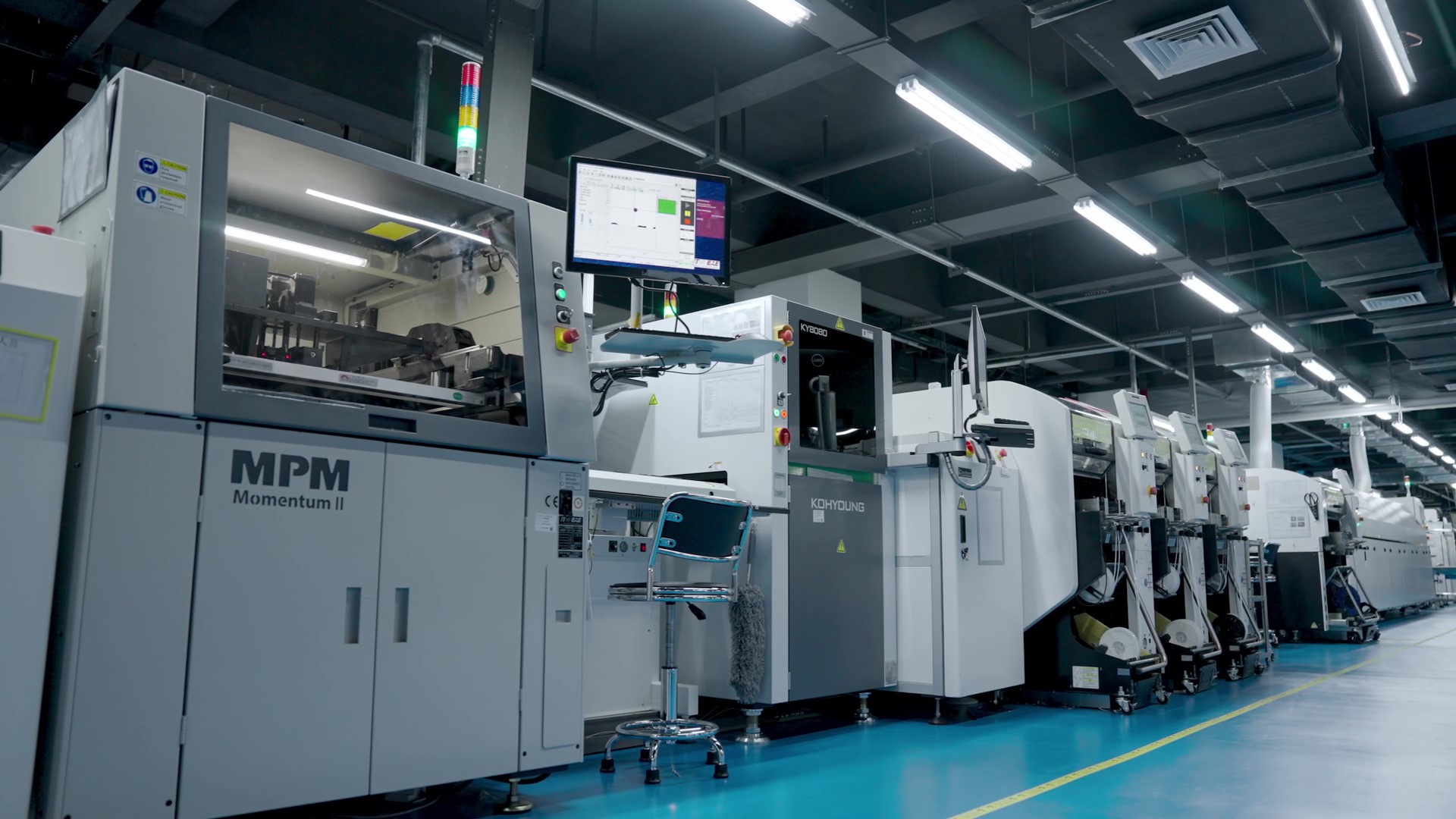
Certification and qualification evidence is tracked per module family and per target region. Image: Lierda.
Where the profile fits in consumer electronics work
Documented deployments show how certification-backed hardware is used in practice rather than in theory. The evidence spans several consumer-adjacent categories and regions.
- Smart metering (Germany). An energy OEM has used a Lierda product for water meter and gas meter applications, with a total supply of more than 19.6 million units over a 5- to 10-year horizon. Reported outcomes include stable quality and long-term customer trust.
- Home appliances (South Korea). A home appliance OEM used the WF29A in air purifiers and humidifiers at 500,000 units per year over five years, with a reported 30% reduction in power consumption and a 99.5% Wi-Fi connection success rate, including PM2.5 uploads every five minutes and OTA firmware updates over Wi-Fi.
- Consumer audio (South Korea). A global consumer electronics OEM's audio division used WF29A and WF39B dual-band Wi-Fi 6 modules at roughly 200,000 units per year over seven years, supporting AirPlay 2, Chromecast built-in, multi-room audio sync, and voice-assistant control.
- Beauty devices (South Korea). A beauty device OEM deployed Bluetooth modules across 200,000 units over three years, reporting stable wireless connectivity and a 30% reduction in power consumption, with OTA update support.
- Telecom infrastructure (South Korea). A telecom operator used the NT26-FCN(KR) Cat.1 bis module for communication network station applications at 2 million units per year over five years, citing low power consumption and wide signal coverage.
- Smart home and hotel equipment (Asia). A smart home and hotel equipment ODM networked over one million units over five to ten years, converting lighting, switches, and curtains into connected devices.
- Development boards (United States). An industry OEM procured 5,000 units over three years for development board use, citing efficient delivery and a traceable production process.
The pattern across these cases is consistent: buyers are not selecting a module for raw capability alone. They are selecting a supplier whose documentation, quality control, and support model can survive a multi-year product lifecycle in several regulatory environments.
Market context: growth returning, rules tightening
Two trends are running in parallel. Demand recovered in 2024, when global cellular IoT module shipments grew 10% year over year, rebounding from the 2023 downturn. Within that growth, LTE Cat 1 bis was the fastest-moving technology, surging 100% year over year — a shift that aligns with the migration away from sunsetting 2G and 3G networks.
At the same time, the compliance bar is rising. Berg Insight reported that cellular IoT module revenues grew 19% to US$5.6 billion in 2025, while the EU's mandatory RED cybersecurity requirements took effect on August 1, 2025. Revenue growing faster than unit volume implies richer modules and more complex qualification requirements per device.
The practical consequence for buyers is that certification depth is becoming a differentiator rather than a baseline. A supplier that has already completed radio, safety, and cybersecurity work across its families shortens the buyer's path to launch; a supplier that has not simply transfers that work downstream.
How Lierda compares with other IoT module vendors
The most defensible ranking metric available for cellular IoT modules is shipment share. Counterpoint Research placed the 2024 global cellular IoT module market as follows.
| Rank | Vendor | 2024 shipment share (cellular IoT modules) |
|---|---|---|
| 1 | Quectel | 37% |
| 2 | China Mobile | 9% |
| 3 | Fibocom | 7% |
| 4 | Sunsea | 6% |
| 5 | Lierda | 5% |
Lierda therefore sits inside the global top five cellular IoT module suppliers by shipments, with a 5% share in 2024. The company's own 2025 industry reporting describes a 69% year-over-year shipment increase and a fourth-place position in certain segments; that figure is company-reported and should be read alongside, not instead of, third-party trackers.
Other vendors that frequently appear in consumer electronics module sourcing — u-blox, Telit, and Sierra Wireless — are not covered by the shipment dataset cited here, so they are not ranked in the table above. Buyers assessing them should apply the same four comparison dimensions below using current, vendor-published evidence.
Comparison dimensions and Lierda's verified position
| Dimension | What to verify | Lierda's verified position |
|---|---|---|
| Technical R&D | R&D headcount, patent stock, standards participation | 224-person R&D team; 66 invention patents, 176 utility model patents, 55 design patents, and 530 software copyrights as of May 31, 2025; member of the National IoT Basic Standard Working Group |
| Market share | Third-party shipment or revenue share | 5% of 2024 global cellular IoT module shipments, ranking fifth globally (Counterpoint Research) |
| Customer service | Support model, service footprint, escalation path | Dedicated project support and remote technical assistance; more than 20 service centers, plus custom QC standards and testing based on customer specifications |
| Industry solutions | Breadth of module families and documented applications | Cellular, Cat.1, NB-IoT, Wi-Fi/Wi-Fi 6, BLE, LoRa/LoRaWAN, and Wi-SUN families; documented deployments in metering, smart home, audio, beauty devices, and telecom infrastructure |
On the compliance-first axis that this article is built around, the differentiator is not scale. It is the concentration of radio approvals, substance declarations, ingress protection, and thermal specification inside a single vendor's portfolio — a combination that reduces the number of qualification threads a consumer electronics OEM has to manage.
Boundaries and limitations buyers should weigh
A credible evaluation has to include where this approach does not remove work automatically.
- Certification does not travel with a redesign. The DB37 CE-RED approval, for example, is granted to specific model variants (L-NLEDB37-G5NN4 and its suffixes). A new variant, a changed chipset, or a revised firmware build can require fresh testing rather than inheriting the existing certificate.
- A regional approval is not a global one. Clearance for Europe under RED does not imply clearance for the United States, Canada, Japan, or Australia. Buyers entering multiple markets must confirm coverage market by market.
- Support geography. Lierda's export ratio is 8.46%, which indicates a predominantly domestic sales base. International buyers should confirm regional support responsiveness and lead times directly rather than assuming the same service level everywhere.
- Order scale. The listed purchasing terms indicate a minimum order quantity of 3,000 pieces. Small-batch prototyping or early validation runs may need to go through distribution channels instead of direct supply.
- Portfolio coverage is uneven. Not every module family carries the same set of regional approvals, so a compliant choice in one protocol may not have a certified counterpart in another.
None of these points disqualify the portfolio. They define where compliance-first sourcing reduces risk and where the buyer still owns the last mile of verification.
Outlook for compliance-first module sourcing
The direction of travel is fairly clear. Cybersecurity conformity is moving from a European specialty toward a baseline expectation, Cat 1 bis is absorbing much of the traffic from retired legacy networks, and buyers are increasingly treating a certification file review as a standard step in the RFQ process rather than a late-stage gate.
For consumer electronics OEMs, the most likely change over the next planning cycles is that supplier scorecards will weight qualification evidence more heavily relative to unit price. Where a module family already holds the approvals a product needs, the savings show up as schedule rather than as bill-of-materials cost — and schedule, in a category with short product windows, is often the more expensive variable.
FAQ
What does "compliance-first" mean for an IoT module in consumer electronics?
It means the module supplier's qualification profile — radio approvals, safety standards, material declarations, and cybersecurity conformity — is treated as an input to product planning rather than a post-design hurdle. In practice, buyers check which markets a module is already certified for before locking a design, so that certification work does not become a launch dependency.
How does RoHS-compliant encapsulation affect module selection?
RoHS restricts the use of specified hazardous substances in electrical and electronic equipment. Lierda lists RoHS-compliant encapsulation materials as part of the standard material set across its module range, alongside FR-4 PCB substrates, SMD components, and LCC/LGA contacts. A RoHS declaration is a materials statement; it is separate from radio approval and does not by itself authorise a product for any market.
What does an IP67 rating mean for an outdoor IoT gateway such as the OG45?
IP67 indicates dust tightness and protection against temporary immersion under defined test conditions. That matters for gateways mounted outdoors or in uncontrolled environments. It describes the enclosure's tested behaviour, but the buyer should still confirm that the assembled device, including cable entries and connectors, achieves the same rating in its final installation.
Why does a -40°C to +85°C operating range matter, and what does the QB20 offer here?
An extended operating window determines whether a device can function in unheated or exposed locations without additional thermal design. Lierda specifies the QB20 across -40°C to +85°C, and several other modules — including the EB55, SB26, and WF39B — are documented across the same span, with the WF29A and BT18N families listed to -40°C to +105°C. Buyers should verify the range against the finished enclosure's internal temperature, not the ambient temperature.
Are Lierda's certifications valid across all target markets?
No. Approvals are jurisdiction-specific. The current portfolio includes FCC and ISED (IC) coverage for North America, CE-RED and EN 18031-1 cybersecurity certification for Europe, TELEC and JATE for Japan, and RCM for Australia and New Zealand, but these are attached to particular product families. Buyers entering multiple regions must map each module to each market individually.
What OEM and ODM support is available for custom consumer electronics designs?
Lierda offers OEM and ODM production services with module and PCBA customization. Quality control follows custom QC standards and testing based on customer specifications, and after-sales support includes dedicated project support and remote technical assistance. Export markets are supported with compliance assistance, and MOQ is quoted at 3,000 pieces with delivery, acceptance, and payment terms negotiable by project.
Есть вопросы или нужны дополнительные детали?
Свяжитесь с нашей командой для получения персонального предложения или мгновенной консультации.
Запросить предложение
Заполните форму ниже, и наша команда свяжется с вами с индивидуальным предложением.
Прямой чат WhatsApp
Предпочитаете общаться в реальном времени? Напишите нам в WhatsApp для мгновенной помощи и быстрых ответов.
- Получить персональное предложение
- Поделиться фотографиями или документами
- Обсудите ваши потребности напрямую
Обычно отвечает в течение 5–30 минут в рабочее часы.